

Positive Psychology in Times of Pandemic—Time Perspective as a Moderator of the Relationship between Resilience and Meaning in Life
Open accessThe DOI matches its Crossref record; 68 of the 69 references it cites were found in a registry or an index, and 1 are not checked yet.
Abstract
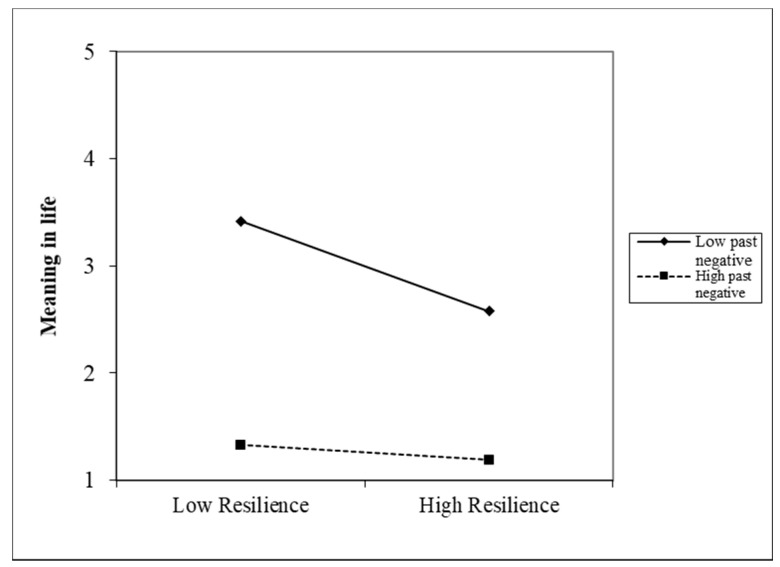
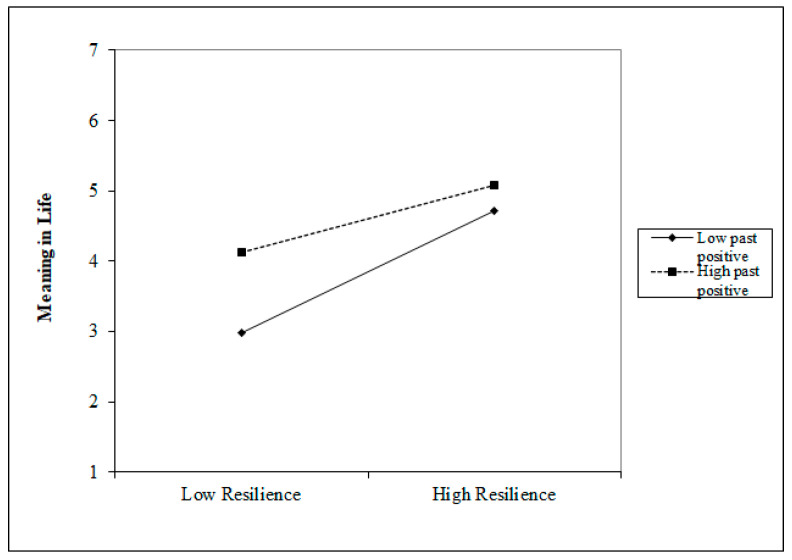
Resilience and meaning in life are significant indicators of psychological well-being and health, which are particularly important in the context of the COVID-19 pandemic. Therefore, they have been explored by a growing number of scientists. There has been a research gap, however, that fails to show that time perspectives also have a significant impact on the perception and building of different life aspects. The current study investigated the associations between resilience, time perspectives and meaning in life and examined the moderating role of time perspective in the relationship between resilience and meaning in life. Methods: Participants of this cross-sectional study were 363 adults aged 18-70. Resilience Measurement Scale (SPP-25), the Zimbardo Time Perspective Inventory (ZTPI), and the Purpose in Life Questionnaire (PIL) were used. Results: The findings confirmed a positive relationship between resilience, meaning in life, and positive time perspectives (Present Hedonistic and Future) and a negative link with Past Negative and Present Fatalistic perspectives. The linear regression analyses showed that Past Negative and Past Positive perspectives significantly moderated the relationship between resilience and meaning in life. The moderating effect was also confirmed in the case of past time perspectives only. Conclusions: The findings indicate the relevance of positive resources, such as resilience and positive perception of the past, in keeping the meaning in life. Understanding the effect of psychological strengths in the context of the pandemic time can be a key to providing intervention and therapeutic services fostering mental health and well-being.
Overview
The claims and statistics of this paper haven’t been checked yet.
Free: it reads the open-access text and checks the first 5 claims that cite a source we can check. Create a free account to check every claim.
Integrity signals
Registry
Cites
Statistics
Figures
Verification
Claims the paper makes
The claims and statistics of this paper haven’t been checked yet.
Free: it reads the open-access text and checks the first 5 claims that cite a source we can check. Create a free account to check every claim.
Claims other papers make about this one
Each is checked against this paper’s own text: does it say what the citing paper says it does?
The check wasn’t confident either way, so it gives no verdict — never disputed.
In the citing paper
“Previous research has also found that evidence-based mindfulness interventions were effective for depression and anxiety during the pandemic [91].”
From Psychological Interventions and Those With Elements of Positive Psychology for Child and Youth Mental Health During the COVID-19 Pandemic: Literature Review, Lessons Learned, and Areas for Future Knowledge Dissemination (2024) · cites this paper as [91]
Experimental — accuracy not yet measured
Self-check
Percentages, sums and reported differences re-computed from the paper’s own numbers.
The self-check needs the paper’s full text.
Citations
Cites
Conservation of resources: A new attempt at conceptualizing stress
Hobfoll, S. E. (1989) · American Psychologist · doi:10.1037/0003-066x.44.3.513 · Cited by 18,187 · cited 1×
“The outcomes might be interpreted in light of the Conservation of Resources theory [67], especially the construct of caravan passageways [68] where one resource reinforces and maintains another.”
BackgroundDevelopment of a new resilience scale: The Connor-Davidson Resilience Scale (CD-RISC)
Connor, K. M., & Davidson, J. R. T. (2003) · Depression and Anxiety · doi:10.1002/da.10113 · Cited by 11,793 · cited 2×
“Resilience leads to better coping with difficulties [2], better quality of life [3], and psychological well-being.”
BackgroundThe Construct of Resilience: A Critical Evaluation and Guidelines for Future Work
Luthar, S. S., Cicchetti, D., & Becker, B. (2000) · Child Development · doi:10.1111/1467-8624.00164 · Cited by 9,381 · cited 1×
“It is also treated as a dynamic psychological process, which includes positive adaptation over time despite adversity [18].”
BackgroundConstrual-level theory of psychological distance.
Trope, Y., & Liberman, N. (2010) · Psychological Review · doi:10.1037/a0018963 · Cited by 6,618 · cited 1×
“Our findings are in line with the Construal-Level Theory of Psychological Distance [72].”
ResultThe Oxford Handbook of Positive Psychology
(2009) · doi:10.1093/oxfordhb/9780195187243.001.0001 · Cited by 2,696
Putting time in perspective: A valid, reliable individual-differences metric.
Zimbardo, P. G., & Boyd, J. N. (1999) · Journal of Personality and Social Psychology · doi:10.1037/0022-3514.77.6.1271 · Cited by 2,520
IQ and ego-resiliency: Conceptual and empirical connections and separateness.
Block, J., & Kremen, A. M. (1996) · Journal of Personality and Social Psychology · doi:10.1037//0022-3514.70.2.349 · Cited by 2,365 · cited 2×
“It is the ability to bounce back from negative emotional experiences and adapt to the changing demands of stressful experiences [17].”
BackgroundA meta-analytic review of benefit finding and growth.
Helgeson, V. S., Reynolds, K. A., & Tomich, P. L. (2006) · Journal of Consulting and Clinical Psychology · doi:10.1037/0022-006x.74.5.797 · Cited by 1,864 · cited 1×
“Some researchers indicate that temporal references are activated during the coping process, such as consideration of past time [8] or present time [9].”
BackgroundThe three meanings of meaning in life: Distinguishing coherence, purpose, and significance
Martela, F., & Steger, M. F. (2016) · The Journal of Positive Psychology · doi:10.1080/17439760.2015.1137623 · Cited by 1,401
Friborg, O., Hjemdal, O., Rosenvinge, J. H., & Martinussen, M. (2003) · International Journal of Methods in Psychiatric Research · doi:10.1002/mpr.143 · Cited by 1,348 · cited 2×
“Previous research has examined relationships between resilience and other psychological constructs [24,28], yet definitely fewer researchers have investigated the relationship between time perspective and other constructs [44,62].”
Background
Research works printed but not linked: 7
- Ogińska-Bulik N. Juczyński Z. Skala pomiaru prężności SPP-25. [Resilience measurement scale SPP-25] Nowiny Psychol. 2008 3 39 56 Available online: https://www.researchgate.net/publication/284689565_Skala_pomiaru_preznosci (accessed on 10 October 2021)
- Frankl V.E. Man’s Search for Ultimate Meaning Plenum Press New York, NY, USA 1997
- Taylor S.E. Health Psychology McGraw-Hill New York, NY, USA 2003
- Seema R. Sircova A. Mindfulness—A time perspective? Estonian Study Balt. J. Psychol. 2013 14 4 21
- Życińska J. Januszek M. Test Sensu Życia (Purpose in Life Test, PIL) J.C. Crumbaugha i L.T. Maholicka: Analiza psychometryczna Psychol. J. 2011 17 133 142
- Hayes A.F. Introduction to Mediation, Moderation, and Conditional Process Analysis: A Regression-Based Approach The Guilford Press New York, NY, USA 2013
- Zimbardo P.G. Boyd J.N. The Time Paradox: The New Psychology of Time That Will Change your Life Free Press New York, NY, USA 2008
Cited by
Resilience and spirituality mediate anxiety and life satisfaction in chronically Ill older adults
Shabani, M., Taheri‐Kharameh, Z., Saghafipour, A., Tehran, H. A., Yoosefee, S., & Amini‐Tehrani, M. (2023) · BMC Psychology · doi:10.1186/s40359-023-01279-z · Cited by 64
“These characteristics contribute to higher levels of life satisfaction by mitigating the negative effects of stress [33].”
BackgroundZábó, V., Csiszár, A., Ungvari, Z. I., & Purebl, G. (2023) · GeroScience · doi:10.1007/s11357-023-00856-9 · Cited by 63
Zhang, Y., Ding, X., Chen, J., Liu, Y., Wang, G., & Hu, D. (2023) · BMC Psychiatry · doi:10.1186/s12888-023-05057-4 · Cited by 28
“health and a positive perception of the past [55].”
BackgroundGu, X., Firdousi, S. F., Obrenovic, B., Afzal, A., Amir, B., & Wu, T. (2023) · Environmental Science and Pollution Research · doi:10.1007/s11356-023-27355-w · Cited by 29
“Time perception means how much thought an individual has put into their future (Lasota and Mróz, 2021).”
BackgroundBurnout, psychopathology and purpose in life in healthcare workers during COVID-19 pandemic
O’Higgins, M. G., Rojas-Bernal, L. Á., Echeverria, I., Roselló-Jiménez, L., Benito, A., & Haro, G. (2022) · Frontiers in Public Health · doi:10.3389/fpubh.2022.926328 · Cited by 28
Sustainable Fashion in New Era: Exploring Consumer Resilience and Goals in the Post-Pandemic
Hwang, J., Sun, X., Zhao, L., & Youn, S. (2024) · Sustainability · doi:10.3390/su16083140 · Cited by 22
Han, S. J., Yeun, Y.-R., & Roh, H. (2023) · Healthcare · doi:10.3390/healthcare11212895 · Cited by 21
“Lasota and Mr ó z [47] also found a positive relationship between resilience and meaning in life during the COVID-19 pandemic.”
BackgroundFernández, R., & Brenlla, M. E. (2022) · Journal of Applied Research in Higher Education · doi:10.1108/jarhe-11-2021-0413 · Cited by 18
Rosa, V. L. L., Tornatore, M., & Commodari, E. (2024) · Current Psychology · doi:10.1007/s12144-024-06058-6 · Cited by 17
“…as resilience, positive thinking, optimism, and social support, may significantly predict the use of more adaptive coping mechanisms, as widely highlighted in several studies conducted during the COVID-19 pandemic (Budimir et al., 2021; Lasota & Mróz, 2021; Lee, 2023; Leslie-Miller et al., 2021).”
Resilience and Meaningfulness of Life in Broken Home Adolescents
Santoso, L. Y., & Huwae, A. (2023) · Bisma The Journal of Counseling · doi:10.23887/bisma.v7i1.58582 · Cited by 15
“Individuals aged 18-70 years have resilience abilities that lead to the meaningfulness of life (Lasota & Mróz, 2021).”
Zou, H., Tao, Z., Zhou, Y., Zhang, Z., Zhang, C., Li, L., Yang, J., Wang, Y., Huang, W., & Wang, J. (2022) · Frontiers in Psychiatry · doi:10.3389/fpsyt.2022.856627 · Cited by 15
“Resilience is the ability to recover from adversity, conflict, failure, and even positive events (43).”
BackgroundItalian university students’ future time perspective and well-being during the COVID-19 pandemic
Parrello, S., Postiglione, J., Sica, L. S., Rosa, B. D., Parola, A., Regnoli, G. M., Fenizia, E., & Sommantico, M. (2024) · Frontiers in Psychology · doi:10.3389/fpsyg.2024.1404952 · Cited by 15
Ma, C., Zhao, M., & Zhang, Y. (2025) · Behavioral Sciences · doi:10.3390/bs15050654 · Cited by 13
“Resilience and meaning in life are significant predictors of post-traumatic growth, and resilience serves as a resource that enables individuals to discover meaning in life and create a better future during challenging periods (Lasota & Mróz, 2021).”
Lyzwinski, L., Zwicker, J. D., Mcdonald, S., & Tough, S. (2024) · JMIR Pediatrics and Parenting · doi:10.2196/59171 · Cited by 7
“Previous research has also found that evidence-based mindfulness interventions were effective for depression and anxiety during the pandemic [91].”
Dambi, J. M., Cowan, F. M., Martin, F., Sibanda, S., Simms, V. M., Willis, N., Bernays, S., & Mavhu, W. M. (2024) · PLOS Global Public Health · doi:10.1371/journal.pgph.0002255 · Cited by 7
Self-Reported Resilience During the COVID-19 Pandemic
Ogungbe, O., Wang, T., Balte, P., Slone, S., Meyer, D., Allen, N. B., Buhr, R. G., Hirsch, J. A., Stukovsky, K. H., Kucharska‐Newton, A., et al. (2025) · JAMA Network Open · doi:10.1001/jamanetworkopen.2025.20360 · Cited by 5
Sica, L. S., Parola, A., Rosa, B. D., Sommantico, M., Fenizia, E., Postiglione, J., Regnoli, G. M., & Parrello, S. (2024) · Journal for Person-Oriented Research · doi:10.17505/jpor.2024.27189 · Cited by 8
“In the context of the COVID-19 pandemic, psychological resources, such as positive perception of the future, finding meaning in life and optimism may be extremely important for coping with the difficult and new situation and for maintaining psychological well-being (Lasota & Mróz, 2021).”
Gender Similarities and Differences in Time Perspective in the Age of COVID-19
Lonigro, A., Mello, Z. R., Worrell, F. C., Zammuto, M., Bianchi, D., Pompili, S., Tata, D. D., Longobardi, E., & Laghi, F. (2025) · The Journal of Genetic Psychology · doi:10.1080/00221325.2025.2465791 · Cited by 4
“Nevertheless, other evidence has documented that past positive time perspective—a tendency to focus on positive features of past—negatively predicted depression (Micillo et al., 2022) and was positively linked to resilience and solid values and goals during the pandemic (Lasota & Mróz, 2021).”
Sánchez‐Izquierdo, M., García-Sánchez, R., Prieto-Ursúa, M., Mateos‐Nozal, J., & Ordóñez-Carabaño, Á. (2025) · PLoS ONE · doi:10.1371/journal.pone.0320663 · Cited by 4
“Furthermore, there is evidence that resilience is a predictor of finding meaning in life [50].”
Bhatt, R., Lori, A., Liu, J., Mei, Z. X., Wingo, T. S., & Wingo, A. P. (2023) · American Journal of Geriatric Psychiatry · doi:10.1016/j.jagp.2023.03.003 · Cited by 5
dos Santos, D. M. B., Corrêa, D. A., & de Aquino, T. A. A. (2024) · Journal of Health Psychology · doi:10.1177/13591053241241479 · Cited by 1
“Additionally, studies have demonstrated a positive correlation between meaning in life and resilience (Arslan and Yıldırım, 2021; Karatas and Burdur, 2021; Lasota and Mro´z, 2021; Yildirim et al., 2021).”
Carlier, M., & Delevoye, Y. (2025) · Springer eBooks · doi:10.1007/978-3-031-90034-1_7 · Cited by 1
Tang, C., Liu, Y., Duan, L., Wang, T., Hu, J., Jin, Y., & Zhang, K. (2025) · Journal of Health Psychology · doi:10.1177/13591053251344503 · Cited by 1
“Focusing on the positive aspects of one’s past helps to reinforce a meaningful life narrative, providing emotional strength and psychological stability (Lasota and Mro´z, 2021).”
Michaelson, V. E., Pickett, W., King, N., Gardner, P., Ferro, M. A., Costello, M. J., Leatherdale, S. T., & Patte, K. A. (2025) · BMC Public Health · doi:10.1186/s12889-025-25819-x · Cited by 1
“Such experiences are thought to enhance wellbeing through the fostering of self-esteem, coping abilities, and resilience, including the ability to handle daily stress [8, 9, 23, 54].”
Muller, M. K., de Almeida, E. R., van der Tuin, S., Balafas, S. E., van den Berg, D. P. G., Núñez, D., Eisma, M. C., Schoevers, R. A., Wang, Y., Veling, W., et al. (2026) · Schizophrenia Research · doi:10.1016/j.schres.2026.02.003 · Cited by 1
Huang, Y., Chen, J., Guan, J., Zhao, S., & Pan, D. (2026) · Frontiers in Psychology · doi:10.3389/fpsyg.2026.1768876 · Cited by 1
“The third emphasizes protective factors, including social support (Mao et al., 2022), self-compassion (Suh and Jeong, 2021), meaning in life (MIL) (Lasota and Mróz, 2021), psychological resilience (Chen et al., 2023), and mindfulness (Zhou et al., 2023).”
Liu, Y., Wen, J., Cao, R., & Miao, M. (2026) · Journal of Happiness Studies · doi:10.1007/s10902-026-01032-4 · Cited by 1
Sucht und Zeitwahrnehmung – die unsichtbare Dimension
Klingemann, H. (2022) · SUCHT - Zeitschrift für Wissenschaft und Praxis / Journal of Addiction Research and Practice · doi:10.1024/0939-5911/a000754
Abakumova, I., Selezneva, Y., Комерова, Н. Е., & Проненко, Е. А. (2022) · E3S Web of Conferences · doi:10.1051/e3sconf/202236304014
Anxiety during the Corona Virus Disease (COVID-19): The Lived Experience of Older Adults
Portelli, P., & Soler, A. (2024) · Medical Research Archives · doi:10.18103/mra.v12i4.5264
Dark triad personality, resilience, and meaning of life in adolescents who have engaged in self-harm
Noya, Q. C., & Huwae, A. (2025) · Psikostudia Jurnal Psikologi · doi:10.30872/psikostudia.v14i4.20744
白, 姗. (2025) · Advances in Social Sciences · doi:10.12677/ass.2025.1410903
Dambi, J. M., Cowan, F. M., Martin, F., Sibanda, S., Simms, V. M., Willis, N., Bernays, S., & Mavhu, W. M. (2023) · medRxiv · doi:10.1101/2023.07.17.23292789
Well-Being Among Foster Parents of Children With a History of Sexual Abuse
Marquez, J. (2023) · ScholarWorks (Walden University)
سلاطنية, ن. (2024) · University of Biskra Theses Repository (University of Biskra)
The Impact of Psychological Well-Being on University Students
Torrelles-Nadal, C., & Chang, Y.-C. (2025) · Frontiers research topics · doi:10.3389/978-2-8325-7241-2
Teachers’ opinions on teacher resilience during the pandemic
Çetiner, Z. (2023) · Dspace Repository (Marmara Üniversitesi)
Gassemi, K., Papastamatelou, J., & Unger, A. (2026) · Personality and Individual Differences · doi:10.1016/j.paid.2026.113930
Tóth, E. E. (2026) · Eötvös Loránd Tudományegyetem · doi:10.15476/elte.2025.423
Zhang, S., & Zhao, H. (2026) · Frontiers in Psychology · doi:10.3389/fpsyg.2026.1885215
CHUNHUA, L., & PENGFEI, L. (2026) · Advances in Physical Education · doi:10.4236/ape.2026.163004
Min, S., & Li, X. (2026) · Frontiers in Psychology · doi:10.3389/fpsyg.2026.1875230
“When individuals can clearly perceive direction and meaning in their lives, their psychological resilience in the face of adversity is more readily enhanced (Lasota and Mróz, 2021).”
Resilience and Time Perspective in a Clinical Sample of Adolescents
Walg, M., Prado, C., El-Wahsch, D., Bender, S., & Hapfelmeier, G. (2026) · Children · doi:10.3390/children13081028
“Lasota and Mróz [35] did not find a direct association between Past Positive and resilience, but their results still highlight the importance of a positive past orientation: Past Positive amplified the effect of resilience on meaning in life, whereas Past Negative had the opposite effect, limiting…”
InfluentialGrishina, T. A. (2025) · Electronic Archive of the National University "Odessa Law Academy" (Scientific Library of the Odessa Law Academy)
Diaconu‐Gherasim, L. R., Pitiruţ, I.-B., & Dodiță, E.-D. (2026) · Psychological Reports · doi:10.1177/00332941261480083
Time perspectives and work behavior
Artnak, A. (2026) · Repository of the University of Ljubljana (University of Ljubljana)
Metadata
- Authors
- Lasota, A., & Mróz, J.
- Affiliations
- Uniwersytet Komisji Edukacji Narodowej w Krakowie (PL)
- Jan Kochanowski University (PL)
- Corresponding author
- Lasota, Agnieszka
- Mróz, Justyna
- Venue
- International Journal of Environmental Research and Public Health
- Publisher
- MDPI AG
- Published
- 2021-12-18
- Volume
- 18
- Issue
- 24
- Pages
- 13340
- ISSN
- 1660-4601 (ISSN-L)
- PMC
- PMC8707410
- OpenAlex
- W4200522104
- Cited by
- 39
- References
- 67
- Citations by year
- 2026: 9 · 2025: 8 · 2024: 9 · 2023: 8 · 2022: 5
- FWCI
- 5.32
- Type
- journal article
- Language
- en
- Open access
- gold
- doi.org
- Licence
- Locations
- International Journal of Environmental Research and Public Health (publishedVersion, cc-by)
- PubMed Central (publishedVersion, cc-by)
- PubMed (publishedVersion)
- RePEc: Research Papers in Economics (submittedVersion)
- DOAJ (DOAJ: Directory of Open Access Journals) (submittedVersion, cc-by-sa)
- Funders
- Uniwersytet Pedagogiczny im. Komisji Edukacji Narodowej w Krakowie
- Topics
- Social Sciences › Psychology › Experimental and Cognitive Psychology › Psychological and Temporal Perspectives Research
- Social Sciences › Psychology › Social Psychology › Psychological Well-being and Life Satisfaction
- Social Sciences › Psychology › Clinical Psychology › Resilience and Mental Health
- Keywords
- resilience, meaning in life, time perspective, COVID-19 pandemic, psychological well-being, past negative time perspective, past positive time perspective, positive psychology, moderating effect
- MeSH terms
- Psychology, Positive, COVID-19, SARS-CoV-2, Adolescent, Adult, Aged, Cross-Sectional Studies, Humans, Middle Aged, Resilience, Psychological, Young Adult, Pandemics
About these checks
Registry, retraction, Cites and statistics results are computed, not judged, with one exception: a printed reference that no index lists is read once by a model before it counts as a citation error. Claims are extracted by a model and kept only when their quote appears verbatim in the text; each cited source is then checked, with a model’s help, for whether it says what the claim relies on. Those verdicts can be wrong — read the claim’s quote and the cited source before relying on one.
Statistics and arithmetic are recomputed, not judged.
Confidence bands are shown only for fields calibrated on our annotated test set. None is calibrated yet, so no band is shown.
What counts as a claim ›How we measure confidence ›How we check this ›
Are you an author, or do you see a problem with this page? Request a review
Data sources
Bibliographic data: Semantic Scholar, OpenAlex, Crossref.
Contains information from the Semantic Scholar Academic Graph Datasets, made available under the ODC Attribution License (ODC-BY 1.0).
Semantic Scholar’s data is described in: Kinney, R., et al. (2023). The Semantic Scholar Open Data Platform. arXiv:2301.10140.
