

School Feeding Programs: What Happens Globally?
Open accessThe DOI matches its Crossref record; 32 of the 32 references it cites were found in a registry or an index.
Abstract
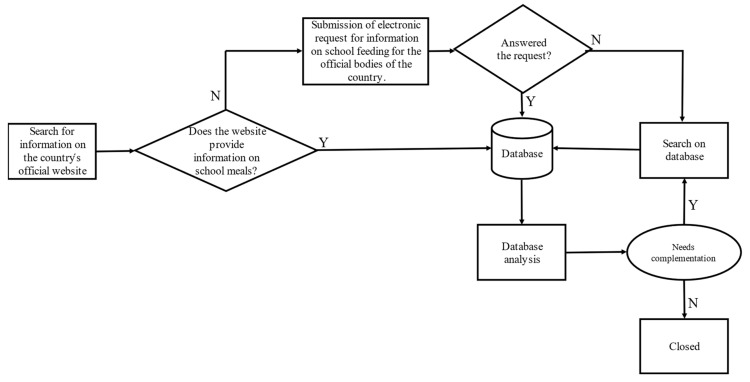
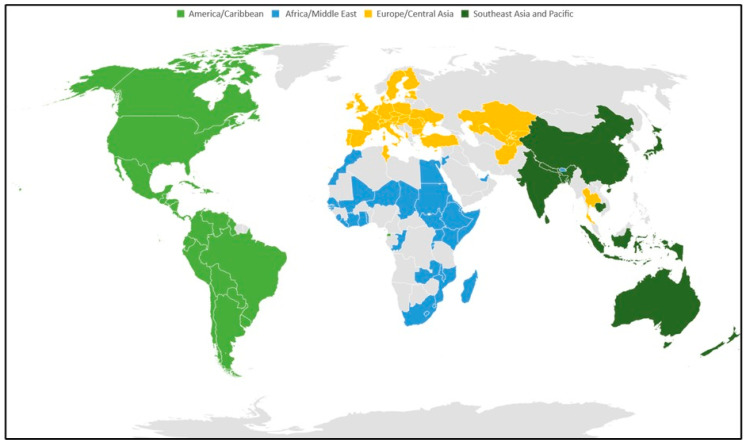
School feeding programs (SFPs) are an important effort to address food insecurity, improve nutritional education, and ultimately improve health outcomes. The objective of this research was to describe the nutritional, cultural, food safety, and agro-family participation of SFPs in different countries and observe the SFP in low-middle and high-income countries to establish disparities. The study followed documentary research of SFP official online resources complemented by a literature review. The programs were assessed in four criteria: (1) nutritional aspects, (2) cultural aspects, (3) food safety, and (4) agro-family participation. Out of 192 countries registered, 117 countries (60.93%) have an SFP, and only 8 (4.16%) do not have SFPs. A total of 67 countries (34.89%) did not have an official online resource and did not respond to follow-up emails. Out of the 117 countries with SFP, all of them had a detailed description of their nutritional aspects, cultural aspects (11.96%), food safety (16.23%), and agro-family participation (23.93%). Europe and Central Asia were the continents with the most comprehensive SFP. While most countries incorporate nutritional aspects and healthy food, cultural, food safety, and agro-family participation must be incorporated in their SPF to optimize children and adolescent development. Moreover, the study identified disparities across countries where the SFPs were identified in low-middle countries compared to middle- and high-income countries.
Overview
The claims and statistics of this paper haven’t been checked yet.
Free: it reads the open-access text and checks the first 5 claims that cite a source we can check. Create a free account to check every claim.
Integrity signals
Registry
Cites
Statistics
Figures
Verification
Claims the paper makes
The claims and statistics of this paper haven’t been checked yet.
Free: it reads the open-access text and checks the first 5 claims that cite a source we can check. Create a free account to check every claim.
Self-check
Percentages, sums and reported differences re-computed from the paper’s own numbers.
The self-check needs the paper’s full text.
Citations
Cites
Obesity: global epidemiology and pathogenesis
Blüher, M. (2019) · Nature Reviews Endocrinology · doi:10.1038/s41574-019-0176-8 · Cited by 5,126 · cited 1×
“It is understood that the world faces somewhat opposite problems: (1) an increase in obesity in developed countries [46] and (2) food shortages and malnutrition in developing countries.”
BackgroundAlimentação saudável e sustentável: uma revisão narrativa sobre desafios e perspectivas
Martinelli, S. S., & Cavalli, S. B. (2019) · Ciência & Saúde Coletiva · doi:10.1590/1413-812320182411.30572017 · Cited by 405 · cited 1×
“Food systems are processes that include agriculture, livestock, production processing, distribution, supply, marketing, preparation, and consumption of food and beverages [35].”
BackgroundJomaa, L. H., McDonnell, E., & Probart, C. (2011) · Nutrition Reviews · doi:10.1111/j.1753-4887.2010.00369.x · Cited by 290 · cited 1×
“Combating the triple burden of malnutrition–undernutrition, hidden, hunger, and obesity that plagues children, especially in developing countries, depends partly on the balanced meals provided at school [10].”
BackgroundOostindjer, M., Aschemann-Witzel, J., Wang, Q., Skuland, S. E., Egelandsdal, B., Amdam, G. V., Schjøll, A., Pachucki, M. C., Rozin, P., Stein, J., et al. (2017) · Critical Reviews in Food Science and Nutrition · doi:10.1080/10408398.2016.1197180 · Cited by 240 · cited 7×
“Children spend at least five hours at school, especially in low-middle income countries, and take their main meals [6].”
BackgroundInfluentialDocumentary Research Method: New Dimensions
Ahmed, J. U. (2010) · RePEc: Research Papers in Economics · Cited by 204
Berchin, I. I., Nunes, N. A., de Amorim, W. S., Zimmer, G. A. A., da Silva, F. R., Fornasari, V. H., Sima, M., & Guerra, J. B. S. O. D. A. (2019) · Land Use Policy · doi:10.1016/j.landusepol.2018.12.043 · Cited by 146 · cited 2×
“Thus, there is a suboptimal investment in the health and nutrition of school-age children and adolescents, which is an obstacle to their development [5,14].”
BackgroundZenebe, M., Gebremedhin, S., Henry, C. J., & Regassa, N. (2018) · The Italian Journal of Pediatrics/Italian journal of pediatrics · doi:10.1186/s13052-018-0449-1 · Cited by 137 · cited 1×
“Therefore, an up-to-date overview of their nutritional status is not available [12,24].”
BackgroundShamah‐Levy, T., Campos‐Nonato, I., Cuevas‐Nasú, L., Hernández-Barrera, L., Morales‐Ruán, M. D. C., Rivera, J. Á., & Barquera, S. (2019) · Salud Pública de México · doi:10.21149/10585 · Cited by 113
Maynard, D., Vidigal, M., Farage, P., Zandonadi, R., Nakano, E., & Botelho, R. (2020) · Sustainability · doi:10.3390/su12051804 · Cited by 110
Self-citationObesity and hypertension in Latin America: Current perspectives
Ruilope, L. M., Filho, A. C. B. N., Nadruz, W., Rosales, F. F. R., & Verdejo-París, J. (2018) · Hipertensión y Riesgo Vascular · doi:10.1016/j.hipert.2017.12.004 · Cited by 82
Research works printed but not linked: 3
- World Health Organization (WHO) Nutrition Action in Schools: A Review of the Evidence Related to the Nutrition-Friendly Schools Initiative WHO Geneva, Switzerland 2020
- De Andrade S.R. Schmitt M.D. Storck B.C. Piccoli T. Ruoff A.B. Documentary analysis in nursing theses: Data collection techniques and research methods Cogitare Enferm. 2018 23 e53598
- dos Santos S.L. O fazer educação alimentar e nutricional: Algumas contribuições para reflexão [Making food and nutrition education: Some contributions for reflection] Cienc. E Saude Coletiva 2012 17 453 462 22267039
Cited by
Acceptability of School Menus: A Systematic Review of Assessment Methods
Santana, S. A., Batista, S. A., Maynard, D. D. C., Ginani, V. C., Zandonadi, R. P., & Botelho, R. B. A. (2023) · International Journal of Environmental Research and Public Health · doi:10.3390/ijerph20032242 · Cited by 39
“The 7-point scale was used in most studies from Italy (37.50%), the Philippines (100%), and Finland (100%).”
BackgroundInfluentialSelf-citationChaves, V. M., Rocha, C., Gomes, S. M., Jacob, M. C. M., & da Costa, J. B. A. (2023) · Sustainability · doi:10.3390/su15042863 · Cited by 17
School Feeding Programme Implementation and its Challenges in Basic Education Schools in Rwanda
de Dieu, H. J., Hashakimana, T., Ngendahayo, E., Mugiraneza, F., Abdou, M., Emmanuel, N., & Ke, Z. (2023) · African Educational Research Journal · doi:10.30918/aerj.113.23.037 · Cited by 13
“The study was guided by a descriptive research design that involved a cross-sectional research design (Cvetkovic-Vega et al., 2021).”
Ingestive Behavior and Precision Nutrition: Part of the Puzzle
Biruete, A., Buobu, P. S., Considine, R. V., Hoxha, E. M., Eicher‐Miller, H. A., Kinzig, K. P., Panjwani, A. A., Running, C. A., Rutigliani, G., Savaiano, D. A., et al. (2025) · Advances in Nutrition · doi:10.1016/j.advnut.2025.100531 · Cited by 7
“School lunch programs, which are widespread in many countries, provide affordable or free nutritious meals; efforts to provide culturally relevant and desirable meals are variable and ongoing [77 – 79].”
Ouedraogo, D., Compaoré, E. W. R., Ouédraogo, O., & Dicko, M. H. (2024) · BMC Nutrition · doi:10.1186/s40795-024-00896-0 · Cited by 6
“Until now, data on nutritional status and health have focused on adolescent girls over 15 and children under 5, as they are more vulnerable and more exposed to disease and death, not to mention the economic losses associated with poor nutritional status [12, 21, 30, 33].”
BackgroundSulu, C. R., & Matemba, D. D. (2024) · Issues in Social Science · doi:10.5296/iss.v12i1.21998 · Cited by 6
Food for thought: School meals for sustainable societies
OECD (2023) · OECD education spotlights · doi:10.1787/629a2730-en · Cited by 5
(2024) · Journal of Adolescent Health · doi:10.1016/j.jadohealth.2024.09.024 · Cited by 4
Huni, C., Sari, N. P. W. P., Duong, M.-P. T., Mazenda, A., Budiono, D., Nguyen, M.-H., & Vuong, Q. (2025) · International Journal of Sociology and Social Policy · doi:10.1108/ijssp-06-2025-0351 · Cited by 5
Ndayishimye, I., & Dushimimana, J. D. D. (2024) · African Journal of Empirical Research · doi:10.51867/ajernet.5.2.36 · Cited by 4
Aquisição Pública de Alimentos Regionais da Agricultura Familiar Em Municípios Da Amazônia Oriental
Cabral, B. D. C., Siqueira, F. F. D. S., Frazão, A. D. G. F., & Tomchinsky, B. (2025) · Mundo Amazónico · doi:10.15446/ma.v16n1.112178 · Cited by 3
Medeiros, L. G. C., Alves, I. C. D. C., Florintino, C. D. S., Corrêa, E. N., Gabriel, C. G., & de Vasconcelos, F. D. A. G. (2025) · Revista de Nutrição · doi:10.1590/1678-9865202538e240119pt · Cited by 2
Burden, trends, and projections of nutritional deficiencies in China from 1990 to 2030
Chen, B., Yang, H., Zheng, W., Zheng, H., Lin, H., Yu, J., Xu, Y., Guo, Z., & Zhan, Z. (2025) · Frontiers in Nutrition · doi:10.3389/fnut.2025.1643869 · Cited by 2
Understanding Undernutrition and Starvation: Epidemiology, Causes, and Consequences
Amrutha, T. V., Murti, K., Prakash, V., Kumar, N., Pal, B., & Meenakshi, S. (2025) · Springer eBooks · doi:10.1007/978-3-031-32047-7_85-1 · Cited by 2
Free nutritious school meals: Effects on student well-being and learning
Dedy, Danim, S., & Khairi, A. (2026) · Indonesian Journal of Educational Development (IJED) · doi:10.59672/ijed.v6i4.6048 · Cited by 2
IMPLEMENTASI KEBIJAKAN DAN TATA KELOLA MAKANAN BERGIZI GRATIS PADA TINGKAT SATUAN PENDIDIKAN
Ariyani, N., Dema, H., & Irwan, I. (2026) · PAPATUNG Jurnal Ilmu Administrasi Publik Pemerintahan dan Politik · doi:10.54783/japp.v9i1.1579 · Cited by 2
Suta, S., Surawit, A., Mongkolsucharitkul, P., Pinsawas, B., Manosan, T., Ophakas, S., Pongkunakorn, T., Pumeiam, S., Sranacharoenpong, K., Sutheeworapong, S., et al. (2022) · medRxiv · doi:10.1101/2022.08.17.22278880 · Cited by 2
“implementing effective interventions such as school lunch programs, cash transfers, special supplemental nutrition programs, proactive nutrition education and fortified foods.(3,9) In Thailand, the government has provided free lunch and a serving of milk every school day for primary school children since 1993 and maln…”
BackgroundIndonesian engineers, the free nutritious meal program (MBG) needs you!
Setiyo, M. (2026) · Mechanical Engineering for Society and Industry · doi:10.31603/mesi.16112 · Cited by 2
Ensuring sanitation and hygiene in preschool childcare facilities
Turan-Vucetic, M., Hodžić, D., Rakić, J. G., Ilić-Živojinović, J., & Maksimović, M. (2024) · Hrana i ishrana · doi:10.5937/hraish2402012t · Cited by 1
Problematic Analysis of the National Free School Lunch Policy on Vocational Education
Eliza, F., Jamaris, J., Marsidin, S., Sardi, J., Habibullah, H., & Fadli, R. (2025) · INVOTEK Jurnal Inovasi Vokasional dan Teknologi · doi:10.24036/invotek.v24i2.1180 · Cited by 2
Weinfurter, M. T., de Campos, D. A., Camargo, C. E. S., Leite, M. S., & Gabriel, C. G. (2025) · Nutrition Reviews · doi:10.1093/nutrit/nuaf142 · Cited by 1
Tatad, E. F. (2025) · Nexus International Journal of Science and Education · doi:10.5281/zenodo.15869718 · Cited by 1
Piirsalu, E., Tool, B., Vidal, I., & Franco, M. (2026) · Preventive Medicine · doi:10.1016/j.ypmed.2026.108515 · Cited by 1
Dagnaw, M., Hailu, E., & Arage, S. M. (2026) · Scientifica · doi:10.1155/sci5/9862553 · Cited by 1
“SFPs may be implemented as in-school meals or THR, and they are widely used as a strategy to reduce short-term hunger, enhance cognitive performance, and mitigate socioeconomic barriers to education among vulnerable populations [21].”
Njohjam, M. N., & Dwan, K. (2026) · Systematic Reviews · doi:10.1186/s13643-026-03147-4 · Cited by 1
“School feeding programs have played a pivotal role in influencing dietary habits and lifestyles in children in many countries in SSA [71].”
Anub, I. B. (2024) · International Journal of Innovative Science and Research Technology (IJISRT) · doi:10.38124/ijisrt/ijisrt24apr2642 · Cited by 1
Kajange, B., Amos, A. A. L., & Lyamtane, E. (2024) · International Journal of Innovative Science and Research Technology (IJISRT) · doi:10.38124/ijisrt/ijisrt24aug806 · Cited by 1
Medeiros, L. G. C., Alves, I. C. D. C., Florintino, C. D. S., Corrêa, E. N., Gabriel, C. G., & de Vasconcelos, F. D. A. G. (2025) · Revista de Nutrição · doi:10.1590/1678-9865202538e240119en · Cited by 1
Nutrition Policy and Programs in Educational Settings: Equitable Approaches to Food Security
Moreland‐Russell, S., & Ferris, D. (2026) · Nutrients · doi:10.3390/nu18050773 · Cited by 1
Gruia, R., & Gaceu, L. (2024) · Annals of the Academy of Romanian Scientists Series on Agriculture Silviculture and Veterinary Medicine · doi:10.56082/annalsarsciagr.2024.1.47
Goldman, F. (2025) · East African Journal of Education Studies · doi:10.37284/eajes.8.2.3236
Batista, S. A., Stedefeldt, E., Almeida, M. D. L. G., Matias, C. T., Amorim, M. D. S., Ginani, V. C., & Botelho, R. B. A. (2025) · International Journal of Gastronomy and Food Science · doi:10.1016/j.ijgfs.2025.101261
Self-citationMoyano, D. L., Rodríguez, E. R., & Perovic, N. R. (2025) · Revista Española de Nutrición Humana y Dietética · doi:10.14306/renhyd.29.1.2265
Simwanza, J., Chitimbe, T., Msiska, R., Ngulube, A., & Kalua, K. (2026) · Preprints.org · doi:10.20944/preprints202602.0902.v1
Omoge, A. O., Omoge, M. O., Erinsakin, O. B., Oyetunji, O. O., & Ogeh, B. M. (2026) · Mental Wellness · doi:10.4081/mw.2026.45
Manajemen Asma Dalam Keluarga: Pendekatan Psikoedukatif
Asyanti, S. (. (2025) · Neliti
Adekunle, E., Ottoh, F., Osimen, G. U., & Akinola, A. O. (2026) · African Journal of Primary Health Care & Family Medicine · doi:10.4102/phcfm.v18i1.5348
How Did School Feeding Become a Global Policy Instrument? A Long-Term Mapping of Research Evolution
Hidayat, R., & Haeril, H. (2026) · Asian Journal of Human Services · doi:10.14391/ajhs.e3004.2.001
Immaculata, M. L. G. (2026) · International Journal of Education, Research, and Innovation Perspectives · doi:10.5281/zenodo.21993864
Güngör, G. (2026) · Cappadocia University Press eBooks · doi:10.35250/kun/9786259079431
Inflexões nas concepções de qualidade da alimentação no Programa de Alimentação Escolar brasileiro
Dias, P. C., Soares, K. C. B., Bottino, L., Ferreira, D. M., Burlandy, L., & Barbosa, R. M. S. (2026) · Ciência & Saúde Coletiva · doi:10.1590/1413-8123202631.11262024
Suryanto, T., Dharmajaya, M. A., & Setiawan, A. (2026) · Best Journal of Administration and Management · doi:10.56403/bejam.v4i4.511
“Cross-national studies also emphasize that program quality is determined not only by nutritional content but also by food security, cultural aspects, and the involvement of local agriculture (Cupertino et al., 2022).”
InfluentialFEED THE WORLD: WORKING TO END HUNGER IN VULNERABLE POPULATIONS
Vann, A. (2025) · K-State Research Exchange (Kansas State University)
Micoanski, K. S., Gómez, S. A., Carpio-Arias, T. V., Veloz, E. C. T., Ullauri, V. G. L., Ríos-Romero, C. G., Moreira, M. B. A., & Gozalbo, M. (2026) · SSRN Electronic Journal · doi:10.2139/ssrn.7560581
Implementasi program makan bergizi gratis
Fatmawati, S., Lanita, U., Kasyani, K., & Aswin, B. (2026) · JOURNAL OF Qualitative Health Research & Case Studies Reports · doi:10.56922/quilt.v6i9.4
Lawalata, P. Y., Molan, K. S. H., & Sius, K. T. (2026) · JianE (Jurnal Ilmu Administrasi Negara) · doi:10.32938/jan.v8i2.11127
Habibi, B., Hapsari, I. M., & Agusti, B. (2026) · Jurnal Pengabdian Masyarakat AbdiMas · doi:10.47007/abd.v13i1.11404
Metadata
- Authors
- Cupertino, A., Ginani, V., Cupertino, A. P., & Botelho, R. B. A.
- Affiliations
- Universidade de Brasília (BR)
- Master’s Programs Public Health, Department of Nutrition, College of Health Sciences, University of Brasilia, Brasilia 70910-900, Brazil
- Corresponding author
- Cupertino, Alessandra
- Venue
- International Journal of Environmental Research and Public Health
- Publisher
- MDPI AG
- Published
- 2022-02-17
- Volume
- 19
- Issue
- 4
- Pages
- 2265
- ISSN
- 1660-4601 (ISSN-L)
- PMC
- PMC8871860
- OpenAlex
- W4212840204
- Cited by
- 29
- References
- 32
- Citations by year
- 2026: 8 · 2025: 9 · 2024: 8 · 2023: 3 · 2022: 1
- FWCI
- 1.01
- Type
- journal article
- Language
- en
- Open access
- gold
- doi.org
- Licence
- Locations
- International Journal of Environmental Research and Public Health (publishedVersion, cc-by)
- PubMed Central (publishedVersion, cc-by)
- PubMed (publishedVersion)
- RePEc: Research Papers in Economics (submittedVersion)
- DOAJ (DOAJ: Directory of Open Access Journals) (submittedVersion, cc-by-sa)
- LA Referencia (Red Federada de Repositorios Institucionales de Publicaciones Científicas) (submittedVersion, cc-by)
- Topics
- Health Sciences › Medicine › Public Health, Environmental and Occupational Health › Food Security and Health in Diverse Populations
- Health Sciences › Nursing › Nutrition and Dietetics › Child Nutrition and Water Access
- Social Sciences › Development › Poverty, Education, and Child Welfare
- Keywords
- school feeding programs, food insecurity, child nutrition, food safety, nutrition education, low- and middle-income countries
- MeSH terms
- Adolescent, Child, Cognition, Europe, Humans, Income, Schools
About these checks
Registry, retraction, Cites and statistics results are computed, not judged, with one exception: a printed reference that no index lists is read once by a model before it counts as a citation error. Claims are extracted by a model and kept only when their quote appears verbatim in the text; each cited source is then checked, with a model’s help, for whether it says what the claim relies on. Those verdicts can be wrong — read the claim’s quote and the cited source before relying on one.
Statistics and arithmetic are recomputed, not judged.
Confidence bands are shown only for fields calibrated on our annotated test set. None is calibrated yet, so no band is shown.
What counts as a claim ›How we measure confidence ›How we check this ›
Are you an author, or do you see a problem with this page? Request a review
Data sources
Bibliographic data: Semantic Scholar, OpenAlex, Crossref.
Contains information from the Semantic Scholar Academic Graph Datasets, made available under the ODC Attribution License (ODC-BY 1.0).
Semantic Scholar’s data is described in: Kinney, R., et al. (2023). The Semantic Scholar Open Data Platform. arXiv:2301.10140.
