

School Feeding Programs: What Happens Globally?
Open accessThe DOI matches its Crossref record; 32 of the 32 references it cites were found in a registry or an index.
Abstract
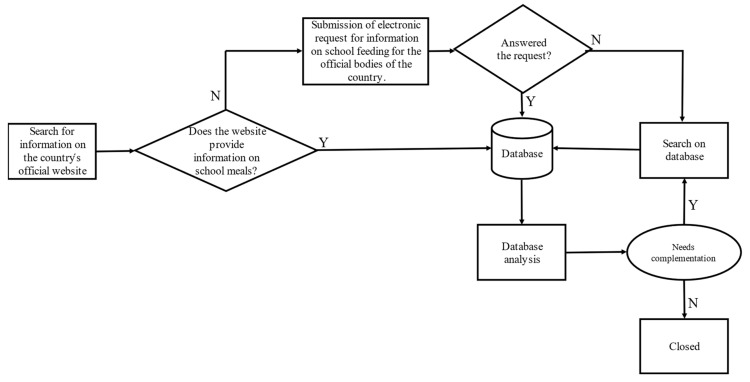
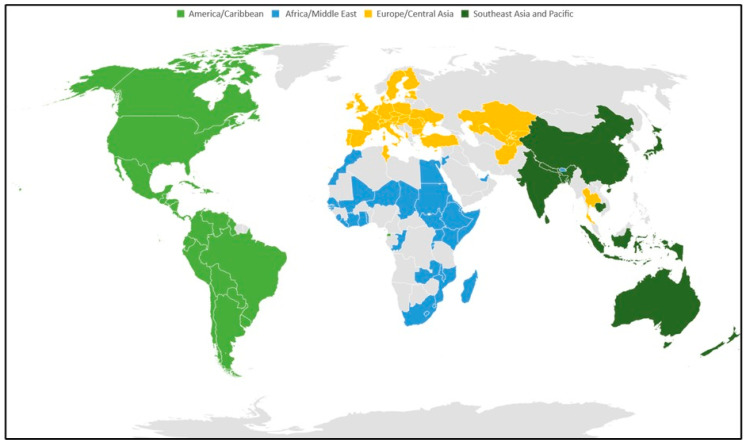
School feeding programs (SFPs) are an important effort to address food insecurity, improve nutritional education, and ultimately improve health outcomes. The objective of this research was to describe the nutritional, cultural, food safety, and agro-family participation of SFPs in different countries and observe the SFP in low-middle and high-income countries to establish disparities. The study followed documentary research of SFP official online resources complemented by a literature review. The programs were assessed in four criteria: (1) nutritional aspects, (2) cultural aspects, (3) food safety, and (4) agro-family participation. Out of 192 countries registered, 117 countries (60.93%) have an SFP, and only 8 (4.16%) do not have SFPs. A total of 67 countries (34.89%) did not have an official online resource and did not respond to follow-up emails. Out of the 117 countries with SFP, all of them had a detailed description of their nutritional aspects, cultural aspects (11.96%), food safety (16.23%), and agro-family participation (23.93%). Europe and Central Asia were the continents with the most comprehensive SFP. While most countries incorporate nutritional aspects and healthy food, cultural, food safety, and agro-family participation must be incorporated in their SPF to optimize children and adolescent development. Moreover, the study identified disparities across countries where the SFPs were identified in low-middle countries compared to middle- and high-income countries.
Overview
The claims and statistics of this paper haven’t been checked yet.
Free: it reads the open-access text and checks the first 5 claims that cite a source we can check. Create a free account to check every claim.
Integrity signals
Registry
Cites
Statistics
Figures
Verification
Claims the paper makes
The claims and statistics of this paper haven’t been checked yet.
Free: it reads the open-access text and checks the first 5 claims that cite a source we can check. Create a free account to check every claim.
Self-check
Percentages, sums and reported differences re-computed from the paper’s own numbers.
The self-check needs the paper’s full text.
Citations
Cites
Obesity: global epidemiology and pathogenesis
Blüher, M. (2019) · Nature Reviews Endocrinology · doi:10.1038/s41574-019-0176-8 · Cited by 5,126 · cited 1×
“It is understood that the world faces somewhat opposite problems: (1) an increase in obesity in developed countries [46] and (2) food shortages and malnutrition in developing countries.”
BackgroundAlimentação saudável e sustentável: uma revisão narrativa sobre desafios e perspectivas
Martinelli, S. S., & Cavalli, S. B. (2019) · Ciência & Saúde Coletiva · doi:10.1590/1413-812320182411.30572017 · Cited by 405 · cited 1×
“Food systems are processes that include agriculture, livestock, production processing, distribution, supply, marketing, preparation, and consumption of food and beverages [35].”
BackgroundJomaa, L. H., McDonnell, E., & Probart, C. (2011) · Nutrition Reviews · doi:10.1111/j.1753-4887.2010.00369.x · Cited by 290 · cited 1×
“Combating the triple burden of malnutrition–undernutrition, hidden, hunger, and obesity that plagues children, especially in developing countries, depends partly on the balanced meals provided at school [10].”
BackgroundOostindjer, M., Aschemann-Witzel, J., Wang, Q., Skuland, S. E., Egelandsdal, B., Amdam, G. V., Schjøll, A., Pachucki, M. C., Rozin, P., Stein, J., et al. (2017) · Critical Reviews in Food Science and Nutrition · doi:10.1080/10408398.2016.1197180 · Cited by 240 · cited 7×
“Children spend at least five hours at school, especially in low-middle income countries, and take their main meals [6].”
BackgroundInfluentialDocumentary Research Method: New Dimensions
Ahmed, J. U. (2010) · RePEc: Research Papers in Economics · Cited by 204
Berchin, I. I., Nunes, N. A., de Amorim, W. S., Zimmer, G. A. A., da Silva, F. R., Fornasari, V. H., Sima, M., & Guerra, J. B. S. O. D. A. (2019) · Land Use Policy · doi:10.1016/j.landusepol.2018.12.043 · Cited by 146 · cited 2×
“Thus, there is a suboptimal investment in the health and nutrition of school-age children and adolescents, which is an obstacle to their development [5,14].”
BackgroundZenebe, M., Gebremedhin, S., Henry, C. J., & Regassa, N. (2018) · The Italian Journal of Pediatrics/Italian journal of pediatrics · doi:10.1186/s13052-018-0449-1 · Cited by 137 · cited 1×
“Therefore, an up-to-date overview of their nutritional status is not available [12,24].”
BackgroundShamah‐Levy, T., Campos‐Nonato, I., Cuevas‐Nasú, L., Hernández-Barrera, L., Morales‐Ruán, M. D. C., Rivera, J. Á., & Barquera, S. (2019) · Salud Pública de México · doi:10.21149/10585 · Cited by 113
Maynard, D., Vidigal, M., Farage, P., Zandonadi, R., Nakano, E., & Botelho, R. (2020) · Sustainability · doi:10.3390/su12051804 · Cited by 110
Self-citationObesity and hypertension in Latin America: Current perspectives
Ruilope, L. M., Filho, A. C. B. N., Nadruz, W., Rosales, F. F. R., & Verdejo-París, J. (2018) · Hipertensión y Riesgo Vascular · doi:10.1016/j.hipert.2017.12.004 · Cited by 82
Frampton, A., Sisson, S. B., Horm, D. M., Campbell, J. E., Lora, K. R., & Ladner, J. L. (2013) · Journal of the Academy of Nutrition and Dietetics · doi:10.1016/j.jand.2013.09.025 · Cited by 66 · cited 1×
“Consequently, it becomes essential that school feeding programs offer healthy and nutritionally adequate meals [16], and thus knowing what each program prioritizes and how it is organized is fundamental to aligning overall decisions on the issue in question.”
BackgroundRodrigues, C. M., Bastos, L. G., Cantarelli, G. S., Stedefeldt, E., da Cunha, D. T., & Saccol, A. L. D. F. (2020) · Children and Youth Services Review · doi:10.1016/j.childyouth.2020.104920 · Cited by 35 · cited 2×
“These reactions can increase students’ absences from classes in the school environment affecting concentration and, consequently, school performance [33].”
BackgroundDrake, L. J., Lazrak, N., Fernandes, M., Chu, K., Singh, S., Ryckembusch, D., Nourozi, S., Bundy, D. A. P., & Burbano, C. (2020) · Frontiers in Public Health · doi:10.3389/fpubh.2020.530176 · Cited by 35
Atuação do Nutricionista no Programa Nacional de Alimentação Escolar na Região Sul do Brasil
Corrêa, R. D. S., Rockett, F. C., Rocha, P. B., da Silva, V. L., de Oliveira, V. R., & UFRGS, B. (2017) · Ciência & Saúde Coletiva · doi:10.1590/1413-81232017222.09622016 · Cited by 33 · cited 4×
“Despite encompassing the largest and oldest program globally, the NSLP in the US and PNAE in Brazil need to be further explored to meet the objectives of adequate school feeding.”
BackgroundInfluentialde Souza, A. A., Bezerra, O. M. D. P. A., Bonomo, E., da Silva, C. A. M., UFOP, B., & UFOP, B. (2017) · Ciência & Saúde Coletiva · doi:10.1590/1413-81232017222.12272016 · Cited by 31 · cited 3×
“Despite encompassing the largest and oldest program globally, the NSLP in the US and PNAE in Brazil need to be further explored to meet the objectives of adequate school feeding.”
BackgroundObjective assessment of compliance with a state-wide school food-service policy via menu audits
Myers, G., Sauzier, M., Ferguson, A., & Pettigrew, S. (2019) · Public Health Nutrition · doi:10.1017/s1368980019000156 · Cited by 30 · cited 1×
“Finally, the red group has no favorable nutritional value and contributes to an excessive amount of energy, total fat, sodium, and sugars [6,45].”
BackgroundCan School Feeding Programs Reduce Malnutrition in Rural China?
Wang, H., Zhao, Q., Boswell, M. J., & Rozelle, S. (2019) · Journal of School Health · doi:10.1111/josh.12849 · Cited by 29 · cited 1×
“Nevertheless, nutrition disparities across countries are complex underlying suboptimal school-based feeding programs that impact school performance and poor health outcomes [1,14,15].”
BackgroundBianchini, V. U., Martinelli, S. S., Soares, P., Fabri, R. K., & Cavalli, S. B. (2020) · Revista de Nutrição · doi:10.1590/1678-9865202033e190197 · Cited by 24 · cited 3×
“Considering the other characteristics analyzed in the programs, according to Botelho [28], healthy and adequate food must be based on eating practices that also consider the social and cultural aspects of the target population.”
BackgroundMethoddos Santos, S. L. (2012) · Ciência & Saúde Coletiva · doi:10.1590/s1413-81232012000200029 · Cited by 23
de Paiva, J. B., de Freitas, M. D. C. S., & Santos, L. A. D. S. (2016) · Ciência & Saúde Coletiva · doi:10.1590/1413-81232015218.07562015 · Cited by 22 · cited 1×
“A study identified that the acceptability of school menus is related to regional products, that is, “local products” [31].”
BackgroundAs formas de gestão do programa nacional de alimentação escolar (PNAE)
dos Santos, S. R., Costa, M. B. D. S., & de Paiva, G. T. (2016) · Revista de Salud Pública · doi:10.15446/rsap.v18n2.41483 · Cited by 20 · cited 1×
“In Brazil, for example, public school meals are free, 100% subsidized by the government [11].”
BackgroundPerspective: Interventions to improve the diets of children and adolescents
Morris, S. S., Barquera, S., Sutrisna, A., Izwardy, D., & Kupka, R. (2020) · Global Food Security · doi:10.1016/j.gfs.2020.100379 · Cited by 18
Identifier of Regional Food Presence (IRFP): A New Perspective to Evaluate Sustainable Menus
Ginani, V. C., Araújo, W. M. C., Zandonadi, R. P., & Botelho, R. B. A. (2020) · Sustainability · doi:10.3390/su12103992 · Cited by 17 · cited 1×
“Thus, school feeding programs must support sustainable development by encouraging the purchase of local food produced by producers in the region [41].”
BackgroundSelf-citationvalorização da sociobiodiversidade na alimentação escolar
Brito, T. P., Rocha, L. C. D., Hirata, A. R., Raimundo, R. R. F., & Galvão, L. O. (2020) · Segurança Alimentar e Nutricional · doi:10.20396/san.v27i0.8659632 · Cited by 14
Ginani, V. C., Ginani, J. S., Botelho, R. B. A., Zandonadi, R. P., Akutsu, R. D. C. C. D. A., & Araújo, W. M. C. (2010) · Journal of Culinary Science & Technology · doi:10.1080/15428052.2011.535758 · Cited by 12 · cited 2×
“Cultural elements are associated with the acceptability of food and can preserve agricultural habits of sustainable systems, maintenance of biodiversity, and sustainability [30].”
BackgroundSelf-citationBerthoud, M. (2017) · theses.fr (ABES) · doi:10.70675/d8c34340z6865z41e0zb9bfz906a0ed7dd85 · Cited by 11
Healthy eating at school: consensus among experts
Camargo, R. G. M., Caivano, S., Bandoni, D. H., & Domene, S. M. Á. (2016) · Revista de Nutrição · doi:10.1590/1678-98652016000600006 · Cited by 9 · cited 1×
“Sustainability being one of the recommendations for school feeding in the world [40].”
BackgroundAlimentação saudável sob o olhar da Educação Ambiental
Vieira, L. A., dos Santos, M. M. C., Vieira, T. A., Oliveira, J. D. S., & Alves, H. D. S. (2020) · Research Society and Development · doi:10.33448/rsd-v9i12.11237 · Cited by 8 · cited 1×
“The hegemonic development in the field based on agribusiness, on monoculture, and the use of pesticides has brought irreversible damage to the environment [36].”
BackgroundComparison of Two School Feeding Programmes in Ghana, West Africa
Owusu, J. S., Colecraft, E. K., Aryeetey, R., Vaccaro, J. A., & Huffman, F. G. (2016) · International Journal of Child Health and Nutrition · doi:10.6000/1929-4247.2016.05.02.2 · Cited by 7 · cited 1×
“However, countries such as Ethiopia, Malawi, Mozambique, Nigeria, and Senegal have benefited from FAO and WFP implementation programs to link local agriculture with school feeding through specific food procurement tools [5,6,25,26,43].”
BackgroundMain Regional Foods Offered in Northeast Brazilian Restaurants and Motives for Their Offer
Botelho, R. B. A., Araújo, W. M. C., & Zandonadi, R. P. (2020) · Journal of Culinary Science & Technology · doi:10.1080/15428052.2020.1777920 · Cited by 7 · cited 1×
“Ginani [29,30] described the importance of regional foods and ingredients in the Brazilian territory.”
BackgroundSelf-citationEnvironmental, social and health dimensions of food supply policies and proposals in Brazil
Pereira, D. S., & Recine, E. (2018) · Revista de Nutrição · doi:10.1590/1678-98652018000500007 · Cited by 2 · cited 2×
“Thus, this is the subject of one of the discussions in the world for the guarantee of the Sustainable Development Goals (SDGs) [37].”
BackgroundBetter nutrition, better lives: Countries’ positioning to fight all forms of malnutrition
Coutinho, J. G., Coitinho, D. C., & Recine, E. (2020) · Revista Panamericana de Salud Pública · doi:10.26633/rpsp.2020.126 · Cited by 1 · cited 2×
“2 billion people who do not have enough to eat in the world today [47].”
Background
Research works printed but not linked: 3
- World Health Organization (WHO) Nutrition Action in Schools: A Review of the Evidence Related to the Nutrition-Friendly Schools Initiative WHO Geneva, Switzerland 2020
- De Andrade S.R. Schmitt M.D. Storck B.C. Piccoli T. Ruoff A.B. Documentary analysis in nursing theses: Data collection techniques and research methods Cogitare Enferm. 2018 23 e53598
- dos Santos S.L. O fazer educação alimentar e nutricional: Algumas contribuições para reflexão [Making food and nutrition education: Some contributions for reflection] Cienc. E Saude Coletiva 2012 17 453 462 22267039
Cited by
Acceptability of School Menus: A Systematic Review of Assessment Methods
Santana, S. A., Batista, S. A., Maynard, D. D. C., Ginani, V. C., Zandonadi, R. P., & Botelho, R. B. A. (2023) · International Journal of Environmental Research and Public Health · doi:10.3390/ijerph20032242 · Cited by 39
“The 7-point scale was used in most studies from Italy (37.50%), the Philippines (100%), and Finland (100%).”
BackgroundInfluentialSelf-citationChaves, V. M., Rocha, C., Gomes, S. M., Jacob, M. C. M., & da Costa, J. B. A. (2023) · Sustainability · doi:10.3390/su15042863 · Cited by 17
School Feeding Programme Implementation and its Challenges in Basic Education Schools in Rwanda
de Dieu, H. J., Hashakimana, T., Ngendahayo, E., Mugiraneza, F., Abdou, M., Emmanuel, N., & Ke, Z. (2023) · African Educational Research Journal · doi:10.30918/aerj.113.23.037 · Cited by 13
“The study was guided by a descriptive research design that involved a cross-sectional research design (Cvetkovic-Vega et al., 2021).”
Ingestive Behavior and Precision Nutrition: Part of the Puzzle
Biruete, A., Buobu, P. S., Considine, R. V., Hoxha, E. M., Eicher‐Miller, H. A., Kinzig, K. P., Panjwani, A. A., Running, C. A., Rutigliani, G., Savaiano, D. A., et al. (2025) · Advances in Nutrition · doi:10.1016/j.advnut.2025.100531 · Cited by 7
“School lunch programs, which are widespread in many countries, provide affordable or free nutritious meals; efforts to provide culturally relevant and desirable meals are variable and ongoing [77 – 79].”
Ouedraogo, D., Compaoré, E. W. R., Ouédraogo, O., & Dicko, M. H. (2024) · BMC Nutrition · doi:10.1186/s40795-024-00896-0 · Cited by 6
“Until now, data on nutritional status and health have focused on adolescent girls over 15 and children under 5, as they are more vulnerable and more exposed to disease and death, not to mention the economic losses associated with poor nutritional status [12, 21, 30, 33].”
Background
Metadata
- Authors
- Cupertino, A., Ginani, V., Cupertino, A. P., & Botelho, R. B. A.
- Affiliations
- Universidade de Brasília (BR)
- Master’s Programs Public Health, Department of Nutrition, College of Health Sciences, University of Brasilia, Brasilia 70910-900, Brazil
- Corresponding author
- Cupertino, Alessandra
- Venue
- International Journal of Environmental Research and Public Health
- Publisher
- MDPI AG
- Published
- 2022-02-17
- Volume
- 19
- Issue
- 4
- Pages
- 2265
- ISSN
- 1660-4601 (ISSN-L)
- PMC
- PMC8871860
- OpenAlex
- W4212840204
- Semantic Scholar
- 4c62a242b231e58c63d28331bd02835548c1b37e
- Cited by
- 29
- References
- 32
- Citations by year
- 2026: 8 · 2025: 9 · 2024: 8 · 2023: 3 · 2022: 1
- FWCI
- 1.01
- Type
- journal article
- Language
- en
- Open access
- gold
- doi.org
- Licence
- Locations
- International Journal of Environmental Research and Public Health (publishedVersion, cc-by)
- PubMed Central (publishedVersion, cc-by)
- PubMed (publishedVersion)
- RePEc: Research Papers in Economics (submittedVersion)
- DOAJ (DOAJ: Directory of Open Access Journals) (submittedVersion, cc-by-sa)
- LA Referencia (Red Federada de Repositorios Institucionales de Publicaciones Científicas) (submittedVersion, cc-by)
- Topics
- Health Sciences › Medicine › Public Health, Environmental and Occupational Health › Food Security and Health in Diverse Populations
- Health Sciences › Nursing › Nutrition and Dietetics › Child Nutrition and Water Access
- Social Sciences › Development › Poverty, Education, and Child Welfare
- Keywords
- school feeding programs, food insecurity, child nutrition, food safety, nutrition education, low- and middle-income countries
- MeSH terms
- Adolescent, Child, Cognition, Europe, Humans, Income, Schools
About these checks
Registry, retraction, Cites and statistics results are computed, not judged, with one exception: a printed reference that no index lists is read once by a model before it counts as a citation error. Claims are extracted by a model and kept only when their quote appears verbatim in the text; each cited source is then checked, with a model’s help, for whether it says what the claim relies on. Those verdicts can be wrong — read the claim’s quote and the cited source before relying on one.
Statistics and arithmetic are recomputed, not judged.
Confidence bands are shown only for fields calibrated on our annotated test set. None is calibrated yet, so no band is shown.
What counts as a claim ›How we measure confidence ›How we check this ›
Are you an author, or do you see a problem with this page? Request a review
Data sources
Bibliographic data: Semantic Scholar, OpenAlex, Crossref.
Contains information from the Semantic Scholar Academic Graph Datasets, made available under the ODC Attribution License (ODC-BY 1.0).
Semantic Scholar’s data is described in: Kinney, R., et al. (2023). The Semantic Scholar Open Data Platform. arXiv:2301.10140.
