

The HIV Epidemic in South Africa: Key Findings from 2017 National Population-Based Survey
Open accessThe DOI matches its Crossref record; 40 of the 40 references it cites were found in a registry or an index.
Abstract
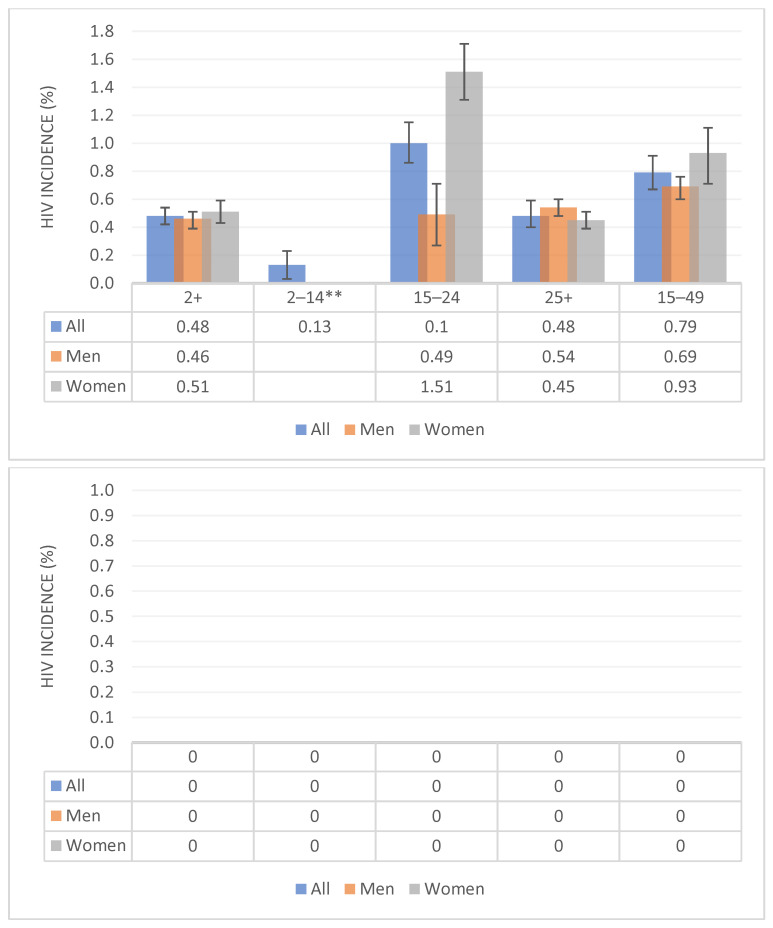
South Africa has the largest number of people living with HIV worldwide. South Africa has implemented five population-based HIV prevalence surveys since 2002 aimed at understanding the dynamics and the trends of the epidemic. This paper presents key findings from the fifth HIV prevalence, incidence, and behaviour survey conducted in 2017 following policy, programme, and epidemic change since the prior survey was conducted in 2012. A cross-sectional population-based household survey collected behavioural and biomedical data on all members of the eligible households. A total of 39,132 respondents from 11,776 households were eligible to participate, of whom 93.6% agreed to be interviewed, and 61.1% provided blood specimens. The provided blood specimens were used to determine HIV status, HIV incidence, viral load, exposure to antiretroviral treatment, and HIV drug resistance. Overall HIV incidence among persons aged 2 years and above was 0.48% which translates to an estimated 231,000 new infections in 2017. HIV prevalence was 14.0% translating to 7.9 million people living with HIV. Antiretroviral (ARV) exposure was 62.3%, with the lowest exposure among those aged 15 to 24 years (39.9%) with 10% lower ARV coverage among males compared to females. Viral suppression among those on treatment was high (87.3%), whilst HIV population viral load suppression was much lower (62.3%). In terms of risk behaviours, 13.6% of youth reported having had an early sexual debut (first sex before the age of 15 years), with more males reporting having done so (19.5%) than females (7.6%). Age-disparate relationships, defined as having a sexual partner 5+ years different from oneself,) among adolescents were more common among females (35.8%) than males (1.5%). Self-reported multiple sexual partnerships (MSPs), defined as having more than one sexual partner in the previous 12 months, were more commonly reported by males (25.5%) than females (9.0%). Condom use at last sexual encounter was highest among males than females. Three quarters (75.2%) of people reported they had ever been tested for HIV, with more females (79.3%) having had done so than males (70.9%). Two-thirds of respondents (66.8%) self-reported having tested for HIV in the past 12 months. Finally, 61.6% of males in the survey self-reported as having been circumcised, with circumcision being more common among youth aged 15-24 years (70.2%), Black Africans (68.9%), and those living in both rural informal (tribal) areas (65%) and urban areas (61.9%). Slightly more (51.2%) male circumcisions were reported to have occurred in a medical setting than in traditional settings (44.8%), with more young males aged 15-24 (62.6%) and men aged 25-49 (51.5%) reporting to have done so compared to most men aged 50 and older (57.1%) who reported that they had undergone circumcision in a traditional setting. The results of this survey show that strides have been made in controlling the HIV epidemic, especially in the reduction of HIV incidence, HIV testing, and treatment. Although condom use at last sex act remains unchanged, there continue to be some challenges with the lack of significant behaviour change as people, especially youth, continue to engage in risky behaviour and delay treatment initiation. Therefore, there is a need to develop or scale up targeted intervention programmes to increase HIV testing further and put more people living with HIV on treatment as well as prevent risky behaviours that put young people at risk of HIV infection.
Overview
The claims and statistics of this paper haven’t been checked yet.
Free: it reads the open-access text and checks the first 5 claims that cite a source we can check. Create a free account to check every claim.
Integrity signals
Registry
Cites
Statistics
Figures
Verification
Claims the paper makes
The claims and statistics of this paper haven’t been checked yet.
Free: it reads the open-access text and checks the first 5 claims that cite a source we can check. Create a free account to check every claim.
Claims other papers make about this one
Each is checked against this paper’s own text: does it say what the citing paper says it does?
The cited source doesn’t support the claim as written.
In the citing paper
“Only half of all patients with TB complete treatment and less than two-thirds with HIV achieve virological suppression on antiretroviral therapy (ART), with rates even lower among individuals with SU and other behavioral health concerns like depression (Naidoo et al., 2017; Zuma et al., 2022).”
From Siyakhana: A Hybrid Type 2 Effectiveness-Implementation Stepped-Wedge Trial to Reduce Stigma Towards Substance Use and Depression Among Community Health Workers in HIV/TB Care in South Africa (2025) · cites this paper as Zuma et al., 2022
Checked by a reasoning model — may be wrong.
Experimental — accuracy not yet measuredThe check wasn’t confident either way, so it gives no verdict — never disputed.
In the citing paper
“contribute to poor engagement in HIV and TB care in South Africa”
From Siyakhana: A Hybrid Type 2 Effectiveness-Implementation Stepped-Wedge Trial to Reduce Stigma Towards Substance Use and Depression Among Community Health Workers in HIV/TB Care in South Africa (2025) · cites this paper as Zuma et al., 2022
Experimental — accuracy not yet measured
Self-check
Percentages, sums and reported differences re-computed from the paper’s own numbers.
The self-check needs the paper’s full text.
Citations
Cites
Auvert, B., Taljaard, D., Lagarde, E., Sobngwi-Tambekou, J., Sitta, R., & Puren, A. (2005) · PLoS Medicine · doi:10.1371/journal.pmed.0020298 · Cited by 2,451
Male circumcision for HIV prevention in young men in Kisumu, Kenya: a randomised controlled trial.
Bailey, R. C., Moses, S., Parker, C. B., Agot, K., Maclean, I., Krieger, J. N., Williams, C. F., Campbell, R. T., & Ndinya-Achola, J. O. (2007) · The Lancet · doi:10.1016/s0140-6736(07)60312-2 · Cited by 2,292
Male circumcision for HIV prevention in men in Rakai, Uganda: a randomised trial.
Gray, R. H., Kigozi, G., Serwadda, D., Makumbi, F., Watya, S., Nalugoda, F., Kiwanuka, N., Moulton, L. H., Chaudhary, M. A., Chen, M. Z., et al. (2007) · The Lancet · doi:10.1016/s0140-6736(07)60313-4 · Cited by 2,226
Gosmann, C., Anahtar, M. N., Handley, S. A., Farcasanu, M., Abu-Ali, G., Bowman, B. A., Padavattan, N., Desai, C., Droit, L., Moodley, A., et al. (2017) · Immunity · doi:10.1016/j.immuni.2016.12.013 · Cited by 696
Zuma, K., Shisana, O., Rehle, T. M., Simbayi, L. C., Jooste, S., Zungu, N., Labadarios, D., Onoya, D., Evans, M., Moyo, S., et al. (2016) · African Journal of AIDS Research · doi:10.2989/16085906.2016.1153491 · Cited by 602
Self-citationFrank, T. D., Carter, A., Jahagirdar, D., Biehl, M. H., Douwes-Schultz, D., Larson, S. L., Arora, M., Dwyer-Lindgren, L., Steuben, K. M., Abbastabar, H., et al. (2019) · The Lancet HIV · doi:10.1016/s2352-3018(19)30196-1 · Cited by 568 · cited 1×
“5% yearly decrease in HIV deaths in South Africa from 2007–2017 [36].”
BackgroundAdolescent girls and young women: key populations for HIV epidemic control
Dellar, R. C., Dlamini, S., & Karim, Q. A. (2015) · Journal of the International AIDS Society · doi:10.7448/ias.18.2.19408 · Cited by 489 · cited 1×
“This dynamic is evidenced by the eight-fold risk of HIV infection amongst adolescent girls and young women compared to their male counterparts [23].”
Backgroundde Oliveira, T., Kharsany, A. B. M., Gräf, T., Cawood, C., Khanyile, D., Grobler, A., Puren, A., Madurai, S., Baxter, C., Karim, Q. A., et al. (2017) · The Lancet HIV · doi:10.1016/s2352-3018(16)30186-2 · Cited by 279 · cited 2×
“Women were more likely to report having had a sexual partner 5 years older than themselves, which has been shown to increase the risk of HIV among youth [19].”
BackgroundStigma-based bullying interventions: A systematic review
Earnshaw, V. A., Reisner, S. L., Menino, D. D., Poteat, V. P., Bogart, L. M., Barnes, T. N., & Schuster, M. A. (2018) · Developmental Review · doi:10.1016/j.dr.2018.02.001 · Cited by 274
Patient-reported barriers and facilitators to antiretroviral adherence in sub-Saharan Africa
Croome, N., Ahluwalia, M., Hughes, L. D., & Abas, M. (2017) · AIDS · doi:10.1097/qad.0000000000001416 · Cited by 198
Research works printed but not linked: 5
- Shisana O. Simbayi L. The Nelson Mandela/HSRC Study of HIV/AIDS: South African National HIV Prevalence, Behavioural Risks and Mass Media: Household Survey 2002 HSRC Press Cape Town, South Africa 2002
- Shisana O. Rehle T. Simbayi L. Parker W. Zuma K. Bhana A. Connolley C. Jooste S. South African National HIV Prevalence, HIV Incidence, Behaviour and Communication Survey, 2005 HSRC Press Cape Town, South Africa 2005
- Shisana O. Rehle T. Simbayi L.C. Zuma K. Jooste S. Pillay-Van Wyk V. Mbelle N. Van Zyl J. Parker W. Zungu N.P. South African National HIV Prevalence, Incidence and Communication Survey, 2008: A Turning Tide among Teenagers HSRC Press Cape Town, South Africa 2009
- Shisana O. Rehle T. Simbayi L.C. Zuma K. Jooste S. Zungu N. Labadarios D. Onoya D. South African National HIV Prevalence, Incidence and Behaviour Survey, 2012 HSRC Press Cape Town, South Africa 2014 27002359
- Simbayi L.C. Zuma K. Zungu N. Moyo S. Marinda E. Jooste S. Mabaso M. Ramlagan S. North A. van Zyl J. South African National HIV Prevalence, Incidence, Behaviour and Communication Survey, 2017 HSRC Press Cape Town, South Africa 2019
Cited by
Items 101–187 of 187
Mbetse, M. P., Chimbo, B., & Malungana, L. (2026) · Digital Health · doi:10.1177/20552076261443026 · Cited by 4
“23,24 Inconsistent condom use and poor adherence to HIV prevention methods elevate vulnerability to sexually transmitted infections.”
Ebogo‐Belobo, J. T., Kenmoe, S., Mikangue, C. A. M., Tchatchouang, S., Fogang, R. L., Takuissu, G. R., Ondigui, J. L. N., Bowo‐Ngandji, A., Kenfack‐Momo, R., Kengne-Ndé, C., et al. (2023) · World Journal of Critical Care Medicine · doi:10.5492/wjccm.v12.i5.264 · Cited by 1
Carbapenem Resistance among HIV-Infected Patients: A Scoping Review
Konar, K. D., Chetty, R. R., Konar, S., & Pillay, S. (2023) · Avicenna Journal of Clinical Microbiology and Infection · doi:10.34172/ajcmi.3505 · Cited by 1
Lippman, S. A., Grignon, J. S., Ditshwane, B., West, R. L., Gilmore, H. J., Mazibuko, S., Mongwe, L. G., Neilands, T. B., Gutin, S. A., O’Connor, C., et al. (2024) · JAIDS Journal of Acquired Immune Deficiency Syndromes · doi:10.1097/qai.0000000000003442 · Cited by 2
Clostridioides difficile infection and testing rates in South Africa: A multicentre study, 2017–2020
Nana, T., Ramjathan, P., Swe-Han, K. S., & Reddy, K. (2024) · Anaerobe · doi:10.1016/j.anaerobe.2024.102937 · Cited by 1
Mkhavele, B., Zondi, S., Cele, L. P., Mogale, N. M., & Mbelle, M. (2025) · South African Family Practice · doi:10.4102/safp.v67i1.6030 · Cited by 1
Mupfuti, R., Kabudula, C. W., & Francis, J. M. (2025) · Scientific Reports · doi:10.1038/s41598-025-91704-7 · Cited by 1
“Conversely, according to the 2017 National Population-Based Survey about 87% of those on HIV antiretroviral treatment achieved viral suppression 8 .”
InfluentialRisk factors for incident human immunodeficiency virus infection in South African blood donors
Swarts, A., van den Berg, K., Vermeulen, M., Jentsch, U., Creel, D. V., Swanevelder, R., Hemingway‐Foday, J., Murphy, E. L., & Custer, B. (2025) · Vox Sanguinis · doi:10.1111/vox.70071 · Cited by 1
“Among blood donors, we confirmed several known sexual risk factors for HIV in females and males reported from studies done in other settings outside of Africa [ 13, 14].”
Bergman, A., Relf, M. V., Mthinkhulu, N., Ndlouvu, N., Lowensen, K., & Farley, J. E. (2025) · AIDS and Behavior · doi:10.1007/s10461-025-04803-x · Cited by 1
Elsayed, B. S., Elmarasi, M., Mapahla, L., Madzime, R. J., ElBadway, M. M. S., & Chivese, T. (2023) · SSRN Electronic Journal · doi:10.2139/ssrn.4570488 · Cited by 1
Taylor-Robinson, A. W., & Liebenberg, L. J. P. (2023) · PubMed Central · doi:10.11604/pamj.2023.44.109.39039
“females in transactional relationships [4]; in Vietnam, infection foci are concentrated among men who have sex with men and people who inject drugs [5].”
BackgroundTsuro, U., Oladimeji, K. E., Pulido-Estrada, G.-A., & Apalata, T. R. (2023) · Healthcare · doi:10.3390/healthcare11131836 · Cited by 2
“2% [39] compared to the national HIV prevalence of 14% [40].”
BackgroundAN OVERVIEW OF HEALTH PROBLEMS IN CHILDREN IN TURKIYE AND AROUND THE WORLD
Sevil, Ü., Gürkan, A., DERMAN, S., YÜCEL, A. S., & Korkmaz, M. (2023) · Uluslararası hakemli akademik spor sağlık ve tıp bilimleri dergisi · doi:10.17363/sstb.2023/abcd89/.48.5
Mbengo, F., Adama, E. A., Towell‐Barnard, A., & Zgambo, M. (2023) · African Journal of AIDS Research · doi:10.2989/16085906.2023.2233496
“African Journal of AIDS Research is co-published by NISC , such as early sexual debut, unprotected (Visser, 2017; Zgambo et al., 2018; Simbayi et al., 2019; Zuma et al., 2022).”
BackgroundNardell, M. F., Govathson, C., Garnier, S., Watts, A., Babalola, D., Ngcobo, N., Long, L. C., Lurie, M. N., Miot, J., Pascoe, S. J. S., et al. (2023) · medRxiv · doi:10.1101/2023.08.23.23294421
Pillay, D., & Rapiti, N. (2023) · Journal of Primary Care & Community Health · doi:10.1177/21501319231194970
References and Further Reading
(2023) · Emerald Group Publishing Limited eBooks · doi:10.1108/978-1-83753-408-120231021
Psychotic experiences: Gift or illness?
van der Zeijst, M. C. E. (2023) · University of Groningen research database (University of Groningen / Centre for Information Technology) · doi:10.33612/diss.806987620
Olwagen, C. P., Jeche, T. R., der Merwe, L. V., Nunes, M. C., Madhi, S. A., & Baillie, V. L. (2023) · Scientific Reports · doi:10.1038/s41598-023-48045-0
Stockton, M. A., Mazinyo, E. W., Mlanjeni, L., et al. (2023) · Cambridge Prisms Global Mental Health · doi:10.1017/gmh.2023.89.pr14
Stockton, M. A., Mazinyo, E. W., Mlanjeni, L., et al. (2023) · Cambridge Prisms Global Mental Health · doi:10.1017/gmh.2023.89.pr13
Stockton, M. A., Mazinyo, E. W., Mlanjeni, L., et al. (2023) · Cambridge Prisms Global Mental Health · doi:10.1017/gmh.2023.89.pr12
Stockton, M. A., Mazinyo, E. W., Mlanjeni, L., et al. (2023) · Cambridge Prisms Global Mental Health · doi:10.1017/gmh.2023.89.pr10
Stockton, M. A. (2023) · Cambridge Prisms Global Mental Health · doi:10.1017/gmh.2023.89.pr11
Stockton, M. A., Mazinyo, E. W., Mlanjeni, L., et al. (2023) · Cambridge Prisms Global Mental Health · doi:10.1017/gmh.2023.89.pr9
Stockton, M. A., Mazinyo, E. W., Mlanjeni, L., et al. (2023) · Cambridge Prisms Global Mental Health · doi:10.1017/gmh.2023.89.pr8
Stockton, M. A., Mazinyo, E. W., Mlanjeni, L., et al. (2023) · Cambridge Prisms Global Mental Health · doi:10.1017/gmh.2023.89.pr7
Stockton, M. A. (2023) · Cambridge Prisms Global Mental Health · doi:10.1017/gmh.2023.89.pr6
Stockton, M. A., Mazinyo, E. W., Mlanjeni, L., et al. (2023) · Cambridge Prisms Global Mental Health · doi:10.1017/gmh.2023.89.pr5
Stockton, M. A., Mazinyo, E. W., Mlanjeni, L., et al. (2023) · Cambridge Prisms Global Mental Health · doi:10.1017/gmh.2023.89.pr4
Stockton, M. A., Mazinyo, E. W., Mlanjeni, L., et al. (2023) · Cambridge Prisms Global Mental Health · doi:10.1017/gmh.2023.89.pr3
Stockton, M. A., Mazinyo, E. W., Mlanjeni, L., et al. (2023) · Cambridge Prisms Global Mental Health · doi:10.1017/gmh.2023.89.pr2
Stockton, M. A. (2023) · Cambridge Prisms Global Mental Health · doi:10.1017/gmh.2023.89.pr1
van den Berg, K., Murphy, E. L., Maartens, G., Louw, V. J., & Grebe, E. (2024) · Vox Sanguinis · doi:10.1111/vox.13627
“…a blood transfusion service in a country with a background HIV prevalence of (cid:4) 13.9% [26] and estimated national incidence of 0.48% (in 2017) [15], ID-NAT testing was the biggest contributor in identifying misclassified cases as it identified both cases that had yet to seroconvert (and…”
BackgroundInfluentialSouth Africa's Struggle and Progress in Achieving Sustainable Development Goal 3Preprint
Mayavo, C., & Maphela, B. (2024) · SSRN Electronic Journal · doi:10.2139/ssrn.4795347
Kubheka, T. I. (2024) · ResearchSpace (University of KwaZulu-Natal) · doi:10.29086/10413/23007
Khan, A. (2024) · DUT Open Scholar (Durban University of Technology) · doi:10.51415/10321/5399
Akoury, N. A., Spinardi, J., Haridy, H., -Osman, N. M., Mphahlele, N., Mendoza, C. F., Yang, J., Aruffo, E., Kyaw, M. H., & Yarnoff, B. (2024) · Expert Review of Vaccines · doi:10.1080/14760584.2024.2396091 · Cited by 1
“…obesity-related inputs were informed by the World Obesity Federation [43], the smoking-related inputs were informed by Macrotrends [44], the chronic obstructive pulmonary disease-related inputs were informed by Abdool-Gaffar et al. [45], and the HIV-related inputs were informed by Zuma et al. [46].”
Macleod, C. I., & Mthethwa, T. (2024) · Sex Education · doi:10.1080/14681811.2024.2412666
“Module 4 discusses sexually transmitted infections, HIV and AIDS, HPV and cervical cancer.”
InfluentialMseba, P. (2024) · SOUTHERN AFRICAN JOURNAL OF SOCIAL WORK AND SOCIAL DEVELOPMENT · doi:10.25159/2708-9355/16138
Bessong, P. O., Tambe, L. A. M., & Redelinghuys, M. J. (2024) · South African Journal of Science · doi:10.17159/sajs.2024/20303
Bishwajit, G., & Yaya, S. (2024) · BMC Geriatrics · doi:10.1186/s12877-024-05416-0
“In general, individuals of Black and coloured background are more likely to experience poorer health status and lower quality of life than those from white or other communities [22–24].”
BackgroundMagut, F., Mazibuko, L., Mthiyane, N., Harling, G., Baisley, K. J., Zuma, T., Dreyer, J., Okesola, N., Behuhuma, N. O., Herbst, C., et al. (2024) · SSRN Electronic Journal · doi:10.2139/ssrn.5044986
Makhaye, N., Thembane, N., & Jaya, Z. N. (2025) · Student s Journal of Health Research Africa · doi:10.51168/sjhrafrica.v6i3.1563
Engelhardt, S., Morley, C., Rooyen, J. V., Thiart, F., Masemola, K., Boda, M., & Luvhengo, T. E. (2025) · Annals of Medicine and Surgery · doi:10.1097/ms9.0000000000003197
“This lies in contrast to the pre-pan-demic South African populational statistics where HIV prevalence is estimated to be at 17%, and patients on ART at 62.3% [ 27 ] .”
InfluentialHIV diagnosis in pregnancy: a yearn for psychosocial support amongst pregnant women
Makhavhu, E. M., Mahlangu, S. V., & Beer, A. G. M.-D. (2025) · AIDS Care · doi:10.1080/09540121.2025.2482657
“The HIV prevalence has increased in South Africa among the years, especially among the adult population (Zuma et al., 2022).”
Factors Associated With Recent HIV Infections Among Newly HIV Diagnosed in Rwanda
Remera, E., Chammartin, F., Nsanzimana, S., Malamba, S. S., Rwibasira, G. N., Riedel, D. J., Forrest, J. I., Mutesa, L., Ford, N., Ahmed, A., et al. (2025) · JAIDS Journal of Acquired Immune Deficiency Syndromes · doi:10.1097/qai.0000000000003669
Bhoora, U., An, Y., Owczarzak, J., Ndini, P., Moyo, D., Shelly, S., Marcus, T. S., Steiner, L., Corcoran, P. C., Pollock, S., et al. (2025) · Journal of Correctional Health Care · doi:10.1089/jchc.24.11.0096 · Cited by 1
“…the prevalence of HIV in correctional facilities is 17.7% – 25.3% compared with the overall population prevalence of 14% (Telisinghe et al., 2014; Zuma et al., 2022), whereas an estimated 10% – 20% of incarcerated people have an opioid use disorder compared with less than 1% in the general…”
InfluentialMagut, F., Mazibuko, L., Mthiyane, N., Harling, G., Baisley, K. J., Zuma, T., Dreyer, J., Okesola, N., Behuhuma, O., Herbst, C., et al. (2025) · AIDS · doi:10.1097/qad.0000000000004255
Regional Disparities and Emerging Topics in Human Milk Research Across Africa: A Scoping Review
Basha, M. M., Siziba, L. P., Hamid, R. O., & Genuneit, J. (2025) · Food Science & Nutrition · doi:10.1002/fsn3.70810
Trevor, M. M., & Skhosana, R. M. (2025) · Research Square · doi:10.21203/rs.3.rs-7538508/v1
Ballot, D. E., Bandini, R. M., & Ramdin, T. (2025) · BMC Research Notes · doi:10.1186/s13104-025-07488-6
“South Africa has the highest number of people living with HIV worldwide, with the highest burden in women of child-bearing age [8].”
Sigida, S. T., Makhado, L., & Makhado, T. G. (2025) · medRxiv · doi:10.1101/2025.09.29.25336917
Self-citationShangase, N., Tobaiwa, O., Cutler, E., Singh, B., Brukwe, Z., Pillay, E., Dorrell, P., Moyo, K., Zondi, L., Pillay, Y. G., et al. (2025) · AIDS and Behavior · doi:10.1007/s10461-025-04874-w
“South Africa in recent years [3] and DoxyPEP use has not been used in heterosexual males [36].”
Chhagan, U., Ntlantsana, V., Karim, E., Tomita, A. M., Chiliza, B., & Paruk, S. (2025) · Early Intervention in Psychiatry · doi:10.1111/eip.70107 · Cited by 1
Dreyer, G., Visser, C., Dreyer, G. J., Botha, M. H., der Merwe, F. H. V., Richter, K. L., & Snyman, L. C. (2024) · Figshare · doi:10.6084/m9.figshare.26718357
MYERS, B. J., Regenauer, K. S., Rose, A., Johnson, K., Ndamase, S., Ciya, N., Brown, I., Joska, J., Bassett, I. V., Belus, J. M., et al. (2024) · Figshare · doi:10.6084/m9.figshare.24934596
MYERS, B. J., Regenauer, K. S., Rose, A., Johnson, K., Ndamase, S., Ciya, N., Brown, I., Joska, J., Bassett, I. V., Belus, J. M., et al. (2024) · Figshare · doi:10.6084/m9.figshare.24934291
Bulled, N. L., Gumede, S. B., Musenge, E., & Lalla‐Edward, S. T. (2026) · Health & Place · doi:10.1016/j.healthplace.2026.103607
The unheard lived experiences of women living with HIV in Gauteng province, South Africa
Trevor, M. M., & Skhosana, R. M. (2026) · Discover Social Science and Health · doi:10.1007/s44155-026-00371-0
“The Province has one of the highest HIV prevalence rates, with approximately 64% of PLHIV being women [36].”
Retrospective analysis of CD4 trends at district levels in South Africa between 2013 and 2023
Cassim, N., da Silva, P., Glencross, D. K., Stevens, W. S., & Coetzee, L. M. (2026) · Southern African Journal of HIV Medicine · doi:10.4102/sajhivmed.v27i1.1772
“6,37 This work is the first known study to identify South Africa districts with higher than expected or, in some instances, rising proportions of patients with AHD that would have been otherwise masked by only examining provincial trends.”
Chimbindi, N., Magut, F., Ngema, U., Zulu, B., Seeley, J., Gibbs, A., Harrison, A. D., Davies, A., & Shahmanesh, M. (2026) · Wellcome Open Research · doi:10.12688/wellcomeopenres.25011.1
Fundisi, E., & Asori, M. (2026) · Scientific African · doi:10.1016/j.sciaf.2026.e03281
Nyoni, P., Gibbs, A., Mkhwanazi, S., & Tomita, A. M. (2026) · Psychology Health & Medicine · doi:10.1080/13548506.2026.2635751
“In 2017, 88 000 new HIV cases were recorded in youth aged 15–25, accounting for almost 40% of total new acquisitions that year (South Africa National AIDS Council [AIDS], 2022; Zuma et al., 2022).”
Transplantation Improves Patient Survival in a PD-first Program in South Africa
Manning, K., Freercks, R., Davids, M. R., Klein-Motsumi, B., Redd, A. D., Ensor, J., Mtingi-Nkonzombi, L., & Muller, E. (2026) · Transplantation Direct · doi:10.1097/txd.0000000000001914
Shimbre, M. S., Gibbs, A., Mthiyane, N., Dreyer, J., Chimbindi, N., Garrett, N., Tomita, A. M., & Shahmanesh, M. (2026) · AIDS Care · doi:10.1080/09540121.2025.2611339
Landman, J. H. C., & Minty, Y. (2026) · South African Journal of Psychiatry · doi:10.4102/sajpsychiatry.v32i0.2620
da Silva, A. G., Cavalcante, M. C. E., Xavier, J. D. S., Ferreira, B. C. R., Santos, M. B., Barreto, T. D. M., Nascimento, R. P. D. S., Carmo, R. N., & de Souza, C. D. F. (2026) · Discover Public Health · doi:10.1186/s12982-026-01726-3
Seleka, M., Ledibane, N. R. T., Mokhele, T., Zuma, K. K., Moyo, S., Jooste, S., & Musekiwa, A. (2026) · BMC Public Health · doi:10.1186/s12889-026-27068-y
“For analysis, racial categories White, Coloured, and Indian/Asian were combined as “Others” due to small sample size [21, 24].”
InfluentialSelf-citationMohamad, N., Thomas, K. G. F., Chernotsky, R., Robbins, R. N., Twamley, E. W., Vance, D. E., Nyembezi, N., Nhlabatsi-Khumalo, Z., & Gouse, H. (2026) · Frontiers in Neurology · doi:10.3389/fneur.2026.1741135
“Few, if any, have been developed or adapted for use with people living with HIV in low-or middle-income countries (LMICs) like South Africa, which has the highest incidence of HIV globally (46, 47).”
Stanton, A. M., Gulbicki, L. R., Bhardwaj, A., Fertig, M. R., Githaiga, J. N., Kabel, K. E., Gwangqa, L., Myer, L., Knight, L., O’Cleirigh, C. M., et al. (2026) · International Journal of Behavioral Medicine · doi:10.1007/s12529-026-10466-2 · Cited by 1
Mbatha, N. N., Mpofana, N., & Gumede, D. (2026) · PLOS Global Public Health · doi:10.1371/journal.pgph.0006423
“South Africa bears the world’s largest HIV burden, and young people remain disproportionately affected despite extensive national prevention programmes [1,2].”
Fortuin, T. L., Nkone, P., Loubser, S. A., Tiemessen, C. T., & Mayaphi, S. H. (2026) · Immunology · doi:10.1111/imm.70156
“The southern African region has been disproportionately affected and carries the highest burden of HIV-1 infections, with South Africa being the most affected with 7.8 million PLWHIV by the end of 2022 [4, 5].”
InfluentialNyasulu, J. C. Y., Badacho, A. S., Oduwole, E. O., & Tshabalala, M. F. (2026) · The Open AIDS Journal · doi:10.2174/0118746136463207260528222537
Mkono, L., Sineke, N., Dlatu, N., Hosu, M. C., Apalata, T., & Faye, L. (2026) · Frontiers in Public Health · doi:10.3389/fpubh.2026.1792518
“A retrospective cohort study was conducted using routinely collected tuberculosis (TB) and human immunodeficiency virus (HIV) program data from public healthcare facilities in a rural district of the Eastern Cape Province, South Africa.”
Okova, D., Lukwa, A. T., & Cunnama, L. (2026) · Value in Health Regional Issues · doi:10.1016/j.vhri.2026.101670
Tuberculosis in Pregnancy: Challenges of Immune Protection
Yengkhom, D., & Weinberg, A. (2026) · The Journal of Infectious Diseases · doi:10.1093/infdis/jiag345
“This difference may arise from the higher incidence of HIV in women than men in areas e222 • JID 2026:234 (15 August) • Yengkhom and Weinberg of high TB endemicity, like South Africa, associated with the force of HIV infection in driving active TB infection (ATBI) [5].”
Maguwu-Dzimiri, C. T. (2026) · Gender questions · doi:10.25159/2412-8457/21372
Why accurate risk stratification matters in HIV population modeling
Dimitrov, D., Matrajt, L., Ren, X., Stansfield, S. E., & Moore, M. (2026) · Mathematical Biosciences & Engineering · doi:10.3934/mbe.2026084
Smith, T., Mazibuko, L., Dlamini, S., Shelembe, N., Mtshali, N., Psaros, C., Shahmanesh, M., Seeley, J., & Ngwenya, N. B. (2026) · Health Literacy and Communication Open · doi:10.1080/28355245.2026.2682614
Late-onset versus young-onset rheumatoid arthritis in South Africans
Pawson, M., Winchow, L.-L., Tikly, M., & Govind, N. (2026) · Clinical Rheumatology · doi:10.1007/s10067-026-08338-x
Sangany, C. M., & Kabuya, K. E. (2026) · Advances in Bioscience and Biotechnology · doi:10.4236/abb.2026.178021
Sematlane, N. P., Campbell, L., Masquillier, C., Wouters, E., & Knight, L. (2026) · BMC Public Health · doi:10.1186/s12889-026-29431-5
Mmabatswa, M. M., Nkuna, A., Vanderdonck, K., Kebalepile, M. M., & Chakane, P. M. (2026) · BJA Open · doi:10.1016/j.bjao.2026.100891
“17,18 Prolonged operative duration was the variable most strongly associated with mortality.”
Mkhatshwa, N. O., Makgotloe, A., Buthelezi, T. E., & Anderson, C. D. (2026) · Journal of the Colleges of Medicine of South Africa · doi:10.4102/jcmsa.v4i1.404
Banda, L., Mokgatle, M. M., & Oladimeji, O. (2026) · JMIR Research Protocols · doi:10.2196/90426
Kuo, C., Stein, D. J., Gill, K., Liu, T., Mathews, C., Atujuna, M., Brown, L., Whiteley, L., Beardslee, W. R., Akande, M., et al. (2026) · AIDS and Behavior · doi:10.1007/s10461-026-05318-9
Metadata
- Authors
- Zuma, K., Simbayi, L., Zungu, N., Moyo, S., Marinda, E., Jooste, S., North, A., Nadol, P., Aynalem, G., Igumbor, E., Dietrich, C., Sigida, S., Chibi, B., Makola, L., Kondlo, L., Porter, S., Ramlagan, S., & on behalf of the SABSSM V Study Group Contributors
- Affiliations
- Human Sciences Research Council (ZA)
- Centers for Disease Control and Prevention (US)
- Corresponding author
- Zuma, Khangelani
- ORCID
- Venue
- International Journal of Environmental Research and Public Health
- Publisher
- MDPI AG
- Published
- 2022-07-01
- Volume
- 19
- Issue
- 13
- Pages
- 8125
- ISSN
- 1660-4601 (ISSN-L)
- PMC
- PMC9265818
- OpenAlex
- W4283796499
- Cited by
- 187
- References
- 39
- Citations by year
- 2026: 37 · 2025: 47 · 2024: 56 · 2023: 46
- FWCI
- 18.21
- Type
- journal article
- Language
- en
- Open access
- gold
- doi.org
- Licence
- Locations
- International Journal of Environmental Research and Public Health (publishedVersion, cc-by)
- PubMed Central (publishedVersion, cc-by)
- PubMed (publishedVersion)
- RePEc: Research Papers in Economics (submittedVersion)
- DOAJ (DOAJ: Directory of Open Access Journals) (submittedVersion)
- UWC Research Repository (University of the Western Cape) (submittedVersion)
- Funders
- President’s Emergency Plan for AIDS Relief (NU2GGH001629)
- Topics
- Health Sciences › Medicine › Infectious Diseases › HIV/AIDS Research and Interventions
- Social Sciences › Economics, Econometrics and Finance › Economics and Econometrics › HIV/AIDS Impact and Responses
- Health Sciences › Medicine › Epidemiology › HIV, Drug Use, Sexual Risk
- Keywords
- HIV, HIV prevalence, HIV incidence, antiretroviral treatment coverage, viral suppression, HIV drug resistance, HIV testing, HIV risk behavior, early sexual initiation, age-disparate relationships, multiple sexual partners, condom use, South Africa, gender differences, adolescents, young adults
- MeSH terms
- Adolescent, Aged, Cross-Sectional Studies, Female, Humans, Male, Middle Aged, Sexual Behavior, South Africa, HIV Infections, Prevalence, Anti-Retroviral Agents
About these checks
Registry, retraction, Cites and statistics results are computed, not judged, with one exception: a printed reference that no index lists is read once by a model before it counts as a citation error. Claims are extracted by a model and kept only when their quote appears verbatim in the text; each cited source is then checked, with a model’s help, for whether it says what the claim relies on. Those verdicts can be wrong — read the claim’s quote and the cited source before relying on one.
Statistics and arithmetic are recomputed, not judged.
Confidence bands are shown only for fields calibrated on our annotated test set. None is calibrated yet, so no band is shown.
What counts as a claim ›How we measure confidence ›How we check this ›
Are you an author, or do you see a problem with this page? Request a review
Data sources
Bibliographic data: Semantic Scholar, OpenAlex, Crossref.
Contains information from the Semantic Scholar Academic Graph Datasets, made available under the ODC Attribution License (ODC-BY 1.0).
Semantic Scholar’s data is described in: Kinney, R., et al. (2023). The Semantic Scholar Open Data Platform. arXiv:2301.10140.
