

Mindfulness-Based Intervention for the Reduction of Compassion Fatigue and Burnout in Nurse Caregivers of Institutionalized Older Persons with Dementia: A Randomized Controlled Trial
Open accessThe DOI matches its Crossref record; 68 of the 69 references it cites were found in a registry or an index.
Abstract
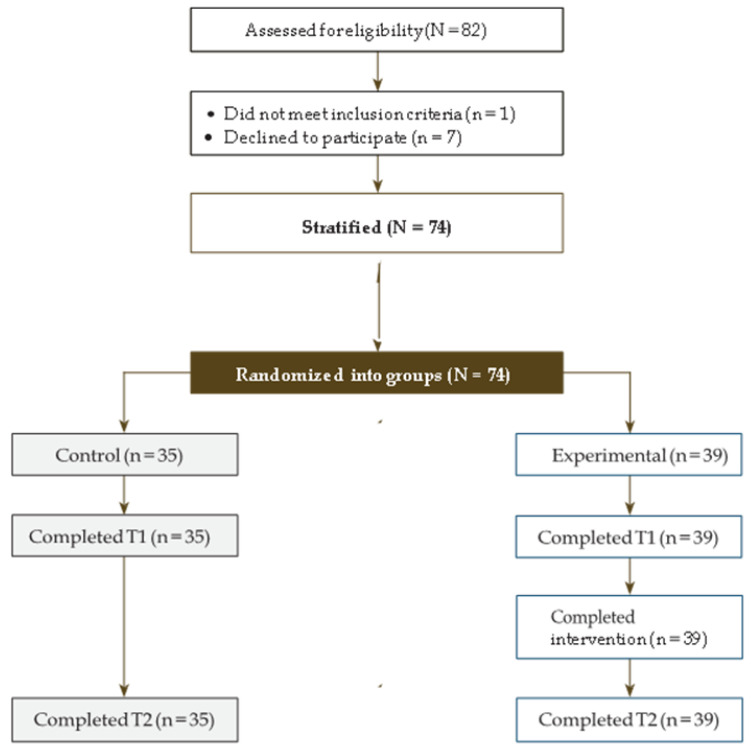
The recent COVID-19 pandemic has severely impacted the mental health of nurses caring for institutionalized older people. Caring in this environment can be complex, with higher levels of burnout and compassion fatigue in staff. It is therefore important to find interventions to increase the well-being of staff. Mindfulness training is known to be effective in treating a variety of physical and mental health conditions. This study sought to conduct a direct evaluation of the effectiveness of a combined online training in two types of mindfulness-based therapies for the reduction of compassion fatigue and burnout in geriatric nurses caring for institutionalized elderly people with dementia. In a randomized controlled trial (n = 39 experimental group, n = 35 control group), we explored whether individuals with high levels of burnout and compassion fatigue would benefit more from an online mindfulness training program. The outcome variable was the ProQoL professional quality of life scale, which was collected at baseline, at six weeks, and at three months after completion of the intervention. Significant differences were found between both groups for the subscales Compassion Fatigue and Burnout (p < 0.05), with a significant improvement in the experimental group (significant effect size). These findings were maintained at three months after the end of the intervention for both compassion fatigue (F1,28 = 18.14, p = 0.003) and burnout (F1,28 = 7.25, p = 0.040). However, there were no differences between groups for the satisfaction subscale. The effect of time and the effects of comparing the two groups after controlling for time were statistically significant for all three subscales of the questionnaire (all p values < 0.001), with effect sizes ranging from small to large (R2 change 0.10–0.47). These data indicate that the experimental condition was more effective, explaining between 10 and 18% more of the variance. A short, online intervention based on mindfulness training appears to be effective for reducing compassion fatigue and burnout in geriatric nurses, with sustained effects over time.
Overview
The claims and statistics of this paper haven’t been checked yet.
Free: it reads the open-access text and checks the first 5 claims that cite a source we can check. Create a free account to check every claim.
Integrity signals
Registry
Cites
Statistics
Figures
Verification
Claims the paper makes
The claims and statistics of this paper haven’t been checked yet.
Free: it reads the open-access text and checks the first 5 claims that cite a source we can check. Create a free account to check every claim.
Claims other papers make about this one
Each is checked against this paper’s own text: does it say what the citing paper says it does?
The source backs part of the claim, not all of it — or backs it for a different population, condition or comparison.
In the citing paper
“However, third-wave CBTs often involve combinations of multiple techniques such as cognitive restructuring, relaxation training, mindfulness meditation, and self-compassion exercises [12,27].”
From Effects of Third-Wave Cognitive Behavioral Therapy for Healthcare Professionals’ Burnout: A Systematic Review and Meta-Analysis (2025) · cites this paper as [27]
Experimental — accuracy not yet measured
Self-check
Percentages, sums and reported differences re-computed from the paper’s own numbers.
The self-check needs the paper’s full text.
Citations
Cites
The clinical use of mindfulness meditation for the self-regulation of chronic pain
Kabat-Zinn, J., Lipworth, L., & Burney, R. (1985) · Journal of Behavioral Medicine · doi:10.1007/bf00845519 · Cited by 1,745 · cited 3×
“In a recent and interesting study in Italian healthcare professionals evaluating baseline stress levels before and after the pandemic and the effect of Mindfulness-Based Stress Reduction (MBSR) training on well-being (PGWBI), stress (PSS), and burnout (MBI), the authors concluded that MBSR training may represent an ef…”
BackgroundMethodGu, J., Strauss, C., Bond, R., & Cavanagh, K. (2015) · Clinical Psychology Review · doi:10.1016/j.cpr.2015.01.006 · Cited by 1,712 · cited 1×
“MBIs are effective at improving many biopsychosocial conditions, such as depression, anxiety, stress, insomnia, addiction, psychosis, pain, hypertension, weight management, cancer-related symptoms, and prosocial behaviors [29,30].”
BackgroundMindfulness-based stress reduction for healthy individuals: A meta-analysis
Khoury, B., Sharma, M., Rush, S. E., & Fournier, C. (2015) · Journal of Psychosomatic Research · doi:10.1016/j.jpsychores.2015.03.009 · Cited by 1,617 · cited 1×
“A notable example is the equally popular Mindfulness-Based Cognitive Therapy (MBCT) program developed two decades ago [25,26].”
BackgroundCompassion fatigue: Psychotherapists’ chronic lack of self care.
Figley, C. R. (2002) · Journal of Clinical Psychology · doi:10.1002/jclp.10090 · Cited by 1,614 · cited 3×
“Later, Figley [12] defined compassion fatigue as a state of tension and preoccupation with clients’ individual or cumulative traumas.”
BackgroundInfluentialMindfulness-based interventions for psychiatric disorders: A systematic review and meta-analysis
Goldberg, S. B., Tucker, R. P., Greene, P. A., Davidson, R. J., Wampold, B. E., Kearney, D. J., & Simpson, T. L. (2018) · Clinical Psychology Review · doi:10.1016/j.cpr.2017.10.011 · Cited by 1,145 · cited 1×
“A literature review included a total of 142 non-overlapping samples and 12,005 participants [31].”
BackgroundJob Demands—Resources theory and self-regulation: New explanations and remedies for job burnout
Bakker, A. B., & de Vries, J. D. (2021) · Anxiety, Stress, & Coping · doi:10.1080/10615806.2020.1797695 · Cited by 1,131 · cited 1×
“Clearly, there is an increasing demand for wellness-support methods at work [17].”
BackgroundThe cognitive activation theory of stress.
Ursin, H., & Eriksen, H. R. (2004) · Psychoneuroendocrinology · doi:10.1016/s0306-4530(03)00091-x · Cited by 1,004 · cited 5×
“In a recent and interesting study in Italian healthcare professionals evaluating baseline stress levels before and after the pandemic and the effect of Mindfulness-Based Stress Reduction (MBSR) training on well-being (PGWBI), stress (PSS), and burnout (MBI), the authors concluded that MBSR training may represent an ef…”
BackgroundInfluentialFactors related to physician burnout and its consequences: a review
Patel, R. S., Bachu, R., Adikey, A., Malik, M., & Shah, M. (2018) · Behavioral Sciences · doi:10.3390/bs8110098 · Cited by 896 · cited 1×
“The negative consequences of not having adequate stress-coping strategies to deal with the demands of professional life have an impact on the health and mental well-being of the individual, as well as on their professional performance [2].”
BackgroundMuller, A. E., Hafstad, E. V., Himmels, J. P. W., Smedslund, G., Flottorp, S., Stensland, S. Ø., Stroobants, S., Van de Velde, S., & Vist, G. E. (2020) · Psychiatry Research · doi:10.1016/j.psychres.2020.113441 · Cited by 895
Fjorback, L. O., Arendt, M., Ørnbøl, E., Fink, P., & Walach, H. (2011) · Acta Psychiatrica Scandinavica · doi:10.1111/j.1600-0447.2011.01704.x · Cited by 803 · cited 1×
“MBIs are effective at improving many biopsychosocial conditions, such as depression, anxiety, stress, insomnia, addiction, psychosis, pain, hypertension, weight management, cancer-related symptoms, and prosocial behaviors [29,30].”
Background
Research works printed but not linked: 2
- Wagh-Gumaste S. Influence of Hindu Spiritual Teachers on Mindfulness-Based Stress Reduction (MBSR) of Jon Kabat-Zinn: Focusing on the Teachings of Sri Nisargadatta Maharaj and Sri Ramana Maharshi Int. J. South Asian Stud. 2022 12 1 18
- Belton S. Caring for the caregivers: Making the case for mindfulness-based wellness programming to support nurses and prevent staff turnover Nurs. Econ. 2018 36 191 195
Cited by
Individual-level interventions for reducing occupational stress in healthcare workers
Tamminga, S. J., Emal, L. M., Boschman, J. S., Levasseur, A., Thota, A. B., Ruotsalainen, J. H., Schelvis, R. M. C., Nieuwenhuijsen, K., & van der Molen, H. F. (2023) · Cochrane Database of Systematic Reviews · doi:10.1002/14651858.cd002892.pub6 · Cited by 194
Xie, W., Liu, M., Liu, F., 王佳琳, Okoli, C. T. C., Huang, S., Ye, X., Zeng, L., Wang, Y., & Wei, M. (2023) · International Journal of Nursing Studies · doi:10.1016/j.ijnurstu.2023.104613 · Cited by 78
Shiri, R., Nikunlaakso, R., & Laitinen, J. (2023) · Healthcare · doi:10.3390/healthcare11121792 · Cited by 65
“Other studies found that a 4-week brief mindfulness-based intervention decreased emotional exhaustion and depersonalization at three months follow-up among primary care physicians [60], a 6-week mindfulness stress reduction training reduced burnout at six weeks and three months post-intervention among nurses working a…”
BackgroundDou, J., Lian, Y., Lin, L., Asmuri, S. N., Wang, P., & Durai, R. A. P. R. (2025) · BMC Nursing · doi:10.1186/s12912-025-03101-0 · Cited by 71
“Among the 16 studies included in this study, three studies reported the high adherence [52, 56, 57]; 11 studies documented the implementer qualifications [51–55, 57, 58, 60, 61, 65, 66]; five studies provided participant high completion or attendance [58, 59, 62–64].”
InfluentialPatole, S., Pawale, D., & Rath, C. P. (2024) · Healthcare · doi:10.3390/healthcare12020171 · Cited by 42
Person-directed burnout intervention for nurses: A systematic review of psychoeducational approaches
Sharin, I. A., Jinah, N., Bakit, P. A., Adnan, I. K., Zakaria, N. H. B., Subki, S. Z. A., Zakaria, N., & Lee, K. Y. (2025) · PLoS ONE · doi:10.1371/journal.pone.0322282 · Cited by 30
“Only three studies described obstacles encountered in this review [36,51,54], including changes in hospital operations, challenges for participants in attending sessions due to time limitations, conflicting work schedules, increased workload, and the adjustment period required for transitioning to…”
InfluentialKang, Y., & Bang, C. H. (2024) · Healthcare · doi:10.3390/healthcare12181893 · Cited by 19
“The frequency and severity of problematic behaviors also emerged as significant predictors of nurses’ workload-related stress [33,36–38].”
BackgroundInfluentialCollett, G., Gupta, J., Eltayeb, A., Korszun, A., Sharples, L. D., Rice, K. M., & Gupta, A. K. (2025) · Annals of Internal Medicine · doi:10.7326/annals-25-00469 · Cited by 20
The silent strain beyond the screen: conceptualizing digital compassion fatigue in nursing
Hashish, E. A. A., & Alnajjar, H. A. (2025) · BMC Nursing · doi:10.1186/s12912-025-04143-0 · Cited by 16
“Extrapolating from these findings, similar strategies adapted to digital care contexts may offer a practical starting point for addressing DCF [15, 16].”
InfluentialManzanedo‐Moreno, M., Sampedro, C. S., Abajas‐Bustillo, R., Martín-Melón, R., Fernández‐Peña, R., & Ortego, C. (2025) · International Nursing Review · doi:10.1111/inr.70023 · Cited by 16
Shi, J. M., Wang, K., Yoo, D. W., Karkar, R., & Saha, K. (2025) · Proceedings of the ACM on Human-Computer Interaction · doi:10.1145/3757555 · Cited by 29
Shurab, W. M. E., Ibrahim, S. A. E.-A., abdelaleem, M. M., Gabal, S. A., & mohamed, T. R. (2024) · BMC Nursing · doi:10.1186/s12912-024-01976-z · Cited by 21
“These Findings are consistent with results reported by Elmawla et al. [14] who studied the effect of an educational program about authentic leadership and mind-fulness factors on head nurses practice self–evaluation among 70 nurse managers at Elmenshawy General Hospital and Kafer El sheikh General…”
BackgroundResultInfluentialKılıç, D., Taşar, P. T., & Cengiz, M. (2024) · Health Education Research · doi:10.1093/her/cyae005 · Cited by 12
Paudel, N. R., Prakash, K. C., Nygård, C., & Neupane, S. (2025) · Frontiers in Psychiatry · doi:10.3389/fpsyt.2024.1496205 · Cited by 24
刘美林, Guo, Y., Bai, J., Wang, Z., 韩继明, Zhu, J., & Wang, J. (2025) · Australian Critical Care · doi:10.1016/j.aucc.2025.101255 · Cited by 14
D’Antoni, F., Matiz, A., & Crescentini, C. (2025) · Healthcare · doi:10.3390/healthcare13020092 · Cited by 11
Li, A. C. M., Chio, F. H. N., Mak, W. W. S., Fong, T., Chan, S. H. W., Tran, Y. H. R., & Kakani, K. (2025) · Social Science & Medicine · doi:10.1016/j.socscimed.2025.117749 · Cited by 16
Herz, M., Bösl, S., & Gebhard, D. (2024) · BMC Nursing · doi:10.1186/s12912-024-01855-7 · Cited by 16
“%) reported significant improvements for a behavioral approach [81, 85, 89].”
BackgroundResultInfluentialInterventions for preventing or reducing nurse burnout: A systematic review and meta-analysis.
Jiménez-García, S., & Flor-Martínez, A. (2026) · International Journal of Nursing Studies · doi:10.1016/j.ijnurstu.2026.105391 · Cited by 10
Lipsa, J. M., Rajkumar, E., Gopi, A., & Romate, J. (2024) · Journal of Occupational Health · doi:10.1093/joccuh/uiae061 · Cited by 13
“The helping professionals included nurses ( n =39), 18-23, 33, The PIs included mindfulness-based interventions ( n =14), 15,16, 37,41,47,48,56,58,64,84,86,92,94,102 in which various studies adopted various principles of mindfulness.”
BackgroundMindfulness Bundle Toolkit’s Impact on Nurse Burnout
Bazan, G. N., Patterson, T., Sawyer, K., Kamau, D. W., Bradberry, M., Grissman, C., Mihandoust, S., Hernández‐Rivas, J. M., Stennett, C. R., & Long, J. D. (2025) · American Journal of Critical Care · doi:10.4037/ajcc2025260 · Cited by 10
Unveiling the burden of compassion fatigue in nurses
Taşdemir, H. İ., Aydın, R., Ergezen, F. D., Taşdemir, D., & Ergezen, Y. (2023) · Nursing Ethics · doi:10.1177/09697330231200571 · Cited by 15
“56 Indeed, these studies highlight the crucial importance of targeted interventions and support mechanisms in mitigating compassion fatigue among nurses facing similar crises, such as the COVID-19 pandemic.”
BackgroundMarotta, M., Grassi, N., Pingitore, A., Parlanti, A., Berti, S. L., & Vassalle, C. (2025) · Journal of Clinical Medicine · doi:10.3390/jcm14217655 · Cited by 6
“Some previous results analyzed in different meta-analyses provided evidence that mindfulness improves emotional regulation and psychosocial aspects in the general and working populations and in different categories of patients [41–44].”
Naskar, S., Dixit, S., Varadharasu, S., Pattnaik, J. I., & Singh, R. (2024) · Journal of Family Medicine and Primary Care · doi:10.4103/jfmpc.jfmpc_1713_23 · Cited by 5
“[17] The mindfulness methodology is used in MBIs, which are psychotherapeutic treatments.”
MethodHan, J.-H., Lee, M., Cha, C., & Baek, G. (2025) · Healthcare · doi:10.3390/healthcare13243253 · Cited by 3
“Among these, 13 studies included follow-up assessments [12,27,34,39,45,46,49–54 , 56] with”
Zhu, L., Xing, Y., Xu, W., Jia, H., Wang, X., Liu, S., & Ding, Y. (2025) · Journal of Medical Internet Research · doi:10.2196/53737 · Cited by 5
“Information on intervention providers, such as category, experience, background, and any specific training given, was f u l l y d e s c r i b e d i n o n l y 1 5 s t u d i e s [26,29,30,35,37,45-47, 50, 51, 54, 55 , 57-59 57-59].”
Interventions Addressing Compassion Fatigue Among Nurses: A Scoping Review
Pavithrakshmi, K. M., Chukkali, S., & Krishnamurthy, V. (2026) · Journal of Advanced Nursing · doi:10.1111/jan.70465 · Cited by 6
Lin, C. C., Marques, I. V. P., da Silva, G. C., da Silva, E. Q., Colombari, A. V., Júnior, J. R. A. D. N., & de Oliveira, D. V. (2024) · Fisioterapia em Movimento · doi:10.1590/fm.2024.37132 · Cited by 13
Ethical analysis of the change of values in healthcare
Hansen, D., Aleksandrova–Yankulovska, S., & Steger, F. (2025) · Nursing Ethics · doi:10.1177/09697330251319374 · Cited by 6
“17,61 Additionally, this process implies consequences for the whole society (Figure 3).”
InfluentialFan, L.-H., Wang, G.-H., Lei, J.-M., Shi, C. J., & Yi, L. (2025) · Geriatric Nursing · doi:10.1016/j.gerinurse.2025.05.011 · Cited by 7
Lin, C. C., Marques, I. V. P., da Silva, G. C., da Silva, E. Q., Colombari, A. V., Júnior, J. R. A. D. N., & de Oliveira, D. V. (2024) · Fisioterapia em Movimento · doi:10.1590/fm.2024.37132.0 · Cited by 2
Zhou, R., Chen, L.-L., & Lin, L.-D. (2025) · World Journal of Psychiatry · doi:10.5498/wjp.v15.i9.107630 · Cited by 5
Hsieh, C.-W., Sun, W., Chiang, H., Weng, S., Hsu, Y., Yu, E., & Hsu, H. (2025) · Applied Nursing Research · doi:10.1016/j.apnr.2025.152032 · Cited by 2
Proficient nurses' empathy in caring for people with dementia
Ishii, Y., Yao, L., Oyama, H., Fukazawa, Y., Toriumi, Y., & Takayanagi, C. (2025) · International Journal of Qualitative Studies on Health and Well-Being · doi:10.1080/17482631.2025.2608193 · Cited by 2
“Education using mindfulness (Wu et al., 2025) and virtual reality (Pérez et al., 2022) has been found to be effective at addressing the emotional challenges that nurses face in dementia care and at alleviating empathy fatigue and improving empathic attitudes.”
Zhou, X., Hu, D., Xiong, H., Zhou, H., Xu, H., & Tang, H. (2026) · Digital Health · doi:10.1177/20552076261433666 · Cited by 2
“36,37 The advancements in AI and machine learning within mHealth applications also present an area ripe for further exploration, as our analysis indicated limited research specifically discussing predictive analytics related to patient outcomes in HF and COPD.”
Csima, M., Podráczky, J., Cseh, S., Sipos, D., Garai, S., & Fináncz, J. (2024) · Healthcare · doi:10.3390/healthcare12080863 · Cited by 4
Yaxin, C., Lijiao, Y., Chen, Z., Ziteng, H., Fuqiang, Z., Zhenhong, L., Feng, L., Yixiang, L., Dai, X., Qianzi, C., et al. (2025) · Frontiers in Psychiatry · doi:10.3389/fpsyt.2024.1415113 · Cited by 2
Yıldırım, D., Yıldız, C. Ç., & Karaca, O. (2025) · Psychology Health & Medicine · doi:10.1080/13548506.2025.2451778 · Cited by 2
“…controlled experimental study evaluating the effect of a mindfulness-based stress reduction programme on reducing stress and compassion fatigue in nurses, it was reported that it reduced the levels of Compassion Fatigue and Burnout, and this effect continued even for 3 months (Pérez et al., 2022).”
Özçelik, A. G., Yılmaz, Z. U., Tural, E., & Dayan, A. (2025) · Discover Psychology · doi:10.1007/s44202-025-00394-9 · Cited by 1
“Particularly in the last two decades, studies conducted on healthcare professionals have demonstrated the positive effects of mindful-ness-based interventions on anxiety, stress, and burnout [9, 10].”
Maulana, I., Shalahuddin, I., Eriyani, T., & Pebrianti, S. (2025) · Journal of Multidisciplinary Healthcare · doi:10.2147/jmdh.s566502 · Cited by 3
“Mindfulness-based strategies—including breathing techniques, gratitude journaling, and heartfulness meditation— were the most frequently implemented, demonstrating consistent improvements in burnout, stress, anxiety, and psychological well-being; 26,30,31,36 .”
Friend, A. T., Anthony, B. F., Granger, R., Brioc, I., Hartfiel, N., & Edwards, R. T. (2026) · Behavioral Sciences · doi:10.3390/bs16020194 · Cited by 2
“…can alleviate stress, anxiety, and burnout while fostering greater compassion towards oneself and others (Fatemi et al., 2024; Ghawadra et al., 2020; Klatt et al., 2022; Knudsen et al., 2023; Pérez et al., 2022; Sos & Melton, 2023; Strauss et al., 2021; H. Taylor et al., 2022; Yang et al., 2018).”
Regan, K., Culverwell, R., Manzoor, K., Hill, J. E., & Gomez, K. U. (2026) · The British Journal of Social Work · doi:10.1093/bjsw/bcag019 · Cited by 1
Zhang, D., Chen, Y., Jia, Y., Liao, Q., Huang, L., & Yi, S. (2026) · Humanities and Social Sciences Communications · doi:10.1057/s41599-026-07029-x · Cited by 1
“…maintain psychological balance in high-stress work environments and adopt more adaptive coping strategies by enhancing emotional awareness, improving cognitive fl exibility, and reducing avoidance and over-identi fi cation with negative experiences (Li 2019, Perez et al. 2022, Ong et al. 2024).”
Faraji, C. P., & Onputtha, S. (2025) · Journal of Lifestyle and SDGs Review · doi:10.47172/2965-730x.sdgsreview.v5.n02.pe03824 · Cited by 1
FADIGA E QUALIDADE DE VIDA EM PROFISSIONAIS DE SAÚDE DA URGÊNCIA E EMERGÊNCIA
dos Santos, M. A., Luchesi, B. M., Facin, V. L., dos Santos, E. M., Toffano, S. E. M., Pereira, F. H., Azambuja, V. D. A., & Santos, V. B. (2024) · Texto & Contexto - Enfermagem · doi:10.1590/1980-265x-tce-2024-0114pt · Cited by 2
Síndrome de Burnout em acadêmicos de medicina: o que é, e como conduzi-la
de Moura, K. G. F. Z., CARMINATI, C. T., Pires, J. S., Guasti, F. D. P., Zanelato, Y. G., & Bongiovani, B. C. (2024) · Cuadernos de Educación y Desarrollo · doi:10.55905/cuadv16n2-ed.esp.083
Burnout during the COVID-19 pandemic: Modulating role of mindfulness
Sampei, M., & Morisaki, N. (2024) · Elsevier eBooks · doi:10.1016/b978-0-323-95650-5.00036-7
Fatiga por compasión en profesionales de oncología médica y radioterapia oncológica
Concepción, M. G., Bruzos, E. R., Villoria, M. B., Bierge, C., Tobajas, E., Porcar, E. T., & Blasco, T. B. (2024) · Psicooncología · doi:10.5209/psic.98173 · Cited by 1
Chen, M., Cai, Z., Xu, E., & Gong, D. (2025) · Asian Journal of Surgery · doi:10.1016/j.asjsur.2024.12.038
FATIGUE AND QUALITY OF LIFE IN EMERGENCY HEALTHCARE PROFESSIONALS
dos Santos, M. A., Luchesi, B. M., Facin, V. L., dos Santos, E. M., Toffano, S. E. M., Pereira, F. H., Azambuja, V. D. A., & Santos, V. B. (2024) · Texto & Contexto - Enfermagem · doi:10.1590/1980-265x-tce-2024-0114en · Cited by 1
Lifting Up Dementia Caregivers Through Faith Community Nursing
Hanna, K. J., Jared, B., Langford, M., & Rodoli, W. J. (2025) · Journal of Christian Nursing · doi:10.1097/cnj.0000000000001268
Pagpapayabong Program: Development and Effects on Resilience and Well-Being of Filipino Youth
Medina, J. I. J., & Vargas, M. A. S. (2025) · Journal of Loss and Trauma · doi:10.1080/15325024.2025.2539118
“Still, they are known to have sustained long-term effects (Pérez et al., 2022), making them comparable to the traditional implementation and models of mindfulness-based interventions.”
A prática da meditação na prevenção do Burnout em profissionais de saúde: Uma revisão integrativa
Silva, J. B. M. E., Canga, B. D. G., Nunes, R. G. R., Pereira, A. C. D., Marques, D. F., & Pereira, S. A. P. (2025) · Research Society and Development · doi:10.33448/rsd-v14i8.49316
Singh, P., Paniyadi, N. K., Jacob, J., Kumari, A. R., Lytton, R., & Harh, D. (2025) · Indian Journal of Palliative Care · doi:10.25259/ijpc_175_2025 · Cited by 2
Yanto, A., Pandin, M. G. R., & Kustriyani, M. (2025) · medRxiv · doi:10.1101/2025.09.07.25335259
Feng, M., Huang, Z., Zhang, Y., Xie, L., & Liu, X. (2025) · Research Square · doi:10.21203/rs.3.rs-7253913/v1
Achtsamkeitstraining bei Pflegefachpersonen in der Psychosomatik
Morgenstern, U., & Voß, S. (2025) · PPH · doi:10.1055/a-2633-7501
Sun, Q.-Q., Ke, F.-F., Zhou, H., Zhou, S., Lu, J., & Gao, M. (2025) · World Journal of Psychiatry · doi:10.5498/wjp.v15.i12.112655
Vivas, V. B., & Madregón, J. E. A. (2025) · Revista Colombiana de Psiquiatría · doi:10.1016/j.rcp.2025.07.005
Barrera-Algarín, E., Andrada, A. V., Martínez-Fernández, R., & Castro-Ibáñez, R. (2025) · International Social Work · doi:10.1177/00208728251390040
“CF appears suddenly, characterised by feelings of hopelessness (Pérez et al., 2022), and stems directly from vicarious exposure to patient suffering.”
Suwardianto, H., Santoso, T., Mahyuvi, T., Alfianto, A. G., Amaral, O. D. B., Pinto, J., & Kumar, S. (2025) · International Journal of Health Concord · doi:10.55018/ihc.v12.21 · Cited by 2
“…health institutions should develop spiritual reflection and mindfulness training programs for nurses (Cohen et al., 2023; Green & Kinchen, 2021; Pe rez et al., 2022), especially to improve aspects that have a significant relationship with working hours, such as Personal Meaning Production and…”
Compassion fatigue and resilience in palliative care nursing practice: systematic review
Jadhav, H. R., Pritika, Dileep, E. T., Umar, M., Pratap, A., Pillai, A. K. R., Ozukum, S. T., Suhashini, Rathore, K. S., & Kawar, A. J. (2025) · International Journal of Research in Medical Sciences · doi:10.18203/2320-6012.ijrms20254387
Neurotransmitters, emotions, and well-being vs. burnout in nurses: a scoping reviewPreprint
Pinto, V., Seixas, M. F., Braga, R. J. V. D. A., & Diogo, P. (2026) · Research Square · doi:10.21203/rs.3.rs-8377718/v1
Zeng, R., Zeng, Y., Li, M., Huangfu, Z., Zhang, X., Wang, S., & Liao, H. (2026) · Worldviews on Evidence-Based Nursing · doi:10.1111/wvn.70111
II Encuentro presencial de la red de programas de doctorado en Ciencias de la Salud
Montaño, V. S., Leiva, M. G., & Landa, S. U. (2026) · Universidad de Burgos eBooks · doi:10.36443/9791387585273
An intervention to reduce burnout and fatigue of health care chaplains: a pilot study
Larson, E., Creech, G., Heistand, K. K., Lovejoy, L. A., Nowicki, K. M., Soroka, J. T., & Vlasaty, D. R. (2026) · Journal of Health Care Chaplaincy · doi:10.1080/08854726.2026.2663701
“Research has also shown that interventions can reduce negative consequences of a stressful work environment for medical staff, allowing them to restore performance quality (Aryankhesal et al., 2019; Perez et al., 2022; Tamminga et al., 2023).”
Liu, X., Wang, H., Tian, S., Guo, X., & Cao, H. (2026) · International Journal of Nursing Studies · doi:10.1016/j.ijnurstu.2026.105622 · Cited by 2
Feng, M., Huang, Z. H., Zhang, Y., Xie, L., & Liu, X. (2026) · BMJ Open · doi:10.1136/bmjopen-2025-113569
“Consequently, the establishment of systematic support systems—such as resilience training, structured peer support and mindfulness-based interventions—to aid nurses in developing more adaptive cognitive patterns and proactive coping strategies may be of practical importance for the prevention and…”
D’Antoni, F., Matiz, A., & Crescentini, C. (2026) · PSICOLOGIA DELLA SALUTE · doi:10.3280/pds2026-002005 · Cited by 1
Wu, C., Zhang, L., & Xu, X. (2026) · International Nursing Review · doi:10.1111/inr.70245
Li, R., Zhang, B., Qiao, Y., & Zhu, L. (2026) · Journal of Alzheimer s Disease · doi:10.1177/13872877261488017
“18 Limited by cross-sectional design, this study cannot distinguish the bidirectional correlation between neuropsychiatric symptoms and daily living ability: aggravated daily living dependence may also further worsen patients ’ neuropsychiatric symptoms.”
González-Spinoglio, L., Tormo, M. E., Giné-Vázquez, I., Rodeiro-Boliart, J., Aguilar-Ortiz, S., Ayuso‐Mateos, J. L., McGreevy, K. R., Mediavilla, R., Roos, R., Sijbrandij, M., et al. (2026) · Depression and Anxiety · doi:10.1155/da/5875889
Matias, M., & Rosa, P. J. (2026) · Behavioral Sciences · doi:10.3390/bs16101821
“Accumulating evidence indicates that MBIs can reduce symptoms of depression, anxiety, stress, and burnout, supporting their use across both clinical and occupational contexts (Pérez et al., 2022).”
Han, Y., He, J., Wang, Q., & Tang, Y. (2026) · Frontiers in Psychiatry · doi:10.3389/fpsyt.2026.1967611
“Voluntary resilience or mindfulness programs may add value (18, 19).”
InfluentialAndrews, S., Edwards, K., Stirling, C., Lees, D., van Dam, P., Klatt, M. D., Caputo, J., Kornhaber, R. A., & Williams, P. (2026) · Frontiers in Health Services · doi:10.3389/frhs.2026.1813706
“Evidence for mindfulness interventions in RAC remains limited, although one trial among nurses caring for older people with dementia in residential care reported reductions in compassion fatigue and burnout (28).”
Vivas, V. B., & Madregón, J. E. A. (2026) · Revista Colombiana de Psiquiatría (English ed ) · doi:10.1016/j.rcpeng.2026.10.003
Metadata
- Authors
- Pérez, V., Menéndez-Crispín, E. J., Sarabia-Cobo, C., de Lorena, P., Fernández-Rodríguez, A., & González-Vaca, J.
- Affiliations
- Institute CR Santa Lucía, 28001 Madrid, Spain
- Centro Interdisdiplinar de Psicoterapia, 28001 Madrid, Spain
- Facultad de Enfermería, IDIVAL, Universidad de Cantabria, Avda Valdecilla s/n, 39011 Santander, Spain
- CAD Santander, IDIVAL, 39008 Santander, Spain
- Institut d'Investigació Biomédica de Bellvitge (ES)
- Venue
- International Journal of Environmental Research and Public Health
- Publisher
- MDPI AG
- Published
- 2022-09-11
- Volume
- 19
- Issue
- 18
- Pages
- 11441
- ISSN
- 1660-4601 (ISSN-L)
- PMC
- PMC9517410
- OpenAlex
- W4296280357
- Semantic Scholar
- b0cf5ad9969a4f37b991d889bd7b0f38fb928573
- Cited by
- 77
- References
- 69
- Citations by year
- 2026: 20 · 2025: 35 · 2024: 18 · 2023: 4
- FWCI
- 13.02
- Type
- journal article
- Language
- en
- Open access
- gold
- doi.org
- Licence
- Locations
- International Journal of Environmental Research and Public Health (publishedVersion, cc-by)
- PubMed Central (publishedVersion, cc-by)
- PubMed (publishedVersion)
- RePEc: Research Papers in Economics (submittedVersion)
- Dipòsit Digital de la Universitat de Barcelona (Universitat de Barcelona) (submittedVersion, cc-by)
- DOAJ (DOAJ: Directory of Open Access Journals) (submittedVersion)
- UCrea (University of Cantabria) (submittedVersion, cc-by)
- Topics
- Social Sciences › Psychology › Clinical Psychology › Mindfulness and Compassion Interventions
- Health Sciences › Medicine › Public Health, Environmental and Occupational Health › Occupational Health and Burnout
- Social Sciences › Psychology › Social Psychology › Stress and Burnout Research
- Keywords
- mindfulness-based interventions, compassion fatigue, burnout, geriatric nurses, dementia care, online training, professional quality of life, nurse well-being, COVID-19 pandemic, sustained effects
- MeSH terms
- Compassion Fatigue, COVID-19, Aged, Aged, 80 and over, Burnout, Professional, Dementia, Empathy, Humans, Job Satisfaction, Quality of Life, Surveys and Questionnaires, Caregivers, Pandemics, Mindfulness
About these checks
Registry, retraction, Cites and statistics results are computed, not judged, with one exception: a printed reference that no index lists is read once by a model before it counts as a citation error. Claims are extracted by a model and kept only when their quote appears verbatim in the text; each cited source is then checked, with a model’s help, for whether it says what the claim relies on. Those verdicts can be wrong — read the claim’s quote and the cited source before relying on one.
Statistics and arithmetic are recomputed, not judged.
Confidence bands are shown only for fields calibrated on our annotated test set. None is calibrated yet, so no band is shown.
What counts as a claim ›How we measure confidence ›How we check this ›
Are you an author, or do you see a problem with this page? Request a review
Data sources
Bibliographic data: Semantic Scholar, OpenAlex, Crossref.
Contains information from the Semantic Scholar Academic Graph Datasets, made available under the ODC Attribution License (ODC-BY 1.0).
Semantic Scholar’s data is described in: Kinney, R., et al. (2023). The Semantic Scholar Open Data Platform. arXiv:2301.10140.
