

Influence of One Hour versus Two Hours of Daily Static Stretching for Six Weeks Using a Calf-Muscle-Stretching Orthosis on Maximal Strength
Open accessThe DOI matches its Crossref record; 52 of the 52 references it cites were found in a registry or an index.
Abstract
Rebuilding strength capacity is of crucial importance in rehabilitation since significant atrophy due to immobilization after injury and/or surgery can be assumed. To increase maximal strength (MSt), strength training is commonly used. The literature regarding animal studies show that long-lasting static stretching (LStr) interventions can also produce significant improvements in MSt with a dose–response relationship, with stretching times ranging from 30 min to 24 h per day; however, there is limited evidence in human studies. Consequently, the aim of this study is to investigate the dose–response relationship of long-lasting static stretching on MSt. A total of 70 active participants (f = 30, m = 39; age: 27.4 ± 4.4 years; height: 175.8 ± 2.1 cm; and weight: 79.5 ± 5.9 kg) were divided into three groups: IG1 and IG2 both performed unilateral stretching continuously for one (IG1) or two hours (IG2), respectively, per day for six weeks, while the CG served as the non-intervened control. MSt was determined in the plantar flexors in the intervened as well as in the non-intervened control leg to investigate the contralateral force transfer. Two-way ANOVA showed significant interaction effects for MSt in the intervened leg (ƞ2 = 0.325, p < 0.001) and in the contralateral control leg (ƞ2 = 0.123, p = 0.009), dependent upon stretching time. From this, it can be hypothesized that stretching duration had an influence on MSt increases, but both durations were sufficient to induce significant enhancements in MSt. Thus, possible applications in rehabilitation can be assumed, e.g., if no strength training can be performed, atrophy could instead be reduced by performing long-lasting static stretch training.
Overview
The claims and statistics of this paper haven’t been checked yet.
Free: it reads the open-access text and checks the first 5 claims that cite a source we can check. Create a free account to check every claim.
Integrity signals
Registry
Cites
Statistics
Figures
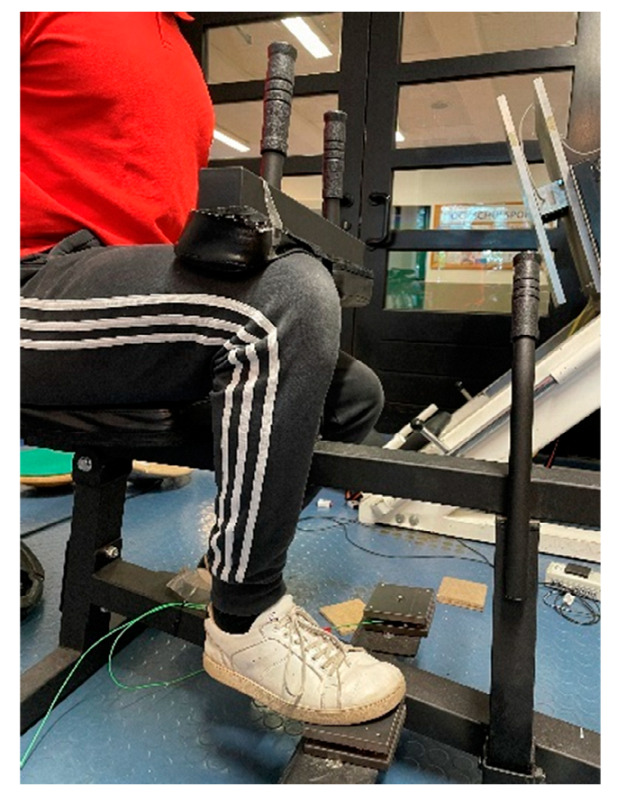
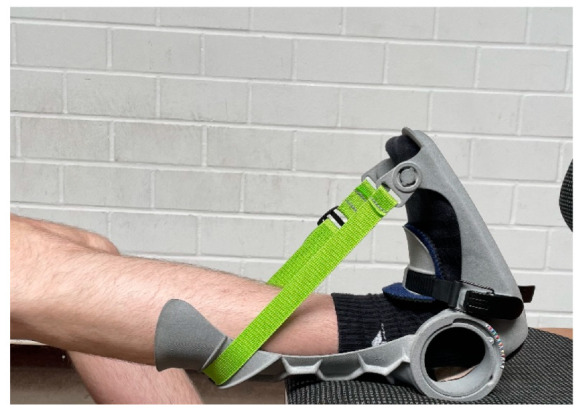
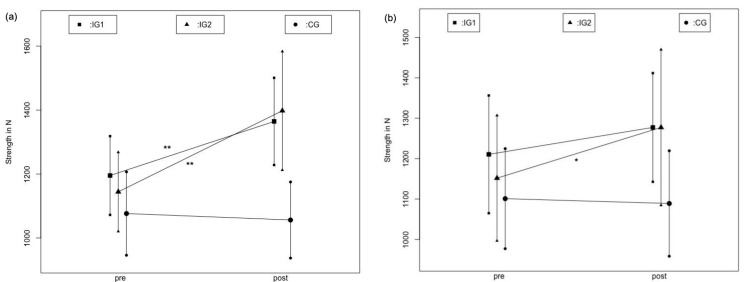
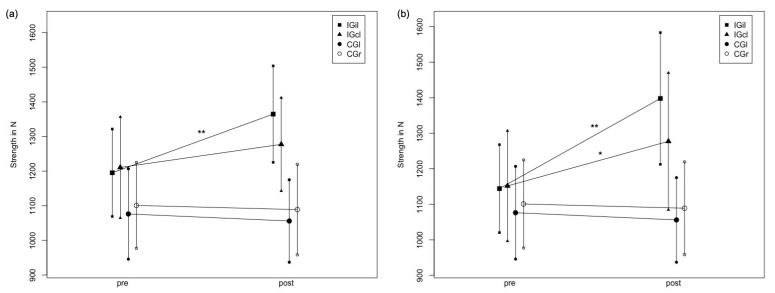
Verification
Claims the paper makes
The claims and statistics of this paper haven’t been checked yet.
Free: it reads the open-access text and checks the first 5 claims that cite a source we can check. Create a free account to check every claim.
Claims other papers make about this one
Each is checked against this paper’s own text: does it say what the citing paper says it does?
The source backs part of the claim, not all of it — or backs it for a different population, condition or comparison.
In the citing paper
“recent research illustrates that prolonged static stretching can produce muscle strength and hypertrophy benefits [143–145] with minimal intensity of effort (vs. minimal time concerns).”
From Minimalist Training: Is Lower Dosage or Intensity Resistance Training Effective to Improve Physical Fitness? A Narrative Review (2024) · cites this paper as [143]
Experimental — accuracy not yet measuredThe source backs part of the claim, not all of it — or backs it for a different population, condition or comparison.
In the citing paper
“Warneke et al. [165] conducted long duration stretching studies in humans, stretching the plantar flexors for up to two continuous hours per day using an orthotic stretching device [166, 167], and found significant, large magnitude increases in muscle strength (22.9%, d = 0.91) and hypertrophy (15.2%, d = 0.84).”
From Minimalist Training: Is Lower Dosage or Intensity Resistance Training Effective to Improve Physical Fitness? A Narrative Review (2024) · cites this paper as [166]
Experimental — accuracy not yet measured
Self-check
Percentages, sums and reported differences re-computed from the paper’s own numbers.
The self-check needs the paper’s full text.
Citations
Cites
Borde, R., Hortobágyi, T., & Granacher, U. (2015) · Sports Medicine · doi:10.1007/s40279-015-0385-9 · Cited by 737 · cited 1×
“While low intensities seem to be sufficient to induce hypertrophy [7,8], a load intensity of 60–80% of the one-repetition maximum (1RM) is generally recommended as an appropriate method to achieve both MSt and muscle hypertrophy [4,9].”
MethodLixandrão, M. E., Ugrinowitsch, C., Berton, R., Vechin, F. C., Conceição, M. S., Damas, F., Libardi, C. A., & Roschel, H. (2018) · Sports Medicine · doi:10.1007/s40279-017-0795-y · Cited by 554 · cited 1×
“Additionally, there are investigations showing that training with low load intensities, but with the addition of blood-flow restriction, led to muscular hypertrophy as well as increases in MSt [7,46].”
BackgroundDel Vecchio, A., Casolo, A., Negro, F., Scorcelletti, M., Bazzucchi, I., Enoka, R., Felici, F., & Farina, D. (2019) · The Journal of Physiology · doi:10.1113/jp277250 · Cited by 436 · cited 2×
“However, increased MSt in the first weeks of training are commonly related to neuronal aspects [42,43], while morphological changes might be of minor relevance.”
BackgroundSchoenfeld, B. J., Peterson, M. D., Ogborn, D., Contreras, B., & Sonmez, G. T. (2015) · Journal of Strength and Conditioning Research · doi:10.1519/jsc.0000000000000958 · Cited by 418 · cited 2×
“From this, it can be hypothesized that high intensities seem to be more beneficial to achieve improvements in MSt [8,10].”
BackgroundMethodStimuli and sensors that initiate skeletal muscle hypertrophy following resistance exercise
Wackerhage, H., Schoenfeld, B. J., Hamilton, D. L., Lehti, M., & Hulmi, J. J. (2019) · Journal of Applied Physiology · doi:10.1152/japplphysiol.00685.2018 · Cited by 357
Peterson, M. D., Rhea, M. R., & Alvar, B. A. (2005) · The Journal of Strength and Conditioning Research · doi:10.1519/r-16874.1 · Cited by 303 · cited 1×
“In addition to applications in rehabilitation, there is a potential use for astronauts, since time in a weightless environment results in atrophy effects and conventional strength training with external weights seems unfeasible in implementation [52,53].”
BackgroundKrzysztofik, M., Wilk, M., Wojdała, G., & Gołaś, A. (2019) · International Journal of Environmental Research and Public Health · doi:10.3390/ijerph16244897 · Cited by 264 · cited 1×
“While low intensities seem to be sufficient to induce hypertrophy [7,8], a load intensity of 60–80% of the one-repetition maximum (1RM) is generally recommended as an appropriate method to achieve both MSt and muscle hypertrophy [4,9].”
MethodChronic neural adaptations to unilateral exercise: mechanisms of cross education.
Zhou, S. (2000) · PubMed · Cited by 232
Holm, L., Reitelseder, S., Pedersen, T. G., Doessing, S., Petersen, S. G., Flyvbjerg, A., Andersen, J. L., Aagaard, P., & Kjaer, M. (2008) · Journal of Applied Physiology · doi:10.1152/japplphysiol.90538.2008 · Cited by 218 · cited 1×
“From this, it can be hypothesized that high intensities seem to be more beneficial to achieve improvements in MSt [8,10].”
BackgroundSola, O. M., Christensen, D. L., & Martin, A. W. (1973) · Experimental Neurology · doi:10.1016/0014-4886(73)90182-9 · Cited by 182 · cited 3×
“mechanical-induced structural changes are confirmed by the results of a variety of animal studies [40], showing significant increases in muscle mass, the muscle cross-sectional area and the fiber cross-sectional area due to chronic stretching interventions: “It is Stretch that causes the Hypertrophy of Muscle” ([41] p.”
Result
Cited by
Resistance Training Induces Improvements in Range of Motion: A Systematic Review and Meta-Analysis
Alizadeh, S., Daneshjoo, A., Zahiri, A., Anvar, S. H., Goudini, R., Hicks, J. P., Konrad, A., & Behm, D. G. (2023) · Sports Medicine · doi:10.1007/s40279-022-01804-x · Cited by 99
Physiology of Stretch-Mediated Hypertrophy and Strength Increases: A Narrative Review
Warneke, K., Lohmann, L. H., Lima, C. D., Hollander, K., Konrad, A., Zech, A., Nakamura, M., WIRTH, K. J., Keiner, M., & Behm, D. G. (2023) · Sports Medicine · doi:10.1007/s40279-023-01898-x · Cited by 61
“Studies using a comparable load control to animal studies were performed in 2022 and 2023 applying high stretching volumes of 7–14 h per week with daily stretching of 1–2 h [40, 109, 112, 113] showing more consistent effects regarding hypertrophy and strength increases.”
BackgroundMethodSelf-citationBehm, D. G., Granacher, U., Warneke, K., Aragão-Santos, J. C., Da Silva-Grigoletto, M. E., & Konrad, A. (2024) · Sports Medicine · doi:10.1007/s40279-023-01949-3 · Cited by 45
“The literature investigating stretch-mediated (≥ 30 min per session) hypertrophy is very scarce and has exclusively tested the plantar flexors [163, 166, 167, 169, 170].”
BackgroundMethodInfluentialSelf-citationWarneke, K., WIRTH, K. J., Keiner, M., Lohmann, L. H., Hillebrecht, M., Brinkmann, A., Wohlann, T., & Schiemann, S. (2023) · European Journal of Applied Physiology · doi:10.1007/s00421-023-05184-6 · Cited by 41
Self-citationWarneke, K., Lohmann, L. H., Behm, D. G., WIRTH, K. J., Keiner, M., Schiemann, S., & Wilke, J. (2024) · Sports Medicine - Open · doi:10.1186/s40798-024-00706-8 · Cited by 34
“Among these, 36 studies with 85 ES [19–26 ,”
BackgroundResultInfluentialSelf-citationSex differences in stretch-induced hypertrophy, maximal strength and flexibility gains
Warneke, K., Zech, A., Wagner, C.-M., Konrad, A., Nakamura, M., Keiner, M., Schoenfeld, B. J., & Behm, D. G. (2023) · Frontiers in Physiology · doi:10.3389/fphys.2022.1078301 · Cited by 27
Self-citationWohlann, T., Warneke, K., Kalder, V., Behm, D. G., Schmidt, T., & Schiemann, S. (2024) · European Journal of Applied Physiology · doi:10.1007/s00421-023-05413-y · Cited by 21
Self-citationWarneke, K., Lohmann, L. H., Keiner, M., Wagner, C.-M., Schmidt, T., Wirth, K., Zech, A., Schiemann, S., & Behm, D. (2022) · International Journal of Environmental Research and Public Health · doi:10.3390/ijerph192013254 · Cited by 19
“The testing procedure and devices were validated and described in [30,31].”
BackgroundMethodSelf-citationWarneke, K., Konrad, A., Keiner, M., Zech, A., Nakamura, M., Hillebrecht, M., & Behm, D. G. (2022) · International Journal of Environmental Research and Public Health · doi:10.3390/ijerph192315571 · Cited by 16
“Based on the literature, moderate to high size effects (Warneke et al., 2022) were assumed for sample size calculation.”
BackgroundSelf-citationThe effects of chronic stretch training on musculoskeletal pain
Konrad, A., Nakamura, M., Sardroodian, M., Aboozari, N., Anvar, S. H., & Behm, D. G. (2025) · European Journal of Applied Physiology · doi:10.1007/s00421-025-05747-9 · Cited by 13
“Lately, various studies have shown that high-volume static stretch training with weekly stretch durations of ~ 60 min per muscle group could induce improvements in muscle strength as well as increase muscle mass (Panidi et al. 2021; Warneke et al. 2022, 2023a,b; Wohlann et al. 2023).”
Effect weight training on muscular hypertrophy: a systematic review
Ihsan, F., Nasrulloh, A., Nugroho, S., & Yuniana, R. (2023) · Pedagogy of Physical Culture and Sports · doi:10.15561/26649837.2023.0601 · Cited by 11
“The findings from this systematic review support previous research showing a positive association between weight training and muscle hypertrophy [49, 50].”
ResultEffects of a Home-Based Stretching Program on Bench Press Maximum Strength and Shoulder Flexibility
Warneke, K., Hillebrecht, M., Claassen-Helmers, E., Wohlann, T., Keiner, M., & Behm, D. G. (2023) · Journal of Sports Science and Medicine · doi:10.52082/jssm.2023.597 · Cited by 11
“…daily stretching to induce hypertrophy and previous studies pointed out the demand for further studies with the transferability to other muscle groups (Warneke et al., 2022b; 2022d), a home-based training program was developed to improve the application of improving maximum strength via stretching.”
BackgroundResultInfluentialSelf-citationKonrad, A., Reiner, M. M., Gabriel, A., Warneke, K., Nakamura, M., & Tilp, M. (2023) · European Journal of Applied Physiology · doi:10.1007/s00421-023-05185-5 · Cited by 11
Self-citationWarneke, K., Afonso, J. R., Thomas, E., Rittweger, J., Konrad, A., Moser, O., Lohmann, L. H., Zech, A., Schoenfeld, B. J., & Behm, D. G. (2025) · Sports Medicine · doi:10.1007/s40279-025-02237-y · Cited by 4
“…exceeding 60 min of stretching per week were performed in 2021 [14, 15], Warneke et al. [16] were the first to use an orthotic device to stretch the plantar flexors [16, 17] with stretching durations comparable to those in animal research (up to 2 h per day for 6 weeks) and find meaningful effects.”
Self-citationWohlann, T., Warneke, K., Behm, D. G., & Schiemann, S. (2024) · Sports · doi:10.3390/sports12040109 · Cited by 2
Self-citationRelative Cross-Education Training Effects of Male Youth Exceed Male Adults
Othman, A. B., Anvar, S. H., Aragão-Santos, J. C., Behm, D. G., & Chaouachi, A. (2024) · The Journal of Strength and Conditioning Research · doi:10.1519/jsc.0000000000004724 · Cited by 1
“Cross-education strength training gains have also been recorded following 6 weeks of 1 – 2 hours daily plantar flexors stretching and attributed to central neural adaptations because of stimulation of the stretched muscles (47,48).”
BackgroundInfluentialSiegel, S. D., Sproll, M., Lohmann, L. H., Lebelt, N., Fasold, A. M., Zech, A., & Warneke, K. (2026) · Scientific Reports · doi:10.1038/s41598-026-43038-1 · Cited by 1
“Previous human studies focused on functional and morphological outcomes by using huge stretching volumes of up to 14 h per week 31 for just one muscle group, limiting the practical applicability 34 .”
Self-citationPereira, A. B. G., & da Silva, M. F. L. (2022) · Research Society and Development · doi:10.33448/rsd-v11i17.38935 · Cited by 1
Toivanen, E., & Segerfalk, M. (2023) · DiVA (Luleå University of Technology)
Wahyuni, E. S., Yonaevy, U., & Prasetyaningsih, R. H. (2026) · Jurnal Kegawatdaruratan Medis Indonesia · doi:10.58545/jkmi.v5i1.738
Williams, J., Comfort, P., Ripley, N. J., Fahey, J. T., Barber, R., & Bramah, C. (2026) · Journal of Sports Sciences · doi:10.1080/02640414.2026.2711158
Metadata
- Authors
- Warneke, K., Keiner, M., Hillebrecht, M., & Schiemann, S.
- Affiliations
- Leuphana University of Lüneburg (DE)
- Department of Sport Science, German University of Health & Sport, 85737 Ismaning, Germany
- Carl von Ossietzky Universität Oldenburg (DE)
- Corresponding author
- Warneke, Konstantin
- Venue
- International Journal of Environmental Research and Public Health
- Publisher
- MDPI AG
- Published
- 2022-09-15
- Volume
- 19
- Issue
- 18
- Pages
- 11621
- ISSN
- 1660-4601 (ISSN-L)
- PMC
- PMC9517223
- OpenAlex
- W4296281250
- Cited by
- 20
- References
- 52
- Citations by year
- 2026: 3 · 2025: 2 · 2024: 4 · 2023: 8 · 2022: 3
- FWCI
- 4.39
- Type
- journal article
- Language
- en
- Open access
- gold
- doi.org
- Licence
- Locations
- International Journal of Environmental Research and Public Health (publishedVersion, cc-by)
- PubMed Central (publishedVersion, cc-by)
- PubMed (publishedVersion)
- RePEc: Research Papers in Economics (submittedVersion)
- DOAJ (DOAJ: Directory of Open Access Journals) (submittedVersion, cc-by-sa)
- Multilingual Matters (Channel View Publications) (submittedVersion, cc-by)
- Funders
- Carl von Ossietzky Universität Oldenburg
- Topics
- Health Sciences › Medicine › Orthopedics and Sports Medicine › Sports Performance and Training
- Physical Sciences › Engineering › Biomedical Engineering › Lower Extremity Biomechanics and Pathologies
- Health Sciences › Medicine › Orthopedics and Sports Medicine › Sports injuries and prevention
- Keywords
- static stretching, maximal strength, stretching duration, dose-response relationship, triceps surae, plantar flexors, rehabilitation
- MeSH terms
- Adult, Atrophy, Humans, Leg, Orthotic Devices, Muscle, Skeletal, Muscle Stretching Exercises, Muscle Strength, Young Adult
About these checks
Registry, retraction, Cites and statistics results are computed, not judged, with one exception: a printed reference that no index lists is read once by a model before it counts as a citation error. Claims are extracted by a model and kept only when their quote appears verbatim in the text; each cited source is then checked, with a model’s help, for whether it says what the claim relies on. Those verdicts can be wrong — read the claim’s quote and the cited source before relying on one.
Statistics and arithmetic are recomputed, not judged.
Confidence bands are shown only for fields calibrated on our annotated test set. None is calibrated yet, so no band is shown.
What counts as a claim ›How we measure confidence ›How we check this ›
Are you an author, or do you see a problem with this page? Request a review
Data sources
Bibliographic data: Semantic Scholar, OpenAlex, Crossref.
Contains information from the Semantic Scholar Academic Graph Datasets, made available under the ODC Attribution License (ODC-BY 1.0).
Semantic Scholar’s data is described in: Kinney, R., et al. (2023). The Semantic Scholar Open Data Platform. arXiv:2301.10140.
