

The DOI matches its Crossref record; 269 of the 272 references it cites were found in a registry or an index, and 2 are not checked yet; none of the 340 sources its claims cite is checked for support yet.
A Comprehensive Review on Social Inequalities and Pregnancy Outcome—Identification of Relevant Pathways and Mechanisms
Open accessAbstract
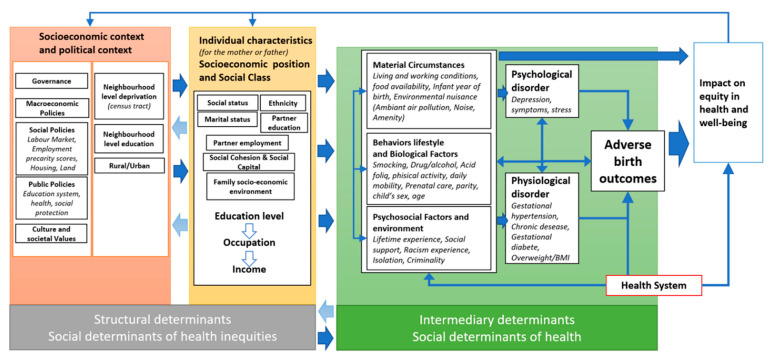
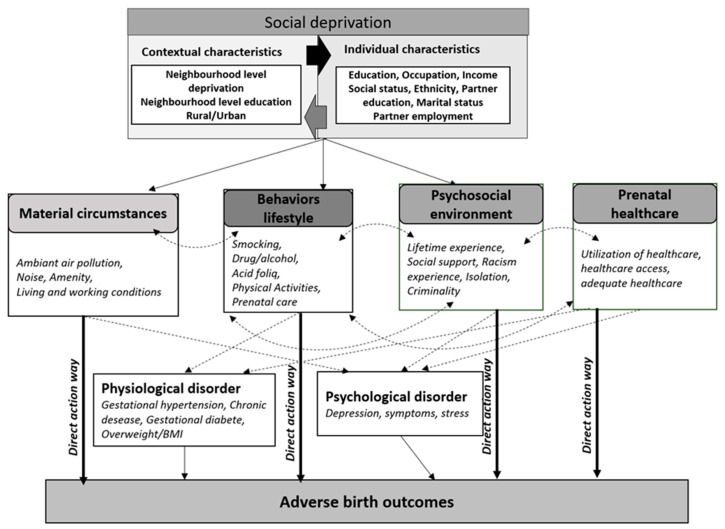
Scientific literature tends to support the idea that the pregnancy and health status of fetuses and newborns can be affected by maternal, parental, and contextual characteristics. In addition, a growing body of evidence reports that social determinants, measured at individual and/or aggregated level(s), play a crucial role in fetal and newborn health. Numerous studies have found social factors (including maternal age and education, marital status, pregnancy intention, and socioeconomic status) to be linked to poor birth outcomes. Several have also suggested that beyond individual and contextual social characteristics, living environment and conditions (or “neighborhood”) emerge as important determinants in health inequalities, particularly for pregnant women. Using a comprehensive review, we present a conceptual framework based on the work of both the Commission on Social Determinants of Health and the World Health Organization (WHO), aimed at describing the various pathways through which social characteristics can affect both pregnancy and fetal health, with a focus on the structural social determinants (such as socioeconomic and political context) that influence social position, as well as on intermediary determinants. We also suggest that social position may influence more specific intermediary health determinants; individuals may, on the basis of their social position, experience differences in environmental exposure and vulnerability to health-compromising living conditions. Our model highlights the fact that adverse birth outcomes, which inevitably lead to health inequity, may, in turn, affect the individual social position. In order to address both the inequalities that begin in utero and the disparities observed at birth, it is important for interventions to target various unhealthy behaviors and psychosocial conditions in early pregnancy. Health policy must, then, support: (i) midwifery availability and accessibility and (ii) enhanced multidisciplinary support for deprived pregnant women.
Checked 2026-11-13 · 2 references not checked yet
Overview
CoChat Summary
TL;DR
This comprehensive review of 35 studies finds excess risk of low birthweight (LBW) and preterm birth (PTB) among deprived pregnant women and those living in deprived neighborhoods. It proposes a WHO/CSDH-based conceptual framework linking structural social determinants through material circumstances, behaviors/lifestyle, psychosocial environment, and healthcare access to adverse pregnancy outcomes.
Key findings
- From 359 screened studies, 35 met inclusion criteria and most showed increased LBW or decreased birthweight with adverse socioeconomic conditions: maternal education LBW risk ranged from OR = 2.0 [1.49–2.71] to RR = 3.77 [2.26–6.30]; unemployment during pregnancy OR = 1.7 [1.37–2.10]; maternal income OR = 1.7 [1.58–2.84]; employment precarity RR = 1.48 [1.11–1.98].
- Birthweight decreased by beta = −103 g [−108; −97] for lower vs. higher maternal education and beta = −56 g [−61; −50] for paternal education; living in the most deprived areas was associated with beta = −113.4 g [−133.0; −93.8].
- PTB risk was higher in the highest county poverty quartile (OR = 1.18; 95% CI [1.03, 1.35]), in deprived vs. privileged neighborhoods (OR = 1.16; 95% CI [1.06–1.27]), and in most deprived vs. most privileged groups (OR = 1.5; 95% CI [1.3; 1.7]).
- SGA was associated with social characteristics in all but two studies: unemployment OR ≈ 1.3, low parental education up to 2.8, lowest income decile OR = 2.0 [1.78; 2.26], less skilled family head occupation RR = 1.79 [1.29; 2.47], and most deprived neighborhoods OR = 1.18 [1.07; 1.30].
Methods
- Comprehensive review following PRISMA: PubMed search for English-language articles published January 2000–April 2022, plus reference-list and citation screening, using keywords for deprivation, socioeconomic inequality, neighborhood, lifestyle, and outcomes including LBW, birthweight, PTB, gestational age, and SGA.
- Inclusion criteria were human studies, peer-reviewed English papers after 2000, restricted to pregnant women and pregnancy outcomes; non-original studies were excluded. Two authors independently screened and extracted data; 359 studies were screened and 35 met criteria.
- Extracted measures included ORs, HRs, RRs, and other association metrics, preferentially from fully adjusted models; the paper then adapted the CSDH/WHO conceptual framework to propose pathways and mechanisms.
Limitations
- The paper states that heterogeneous statistical methods and confounding factors make comparison across studies difficult; most studies used classical multivariate regression, only five performed multilevel analysis, and two tested mediation via structural equation models.
- The paper states that none of the reviewed studies adjusted on household characteristics such as family income, parental life course factors, and family smoking status, and none explored paternal characteristics except one study.
- Evident from the text: the search was limited to PubMed and English-language articles, and the included studies were heavily concentrated in the United States, with only six from Europe/UK, one from Asia, and one covering four countries; no formal quality appraisal or meta-analytic pooling is reported.
Model-written summary. Check it against the paper before relying on it.
Integrity signals
Registry
Cites
Statistics
Figures
Verification
Claims the paper makes
0 Valid · 5 Not valid · 148 Not checked · 56 Own results and interpretations
None of the sources cited for this claim have been checked yet.
In the paper
“For instance, the risk of PTB is significantly linked with a low level of maternal education (compared to those having a higher level of education), with a risk of about 1.2 in Kaufman et al. [33] and El-Sayed et al. [47].”
§ A Comprehensive Review on Social Inequalities and Pregnancy Outcome—Identification of Relevant Pathways and Mechanisms > 3. Results > 3.7. Findings in Terms of Social Determinants and Health Inequalities
What the sources say
- Not checked yetcites [33] Kaufman, J.S., Alonso, F.T., and Pino, P. (2008). Multi-Level Modeling of Social Factors and Preterm Delivery in Santiago de Chile. BMC Pregnancy Childbirth, 8. source
- Not checked yetcites [47] Galea, 2012, Temporal Changes in Socioeconomic Influences on Health: Maternal Education and Preterm Birth, Am. J. Public Health source
plainstates an association- Asserted: passes — The authors put it forward as true.
- Checkable: passes — It can be checked against evidence.
- Load-bearing: passes — The paper’s conclusions depend on it.
- Based: passes — The paper gives a reason why it holds.
In the paper
“In addition, when comparing mothers with lower vs. higher levels of education, the decrease in birthweight was equal to beta = −103; 95%CI [−108; −97] [52].”
§ A Comprehensive Review on Social Inequalities and Pregnancy Outcome—Identification of Relevant Pathways and Mechanisms > 3. Results > 3.7. Findings in Terms of Social Determinants and Health Inequalities
What the sources say
- Not checked yetcites [52] Mortensen, 2008, Social Inequality in Fetal Growth: A Comparative Study of Denmark, Finland, Norway and Sweden in the Period 1981–2000, J. Epidemiol. Community Health source
plainstates an association- Asserted: passes — The authors put it forward as true.
- Checkable: passes — It can be checked against evidence.
- Load-bearing: unclear — It is unclear whether the paper’s conclusions depend on it.
- Based: passes — The paper gives a reason why it holds.
In the paper
“The risk of LBW increased far more among African American women living in low-poverty neighborhoods than it did for white women living in low-poverty neighborhoods (OR: 5.23; 95%CI [2.26;12.10]) in the study by Wallace et al. [39].”
§ A Comprehensive Review on Social Inequalities and Pregnancy Outcome—Identification of Relevant Pathways and Mechanisms > 3. Results > 3.7. Findings in Terms of Social Determinants and Health Inequalities
What the sources say
- Not checked yetcites [39] Wallace, 2013, Neighborhood Poverty, Allostatic Load, and Birth Outcomes in African American and White Women: Findings from the Bogalusa Heart Study, Health Place source
plainstates a cause- Asserted: passes — The authors put it forward as true.
- Checkable: passes — It can be checked against evidence.
- Load-bearing: unclear — It is unclear whether the paper’s conclusions depend on it.
- Based: passes — The paper gives a reason why it holds.
In the paper
“For instance, a significant decrease in birthweight was observed in the most deprived areas, in comparison with the least deprived (Beta = –113.4 g (95%CI [ –133.0; –93.8]) [51].”
§ A Comprehensive Review on Social Inequalities and Pregnancy Outcome—Identification of Relevant Pathways and Mechanisms > 3. Results > 3.7. Findings in Terms of Social Determinants and Health Inequalities
What the sources say
- Not checked yetcites [51] Glinianaia, S.V., Ghosh, R., Rankin, J., Pearce, M.S., Parker, L., and Pless-Mulloli, T. (2013). No Improvement in Socioeconomic Inequalities in Birthweight and Preterm Birth over Four Decades: A Population-Based Cohort Study. BMC Public Health, 13. source
plainstates an association- Asserted: passes — The authors put it forward as true.
- Checkable: passes — It can be checked against evidence.
- Load-bearing: passes — The paper’s conclusions depend on it.
- Based: passes — The paper gives a reason why it holds.
None of the sources cited for this claim have been checked yet.
In the paper
“However, a few studies [35,48,49] suggested that from fully adjusted models (including both individual- and family-level characteristics), the effect of neighborhood socioeconomic status was not as important as previously demonstrated [35,48].”
§ A Comprehensive Review on Social Inequalities and Pregnancy Outcome—Identification of Relevant Pathways and Mechanisms > 3. Results > 3.7. Findings in Terms of Social Determinants and Health Inequalities
What the sources say
- Not checked yetcites [35] Young, 2010, A Multilevel Non-Hierarchical Study of Birth Weight and Socioeconomic Status, Int. J. Health. Geogr. source
- Not checked yetcites [48] Narla, 2013, Comparison of Individual-Level versus Area-Level Socioeconomic Measures in Assessing Health Outcomes of Children in Olmsted County, Minnesota, J. Epidemiol. Community Health source
- Not checked yetcites [49] Carvalho, 2005, Similarity between Neonatal Profile and Socioeconomic Index: A Spatial Approach, Cad. Saúde Pública source
hedged- Asserted: passes — The authors put it forward as true.
- Checkable: passes — It can be checked against evidence.
- Load-bearing: unclear — It is unclear whether the paper’s conclusions depend on it.
- Based: passes — The paper gives a reason why it holds.
107 more claims
Create a free account to see all 209 claims and to verify the 334 references still open.
- It may state two separate claims as one. 73
- Probably not a substantial claim. 41
Self-check
Percentages, sums and reported differences re-computed from the paper’s own numbers.
Each contradiction between two passages listed here was confirmed by an independent check.
Rated minor: it would not touch a result — a value no result rests on, a p-value that stays on the same side of the significance level, or a conflict that is clerical, resolved elsewhere in the paper, or outside its own findings.
In the paper
§ A Comprehensive Review on Social Inequalities and Pregnancy Outcome—Identification of Relevant Pathways and Mechanisms > 3. Results > 3.7. Findings in Terms of Social Determinants and Health Inequalities
“most studies confirmed that the risk of PTB was associated with individual or family socioeconomic characteristics [31,33,36,37,38,39,42,44,46,47,50,54]”
§ A Comprehensive Review on Social Inequalities and Pregnancy Outcome—Identification of Relevant Pathways and Mechanisms > 3. Results > 3.7. Findings in Terms of Social Determinants and Health Inequalities
“all but four studies reached this conclusion [37,39,50,54].”
Rated minor: it would not touch a result — a value no result rests on, a p-value that stays on the same side of the significance level, or a conflict that is clerical, resolved elsewhere in the paper, or outside its own findings.
In the paper
§ A Comprehensive Review on Social Inequalities and Pregnancy Outcome—Identification of Relevant Pathways and Mechanisms > 3. Results > 3.7. Findings in Terms of Social Determinants and Health Inequalities
“Huang et al. found an association between a grandmother’s education at the time of a mother’s birth and the birthweight of her grandchild, independent of the mother’s mediating life course”
§ A Comprehensive Review on Social Inequalities and Pregnancy Outcome—Identification of Relevant Pathways and Mechanisms > 3. Results > 3.7. Findings in Terms of Social Determinants and Health Inequalities
“(beta = −54 g 95%CI [−14.0; 122.1]) per increase in educational level [45].”
Rated minor: it would not touch a result — a value no result rests on, a p-value that stays on the same side of the significance level, or a conflict that is clerical, resolved elsewhere in the paper, or outside its own findings.
In the paper
§ A Comprehensive Review on Social Inequalities and Pregnancy Outcome—Identification of Relevant Pathways and Mechanisms > 3. Results > 3.4. Assessment of Social Inequalities
“just five studies performed multilevel analysis [26,30,33,34,35].”
§ A Comprehensive Review on Social Inequalities and Pregnancy Outcome—Identification of Relevant Pathways and Mechanisms > References
“36. Urquia M.L. Frank J.W. Moineddin R. Glazier R.H. Does Time Since Immigration Modify Neighborhood Deprivation Gradients in Preterm Birth? A Multilevel Analysis”
Rated minor: it would not touch a result — a value no result rests on, a p-value that stays on the same side of the significance level, or a conflict that is clerical, resolved elsewhere in the paper, or outside its own findings.
In the paper
§ A Comprehensive Review on Social Inequalities and Pregnancy Outcome—Identification of Relevant Pathways and Mechanisms > 3. Results > 3.6. Definition of Social Determinants
“Others used neighborhood socioeconomic characteristics only [28,30,51,53]”
§ A Comprehensive Review on Social Inequalities and Pregnancy Outcome—Identification of Relevant Pathways and Mechanisms > 3. Results > 3.6. Definition of Social Determinants
“Most studies, however, used both individual and neighborhood socioeconomic characteristics [32,33,34,35,39,40,42,43,45,46,48,51,57].”
Citations
Cites
Putnam, R. (2000) · doi:10.1145/358916.361990 · Cited by 17,114
Epidemiology and causes of preterm birth
Goldenberg, R. L., Culhane, J. F., Iams, J. D., & Romero, R. (2008) · The Lancet · doi:10.1016/s0140-6736(08)60074-4 · Cited by 7,801
Stress recovery during exposure to natural and urban environments
Ulrich, R. S., Simons, R. F., Losito, B. D., Fiorito, E., Miles, M. A., & Zelson, M. (1991) · Journal of Environmental Psychology · doi:10.1016/s0272-4944(05)80184-7 · Cited by 5,990
Levesque, J.-F., Harris, M. F., & Russell, G. (2013) · International Journal for Equity in Health · doi:10.1186/1475-9276-12-18 · Cited by 3,484
Social capital, income inequality, and mortality.
Kawachi, I., Kennedy, B. P., Lochner, K., & Prothrow-Stith, D. (1997) · American Journal of Public Health · doi:10.2105/ajph.87.9.1491 · Cited by 3,212
An overview of mortality and sequelae of preterm birth from infancy to adulthood
Saigal, S., & Doyle, L. W. (2008) · The Lancet · doi:10.1016/s0140-6736(08)60136-1 · Cited by 2,818
Tracking restoration in natural and urban field settings
Hartig, T., Evans, G. W., Jamner, L. D., Davis, D. S., & Gärling, T. (2003) · Journal of Environmental Psychology · doi:10.1016/s0272-4944(02)00109-3 · Cited by 2,118
Heinrichs, M., Baumgartner, T., Kirschbaum, C., & Ehlert, U. (2003) · Biological Psychiatry · doi:10.1016/s0006-3223(03)00465-7 · Cited by 2,091
Air Pollution Removal by Urban Trees and Shrubs in the United States
Nowak, D. J., Crane, D. E., & Stevens, J. C. (2006) · Urban Forestry & Urban Greening · doi:10.1016/j.ufug.2006.01.007 · Cited by 2,019
Antenatal risk factors for postpartum depression: a synthesis of recent literature
Robertson, E., Grace, S., Wallington, T., & Stewart, D. E. (2004) · General Hospital Psychiatry · doi:10.1016/j.genhosppsych.2004.02.006 · Cited by 1,886
Research works printed but not linked: 3
- Deguen, 2020, Environmental Amenities and the Fetal and Infant Health during the FIrst 1000 Days of Life: A Literature Review and Theoretical Contribution, Méd. Reprod., 22, 16
- Kaplan, R., and Kaplan, S. (1989). The Experience of Nature: A Psychological Perspective, Cambridge University Press. pp. xii, 340.
- Gray, R., Headley, J., Oakley, L., Kurinczuk, J.J., Brocklehurst, P., and Hollowell, J. (2022, August 20). Towards an Understanding of Variations in Infant Mortality Rates between Different Ethnic Groups in England and Wales. Available online: https://www.semanticscholar.org/paper/Towards-an-understanding-of-variations-in-infant-in-Graya-Headleyb/d7a8fb6fb35f6b7516e7d6cfdbceb24f70cd080b.
Cited by
Cytokine modulation and immunoregulation of uterine NK cells in pregnancy disorders
Zhou, J., Yan, P., Ma, W., & Li, J. (2024) · Cytokine & Growth Factor Reviews · doi:10.1016/j.cytogfr.2024.11.007 · Cited by 44
Tackling racism in maternal health
Catalão, R., Zephyrin, L., Richardson, L., Coghill, Y., Smylie, J. K., & Hatch, S. L. (2023) · BMJ · doi:10.1136/bmj-2023-076092 · Cited by 32
Fell, D. B., Török, E., Sprague, A. E., Regan, A. K., Dhinsa, T., Alton, G. D., Dimanlig-Cruz, S., MacDonald, S. E., Buchan, S. A., Kwong, J. C., et al. (2023) · Vaccine · doi:10.1016/j.vaccine.2023.01.073 · Cited by 21
Inclusion in Motion: Promoting Equitable Physical Activity and Health in Childhood and Adolescence
Ulset, V. S., Oppici, L., Hamre, K., Rudd, J. R., Stornæs, A. V., Haraldsen, H. M., & Säfvenbom, R. (2025) · Children · doi:10.3390/children12070942 · Cited by 16
Buciu, V. B., Șerban, D. M., Olariu, S., Novacescu, D., Cîtu, C., Ciurescu, S., Tomescu, L. C., Rațiu, A., Sas, I., Ionac, M. E., et al. (2025) · Journal of Clinical Medicine · doi:10.3390/jcm14113937 · Cited by 9
Mobin, A., Obeid, A., El‐Kebbi, I. M., Everett, D., Ibrahim, S. M., Farhat, J., & Al‐Omari, B. (2024) · Chronic Diseases and Translational Medicine · doi:10.1002/cdt3.153 · Cited by 7
Prenatal substance use and mental health comorbidities predict continued use.
Kruger, E. S., Rodriguez, A., Leeman, L. M., & Sanjuan, P. M. (2024) · Psychology of Addictive Behaviors · doi:10.1037/adb0001017 · Cited by 6
Prevalence and factors associated with unintended pregnancy among women in Ghana
Osborne, A., Wongnaah, F. G., Adeleye, K. K., Bangura, C., Aboagye, R. G., & Ahinkorah, B. O. (2025) · BMC Pregnancy and Childbirth · doi:10.1186/s12884-025-07749-z · Cited by 6
Li, Y., Mao, H.-Y., Yan, L., Liu, Z., Shu, S., Jiang, T., Xu, L.-Y., Zhang, X.-Y., Liu, B.-L., Zhu, M., et al. (2025) · Environment International · doi:10.1016/j.envint.2025.109724 · Cited by 5
Akalanka, H. M. K., Lin, K., & Sun, J. (2025) · Global Health Journal · doi:10.1016/j.glohj.2025.11.005 · Cited by 5
Social Determinants and Perinatal Hardships During the COVID-19 Pandemic
Eliason, E. L., Agostino, J., & MacDougall, H. (2023) · Journal of Women s Health · doi:10.1089/jwh.2023.0290 · Cited by 5
Headen, I. E. (2025) · Journal of Racial and Ethnic Health Disparities · doi:10.1007/s40615-025-02345-5 · Cited by 5
Inequalities in smoking among pregnant women in North West London
Pinho‐Gomes, A., & Mullins, E. (2023) · Journal of Public Health · doi:10.1093/pubmed/fdad040 · Cited by 5
Angeli, F., Gamberini, C., & Ambrosino, E. (2025) · Qualitative Health Research · doi:10.1177/10497323251317437 · Cited by 4
Smagulov, N. K., Zhamantayev, O., Konkabaeva, A. E., Adilbekova, A. A., Zhanalina, G., Shintayeva, N. U., & Aubakirova, D. (2024) · International Journal of Environmental Research and Public Health · doi:10.3390/ijerph21040416 · Cited by 4
Impact of maternal chronic energy deficiency on newborns in developing countries: A scoping review
Maeka, S. M. A., Kartasurya, M. I., & Pradigdo, S. F. (2025) · Journal of Holistic Nursing Science · doi:10.31603/jhns.v12i2.14001 · Cited by 3
The landscape of pregnancy and prepregnancy cohorts: a scoping review
Maxwell, L., Gilyan, R., Chavan, S. A., Akter, S., Bhatt, M., Cunningham, S. A., & Jaenisch, T. (2025) · BMC Pregnancy and Childbirth · doi:10.1186/s12884-025-07949-7 · Cited by 3
Provincial distribution of unintended pregnancy and its associated factors in Sierra Leone
Osborne, A., Yillah, R. M., Bangura, C., & Ahinkorah, B. O. (2025) · BMC Public Health · doi:10.1186/s12889-024-20990-z · Cited by 3
Pillay, T., Luyt, K., Odd, D., & Trenell, M. (2025) · The Lancet Child & Adolescent Health · doi:10.1016/s2352-4642(25)00268-8 · Cited by 2
Zhang, N., Ye, J., Pan, X., & Wu, J. (2023) · China CDC Weekly · doi:10.46234/ccdcw2023.067 · Cited by 2
Yu, Y. H., Ma, Q., & Groth, S. W. (2024) · Midwifery · doi:10.1016/j.midw.2024.103972 · Cited by 2
Mieux intégrer les déterminants sociaux dans la promotion de la santé des enfants en France
Vandentorren, S., Gorza, M., & Cardoso, T. (2023) · Les Tribunes de la santé · doi:10.3917/seve1.077.0015 · Cited by 1
Self-citationȚovîrnac, F., Călin, A. M., Elkan, E. M., Țovârnac, N. A., Antohi, V. M., & Nechifor, A. (2025) · Healthcare · doi:10.3390/healthcare13020197 · Cited by 1
Mowla, S. J., Krajewski, A. K., Wilkie, A. A., Rappazzo, K. M., & Luben, T. J. (2025) · Journal of Exposure Science & Environmental Epidemiology · doi:10.1038/s41370-025-00774-2 · Cited by 1
Alley, D., Ahlers‐Schmidt, C. R., Okut, H., & Sanchez, A. (2025) · Kansas Journal of Medicine · doi:10.17161/kjm.vol18.23910 · Cited by 1
Pregnancy outcomes of obstetrician gynecologist mothers: a retrospective matched cohort study
Xu, G., Zhang, L., Liao, Y. J., Wang, Y., & Luo, Q. (2025) · Scientific Reports · doi:10.1038/s41598-025-30887-5 · Cited by 1
Zuhrotunida, Z., Yani, I., & Lestari, M. L. (2025) · JURNAL INFO KESEHATAN · doi:10.31965/infokes.vol23.iss4.2262 · Cited by 1
Myint, W. W., Tasnim, S., Mealing, S., Zaman, A., Osuji, C., Falia, G., & Smith, M. L. (2026) · Frontiers in Global Women s Health · doi:10.3389/fgwh.2026.1616403 · Cited by 1
Mutebi, C., Jaamour, D., Tolu-Akinnawo, O. Z., Ezekwueme, F., Ughagwu, K. P., Obarombi, J., Ogunniyi, K. E., Awoyemi, T., & Galvin, S. (2025) · Women s Health Reports · doi:10.1177/26884844251405808 · Cited by 1
Donofry, S. D., Dämon, S., Jouppi, R. J., Davis, J. A., Kolko, R. P., Call, C. C., & Levine, M. D. (2026) · Appetite · doi:10.1016/j.appet.2026.108545 · Cited by 1
Corradetti, B., Ge, X., Whitworth, K. W., & Symanski, E. (2026) · International Journal of Molecular Sciences · doi:10.3390/ijms27114739 · Cited by 1
Sanfilippo, K. R. M., Spiro, N., Shaughnessy, C., Rowles, M., Harkness, A. C., Keramati, M., Coombes, E., Perkins, R., & Tredget, E. (2026) · Critical Public Health · doi:10.1080/09581596.2026.2682647 · Cited by 1
Abortion from the Perspective of Islamic Law and Contemporary Social Dynamics: A Literature Review
Putri, D. N., & Arisman (2026) · el-Bait Jurnal Hukum Keluarga Islam · doi:10.53515/ebjhki.v4i1.136 · Cited by 1
Closer look at the cardiovascular and metabolic predictors of postpartum depression
Kalawatia, M., Lucke-Wold, B. P., & Mehrunkar, A. (2025) · World Journal of Psychiatry · doi:10.5498/wjp.v15.i6.106283 · Cited by 1
Antibacterial function and mechanism of peptide β-casein 65 action in breast milkPreprint
Zhang, M., Zhang, J., Yan, X., Yu, Q., Hu, X., Chen, X., & Han, S. (2023) · doi:10.22541/au.168180484.43903572/v1 · Cited by 1
The maternal and child health record book: Time to separate?
Adjei, M. R., Ohene, S.-A., & Grobusch, M. P. (2024) · Midwifery · doi:10.1016/j.midw.2024.104134
Effects of pre-pregnancy maternal underweight on pregnancy and perinatal outcomes of the foetus
Oke, O., Salibi, G., & Tzenios, N. (2024) · Special journal of the Medical Academy and other Life Sciences · doi:10.58676/sjmas.v2i7.81
How to Promote a Stress and Smoke Free Start of Life?
van Dijk, W. (2024) · doi:10.5463/thesis.740
Rao, A. P., Khatib, M. N., Thangavelu, L. P., Roopashree, R., Sharma, P., Lal, M., Barwl, A., Prasad, G. V. S., Rajput, P., Zahiruddin, Q. S., et al. (2024) · Asia Pacific Journal of Public Health · doi:10.1177/10105395241305671
ETHNICITY, DEPRIVATION, AND CHILDHOOD MORTALITY IN ENGLAND: A COHORT STUDYPreprint
Odd, D., Garstang, J. J., Williams, T. G. S., Stoianova, S., & Luyt, K. (2025) · medRxiv · doi:10.1101/2025.03.01.25322994
Aran, Ö. (2024) · Digital Commons - DU (University of Denver) · doi:10.56902/etdcrp.2024.13
Cesarean delivery and hypothermia: an example of how registry data can inform clinical practice
Hofkamp, M. P., & McAllister, R. K. (2025) · Baylor University Medical Center Proceedings · doi:10.1080/08998280.2025.2498836
Apuntando hacia un buen control prenatal como indicador de salud en Paraguay: alcance 2020-2023
Cusihuamán-Puma, A. U. (2025) · Revista de salud publica del Paraguay · doi:10.18004/rspp.2025.abr.02
Boakye, S. K., & Danquah, L. (2025) · BMC Pregnancy and Childbirth · doi:10.1186/s12884-025-07856-x
Lisanti, A. J., Min, J., Hampton, L., Cole, J. C. M., Budney, A., Burnham, A., Zimmerman, L., Quarshie, W. O., Shillingford, A. J., & Gaynor, J. W. (2025) · Cardiology in the Young · doi:10.1017/s1047951125100772
Ali, N., Fawaz, M. A., Afefy, N. A., & Shahine, M. R. (2025) · Egyptian Nursing Journal · doi:10.4103/enj.enj_11_25
Attard, C., Rubeis, V. D., MacMillan, H. L., Barlow, J., Ratcliffe, J., Duku, E., Bennett, T. A., & González, A. (2025) · Children and Youth Services Review · doi:10.1016/j.childyouth.2025.108584
Marshall, A., Askariah, A., Yule, S., Fyfe, D., Hassett, R., Todd, J., MacBride‐Stewart, S., Nichol, S., Stephen, L. J., Mackay, D., et al. (2025) · Seizure · doi:10.1016/j.seizure.2025.09.009
Zaguri‐Vittenberg, S., Azi-Goren, Y., & Kahalon, R. (2025) · Journal of Health Psychology · doi:10.1177/13591053251381484
Li, Y., Zan, C., Chen, S., Tang, S., Zhang, Q., Pan, Y., Yu, S., & Wang, Q. (2025) · BMC Geriatrics · doi:10.1186/s12877-025-06293-x
Rippel, G. Q., Souza, R. T., Mayrink, J., Miele, M. J. D. O., Galvão, R. B., Costa, M. L., Feitosa, F. E. D. L., Filho, E. A. R., Leite, D. F. B., Tedesco, R. P., et al. (2026) · International Journal of Gynecology & Obstetrics · doi:10.1002/ijgo.71138
Averdunk, K., Miani, C., Strizek, B., & Weigl, M. (2025) · PLoS ONE · doi:10.1371/journal.pone.0336013
Tobacco smoking and vaping in pregnancy and neonatal outcomes: results from a UK cohort studyPreprint
Laverty, A. A., Esan, O., Sinha, I., Williams, P. J., Filippidis, F. T., & Hopkinson, N. S. (2025) · medRxiv · doi:10.1101/2025.11.03.25339380
FACTORS INFLUENCING THE INCIDENCE OF PRE-ECLAMPSIA IN PREGNANT WOMEN IN JEMBER DISTRICT
Kholifah, S., Permatasari, E., & Yani, R. W. E. (2025) · Quality Jurnal Kesehatan · doi:10.36082/qjk.v19i2.2587
Schmidt, N. C. (2024) · Archive ouverte UNIGE (University of Geneva) · doi:10.13097/archive-ouverte/unige:180137
Astuti, M. D. P., Dharmawan, Y., Lestantyo, D., & Nurjazuli, N. (2025) · Proceeding of International Seminar and Workshop on Public Health Action · doi:10.60074/iswopha.v1i1.14291
Arriola‐Montenegro, J., & Kattah, A. G. (2025) · Kidney International Reports · doi:10.1016/j.ekir.2025.103760
Predictors of maternal residential mobility in a sibling-matched birth cohort in Massachusetts
Legaspi, J. M., & Vieira, V. M. (2026) · Environmental Epidemiology · doi:10.1097/ee9.0000000000000452
Franchi, J. V. D. O. (2023) · LA Referencia (Red Federada de Repositorios Institucionales de Publicaciones Científicas)
Prevalence and risk factors associated with birth asphyxia: a systematic review and meta-analysis
Niazi, Y., Farooq, S. M. Y., Moazzam, M., Bilal, S., & Asif, M. F. (2026) · Italian Journal of Gynaecology and Obstetrics · doi:10.36129/jog.2026.269
Estrategias de inclusión social: evaluación de programas y servicios para mujeres embarazadas
de Chimborazo, U. N., & Acosta, C. E. H. (2026) · Dominio de las Ciencias · doi:10.23857/dc.v12i1.4656
Reduced varying coefficient models for regional quantile regression with multiple responses
Jung, W., Park, S., Hong, H. G., & Lee, E. R. (2026) · Biometrics · doi:10.1093/biomtc/ujag040
Ma, C., Shah, A. M., Chen, W., Li, Z., Peng, Y., Wu, R., Du, X., Li, H., Lv, B., Liu, S., et al. (2026) · iScience · doi:10.1016/j.isci.2026.115513
Kabir, P., Sandalinas, F., Bell, R. C., & Bourque, S. L. (2026) · medRxiv · doi:10.64898/2026.03.30.26349718
Simoncic, V. (2023) · theses.fr (ABES) · doi:10.70675/381b555az9512z48f3z8210zdd0f0c12d0bc
Self-citationSerum zinc and magnesium levels in preterm neonates seen at Jos University Teaching Hospital
Ajiduku, H. E., Toma, B., & Okoli, C. A. (2026) · Discover Chemistry. · doi:10.1007/s44371-026-00521-y
Carroll, L. S. L. (2025) · PhilPapers (PhilPapers Foundation)
Donofry, S. D., McLaughlin, M., Miller, E. S., Grobman, W., Saade, G. R., Wimmer, N. J., Hoffman, M., Theilen, L. H., Yee, L. M., Merz, C. N. B., et al. (2026) · medRxiv · doi:10.64898/2026.05.26.26353833
Konok, A. H. B., Hossain, M. S., & Islam, M. H. (2026) · PLoS ONE · doi:10.1371/journal.pone.0351676
The triple burden: low-SES women and the binds of caretaking, work, and college
Matheny, K. T., Horwitz, I. M., & Milan, N. (2026) · Social Forces · doi:10.1093/sf/soag068
Chen, Y., & Bao, S. (2026) · Applied Research in Quality of Life · doi:10.1007/s11482-026-10641-3
Tomasi, C. D., Ramos, M. A., Gava, F. D. M., Soratto, J., Meller, F. D. O., Schäfer, A. A., García, C., & Miranda, V. I. A. (2026) · Journal of Interpersonal Violence · doi:10.1177/08862605261463281
Quitadamo, P. A., Rinaldi, M., Pesce, S., Comegna, L., Bisceglia, M., Maffei, G., Corvaglia, L., & Baldassarre, M. E. (2026) · Children · doi:10.3390/children13081078
Sisák, A. (2026) · SZTE Repository of Dissertations (University of Szeged)
Spatial bias in quality of estimated delivery date records in the electronic health record
Lewis, A., Foraker, R., Lian, M., Zhao, M., Oh, I. Y., Gupta, A., Frolova, A., & Payne, P. (2026) · JAMIA Open · doi:10.1093/jamiaopen/ooag183
Tung, I., Hipwell, A. E., Zhao, H., Galai, N., Sullivan, A. D. W., Acevedo, B. P., Norcott, C., Shuffrey, L. C., Croen, L., Grosvenor, L. P., et al. (2026) · Journal of Child Psychology and Psychiatry · doi:10.1111/jcpp.70236
N’da, E. J., Dely, I. D., Koné, B., Kouakou, É. Y., Doumbia, M., Cissé, G., & Yapo, O. B. (2026) · World Journal of Advanced Research and Reviews · doi:10.30574/wjarr.2026.32.1.2497
Sales-Badal, A., Recacha-Ponce, P., Díaz, C. S., Ramos, C. G., Orenga-Orenga, B.-J., Cubedo-Navarro, A., Biel-Tres, A., & Llagostera‐Reverter, I. (2026) · Research Square · doi:10.21203/rs.3.rs-10751249/v1
Kırkıç, K. A., & Şen, M. T. (2026) · Özgür Yayınları eBooks · doi:10.58830/ozgur.pub1555
Ramiah, R. (2025) · DigitalCommons@UNO
Abdul‐Fatah, A., Marro, L., Owen, J., Borghese, M. M., Fisher, M. M., Koebel, C., Arbuckle, T. E., & Ashley‐Martin, J. (2026) · Journal of Racial and Ethnic Health Disparities · doi:10.1007/s40615-026-03234-1
Stokes, J., Green, R., Lester, S. E., Zia, K., & Meier, P. S. (2026) · Social Science & Medicine · doi:10.1016/j.socscimed.2026.120004
Metadata
- Authors
- Simoncic, V., Deguen, S., Enaux, C., Vandentorren, S., & Kihal-Talantikite, W.
- Affiliations
- Centre National de la Recherche Scientifique (FR)
- Université de Bordeaux (FR)
- LIVE UMR 7362 CNRS (Laboratoire Image Ville Environnement), University of Strasbourg, 67100 Strasbourg, France
- Corresponding author
- Simoncic, Valentin
- Venue
- International Journal of Environmental Research and Public Health
- Publisher
- MDPI AG
- Published
- 2022-12-10
- Volume
- 19
- Issue
- 24
- Pages
- 16592
- ISSN
- 1660-4601 (ISSN-L)
- PMC
- PMC9779203
- OpenAlex
- W4311133980
- Semantic Scholar
- 6294f896280979870a158299965bc5d52cf55ecb
- Cited by
- 83
- References
- 272
- Citations by year
- 2026: 27 · 2025: 36 · 2024: 11 · 2023: 9
- FWCI
- 3.07
- Type
- journal article
- Language
- en
- Open access
- gold
- doi.org
- Licence
- Locations
- International Journal of Environmental Research and Public Health (publishedVersion, cc-by)
- PubMed (publishedVersion)
- PubMed Central (publishedVersion, cc-by)
- HAL (submittedVersion, cc-by)
- RePEc: Research Papers in Economics (submittedVersion)
- DOAJ (DOAJ: Directory of Open Access Journals) (submittedVersion, cc-by-sa)
- Oskar-Bordeaux (Universite de Bordeaux) (submittedVersion, cc-by)
- Funders
- Grand Est Region
- Topics
- Health Sciences › Medicine › Pediatrics, Perinatology and Child Health › Maternal and Neonatal Healthcare
- Social Sciences › Health › Public Health and Social Inequalities
- Social Sciences › Health › Health disparities and outcomes
- Keywords
- birth outcomes, social determinants of health, maternal socioeconomic status, neighborhood effects, health disparities, fetal well-being, maternal age, maternal education, marital status, pregnancy intention, social status, environmental exposure, psychosocial risk factors
- MeSH terms
- Female, Humans, Infant, Newborn, Pregnancy, Pregnancy Outcome, Prenatal Care, Social Class, Socioeconomic Factors, Pregnant People
About these checks
Registry, retraction, Cites and statistics results are computed, not judged, with one exception: a printed reference that no index lists is read once by a model before it counts as a citation error. Claims are extracted by a model and kept only when their quote appears verbatim in the text; each cited source is then checked, with a model’s help, for whether it says what the claim relies on. Those verdicts can be wrong — read the claim’s quote and the cited source before relying on one.
A language model drew the claims from the paper on 2026-11-13, under version 3 of the claim definition (model deepseek-v4.1-flash, prompt extract-v3).
A second model labelled each claim on 2026-11-13 (model jev-1.13-20260917, definition revision gold-guideline-v0.2).
Statistics and arithmetic are recomputed, not judged.
Confidence bands are shown only for fields calibrated on our annotated test set. None is calibrated yet, so no band is shown.
What counts as a claim ›How we measure confidence ›How we check this ›
Are you an author, or do you see a problem with this page? Request a review
Data sources
Bibliographic data: Semantic Scholar, OpenAlex, Crossref.
Contains information from the Semantic Scholar Academic Graph Datasets, made available under the ODC Attribution License (ODC-BY 1.0).
Semantic Scholar’s data is described in: Kinney, R., et al. (2023). The Semantic Scholar Open Data Platform. arXiv:2301.10140.
