

The DOI matches its Crossref record; 181 of the 184 references it cites were found in a registry or an index.
The Role of Antimicrobial Peptides in Preventing Multidrug-Resistant Bacterial Infections and Biofilm Formation
Open accessAbstract
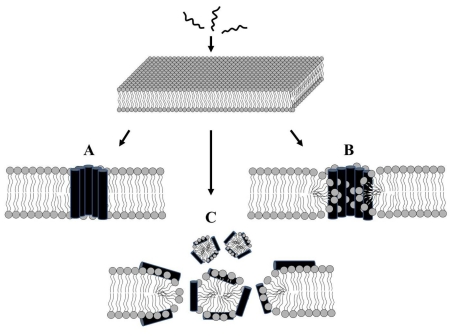
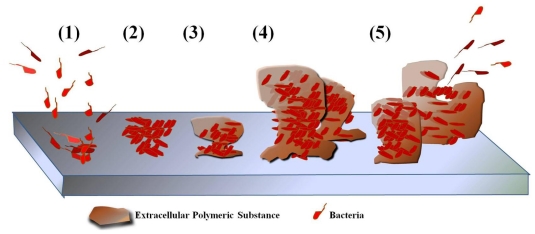
Over the last decade, decreasing effectiveness of conventional antimicrobial-drugs has caused serious problems due to the rapid emergence of multidrug-resistant pathogens. Furthermore, biofilms, which are microbial communities that cause serious chronic infections and dental plaque, form environments that enhance antimicrobial resistance. As a result, there is a continuous search to overcome or control such problems, which has resulted in antimicrobial peptides being considered as an alternative to conventional drugs. Antimicrobial peptides are ancient host defense effector molecules in living organisms. These peptides have been identified in diverse organisms and synthetically developed by using peptidomimic techniques. This review was conducted to demonstrate the mode of action by which antimicrobial peptides combat multidrug-resistant bacteria and prevent biofilm formation and to introduce clinical uses of these compounds for chronic disease, medical devices, and oral health. In addition, combinations of antimicrobial peptides and conventional drugs were considered due to their synergetic effects and low cost for therapeutic treatment.
Overview
The claims and statistics of this paper haven’t been checked yet.
Run the check — free, no account needed. It reads the open-access text and checks the sources it cites.
Integrity signals
Registry
Cites
Statistics
Figures
Verification
Claims the paper makes
The claims and statistics of this paper haven’t been checked yet.
Run the check — free, no account needed. It reads the open-access text and checks the sources it cites.
Claims other papers make about this one
Each is checked against this paper’s own text: does it say what the citing paper says it does?
The source backs part of the claim, not all of it — or backs it for a different population, condition or comparison.
In the citing paper
“Peptide-based therapies, which encompass antimicrobial peptides and growth factors, are particularly appealing for their dual ability to combat infection and promote healing [23,24].”
From Advancements in Regenerative Therapies for Orthopedics: A Comprehensive Review of Platelet-Rich Plasma, Mesenchymal Stem Cells, Peptide Therapies, and Biomimetic Applications (2025) · cites this paper as [24]
Experimental — accuracy not yet measured
Self-check
Percentages, sums and reported differences re-computed from the paper’s own numbers.
The self-check needs the paper’s full text.
Citations
Cites
Bacterial Biofilms: A Common Cause of Persistent Infections
Costerton, J. W., Stewart, P. S., & Greenberg, E. P. (1999) · Science · doi:10.1126/science.284.5418.1318 · Cited by 12,167
Antimicrobial peptides of multicellular organisms
Zasloff, M. (2002) · Nature · doi:10.1038/415389a · Cited by 8,457
Bacterial biofilms: from the Natural environment to infectious diseases
Hall‐Stoodley, L., Costerton, J. W., & Stoodley, P. (2004) · Nature Reviews Microbiology · doi:10.1038/nrmicro821 · Cited by 7,133
Antimicrobial peptides: pore formers or metabolic inhibitors in bacteria?
Brogden, K. A. (2005) · Nature Reviews Microbiology · doi:10.1038/nrmicro1098 · Cited by 5,829
Antibiotic resistance of bacteria in biofilms
Stewart, P. S., & Costerton, J. W. (2001) · The Lancet · doi:10.1016/s0140-6736(01)05321-1 · Cited by 4,596
Antimicrobial and host-defense peptides as new anti-infective therapeutic strategies
Hancock, R. E. W., & Sahl, H. (2006) · Nature Biotechnology · doi:10.1038/nbt1267 · Cited by 4,301
QUORUM SENSING: Cell-to-Cell Communication in Bacteria
Waters, C. M., & Bassler, B. L. (2005) · Annual Review of Cell and Developmental Biology · doi:10.1146/annurev.cellbio.21.012704.131001 · Cited by 3,989
Antibiotic resistance of bacterial biofilms
Høiby, N., Bjarnsholt, T., Givskov, M., Molin, S., & Ciofu, O. (2010) · International Journal of Antimicrobial Agents · doi:10.1016/j.ijantimicag.2009.12.011 · Cited by 3,238
Mechanisms of Antimicrobial Peptide Action and Resistance
Yeaman, M. R., & Yount, N. Y. (2003) · Pharmacological Reviews · doi:10.1124/pr.55.1.2 · Cited by 2,998
Estimating Health Care-Associated Infections and Deaths in U.S. Hospitals, 2002
Klevens, R. M., Edwards, J. R., Richards, C. L., Horan, T. C., Gaynes, R. P., Pollock, D. A., & Cardo, D. M. (2007) · Public Health Reports · doi:10.1177/003335490712200205 · Cited by 2,963
Research works printed but not linked: 2
- Bierbaum, 2009, Lantibiotics: Mode of action, biosynthesis and bioengineering, Curr Pharm Biotechnol, 10, 2, 10.2174/138920109787048616 · DOI
- Nicolas, 2009, Multifunctional host defense peptides: Intracellular-targeting antimicrobial peptides, FEBS J, 276, 6483, 10.1111/j.1742-4658.2009.07359.x · DOI
Cited by
Sorted by citations
Antibiotic resistance in Pseudomonas aeruginosa: mechanisms and alternative therapeutic strategies
Pang, Z., Raudonis, R., Glick, B. R., Lin, T., & Cheng, Z. (2018) · Biotechnology Advances · doi:10.1016/j.biotechadv.2018.11.013 · Cited by 2,520
Roy, R., Tiwari, M., Donelli, G., & Tiwari, V. (2017) · Virulence · doi:10.1080/21505594.2017.1313372 · Cited by 1,605
Simons, A., Alhanout, K., & Duval, R. E. (2020) · Microorganisms · doi:10.3390/microorganisms8050639 · Cited by 587
Annabi, N., Rana, D., Sani, E. S., Lara, R. P., Gifford, J. L., Fares, M. M., Mithieux, S. M., & Weiss, A. S. (2017) · Biomaterials · doi:10.1016/j.biomaterials.2017.05.011 · Cited by 554
Antimicrobial peptides under clinical investigation
Koo, H. B., & Seo, J. (2019) · Peptide Science · doi:10.1002/pep2.24122 · Cited by 387
Metadata
- Authors
- Park, S.-C., Park, Y., & Hahm, K.-S.
- Affiliations
- Chosun University (KR)
- Corresponding author
- Park, Yoonkyung
- Hahm, Kyung-Soo
- Venue
- International Journal of Molecular Sciences
- Publisher
- MDPI AG
- Published
- 2011-09-16
- Volume
- 12
- Issue
- 9
- Pages
- 5971-5992
- ISSN
- 1422-0067 (ISSN-L)
- PMC
- PMC3189763
- OpenAlex
- W2081930655
- Cited by
- 327
- References
- 184
- Citations by year
- 2026: 18 · 2025: 22 · 2024: 23 · 2023: 23 · 2022: 25 · 2021: 27 · 2020: 29 · 2019: 28 · 2018: 19 · 2017: 19 · 2016: 28 · 2015: 21 · 2014: 14 · 2013: 20 · 2012: 9
- FWCI
- 1.65
- Type
- journal article
- Language
- en
- Open access
- gold
- doi.org
- Licence
- Locations
- International Journal of Molecular Sciences (publishedVersion, cc-by)
- Europe PMC (PubMed Central) (publishedVersion, cc-by)
- PubMed Central (publishedVersion, cc-by)
- PubMed (publishedVersion)
- DOAJ (DOAJ: Directory of Open Access Journals) (submittedVersion, cc-by-sa)
- Funders
- National Research Foundation
- National Research Foundation of Korea (2011-0017532)
- Topics
- Life Sciences › Immunology and Microbiology › Microbiology › Antimicrobial Peptides and Activities
- Life Sciences › Immunology and Microbiology › Applied Microbiology and Biotechnology › Antimicrobial agents and applications
- Life Sciences › Biochemistry, Genetics and Molecular Biology › Molecular Biology › Bacterial biofilms and quorum sensing
- Keywords
- antimicrobial peptides, multidrug-resistant bacteria, biofilm formation, antimicrobial resistance, peptidomimetics, chronic infection, medical device infections, oral health, dental plaque, combination therapy, mechanism of action
- MeSH terms
- Bacteria, Bacterial Infections, Humans, Microbial Sensitivity Tests, Models, Biological, Bacterial Physiological Phenomena, Biofilms, Antimicrobial Cationic Peptides, Drug Resistance, Multiple, Bacterial
About these checks
Registry, retraction, Cites and statistics results are computed, not judged, with one exception: a printed reference that no index lists is read once by a model before it counts as a citation error. Claims are extracted by a model and kept only when their quote appears verbatim in the text; each cited source is then checked, with a model’s help, for whether it says what the claim relies on. Those verdicts can be wrong — read the claim’s quote and the cited source before relying on one.
Statistics and arithmetic are recomputed, not judged.
Confidence bands are shown only for fields calibrated on our annotated test set. None is calibrated yet, so no band is shown.
What counts as a claim ›How we measure confidence ›How we check this ›
Are you an author, or do you see a problem with this page? Request a review
