

The DOI matches its Crossref record; 15 of the 15 references it cites were found in a registry or an index.
Elemental Ingredients in the Macrophage Cocktail: Role of ZIP8 in Host Response to Mycobacterium tuberculosis
Abstract
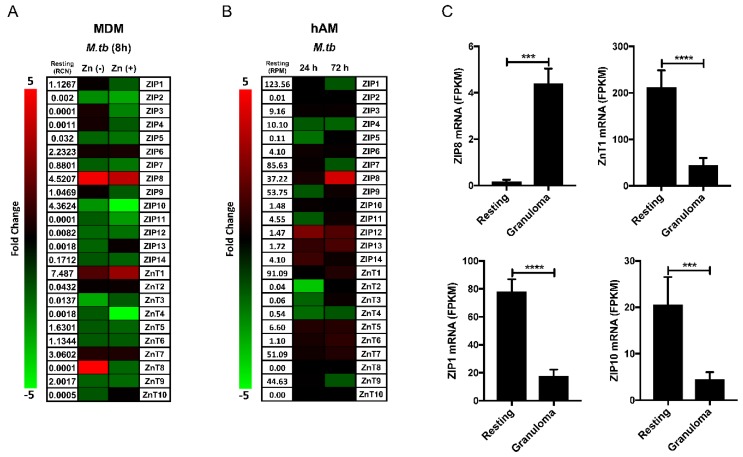
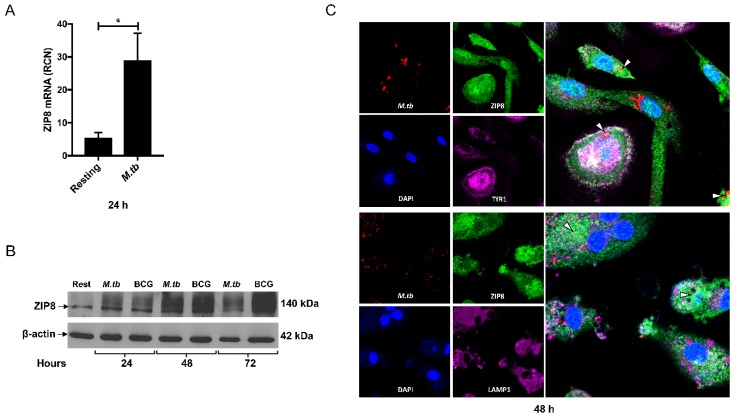
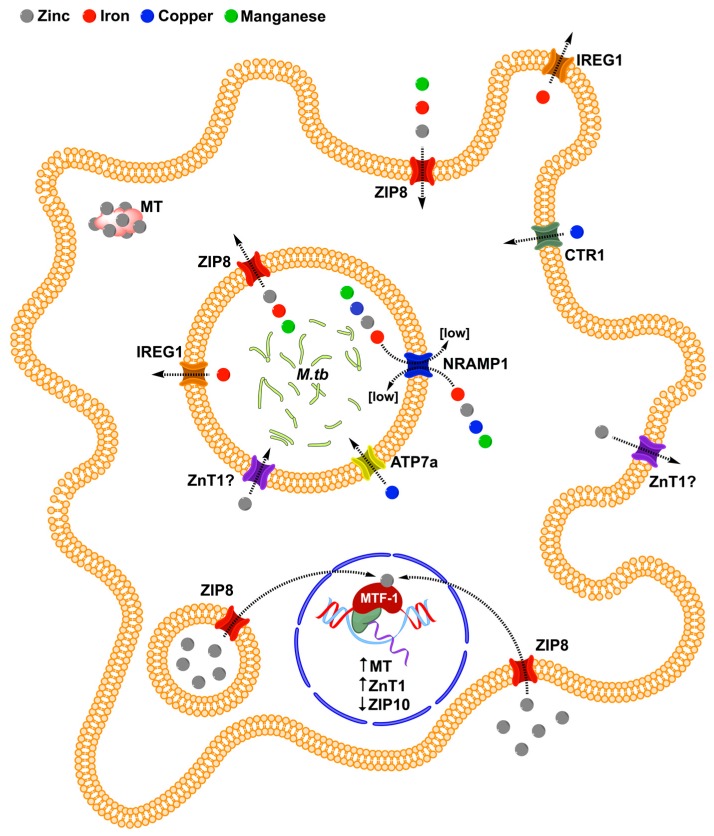
Tuberculosis (TB) is a global epidemic caused by the infection of human macrophages with the world’s most deadly single bacterial pathogen, Mycobacterium tuberculosis (M.tb). M.tb resides in a phagosomal niche within macrophages, where trace element concentrations impact the immune response, bacterial metal metabolism, and bacterial survival. The manipulation of micronutrients is a critical mechanism of host defense against infection. In particular, the human zinc transporter Zrt-/Irt-like protein 8 (ZIP8), one of 14 ZIP family members, is important in the flux of divalent cations, including zinc, into the cytoplasm of macrophages. It also has been observed to exist on the membrane of cellular organelles, where it can serve as an efflux pump that transports zinc into the cytosol. ZIP8 is highly inducible in response to M.tb infection of macrophages, and we have observed its localization to the M.tb phagosome. The expression, localization, and function of ZIP8 and other divalent cation transporters within macrophages have important implications for TB prevention and dissemination and warrant further study. In particular, given the importance of zinc as an essential nutrient required for humans and M.tb, it is not yet clear whether ZIP-guided zinc transport serves as a host protective factor or, rather, is targeted by M.tb to enable its phagosomal survival.
Overview
The claims and statistics of this paper haven’t been checked yet.
Run the check — free, no account needed. It reads the open-access text and checks the sources it cites.
Integrity signals
Registry
Cites
Statistics
Figures
Verification
Claims the paper makes
The claims and statistics of this paper haven’t been checked yet.
Run the check — free, no account needed. It reads the open-access text and checks the sources it cites.
Claims other papers make about this one
Each is checked against this paper’s own text: does it say what the citing paper says it does?
In the citing paper
“Additionally, it has been seen to reside on cellular organelle membranes, where it can act as an efflux pump to move zinc into the cytosol (Pyle et al. 2017).”
From Nutritional Immunity in Wound Infection: Unveiling the Role of Dietary Elements in Host–Pathogen Interaction (2025) · cites this paper as Pyle et al. 2017
Self-check
Percentages, sums and reported differences re-computed from the paper’s own numbers.
The self-check needs the paper’s full text.
Citations
Cites
The epidemiology of global micronutrient deficiencies
Bailey, R. L., West Jr., K. P., & Black, R. E. (2015) · Annals of Nutrition and Metabolism · doi:10.1159/000371618 · Cited by 2,035 · cited 1×
“Zinc deficiency is a major cause of immune dysfunction and infection [109].”
BackgroundNutritional immunity: transition metals at the pathogen–host interface
Hood, M. I., & Skaar, E. P. (2012) · Nature Reviews Microbiology · doi:10.1038/nrmicro2836 · Cited by 1,535
Sturgill-Koszycki, S., Schlesinger, P. H., Chakraborty, P., Haddix, P. L., Collins, H. L., Fok, A. K., Allen, R. D., Gluck, S. L., Heuser, J., & Russell, D. G. (1994) · Science · doi:10.1126/science.8303277 · Cited by 1,302
A Role for the ATP7A Copper-transporting ATPase in Macrophage Bactericidal Activity
White, C., Lee, J., Kambe, T., Fritsche, K., & Petris, M. J. (2009) · Journal of Biological Chemistry · doi:10.1074/jbc.m109.070201 · Cited by 524
Antioxidant effect of zinc in humans
Prasad, A. S., Bao, B., Beck, F. W. J., Kucuk, O., & Sarkar, F. H. (2004) · Free Radical Biology and Medicine · doi:10.1016/j.freeradbiomed.2004.07.007 · Cited by 520
Mycobacterial P1-Type ATPases Mediate Resistance to Zinc Poisoning in Human Macrophages
Botella, H., Peyron, P., Levillain, F., Poincloux, R., Poquet, Y., Brandli, I., Wang, C., Tailleux, L., Tilleul, S., Charrière, G. M., et al. (2011) · Cell Host & Microbe · doi:10.1016/j.chom.2011.08.006 · Cited by 381
ZIP8 Regulates Host Defense through Zinc-Mediated Inhibition of NF-κB
Liu, M.-J., Bao, S., Gálvez-Peralta, M., Pyle, C. J., Rudawsky, A. C., Pavlovicz, R. E., Killilea, D. W., Li, C., Nebert, D. W., Wewers, M. D., et al. (2013) · Cell Reports · doi:10.1016/j.celrep.2013.01.009 · Cited by 367
Self-citationZinc transporter ZIP8 (SLC39A8) and zinc influence IFN-γ expression in activated human T cells
Aydemir, T. B., Liuzzi, J. P., McClellan, S., & Cousins, R. J. (2009) · Journal of Leukocyte Biology · doi:10.1189/jlb.1208759 · Cited by 229
Role of Iron in Nramp1-Mediated Inhibition of Mycobacterial Growth
Zwilling, B. S., Kuhn, D. E., Wikoff, L., Brown, D., & Lafuse, W. (1999) · Infection and Immunity · doi:10.1128/iai.67.3.1386-1392.1999 · Cited by 155
Mitchell, C. J., Shawki, A., Ganz, T., Nemeth, E., & Mackenzie, B. (2014) · American Journal of Physiology-Cell Physiology · doi:10.1152/ajpcell.00348.2013 · Cited by 132
Olakanmi, O., Schlesinger, L. S., Ahmed, A., & Britigan, B. E. (2002) · Journal of Biological Chemistry · doi:10.1074/jbc.m209768200 · Cited by 122
Self-citationKuhn, D. E., Baker, B. D., Lafuse, W. P., & Zwilling, B. S. (1999) · Journal of Leukocyte Biology · doi:10.1002/jlb.66.1.113 · Cited by 113
Nairz, M., Fritsche, G., Crouch, M.-L. V., Barton, H. C., Fang, F. C., & Weiss, G. (2009) · Cellular Microbiology · doi:10.1111/j.1462-5822.2009.01337.x · Cited by 100
Padilla-Benavides, T., Long, J. E., Raimunda, D., Sassetti, C. M., & Argüello, J. M. (2013) · Journal of Biological Chemistry · doi:10.1074/jbc.m112.448175 · Cited by 91
Olakanmi, O., Schlesinger, L. S., & Britigan, B. E. (2007) · Journal of Leukocyte Biology · doi:10.1189/jlb.0606405 · Cited by 88
Self-citation
Research works printed but not linked: 93
- Torrelles, 2017, Integrating Lung Physiology, Immunology, and Tuberculosis, Trends Microbiol., 25, 688, 10.1016/j.tim.2017.03.007 · DOI
- Dodd, 2017, New concepts in understanding latent tuberculosis, Curr. Opin. Infect. Dis., 30, 316, 10.1097/QCO.0000000000000367 · DOI
- Rajaram, 2014, Macrophage immunoregulatory pathways in tuberculosis, Semin. Immunol., 26, 471, 10.1016/j.smim.2014.09.010 · DOI
- Neyrolles, 2015, Mycobacteria, metals, and the macrophage, Immunol. Rev., 264, 249, 10.1111/imr.12265 · DOI
- Mertz, 1981, The essential trace elements, Science, 213, 1332, 10.1126/science.7022654 · DOI
- Sow, 2008, The iron export protein ferroportin 1 is differentially expressed in mouse macrophage populations and is present in the mycobacterial-containing phagosome, J. Leukoc. Biol., 84, 689, 10.1189/jlb.1107781 · DOI · Paper page
- Rowland, 2012, Resistance mechanisms of Mycobacterium tuberculosis against phagosomal copper overload, Tuberculosis (Edinb.), 92, 202, 10.1016/j.tube.2011.12.006 · DOI
- Blischak, 2015, Mycobacterial infection induces a specific human innate immune response, Sci. Rep., 5, 16882, 10.1038/srep16882 · DOI
- Weinberg, 1975, Nutritional immunity. Host’s attempt to withold iron from microbial invaders, JAMA, 231, 39, 10.1001/jama.1975.03240130021018 · DOI · Paper page
- Wagner, 2005, Elemental analysis of Mycobacterium avium-, Mycobacterium tuberculosis-, and Mycobacterium smegmatis-containing phagosomes indicates pathogen-induced microenvironments within the host cell’s endosomal system, J. Immunol., 174, 1491, 10.4049/jimmunol.174.3.1491 · DOI
- Nairz, 2010, The struggle for iron—A metal at the host-pathogen interface, Cell. Microbiol., 12, 1691, 10.1111/j.1462-5822.2010.01529.x · DOI · Paper page
- Pietrangelo, 2006, Hereditary hemochromatosis, Biochim. Biophys. Acta, 1763, 700, 10.1016/j.bbamcr.2006.05.013 · DOI
- Kurthkoti, K., Amin, H., Marakalala, M.J., Ghanny, S., Subbian, S., Sakatos, A., Livny, J., Fortune, S.M., Berney, M., and Rodriguez, G.M. (2017). The Capacity of Mycobacterium tuberculosis To Survive Iron Starvation Might Enable It To Persist in Iron-Deprived Microenvironments of Human Granulomas. mBio, 8. · DOI
- Olakanmi, 2004, The nature of extracellular iron influences iron acquisition by Mycobacterium tuberculosis residing within human macrophages, Infect. Immun., 72, 2022, 10.1128/IAI.72.4.2022-2028.2004 · DOI
- Fang, 2015, Iron acquisition strategies in mycobacteria, Tuberculosis (Edinb.), 95, 123, 10.1016/j.tube.2015.01.004 · DOI
- Blackwell, 2001, SLC11A1 (formerly NRAMP1) and disease resistance, Cell. Microbiol., 3, 773, 10.1046/j.1462-5822.2001.00150.x · DOI
- Gunshin, 1997, Cloning and characterization of a mammalian proton-coupled metal-ion transporter, Nature, 388, 482, 10.1038/41343 · DOI · Paper page
- Yuan, 2017, NRAMP1 D543N and INT4 polymorphisms in susceptibility to pulmonary tuberculosis: A meta-analysis, Infect. Genet. Evol., 54, 91, 10.1016/j.meegid.2017.06.022 · DOI · Paper page
- Gruenheid, 1997, Natural resistance to infection with intracellular pathogens: The Nramp1 protein is recruited to the membrane of the phagosome, J. Exp. Med., 185, 717, 10.1084/jem.185.4.717 · DOI · Paper page
- Searle, 1998, Localisation of Nramp1 in macrophages: Modulation with activation and infection, J. Cell Sci., 111, 2855, 10.1242/jcs.111.19.2855 · DOI
- Skamene, 1998, Infection genomics: Nramp1 as a major determinant of natural resistance to intracellular infections, Annu. Rev. Med., 49, 275, 10.1146/annurev.med.49.1.275 · DOI
- Hackam, 1998, Host resistance to intracellular infection: Mutation of natural resistance-associated macrophage protein 1 (Nramp1) impairs phagosomal acidification, J. Exp. Med., 188, 351, 10.1084/jem.188.2.351 · DOI · Paper page
- Fritsche, 2008, Nramp1-functionality increases iNOS expression via repression of IL-10 formation, Eur. J. Immunol., 38, 3060, 10.1002/eji.200838449 · DOI · Paper page
- Jabado, 2000, Natural resistance to intracellular infections: Natural resistance-associated macrophage protein 1 (Nramp1) functions as a pH-dependent manganese transporter at the phagosomal membrane, J. Exp. Med., 192, 1237, 10.1084/jem.192.9.1237 · DOI · Paper page
- Samanovic, 2012, Copper in microbial pathogenesis: Meddling with the metal, Cell Host Microbe, 11, 106, 10.1016/j.chom.2012.01.009 · DOI · Paper page
- Wolschendorf, 2011, Copper resistance is essential for virulence of Mycobacterium tuberculosis, Proc. Natl. Acad. Sci. USA, 108, 1621, 10.1073/pnas.1009261108 · DOI · Paper page
- Kapetanovic, 2016, Salmonella employs multiple mechanisms to subvert the TLR-inducible zinc-mediated antimicrobial response of human macrophages, FASEB J., 30, 1901, 10.1096/fj.201500061 · DOI · Paper page
- Xu, 2012, Silver(I), mercury(II), cadmium(II), and zinc(II) target exposed enzymic iron-sulfur clusters when they toxify Escherichia coli, Appl. Environ. Microbiol., 78, 3614, 10.1128/AEM.07368-11 · DOI
- Eijkelkamp, B.A., Morey, J.R., Ween, M.P., Ong, C.L., McEwan, A.G., Paton, J.C., and McDevitt, C.A. (2014). Extracellular zinc competitively inhibits manganese uptake and compromises oxidative stress management in Streptococcus pneumoniae. PLoS ONE, 9. · DOI
- Maciag, 2007, Global analysis of the Mycobacterium tuberculosis Zur (FurB) regulon, J. Bacteriol., 189, 730, 10.1128/JB.01190-06 · DOI
- Rodriguez, 2002, ideR, An essential gene in mycobacterium tuberculosis: Role of IdeR in iron-dependent gene expression, iron metabolism, and oxidative stress response, Infect. Immun., 70, 3371, 10.1128/IAI.70.7.3371-3381.2002 · DOI
- Tinaztepe, 2016, Role of Metal-Dependent Regulation of ESX-3 Secretion in Intracellular Survival of Mycobacterium tuberculosis, Infect. Immun., 84, 2255, 10.1128/IAI.00197-16 · DOI
- Lichten, 2009, Mammalian zinc transporters: Nutritional and physiologic regulation, Annu. Rev. Nutr., 29, 153, 10.1146/annurev-nutr-033009-083312 · DOI
- Kimura, T., and Kambe, T. (2016). The Functions of Metallothionein and ZIP and ZnT Transporters: An Overview and Perspective. Int. J. Mol. Sci., 17. · DOI
- Chen, 2014, SLC30A10 is a cell surface-localized manganese efflux transporter, and parkinsonism-causing mutations block its intracellular trafficking and efflux activity, J. Neurosci., 34, 14079, 10.1523/JNEUROSCI.2329-14.2014 · DOI
- Liu, 2008, Cd2+ versus Zn2+ uptake by the ZIP8 HCO3--dependent symporter: Kinetics, electrogenicity and trafficking, Biochem. Biophys. Res. Commun., 365, 814, 10.1016/j.bbrc.2007.11.067 · DOI
- Girijashanker, 2008, Slc39a14 gene encodes ZIP14, a metal/bicarbonate symporter: Similarities to the ZIP8 transporter, Mol. Pharmacol., 73, 1413, 10.1124/mol.107.043588 · DOI
- Espinoza, 2012, Iron, copper, and zinc transport: Inhibition of divalent metal transporter 1 (DMT1) and human copper transporter 1 (hCTR1) by shRNA, Biol. Trace Elem. Res., 146, 281, 10.1007/s12011-011-9243-2 · DOI
- Porollo, 2013, Granulocyte macrophage-colony stimulating factor induced Zn sequestration enhances macrophage superoxide and limits intracellular pathogen survival, Immunity, 39, 697, 10.1016/j.immuni.2013.09.006 · DOI · Paper page
- Dodd, 2016, CD36-Mediated Uptake of Surfactant Lipids by Human Macrophages Promotes Intracellular Growth of Mycobacterium tuberculosis, J. Immunol., 197, 4727, 10.4049/jimmunol.1600856 · DOI
- Lavalett, 2017, Alveolar macrophages from tuberculosis patients display an altered inflammatory gene expression profile, Tuberculosis (Edinb.), 107, 156, 10.1016/j.tube.2017.08.012 · DOI
- Cronan, 2016, Macrophage Epithelial Reprogramming Underlies Mycobacterial Granuloma Formation and Promotes Infection, Immunity, 45, 861, 10.1016/j.immuni.2016.09.014 · DOI
- Schlesinger, 1993, Macrophage phagocytosis of virulent but not attenuated strains of Mycobacterium tuberculosis is mediated by mannose receptors in addition to complement receptors, J. Immunol., 150, 2920, 10.4049/jimmunol.150.7.2920 · DOI
- Brooks, 2011, NOD2 controls the nature of the inflammatory response and subsequent fate of Mycobacterium tuberculosis and M. bovis BCG in human macrophages, Cell. Microbiol., 13, 402, 10.1111/j.1462-5822.2010.01544.x · DOI
- Pyle, C.J., Akhter, S., Bao, S., Dodd, C.E., Schlesinger, L.S., and Knoell, D.L. (2017). Zinc Modulates Endotoxin-Induced Human Macrophage Inflammation through ZIP8 Induction and C/EBPβ Inhibition. PLoS ONE, 12. · DOI
- Langmade, 2000, The transcription factor MTF-1 mediates metal regulation of the mouse ZnT1 gene, J. Biol. Chem., 275, 34803, 10.1074/jbc.M007339200 · DOI
- Hardyman, 2016, Zinc sensing by metal-responsive transcription factor 1 (MTF1) controls metallothionein and ZnT1 expression to buffer the sensitivity of the transcriptome response to zinc, Metallomics, 8, 337, 10.1039/C5MT00305A · DOI
- Lichten, L.A., Ryu, M.S., Guo, L., Embury, J., and Cousins, R.J. (2011). MTF-1-mediated repression of the zinc transporter Zip10 is alleviated by zinc restriction. PLoS ONE, 6. · DOI
- Piffer, 2017, Alterations of zinc homeostasis in response to Cryptococcus neoformans in a murine macrophage cell line, Future Microbiol., 12, 491, 10.2217/fmb-2016-0160 · DOI
- Ribeiro, 2017, Modulation of Zinc Homeostasis in Acanthamoeba castellanii as a Possible Antifungal Strategy against Cryptococcus gattii, Front. Microbiol., 8, 1626, 10.3389/fmicb.2017.01626 · DOI
- Winters, 2010, Metallomic analysis of macrophages infected with Histoplasma capsulatum reveals a fundamental role for zinc in host defenses, J. Infect. Dis., 202, 1136, 10.1086/656191 · DOI
- Giacomini, 2011, Expression of proinflammatory and regulatory cytokines via NF-κB and MAPK-dependent and IFN regulatory factor-3-independent mechanisms in human primary monocytes infected by Mycobacterium tuberculosis, Clin. Dev. Immunol., 2011, 841346, 10.1155/2011/841346 · DOI
- Begum, 2002, Mycobacterium bovis BCG cell wall and lipopolysaccharide induce a novel gene, BIGM103, encoding a 7-TM protein: Identification of a new protein family having Zn-transporter and Zn-metalloprotease signatures, Genomics, 80, 630, 10.1006/geno.2002.7000 · DOI
- Besecker, 2008, The human zinc transporter SLC39A8 (Zip8) is critical in zinc-mediated cytoprotection in lung epithelia, Am. J. Physiol. Lung Cell. Mol. Physiol., 294, L1127, 10.1152/ajplung.00057.2008 · DOI
- Sweet, 2010, Mannose receptor-dependent delay in phagosome maturation by Mycobacterium avium glycopeptidolipids, Infect. Immun., 78, 518, 10.1128/IAI.00257-09 · DOI
- Wang, 2012, ZIP8 is an iron and zinc transporter whose cell-surface expression is up-regulated by cellular iron loading, J. Biol. Chem., 287, 34032, 10.1074/jbc.M112.367284 · DOI
- Kim, 2014, Regulation of the catabolic cascade in osteoarthritis by the zinc-ZIP8-MTF1 axis, Cell, 156, 730, 10.1016/j.cell.2014.01.007 · DOI
- He, 2006, ZIP8, member of the solute-carrier-39 (SLC39) metal-transporter family: Characterization of transporter properties, Mol. Pharmacol., 70, 171, 10.1124/mol.106.024521 · DOI
- Jenkitkasemwong, 2012, Physiologic implications of metal-ion transport by ZIP14 and ZIP8, Biometals, 25, 643, 10.1007/s10534-012-9526-x · DOI
- Skaar, 2010, Nutritional immunity beyond iron: A role for manganese and zinc, Curr. Opin. Chem. Biol., 14, 218, 10.1016/j.cbpa.2009.11.008 · DOI · Paper page
- Sugarman, 1983, Zinc and infection, Rev. Infect. Dis., 5, 137, 10.1093/clinids/5.1.137 · DOI
- Patterson, 1960, Influence of cobalt and zinc ions on the growth and porphyrin production of Mycobacterium Tuberculosis avium, Nature, 185, 57, 10.1038/185057a0 · DOI
- McDermott, 2016, Zinc- and bicarbonate-dependent ZIP8 transporter mediates selenite uptake, Oncotarget, 7, 35327, 10.18632/oncotarget.9205 · DOI
- Zhang, 2017, Crystal structures of a ZIP zinc transporter reveal a binuclear metal center in the transport pathway, Sci. Adv., 3, e1700344, 10.1126/sciadv.1700344 · DOI
- Koike, 2017, Inhibitory effect of divalent metal cations on zinc uptake via mouse Zrt-/Irt-like protein 8 (ZIP8), Life Sci., 173, 80, 10.1016/j.lfs.2016.12.006 · DOI
- Brune, 1991, Competitive inhibition of iron absorption by manganese and zinc in humans, Am. J. Clin. Nutr., 54, 152, 10.1093/ajcn/54.1.152 · DOI
- Boycott, 2015, Autosomal-Recessive Intellectual Disability with Cerebellar Atrophy Syndrome Caused by Mutation of the Manganese and Zinc Transporter Gene SLC39A8, Am. J. Hum. Genet., 97, 886, 10.1016/j.ajhg.2015.11.002 · DOI
- Park, 2015, SLC39A8 Deficiency: A Disorder of Manganese Transport and Glycosylation, Am. J. Hum. Genet., 97, 894, 10.1016/j.ajhg.2015.11.003 · DOI
- Park, J.H., Hogrebe, M., Fobker, M., Brackmann, R., Fiedler, B., Reunert, J., Rust, S., Tsiakas, K., Santer, R., and Gruneberg, M. (2017). SLC39A8 deficiency: Biochemical correction and major clinical improvement by manganese therapy. Genet. Med. · DOI
- Wang, 2014, Tissue-Specific Induction of Mouse ZIP8 and ZIP14 Divalent Cation/Bicarbonate Symporters by, and Cytokine Response to, Inflammatory Signals, Int. J. Toxicol., 33, 246, 10.1177/1091581814529310 · DOI
- Besecker, 2011, A comparison of zinc metabolism, inflammation, and disease severity in critically ill infected and noninfected adults early after intensive care unit admission, Am. J. Clin. Nutr., 93, 1356, 10.3945/ajcn.110.008417 · DOI
- Raymond, 2010, Increased metallothionein gene expression, zinc, and zinc-dependent resistance to apoptosis in circulating monocytes during HIV viremia, J. Leukoc. Biol., 88, 589, 10.1189/jlb.0110051 · DOI
- Liuzzi, 2005, Interleukin-6 regulates the zinc transporter Zip14 in liver and contributes to the hypozincemia of the acute-phase response, Proc. Natl. Acad. Sci. USA, 102, 6843, 10.1073/pnas.0502257102 · DOI · Paper page
- Sayadi, 2013, Zip14 expression induced by lipopolysaccharides in macrophages attenuates inflammatory response, Inflamm. Res., 62, 133, 10.1007/s00011-012-0559-y · DOI
- Halsted, 1970, Plasma-zinc in health and disease, Lancet, 1, 322, 10.1016/S0140-6736(70)90701-4 · DOI
- Wang, 2011, Serum trace element levels in tuberculous pleurisy, Biol. Trace Elem. Res., 141, 86, 10.1007/s12011-010-8722-1 · DOI
- Ghulam, 2009, Status of zinc in pulmonary tuberculosis, J. Infect. Dev. Ctries, 3, 365
- Cernat, 2011, Serum trace metal and ceruloplasmin variability in individuals treated for pulmonary tuberculosis, Int. J. Tuberc. Lung Dis., 15, 1239, 10.5588/ijtld.10.0445 · DOI
- Tobin, 2010, The lta4h locus modulates susceptibility to mycobacterial infection in zebrafish and humans, Cell, 140, 717, 10.1016/j.cell.2010.02.013 · DOI
- Tobin, 2012, Host genotype-specific therapies can optimize the inflammatory response to mycobacterial infections, Cell, 148, 434, 10.1016/j.cell.2011.12.023 · DOI
- Beamer, 2008, Interleukin-10 promotes Mycobacterium tuberculosis disease progression in CBA/J mice, J. Immunol., 181, 5545, 10.4049/jimmunol.181.8.5545 · DOI
- Turner, 2002, In vivo IL-10 production reactivates chronic pulmonary tuberculosis in C57BL/6 mice, J. Immunol., 169, 6343, 10.4049/jimmunol.169.11.6343 · DOI
- Cyktor, 2011, Interleukin-10 and immunity against prokaryotic and eukaryotic intracellular pathogens, Infect. Immun., 79, 2964, 10.1128/IAI.00047-11 · DOI
- Keane, 2011, IL-10 blocks phagosome maturation in Mycobacterium tuberculosis-infected human macrophages, Am. J. Respir. Cell Mol. Biol., 45, 172, 10.1165/rcmb.2010-0319OC · DOI · Paper page
- Queval, 2016, STAT3 Represses Nitric Oxide Synthesis in Human Macrophages upon Mycobacterium tuberculosis Infection, Sci. Rep., 6, 29297, 10.1038/srep29297 · DOI
- Arcos, 2017, Mycobacterium tuberculosis cell wall released fragments by the action of the human lung mucosa modulate macrophages to control infection in an IL-10-dependent manner, Mucosal Immunol., 10, 1248, 10.1038/mi.2016.115 · DOI
- Ong, 2014, Tuberculosis, pulmonary cavitation, and matrix metalloproteinases, Am. J. Respir. Crit. Care Med., 190, 9, 10.1164/rccm.201311-2106PP · DOI
- Belton, 2016, Hypoxia and tissue destruction in pulmonary TB, Thorax, 71, 1145, 10.1136/thoraxjnl-2015-207402 · DOI
- Volkman, 2010, Tuberculous granuloma induction via interaction of a bacterial secreted protein with host epithelium, Science, 327, 466, 10.1126/science.1179663 · DOI
- Davis, 2009, The role of the granuloma in expansion and dissemination of early tuberculous infection, Cell, 136, 37, 10.1016/j.cell.2008.11.014 · DOI
- Yang, 2015, Metal Ion Dependence of the Matrix Metalloproteinase-1 Mechanism, Biochemistry, 54, 3631, 10.1021/acs.biochem.5b00379 · DOI
- Walker, 2012, Doxycycline and HIV infection suppress tuberculosis-induced matrix metalloproteinases, Am. J. Respir. Crit. Care Med., 185, 989, 10.1164/rccm.201110-1769OC · DOI
- Grobler, 2016, Nutritional supplements for people being treated for active tuberculosis, Cochrane Database Syst. Rev., 6, CD006086
Cited by
Sorted by citations
Nutrient Zinc at the Host–Pathogen Interface
Lonergan, Z. R., & Skaar, E. P. (2019) · Trends in Biochemical Sciences · doi:10.1016/j.tibs.2019.06.010 · Cited by 129
Chen, C., Hu, X., He, D., He, X., & Shen, L. (2025) · Food Science & Nutrition · doi:10.1002/fsn3.70854 · Cited by 6
Metadata
- Authors
- Pyle, C., Azad, A., Papp, A., Sadee, W., Knoell, D., & Schlesinger, L.
- Affiliations
- Department of Molecular Genetics and Microbiology, Duke University, Durham, NC 27710, USA
- Texas Biomedical Research Institute, San Antonio, TX 78227, USA
- Center for Pharmacogenomics, Department of Cancer Biology and Genetics, College of Medicine, The Ohio State University Wexner Medical Center, Columbus, OH 43085, USA
- College of Pharmacy, The University of Nebraska Medical Center, Omaha, NE 68198-6120, USA
- Venue
- International Journal of Molecular Sciences
- Publisher
- MDPI AG
- Published
- 2017-11-09
- Volume
- 18
- Issue
- 11
- Pages
- 2375
- ISSN
- 1422-0067
- PMC
- PMC5713344
- Cited by
- 31
- References
- 15
- Language
- en
- Funders
- Bill and Melinda Gates Foundation (OPP1130674)
About these checks
Registry, retraction, Cites and statistics results are computed, not judged, with one exception: a printed reference that no index lists is read once by a model before it counts as a citation error. Claims are extracted by a model and kept only when their quote appears verbatim in the text; each cited source is then checked, with a model’s help, for whether it says what the claim relies on. Those verdicts can be wrong — read the claim’s quote and the cited source before relying on one.
Statistics and arithmetic are recomputed, not judged.
Confidence bands are shown only for fields calibrated on our annotated test set. None is calibrated yet, so no band is shown.
What counts as a claim ›How we measure confidence ›How we check this ›
Are you an author, or do you see a problem with this page? Request a review
