

The DOI matches its Crossref record; 1 of the 1 references it cites were found in a registry or an index.
The Mitochondrial Genome Assembly of Fennel (Foeniculum vulgare) Reveals Two Different atp6 Gene Sequences in Cytoplasmic Male Sterile Accessions
Abstract
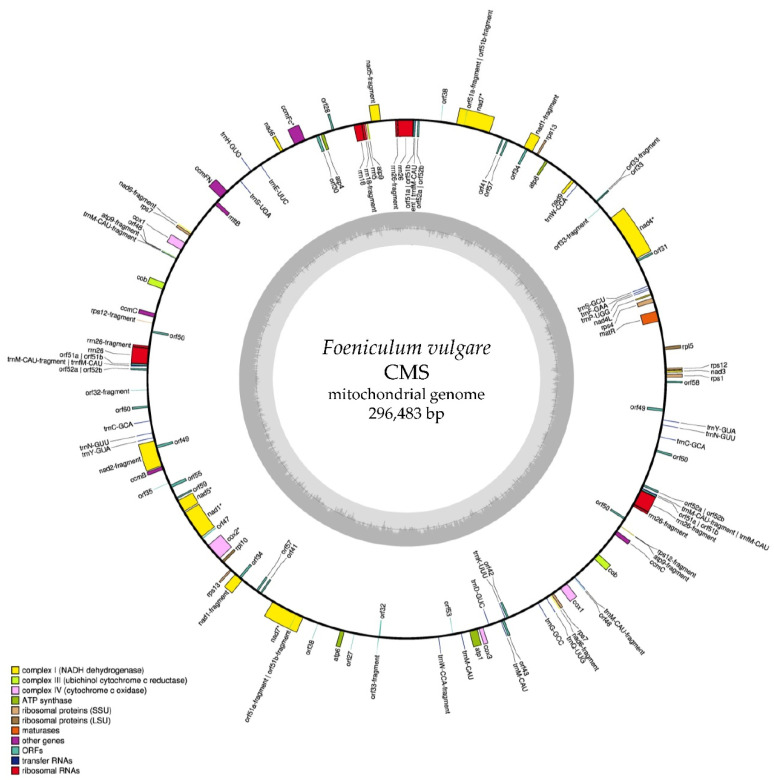
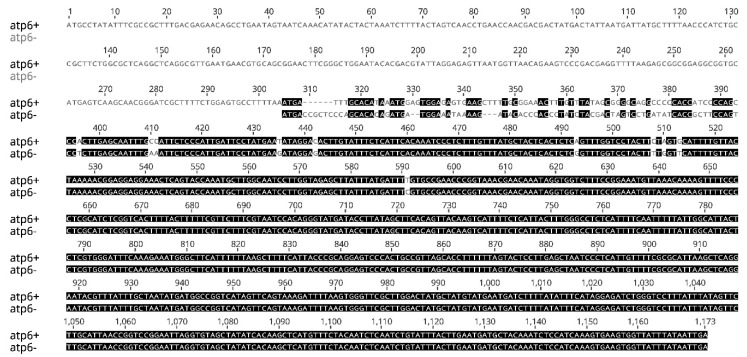
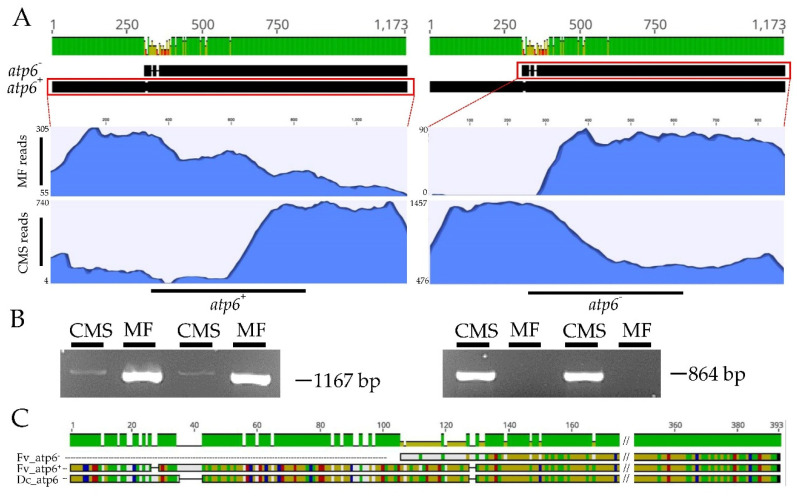
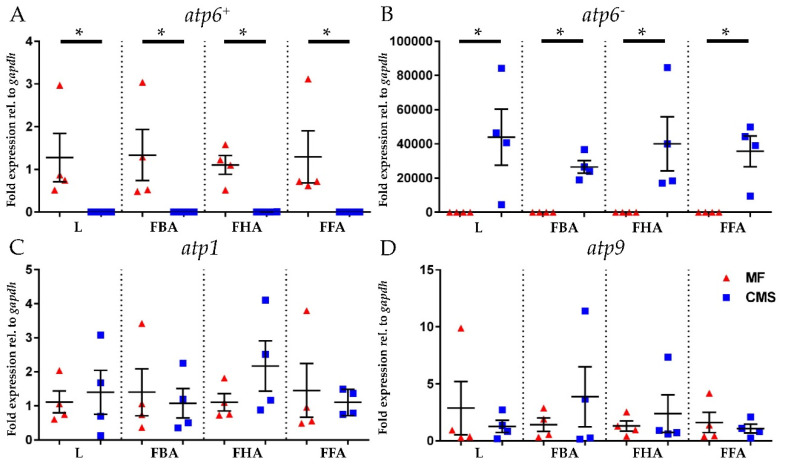
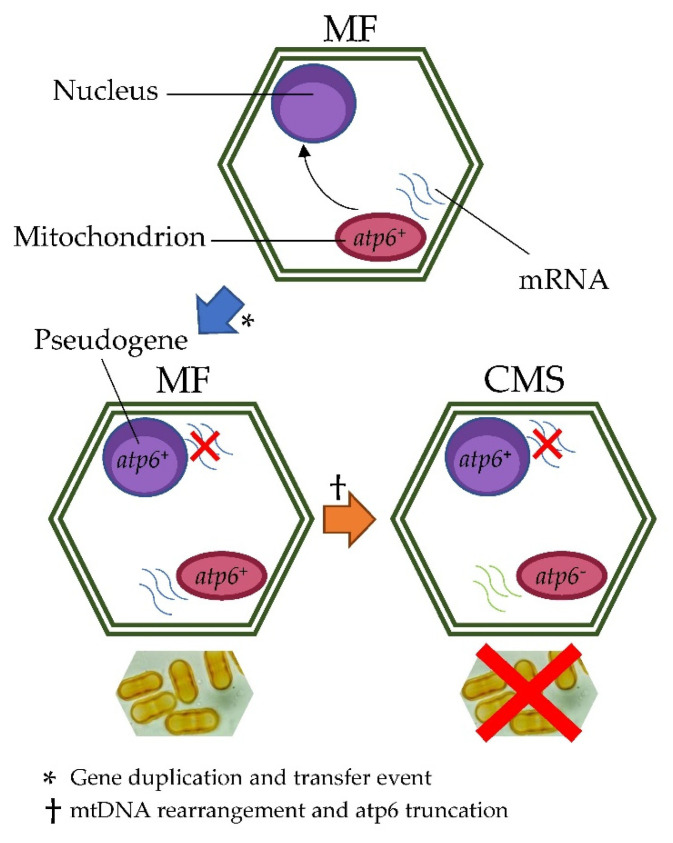
Cytoplasmic male sterility (CMS) has always aroused interest among researchers and breeders, being a valuable resource widely exploited not only to breed F1 hybrid varieties but also to investigate genes that control stamen and pollen development. With the aim of identifying candidate genes for CMS in fennel, we adopted an effective strategy relying on the comparison between mitochondrial genomes (mtDNA) of both fertile and sterile genotypes. mtDNA raw reads derived from a CMS genotype were assembled in a single molecule (296,483 bp), while a draft mtDNA assembly (166,124 nucleotides, 94 contigs) was performed using male fertile sample (MF) sequences. From their annotation and alignment, two atp6-like sequences were identified. atp6−, the putative mutant copy with a 300 bp truncation at the 5’-end, was found only in the mtDNA of CMS samples, while the wild type copy (atp6+) was detected only in the MF mtDNA. Further analyses (i.e., reads mapping and Sanger sequencing), revealed an atp6+ copy also in CMS samples, probably in the nuclear DNA. However, qPCRs performed on different tissues proved that, despite its availability, atp6+ is expressed only in MF samples, while apt6− mRNA was always detected in CMS individuals. In the light of these findings, the energy deficiency model could explain the pollen deficiency observed in male sterile flower. atp6− could represent a gene whose mRNA is translated into a not-fully functional protein leading to suboptimal ATP production that guarantees essential cellular processes but not a high energy demand process such as pollen development. Our study provides novel insights into the fennel mtDNA genome and its atp6 genes, and paves the way for further studies aimed at understanding their functional roles in the determination of male sterility.
Overview
The claims and statistics of this paper haven’t been checked yet.
Run the check — free, no account needed. It reads the open-access text and checks the sources it cites.
Integrity signals
Registry
Cites
Statistics
Figures
Verification
Claims the paper makes
The claims and statistics of this paper haven’t been checked yet.
Run the check — free, no account needed. It reads the open-access text and checks the sources it cites.
Claims other papers make about this one
Each is checked against this paper’s own text: does it say what the citing paper says it does?
In the citing paper
“Further, mitochondrial genome analysis uncovered two distinct atp6 gene sequences in cytoplasmic male sterile (CMS) lines, offering important insights for hybrid seed production (Palumbo et al. 2020).”
From Unlocking the Apiaceae: comprehensive advances in agronomy, biotechnology, phytochemistry, and health applications of major seed spices (2025) · cites this paper as Palumbo et al. 2020
Self-check
Percentages, sums and reported differences re-computed from the paper’s own numbers.
The self-check needs the paper’s full text.
Citations
Cites
Kohn, A. B., Citarella, M. R., Kocot, K. M., Bobkova, Y. V., Halanych, K. M., & Moroz, L. L. (2012) · Molecular Phylogenetics and Evolution · doi:10.1016/j.ympev.2011.12.009 · Cited by 53
Research works printed but not linked: 59
- Chen, 2014, Male Sterility and Fertility Restoration in Crops, Annu. Rev. Plant Biol., 65, 579, 10.1146/annurev-arplant-050213-040119 · DOI
- Palumbo, 2018, First draft genome sequencing of fennel (Foeniculum vulgare Mill.): Identification of simple sequence repeats and their application in marker-assisted breeding, Mol. Breed., 38, 122, 10.1007/s11032-018-0884-0 · DOI
- Tester, 2010, Breeding Technologies to Increase Crop Production in a Changing World, Science, 327, 818, 10.1126/science.1183700 · DOI
- Wang, P., Lu, Q., Ai, Y., Wang, Y., Li, T., Wu, L., Liu, J., Cheng, Q., Sun, L., and Shen, H. (2019). Candidate gene selection for cytoplasmic male sterility in pepper (Capsicum annuum L.) through whole mitochondrial genome sequencing. Int. J. Mol. Sci., 20. · DOI
- Budar, 2001, Male sterility in plants: Occurrence, determinism, significance and use, Comptes Rendus l’Academie des Sci. Ser. III, 324, 543
- Feng, 2009, Substoichiometric shifting in the fertility reversion of cytoplasmic male sterile pearl millet, Theor. Appl. Genet., 118, 1361, 10.1007/s00122-009-0986-5 · DOI
- Priyadarshan, P.M. (2019). Male sterility. Plant breeding: Classical to Modern, Springer. · DOI
- Kim, 2019, Identification of a gene responsible for cytoplasmic male-sterility in onions (Allium cepa L.) using comparative analysis of mitochondrial genome sequences of two recently diverged cytoplasms, Theor. Appl. Genet., 132, 313, 10.1007/s00122-018-3218-z · DOI
- Park, 2013, Complete mitochondrial genome sequence and identification of a candidate gene responsible for cytoplasmic male sterility in radish (Raphanus sativus L.) containing DCGMS cytoplasm, Theor. Appl. Genet., 126, 1763, 10.1007/s00122-013-2090-0 · DOI
- Nakajima, 2001, A novel orfB-related gene of carrot mitochondrial genomes that is associated with homeotic cytoplasmic male sterility (CMS), Plant Mol. Biol., 46, 99, 10.1023/A:1010652118518 · DOI
- Jing, 2012, A male sterility-associated cytotoxic protein ORF288 in Brassica juncea causes aborted pollen development, J. Exp. Bot., 63, 1285, 10.1093/jxb/err355 · DOI
- Yamamoto, 2005, The 5′-leader sequence of sugar beet mitochondrial atp6 encodes a novel polypeptide that is characteristic of Owen cytoplasmic male sterility, Mol. Genet. Genomics, 273, 342, 10.1007/s00438-005-1140-y · DOI
- Wang, 2006, Cytoplasmic Male Sterility of Rice with Boro II Cytoplasm Is Caused by a Cytotoxic Peptide and is restored by Two Related PPR Motif Genes via Distinct Modes of mRNA Silencing, Plant Cell, 18, 676, 10.1105/tpc.105.038240 · DOI
- Tang, 1996, Transcript processing internal to a mitochondrial open reading frame is correlated with fertility restoration in male-sterile sorghum, Plant J., 10, 123, 10.1046/j.1365-313X.1996.10010123.x · DOI
- National Library of Medicine National Center for Biotechnology Information (2020, June 30). Nucleotide Database, Available online: https://www.ncbi.nlm.nih.gov/nucleotide/.
- Liu, 2006, A YA-type cytoplasmic male-sterile source in common wheat, Plant Breed., 125, 437, 10.1111/j.1439-0523.2006.01286.x · DOI
- Huang, 2014, Workable male sterility systems for hybrid rice: Genetics, biochemistry, molecular biology, and utilization, Rice, 7, 1, 10.1186/s12284-014-0013-6 · DOI
- Freeling, M., and Walbot, V. (1994). Male sterility and restorer genes in maize. The Maize Handbook, Springer-Verlag. · DOI
- Zhao, 2016, MutS HOMOLOG1 silencing mediates ORF220 substoichiometric shifting and causes male sterility in Brassica juncea, J. Exp. Bot., 67, 435, 10.1093/jxb/erv480 · DOI
- Heng, 2018, Morphological and genetic characterization of a new cytoplasmic male sterility system (oxa CMS) in stem mustard (Brassica juncea), Theor. Appl. Genet., 131, 59, 10.1007/s00122-017-2985-2 · DOI
- Wang, Y., Wang, Q., Hao, W., Li, J., Qi, M., and Zhang, L. (2020). Mitochondrial Genome Sequencing Reveals orf463a May Induce Male Sterility in NWB Cytoplasm. Genes, 11. · DOI
- Horn, 1991, Cytoplasmic male sterility in sunflower is correlated with the co-transcription of a new open reading frame with the atpA gene, Mol. Gen. Genet., 227, 369, 10.1007/BF00273925 · DOI
- Quagliotti, L., Accati, E., and Milanesio, M. (October, January 30). Preliminary report on a functional type of male-sterility in fennel. Proceedings of the 5th Eucarpia Congress, Milan, Italy.
- Ramanujam, 1970, Heterosis breeding in fennel, Indian J. Genet. Plant Breed., 30, 732
- Peery, R., Kuehl, J.V., Boore, J.L., and Raubeson, L. (August, January 28). Comparisons of three Apiaceae chloroplast genomes—coriander, dill and fennel. Proceedings of the Botany 2006 Meeting, Chico, CA, USA.
- Palumbo, 2018, The leaf transcriptome of fennel (Foeniculum vulgare Mill.) enables characterization of the t-anethole pathway and the discovery of microsatellites and single-nucleotide variants, Sci. Rep., 8, 1, 10.1038/s41598-018-28775-2 · DOI · Paper page
- Li, 2018, The comparison of four mitochondrial genomes reveals cytoplasmic male sterility candidate genes in cotton, BMC Genomics, 19, 1, 10.1186/s12864-018-5122-y · DOI
- Allen, 2007, Comparisons among two fertile and three male-sterile mitochondrial genomes of maize, Genetics, 177, 1173, 10.1534/genetics.107.073312 · DOI
- (2020, June 30). National Center for Biotechnology Information (NCBI), Organelle Genome Resources, Available online: https://www.ncbi.nlm.nih.gov/genome/organelle/.
- Wu, 2019, Mitochondrial genome and transcriptome analysis of five alloplasmic male-sterile lines in Brassica juncea, BMC Genomics, 20, 1, 10.1186/s12864-019-5721-2 · DOI
- Tillich, 2017, GeSeq–Versatile and accurate annotation of organelle genomes, Nucleic Acids Res., 45, W6, 10.1093/nar/gkx391 · DOI
- Ranjbarian, 2018, Identification of highly effective antitrypanosomal compounds in essential oils from the Apiaceae family, Ecotoxicol. Environ. Saf., 156, 154, 10.1016/j.ecoenv.2018.03.032 · DOI
- Talou, 2017, The Apiaceae: Ethnomedicinal family as source for industrial uses, Ind. Crops Prod., 109, 661, 10.1016/j.indcrop.2017.09.027 · DOI
- Lee, H.O., Joh, H.J., Kim, K., Lee, S.C., Kim, N.H., Park, J.Y., Park, H.S., Park, M.S., Kim, S., and Kwak, M. (2019). Dynamic chloroplast genome rearrangement and DNA barcoding for three apiaceae species known as the medicinal herb “bang-poong”. Int. J. Mol. Sci., 20. · DOI
- Yao, 2019, The complete chloroplast genome of Torilis scabra (Apiaceae), Mitochondrial DNA Part B Resour., 4, 2914, 10.1080/23802359.2019.1661303 · DOI
- Tan, 2018, Different lengths, copies and expression levels of the mitochondrial atp6 gene in male sterile and fertile lines of carrot (Daucus carota L.), Mitochondrial DNA Part A DNA Mapp. Seq. Anal., 29, 446, 10.1080/24701394.2017.1303492 · DOI
- Gualberto, 2017, Plant Mitochondrial Genomes: Dynamics and Mechanisms of Mutation, Annu. Rev. Plant Biol., 68, 225, 10.1146/annurev-arplant-043015-112232 · DOI
- Kozik, 2019, The alternative reality of plant mitochondrial DNA: One ring does not rule them all, PLoS Genet., 15, 1, 10.1371/journal.pgen.1008373 · DOI
- Sloan, 2013, One ring to rule them all? Genome sequencing provides new insights into the “master circle” model of plant mitochondrial DNA structure, New Phytol., 200, 978, 10.1111/nph.12395 · DOI
- Mower, 2012, Evidence against equimolarity of large repeat arrangements and a predominant master circle structure of the mitochondrial genome from a monkeyflower (Mimulus guttatus) lineage with cryptic CMS, Genome Biol. Evol., 4, 670, 10.1093/gbe/evs042 · DOI
- Zhang, 2019, Deciphering tea tree chloroplast and mitochondrial genomes of Camellia sinensis var, assamica. Sci. Data, 6, 209, 10.1038/s41597-019-0201-8 · DOI
- Kubo, 2008, Angiosperm mitochondrial genomes and mutations, Mitochondrion, 8, 5, 10.1016/j.mito.2007.10.006 · DOI
- Morley, 2017, Plant mitochondrial DNA, Front. Biosci., 22, 1023, 10.2741/4531 · DOI
- Park, 2014, Complete sequences of organelle genomes from the medicinal plant Rhazya stricta (Apocynaceae) and contrasting patterns of mitochondrial genome evolution across asterids, BMC Genomics, 15, 1, 10.1186/1471-2164-15-405 · DOI
- Marienfeld, 1996, Genomic recombination of the mitochondrial atp6 gene in Arabidopsis thaliana at the protein processing site creates two different presequences, DNA Res., 3, 287, 10.1093/dnares/3.5.287 · DOI
- Brandvain, 2009, The functional transfer of genes from the mitochondria to the nucleus: The effects of selection, mutation, population size and rate of self-fertilization, Genetics, 182, 1129, 10.1534/genetics.108.100024 · DOI
- Funes, 2002, The typically mitochondrial DNA-encoded ATP6 subunit of the F1F0-ATPase is encoded by a nuclear gene in Chlamydomonas reinhardtii, J. Biol. Chem., 277, 6051, 10.1074/jbc.M109993200 · DOI
- Itabashi, 2009, Characterization of cytoplasmic male sterility of rice with Lead Rice cytoplasm in comparison with that with Chinsurah Boro II cytoplasm, Plant Cell Rep., 28, 233, 10.1007/s00299-008-0625-7 · DOI
- Dewey, 1991, Chimeric mitochondrial genes expressed in the C male-sterile cytoplasm of maize, Curr. Genet., 20, 475, 10.1007/BF00334775 · DOI
- Zhao, 2016, Mutation in the coding sequence of atp6 are associated with male sterile cytoplasm in kenaf (Hibiscus cannabinus L.), Euphytica, 207, 169, 10.1007/s10681-015-1559-0 · DOI
- Makarenko, M.S., Usatov, A.V., Tatarinova, T.V., Azarin, K.V., Logacheva, M.D., Gavrilova, V.A., Kornienko, I.V., and Horn, R. (2019). Organization features of the mitochondrial genome of sunflower (Helianthus annuus L.) with ANN2-type male-sterile cytoplasm. Plants, 8. · DOI
- Ducos, 2001, The male sterile G cytoplasm of wild beet displays modified mitochondrial respiratory complexes, Plant J., 26, 171, 10.1046/j.1365-313x.2001.01017.x · DOI
- An, 2014, Comparative transcript profiling of the fertile and sterile flower buds of pol CMS in B. napus, BMC Genomics, 15, 2, 10.1186/1471-2164-15-258 · DOI
- Sabar, 2003, ORFB is a subunit of F1F0-ATP synthase: Insight into the basis of cytoplasmic male sterility in sunflower, EMBO Rep., 4, 381, 10.1038/sj.embor.embor800 · DOI
- Jin, J.-J., Yu, W.-B., Yang, J.-B., Song, Y., DePamphilis, C.W., Yi, T.-S., and Li, D.-Z. (2019). GetOrganelle: A fast and versatile toolkit for accurate de novo assembly of organelle genomes. bioRxiv, 1–31. · DOI
- Bankevich, 2012, SPAdes: A new genome assembly algorithm and its applications to single-cell sequencing, J. Comput. Biol., 19, 455, 10.1089/cmb.2012.0021 · DOI
- Langmead, 2012, Fast gapped-read alignment with Bowtie 2, Nat. Methods, 9, 357, 10.1038/nmeth.1923 · DOI · Paper page
- Kearse, 2012, Geneious Basic: An integrated and extendable desktop software platform for the organization and analysis of sequence data, Bioinformatics, 28, 1647, 10.1093/bioinformatics/bts199 · DOI
- Livak, 2001, Analysis of relative gene expression data using real-time quantitative PCR and the 2-ΔΔCT method, Methods, 25, 402, 10.1006/meth.2001.1262 · DOI · Paper page
Cited by
Singh, R., Choudhary, S., Kumari, V., Meena, R. S., Meena, N. K., Y, R., & Verma, A. K. (2025) · Journal of Agriculture and Ecology · doi:10.58628/jae-2521-101
Metadata
- Authors
- Palumbo, F., Vitulo, N., Vannozzi, A., Magon, G., & Barcaccia, G.
- Affiliations
- Department of Agronomy Food Natural Resources Animals and Environment (DAFNAE), University of Padova, Campus of Agripolis, Viale dell’Università 16, 35020 Legnaro, PD, Italy
- Department of Biotechnology, University of Verona, Strada Le Grazie 15, 37134 Verona, Italy
- Venue
- International Journal of Molecular Sciences
- Publisher
- MDPI AG
- Published
- 2020-06-30
- Volume
- 21
- Issue
- 13
- Pages
- 4664
- ISSN
- 1422-0067
- PMC
- PMC7370444
- Cited by
- 17
- References
- 1
- Language
- en
About these checks
Registry, retraction, Cites and statistics results are computed, not judged, with one exception: a printed reference that no index lists is read once by a model before it counts as a citation error. Claims are extracted by a model and kept only when their quote appears verbatim in the text; each cited source is then checked, with a model’s help, for whether it says what the claim relies on. Those verdicts can be wrong — read the claim’s quote and the cited source before relying on one.
Statistics and arithmetic are recomputed, not judged.
Confidence bands are shown only for fields calibrated on our annotated test set. None is calibrated yet, so no band is shown.
What counts as a claim ›How we measure confidence ›How we check this ›
Are you an author, or do you see a problem with this page? Request a review
Data sources
Bibliographic data: Semantic Scholar, OpenAlex, Crossref.
Contains information from the Semantic Scholar Academic Graph Datasets, made available under the ODC Attribution License (ODC-BY 1.0).
Semantic Scholar’s data is described in: Kinney, R., et al. (2023). The Semantic Scholar Open Data Platform. arXiv:2301.10140.
