

Cell-Penetrable Peptide-Conjugated FADD Induces Apoptosis and Regulates Inflammatory Signaling in Cancer Cells
Open accessThe DOI matches its Crossref record; 70 of the 70 references it cites were found in a registry or an index.
Abstract
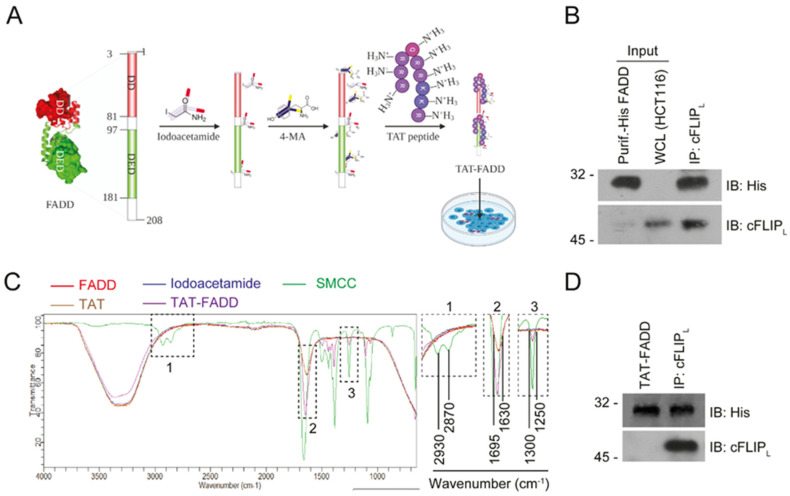
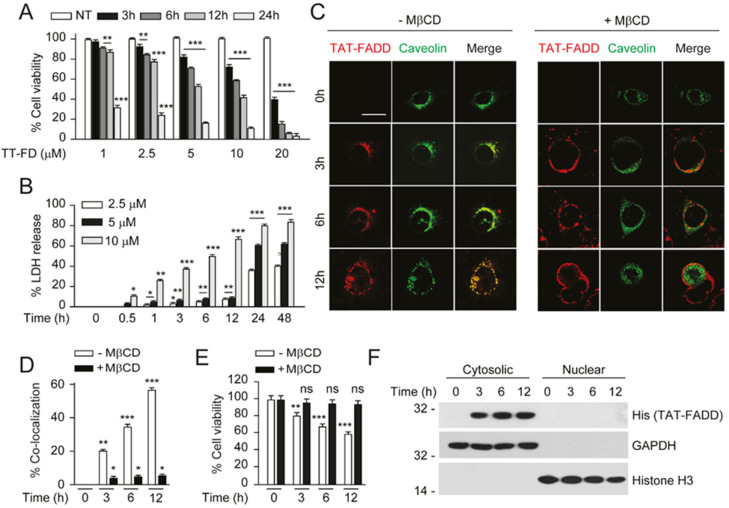
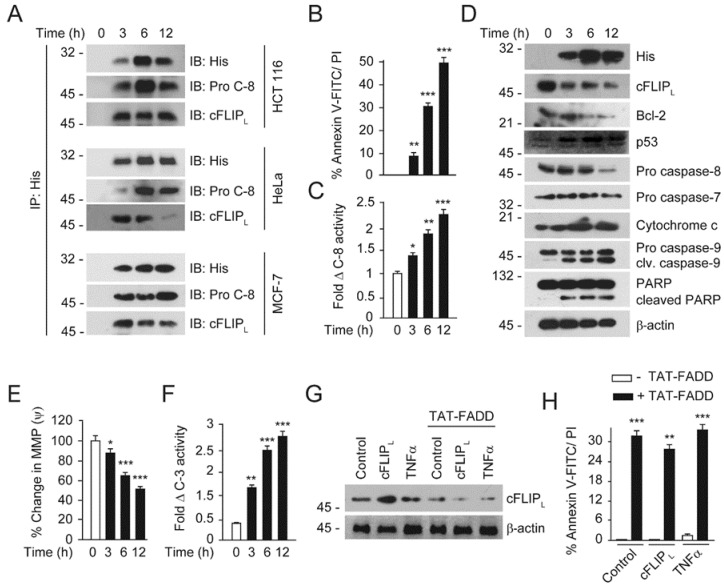
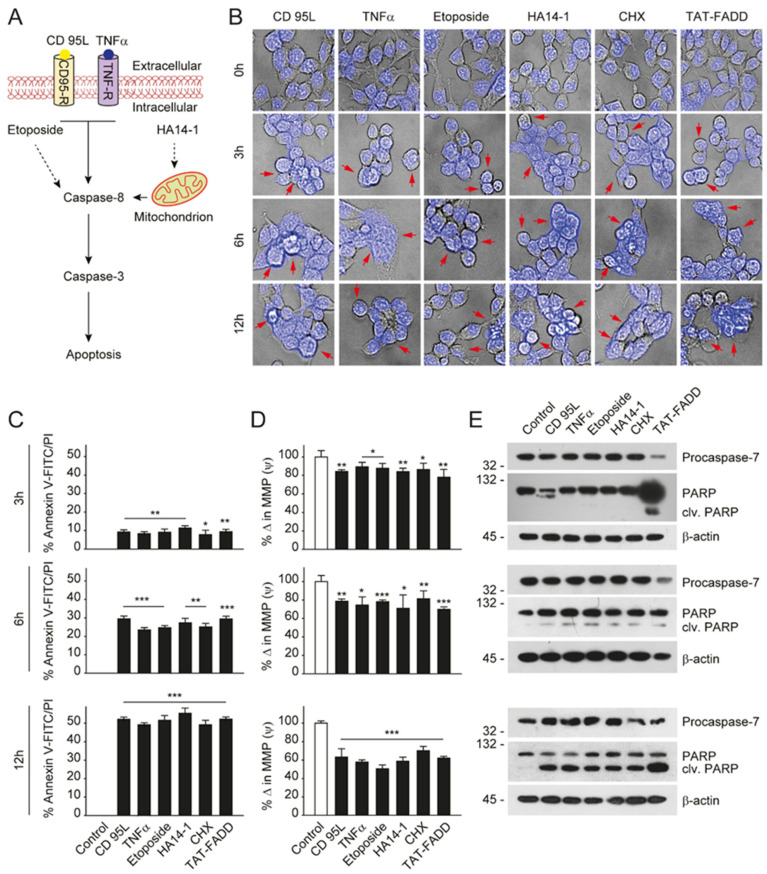
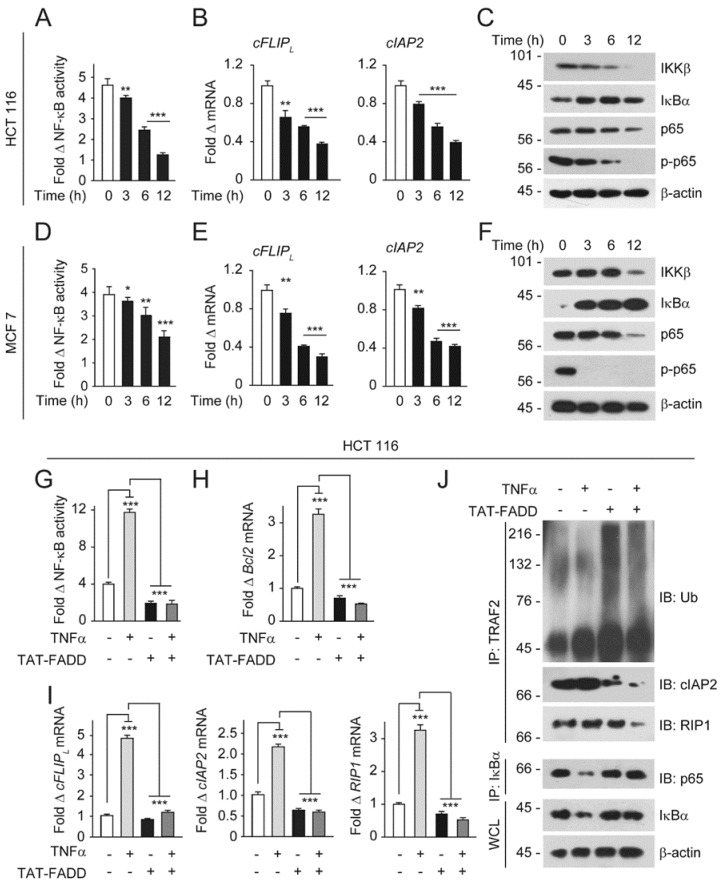
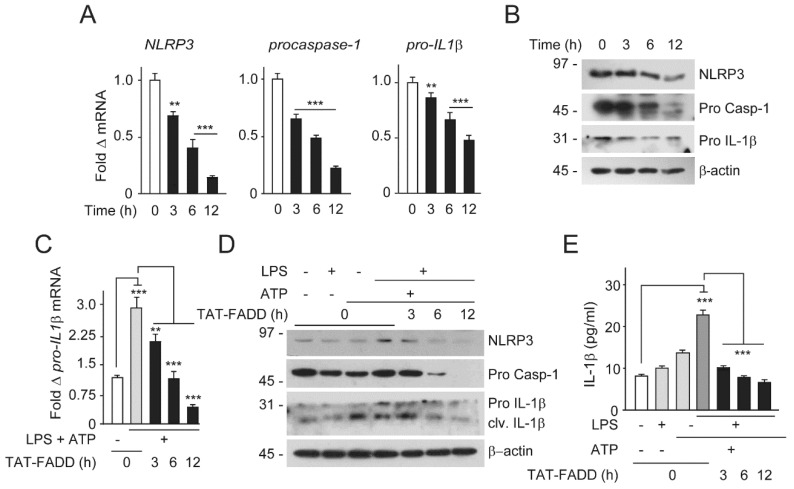
Dysregulated expression of Fas-associated death domain (FADD) is associated with the impediment of various cellular pathways, including apoptosis and inflammation. The adequate cytosolic expression of FADD is critical to the regulation of cancer cell proliferation. Importantly, cancer cells devise mechanisms to suppress FADD expression and, in turn, escape from apoptosis signaling. Formulating strategies, for direct delivery of FADD proteins into cancer cells in a controlled manner, may represent a promising therapeutic approach in cancer therapy. We chemically conjugated purified FADD protein with cell permeable TAT (transactivator of transcription) peptide, to deliver in cancer cells. TAT-conjugated FADD protein internalized through the caveolar pathway of endocytosis and retained in the cytosol to augment cell death. Inside cancer cells, TAT-FADD rapidly constituted DISC (death inducing signaling complex) assembly, which in turn, instigate apoptosis signaling. The apoptotic competency of TAT-FADD showed comparable outcomes with the conventional apoptosis inducers. Notably, TAT-FADD mitigates constitutive NF-κB activation and associated downstream anti-apoptotic genes Bcl2, cFLIPL, RIP1, and cIAP2, independent of pro-cancerous TNF-α priming. In cancer cells, TAT-FADD suppresses the canonical NLRP3 inflammasome priming and restricts the processing and secretion of proinflammatory IL-1β. Our results demonstrate that TAT-mediated intracellular delivery of FADD protein can potentially recite apoptosis signaling with simultaneous regulation of anti-apoptotic and proinflammatory NF-κB signaling activation in cancer cells.
Overview
The claims and statistics of this paper haven’t been checked yet.
Free: it reads the open-access text and checks the first 5 claims that cite a source we can check. Create a free account to check every claim.
Integrity signals
Registry
Cites
Statistics
Figures
Verification
Claims the paper makes
The claims and statistics of this paper haven’t been checked yet.
Free: it reads the open-access text and checks the first 5 claims that cite a source we can check. Create a free account to check every claim.
Claims other papers make about this one
Each is checked against this paper’s own text: does it say what the citing paper says it does?
The source backs part of the claim, not all of it — or backs it for a different population, condition or comparison.
In the citing paper
“Caveolin pathways successfully encapsulate large molecules and prevent lysosomal degradation to retain the functional activity of molecules [100].”
From Insights of Endocytosis Signaling in Health and Disease (2023) · cites this paper as [100]
Experimental — accuracy not yet measured
Self-check
Percentages, sums and reported differences re-computed from the paper’s own numbers.
The self-check needs the paper’s full text.
Citations
Cites
Martinon, F., Burns, K., & Tschopp, J. (2002) · Molecular Cell · doi:10.1016/s1097-2765(02)00599-3 · Cited by 6,066 · cited 2×
“The NF‐κB‐activated transcriptional priming of pro‐IL1β was further processed through the NLRP3 inflammasome complex to secret mature IL1β [28,29].”
BackgroundSchroder, K., & Tschopp, J. (2010) · Cell · doi:10.1016/j.cell.2010.01.040 · Cited by 5,475 · cited 2×
“The NF‐κB‐activated transcriptional priming of pro‐IL1β was further processed through the NLRP3 inflammasome complex to secret mature IL1β [28,29].”
BackgroundNF-κB regulation in the immune system
Li, Q., & Verma, I. M. (2002) · Nature Reviews Immunology · doi:10.1038/nri910 · Cited by 4,007
Mechanism and Regulation of NLRP3 Inflammasome Activation
He, Y., Hara, H., & Núñez, G. (2016) · Trends in Biochemical Sciences · doi:10.1016/j.tibs.2016.09.002 · Cited by 2,759
Induction of TNF receptor I-mediated apoptosis via two sequential signaling complexes
Micheau, O., & Tschopp, J. (2003) · Cell · doi:10.1016/s0092-8674(03)00521-x · Cited by 2,738 · cited 1×
“The canonical activation of NF-κB is triggered upon ligation of TNF-α to its cognate receptor TNF receptor 1 (TNF-R1), leading to subsequent recruitment of TNF-R1-associated death domain (TRADD), FADD, TNF receptor-associated factor 2 (TRAF2), receptor-interacting protein kinase (RIP1), and the cellular inhibitor of a…”
BackgroundNF-κB at the crossroads of life and death
Karin, M., & Lin, A. (2002) · Nature Immunology · doi:10.1038/ni0302-221 · Cited by 2,709
NF-κB, inflammation, immunity and cancer: coming of age
Taniguchi, K., & Karin, M. (2018) · Nature Reviews Immunology · doi:10.1038/nri.2017.142 · Cited by 2,679
Tat-mediated delivery of heterologous proteins into cells.
Fawell, S., Seery, J., Daikh, Y., Moore, C., Chen, L. L., Pepinsky, B., & Barsoum, J. (1994) · Proceedings of the National Academy of Sciences · doi:10.1073/pnas.91.2.664 · Cited by 1,225 · cited 1×
“The purified FADD protein was conjugated with TAT peptide as per [69] with minor modifications.”
MethodNF-κB, an Active Player in Human Cancers
Xia, Y., Shen, S., & Verma, I. M. (2014) · Cancer Immunology Research · doi:10.1158/2326-6066.cir-14-0112 · Cited by 1,213
Ubiquitin signalling in the NF-κB pathway
Chen, Z. J. (2005) · Nature Cell Biology · doi:10.1038/ncb0805-758 · Cited by 1,184
Cited by
Lv, C., Kang, W., Liu, S., Yang, P., Nishina, Y., Ge, S., Bianco, A., & Ma, B. (2022) · ACS Nano · doi:10.1021/acsnano.2c05532 · Cited by 133
Insights of Endocytosis Signaling in Health and Disease
Pathak, C., Vaidya, F. U., Waghela, B. N., Jaiswara, P. K., Gupta, V. K., Kumar, A., Rajendran, B. K., & Ranjan, K. (2023) · International Journal of Molecular Sciences · doi:10.3390/ijms24032971 · Cited by 59
“Caveolin pathways successfully encapsulate large molecules and prevent lysosomal degradation to retain the functional activity of molecules [100].”
BackgroundSelf-citationFADD as a key molecular player in cancer progression
Liu, Y., Li, X., Zhou, X., Wang, J., & Ao, X. (2022) · Molecular Medicine · doi:10.1186/s10020-022-00560-y · Cited by 51
“Luciferase reporter and quantitative real-time polymerase chain reaction (qRT-PCR) assays showed that TAT-FADD significantly reduced the activation of NF-κB in HCT-116 cells, leading to the inhibition of anti-apoptotic genes, including Bcl2, cIAPs, RIP1, and cFLIPL (Ranjan et al. 2020).”
MethodUnleashing cell-penetrating peptide applications for immunotherapy
Koo, J., Kim, G., Nam, K.-H., & Choi, J. (2022) · Trends in Molecular Medicine · doi:10.1016/j.molmed.2022.03.010 · Cited by 45
Cellular Dynamics of Fas-Associated Death Domain in the Regulation of Cancer and Inflammation
Ranjan, K., & Pathak, C. (2024) · International Journal of Molecular Sciences · doi:10.3390/ijms25063228 · Cited by 37
Self-citationTAT for Enzyme/Protein Delivery to Restore or Destroy Cell Activity in Human Diseases
Lichtenstein, M., Zabit, S., Hauser, N., Farouz, S., Melloul, O., Hirbawi, J., & Lorberboum‐Galski, H. (2021) · Life · doi:10.3390/life11090924 · Cited by 29
“Similarly, the human Fas-associated death domain (FADD) protein was chemically conjugated to the TAT peptide for delivery into cancer cells [81].”
MethodApoptosis, a Metabolic “Head-to-Head” between Tumor and T Cells: Implications for Immunotherapy
Franzese, O., Ancona, P., Bianchi, N., & Aguiari, G. (2024) · Cells · doi:10.3390/cells13110924 · Cited by 28
“Therefore, the delivery of FADD proteins into cancer cells could represent a promising therapeutic approach for tumor therapy [29].”
BackgroundMineo, S., Takahashi, N., Yamada‐Hara, M., Tsuzuno, T., Aoki‐Nonaka, Y., & Tabeta, K. (2021) · Archives of Oral Biology · doi:10.1016/j.archoralbio.2021.105215 · Cited by 22
Spotlight on HIV-derived TAT peptide as a molecular shuttle in drug delivery
Maani, Z., Rahbarnia, L., Bahadori, A., Chollou, K. M., & Farajnia, S. (2024) · Drug Discovery Today · doi:10.1016/j.drudis.2024.104191 · Cited by 16
Pan, S., Meng, H., Fan, T. T., Hao, B., Song, C., Li, D., Li, N., & Geng, Q. (2022) · Frontiers in Genetics · doi:10.3389/fgene.2022.900159 · Cited by 16
Yokoo, H. (2022) · doi:10.1002/9783527835997.ch13 · Cited by 9
Tereshkina, Y. A., Kostryukova, L. V., Tikhonova, E. G., Khudoklinova, Y. Y., Orlova, N. A., Gisina, A. M., Morozevich, G. E., Melnikov, P., & Pokrovsky, V. S. (2022) · Pharmaceutics · doi:10.3390/pharmaceutics14102224 · Cited by 8
Identification and characterization of eccDNA-driven genes in humans
Gu, Y., Song, Y., & Liu, J. (2025) · PLoS ONE · doi:10.1371/journal.pone.0324438 · Cited by 8
“TAT-FADD could regulate anti-apoptotic and proinflammatory signaling through NF-Κ b [102].”
Sun, Y., Ma, Q., Chen, Y., Liao, D., & Kong, F. (2024) · The Clinical Respiratory Journal · doi:10.1111/crj.13755 · Cited by 6
“18,19 FADD was initially described as a connector molecule for death receptor-mediated apoptosis, and subsequent studies have demonstrated its antitumorigenicity and possibly tumorigenicity.”
BackgroundCPP Applications in Immune Modulation and Disease Therapy
Koo, J., Kim, W., & Choi, J. (2021) · Methods in molecular biology · doi:10.1007/978-1-0716-1752-6_23 · Cited by 5
A New Prognostic Signature Constructed with Necroptosis-Related lncRNA in Bladder Cancer
Yu, Z., Lu, B., Gao, H., & Liang, R. (2022) · Journal of Oncology · doi:10.1155/2022/5643496 · Cited by 6
The diagnostic or prognostic values of FADD in cancers based on pan‑cancer analysis
Wang, C.-Y., Jiang, X., Zhao, Q., Xie, Z., & Cai, H. (2023) · Biomedical Reports · doi:10.3892/br.2023.1659 · Cited by 5
“Previous studies have demonstrated that FADD is involved in and regulates signaling complexes, including necrosomes, endosomes and inflammasomes (1,15,16).”
Pathak, C., Ansari, A., Kumar, A., & Ranjan, K. (2025) · Journal of Molecular Pathology · doi:10.3390/jmp6040032 · Cited by 6
“This death domain facilitates the binding of FADD and cFLIP, which can switch the activation or inactivation of caspase-8 and the formation of the death-inducing signaling complex (DISC) to execute a downstream caspase cascade for regulation of cell death [33,37,38].”
Self-citationShen, B., Wen-wen, H., Tan, X., Gu, K. J., Naseem, D. F., Zheng, G., Li, G., Lou, J., & Chen, C. (2024) · Molecular Carcinogenesis · doi:10.1002/mc.23734 · Cited by 3
Yang, J., Kong, W., Wei, C., Wang, X., Meng, Q., Jia, C., Zhang, Z., Li, J., & Meng, Q. (2025) · Animal Advances · doi:10.48130/animadv-0025-0031 · Cited by 2
Apoptosis-Related Diseases and Peroxisomes
Wang, M., Liu, Y., Chen, N., Wang, J., & Zhao, Y. (2022) · Physiology · doi:10.5772/intechopen.105052
Langel, Ü. (2023) · Springer eBooks · doi:10.1007/978-3-031-38731-9_7 · Cited by 2
Xu, S., Liao, S., Xi, J., Gong, L., Zou, X., Yang, X., Di, J., Zhang, X., & Gui, C. (2024) · Food Science and Human Wellness · doi:10.26599/fshw.2024.9250359
Emerging Concept of Receptor Endocytosis and Signaling
Kumar, A., Panda, A., Kumar, S., & Ranjan, K. (2025) · The Receptors · doi:10.1007/978-3-031-81991-9_3
Self-citation
Metadata
- Authors
- Ranjan, K., Waghela, B. N., Vaidya, F. U., & Pathak, C.
- Affiliations
- Indian Institute of Advanced Research (IN)
- Corresponding author
- Pathak, Chandramani
- Venue
- International Journal of Molecular Sciences
- Publisher
- MDPI AG
- Published
- 2020-09-19
- Volume
- 21
- Issue
- 18
- Pages
- 6890
- ISSN
- 1422-0067 (ISSN-L)
- PMC
- PMC7555701
- OpenAlex
- W3087422657
- Cited by
- 24
- References
- 70
- Citations by year
- 2025: 4 · 2024: 6 · 2023: 3 · 2022: 8 · 2021: 3
- FWCI
- 1.14
- Type
- journal article
- Language
- en
- Open access
- gold
- doi.org
- Licence
- Locations
- International Journal of Molecular Sciences (publishedVersion, cc-by)
- PubMed Central (publishedVersion, cc-by)
- PubMed (publishedVersion)
- DOAJ (DOAJ: Directory of Open Access Journals) (submittedVersion, cc-by-sa)
- Funders
- Department of Biotechnology, Ministry of Science and Technology, India (6242/P60/RGCB/PMD/DBT/CMPK/2015)
- Department of Science & Technology (EMR/2016/002574)
- Topics
- Life Sciences › Biochemistry, Genetics and Molecular Biology › Molecular Biology › Cell death mechanisms and regulation
- Life Sciences › Biochemistry, Genetics and Molecular Biology › Molecular Biology › RNA Interference and Gene Delivery
- Health Sciences › Medicine › Oncology › Cancer-related Molecular Pathways
- Keywords
- FADD, cell-penetrating peptides, apoptosis, NF-κB signaling, NLRP3 inflammasome, IL-1β, death-inducing signaling complex, caveolar endocytosis, anti-apoptotic proteins, cancer therapy, protein delivery
- MeSH terms
- RAW 264.7 Cells, Animals, Gene Expression Regulation, HeLa Cells, Humans, Neoplasm Proteins, Neoplasms, Apoptosis, HCT116 Cells, Mice, Fas-Associated Death Domain Protein, Hep G2 Cells, HEK293 Cells, Cell-Penetrating Peptides, MCF-7 Cells
About these checks
Registry, retraction, Cites and statistics results are computed, not judged, with one exception: a printed reference that no index lists is read once by a model before it counts as a citation error. Claims are extracted by a model and kept only when their quote appears verbatim in the text; each cited source is then checked, with a model’s help, for whether it says what the claim relies on. Those verdicts can be wrong — read the claim’s quote and the cited source before relying on one.
Statistics and arithmetic are recomputed, not judged.
Confidence bands are shown only for fields calibrated on our annotated test set. None is calibrated yet, so no band is shown.
What counts as a claim ›How we measure confidence ›How we check this ›
Are you an author, or do you see a problem with this page? Request a review
Data sources
Bibliographic data: Semantic Scholar, OpenAlex, Crossref.
Contains information from the Semantic Scholar Academic Graph Datasets, made available under the ODC Attribution License (ODC-BY 1.0).
Semantic Scholar’s data is described in: Kinney, R., et al. (2023). The Semantic Scholar Open Data Platform. arXiv:2301.10140.
