

The Extracts of Dendrobium Alleviate Dry Eye Disease in Rat Model by Regulating Aquaporin Expression and MAPKs/NF-κB Signalling
Open accessThe DOI matches its Crossref record; 48 of the 48 references it cites were found in a registry or an index.
Abstract
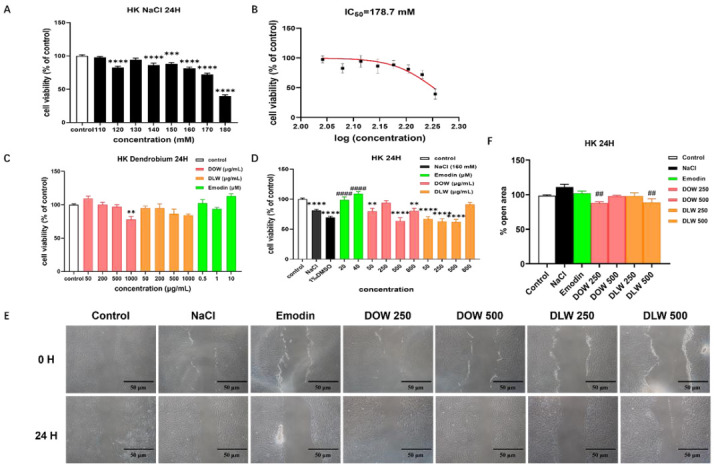
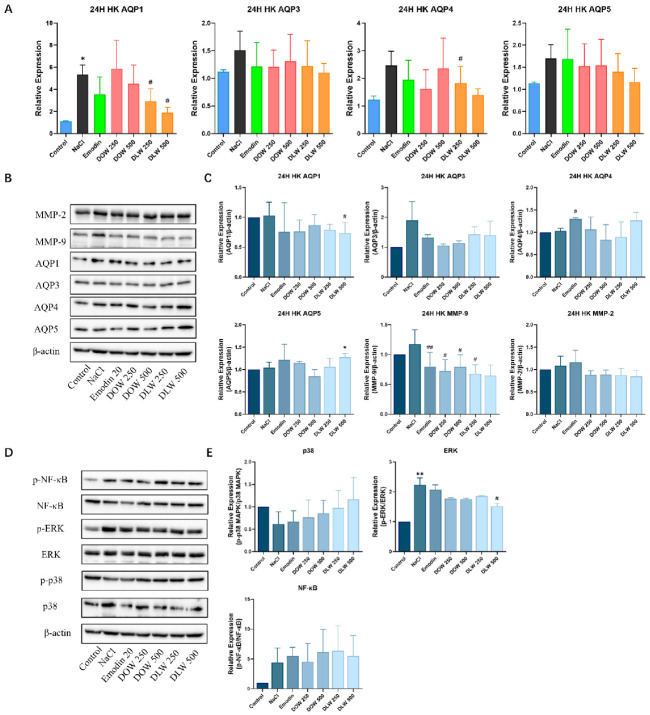
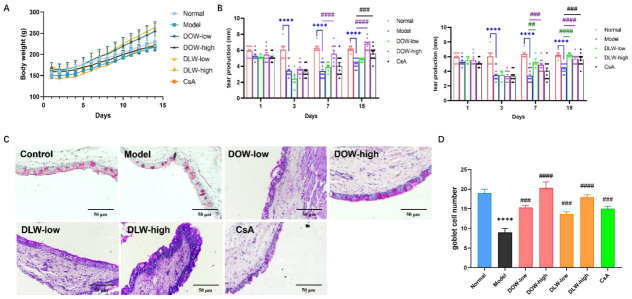
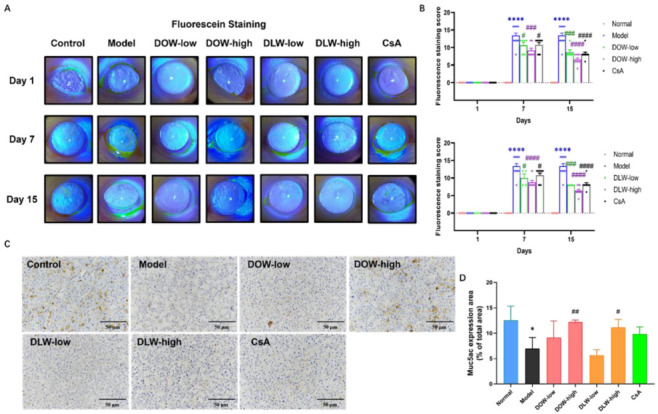
Dry eye is one of the most common ocular surface diseases caused by tear film instability and ocular surface damage due to an abnormal quality or quantity of tears. Inflammatory factors can initiate relevant transduction signalling pathways and trigger the inflammatory cascade response, resulting in ocular surface inflammation. It has been shown that the active ingredients in Dendrobium, such as polysaccharides, alkaloids and phenols, have anti-inflammatory, anti-tumour and immunity-boosting effects, and Dendrobium officinale extract can improve glandular secretion function, increase salivary secretion and increase the expression level of water channel protein in salivary glands in patients with dry eye syndromes. We investigated the in vitro cytoprotective effect of Dendrobium extracts in sodium chloride induced hyperosmotic conditions in human cornea keratocytes (HKs). Results showed that Dendrobium officinale Kimura et Migo water extract (DOW) and Dendrobium loddigesii Rolfe water extract (DLW) could upregulate the expression of aquaporins (AQP)5 protein, thus exerting a repairing effect by promoting cell migration. Furthermore, oral administration of DOW and DLW enhanced tear production in rats and exerted a protective effect on ocular surface damage. DOW and DLW could upregulate the expression of AQP5 and mucin (muc)5ac proteins in the lacrimal gland and reduce the inflammatory response. DOW and DLW inhibited the activation of the corresponding mitogen-activated protein kinases (MAPK) and NF-KB pathway, thereby playing a role in improving dry eye symptoms. This study provides a new perspective on dry eye treatment, and DOW and DLW may be potential therapeutic agents for dry eye.
Overview
The claims and statistics of this paper haven’t been checked yet.
Free: it reads the open-access text and checks the first 5 claims that cite a source we can check. Create a free account to check every claim.
Integrity signals
Registry
Cites
Statistics
Figures
Verification
Claims the paper makes
The claims and statistics of this paper haven’t been checked yet.
Free: it reads the open-access text and checks the first 5 claims that cite a source we can check. Create a free account to check every claim.
Claims other papers make about this one
Each is checked against this paper’s own text: does it say what the citing paper says it does?
The source backs part of the claim, not all of it — or backs it for a different population, condition or comparison.
In the citing paper
“an oral administration of Dendrobium officinale extract downregulated the phosphorylation of ERK in human corneal keratocytes and upregulated various aquaporins”
From MAPK Pathways in Ocular Pathophysiology: Potential Therapeutic Drugs and Challenges (2023) · cites this paper as [162]
Experimental — accuracy not yet measuredThe cited source says what the claim attributes to it.
In the citing paper
“while its oral administration in rats enhanced tear production and had a protective effect on ocular surface damage [ 162 ]”
From MAPK Pathways in Ocular Pathophysiology: Potential Therapeutic Drugs and Challenges (2023) · cites this paper as [162]
Self-check
Percentages, sums and reported differences re-computed from the paper’s own numbers.
The self-check needs the paper’s full text.
Citations
Cites
Shared Principles in NF-κB Signaling
Hayden, M. S., & Ghosh, S. (2008) · Cell · doi:10.1016/j.cell.2008.01.020 · Cited by 4,494 · cited 1×
“It has been shown that tumour growth, inflammation, immune response, cell growth and differentiation, infectious shock, viral infection and immune system dysplasia are all associated with an imbalance in inflammatory transcription factor NF-κB regulation [8,9].”
BackgroundTFOS DEWS II Definition and Classification Report
Craig, J. P., Nichols, K. K., Akpek, E. K., Caffery, B., Dua, H. S., Joo, C.-K., Liu, Z., Nelson, J. D., Nichols, J. J., Tsubota, K., et al. (2017) · The Ocular Surface · doi:10.1016/j.jtos.2017.05.008 · Cited by 3,383 · cited 2×
“In the 2014 consensus on the definition and diagnosis of dry eye developed by the Asian Dry Eye Society, dry eye was clearly defined as a chronic disease [2].”
Background(2007) · The Ocular Surface · doi:10.1016/s1542-0124(12)70081-2 · Cited by 3,267
Luo, L., Li, D.-Q., Doshi, A., Farley, W., Corrales, R. M., & Pflugfelder, S. C. (2004) · Investigative Opthalmology & Visual Science · doi:10.1167/iovs.03-1145 · Cited by 595
De Paiva, C. S., Corrales, R. M., Villarreal, A. L., Farley, W. J., Li, D.-Q., Stern, M. E., & Pflugfelder, S. C. (2006) · Experimental Eye Research · doi:10.1016/j.exer.2006.02.004 · Cited by 451
In-depth analysis of the human tear proteome
Zhou, L., Zhao, S. Z., Koh, S. K., Chen, L., Vaz, C., Tanavde, V., Li, X. R., & Beuerman, R. W. (2012) · Journal of Proteomics · doi:10.1016/j.jprot.2012.04.053 · Cited by 379 · cited 1×
“It secretes proteins and fluids into the tear film, which is essential for maintaining a healthy ocular surface and a smooth refractive interface for light to enter the eye [40].”
BackgroundDry eye disease and oxidative stress
Seen, S., & Tong, L. (2018) · Acta Ophthalmologica · doi:10.1111/aos.13526 · Cited by 356
Prevalence of dry eye among adult Chinese in the Beijing Eye Study
Jie, Y., Xu, L., Wu, Y. Y., & Jonas, J. B. (2009) · Eye · doi:10.1038/sj.eye.6703101 · Cited by 354 · cited 1×
“In addition, epidemiological studies have shown that the incidence of dry eye increases with age [5].”
BackgroundLi, D.-Q., Luo, L., Chen, Z., Kim, H.-S., Song, X. J., & Pflugfelder, S. C. (2006) · Experimental Eye Research · doi:10.1016/j.exer.2005.08.019 · Cited by 345
Hyperosmolar Saline Is a Proinflammatory Stress on the Mouse Ocular Surface
Luo, L., Li, D.-Q., Corrales, R. M., & Pflugfelder, S. C. (2005) · Eye & Contact Lens: Science & Clinical Practice · doi:10.1097/01.icl.0000162759.79740.46 · Cited by 340
Research works printed but not linked: 1
- Lou H. Li Z.J. Research progress of nf-κb in the field of ophthalmology Int. Eye Sci. 2017 17 266 269
Cited by
MAPK Pathways in Ocular Pathophysiology: Potential Therapeutic Drugs and Challenges
Moustardas, P., Aberdam, D., & Lagali, N. (2023) · Cells · doi:10.3390/cells12040617 · Cited by 63
“In a rabbit DED model, the Chinese plant, Esculetin, reduced inflammation and dry eye symptoms through specific inhibition of the ERK1/2 pathway [161], and recently it has been reported that an oral administration of Dendrobium officinale extract downregulated the phosphorylation of ERK in human corneal keratocytes an…”
BackgroundLi, Y., Chang, Q., Xia, P., & Zong-suo, L. (2024) · Phytochemistry Reviews · doi:10.1007/s11101-024-09973-5 · Cited by 37
“…inhibit the activation of the corresponding mitogen-activated protein kinases (MAPK) and nuclear factor-kappa B (NF-κ B) pathways in the hyperosmotic in vitro human cornea keratocytes model and in vivo scopolamine-induced dry eye disease rats, thereby improving dry eye symptoms (Ling et al. 2022).”
Wei, X. L., Wang, D., Xu, Z., Liu, J., Zhu, Q., Chen, Q., Tang, H., & Xu, W. (2024) · Heliyon · doi:10.1016/j.heliyon.2024.e37541 · Cited by 24
Zhou, Y., Ma, B., Liu, Q., Duan, H., Huo, Y., Zhao, L., Chen, J., Han, W., & Qi, H. (2024) · Investigative Ophthalmology & Visual Science · doi:10.1167/iovs.65.1.4 · Cited by 14
Aquaporins in lacrimal glands and their role in dry eye disease
Bai, Y., Zhang, K., Cao, X., & Chen, P. (2023) · Experimental Eye Research · doi:10.1016/j.exer.2023.109676 · Cited by 12
Role of Chinese Medicine Monomers in Dry Eye Disease: Breaking the Vicious Cycle of Inflammation
Hu, Z., Chen, X., Hu, Q., Zou, M., & Liu, Z. (2025) · Pharmacology Research & Perspectives · doi:10.1002/prp2.70077 · Cited by 10
“In vivo and in vitro studies have found that dendrobium extract could suppress the activation of NF-κB and MAPK pathway-related proteins by inhibiting their phosphorylation, thereby ameliorating the imbalance in the ocular surface microenvironment of DED [119].”
Aquaporin 5 in the eye: Expression, function, and roles in ocular diseases
Zhang, K., Di, G., Bai, Y., Liu, A., Bian, W., & Chen, P. (2023) · Experimental Eye Research · doi:10.1016/j.exer.2023.109557 · Cited by 9
Lee, K., Gwon, H., Shim, J. J., Kim, J.-Y., & Lee, J. H. (2024) · International Journal of Molecular Sciences · doi:10.3390/ijms25063528 · Cited by 8
“…epithelium , which is a defining characteristic of DEs . the pro-inflammatory protein levels in corneal tissue and serum to delineate the molecular mechanisms by which β Recent studies have identified up - regulation of MMPs as a pathologic change in DE pati e nts and in animal models [ 38 , 39].”
BackgroundPharmacological and Therapeutic Biofunction of Dendrobium nobile : A Critical Review
Jain, A., Sarsaiya, S., Gong, Q., Wu, Q., & Shi, J. (2024) · Natural Product Communications · doi:10.1177/1934578x241300010 · Cited by 7
“48,50 In addition to targeting cytokines and enzymes, D. nobile interferes with the nuclear factor kappa-light-chain-enhancer of activated B cell (NF-κ B) pathway, which is a crucial driver of in fl ammation.”
Li, Y., Wang, H., Bi, H., Feng, J., Gao, T., Dong, D., Li, G., Liu, B., Yuan, H., & Ni, W. (2025) · Food Bioscience · doi:10.1016/j.fbio.2025.106698 · Cited by 6
Ling, J., Han, Z., Qiu, J., Li, B., Chen, D., Wang, Y., Liu, J., Li, R., Xu, D., Liu, X., et al. (2026) · Phytomedicine · doi:10.1016/j.phymed.2026.157863 · Cited by 6
Self-citationLi, D., Wang, T., Zhao, R., Wang, W., Zhang, Y., Long, A., Bi, H., Wang, H., Wang, D., Shi, J., et al. (2025) · Photochemical & Photobiological Sciences · doi:10.1007/s43630-025-00795-8 · Cited by 2
Tang, S., Cai, M., Li, F., Li, K., Zhao, C., Zhao, L., Su, L., Yue, Q., & Zhang, S. (2026) · Inflammopharmacology · doi:10.1007/s10787-026-02116-6 · Cited by 2
“On the 7th and 14th days, fluorescein staining was conducted on the eyes of every mouse, with scores determined blindly by four inde - pendent evaluators according to established criteria (Ling et al. 2022) (Fig.”
Elbadry, A. M. M., Aly, S. H., Abdelrazek, N. A., El‐Shiekh, R. A., Salman, A., Nabil, A., Reda, A., Eid, O., Manaa, E. G., Abdel-All, S. R., et al. (2026) · Beni-Suef University Journal of Basic and Applied Sciences · doi:10.1186/s43088-026-00757-8 · Cited by 2
Ma, Y., Zhu, L.-M., Liu, W., Yin, Y.-J., Peng, X., & Ming-ming, Z. (2023) · International Journal of Morphology · doi:10.4067/s0717-95022023000401152 · Cited by 2
Gao, T., Ding, G., Gong, J., & Wang, X. C. (2026) · International Ophthalmology · doi:10.1007/s10792-026-04125-4 · Cited by 1
Shedding Light on Skin Autoimmunity: More than Just Skin Deep
Li, P. H., & Lau, C. S. (2023) · International Journal of Molecular Sciences · doi:10.3390/ijms241512077 · Cited by 1
Dendrobium nobile : A Potential Therapeutic Approach for Dry Eye Disease
Sarsaiya, S., Jain, A., Gong, Q., Wu, Q., & Shi, J. (2025) · CABI eBooks · doi:10.1079/9781800627987.0014
Ling, J., Chen, D., Li, B., Zhu, Y., Wang, Y., Han, Z., Chen, Y., Liu, X., & Xu, T. (2025) · Food Science and Human Wellness · doi:10.26599/fshw.2025.9250564
Self-citationDuan, B., Ge, H., Sun, M., Su, S., Zhao, S., & Liu, P. (2025) · Pharmacognosy Magazine · doi:10.1177/09731296251325353
“Additionally, Dendrobium poly-saccharides contribute to maintaining ocular tissue health, fostering lens metabolism and repair, thereby potentially enhancing vision and reducing the incidence of other ocular complications (Ling et al., 2022; Yang et al., 2022).”
张, 若. (2025) · Journal of Clinical Personalized Medicine · doi:10.12677/jcpm.2025.43392
Zhao, S., Wang, J., Liu, Y., Hu, X., Gu, C., & Yao, J. (2026) · Journal of Inflammation Research · doi:10.2147/jir.s516780
“20 Chrysoeriol from Lonicerae Japonicae Flos has been shown to enhance retinal function through its antioxidant properties and suppress inflammation via inhibition of NF-κB signaling.”
Unal, A., Oflaz, A. B., Cetin, N., Yayla, M., Menevşe, E., Çelik, Z. E., Tugay, O., & Bozkurt, B. (2026) · International Ophthalmology · doi:10.1007/s10792-026-04021-x
Comprehensive Review on Controversy of Jivanti
Jain, S., Kavathiya, K., Xalxo, A. R., & Sahu, S. (2025) · International Journal of Research in AYUSH · doi:10.4103/ijra.ijra_30_25
Lu, Y., Li, Y., Zhao, Z., Liu, Y., Wang, J., & Yao, J. (2026) · Frontiers in Pharmacology · doi:10.3389/fphar.2026.1693198
Zhu, S., Li, J., Lu, Y., Sun, C., Zou, Y., Wang, Y., Wu, S., Yao, J., & Bai, W. (2026) · Frontiers in Bioscience-Landmark · doi:10.31083/fbl47218
Liang, Q., Chen, Z., Liu, Y., Guo, R., Zhang, D., Jiang, J., Wang, C. S., & Hu, K. (2026) · Investigative Ophthalmology & Visual Science · doi:10.1167/iovs.67.4.61
“Emerging research has demonstrated the therapeutic potential of MSCs in DED, aiming to suppress ocular surface inflammation and promote tissue regeneration to restore corneal and conjunctival integrity and tear film stability.”
InfluentialMerits of bioactivity and products of Dendrobium officinale and other related species
Wu, S., He, J., Zhang, Y., Zhang, H., Zhang, X., & Liang, Z. (2026) · Frontiers in Plant Science · doi:10.3389/fpls.2026.1864437
Ion Channels and Dry Eye Disease: From Physiological Functions to Targeted Therapeutic Mechanisms
Shen, J., Xie, R., Yang, T., Dong, S., 真隅暁, Yang, L., Ding, L., Zhou, L., Jiang, Y., An, H., et al. (2026) · The FASEB Journal · doi:10.1096/fj.202601064r
“This mechanism underlies their anti-inflammatory regulation and therapeutic effect against DED [88].”
InfluentialSood, R., Sanjay, S., & Lee, H. (2026) · Antioxidants · doi:10.3390/antiox15070872
Peng, J., Li, J., Ni, Y., Gao, T., Liu, H., Wang, Y., Long, H., Shi, J., Wang, H., & Xie, M. (2026) · Advanced Biology · doi:10.1002/adbi.70158
“Existing studies suggest that MAPK and NF-κ B signaling pathways may be involved in the inflammatory pathogenesis of both depression and DED [ 11, 18–20, 14, 16 ].”
Wang, J., Qing, Q., Zhang, J., Shi, S., Yang, X., Cai, X., Wang, Z., Jiang, W., & Zhang, Q. (2026) · Biomedicines · doi:10.3390/biomedicines14102277
“This dynamic under-scores that ocular surface barrier failure in SSDE is likely governed by an intimately coupled immune–apoptotic axis rather than isolated, independent stress events [48,53].”
Metadata
- Authors
- Ling, J., Chan, C.-L., Ho, C.-Y., Gao, X., Tsang, S.-M., Leung, P.-C., Hu, J.-M., & Wong, C.-K.
- Affiliations
- Chinese University of Hong Kong (HK)
- State Key Laboratory of Research on Bioactivities, Institute of Chinese Medicine, Clinical Applications of Medicinal Plants, The Chinese University of Hong Kong, Hong Kong, China
- Kunming Institute of Botany (CN)
- Corresponding author
- Wong, Chun-Kwok
- Venue
- International Journal of Molecular Sciences
- Publisher
- MDPI AG
- Published
- 2022-09-23
- Volume
- 23
- Issue
- 19
- Pages
- 11195
- ISSN
- 1422-0067 (ISSN-L)
- PMC
- PMC9570073
- OpenAlex
- W4297235705
- Cited by
- 31
- References
- 48
- Citations by year
- 2026: 13 · 2025: 8 · 2024: 5 · 2023: 5
- FWCI
- 3.97
- Type
- journal article
- Language
- en
- Open access
- gold
- doi.org
- Licence
- Locations
- International Journal of Molecular Sciences (publishedVersion, cc-by)
- PubMed Central (publishedVersion, cc-by)
- PubMed (publishedVersion)
- DOAJ (DOAJ: Directory of Open Access Journals) (submittedVersion, cc-by-sa)
- Figshare (submittedVersion, cc-by)
- Funders
- State Key Laboratory of Research on Bioactivities and Clinical Applications of Medicinal Plants
- CUHK, by the Innovation
- Technology Commission, Hong Kong
- Li Dak Sum Yip Yio Chin R&D Centre for Chinese Medicine, the Chinese University of Hong Kong
- Topics
- Health Sciences › Medicine › Ophthalmology › Ocular Surface and Contact Lens
- Health Sciences › Medicine › Physiology (medical) › Salivary Gland Disorders and Functions
- Life Sciences › Pharmacology, Toxicology and Pharmaceutics › Pharmaceutical Science › Advanced Drug Delivery Systems
- Keywords
- dry eye, Dendrobium officinale, Dendrobium loddigesii, aquaporin 5, MAPK signaling, NF-κB signaling, ocular surface inflammation, keratocytes, hyperosmotic stress, MUC5AC, lacrimal gland, tear secretion, anti-inflammatory herbal extract, ocular surface damage
- MeSH terms
- Animals, Anti-Inflammatory Agents, Humans, Mucins, Phenols, Polysaccharides, Sodium Chloride, Tears, Water, Dry Eye Syndromes, NF-kappa B, Mitogen-Activated Protein Kinases, Dendrobium, Rats, Aquaporin 5
About these checks
Registry, retraction, Cites and statistics results are computed, not judged, with one exception: a printed reference that no index lists is read once by a model before it counts as a citation error. Claims are extracted by a model and kept only when their quote appears verbatim in the text; each cited source is then checked, with a model’s help, for whether it says what the claim relies on. Those verdicts can be wrong — read the claim’s quote and the cited source before relying on one.
Statistics and arithmetic are recomputed, not judged.
Confidence bands are shown only for fields calibrated on our annotated test set. None is calibrated yet, so no band is shown.
What counts as a claim ›How we measure confidence ›How we check this ›
Are you an author, or do you see a problem with this page? Request a review
Data sources
Bibliographic data: Semantic Scholar, OpenAlex, Crossref.
Contains information from the Semantic Scholar Academic Graph Datasets, made available under the ODC Attribution License (ODC-BY 1.0).
Semantic Scholar’s data is described in: Kinney, R., et al. (2023). The Semantic Scholar Open Data Platform. arXiv:2301.10140.
