

The Glutathione S-Transferase PtGSTF1 Improves Biomass Production and Salt Tolerance through Regulating Xylem Cell Proliferation, Ion Homeostasis and Reactive Oxygen Species Scavenging in Poplar
Open accessThe DOI matches its Crossref record; 72 of the 73 references it cites were found in a registry or an index.
Abstract
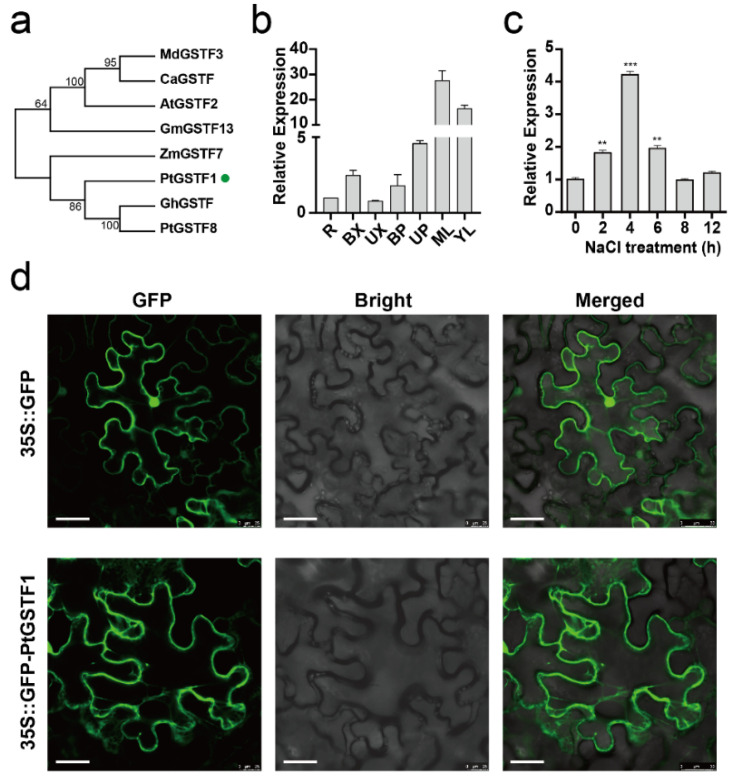
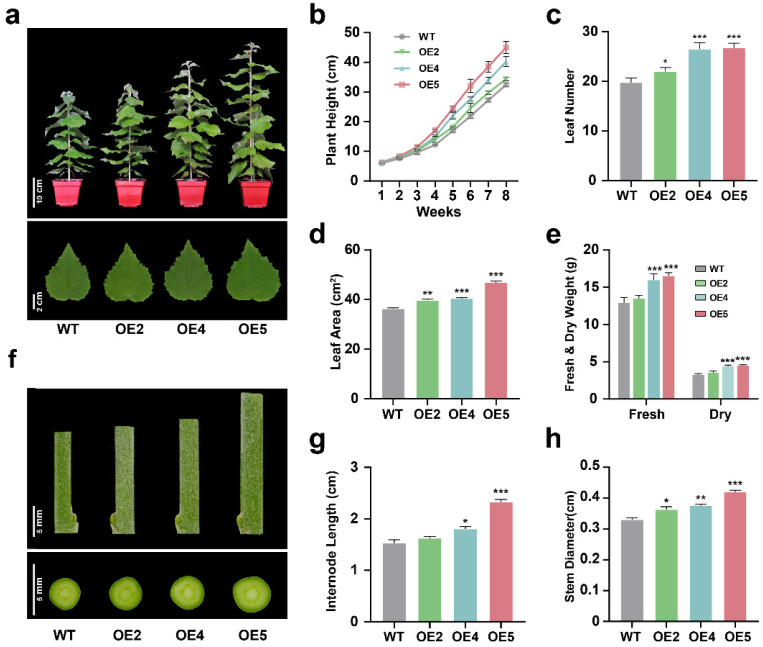
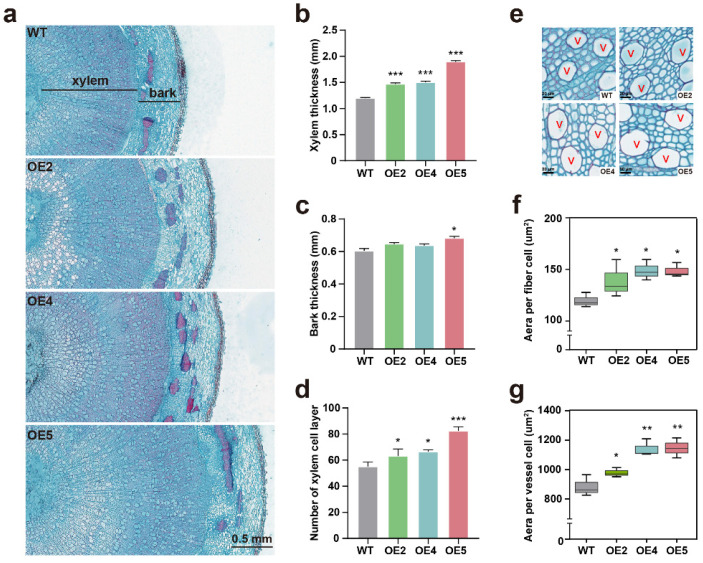
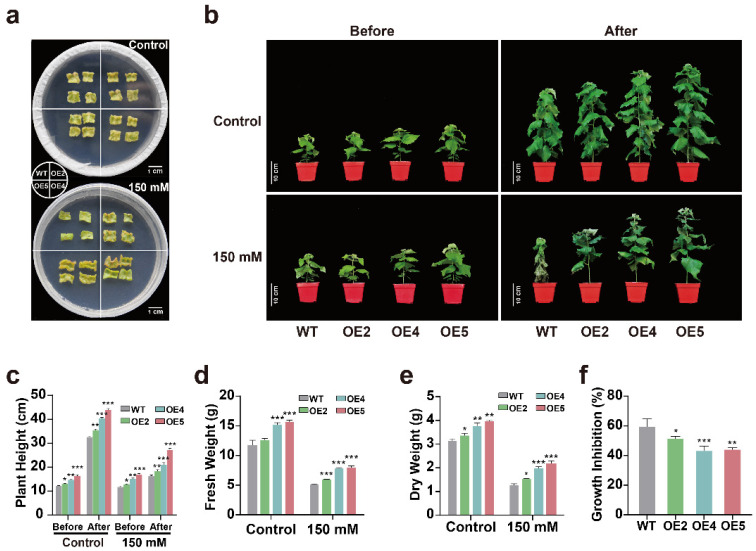
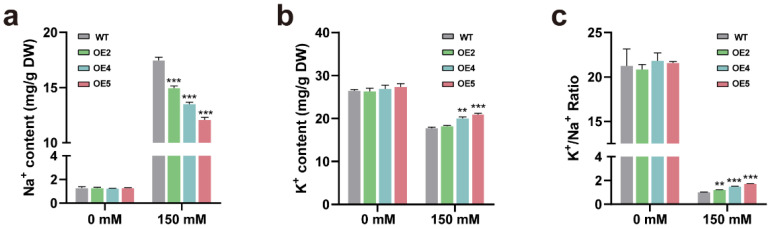
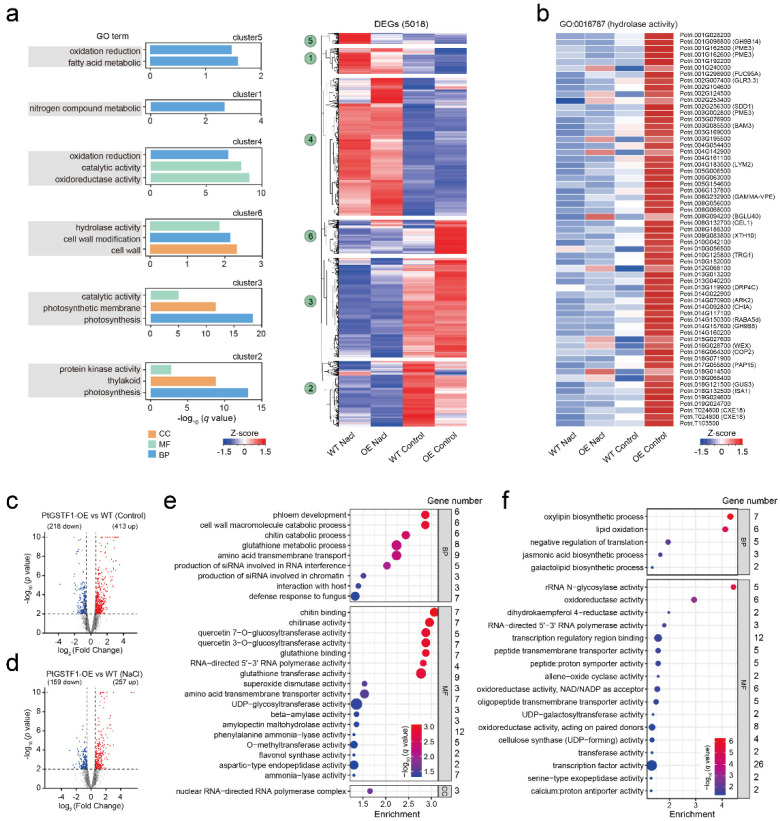
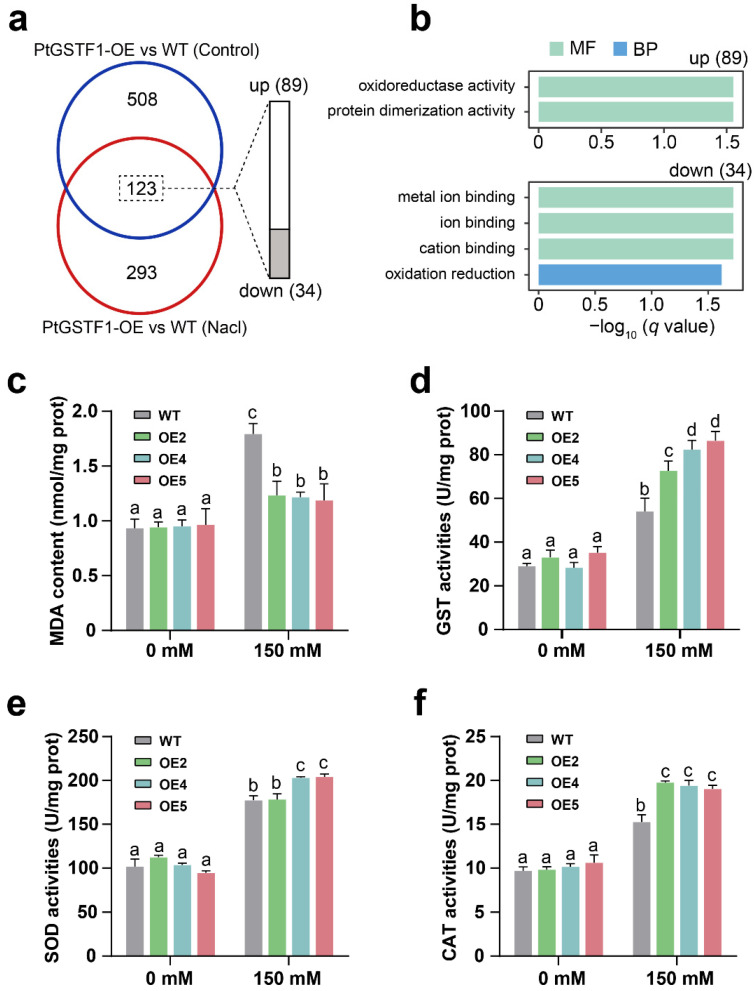
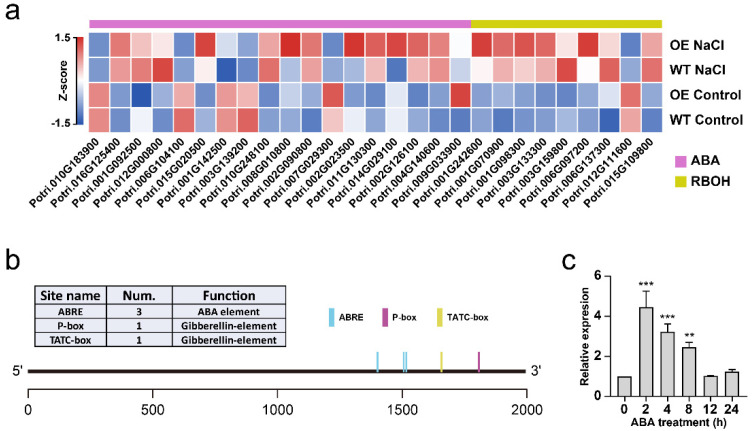
Glutathione S-transferases (GSTs) play an essential role in plant cell detoxification and secondary metabolism. However, their accurate functions in the growth and response to abiotic stress in woody plants are still largely unknown. In this work, a Phi class Glutathione S-transferase encoding gene PtGSTF1 was isolated from poplar (P. trichocarpa), and its biological functions in the regulation of biomass production and salt tolerance were investigated in transgenic poplar. PtGSTF1 was ubiquitously expressed in various tissues and organs, with a predominant expression in leaves and inducible expression by salt stress. Transgenic poplar overexpressing PtGSTF1 showed improved shoot growth, wood formation and improved salt tolerance, consistent with the increased xylem cell number and size under normal condition, and the optimized Na+ and K+ homeostasis and strengthened reactive oxygen species scavenging during salt stress. Further transcriptome analyses demonstrated that the expressions of genes related to hydrolase, cell wall modification, ion homeostasis and ROS scavenging were up- or down-regulated in transgenic plants. Our findings imply that PtGSTF1 improves both biomass production and salt tolerance through regulating hydrolase activity, cell wall modification, ion homeostasis and ROS scavenging in transgenic poplar, and that it can be considered as a useful gene candidate for the genetic breeding of new tree varieties with improved growth under salt stress conditions.
Overview
The claims and statistics of this paper haven’t been checked yet.
Free: it reads the open-access text and checks the first 5 claims that cite a source we can check. Create a free account to check every claim.
Integrity signals
Registry
Cites
Statistics
Figures
Verification
Claims the paper makes
The claims and statistics of this paper haven’t been checked yet.
Free: it reads the open-access text and checks the first 5 claims that cite a source we can check. Create a free account to check every claim.
Claims other papers make about this one
Each is checked against this paper’s own text: does it say what the citing paper says it does?
The check wasn’t confident either way, so it gives no verdict — never disputed.
In the citing paper
“Moreover, in Maize, the Complex Trait Loci (CTL, Figure 3) have been used for novel trait development.”
From Emerging applications of gene editing technologies for the development of climate-resilient crops (2025) · cites this paper as Gao et al., 2022
Experimental — accuracy not yet measured
Self-check
Percentages, sums and reported differences re-computed from the paper’s own numbers.
The self-check needs the paper’s full text.
Citations
Cites
Reactive Oxygen Species in Plant Signaling
Waszczak, C., Carmody, M., & Kangasjärvi, J. (2018) · Annual Review of Plant Biology · doi:10.1146/annurev-arplant-042817-040322 · Cited by 1,563 · cited 1×
“Through the development and evolutionary expansion of a series of enzymatic and non-enzymatic ROS scavengers, cell damage caused by ROS has been effectively alleviated [60].”
BackgroundPlant glutathione transferases.
Dixon, D. P., Lapthorn, A. J., & Edwards, R. (2002) · Genome biology · doi:10.1186/gb-2002-3-3-reviews3004 · Cited by 972 · cited 1×
“They catalyze the conjugation of a diverse range of xenobiotics and detoxified selective herbicides in the form of dimers [9].”
BackgroundROS homeostasis in halophytes in the context of salinity stress tolerance
Bose, J., Rodrigo-Moreno, A., & Shabala, S. (2014) · Journal of Experimental Botany · doi:10.1093/jxb/ert430 · Cited by 963 · cited 1×
“As the central signaling molecule, ROS plays an important role in the process of plant defense responses and salt stress tolerance [26,58,59].”
BackgroundPlant glutathione S -transferases: enzymes with multiple functions in sickness and in health
Edwards, R., Dixon, D. P., & Walbot, V. (2000) · Trends in Plant Science · doi:10.1016/s1360-1385(00)01601-0 · Cited by 931 · cited 1×
“18) are an ancient super family of catalytic and binding proteins widely distributed in bacteria, plants and animals [1,2].”
BackgroundDraper, H. H., Squires, E. J., Mahmoodi, H., Wu, J., Agarwal, S., & Hadley, M. (1993) · Free Radical Biology and Medicine · doi:10.1016/0891-5849(93)90035-s · Cited by 914 · cited 1×
“MDA content was determined with the thiobarbituric acid (TBA) chromatometry method, as described previously [72].”
MethodXia, X.-J., Zhou, Y.-H., Shi, K., Zhou, J., Foyer, C. H., & Yu, J.-Q. (2015) · Journal of Experimental Botany · doi:10.1093/jxb/erv089 · Cited by 709 · cited 1×
“Excess cytoplasmic Na+ can also lead to the production of ROS such as singlet oxygen, H2O2 and O2−, which causes membrane lipid peroxidation [47,50,57].”
BackgroundAllocati, N., Masulli, M., Di Ilio, C., & Federici, L. (2018) · Oncogenesis · doi:10.1038/s41389-017-0025-3 · Cited by 625 · cited 1×
“In eukaryotes, based on their cellular locations, GSTs are divided into at least three major protein families, namely cytosolic GSTs, mitochondrial GSTs and microsomal GSTs [6].”
BackgroundTuning plant signaling and growth to survive salt
Julkowska, M. M., & Testerink, C. (2015) · Trends in Plant Science · doi:10.1016/j.tplants.2015.06.008 · Cited by 563 · cited 1×
“As the central signaling molecule, ROS plays an important role in the process of plant defense responses and salt stress tolerance [26,58,59].”
BackgroundGlutathione S-Transferase Enzymes in Plant-Pathogen Interactions
Gullner, G., Komives, T., Király, L., & Schröder, P. (2018) · Frontiers in Plant Science · doi:10.3389/fpls.2018.01836 · Cited by 503
Roles for glutathione transferases in plant secondary metabolism
Dixon, D. P., Skipsey, M., & Edwards, R. (2010) · Phytochemistry · doi:10.1016/j.phytochem.2009.12.012 · Cited by 501 · cited 2×
“In Arabidopsis, GSTU7 was reported to be localized in the cytosol, whereas the tea CsGSTU8 was found to be distributed throughout the cell [16,17,46,47].”
Background
Cited by
Rai, G. K., Kumar, P., Choudhary, S. M., Singh, H., Adab, K., Kosser, R., Magotra, I., Kumar, R. R., Singh, M., Sharma, R., et al. (2023) · Plants · doi:10.3390/plants12051133 · Cited by 118
A glutathione S-transferase regulates lignin biosynthesis and enhances salt tolerance in tomato
Yuan, L., Dang, J., Zhang, J., Wang, L., Zheng, H., Li, G., Li, J., Zhou, F., Khan, A., Zhang, Z., et al. (2024) · PLANT PHYSIOLOGY · doi:10.1093/plphys/kiae504 · Cited by 96
Emerging applications of gene editing technologies for the development of climate-resilient crops
Chavhan, R. L., Jaybhaye, S. G., Hinge, V. R., Deshmukh, A. S., Shaikh, U. S., Jadhav, P. K., Kadam, U. S., & Hong, J. C. (2025) · Frontiers in Genome Editing · doi:10.3389/fgeed.2025.1524767 · Cited by 55
PfGSTF2 endows resistance to quizalofop‐p‐ethyl in Polypogon fugax by GSH conjugation
Chen, W., Bai, D., Liao, Y., Yu, Q. P., Bai, L., & Pan, L. (2024) · Plant Biotechnology Journal · doi:10.1111/pbi.14491 · Cited by 41
“The antioxidant capacity of GSTs enzymes (as GPOX) is important in plant responses to adversities (Cummins et al ., 2009; Gao et al ., 2022; Roxas et al ., 1997; Zhang et al ., 2021) and even in insect responses to pesticides (Li et al ., 2021).”
Li, X., Pang, Y., Zhong, Y., Cai, Z., Ma, Q., Wen, K., & Nian, H. (2023) · International Journal of Molecular Sciences · doi:10.3390/ijms24065547 · Cited by 42
Self-citationNew developments in understanding cotton's physiological and molecular responses to salt stress
Muhammad, N., Dong, Q., Luo, T., Zhang, X., Song, M., Wang, X., & Ma, X. (2025) · Plant Stress · doi:10.1016/j.stress.2025.100742 · Cited by 32
Self-citationWang, J., Ding, C., Cui, C., Song, J., Ji, G., Sun, N., Qi, S., Li, J., Xu, Z., & Zhang, H. (2025) · Tree Physiology · doi:10.1093/treephys/tpaf039 · Cited by 29
Self-citationMa, X., Ouyang, Z., Luo, H., Shang, W., Ma, H., Zhu, M., Dong, H., Guo, Z., Dong, X., Piao, F., et al. (2025) · Microbiological Research · doi:10.1016/j.micres.2025.128143 · Cited by 27
Self-citationNiu, M., Feng, C., Liu, M., Liu, X., Liu, S., Liu, C., Yin, W., & Xia, X. (2023) · Industrial Crops and Products · doi:10.1016/j.indcrop.2023.117945 · Cited by 22
Diversification of glutathione transferases in plants and their role in oxidative stress defense
Ugalde, J. M., Nath, M., Wagner, S., & Meyer, A. J. (2025) · Biological Chemistry · doi:10.1515/hsz-2025-0111 · Cited by 21
Jiang, Y., Zhang, Y., Duan, R., Fan, J., Jiao, P., Sun, H., Guan, S., & Liu, S. (2022) · Agronomy · doi:10.3390/agronomy12122948 · Cited by 20
“PtGSTF1 increases biomass production and salt tolerance by regulating xylem cell proliferation, ion homeostasis and ROS-scavenging in poplar [39]; the overexpression of CsGSH2 reduces phytotoxicity in cucumbers by enhancing antioxidant and glutathione detoxification properties [40]; in this study,…”
BackgroundLin, C., Zhang, Z., Zhang, Z., Long, Y., Shen, X., Zhang, J., & Wang, Y. (2025) · Phyton · doi:10.32604/phyton.2025.063086 · Cited by 27
“In poplar ( Populus trichocarpa) , overexpression of PtGSTF1 positively regulates cell proliferation and salt tolerance [59].”
Xu, C., Jiang, L., Li, A., Meng, J., Yun, P., Li, J., Liu, C., Chen, Y., Zhang, H., Ahmed, H. A. I., et al. (2025) · BMC Plant Biology · doi:10.1186/s12870-025-06559-x · Cited by 20
“In poplar, PtGSTF1 improves ion homeostasis and ROS scavenging under salinity stress [15] while in Juglans regia the JrGSTTau1 gene enhances cold tolerance [16].”
Self-citationZhao, Y., Lu, K., Zhang, W., Guo, W., Chao, E., Yang, Q., & Zhang, H. (2023) · Plant Physiology and Biochemistry · doi:10.1016/j.plaphy.2023.107898 · Cited by 16
Self-citationMsSPL12 is a positive regulator in alfalfa (Medicago sativa L.) salt tolerance
Lin, S., Yang, J., Liu, Y., & Zhang, W. (2024) · Plant Cell Reports · doi:10.1007/s00299-024-03175-1 · Cited by 14
“Many SPL genes are targeted by microRNA156 (miRNAs) to cause a plethora of phenotypic changes in a variety of plants, including alterations in plant height, leaf shape, organ formation, yield, and stress resistance (Gao et al. 2022a, b).”
Wang, F., Miao, H., Zhang, S., Hu, X., Chu, Y., Yang, W., Wang, H., Wang, J., Shan, S., & Chen, J. W. (2024) · BMC Plant Biology · doi:10.1186/s12870-024-05145-x · Cited by 15
Song, Y., Yu, K., Zhang, S., Li, Y. Z., Xu, C., Qian, H., Cui, Y., Guo, Y., Zhang, X., Li, R., et al. (2024) · Plant Physiology and Biochemistry · doi:10.1016/j.plaphy.2024.108766 · Cited by 18
Lu, C., Zhang, P., Li, S., Cheng, M., & Duan, D. (2023) · BMC Plant Biology · doi:10.1186/s12870-023-04430-5 · Cited by 13
Mazumdar, A. B., & Chattopadhyay, S. (2024) · Journal of Plant Growth Regulation · doi:10.1007/s00344-024-11476-8 · Cited by 10
PagbZIP75 decreases the ROS accumulation to enhance salt tolerance of poplar via the ABA signaling
Hu, J., Nan, S., Zhou, L., Yu, C., Li, Y., Zhao, K. X., Du, S., Han, Y., & Wang, S. (2024) · Environmental and Experimental Botany · doi:10.1016/j.envexpbot.2024.106051 · Cited by 9
Self-citationMackon, E., Guo, Y., Mackon, G. C. J. D. E., Ma, Y., Yao, Y., Luo, D., Dai, X., Zhao, N., Lü, Y., Jandan, T. H., et al. (2023) · Phytochemistry · doi:10.1016/j.phytochem.2023.113896 · Cited by 11
Prazyan, A. A., Podlutskii, M., Volkova, P., Kazakova, E., Bitarishvili, S. V., Shesterikova, E., Saburov, V. O., Макаренко, Е. С., Lychenkova, M. A., Korol, M., et al. (2024) · Plants · doi:10.3390/plants13030342 · Cited by 11
“GSTs also participate in light signalling in Arabidopsis [62], in salt tolerance through regulating xylem cell proliferation, ion homeostasis, and reactive oxygen species scavenging in poplars [63], and in plant drought tolerance [64].”
BackgroundQiu, L., Chen, K., Pan, J., Ma, Z., Zhang, J., Wang, J., Cheng, T., Zheng, T., Pan, H., & Zhang, Q. (2024) · International Journal of Biological Macromolecules · doi:10.1016/j.ijbiomac.2024.136506 · Cited by 11
Srivastava, A., Mahra, S., Hsan, N., Singh, S., Sharma, S., Koh, J., Kumar, S., Dash, P. K., Thakur, M., & Tripathi, D. K. (2025) · Plant Science · doi:10.1016/j.plantsci.2025.112538 · Cited by 9
Revolutionizing poplar biotechnology: Genetic transformation and CRISPR/Cas strategies
Ming, M., Liu, Q., Zhang, J., Zhao, A., Yi, M., Cao, F., Xue, L., Li, G., Dai, T., & Fu, F. (2025) · Industrial Crops and Products · doi:10.1016/j.indcrop.2025.121350 · Cited by 7
Zhang, T., Wu, H., Sun, Y., Zhang, P., Li, L., Luo, D., & Wu, Z. (2025) · Plants · doi:10.3390/plants14060932 · Cited by 7
“Certain members of the GST gene family also have molecular chaperone functions, aiding in the proper folding of proteins, preventing the aggregation of misfolded proteins, and protecting cells from stress-induced damage [7].”
Li, S., Zhang, Y., Dong, H., Li, Y., Hu, Z., Zhao, Y. Y., Qi, Z., Xu, L., Chen, Q., & Hu, L. (2025) · Industrial Crops and Products · doi:10.1016/j.indcrop.2025.122212 · Cited by 10
Recent Advancement on Physiological and Molecular Response to Cotton under Salt Stress: A ReviewPreprint
Muhammad, N., Luo, T., Gui, H., Dong, Q., Abro, A. A., Wang, Q., Pang, N., Zhang, X., Wang, X., & Song, M. (2023) · Preprints.org · doi:10.20944/preprints202307.1469.v1 · Cited by 5
Self-citationKang, Z., Li, C., Song, X., YuanBao, C., Guo, G., Zeng, H., Tu, X., Pan, X., & Zhang, W. (2025) · Industrial Crops and Products · doi:10.1016/j.indcrop.2025.120984 · Cited by 7
Li, J., Yang, Y., Wang, F., Ma, Q., & Jia, H. (2025) · International Journal of Biological Macromolecules · doi:10.1016/j.ijbiomac.2025.144687 · Cited by 5
Morales‐Merida, B. E., Grimaldi-Olivas, J. C., Cruz‐Mendívil, A., Villicaña, C., Valdez-Torres, J. B., Heredia, J. B., León-Chan, R. G., Lightbourn-Rojas, L. A., & León‐Félix, J. (2023) · Horticulturae · doi:10.3390/horticulturae9060699 · Cited by 5
Kaur, M., Asthir, B., Kaur, R., & Chaudhary, A. (2023) · Stresses · doi:10.3390/stresses3010023 · Cited by 4
“[32] have reported that the rise in specific activities of GST deliberately improves antioxidative defense by scavenging ROS under salt stress in Poplar; therefore, it could act as a criterion for stress acclimatization.”
BackgroundYe, X., Xie, Z., Zeng, L., Ding, Z., Tie, W., Yan, Y., Huo, K., Ma, J., Li, C., Yan, F., et al. (2024) · Food Bioscience · doi:10.1016/j.fbio.2024.104772 · Cited by 5
Pizziconi, B., Bruno, G., Palombieri, S., Sestili, F., Cimini, S., & Gara, L. D. (2025) · Plant Nano Biology · doi:10.1016/j.plana.2025.100230 · Cited by 7
Guo, P., Liu, A., Qi, Y., Wang, X., Fan, X., Guo, X., Yu, C., & Tian, C. (2024) · Genes & Genomics · doi:10.1007/s13258-024-01542-6 · Cited by 3
“Approximately 48–72 h after injection, GFP signal was visualized using laser confocal microscopy (Gao et al. 2022).”
Self-citationAhmed, S., Priyadarshini, P., Indu, I., Rana, M., Yadav, G., Rai, A. K., Chand, S., Yadav, M., Singh, M., & Singhal, R. K. (2025) · Cereal Research Communications · doi:10.1007/s42976-025-00648-1 · Cited by 4
“In a recent study, transgenic poplar overexpressing PtGSTF1 showed improved salt tolerance by regulating optimized Na + and K + homeostasis and ROS scavenging during salt stress (Gao et al. 2022).”
Environmental NaCl affects Caenorhabditis elegans development and aging
Pohl, F., Egan, B. M., Schneider, D. L., Mosley, M. C., Garcia, M. A., Hou, S., Chiu, C.-H., & Kornfeld, K. (2025) · Genetics · doi:10.1093/genetics/iyaf139 · Cited by 3
Roles of enzymatic antioxidants in stress response and signaling in plants
Ghorbel, M., Olayen, W., & Brini, F. (2024) · Elsevier eBooks · doi:10.1016/b978-0-443-13236-0.00017-8 · Cited by 4
Yu, B., Lin, Y., Gan, Y., Yang, C., Liang, Y., Qin, Q., Chen, L., Liu, R., Zhao, H., Qiu, Z., et al. (2025) · Horticultural Plant Journal · doi:10.1016/j.hpj.2024.12.001 · Cited by 3
Self-citationKumari, M., Gupta, S., Singh, S., Dutta, P., Asif, M. H., & Chakrabarty, D. (2025) · 3 Biotech · doi:10.1007/s13205-025-04450-y · Cited by 3
“Earlier reports on NtGSTf4 of tobacco and PtGSTF1 of Poplar trichocarpa showed increase in expression during salt stress (Wang et al. 2019; Gao et al. 2022).”
Yan, W., Wang, C., Zhang, H., Fan, W., Liu, X., Huang, Z., Wang, Y., & Zhang, B. (2024) · Horticulturae · doi:10.3390/horticulturae10091001 · Cited by 2
Self-citationLiu, R., Wang, H., Zhang, J., Yang, J., Guo, P., Qi, Y., Guo, X., Lu, C., Yu, C., & Zhang, H. (2025) · Plant Cell Reports · doi:10.1007/s00299-025-03609-4 · Cited by 1
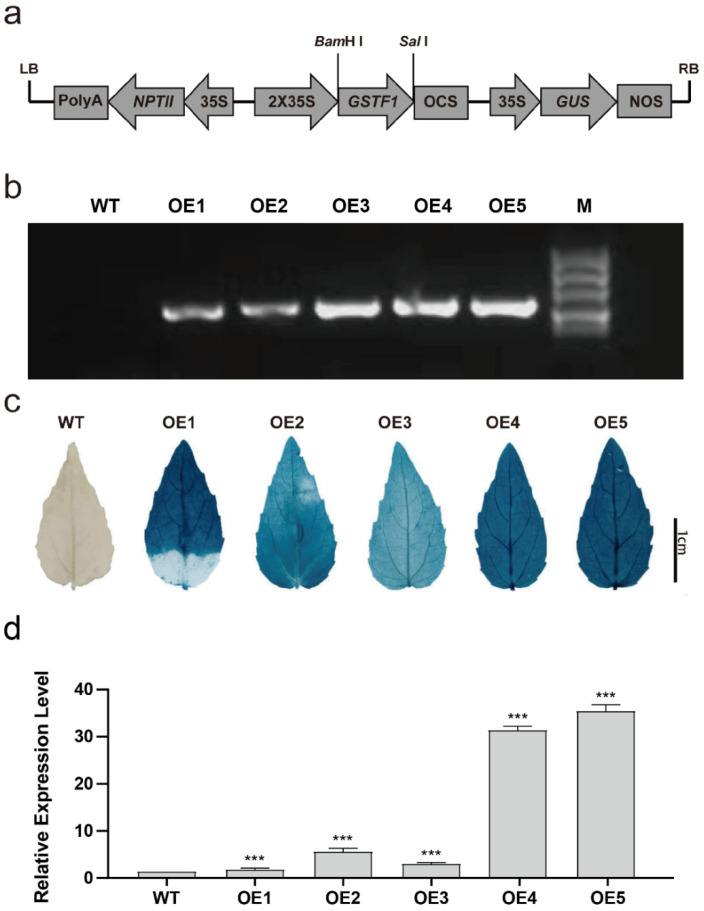
“Stable expression of PtrCWINV2 in transgenic lines was verified through genomic DNA PCR, quantitative real-time PCR (qRT-PCR), and β-glucuronidase (GUS) histochemical staining (Gao et al. 2022).”
Self-citationZhang, Z., Shen, X., Yu, J., Wang, Q., Zhu, T., Zhang, Z., Long, Y., Zhang, J., Hellal, F. A. A., Liu, H., et al. (2026) · New Crops · doi:10.1016/j.ncrops.2026.100108 · Cited by 2
Pan-Genome-Wide Analysis and Expression Profiling of the Potato GST Gene Family
Li, M., Zhu, J., Li, Z., Qiu, X., Bao, M., Chen, Z., Bi, Z., Sun, C., Li, Y., Liu, Z., et al. (2026) · Plants · doi:10.3390/plants15101548 · Cited by 1
“…tolerance, SlGSTU43 in tomato ( Solanum lycopersicum ) confers salt resistance by efficiently scavenging excessively accumulated ROS and promoting lignin biosynthesis [20], whereas PtGSTF1 in poplar ( Populus tremula ) acts protectively primarily by improving ion homeostasis under salt stress [21].”
Transcriptomic Time Series Analysis in Poplars in Response to Sphaerulina StressPreprint
Esmaeilpour, M. (2024) · SSRN Electronic Journal · doi:10.2139/ssrn.4854573
Screening and Functional Verification of Poplar Salt Tolerance Genes
Xu, H., & Chen, X. (2024) · Tree Genetics and Molecular Breeding · doi:10.5376/tgmb.2024.14.0014
Gao, H., Wang, H., Yu, B., Wang, X., Guo, P., Li, S., Cheng, J., Yu, C., & Zhang, H. (2025) · Plant Physiology and Biochemistry · doi:10.1016/j.plaphy.2025.110526
Self-citationHan, Q., Shi, X., Wang, C., Li, Y., Xia, L., Lu, C., Zhang, H., & Zhang, S. (2025) · Annals of Botany · doi:10.1093/aob/mcaf286
Self-citationWang, F., Miao, H., Zhang, S., Hu, X., Chu, Y., Yang, W., Wang, H., Wang, J., Shan, S., & Chen, J. (2024) · Figshare · doi:10.6084/m9.figshare.26722884
Wang, F., Miao, H., Zhang, S., Hu, X., Chu, Y., Yang, W., Wang, H., Wang, J., Shan, S., & Chen, J. (2024) · Figshare · doi:10.6084/m9.figshare.26722890
Wang, F., Miao, H., Zhang, S., Hu, X., Chu, Y., Yang, W., Wang, H., Wang, J., Shan, S., & Chen, J. (2024) · Figshare · doi:10.6084/m9.figshare.25865055
Wang, F., Miao, H., Zhang, S., Hu, X., Chu, Y., Yang, W., Wang, H., Wang, J., Shan, S., & Chen, J. (2024) · Figshare · doi:10.6084/m9.figshare.25865195
Wang, F., Miao, H., Zhang, S., Hu, X., Chu, Y., Yang, W., Wang, H., Wang, J., Shan, S., & Chen, J. (2024) · Figshare · doi:10.6084/m9.figshare.26722887
Li, S. Y., Zhuo, R., Wu, L., An, X., & Qiu, W. (2026) · International Journal of Biological Macromolecules · doi:10.1016/j.ijbiomac.2026.150950
Liu, A., Guo, P., Wang, S. D., Xu, X. P., Hua, Y., Li, A., Tang, S., Li, B., Yu, C., Zhang, Y., et al. (2026) · Russian Journal of Plant Physiology · doi:10.1134/s102144372560686x
Self-citationWang, X. Y., Huang, L., Gao, H., Wen, T., Li, X., Liu, R., Guo, X., Yu, C., & Zhang, H. (2026) · Annals of Botany · doi:10.1093/aob/mcag085
Self-citationBiotechnological Applications for Improvement of Salt Stress Tolerance in Poplar
Karabaş, S., Can, M. F., & Filiz, E. (2026) · Environmental science and engineering · doi:10.1007/978-3-032-01059-9_12
Liu, M., Li, M., Zhang, J., Hu, N., Guo, J., Zhang, X., Liu, X. D., & Zhang, W. (2026) · Analytical Chemistry · doi:10.1021/acs.analchem.6c02034
Zhang, L., Zhang, J., Su, Y., Shi, J., Guo, Y., Huang, J., & Qu, Y. (2026) · Frontiers in Plant Science · doi:10.3389/fpls.2026.1846132
“In poplars, GSTF1 responds to salt stress by modulating xylem cell differentiation, ion homeostasis, and ROS scavenging (Gao et al., 2022).”
Gao, W., Zheng, Z., Huang, Y., Dong, W., Xie, Q., Liu, Z., Sun, L., & Gao, C. (2026) · Journal of Experimental Botany · doi:10.1093/jxb/erag339
Xu, Y., Yang, J., Xing, M., Lu, Y., Yan, J., Liu, X., Chen, G., & Zeng, A. (2026) · Plant Stress · doi:10.1016/j.stress.2026.101478
Hu, Y., Cui, K., Yang, B., Wang, S., Liang, C., Teng, R., Yan, L., Wang, L., Wang, J., & Niu, Y. (2026) · Microbiological Research · doi:10.1016/j.micres.2026.128635
Yan, N., Wang, W., Zhao, A., Du, Y., Ye, Z., Chen, Z., Song, Y., Liu, C., Luo, S., Zhang, H., et al. (2026) · Plant Science · doi:10.1016/j.plantsci.2026.113390
Self-citationShohag, S., Yamaguchi, H., Hitachi, K., Tsuchida, K., & Komatsu, S. (2026) · International Journal of Molecular Sciences · doi:10.3390/ijms27198895
“Overexpression of PtGSTF1 in poplar enhanced biomass production and salt tolerance, through increased xylem cell number and size, optimized Na + /K + homeostasis, and improved scavenging of ROS in transgenic plants [35].”
Cui, X., Yang, M., Wang, Y., Lian, S., Ren, W., Li, P., Liu, N., Li, B., Zhang, Y., & Wang, C. (2026) · Pest Management Science · doi:10.1002/ps.71356
Self-citation
Metadata
- Authors
- Gao, H., Yu, C., Liu, R., Li, X., Huang, H., Wang, X., Zhang, C., Jiang, N., Li, X., Cheng, S., Zhang, H., & Li, B.
- Affiliations
- Ludong University (CN)
- Corresponding author
- Zhang, Hongxia
- Li, Bei
- ORCID
- Venue
- International Journal of Molecular Sciences
- Publisher
- MDPI AG
- Published
- 2022-09-25
- Volume
- 23
- Issue
- 19
- Pages
- 11288
- ISSN
- 1422-0067 (ISSN-L)
- PMC
- PMC9569880
- OpenAlex
- W4297235880
- Semantic Scholar
- 803236f80462cd5fb5f741eb03315ee1af92b4ba
- Cited by
- 60
- References
- 73
- Citations by year
- 2026: 14 · 2025: 21 · 2024: 15 · 2023: 9 · 2022: 1
- FWCI
- 7.02
- Type
- journal article
- Language
- en
- Open access
- gold
- doi.org
- Licence
- Locations
- International Journal of Molecular Sciences (publishedVersion, cc-by)
- PubMed Central (publishedVersion, cc-by)
- PubMed (publishedVersion)
- DOAJ (DOAJ: Directory of Open Access Journals) (submittedVersion, cc-by-sa)
- Funders
- National Natural Science Foundation of China (32271909, 31870576, 32071733, SDAIT-02-05)
- Modern Agricultural Industry Technology System Innovation Team of Shandong Province of China (32271909, 31870576, 32071733, SDAIT-02-05)
- Topics
- Life Sciences › Agricultural and Biological Sciences › Plant Science › Plant Stress Responses and Tolerance
- Life Sciences › Biochemistry, Genetics and Molecular Biology › Molecular Biology › Glutathione Transferases and Polymorphisms
- Life Sciences › Agricultural and Biological Sciences › Plant Science › Plant Molecular Biology Research
- Keywords
- glutathione S-transferase, poplar, Populus trichocarpa, salt tolerance, biomass production, ion homeostasis, reactive oxygen species scavenging, hydrolase activity, cell wall remodeling, transgenic poplar, abiotic stress response, wood formation
- MeSH terms
- Plant Breeding, Glutathione, Glutathione Transferase, Homeostasis, Hydrolases, Plant Proteins, Reactive Oxygen Species, Gene Expression Regulation, Plant, Biomass, Plants, Genetically Modified, Populus, Cell Proliferation, Xylem, Salt Tolerance
About these checks
Registry, retraction, Cites and statistics results are computed, not judged, with one exception: a printed reference that no index lists is read once by a model before it counts as a citation error. Claims are extracted by a model and kept only when their quote appears verbatim in the text; each cited source is then checked, with a model’s help, for whether it says what the claim relies on. Those verdicts can be wrong — read the claim’s quote and the cited source before relying on one.
Statistics and arithmetic are recomputed, not judged.
Confidence bands are shown only for fields calibrated on our annotated test set. None is calibrated yet, so no band is shown.
What counts as a claim ›How we measure confidence ›How we check this ›
Are you an author, or do you see a problem with this page? Request a review
Data sources
Bibliographic data: Semantic Scholar, OpenAlex, Crossref.
Contains information from the Semantic Scholar Academic Graph Datasets, made available under the ODC Attribution License (ODC-BY 1.0).
Semantic Scholar’s data is described in: Kinney, R., et al. (2023). The Semantic Scholar Open Data Platform. arXiv:2301.10140.
