

The Glutathione S-Transferase PtGSTF1 Improves Biomass Production and Salt Tolerance through Regulating Xylem Cell Proliferation, Ion Homeostasis and Reactive Oxygen Species Scavenging in Poplar
Open accessThe DOI matches its Crossref record; 72 of the 73 references it cites were found in a registry or an index.
Abstract
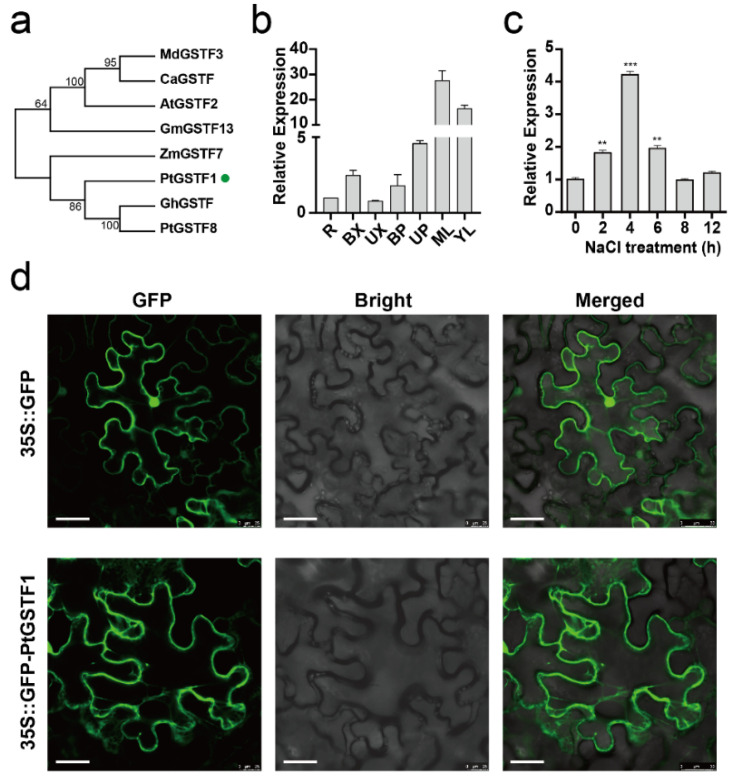
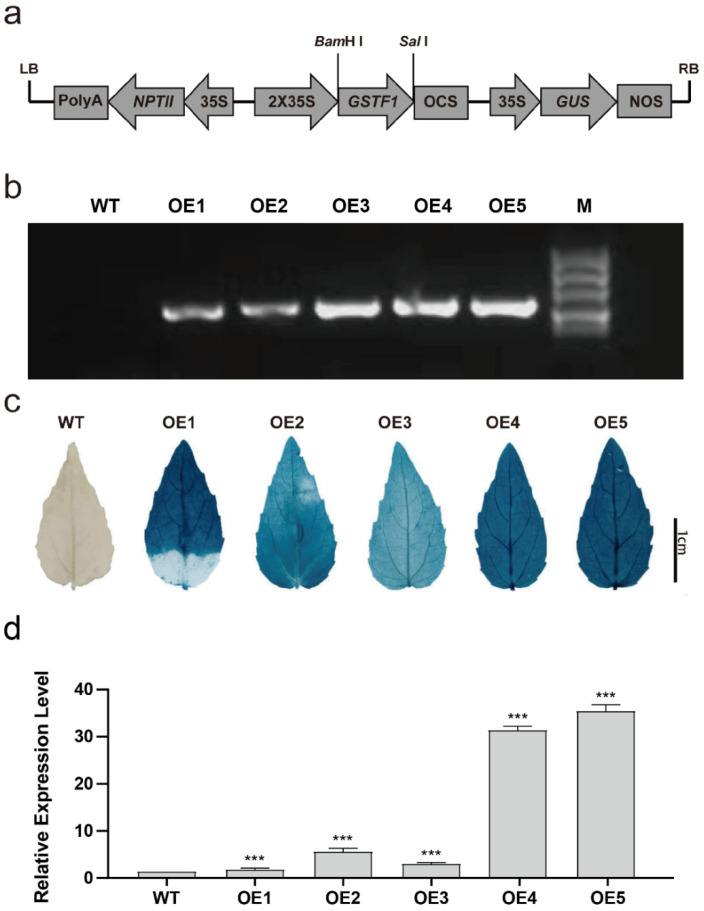
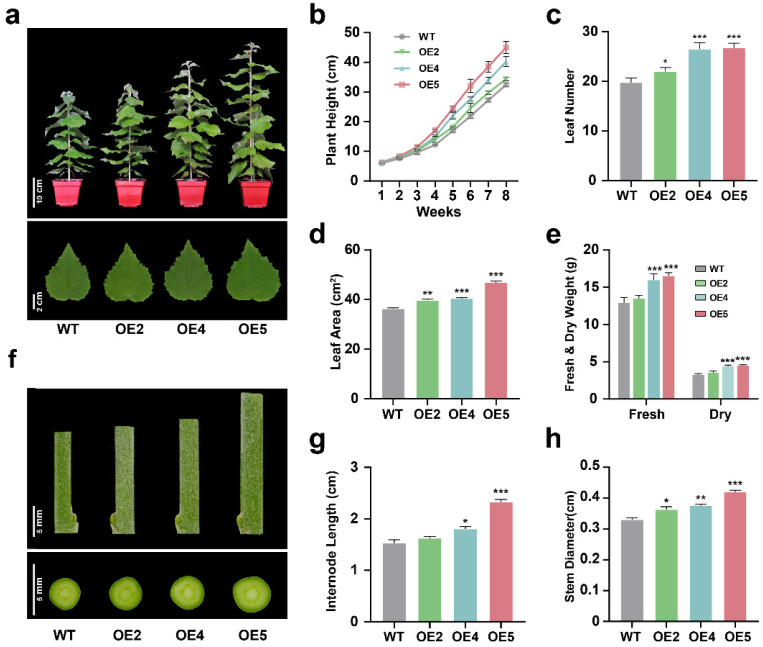
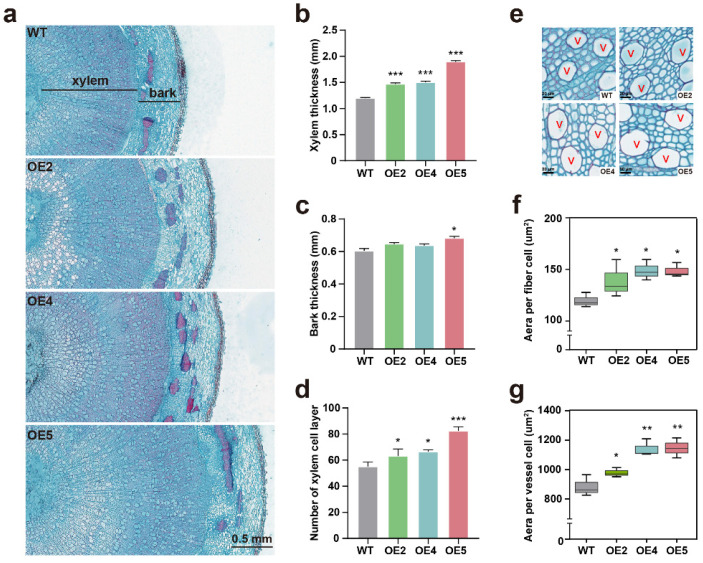
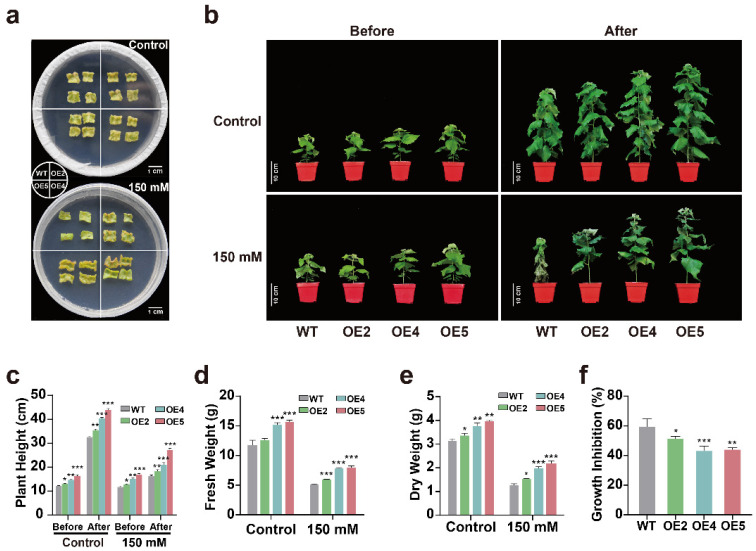
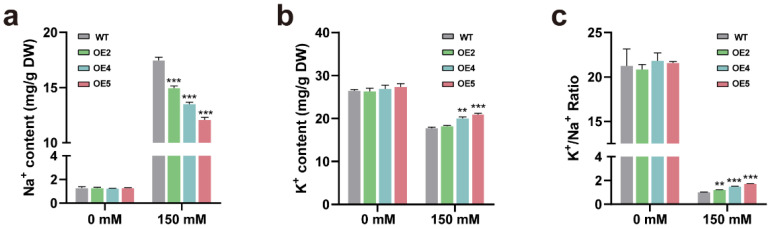
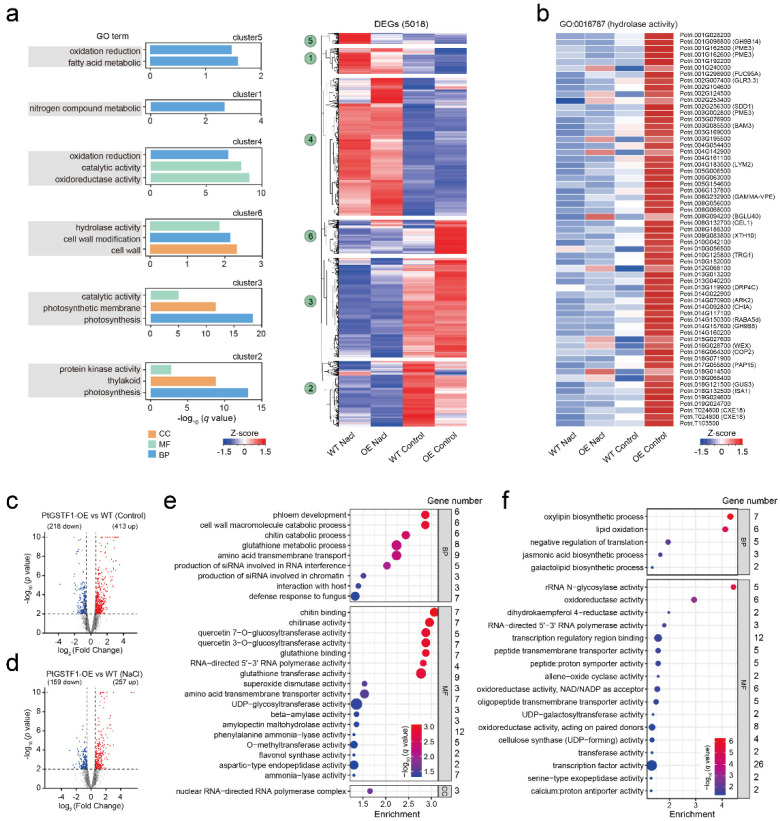
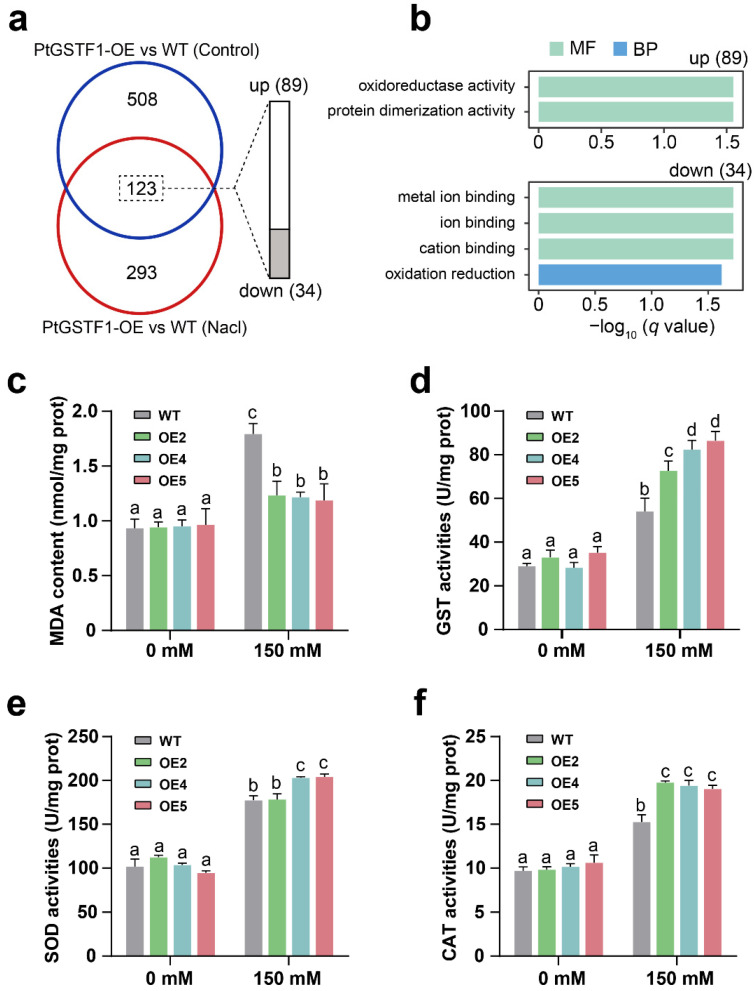
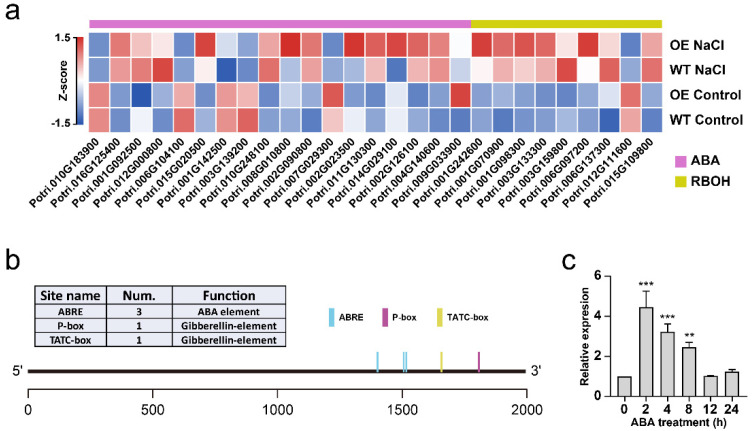
Glutathione S-transferases (GSTs) play an essential role in plant cell detoxification and secondary metabolism. However, their accurate functions in the growth and response to abiotic stress in woody plants are still largely unknown. In this work, a Phi class Glutathione S-transferase encoding gene PtGSTF1 was isolated from poplar (P. trichocarpa), and its biological functions in the regulation of biomass production and salt tolerance were investigated in transgenic poplar. PtGSTF1 was ubiquitously expressed in various tissues and organs, with a predominant expression in leaves and inducible expression by salt stress. Transgenic poplar overexpressing PtGSTF1 showed improved shoot growth, wood formation and improved salt tolerance, consistent with the increased xylem cell number and size under normal condition, and the optimized Na+ and K+ homeostasis and strengthened reactive oxygen species scavenging during salt stress. Further transcriptome analyses demonstrated that the expressions of genes related to hydrolase, cell wall modification, ion homeostasis and ROS scavenging were up- or down-regulated in transgenic plants. Our findings imply that PtGSTF1 improves both biomass production and salt tolerance through regulating hydrolase activity, cell wall modification, ion homeostasis and ROS scavenging in transgenic poplar, and that it can be considered as a useful gene candidate for the genetic breeding of new tree varieties with improved growth under salt stress conditions.
Overview
The claims and statistics of this paper haven’t been checked yet.
Free: it reads the open-access text and checks the first 5 claims that cite a source we can check. Create a free account to check every claim.
Integrity signals
Registry
Cites
Statistics
Figures
Verification
Claims the paper makes
The claims and statistics of this paper haven’t been checked yet.
Free: it reads the open-access text and checks the first 5 claims that cite a source we can check. Create a free account to check every claim.
Claims other papers make about this one
Each is checked against this paper’s own text: does it say what the citing paper says it does?
The check wasn’t confident either way, so it gives no verdict — never disputed.
In the citing paper
“Moreover, in Maize, the Complex Trait Loci (CTL, Figure 3) have been used for novel trait development.”
From Emerging applications of gene editing technologies for the development of climate-resilient crops (2025) · cites this paper as Gao et al., 2022
Experimental — accuracy not yet measured
Self-check
Percentages, sums and reported differences re-computed from the paper’s own numbers.
The self-check needs the paper’s full text.
Citations
Cites
Reactive Oxygen Species in Plant Signaling
Waszczak, C., Carmody, M., & Kangasjärvi, J. (2018) · Annual Review of Plant Biology · doi:10.1146/annurev-arplant-042817-040322 · Cited by 1,563 · cited 1×
“Through the development and evolutionary expansion of a series of enzymatic and non-enzymatic ROS scavengers, cell damage caused by ROS has been effectively alleviated [60].”
BackgroundPlant glutathione transferases.
Dixon, D. P., Lapthorn, A. J., & Edwards, R. (2002) · Genome biology · doi:10.1186/gb-2002-3-3-reviews3004 · Cited by 972 · cited 1×
“They catalyze the conjugation of a diverse range of xenobiotics and detoxified selective herbicides in the form of dimers [9].”
BackgroundROS homeostasis in halophytes in the context of salinity stress tolerance
Bose, J., Rodrigo-Moreno, A., & Shabala, S. (2014) · Journal of Experimental Botany · doi:10.1093/jxb/ert430 · Cited by 963 · cited 1×
“As the central signaling molecule, ROS plays an important role in the process of plant defense responses and salt stress tolerance [26,58,59].”
BackgroundPlant glutathione S -transferases: enzymes with multiple functions in sickness and in health
Edwards, R., Dixon, D. P., & Walbot, V. (2000) · Trends in Plant Science · doi:10.1016/s1360-1385(00)01601-0 · Cited by 931 · cited 1×
“18) are an ancient super family of catalytic and binding proteins widely distributed in bacteria, plants and animals [1,2].”
BackgroundDraper, H. H., Squires, E. J., Mahmoodi, H., Wu, J., Agarwal, S., & Hadley, M. (1993) · Free Radical Biology and Medicine · doi:10.1016/0891-5849(93)90035-s · Cited by 914 · cited 1×
“MDA content was determined with the thiobarbituric acid (TBA) chromatometry method, as described previously [72].”
MethodXia, X.-J., Zhou, Y.-H., Shi, K., Zhou, J., Foyer, C. H., & Yu, J.-Q. (2015) · Journal of Experimental Botany · doi:10.1093/jxb/erv089 · Cited by 709 · cited 1×
“Excess cytoplasmic Na+ can also lead to the production of ROS such as singlet oxygen, H2O2 and O2−, which causes membrane lipid peroxidation [47,50,57].”
BackgroundAllocati, N., Masulli, M., Di Ilio, C., & Federici, L. (2018) · Oncogenesis · doi:10.1038/s41389-017-0025-3 · Cited by 625 · cited 1×
“In eukaryotes, based on their cellular locations, GSTs are divided into at least three major protein families, namely cytosolic GSTs, mitochondrial GSTs and microsomal GSTs [6].”
BackgroundTuning plant signaling and growth to survive salt
Julkowska, M. M., & Testerink, C. (2015) · Trends in Plant Science · doi:10.1016/j.tplants.2015.06.008 · Cited by 563 · cited 1×
“As the central signaling molecule, ROS plays an important role in the process of plant defense responses and salt stress tolerance [26,58,59].”
BackgroundGlutathione S-Transferase Enzymes in Plant-Pathogen Interactions
Gullner, G., Komives, T., Király, L., & Schröder, P. (2018) · Frontiers in Plant Science · doi:10.3389/fpls.2018.01836 · Cited by 503
Roles for glutathione transferases in plant secondary metabolism
Dixon, D. P., Skipsey, M., & Edwards, R. (2010) · Phytochemistry · doi:10.1016/j.phytochem.2009.12.012 · Cited by 501 · cited 2×
“In Arabidopsis, GSTU7 was reported to be localized in the cytosol, whereas the tea CsGSTU8 was found to be distributed throughout the cell [16,17,46,47].”
Background
Cited by
Rai, G. K., Kumar, P., Choudhary, S. M., Singh, H., Adab, K., Kosser, R., Magotra, I., Kumar, R. R., Singh, M., Sharma, R., et al. (2023) · Plants · doi:10.3390/plants12051133 · Cited by 118
A glutathione S-transferase regulates lignin biosynthesis and enhances salt tolerance in tomato
Yuan, L., Dang, J., Zhang, J., Wang, L., Zheng, H., Li, G., Li, J., Zhou, F., Khan, A., Zhang, Z., et al. (2024) · PLANT PHYSIOLOGY · doi:10.1093/plphys/kiae504 · Cited by 96
Emerging applications of gene editing technologies for the development of climate-resilient crops
Chavhan, R. L., Jaybhaye, S. G., Hinge, V. R., Deshmukh, A. S., Shaikh, U. S., Jadhav, P. K., Kadam, U. S., & Hong, J. C. (2025) · Frontiers in Genome Editing · doi:10.3389/fgeed.2025.1524767 · Cited by 55
PfGSTF2 endows resistance to quizalofop‐p‐ethyl in Polypogon fugax by GSH conjugation
Chen, W., Bai, D., Liao, Y., Yu, Q. P., Bai, L., & Pan, L. (2024) · Plant Biotechnology Journal · doi:10.1111/pbi.14491 · Cited by 41
“The antioxidant capacity of GSTs enzymes (as GPOX) is important in plant responses to adversities (Cummins et al ., 2009; Gao et al ., 2022; Roxas et al ., 1997; Zhang et al ., 2021) and even in insect responses to pesticides (Li et al ., 2021).”
Li, X., Pang, Y., Zhong, Y., Cai, Z., Ma, Q., Wen, K., & Nian, H. (2023) · International Journal of Molecular Sciences · doi:10.3390/ijms24065547 · Cited by 42
Self-citation
Metadata
- Authors
- Gao, H., Yu, C., Liu, R., Li, X., Huang, H., Wang, X., Zhang, C., Jiang, N., Li, X., Cheng, S., Zhang, H., & Li, B.
- Affiliations
- Ludong University (CN)
- Corresponding author
- Zhang, Hongxia
- Li, Bei
- ORCID
- Venue
- International Journal of Molecular Sciences
- Publisher
- MDPI AG
- Published
- 2022-09-25
- Volume
- 23
- Issue
- 19
- Pages
- 11288
- ISSN
- 1422-0067 (ISSN-L)
- PMC
- PMC9569880
- OpenAlex
- W4297235880
- Semantic Scholar
- 803236f80462cd5fb5f741eb03315ee1af92b4ba
- Cited by
- 60
- References
- 73
- Citations by year
- 2026: 14 · 2025: 21 · 2024: 15 · 2023: 9 · 2022: 1
- FWCI
- 7.02
- Type
- journal article
- Language
- en
- Open access
- gold
- doi.org
- Licence
- Locations
- International Journal of Molecular Sciences (publishedVersion, cc-by)
- PubMed Central (publishedVersion, cc-by)
- PubMed (publishedVersion)
- DOAJ (DOAJ: Directory of Open Access Journals) (submittedVersion, cc-by-sa)
- Funders
- National Natural Science Foundation of China (32271909, 31870576, 32071733, SDAIT-02-05)
- Modern Agricultural Industry Technology System Innovation Team of Shandong Province of China (32271909, 31870576, 32071733, SDAIT-02-05)
- Topics
- Life Sciences › Agricultural and Biological Sciences › Plant Science › Plant Stress Responses and Tolerance
- Life Sciences › Biochemistry, Genetics and Molecular Biology › Molecular Biology › Glutathione Transferases and Polymorphisms
- Life Sciences › Agricultural and Biological Sciences › Plant Science › Plant Molecular Biology Research
- Keywords
- glutathione S-transferase, poplar, Populus trichocarpa, salt tolerance, biomass production, ion homeostasis, reactive oxygen species scavenging, hydrolase activity, cell wall remodeling, transgenic poplar, abiotic stress response, wood formation
- MeSH terms
- Plant Breeding, Glutathione, Glutathione Transferase, Homeostasis, Hydrolases, Plant Proteins, Reactive Oxygen Species, Gene Expression Regulation, Plant, Biomass, Plants, Genetically Modified, Populus, Cell Proliferation, Xylem, Salt Tolerance
About these checks
Registry, retraction, Cites and statistics results are computed, not judged, with one exception: a printed reference that no index lists is read once by a model before it counts as a citation error. Claims are extracted by a model and kept only when their quote appears verbatim in the text; each cited source is then checked, with a model’s help, for whether it says what the claim relies on. Those verdicts can be wrong — read the claim’s quote and the cited source before relying on one.
Statistics and arithmetic are recomputed, not judged.
Confidence bands are shown only for fields calibrated on our annotated test set. None is calibrated yet, so no band is shown.
What counts as a claim ›How we measure confidence ›How we check this ›
Are you an author, or do you see a problem with this page? Request a review
Data sources
Bibliographic data: Semantic Scholar, OpenAlex, Crossref.
Contains information from the Semantic Scholar Academic Graph Datasets, made available under the ODC Attribution License (ODC-BY 1.0).
Semantic Scholar’s data is described in: Kinney, R., et al. (2023). The Semantic Scholar Open Data Platform. arXiv:2301.10140.
