

A Focused Review of Ras Guanine Nucleotide-Releasing Protein 1 in Immune Cells and Cancer
Open accessThe DOI matches its Crossref record; 116 of the 116 references it cites were found in a registry or an index; none of the 221 sources its claims cite is checked for support yet.
Abstract
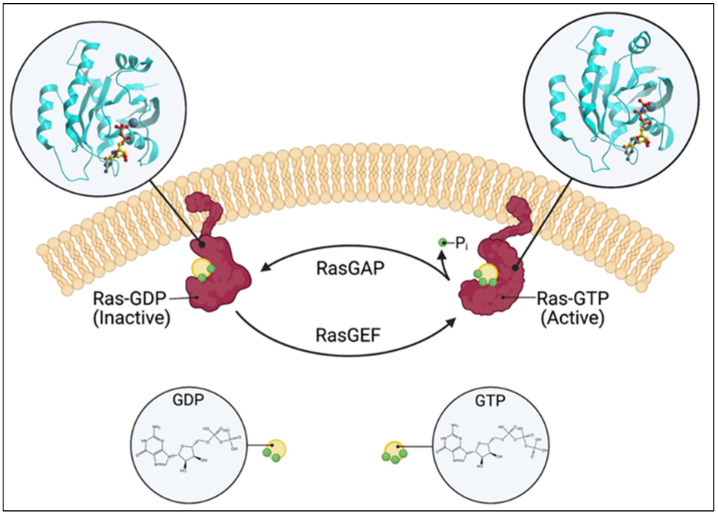
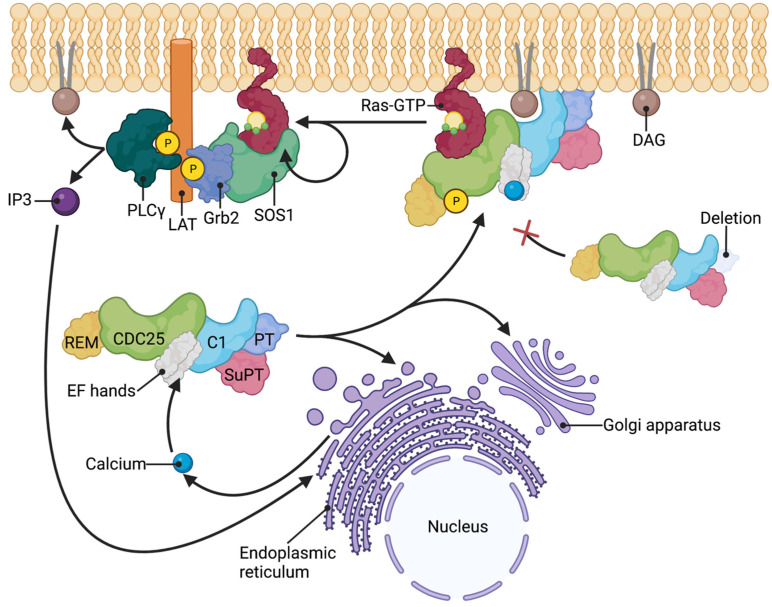
Four Ras guanine nucleotide-releasing proteins (RasGRP1 through 4) belong to the family of guanine nucleotide exchange factors (GEFs). RasGRPs catalyze the release of GDP from small GTPases Ras and Rap and facilitate their transition from an inactive GDP-bound to an active GTP-bound state. Thus, they regulate critical cellular responses via many downstream GTPase effectors. Similar to other RasGRPs, the catalytic module of RasGRP1 is composed of the Ras exchange motif (REM) and Cdc25 domain, and the EF hands and C1 domain contribute to its cellular localization and regulation. RasGRP1 can be activated by a diacylglycerol (DAG)-mediated membrane recruitment and protein kinase C (PKC)-mediated phosphorylation. RasGRP1 acts downstream of the T cell receptor (TCR), B cell receptors (BCR), and pre-TCR, and plays an important role in the thymocyte maturation and function of peripheral T cells, B cells, NK cells, mast cells, and neutrophils. The dysregulation of RasGRP1 is known to contribute to numerous disorders that range from autoimmune and inflammatory diseases and schizophrenia to neoplasia. Given its position at the crossroad of cell development, inflammation, and cancer, RASGRP1 has garnered interest from numerous disciplines. In this review, we outline the structure, function, and regulation of RasGRP1 and focus on the existing knowledge of the role of RasGRP1 in leukemia and other cancers.
Overview
CoChat Summary
TL;DR
RasGRP1 is a Ras guanine nucleotide exchange factor that regulates Ras/Rap GTPases downstream of TCR, BCR, pre-TCR, and other receptors, with important roles in immune cell development and function. Its role in cancer is context-dependent, acting oncogenic in T-ALL/lymphoma and skin tumors but tumor suppressive in colorectal cancer and associated with improved survival in breast cancer.
Key findings
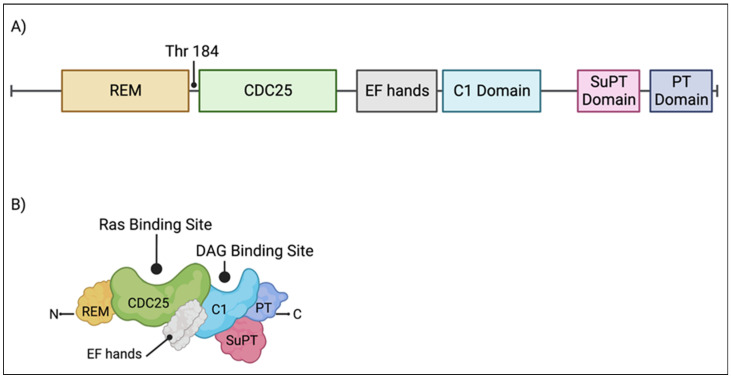
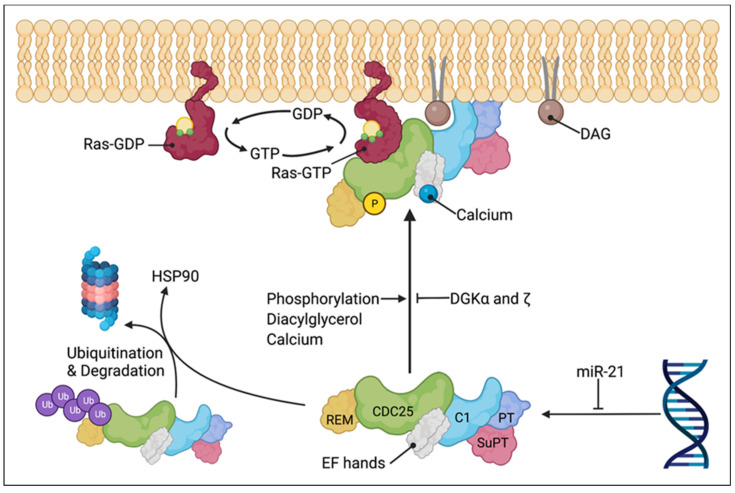
- RasGRP1’s catalytic module comprises REM and CDC25 domains; EF hands, C1 domain, and PT/SuPT tail regulate localization and activation. It is activated by DAG-mediated membrane recruitment and PKCα-mediated phosphorylation at T184, and terminated by DGKα/DGKζ converting DAG to PA; HSP90 and miR-21 also regulate it.
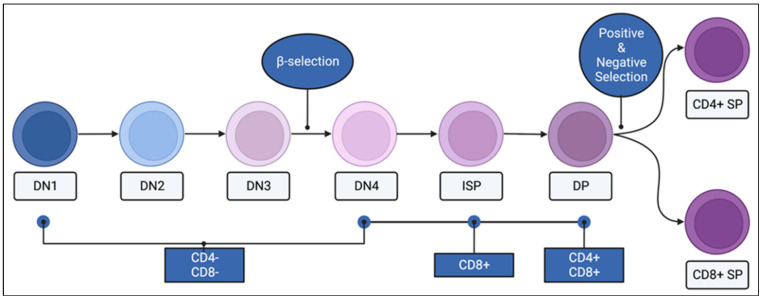
- In immune cells, RasGRP1 is essential for positive selection of DP thymocytes, acts as a backup for SOS1 at β-selection, and is required for peripheral T cell activation/proliferation, NK cytotoxicity and cytokine production, BCR-mediated proliferation (with RasGRP3 central), neutrophil development via Gfi1/G-CSF, and mast cell IgE-mediated degranulation.
- In cancer, RasGRP1 is overexpressed in nearly half of T-ALL; wild-type RasGRP1 is leukemogenic in retroviral insertion studies, but overexpression alone is insufficient and requires a cooperating oncogene or cytokine stimulation. Loss-of-function mutants cause ALPS, immunodeficiency, and EBV-induced B cell lymphoma; no oncogenic RasGRP1 mutant has been identified.
- RasGRP1 acts as a tumor suppressor in colorectal cancer and predicts anti-EGFR therapy response; it is upregulated in hepatocellular carcinoma and associated with tumor size, TNM stage, and Barcelona Clinic Liver Cancer stage; in breast cancer, upregulation is associated with improved overall survival and, in triple-negative subtype, improved overall and disease-free survival. Approximately 46% of cancers exhibit alterations in the Ras pathway.
Methods
- Design: focused narrative review of RasGRP1 structure, function, regulation, and role in leukemia and other cancers.
- Data/sample: no primary data; synthesizes existing literature on immune cells and cancers including leukemia/lymphoma, squamous cell carcinoma, colorectal cancer, hepatocellular carcinoma, and breast cancer.
- Main analysis: narrative synthesis of cited studies; no systematic search strategy, meta-analysis, or formal quality assessment is described.
Limitations
- The paper states unresolved issues: conflicting evidence on whether EF hands and calcium are required for RasGRP1 activation; the molecular basis for the counterintuitive breast cancer survival correlation is unknown; the array of cooperating oncogenes for RasGRP1-driven transformation has yet to be fully elucidated; and no RasGRP1-specific small molecule inhibitors currently exist.
- Evident from the text: as a focused narrative review, it does not describe systematic search criteria, inclusion/exclusion methods, or formal evidence appraisal, so conclusions depend on the selected cited literature.
Model-written summary. Check it against the paper before relying on it.
Integrity signals
Registry
Cites
Statistics
Figures
Verification
Claims the paper makes
0 Valid · 1 Not valid · 118 Not checked · 15 Own results and interpretations
In the paper
“The PT domain additionally facilitates the dimerization of RasGRP1 in the inactive state [16].”
§ A Focused Review of Ras Guanine Nucleotide-Releasing Protein 1 in Immune Cells and Cancer > 2. RasGRP1: Structure and Function
What the sources say
- Not checked yetcites [16] Iwig J.S. Vercoulen Y. Das R. Barros T. Limnander A. Che Y. Pelton J.G. Wemmer D.E. Roose J.P. Kuriyan J. Structural analysis of autoinhibition in the Ras-specific exchange factor RasGRP1 eLife 2013 2 e00813 10.7554/eLife.00813 23908768 PMC3728621 source
plainstates a cause- Asserted: passes — The authors put it forward as true.
- Checkable: passes — It can be checked against evidence.
- Load-bearing: unclear — It is unclear whether the paper’s conclusions depend on it.
- Based: passes — The paper gives a reason why it holds.
In the paper
“the double knockout of RasGRP1 and SOS1 is needed to arrest a negative selection [53].”
§ A Focused Review of Ras Guanine Nucleotide-Releasing Protein 1 in Immune Cells and Cancer > 4. RasGRP1: Cell Development and Function > 4.1. Immature Thymocytes
What the sources say
- Not checked yetcites [53] Kortum R.L. Sommers C.L. Pinski J.M. Alexander C.P. Merrill R.K. Li W. Love P.E. Samelson L.E. Deconstructing Ras signaling in the thymus Mol. Cell. Biol. 2012 32 2748 2759 10.1128/MCB.00317-12 22586275 PMC3416180 source
plainstates a cause- Asserted: passes — The authors put it forward as true.
- Checkable: passes — It can be checked against evidence.
- Load-bearing: unclear — It is unclear whether the paper’s conclusions depend on it.
- Based: passes — The paper gives a reason why it holds.
A statement the paper makes itself — it cites no source for it, so there is none to check. The quote shows it is in the paper.
In the paper
“The catalytic module of RasGRP1 is composed of the Ras exchange motif (REM) followed by the CDC25 subunit (Figure 2).”
§ A Focused Review of Ras Guanine Nucleotide-Releasing Protein 1 in Immune Cells and Cancer > 2. RasGRP1: Structure and Function
plain- Asserted: passes — The authors put it forward as true.
- Checkable: passes — It can be checked against evidence.
- Load-bearing: unclear — It is unclear whether the paper’s conclusions depend on it.
- Based: passes — The paper gives a reason why it holds.
A conclusion the paper draws from its own results — it cites no other source for it, so there is none to check. The quote shows it is in the paper.
In the paper
“While the C1 domain is well-recognized for its role mediating the RasGRP1 membrane targeting capacity and activation, it is now accepted that these effects are also dependent on the tail domain of RasGRP1.”
§ A Focused Review of Ras Guanine Nucleotide-Releasing Protein 1 in Immune Cells and Cancer > 2. RasGRP1: Structure and Function
boostedstates a cause- Asserted: passes — The authors put it forward as true.
- Checkable: passes — It can be checked against evidence.
- Load-bearing: unclear — It is unclear whether the paper’s conclusions depend on it.
- Based: passes — The paper gives a reason why it holds.
In the paper
“Additionally, the degradation of RasGRP1 can be mediated by HSP90 acetylation [46].”
§ A Focused Review of Ras Guanine Nucleotide-Releasing Protein 1 in Immune Cells and Cancer > 3. Ras Guanine Nucleotide-Releasing Protein 1: Regulation
What the sources say
- Not checked yetcites [46] Ding H. Peterson K.L. Correia C. Koh B. Schneider P.A. Nowakowski G.S. Kaufmann S.H. Histone deacetylase inhibitors interrupt HSP90*RASGRP1 and HSP90*CRAF interactions to upregulate BIM and circumvent drug resistance in lymphoma cells Leukemia 2017 31 1593 1602 10.1038/leu.2016.357 27890930 PMC5474223 source
plainstates a cause- Asserted: passes — The authors put it forward as true.
- Checkable: passes — It can be checked against evidence.
- Load-bearing: unclear — It is unclear whether the paper’s conclusions depend on it.
- Based: passes — The paper gives a reason why it holds.
83 more claims
Create a free account to see all 134 claims and to verify the 221 references still open.
- Probably not a substantial claim. 7
- It may state two separate claims as one. 39
Self-check
Percentages, sums and reported differences re-computed from the paper’s own numbers.
Each contradiction between two passages listed here was confirmed by an independent check.
Rated minor: it would not touch a result — a value no result rests on, a p-value that stays on the same side of the significance level, or a conflict that is clerical, resolved elsewhere in the paper, or outside its own findings.
In the paper
§ A Focused Review of Ras Guanine Nucleotide-Releasing Protein 1 in Immune Cells and Cancer > 5. RasGRP1: Role in Cancer > 5.2. Squamous Cell Carcinoma
“7,12-dimethylbenz(a)anthracene (DBMA) as carcinogen”
§ A Focused Review of Ras Guanine Nucleotide-Releasing Protein 1 in Immune Cells and Cancer > 5. RasGRP1: Role in Cancer > 5.2. Squamous Cell Carcinoma
“Additionally, the overexpression of RasGRP1 was found to partially replace the DMBA induction [99].”
Citations
Cites
Mutation and cancer: statistical study of retinoblastoma
Knudson, A. G. (1971) · Proceedings of the National Academy of Sciences · doi:10.1073/pnas.68.4.820 · Cited by 7,612
Vardiman, J. W., Thiele, J., Arber, D. A., Brunning, R. D., Borowitz, M. J., Porwit, A., Harris, N. L., Le Beau, M. M., Hellström-Lindberg, E., Tefferi, A., et al. (2009) · Blood · doi:10.1182/blood-2009-03-209262 · Cited by 4,424
Oncogenic Signaling Pathways in The Cancer Genome Atlas
Sanchez-Vega, F., Mina, M., Armenia, J., Chatila, W. K., Luna, A., La, K. C., Dimitriadoy, S., Liu, D. L., Kantheti, H. S., Saghafinia, S., et al. (2018) · Cell · doi:10.1016/j.cell.2018.03.035 · Cited by 3,201
A Family of cAMP-Binding Proteins That Directly Activate Rap1
Kawasaki, H., Springett, G. M., Mochizuki, N., Toki, S., Nakaya, M., Matsuda, M., Housman, D. E., & Graybiel, A. M. (1998) · Science · doi:10.1126/science.282.5397.2275 · Cited by 1,362
Calcium signalling in lymphocyte activation and disease
Feske, S. (2007) · Nature Reviews Immunology · doi:10.1038/nri2152 · Cited by 1,043 · cited 4×
“IP3 subsequently induces the release of intracellular stores of calcium.”
BackgroundInfluentialProtein kinase C and other diacylglycerol effectors in cancer
Griner, E. M., & Kazanietz, M. G. (2007) · Nature Reviews Cancer · doi:10.1038/nrc2110 · Cited by 978 · cited 1×
“We refer the reader to the review by Griner and Kazanietz for additional details on PKC and other DAG effectors [45].”
BackgroundLieschke, G., Grail, D., Hodgson, G., Metcalf, D., Stanley, E., Cheers, C., Fowler, K., Basu, S., Zhan, Y., & Dunn, A. (1994) · Blood · doi:10.1182/blood.v84.6.1737.1737 · Cited by 962
Ras superfamily GEFs and GAPs: validated and tractable targets for cancer therapy?
Vigil, D., Cherfils, J., Rossman, K. L., & Der, C. J. (2010) · Nature Reviews Cancer · doi:10.1038/nrc2960 · Cited by 819
Natural Killer Cell Signaling Pathways
Vivier, E., Nunès, J. A., & Vély, F. (2004) · Science · doi:10.1126/science.1103478 · Cited by 751
Endomembrane Trafficking of Ras
Choy, E., Chiu, V. K., Silletti, J., Feoktistov, M., Morimoto, T., Michaelson, D., Ivanov, I. E., & Philips, M. R. (1999) · Cell · doi:10.1016/s0092-8674(00)80607-8 · Cited by 697
Cited by
Zhao, J., Cui, X., Qi, Z., Zhang, K., Su, D., Yang, S., Hong, B., Wang, Q., Ju, J., Cheng, C., et al. (2024) · Theranostics · doi:10.7150/thno.92703 · Cited by 51
Liu, Z., Ding, M., Qiu, P., Pan, K., & Guo, Q. (2023) · Frontiers in Immunology · doi:10.3389/fimmu.2023.1200282 · Cited by 47
“Many studies have shown that RASGRP1 played an important role in the development of various cancers including BC, squamous cell carcinoma, colorectal cancer, hepatocellular carcinoma, as well as lymphoma and leukemia (52).”
Cell-type-resolved genetic variation shapes inflammatory bowel disease risk
Alegbe, T., Harris, B. T., Fachal, L., Ramirez-Navarro, L., Tutert, M., Krzak, M., Ghouraba, M., Strickland, M., Ozols, M., Cohen, C. E., et al. (2026) · Nature · doi:10.1038/s41586-026-10627-z · Cited by 26
“RASGRP1 encodes a Ras guanine nucleotide exchange factor that modulates MAPK signalling and epithelial proliferation 50,51 , and its depletion results in colitis phenotypes in mice 52 , suggesting a role in maintaining epithelial turnover.”
Yu, L., Prabhakaran, P., Wang, Y., Li, D., Sun‐Waterhouse, D., & Li, F. (2025) · Food Chemistry · doi:10.1016/j.foodchem.2025.145099 · Cited by 17
Liu, J., Ma, J., Zhang, Y., Li, J., Yang, Y., Yin, P., Wan, X., Ma, S., & Shang, D. (2025) · Cellular & Molecular Biology Letters · doi:10.1186/s11658-025-00805-8 · Cited by 12
“PKC and PKD are serine/threonine kinases involved in diverse receptor-mediated signaling cascades, while RasGRPs promote GTP loading of Ras and trigger its activation [62].”
From gene editing to tumor eradication: The CRISPR revolution in cancer therapy
Ali, A., Azmat, U., Khatoon, A., Akbar, K., Murtaza, B., Ji, Z., Irshad, U., & Su, Z. (2025) · Progress in Biophysics and Molecular Biology · doi:10.1016/j.pbiomolbio.2025.04.003 · Cited by 10
Cell-type-resolved genetic regulatory variation shapes inflammatory bowel disease riskPreprint
Alegbe, T., Harris, B., Fachal, L., Ramirez-Navarro, L., Tutert, M., Krzak, M., Ghouraba, M., Strickland, M., Ozols, M., Cohen, C. E., et al. (2025) · medRxiv · doi:10.1101/2025.06.24.25330216 · Cited by 8
“RASGRP1 encodes a Ras guanine nucleotide exchange factor that modulates MAPK signalling and epithelial proliferation 40,41 , and its depletion results in colitis phenotypes in mice 42 , suggesting a role in maintaining epithelial turnover.”
NK cells in HPV-related tumorigenesis: mechanisms and clinical applications
Deng, J., Liu, Y. H., Ma, X., Li, D., Li, Z., Pan, Y., & Zeng, X. (2026) · Frontiers in Cellular and Infection Microbiology · doi:10.3389/fcimb.2025.1723091 · Cited by 7
Dhiflaoui, A., & Almawi, W. Y. (2025) · Gene · doi:10.1016/j.gene.2025.149730 · Cited by 7
Computational approaches for identifications of altered ion channels in keratoconus
Gaikwad, K. B., Babu, J. S., Parthasarathi, K. T. S., Janakiraman, N., Padmanabhan, P., Pandey, A., Gundimeda, S., Elchuri, S. V., & Sharma, J. N. (2024) · Eye · doi:10.1038/s41433-024-03395-5 · Cited by 5
“Moreover, SP1 was found to be up-regulated in keratoconus [78].”
Alsaedi, S. B., Mineta, K., Tamura, N., Gao, X., Gojobori, T., & Ogasawara, M. (2025) · PLoS ONE · doi:10.1371/journal.pone.0329101 · Cited by 4
“Dysregulation of these genes contributes to systemic inflammation and immune dysregulation, features common to RA and neurodegenerative disorders [78,83].”
Zeng, H., Yu, Z., Li, X., Yin, Z., Huang, X., & Peng, H. (2023) · Frontiers in Immunology · doi:10.3389/fimmu.2023.1179664 · Cited by 4
“RASGRP1 is mainly expressed in T cells and thymocytes, which can prevent virus infection and autoimmunity-related activated T cell proliferation (38).”
BackgroundMansour, R., El-Orfali, Y., Saidu, A., Alkalamouni, H., Mardirossian, H., Hanna‐Wakim, R., Abboud, M. R., & Massaad, M. J. (2023) · Clinical Immunology · doi:10.1016/j.clim.2023.109813 · Cited by 4
Genes in Alcoholic Liver Disease: A Complex Interplay
Dawra, S., & Manrai, M. (2023) · Gene Expression · doi:10.14218/ge.2023.00004 · Cited by 2
Hakami, M. A., Fatima, R., Khan, Y., Alsaiari, A. A., Alsaiari, J. A., & Hussain, M. S. (2026) · EXCLI journal · doi:10.17179/excli2026-9572 · Cited by 2
Zhang, L., Liu, Y., Li, T., Li, J., Yan, X., Liu, Z., Li, L., Shen, H., Zou, W., & Wu, J. (2025) · Phytotherapy Research · doi:10.1002/ptr.70026 · Cited by 1
“However, the lack of RASGRP1 causes the failure of GCSF-dependent neutrophil differentiation (Hsu et al. 2023).”
Plasma lipidomics for biomarker identification in non-muscle invasive bladder cancer
Zhao, Y., Ji, Z., Sun, W., & Liu, X. (2025) · BMC Cancer · doi:10.1186/s12885-025-15019-6 · Cited by 1
“As a lipid second messenger, diacylglycerol modulates cell proliferation pathways, offering promising therapeutic targets for tumor growth inhibition [15].”
Huang, S., He, X., Bian, X., Tong, J., Li, Z., & Chen, Y. (2025) · Biology of Reproduction · doi:10.1093/biolre/ioaf083
Sarsah, S. K., & Murray, M. N. (2026) · BMC Research Notes · doi:10.1186/s13104-026-07898-0
“The higher than expected molecular weight (90–100 kDa) is consistent with post-translational modifications (phosphorylation) observed in RASGRP1 [20].”
Zhang, Z., Huang, H., Chen, J., Peng, K., & Yang, Y. (2026) · Scientific Reports · doi:10.1038/s41598-026-61921-9
“Functional enrichment analysis suggested that the differentially expressed genes were mainly associated with inflammatory and immune-related pathways, including rheumatoid arthritis 31 , the TNF signaling pathway 32 , and www.nature.com/scientificreports leukocyte proliferation 33 .”
Pharmacological inhibition of both DGKα and DGKζ is required for optimal T cell activation
Meibers, H. E., Reiner, G. L., Mitchell, C. G., Zepeda‐Carranza, B., Piovesan, D., Rosen, C. E., Fournier, J. T. A., Yadav, M., Paladugu, S. R., Nareddy, P. R., et al. (2026) · Journal of Pharmacology and Experimental Therapeutics · doi:10.1016/j.jpet.2026.104327
Gan, Q., Xu, X., Liu, H., & Li, Y. (2026) · Translational Cancer Research · doi:10.21037/tcr-2025-1466
Editorial for the Special Issue “Molecular Mechanism of Leukemia”
An, J., & Ko, M. (2023) · International Journal of Molecular Sciences · doi:10.3390/ijms241813936
“…comprehensive reviews concerning the impact of mutations or dysregulation of key proteins such as TET proteins [5], IKAROS [6], S100A8/9 [7], NPM1 [8], and RasGRP [9] on hematologic malignancies, along with potential therapeutic strategies targeting these molecules for diagnosis and treatment.”
MOLECULAR AND GENETIC MECHANISMS OF IMMUNE REGULATION IN SEVERE ACNE
Demina, O. M. (2024) · Современные проблемы науки и образования · doi:10.17513/spno.33824
RASGRP1 Deficiency Manifesting as Severe Vasculopathy and Fatal Autoimmune Hemolytic Anemia
Ashari, K. A., Yaghmaie, B., Pak, N., Shahrooei, M., Ziaee, V., & Parvaneh, N. (2026) · eJHaem · doi:10.1002/jha2.70275
Liu, Z., Ding, M., Qiu, P., Pan, K., & Guo, Q. (2023) · doi:10.3389/fimmu.2023.1200282.s003
Saidu, A. (2023) · AUB ScholarWorks (American University of Beirut)
Metadata
- Authors
- Hsu, T. C., Rodrigues, G. O. L., Winer, H., Hixon, J. A., Li, W., Tarasova, N. I., & Durum, S. K.
- Affiliations
- National Institutes of Health (US)
- National Cancer Institute (US)
- Corresponding author
- Durum, Scott K.
- ORCID
- Venue
- International Journal of Molecular Sciences
- Publisher
- MDPI AG
- Published
- 2023-01-13
- Volume
- 24
- Issue
- 2
- Pages
- 1652
- ISSN
- 1422-0067 (ISSN-L)
- PMC
- PMC9864139
- OpenAlex
- W4316372003
- Semantic Scholar
- 1487ec27d139b8f1374eb2931f008f86fb888d84
- Cited by
- 27
- References
- 116
- Citations by year
- 2026: 8 · 2025: 9 · 2024: 3 · 2023: 7
- FWCI
- 0.59
- Type
- journal article
- Language
- en
- Open access
- gold
- doi.org
- Licence
- Locations
- International Journal of Molecular Sciences (publishedVersion, cc-by)
- PubMed Central (publishedVersion, cc-by)
- PubMed (publishedVersion)
- Funders
- National Cancer Institute
- National Institutes of Health USA
- Topics
- Life Sciences › Biochemistry, Genetics and Molecular Biology › Molecular Biology › Protein Kinase Regulation and GTPase Signaling
- Life Sciences › Biochemistry, Genetics and Molecular Biology › Molecular Biology › Protein Tyrosine Phosphatases
- Life Sciences › Biochemistry, Genetics and Molecular Biology › Cell Biology › Cellular transport and secretion
- Keywords
- RasGRP1, guanine nucleotide exchange factor, Ras GTPase, Rap GTPases, diacylglycerol, protein kinase C phosphorylation, T cell receptor signaling, B cell receptor signaling, pre-TCR signaling, T cell development, mast cells, neutrophils, natural killer cells, leukemia, cancer, autoimmune disease, inflammation, schizophrenia
- MeSH terms
- DNA-Binding Proteins, Guanine Nucleotides, Humans, Immune System, Neoplasms, Receptors, Antigen, T-Cell, T-Lymphocytes, Guanine Nucleotide Exchange Factors
About these checks
Registry, retraction, Cites and statistics results are computed, not judged, with one exception: a printed reference that no index lists is read once by a model before it counts as a citation error. Claims are extracted by a model and kept only when their quote appears verbatim in the text; each cited source is then checked, with a model’s help, for whether it says what the claim relies on. Those verdicts can be wrong — read the claim’s quote and the cited source before relying on one.
A language model drew the claims from the paper on 2026-11-29, under version 3 of the claim definition (model deepseek-v4.1-flash, prompt extract-v3).
A second model labelled each claim on 2026-11-29 (model jev-1.13-20260917, definition revision gold-guideline-v0.2).
Statistics and arithmetic are recomputed, not judged.
Confidence bands are shown only for fields calibrated on our annotated test set. None is calibrated yet, so no band is shown.
What counts as a claim ›How we measure confidence ›How we check this ›
Are you an author, or do you see a problem with this page? Request a review
Data sources
Bibliographic data: Semantic Scholar, OpenAlex, Crossref.
Contains information from the Semantic Scholar Academic Graph Datasets, made available under the ODC Attribution License (ODC-BY 1.0).
Semantic Scholar’s data is described in: Kinney, R., et al. (2023). The Semantic Scholar Open Data Platform. arXiv:2301.10140.
