

The Evaluation of Rac1 Signaling as a Potential Therapeutic Target of Alzheimer’s Disease
Open accessThe DOI matches its Crossref record; 44 of the 44 references it cites were found in a registry or an index; none of the 22 sources its claims cite is checked for support yet.
Abstract
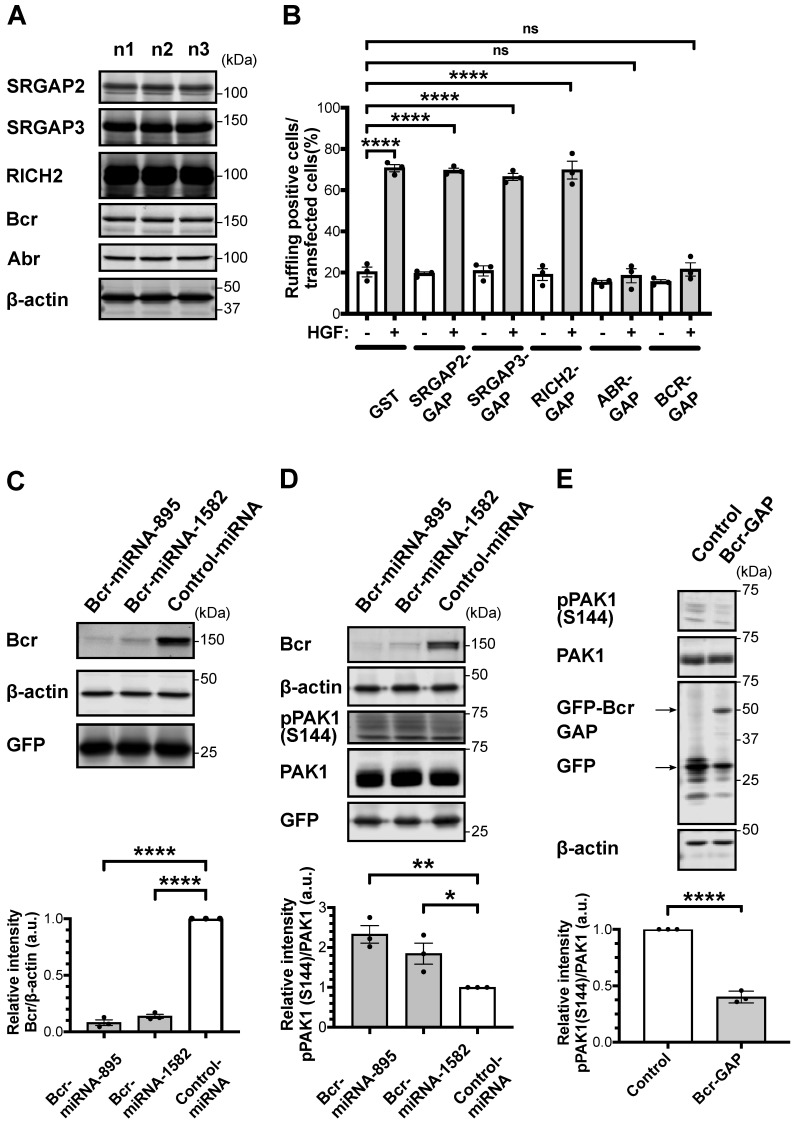
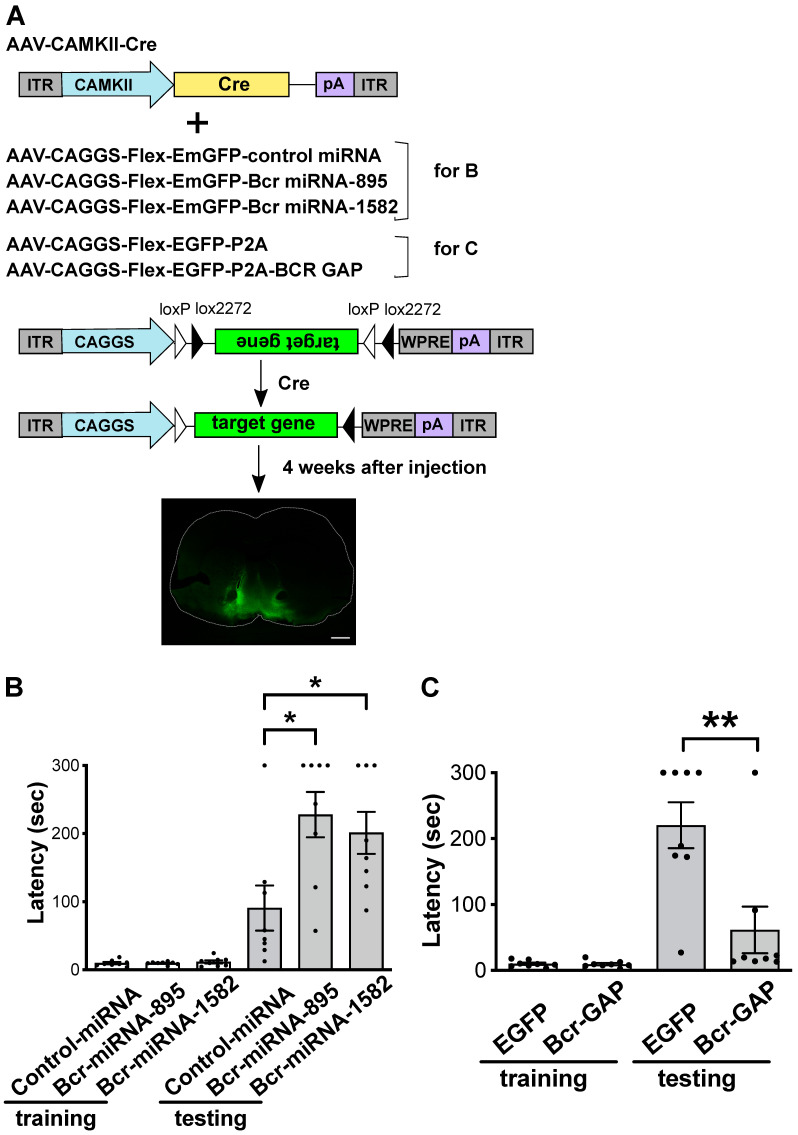
The Small GTPase Rac1 is critical for various fundamental cellular processes, including cognitive functions. The cyclical activation and inactivation of Rac1, mediated by Rac guanine nucleotide exchange factors (RacGEFs) and Rac GTPase-activating proteins (RacGAPs), respectively, are essential for activating intracellular signaling pathways and controlling cellular processes. We have recently shown that the Alzheimer’s disease (AD) therapeutic drug donepezil activates the Rac1-PAK pathway in the nucleus accumbens (NAc) for enhanced aversive learning. Also, PAK activation itself in the NAc enhances aversive learning. As aversive learning allows short-term preliminary AD drug screening, here we tested whether sustained Rac1 activation by RacGAP inhibition can be used as an AD therapeutic strategy for improving AD-learning deficits based on aversive learning. We found that the RacGAP domain of breakpoint cluster region protein (Bcr) (Bcr-GAP) efficiently inhibited Rac1 activity in a membrane ruffling assay. We also found that, in striatal/accumbal primary neurons, Bcr knockdown by microRNA mimic-expressing adeno-associated virus (AAV-miRNA mimic) activated Rac1-PAK signaling, while Bcr-GAP-expressing AAV inactivated it. Furthermore, conditional knockdown of Bcr in the NAc of wild-type adult mice enhanced aversive learning, while Bcr-GAP expression in the NAc inhibited it. The findings indicate that Rac1 activation by RacGAP inhibition enhances aversive learning, implying the AD therapeutic potential of Rac1 signaling.
Overview
CoChat Summary
TL;DR
Inhibiting the RacGAP Bcr in the nucleus accumbens activated Rac1-PAK signaling and enhanced aversive learning in adult wild-type mice, whereas expressing the Bcr RacGAP domain inhibited aversive learning. The authors conclude that Rac1 activation via RacGAP inhibition has potential as an Alzheimer’s disease therapeutic strategy, though hippocampus-dependent learning and AD models were not tested.
Key findings
- Five RacGAP candidates (SRGAP2, SRGAP3, RICH2, Abr, Bcr) were detected at the protein level in adult mouse striatum/NAc; in an HGF-induced membrane ruffling assay, ABR-GAP and BCR-GAP significantly decreased ruffling to the level of non-stimulated MDCK II cells, while SRGAP2-GAP, SRGAP3-GAP, and RICH2-GAP did not.
- Bcr miRNA mimics knocked down about 90% of endogenous Bcr protein in primary striatal/accumbal neurons; Bcr knockdown increased PAK1 autophosphorylation at S144, and Bcr-GAP expression decreased it, indicating Bcr RacGAP activity controls Rac1-PAK signaling.
- Conditional Bcr knockdown in the NAc of adult wild-type mice significantly extended step-through latency in a passive avoidance test (0.47 mA, 4 s foot shock), indicating enhanced aversive learning; Bcr-GAP expression in the NAc significantly shortened step-through latency (0.80 mA, 5 s foot shock), indicating inhibited aversive learning.
- The authors conclude that Rac1 activation by RacGAP inhibition enhances aversive learning, implying AD therapeutic potential, and note that aversive learning is used for preliminary AD drug screening.
Methods
- In vitro: MDCK II cells were transfected with RacGAP domain constructs and stimulated with 100 pM recombinant HGF for 15 min for a membrane ruffling assay; primary striatal/accumbal neurons from E16 mouse embryos were transduced with AAV miRNA mimics or AAV-Flex-EGFP-Bcr-GAP plus AAV-CaMKII-Cre and analyzed by immunoblotting for PAK1 autophosphorylation at S144.
- In vivo: adult male C57BL/6J mice (7–8 weeks old; 22–30 g) received NAc co-injections of AAV-CAGGS-Flex-EmGFP-Bcr miRNA mimic and AAV-CAMKII-Cre, or AAV-CAGGS-Flex-EGFP-Bcr-GAP and AAV-CAMKII-Cre; passive avoidance testing was performed four weeks later with foot shocks of 0.47 mA, 4 s or 0.80 mA, 5 s, and step-through latency was recorded up to 300 s.
- Analysis: data are expressed as mean ± SEM of at least three independent experiments; one-way ANOVA followed by Dunnett’s multiple comparison test or two-tailed Student’s t test was used, with p < 0.05 considered significant.
Limitations
- Stated: The authors note the study focused on Rac1 signaling in the NAc and aversive learning; AD patients also show hippocampus-dependent learning and memory declines, and they state further investigation in the hippocampus is underway. They also state the investigator was not blinded to group allocation during data collection.
- Stated: Abr miRNA mimic transduction caused cell death, so Abr was not analyzed further; only Bcr was focused on.
- Evident from the text: No AD model mice or disease-state animals were tested; all in vivo experiments used wild-type male C57BL/6J mice, and therapeutic potential is inferred from aversive learning as a preliminary screening output.
Model-written summary. Check it against the paper before relying on it.
Integrity signals
Registry
Cites
Statistics
Figures
Verification
Claims the paper makes
0 Valid · 0 Not valid · 13 Not checked · 30 Own results and interpretations
A result the paper reports from its own data — it cites no other source for it, so there is none to check. The quote shows it is in the paper.
In the paper
“We found that the RacGAP domain of breakpoint cluster region protein (Bcr) (Bcr-GAP) efficiently inhibited Rac1 activity in a membrane ruffling assay.”
- Also stated in: § 2.1. RacGAP Bcr Knockdown in Striatal/Accumbal Neurons Enhances Rac1-PAK Signaling · hedged
“These results indicate that BCR-GAP and ABR-GAP efficiently inhibit Rac1 activity in MDCKⅡ cells.”
§ The Evaluation of Rac1 Signaling as a Potential Therapeutic Target of Alzheimer’s Disease > Abstract
plainstates a cause- Asserted: passes — The authors put it forward as true.
- Checkable: passes — It can be checked against evidence.
- Load-bearing: passes — The paper’s conclusions depend on it.
- Based: passes — The paper gives a reason why it holds.
- Also stated in: § 2.1. RacGAP Bcr Knockdown in Striatal/Accumbal Neurons Enhances Rac1-PAK Signaling · hedged
A result the paper reports from its own data — it cites no other source for it, so there is none to check. The quote shows it is in the paper.
In the paper
“Immunoblotting analysis showed that both Bcr miRNAs mimic increased PAK1 autophosphorylation at S144 in primary striatal/accumbal neurons (Figure 1D)”
§ The Evaluation of Rac1 Signaling as a Potential Therapeutic Target of Alzheimer’s Disease > 2. Results > 2.1. RacGAP Bcr Knockdown in Striatal/Accumbal Neurons Enhances Rac1-PAK Signaling
plainstates a cause- Asserted: passes — The authors put it forward as true.
- Checkable: passes — It can be checked against evidence.
- Load-bearing: passes — The paper’s conclusions depend on it.
- Based: passes — The paper gives a reason why it holds.
- Rests on an assumption not shown here.
A result the paper reports from its own data — it cites no other source for it, so there is none to check. The quote shows it is in the paper.
In the paper
“Both Bcr miRNA mimics knocked down about 90% of the endogenous Bcr protein (Figure 1C).”
§ The Evaluation of Rac1 Signaling as a Potential Therapeutic Target of Alzheimer’s Disease > 2. Results > 2.1. RacGAP Bcr Knockdown in Striatal/Accumbal Neurons Enhances Rac1-PAK Signaling
plainstates a cause- Asserted: passes — The authors put it forward as true.
- Checkable: passes — It can be checked against evidence.
- Load-bearing: passes — The paper’s conclusions depend on it.
- Based: passes — The paper gives a reason why it holds.
- Rests on an assumption not shown here.
A result the paper reports from its own data — it cites no other source for it, so there is none to check. The quote shows it is in the paper.
In the paper
“Immunoblotting analysis showed that Bcr-GAP domain expression significantly decreased PAK1 autophosphorylation at S144 (Figure 1E).”
§ The Evaluation of Rac1 Signaling as a Potential Therapeutic Target of Alzheimer’s Disease > 2. Results > 2.1. RacGAP Bcr Knockdown in Striatal/Accumbal Neurons Enhances Rac1-PAK Signaling
plainstates a cause- Asserted: passes — The authors put it forward as true.
- Checkable: passes — It can be checked against evidence.
- Load-bearing: passes — The paper’s conclusions depend on it.
- Based: passes — The paper gives a reason why it holds.
A result the paper reports from its own data — it cites no other source for it, so there is none to check. The quote shows it is in the paper.
In the paper
“In this system, Bcr miRNA mimics significantly knocked down Bcr expression in the NAc in vivo (Figure S3).”
§ The Evaluation of Rac1 Signaling as a Potential Therapeutic Target of Alzheimer’s Disease > 2. Results > 2.2. Bcr Knockdown in the NAc Enhances Aversive Learning
plainstates a cause- Asserted: passes — The authors put it forward as true.
- Checkable: passes — It can be checked against evidence.
- Load-bearing: passes — The paper’s conclusions depend on it.
- Based: passes — The paper gives a reason why it holds.
- Rests on an assumption not shown here.
26 more claims
Create a free account to see all 43 claims and to verify the 22 references still open.
- It may state two separate claims as one. 4
- Probably not a substantial claim. 10
Citations
Cites
Etienne-Manneville, S., & Hall, A. (2002) · Nature · doi:10.1038/nature01148 · Cited by 4,201
The small GTP-binding protein rac regulates growth factor-induced membrane ruffling
Ridley, A. J., Paterson, H. F., Johnston, C. L., Diekmann, D., & Hall, A. (1992) · Cell · doi:10.1016/0092-8674(92)90164-8 · Cited by 3,652
Rho GTPases and signaling networks
Van Aelst, L., & D’Souza-Schorey, C. (1997) · Genes & Development · doi:10.1101/gad.11.18.2295 · Cited by 2,358
The Guanine Nucleotide-Binding Switch in Three Dimensions
Vetter, I. R., & Wittinghofer, A. (2001) · Science · doi:10.1126/science.1062023 · Cited by 1,875
A brain serine/threonine protein kinase activated by Cdc42 and Rac1
Manser, E., Leung, T., Salihuddin, H., Zhao, Z.-S., & Lim, L. (1994) · Nature · doi:10.1038/367040a0 · Cited by 1,538
Methods of Behavior Analysis in Neuroscience
(2008) · CRC Press eBooks · doi:10.1201/9780367802622 · Cited by 773
Labelling and optical erasure of synaptic memory traces in the motor cortex
Hayashi-Takagi, A., Yagishita, S., Nakamura, M., Shirai, F., Wu, Y. I., Loshbaugh, A. L., Kuhlman, B., Hahn, K. M., & Kasai, H. (2015) · Nature · doi:10.1038/nature15257 · Cited by 624
Structure of PAK1 in an Autoinhibited Conformation Reveals a Multistage Activation Switch
Lei, M., Lu, W., Meng, W., Parrini, M.-C., Eck, M. J., Mayer, B. J., & Harrison, S. C. (2000) · Cell · doi:10.1016/s0092-8674(00)00043-x · Cited by 545
Current knowledge of the large RhoGAP family of proteins
Tcherkezian, J., & Lamarche‐Vane, N. (2007) · Biology of the Cell · doi:10.1042/bc20060086 · Cited by 474
Lipid products of PI(3)Ks maintain persistent cell polarity and directed motility in neutrophils
Wang, F., Herzmark, P., Weiner, O. D., Srinivasan, S., Servant, G., & Bourne, H. R. (2002) · Nature Cell Biology · doi:10.1038/ncb810 · Cited by 472
Cited by
Implication of Rac1 GTPase in molecular and cellular mitochondrial functions
Bailly, C., Degand, C., Laine, W., Sauzeau, V., & Kluza, J. (2024) · Life Sciences · doi:10.1016/j.lfs.2024.122510 · Cited by 41
Unveiling DNA methylation in Alzheimer’s disease: a review of array-based human brain studies
Alves, V. C., Carro, E., & Figueiro‐Silva, J. (2024) · Neural Regeneration Research · doi:10.4103/1673-5374.393106 · Cited by 15
Mechanistic Role of Astrocytic Rac1 Protein in Alzheimer's Disease
Jiang, F., Wang, N., & Meng, Q. (2025) · Aging and Disease · doi:10.14336/ad.2025.0502 · Cited by 2
Wei, W., Cheng, B., Qi, X., He, D., Cheng, S., Yang, X., Pan, C., Meng, P., Hui, J., Gou, Y., et al. (2026) · Translational Psychiatry · doi:10.1038/s41398-026-03976-w · Cited by 1
Yamahashi, Y., Tsuboi, D., Funahashi, Y., & Kaibuchi, K. (2023) · Expert Review of Proteomics · doi:10.1080/14789450.2023.2265067 · Cited by 1
Self-citation
Metadata
- Authors
- Wang, H., Yamahashi, Y., Riedl, M., Amano, M., & Kaibuchi, K.
- Affiliations
- Nagoya University (JP)
- Fujita Health University (JP)
- Corresponding author
- Kaibuchi, Kozo
- Venue
- International Journal of Molecular Sciences
- Publisher
- MDPI AG
- Published
- 2023-07-25
- Volume
- 24
- Issue
- 15
- Pages
- 11880
- ISSN
- 1422-0067 (ISSN-L)
- PMC
- PMC10418761
- OpenAlex
- W4385234141
- Semantic Scholar
- 7d0ffdfb55203cea7b7a70f73312a777515eabb8
- Cited by
- 8
- References
- 43
- Citations by year
- 2026: 2 · 2025: 3 · 2024: 2 · 2023: 1
- FWCI
- 0.69
- Type
- journal article
- Language
- en
- Open access
- gold
- doi.org
- Licence
- Locations
- International Journal of Molecular Sciences (publishedVersion, cc-by)
- PubMed Central (publishedVersion, cc-by)
- PubMed (publishedVersion)
- Institutional Repositories DataBase (IRDB) (submittedVersion)
- Funders
- MEXT and AMED, AMED (JP20dm0207075, JP18dm0207005, JP17H01380, JP19K16370, JP17H05561, JP19H05209, 01111706, FV2019, 0104)
- JSPS KAKENHI (JP20dm0207075, JP18dm0207005, JP17H01380, JP19K16370, JP17H05561, JP19H05209, 01111706, FV2019, 0104)
- MEXT KAKENHI (JP20dm0207075, JP18dm0207005, JP17H01380, JP19K16370, JP17H05561, JP19H05209, 01111706, FV2019, 0104)
- Joint Research by the National Institutes of Natural Sciences (NINS) (JP20dm0207075, JP18dm0207005, JP17H01380, JP19K16370, JP17H05561, JP19H05209, 01111706, FV2019, 0104)
- Uehara Memorial Foundation, Takeda Science Foundation, Hori Sciences and Arts Foundation (JP20dm0207075, JP18dm0207005, JP17H01380, JP19K16370, JP17H05561, JP19H05209, 01111706, FV2019, 0104)
- Fujita Health University (JP20dm0207075, JP18dm0207005, JP17H01380, JP19K16370, JP17H05561, JP19H05209, 01111706, FV2019, 0104)
- Topics
- Life Sciences › Neuroscience › Cellular and Molecular Neuroscience › Alzheimer's disease research and treatments
- Life Sciences › Biochemistry, Genetics and Molecular Biology › Molecular Biology › Protein Kinase Regulation and GTPase Signaling
- Life Sciences › Neuroscience › Cellular and Molecular Neuroscience › Neuroscience and Neuropharmacology Research
- Keywords
- Rac1 signaling, Alzheimer's disease, aversive learning, nucleus accumbens, striatal neurons, miRNA mimics, AAV gene delivery, therapeutic target, learning deficits
- MeSH terms
- Alzheimer Disease, Animals, Neuropeptides, Signal Transduction, Guanine Nucleotide Exchange Factors, GTPase-Activating Proteins, rac1 GTP-Binding Protein, MicroRNAs, Mice
About these checks
Registry, retraction, Cites and statistics results are computed, not judged, with one exception: a printed reference that no index lists is read once by a model before it counts as a citation error. Claims are extracted by a model and kept only when their quote appears verbatim in the text; each cited source is then checked, with a model’s help, for whether it says what the claim relies on. Those verdicts can be wrong — read the claim’s quote and the cited source before relying on one.
A language model drew the claims from the paper on 2026-11-27, under version 3 of the claim definition (model deepseek-v4.1-flash, prompt extract-v3).
A second model labelled each claim on 2026-11-27 (model jev-1.13-20260917, definition revision gold-guideline-v0.2).
Statistics and arithmetic are recomputed, not judged.
Confidence bands are shown only for fields calibrated on our annotated test set. None is calibrated yet, so no band is shown.
What counts as a claim ›How we measure confidence ›How we check this ›
Are you an author, or do you see a problem with this page? Request a review
Data sources
Bibliographic data: Semantic Scholar, OpenAlex, Crossref.
Contains information from the Semantic Scholar Academic Graph Datasets, made available under the ODC Attribution License (ODC-BY 1.0).
Semantic Scholar’s data is described in: Kinney, R., et al. (2023). The Semantic Scholar Open Data Platform. arXiv:2301.10140.
