

Unraveling the Genetic Landscape of Neurological Disorders: Insights into Pathogenesis, Techniques for Variant Identification, and Therapeutic Approaches
Open accessThe DOI matches its Crossref record; 404 of the 410 references it cites were found in a registry or an index; none of the 294 sources its claims cite is checked for support yet.
Abstract
Genetic abnormalities play a crucial role in the development of neurodegenerative disorders (NDDs). Genetic exploration has indeed contributed to unraveling the molecular complexities responsible for the etiology and progression of various NDDs. The intricate nature of rare and common variants in NDDs contributes to a limited understanding of the genetic risk factors associated with them. Advancements in next-generation sequencing have made whole-genome sequencing and whole-exome sequencing possible, allowing the identification of rare variants with substantial effects, and improving the understanding of both Mendelian and complex neurological conditions. The resurgence of gene therapy holds the promise of targeting the etiology of diseases and ensuring a sustained correction. This approach is particularly enticing for neurodegenerative diseases, where traditional pharmacological methods have fallen short. In the context of our exploration of the genetic epidemiology of the three most prevalent NDDs—amyotrophic lateral sclerosis, Alzheimer’s disease, and Parkinson’s disease, our primary goal is to underscore the progress made in the development of next-generation sequencing. This progress aims to enhance our understanding of the disease mechanisms and explore gene-based therapies for NDDs. Throughout this review, we focus on genetic variations, methodologies for their identification, the associated pathophysiology, and the promising potential of gene therapy. Ultimately, our objective is to provide a comprehensive and forward-looking perspective on the emerging research arena of NDDs.
Overview
CoChat Summary
TL;DR
This review synthesizes genetic epidemiology, variant-identification technologies, pathophysiology, and gene-based therapeutic approaches for ALS, AD, and PD, with brief coverage of HD, prion disease, and MS. It argues that NGS/WGS and emerging gene therapies are advancing understanding of neurodegenerative disorders, but much heritability and disease mechanism remain unexplained.
Key findings
- ALS, AD, and PD are mostly sporadic: only 5–10% of cases are familial and >90% sporadic; known high-effect ALS genes C9orf72, SOD1, TARDBP, and FUS account for ~48% of familial and 5% of sporadic cases in European populations.
- AD genetics includes APP/PSEN1/PSEN2 causing ~1% of autosomal dominantly inherited AD; APOE ε4/ε4 confers ~3-fold higher risk than a single ε4 allele; TREM2 variants increase LOAD risk ~2–4-fold; a recent GWAS identified 75 risk loci, 42 novel.
- PD risk includes heterozygous GBA variants with 5–8-fold increased risk, LRRK2 variants in up to 1% of sporadic and 29% of familial Ashkenazi Jewish / 70% of North African PD; the largest GWAS found 90 independent risk signals in 78 genomic regions, 38 novel.
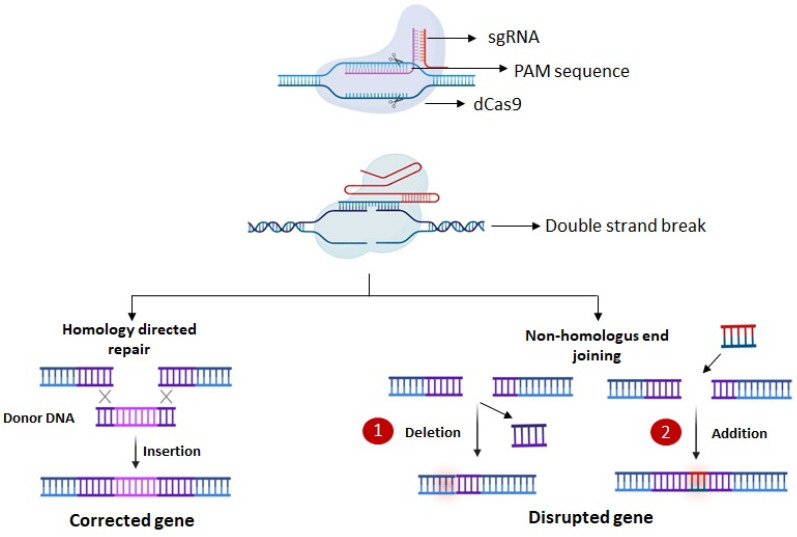
- Gene therapy approaches include ASO-SOD1/Tofersen for SOD1-ALS, AAV2-AADC and ProSavin for PD, AAV-GBA1 and LRRK2 ASOs, and MAPT ASOs reducing tau synthesis >50% in mild AD CNS; AAV2-NGF for AD showed safety but no obvious cognitive improvement.
Methods
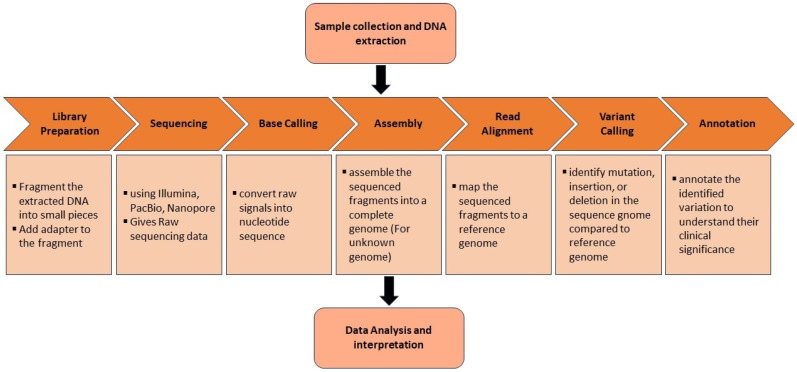
- Narrative review of published literature on genetic causes, variant identification, pathophysiology, and gene therapy for neurodegenerative disorders, focused on ALS, AD, and PD with brief sections on HD, prion disease, and MS.
- Data are cited studies and cohorts, including GWAS, WES/WGS, long-read sequencing, and clinical trials; no primary data collection or systematic search/inclusion criteria are described.
- Main analysis is qualitative synthesis of genetic epidemiology, gene discovery, molecular mechanisms, and therapeutic strategies, with referenced tables of risk loci (Tables 1–4) not included in the provided text.
Limitations
- The paper states that GWAS findings explain only a small proportion of heritability, genetic risk prediction tests are currently unfeasible, and considerable heritability across NDDs remains unexplained.
- The paper states that no diagnostic test can clearly establish the existence, absence, or categorization of a neurodegenerative disorder, and underlying mechanisms remain unresolved for most NDDs.
- Evident from the text: as a narrative review, it lacks a described systematic search strategy, quality appraisal, or primary data; the referenced Tables 1–4 are not included in the provided text.
Model-written summary. Check it against the paper before relying on it.
Integrity signals
Registry
Cites
Statistics
Figures
Verification
Claims the paper makes
0 Valid · 11 Not valid · 268 Not checked · 34 Own results and interpretations
In the paper
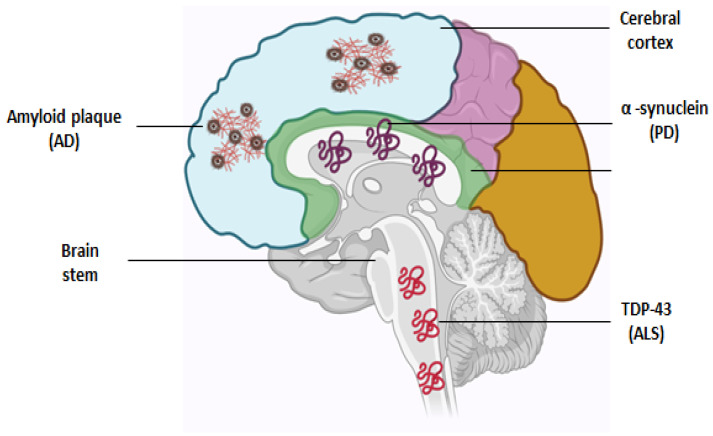
“while PD and ALS are characterized by the accumulation of α-synuclein [5] and TDP43 [6], respectively”
§ Unraveling the Genetic Landscape of Neurological Disorders: Insights into Pathogenesis, Techniques for Variant Identification, and Therapeutic Approaches > 1. Introduction
What the sources say
- Not checked yetcites [5] Kovacs G.G. Botond G. Budka H. Protein coding of neurodegenerative dementias: The neuropathological basis of biomarker diagnostics Acta Neuropathol. 2010 119 389 408 10.1007/s00401-010-0658-1 20198481 source
plainstates an association- Asserted: passes — The authors put it forward as true.
- Checkable: passes — It can be checked against evidence.
- Load-bearing: unclear — It is unclear whether the paper’s conclusions depend on it.
- Based: passes — The paper gives a reason why it holds.
In the paper
“Many neurological disorders are known to have substantial genetic factors contributing to their development [13].”
§ Unraveling the Genetic Landscape of Neurological Disorders: Insights into Pathogenesis, Techniques for Variant Identification, and Therapeutic Approaches > 2. Genetic Techniques in Addressing Neurodegenerative Disorders
What the sources say
- Not checked yetcites [13] Koretsky M.J. Alvarado C. Makarious M.B. Vitale D. Levine K. Bandres-Ciga S. Dadu A. Scholz S.W. Sargent L. Faghri F. Genetic risk factor clustering within and across neurodegenerative diseases Brain 2023 146 4486 4494 10.1093/brain/awad161 37192343 PMC10629980 source
boostedstates an association- Asserted: passes — The authors put it forward as true.
- Checkable: passes — It can be checked against evidence.
- Load-bearing: passes — The paper’s conclusions depend on it.
- Based: passes — The paper gives a reason why it holds.
In the paper
“The current experience with GWASs strongly suggests that rarer variants that are hard to detect with GWASs may account for the ‘missing’ heritability [19].”
§ Unraveling the Genetic Landscape of Neurological Disorders: Insights into Pathogenesis, Techniques for Variant Identification, and Therapeutic Approaches > 2. Genetic Techniques in Addressing Neurodegenerative Disorders
What the sources say
- Not checked yetcites [19] Young A.I. Solving the missing heritability problem PLoS Genet. 2019 15 e1008222 10.1371/journal.pgen.1008222 31233496 PMC6611648 source
hedgedstates a possible cause- Asserted: passes — The authors put it forward as true.
- Checkable: passes — It can be checked against evidence.
- Load-bearing: passes — The paper’s conclusions depend on it.
- Based: passes — The paper gives a reason why it holds.
In the paper
“These findings bear significant implications for risk prediction, diagnosis, and the treatment of neurological diseases [14].”
§ Unraveling the Genetic Landscape of Neurological Disorders: Insights into Pathogenesis, Techniques for Variant Identification, and Therapeutic Approaches > 2. Genetic Techniques in Addressing Neurodegenerative Disorders
What the sources say
- Not checked yetcites [14] Jiang T. Tan M.-S. Tan L. Yu J.-T. Application of next-generation sequencing technologies in Neurology Ann. Transl. Med. 2014 2 125 10.3978/j.issn.2305-5839.2014.11.11 25568878 PMC4260045 doi:10.3978/j.issn.2305-5839.2014.11.11
plainstates an association- Asserted: passes — The authors put it forward as true.
- Checkable: passes — It can be checked against evidence.
- Load-bearing: passes — The paper’s conclusions depend on it.
- Based: passes — The paper gives a reason why it holds.
In the paper
“Most common neurological diseases like AD, PD, and ALS can be studied using both approaches.”
§ Unraveling the Genetic Landscape of Neurological Disorders: Insights into Pathogenesis, Techniques for Variant Identification, and Therapeutic Approaches > 2. Genetic Techniques in Addressing Neurodegenerative Disorders
What the sources say
- Not checked yetcites [16] Craig J. Complex Diseases: Research and Applications Nat. Educ. 2008 1 184
plain- Asserted: passes — The authors put it forward as true.
- Checkable: passes — It can be checked against evidence.
- Load-bearing: unclear — It is unclear whether the paper’s conclusions depend on it.
- Based: passes — The paper gives a reason why it holds.
125 more claims
Create a free account to see all 313 claims and to verify the 294 references still open.
- It may state two separate claims as one. 146
- Probably not a substantial claim. 70
Self-check
Percentages, sums and reported differences re-computed from the paper’s own numbers.
Each contradiction between two passages listed here was confirmed by an independent check.
Rated minor: it would not touch a result — a value no result rests on, a p-value that stays on the same side of the significance level, or a conflict that is clerical, resolved elsewhere in the paper, or outside its own findings.
In the paper
§ Unraveling the Genetic Landscape of Neurological Disorders: Insights into Pathogenesis, Techniques for Variant Identification, and Therapeutic Approaches > 3. Genetic Mutations and Corresponding Cellular Alterations in Neurodegenerative Disorders > 3.1. Amyotrophic Lateral Sclerosis (ALS)
“the standardized global incidence of ALS is only 168 per 100,000 person-years of follow-up”
§ Unraveling the Genetic Landscape of Neurological Disorders: Insights into Pathogenesis, Techniques for Variant Identification, and Therapeutic Approaches > 3. Genetic Mutations and Corresponding Cellular Alterations in Neurodegenerative Disorders > 3.1. Amyotrophic Lateral Sclerosis (ALS)
“Oceania universally has the highest incidence (2.25 per 100,000)”
Cited works that were retracted
Works this paper cites that were later retracted, from the retraction notices publishers deposit. Major when the notice came out before this paper was published.
Rated major: it would touch a result — a value a result rests on, reported and recomputed p-values on opposite sides of the significance level, two passages that conflict with no sign which is right, or a cited work retracted before this paper was published.
In the paper
“Pervez, M.T., Hasnain, M.J.U., Abbas, S.H., Moustafa, M.F., Aslam, N., and Shah, S.S.M. (2022). A comprehensive review of performance of next-generation sequencing platforms. BioMed Res. Int., 2022.”
Cited work 10.1155/2022/3457806 · retracted 2024-01-09 · notice 10.1155/2024/9837802 · this paper published 2024-02-15
Rated major: it would touch a result — a value a result rests on, reported and recomputed p-values on opposite sides of the significance level, two passages that conflict with no sign which is right, or a cited work retracted before this paper was published.
In the paper
“Liu X. Yin L. Li T. Lin L. Zhang J. Li Y. Reduction of WDR81 impairs autophagic clearance of aggregated proteins and cell viability in neurodegenerative phenotypes PLoS Genet. 2021 17 e1009415 10.1371/journal.pgen.1009415 33730050 PMC7968681”
Cited work 10.1371/journal.pgen.1009415 · retracted 2021-08-17 · notice 10.1371/journal.pgen.1009746 · this paper published 2024-02-15
Citations
Cites
2 retracted
[Retracted] A Comprehensive Review of Performance of Next‐Generation Sequencing Platforms
Pervez, M. T., Hasnain, M. J. U., Abbas, S. H., Moustafa, M. F., Aslam, N., & Shah, S. S. M. (2022) · BioMed Research International · doi:10.1155/2022/3457806 · Cited by 141
RetractedLiu, X., Yin, L., Li, T., Lin, L., Zhang, J., & Li, Y. (2021) · PLoS Genetics · doi:10.1371/journal.pgen.1009415 · Cited by 6
RetractedKok, J. S., Berg, I. J., & Scherder, E. J. A. (2013) · Dementia and Geriatric Cognitive Disorders Extra · doi:10.1159/000353441 · Cited by 20,589
Corder, E. H., Saunders, A. M., Strittmatter, W. J., Schmechel, D. E., Gaskell, P. C., Small, G. W., Roses, A. D., Haines, J. L., & Pericak-Vance, M. A. (1993) · Science · doi:10.1126/science.8346443 · Cited by 9,429
Finding the missing heritability of complex diseases
Manolio, T. A., Collins, F. S., Cox, N. J., Goldstein, D. B., Hindorff, L. A., Hunter, D. J., McCarthy, M. I., Ramos, E. M., Cardon, L. R., Chakravarti, A., et al. (2009) · Nature · doi:10.1038/nature08494 · Cited by 8,336
Mutation in the α-Synuclein Gene Identified in Families with Parkinson's Disease
Polymeropoulos, M. H., Lavedan, C., Leroy, E., Ide, S. E., Dehejia, A., Dutra, A., Pike, B., Root, H., Rubenstein, J., Boyer, R., et al. (1997) · Science · doi:10.1126/science.276.5321.2045 · Cited by 8,240
Rosen, D. R., Siddique, T., Patterson, D., Figlewicz, D. A., Sapp, P., Hentati, A., Donaldson, D., Goto, J., O'Regan, J. P., Deng, H.-X., et al. (1993) · Nature · doi:10.1038/362059a0 · Cited by 7,062
Nichols, E., Steinmetz, J. D., Vollset, S. E., Fukutaki, K., Chalek, J., Abd-Allah, F., Abdoli, A., Abualhasan, A., Abu-Gharbieh, E., Akram, T. T., et al. (2022) · The Lancet Public Health · doi:10.1016/s2468-2667(21)00249-8 · Cited by 5,575
Programmable editing of a target base in genomic DNA without double-stranded DNA cleavage
Komor, A. C., Kim, Y. B., Packer, M. S., Zuris, J. A., & Liu, D. R. (2016) · Nature · doi:10.1038/nature17946 · Cited by 5,437
Poewe, W., Seppi, K., Tanner, C. M., Halliday, G. M., Brundin, P., Volkmann, J., Schrag, A.-E., & Lang, A. E. (2017) · Nature Reviews Disease Primers · doi:10.1038/nrdp.2017.13 · Cited by 5,415
Research works printed but not linked: 2
- Craig J. Complex Diseases: Research and Applications Nat. Educ. 2008 1 184
- De Farias A.-R.M. Saha O. Lambert J.-C. Costa M.R. Role of the late-onset Alzheimer’s disease risk genes bin1 and ptk2b in the hyperexcitability of hiPSC-derived neurons Alzheimer’s Dement. 2021 17 e053632 10.1002/alz.053632 · doi:10.1002/alz.053632
Cited by
Alzheimer’s disease as type 3 diabetes: understanding the link and implications
Kciuk, M., Kruczkowska, W., Gałęziewska, J., Wanke, K., Kałuzińska-Kołat, Ż., Aleksandrowicz, M., & Kontek, R. (2024) · International Journal of Molecular Sciences · doi:10.3390/ijms252211955 · Cited by 98
“In general, patients with EOAD tend to have a longer survival time after diagnosis compared to those with LOAD [28].”
Stimuli‐Responsive Nano Drug Delivery Systems for the Treatment of Neurological Diseases
Dai, X., Li, W., Xie, D., Liu, B., Gong, L., & Han, H. (2025) · Small · doi:10.1002/smll.202410030 · Cited by 51
Nezameslami, R., Nezameslami, A., Mehdikhani, B., Jarrahi, S. A. M., Shahbazi, A., Rahmani, A., Masoudi, A., Yeganegi, M., Akhondzardaini, R., Bahrami, M. A., et al. (2025) · Asian Pacific Journal of Cancer Prevention · doi:10.31557/apjcp.2025.26.5.1641 · Cited by 41
Firdaus, Z., & Li, X. (2024) · International Journal of Molecular Sciences · doi:10.3390/ijms252111658 · Cited by 27
Self-citationGenetic risk for neurodegenerative conditions is linked to disease-specific microglial pathways
Askarova, A., Yaa, R. M., Marzi, S. J., & Nott, A. (2025) · PLoS Genetics · doi:10.1371/journal.pgen.1011407 · Cited by 21
Rethinking Parkinson's: The role of proteostasis networks and autophagy in disease progression
Sharma, A., Mannan, A., & Singh, T. G. (2025) · Molecular and Cellular Neuroscience · doi:10.1016/j.mcn.2025.104023 · Cited by 20
Ranieri, A., Monica, I. L., Iorio, M. R. D., Lombardo, B., & Pastore, L. (2024) · Genes · doi:10.3390/genes15040427 · Cited by 14
Omran, T. Z., Jasmi, F. S. O. A., Obaid, K. M., Ghareeb, A., Alsailawi, H. A., & Mudhafar, M. (2025) · Molecular Biology Reports · doi:10.1007/s11033-025-10477-4 · Cited by 11
Foundations of neuropsychology and neurosciences
Ghosh, S., & Sinha, J. K. (2026) · Elsevier eBooks · doi:10.1016/b978-0-443-36544-7.00010-0 · Cited by 9
Chauhan, P., Begum, M. Y., Narapureddy, B. R., Gupta, S., Wadhwa, K., Singh, G., Kumawat, R., Sharma, N., Ballal, S., Jha, S. K., et al. (2024) · Molecular Neurobiology · doi:10.1007/s12035-024-04535-4 · Cited by 9
Exploring Thiophene-Based Pharmacophores as Emerging Therapeutics for Neurodegenerative Disorders
Sharma, S., Gupta, M., & Sharma, S. (2025) · Critical Reviews in Analytical Chemistry · doi:10.1080/10408347.2025.2554239 · Cited by 7
Chauhan, P., Wadhwa, K., & Singh, G. (2024) · Aging Pathobiology and Therapeutics · doi:10.31491/apt.2024.12.160 · Cited by 7
Waqar, Z., Sethi, P., Jain, D., Singh, K., Alsaidan, O. A., Alzarea, S. I., Gupta, J. K., Saxena, S., & Sharma, M. C. (2025) · Current Genomics · doi:10.2174/0113892029372437251010114053 · Cited by 6
Das, A., Bhattacharya, M., Abdelhameed, A. S., Lee, S., & Chakraborty, C. (2025) · Molecular Therapy — Nucleic Acids · doi:10.1016/j.omtn.2025.102546 · Cited by 6
Recent developments in translational imaging of in vivo gene therapy outcomes
Day, I. L., Tamboline, M., Lipshutz, G. S., & Xu, S. (2024) · Molecular Therapy · doi:10.1016/j.ymthe.2024.12.049 · Cited by 6
Zhang, X., Xu, Y., Hu, H., Liao, Z., Lou, C., & Zou, X. (2025) · Molecular Brain · doi:10.1186/s13041-025-01228-4 · Cited by 6
Genetic and epigenetic drivers of neurodegenerative disorders
Roy, K., Syed, M., Narad, P., & Sengupta, A. (2025) · Progress in brain research · doi:10.1016/bs.pbr.2025.08.002 · Cited by 5
Retinal physiology in metabolic syndrome
García, D. M. (2025) · Advances in genetics · doi:10.1016/bs.adgen.2024.11.002 · Cited by 4
Hyderi, Z., Farhana, M. S., Singh, T. P., & Ravi, A. V. (2025) · Brain Research · doi:10.1016/j.brainres.2025.149674 · Cited by 4
Precision medicine in neurodegenerative diseases: From research to clinical practice
Gunasekaran, B., Arifin, A. H., Yu, W. H., Hanafi, S., Rao, K. D. K., & Salvamani, S. (2025) · Progress in brain research · doi:10.1016/bs.pbr.2025.08.006 · Cited by 2
Liu, Y., & Xia, K. (2025) · Genes · doi:10.3390/genes16040406 · Cited by 2
The Genetic Fingerprint of HIV in the Brain: Insights into Neurocognitive Dysfunction
Jadhav, S., Nair, S., & Nema, V. (2025) · Neuroglia · doi:10.3390/neuroglia6020023 · Cited by 2
Kieper, S. N., Spronck, E. A., Bourajjaj, M., Morais, R. D. V. S., van der Bent, M. L., Broekmans, Ş. A., van Rooijen, C., van Westen, R., Squeri, G., Brasser, G., et al. (2025) · Molecular Therapy — Methods & Clinical Development · doi:10.1016/j.omtm.2025.101642 · Cited by 2
Rehman, S. U., Abdullah, M., Soodonbekov, K., Kanatov, B., & Avtandil, S. (2025) · The Journal of Animal and Plant Sciences · doi:10.36899/japs.2025.6.0126 · Cited by 2
From data to diagnosis: harnessing personal genomics for precision healthcare
Tripathi, G., Faiyaz, M., Husain, A., Khanam, A., Hasan, Z., Haque, S., Kumar, P., & Farooqui, A. (2026) · Health and Technology · doi:10.1007/s12553-026-01059-w · Cited by 1
Caferra, P., Fraisse, T., Trincavelli, M. L., Marchetti, L., & Piras, A. M. (2024) · Expert Opinion on Biological Therapy · doi:10.1080/14712598.2024.2422360 · Cited by 1
Guarnaccia, M., Cognata, V. L., Gentile, G., Morello, G., & Cavallaro, S. (2025) · Neural Regeneration Research · doi:10.4103/nrr.nrr-d-24-01604 · Cited by 1
Hussain, S., Sabir, S., Tasleem, S., Mir, H., Afzal, W., Bukhari, N. T., Ikram, H., Khan, M., & Faheem, S. (2026) · Indus journal of bioscience research. · doi:10.70749/ijbr.v4i3.3036 · Cited by 1
Computational discovery and molecular modelling of small-molecule modulators of GDNF
Vankadoth, U. N., Sangavi, P., Pakala, S. R., Rao, M. K., Krishnan, B., & Amineni, U. (2026) · Biochemical and Biophysical Research Communications · doi:10.1016/j.bbrc.2026.154074 · Cited by 1
Scaccabarozzi, G., Fumagalli, L., Mambretti, M., Giorda, R., Villa, M., Ceccarelli, S. B., Villa, L. M., Mani, E., Nobile, M., Molteni, M., et al. (2025) · Autism Research · doi:10.1002/aur.70086
Bouazzaoui, F., Jaouhari, Y., hatimy, O. E., Azraida, H., Kabdy, H., Badaoui, M., Moubtakir, S., Yazouli, L. E., Aboufatima, R., Loukid, M., et al. (2026) · IGI Global eBooks · doi:10.4018/979-8-3373-1365-8.ch015
Evaluating CRISPR-Cas9's Ability for Identifying the Etiology of Multiple Sclerosis
Bayat, S., & Sajedi, S. A. (2025) · Russian Open Medical Journal · doi:10.15275/rusomj.2025.0302
Ethical and regulatory aspects of gene therapy in neurodegenerative disorders
Shoari, A. (2026) · Elsevier eBooks · doi:10.1016/b978-0-443-40467-2.00007-5
The Diagnostic Reliability of BIN1 and TOMM40 Genotyping in Assessing Dementia Risk
Machowska, M., Leszek, J., Mikołajczyk-Tarnawa, A., Głowacka, K., Trypka, E., Rąpała, M., Piechota, J., & Wiela−Hojeńska, A. (2025) · Genes · doi:10.3390/genes16121469
Epigenetics in neurodegeneration: Emerging biomarkers and translational insights
Singh, H., Gurjar, S., & Taliyan, R. (2025) · Brain Research · doi:10.1016/j.brainres.2025.150005
Okafor, N. I., Abdelgader, A., Abobaker, M., & Choonara, Y. E. (2026) · ChemistryOpen · doi:10.1002/open.202500425
Diabetes Mellitus: Review of the Common, Rare, and Uncommon (Conceptual and Metaphorical) Types
Pliszka, M., & Szablewski, L. (2026) · International Journal of Molecular Sciences · doi:10.3390/ijms27219611
Bio-Genetics and Disease: Diagnostic and Analytical Approaches
Juma, M., Jasab, S. J. H., Mohammed, S. H. H., & Alai, L. H. S. (2025) · Bright Sky Publications eBooks · doi:10.62906/bs.book.388
Sarwad, A., Housgoudar, S., -, S. B., Patil, V., Akki, A. J., & Parvatikar, P. (2026) · Elsevier eBooks · doi:10.1016/b978-0-443-34059-8.00006-3
Saltarella, I., Altamura, C., Laghetti, P., Settanni, G., Savino, N., Galiano, A., Fraysse, B., Vacca, A., & Desaphy, J. (2026) · Health care science · doi:10.1002/hcs2.70108
ROS in Precision Medicine in Neurological Diseases: Personalized Approaches
Chaudhari, Y., Patil, N., Rashid, A., Gupta, P. K., Wanjari, R., & Prabhakar, P. K. (2025) · Advances in medical diagnosis, treatment, and care (AMDTC) book series · doi:10.4018/979-8-3693-7919-6.ch014
Peptides and their ligands: A new frontier in immunomodulation
Arora, V., & Singh, P. K. (2026) · Elsevier eBooks · doi:10.1016/b978-0-443-44631-3.00012-3
Understanding levodopa-based therapies for Parkinson’s disease and their constraints
Nand, S., Singh, P., & Goel, F. (2025) · Elsevier eBooks · doi:10.1016/b978-0-443-34201-1.00009-0
From Silent Clones to Myeloma: Unraveling the Genetic Clues Behind MGUS and Smoldering Myeloma
Larasati, A., Triatmono, V. R., & Ghitha, N. (2025) · Journal La Medihealtico · doi:10.37899/journallamedihealtico.v6i3.2139
Gene Therapy for Parkinson’s Disease: Evaluating Current Platforms and Clinical Outcomes
(2026) · Neurological Sciences and Neurosurgery · doi:10.47275/2692-093x-149
Osaghale, L., Beshiru, A., & Subhan, U. (2026) · Gene Reports · doi:10.1016/j.genrep.2026.102551
Askarova, A., Yaa, R. M., Marzi, S. J., & Nott, A. (2025) · doi:10.1371/journal.pgen.1011407.r004
Musa, N. S. H., Burhan, Z. K. J., Askar, H. M. H., Kamil, I. Y. A. R., & Ali, M. A.-M. M. (2025) · Bright Sky Publications eBooks · doi:10.62906/bs.book.437
Exploring The Genetic Basis of Rare Diseases Through Next-Generation Sequencing
Roy, A. (2025) · Journal of Pharmacology Genetics and Molecular Biology · doi:10.64062/jpgmb.vol1.issue1.1
Nisha, N., Kaur, R., Singh, B., & Singh, J. R. (2026) · International Journal of Research Publication and Reviews · doi:10.55248/gengpi.07.0426.b943
Žumbakys, G. (2024) · Lithuanian University of Health Sciences
Metadata
- Authors
- Firdaus, Z., & Li, X.
- Affiliations
- Mayo Clinic (US)
- Corresponding author
- Li, Xiaogang
- Venue
- International Journal of Molecular Sciences
- Publisher
- MDPI AG
- Published
- 2024-02-15
- Volume
- 25
- Issue
- 4
- Pages
- 2320
- ISSN
- 1422-0067 (ISSN-L)
- PMC
- PMC10889342
- OpenAlex
- W4391872714
- Cited by
- 51
- References
- 404
- Citations by year
- 2026: 14 · 2025: 29 · 2024: 8
- FWCI
- 2.51
- Type
- journal article
- Language
- en
- Open access
- gold
- doi.org
- Licence
- Locations
- International Journal of Molecular Sciences (publishedVersion, cc-by)
- PubMed Central (publishedVersion, cc-by)
- PubMed (publishedVersion)
- Funders
- National Institutes of Health (R01 DK129241, DK126662)
- Topics
- Life Sciences › Biochemistry, Genetics and Molecular Biology › Genetics › Genomics and Rare Diseases
- Life Sciences › Neuroscience › Cellular and Molecular Neuroscience › Alzheimer's disease research and treatments
- Life Sciences › Neuroscience › Cellular and Molecular Neuroscience › Hereditary Neurological Disorders
- Keywords
- neurodegenerative diseases, genetic variants, rare variants, genetic epidemiology, amyotrophic lateral sclerosis, Alzheimer's disease, Parkinson's disease, gene therapy, next-generation sequencing, whole genome sequencing, exome sequencing, monogenic disorders, pathogenesis
- MeSH terms
- Alzheimer Disease, Amyotrophic Lateral Sclerosis, Humans, Parkinson Disease, Neurodegenerative Diseases
About these checks
Registry, retraction, Cites and statistics results are computed, not judged, with one exception: a printed reference that no index lists is read once by a model before it counts as a citation error. Claims are extracted by a model and kept only when their quote appears verbatim in the text; each cited source is then checked, with a model’s help, for whether it says what the claim relies on. Those verdicts can be wrong — read the claim’s quote and the cited source before relying on one.
A language model drew the claims from the paper on 2026-11-26, under version 3 of the claim definition (model deepseek-v4.1-flash, prompt extract-v3).
A second model labelled each claim on 2026-11-26 (model jev-1.13-20260917, definition revision gold-guideline-v0.2).
Statistics and arithmetic are recomputed, not judged.
Confidence bands are shown only for fields calibrated on our annotated test set. None is calibrated yet, so no band is shown.
What counts as a claim ›How we measure confidence ›How we check this ›
Are you an author, or do you see a problem with this page? Request a review
Data sources
Bibliographic data: Semantic Scholar, OpenAlex, Crossref.
Contains information from the Semantic Scholar Academic Graph Datasets, made available under the ODC Attribution License (ODC-BY 1.0).
Semantic Scholar’s data is described in: Kinney, R., et al. (2023). The Semantic Scholar Open Data Platform. arXiv:2301.10140.
