

Current Strategies for Increasing Knock-In Efficiency in CRISPR/Cas9-Based Approaches
Open accessThe DOI matches its Crossref record; 130 of the 130 references it cites were found in a registry or an index.
Abstract
Since its discovery in 2012, the clustered regularly interspaced short palindromic repeats (CRISPR) and CRISPR-associated protein 9 (Cas9) system has supposed a promising panorama for developing novel and highly precise genome editing-based gene therapy (GT) alternatives, leading to overcoming the challenges associated with classical GT. Classical GT aims to deliver transgenes to the cells via their random integration in the genome or episomal persistence into the nucleus through lentivirus (LV) or adeno-associated virus (AAV), respectively. Although high transgene expression efficiency is achieved by using either LV or AAV, their nature can result in severe side effects in humans. For instance, an LV (NCT03852498)- and AAV9 (NCT05514249)-based GT clinical trials for treating X-linked adrenoleukodystrophy and Duchenne Muscular Dystrophy showed the development of myelodysplastic syndrome and patient’s death, respectively. In contrast with classical GT, the CRISPR/Cas9-based genome editing requires the homologous direct repair (HDR) machinery of the cells for inserting the transgene in specific regions of the genome. This sophisticated and well-regulated process is limited in the cell cycle of mammalian cells, and in turn, the nonhomologous end-joining (NHEJ) predominates. Consequently, seeking approaches to increase HDR efficiency over NHEJ is crucial. This manuscript comprehensively reviews the current alternatives for improving the HDR for CRISPR/Cas9-based GTs.
Overview
The claims and statistics of this paper haven’t been checked yet.
Free: it reads the open-access text and checks the first 5 claims that cite a source we can check. Create a free account to check every claim.
Integrity signals
Registry
Cites
Statistics
Figures
Verification
Claims the paper makes
The claims and statistics of this paper haven’t been checked yet.
Free: it reads the open-access text and checks the first 5 claims that cite a source we can check. Create a free account to check every claim.
Claims other papers make about this one
Each is checked against this paper’s own text: does it say what the citing paper says it does?
The source backs part of the claim, not all of it — or backs it for a different population, condition or comparison.
In the citing paper
“However, CRISPR-Cas9-mediated HDR frequently results in monoallelic knock-ins, where only one allele is precisely modified while the other remains unedited or acquires variable indels [5].”
From Rapid and Robust Generation of Homozygous Fluorescent Reporter Knock-In Cell Pools by CRISPR-Cas9 (2025) · cites this paper as [5]
Experimental — accuracy not yet measured
Self-check
Percentages, sums and reported differences re-computed from the paper’s own numbers.
The self-check needs the paper’s full text.
Citations
Cites
CRISPR Provides Acquired Resistance Against Viruses in Prokaryotes
Barrangou, R., Fremaux, C., Deveau, H., Richards, M., Boyaval, P., Moineau, S., Romero, D. A., & Horvath, P. (2007) · Science · doi:10.1126/science.1138140 · Cited by 5,947 · cited 1×
“Biologically, the CRISPR/Cas system is an adaptative immune response of bacteria and archaea, which protects against the invasion from viral infection and mobile elements [7,19].”
BackgroundOptimized sgRNA design to maximize activity and minimize off-target effects of CRISPR-Cas9
Doench, J. G., Fusi, N., Sullender, M., Hegde, M., Vaimberg, E. W., Donovan, K. F., Smith, I., Tothova, Z., Wilen, C., Orchard, R., et al. (2016) · Nature Biotechnology · doi:10.1038/nbt.3437 · Cited by 4,637 · cited 1×
“Online predictors score sgRNA according to their on-target activity based on sophisticated studies published by Doench et al. (2016) [93].”
BackgroundDouble nicking by RNA-guided CRISPR Cas9 for enhanced genome editing specificity
Ran, F. A., Hsu, P. D., Lin, C.-Y., Gootenberg, J. S., Konermann, S., Trevino, A. E., Scott, D. A., Inoue, A., Matoba, S., Zhang, Y., et al. (2013) · Cell · doi:10.1016/j.cell.2013.08.021 · Cited by 3,299 · cited 1×
“PAM-out configuration, together with off-sets between 40–70 bp and 50–70 bp when nCas9 (D10A) or nCas9 (H840A) are used, respectively, have demonstrated higher on-target cleavage efficiency [39], while decreasing between 50–1500-fold the Cas9 off-target events in comparison to wtCas9 [39,94].”
BackgroundThe molecular hallmarks of epigenetic control
Allis, C. D., & Jenuwein, T. (2016) · Nature Reviews Genetics · doi:10.1038/nrg.2016.59 · Cited by 2,809 · cited 1×
“In contrast, when the histone tails are deacetylases, the chromatin is condensed, and the DNA strand is negatively regulated, a state known as heterochromatin [123].”
BackgroundHigh-fidelity CRISPR-Cas9 nucleases with no detectable genome-wide off-target effects
Kleinstiver, B. P., Pattanayak, V., Prew, M. S., Tsai, S. Q., Nguyen, N. T., Zheng, Z., & Joung, J. K. (2016) · Nature · doi:10.1038/nature16526 · Cited by 2,673
Evolutionary classification of CRISPR–Cas systems: a burst of class 2 and derived variants
Makarova, K. S., Wolf, Y. I., Iranzo, J., Shmakov, S. A., Alkhnbashi, O. S., Brouns, S. J. J., Charpentier, E., Cheng, D., Haft, D. H., Horvath, P., et al. (2020) · Nature Reviews Microbiology · doi:10.1038/s41579-019-0299-x · Cited by 2,445
Rationally engineered Cas9 nucleases with improved specificity
Slaymaker, I. M., Gao, L., Zetsche, B., Scott, D. A., Yan, W. X., & Zhang, F. (2016) · Science · doi:10.1126/science.aad5227 · Cited by 2,414 · cited 1×
“Even though some efforts have been made to increase the Cas9 specificity without size changes resulting in several Cas9 variants (see Table 1), they have a marginal effect on the knock-in efficiency increase [26,27,33].”
BackgroundCRISPR–Cas9 Structures and Mechanisms
Jiang, F., & Doudna, J. A. (2017) · Annual Review of Biophysics · doi:10.1146/annurev-biophys-062215-010822 · Cited by 2,029 · cited 6×
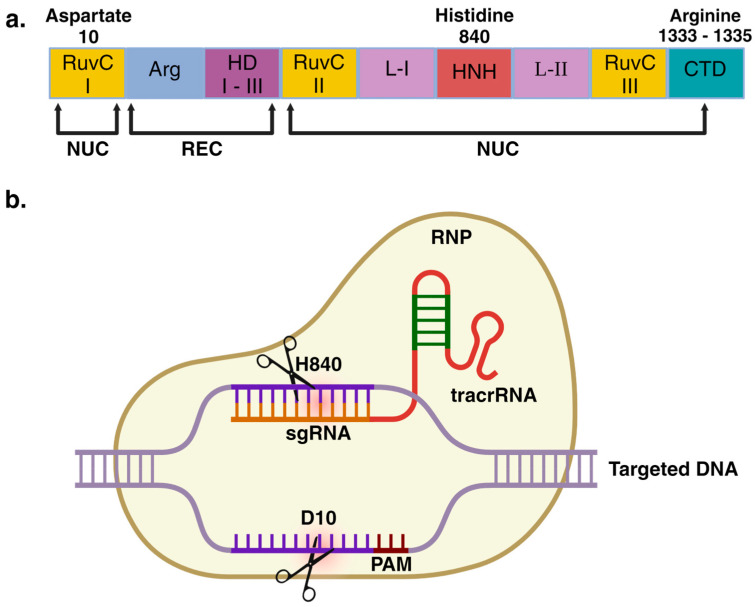
“The CRISPR/Cas9 comprises a sgRNA in combination with the Cas9 endonuclease, which interacts with the targeted DNA to mediate DSB [7].”
BackgroundInfluentialCRISPR-Cas9 Gene Editing for Sickle Cell Disease and β-Thalassemia
Frangoul, H., Altshuler, D., Cappellini, M. D., Chen, Y.-S., Domm, J., Eustace, B. K., Foell, J., de la Fuente, J., Grupp, S., Handgretinger, R., et al. (2021) · New England Journal of Medicine · doi:10.1056/nejmoa2031054 · Cited by 1,962 · cited 1×
“By knocking out the BCL11A gene (80%), the authors found a significant increase in fetal hemoglobin synthesis [46].”
BackgroundNon-homologous DNA end joining and alternative pathways to double-strand break repair
Chang, H. H. Y., Pannunzio, N. R., Adachi, N., & Lieber, M. R. (2017) · Nature Reviews Molecular Cell Biology · doi:10.1038/nrm.2017.48 · Cited by 1,757 · cited 1×
“In addition, there are other nucleases reported (i.e., WRN, APLF, MRN, etc.) along with enzymes such as PNKP, Apratxin, and tyrosyl-DNA phosphodiesterases 1 and 2 that can directly remove end-blocking groups to facilitate DNA end ligation [62].”
Background
Cited by
Gene therapy for genetic diseases: challenges and future directions
Beibei, Q. I. E., Tuo, J., Chen, F., Ding, H., & Lyu, L. (2025) · MedComm · doi:10.1002/mco2.70091 · Cited by 45
Gene editing and CRISPR-dependent homology-mediated end joining
Ruis, B. L., Bielinsky, A., & Hendrickson, E. A. (2025) · Experimental & Molecular Medicine · doi:10.1038/s12276-025-01442-z · Cited by 26
“61 ).”
Retina-directed gene therapy: Achievements and remaining challenges
Biber, J., Gandor, C. L. A., Bećirović, E., & Michalakis, S. (2025) · Pharmacology & Therapeutics · doi:10.1016/j.pharmthera.2025.108862 · Cited by 25
Yan, B., Yan, C., Ding, Y., Cai, S., Wang, Y., Agbo, E., Xu, X., Qin, K., & Fu, Q. (2026) · Frontiers in Microbiology · doi:10.3389/fmicb.2025.1723885 · Cited by 12
“…regulation of phage genomes; the shuttle phage platform based on the λ red recombination system enables efficient insertion of >30 kb of exogenous DNA, while the CRISPR-mediated counter-selection strategy shortens the iterative optimization cycle of targeted genes to 48 h (Leal et al., 2024).”
Yu, C., Adavikolanu, R., Kaake, R. M., & Huang, L. (2025) · Mass Spectrometry Reviews · doi:10.1002/mas.21926 · Cited by 10
“This allows for eAP‐MS to be performed from a variety of cell and tissue types (Chen et al. 2024; Leal et al. 2024; Kruglova and Shepelev 2024; Tabassum et al. 2023; Shamshirgaran et al. 2022; Reuven and Shaul 2022).”
Advances in CRISPR-Cas systems for epigenetics
Ilyas, M., Shah, Q., Gul, A., Ibrahim, H., Fatima, R., Babar, M. M., & Rajadas, J. (2024) · Progress in molecular biology and translational science · doi:10.1016/bs.pmbts.2024.07.003 · Cited by 10
Resly, L. C., Tubbs, A. L., Vogel, A. J., Hux, J. A., MacDonald, I. A., Harris, J., Mischler, A., Tomberlin, G., Evans, K. S., Thompson, R., et al. (2025) · Nucleic Acids Research · doi:10.1093/nar/gkaf961 · Cited by 8
“The CRISPR–Cas endonuclease system has been a popular way of generating DSBs and allowing an insertion of synthetic DNA templates; however, rates of precise insertion us-ing this technology are typically low [ 8–11 ].”
CRISPR in Medicine: A Systematic Review of Clinical Trials and Therapeutic Applications
Rahmanian, M., Khoshandam, M., Mousazadeh, M., Yang, P., Soltaninejad, H., Dehkordi, P. K., Sadeghizadeh, M., Goudarzi, M. T. H., Azimi, A. H., & Sheykhhasan, M. (2026) · Human Gene Therapy · doi:10.1177/10430342251409714 · Cited by 8
“3,4 The CRISPR/Cas9 system is a part of the bacterial adaptive immune response, originally identi fi ed in Streptococcus pyogenes .”
HSP90 buffers deleterious genetic variations in BRCA1
Gracia, B., Zhang, X.-H., Montes, P., Pham, T. C., Huang, M., Chen, J., & Karras, G. I. (2025) · Molecular Cell · doi:10.1016/j.molcel.2025.10.026 · Cited by 8
Efficient genome editing of two-cell mouse embryos via modified CRISPR/Cas electroporation
Sakurai, T., Takei, N., Wei, Y., Hayashi, M., Kamiyoshi, A., Kawate, H., Watanabe, S., Sato, M., & Shindo, T. (2024) · Scientific Reports · doi:10.1038/s41598-024-81198-0 · Cited by 7
CRISPR/Cas as a tool to overcome drug resistance in cancer: From challenge to opportunity
Hussen, B. M., Abdullah, S. R., Hidayat, H. J., Glassy, M. C., Safarzadeh, A., Komaki, A., Samsami, M., & Taheri, M. N. (2025) · Molecular and Cellular Probes · doi:10.1016/j.mcp.2025.102052 · Cited by 7
Recent advances in mucopolysaccharidosis IVA treatment
Leal, A. F., & Pachajoa, H. (2025) · Orphanet Journal of Rare Diseases · doi:10.1186/s13023-025-04028-0 · Cited by 6
“The CRISPR/Cas9 system enables gene modification, including gene knockout, knocking and base editing [80, 81].”
Self-citationLi, G., Zhou, X., Zhu, G., Pan, Y., Yan, J., Meng, J., Ye, T., Cheng, Y., Liu, C., & Gu, Z. (2025) · Animals · doi:10.3390/ani15152161 · Cited by 6
“In contrast, the non-homologous end-joining (NHEJ) repair rate at the MrIAG locus reaches 38% [104].”
CRISPR/Cas-Based Ex Vivo Gene Therapy and Lysosomal Storage Disorders: A Perspective Beyond Cas9
Leal, A. F., Prieto, L. E., & Pachajoa, H. (2025) · Cells · doi:10.3390/cells14151147 · Cited by 5
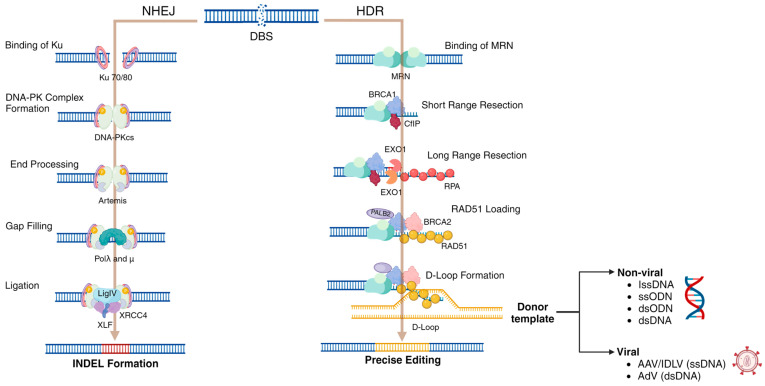
“The absence of a donor template results in indel (insertion or deletion) formation due to the predominant activity of the non-homologous end-joining (NHEJ) pathway in mammalian cells [8,9].”
InfluentialSelf-citationShah, W., Hussain, M., Serwat, A., Bilal, M., Raza, Y., Mansoor, A., & Faraz, A. (2026) · Clinica Chimica Acta · doi:10.1016/j.cca.2026.120875 · Cited by 5
CRISPR-Cas Systems and Genome Editing: Beginning the Era of CRISPR/Cas Therapies for Humans
Karpov, D. S. (2024) · International Journal of Molecular Sciences · doi:10.3390/ijms25105292 · Cited by 5
“Leal et al. comprehensively discuss current approaches to enhance homologous recombination in CRISPR/Cas9-based gene therapy applications [22].”
BackgroundViana, J. V. D. S., & Pereira, A. F. (2025) · Zoo Biology · doi:10.1002/zoo.21896 · Cited by 4
“Cells typically present an asynchronous cycle during in vitro culture, thus highlighting the importance of cell cycle synchronization methodologies for SCNT studies (Cooper 2003) and the uniformity of iPSC (Leal et al. 2024).”
Singh, S., Chaudhary, R., & Tiwari, S. (2025) · Plant Cell Reports · doi:10.1007/s00299-025-03654-z · Cited by 4
“Previous studies have also shown that using a gRNA that cleaves the target near the insertion site favors knock-in events (Collonnier et al. 2017; Leal et al. 2024).”
Mucopolysaccharidosis VI: Therapeutic trategies and erspectives
Leal, A. F., Prieto, L. E., Pachajoa, H., & Tomatsu, S. (2025) · Molecular Genetics and Metabolism · doi:10.1016/j.ymgme.2025.109255 · Cited by 4
Self-citationRamesh, B., & Fakoya, A. O. J. (2025) · Cureus · doi:10.7759/cureus.95908 · Cited by 4
“When attempting to introduce specific changes using homology-directed repair (HDR), which is preferred for knock-ins, the frequency of successful edits can be significantly lower compared to non-homologous end-joining (NHEJ), which is error-prone [95].”
Lobo, S., Barbosa‐Matos, R., Dória, S., Pedro, A. M., Brito, A., Ferreira, D. A., & Oliveíra, C. (2025) · Biology Methods and Protocols · doi:10.1093/biomethods/bpaf018 · Cited by 4
“Since the delivery occurs in a protein complex, it is not dependent on Cas9 translation, leading to a faster Cas9 activity [39].”
HSP90 buffers deleterious genetic variations in BRCA1Preprint
Gracia, B., Montes, P., Huang, M., Chen, J., & Karras, G. I. (2024) · bioRxiv (Cold Spring Harbor Laboratory) · doi:10.1101/2024.11.15.623783 · Cited by 4
Shirk, B. D., Rodriguez, C. Z., Pacheco, M. O., McTyer, J. B., Shirk, P. D., & Stoppel, W. L. (2025) · Biochemical Engineering Journal · doi:10.1016/j.bej.2025.109906 · Cited by 3
Mechanistic and therapeutic dimensions of DcR3-mediated immunomodulation in sepsis
Abbas, B., Lin, X., Chen, X., Chen, Q., & Su, J. (2026) · Frontiers in Immunology · doi:10.3389/fimmu.2025.1750066 · Cited by 3
“Unlike conventional transgenics, CRISPR knock-ins prevent random integration and overexpression artifacts (122, 124, 125).”
Ng, C. X., Mustafa, S., Yap, X. Y., & Lee, S. H. (2026) · Frontiers in Oncology · doi:10.3389/fonc.2026.1888734 · Cited by 3
“While NHEJ enables ef fi cient gene disruption through the introduction of frameshift mutations, its error-prone nature limits its utility for precise gene correction (52).”
Súarez, D. A., Leal, A. F., & Alméciga-Díaz, C. J. (2025) · Universitas Scientiarum · doi:10.11144/javeriana.sc30.eotc · Cited by 3
Self-citationCRISPR–Cas9 mediated gene therapy in inherited bone marrow failure syndromes
Hewa, N. J. S. M., Rajendra, K. C., Hewitt, A. W., & Fairfax, K. A. (2025) · Frontiers in Hematology · doi:10.3389/frhem.2025.1713610 · Cited by 2
Genome Editing: An Approach to Engineer Crops to Withstand Climate Change and Sustain Food Security
Al‐Dossary, O. (2025) · Springer eBooks · doi:10.1007/978-981-99-0862-2_28-1 · Cited by 2
CRISPR-genome editing: Revolutionizing beneficial Bacteria and Fungi for sustainable agriculture
Mascarin, G. M., dos Santos, M. S. N., & Côrtes, M. V. D. C. B. (2026) · Current Research in Biotechnology · doi:10.1016/j.crbiot.2026.100404 · Cited by 2
Rapid and Robust Generation of Homozygous Fluorescent Reporter Knock-In Cell Pools by CRISPR-Cas9
Yang, J., Guo, F., Chin, H. S., Chen, G. B., Zhang, Z., Williams, L., Kueh, A. J., Chow, P. K. H., Herold, M. J., & Fu, N. Y. (2025) · Cells · doi:10.3390/cells14151165 · Cited by 1
“However, CRISPR-Cas9-mediated HDR frequently results in monoallelic knock-ins, where only one allele is precisely modified while the other remains unedited or acquires variable indels [5].”
Reporter Alleles in hiPSCs: Visual Cues on Development and Disease
Cotta, G. C., dos Santos, R. C. T., Costa, G. M. J., & Lacerda, S. M. D. S. N. (2024) · International Journal of Molecular Sciences · doi:10.3390/ijms252011009 · Cited by 1
“These modifications address the challenges associated with the standard CRISPR/Cas9 system by improving fidelity without compromising cleavage activity [70,72].”
BackgroundCRISPR genome editing using a combined positive and negative selection system
Sharma, I., Hall, K., & Moonah, S. N. (2025) · PLoS ONE · doi:10.1371/journal.pone.0321881 · Cited by 1
“Following the double-stranded break, natural repair processes take over, leading to the insertion of specific DNA sequences by the initiation of homology directed repair (HDR) or insertions or deletions (indels) by the nonhomologous end joining (NHEJ) pathway [3].”
InfluentialStrategies for CRISPR-based knock-ins in primary human B cells and lymphoma cell lines
Lund, S., Gong, C., Yu, X., Staudt, L. M., Hodson, D. J., & Scheich, S. (2025) · Frontiers in Immunology · doi:10.3389/fimmu.2025.1589729 · Cited by 1
“Thus, optimizing HDR ef fi ciency should be considered before initiating a CRISPR knock-in experiment (23).”
InfluentialShin, K., & Kim, E. T. (2025) · The Journal of Microbiology · doi:10.71150/jm.2504008 · Cited by 1
“Various approaches have been developed to achieve knock-in modifications in viral genomes via CRISPR-Cas9-induced HDR (Leal et al., 2024; Liao et al., 2024).”
Development of marine organisms as models for studying human diseases
Isiaka, A. B., Uzoka, U. H., Anakwenze, V. N., Ani, N. V., Edward, I. G., Ezeokoli, C. M.-V., Esama, F. P., Ngwu, F. A., & Okoye, P. A. (2025) · Elsevier eBooks · doi:10.1016/b978-0-443-36320-7.00022-3 · Cited by 1
Construction and application of a genetically engineered mouse model of gastric adenocarcinoma
Madeti, Y., Chong, X., & Zhang, X. (2026) · Journal of the Chinese Medical Association · doi:10.1097/jcma.0000000000001350 · Cited by 1
Wu, C.-C., Hsiao, Y.-C., Lin, Z.-Y., Chiu, P.-H., & Chang, C.-H. (2026) · Current Issues in Molecular Biology · doi:10.3390/cimb48030257 · Cited by 1
“To correct this situation, a knock-in POLE-EDM in situ using CRISPR technology can generate reliable reference standards for further application [26].”
Ecology and Genetics in Asexual Sporulation in Agaricomycetes
Kües, U., Subba, S., Kapli, H., Khonsuntia, W., Badalyan, S. М., Ullah, I., & Winkler, M. (2026) · The mycota · doi:10.1007/978-3-032-15548-1_11 · Cited by 1
Targeting human oncogenic viruses with CRISPR/Cas: New therapeutic opportunities and challenges
Jigheh, M. P., Ravanlo, Z. Z., Shahrak, M. Z., Mohabbat, A., & Baghi, H. B. (2026) · Biomedicine & Pharmacotherapy · doi:10.1016/j.biopha.2026.119284 · Cited by 2
Knockout of Ku70 and Ku80 elevates homology‐directed repair efficiency in Plutella xylostella
Munir, F., Zaheer, U., Asad, M., & Yang, G. (2026) · Insect Molecular Biology · doi:10.1111/imb.70039 · Cited by 1
“However, HDR is confined to the S and G2 phases of the cell cycle, which restricts its overall efficiency (Haider & Mussolino, 2025; Leal et al., 2024; Smirnikhina et al., 2022).”
du Plessis, J., & Omar, A. (2026) · Cancer Medicine · doi:10.1002/cam4.72112 · Cited by 1
“CRISPR-mediated knock-in enables the precise introduction of disease-relevant mutations—such as oncogenic drivers or drug-resistance alleles—directly into endogenous gene [55].”
Leal, A. F., Pachajoa, H., & Tomatsu, S. (2025) · International Journal of Molecular Sciences · doi:10.3390/ijms26136448 · Cited by 1
“The CRISPR/Cas9 system is a revolutionary genome editing tool that enables the rewriting of the genome by introducing expression cassettes at specific genomic regions and directly correcting point mutations [120,121].”
Self-citationCRISPR-Cas9-based strategies for enhanced targeted integration
Lacombe, L. (2024) · theses.fr (ABES) · doi:10.70675/9c9d279dz512az4b72z8322zea205cef9b67 · Cited by 1
Assessing Microprocessor complex mutations with a Microsensor system
Bao, S., Le, T. N.-Y., Le, C. T., Tran, L. N. B., & Nguyen, T. A. (2025) · RNA · doi:10.1261/rna.080338.124
“Efforts to enhance the integration of donor DNA into the genome post-Cas9 cleavage have been explored through various methods (Leal et al. 2024).”
Smith, S. L., Iwamoto, Y., Manimaran, A., & Drubin, D. G. (2025) · Molecular Biology of the Cell · doi:10.1091/mbc.e25-06-0301
Improving Gene Knock-In Efficiencies in Sheep Primary Cells Using a CRISPR/Cas9-Gal4 System
Li, Y., Wu, S. V., Wu, Y., Yuan, Y., Zhao, Y., Teng, M., Zhang, W., Wang, J., & Qiu, Y. (2025) · Current Issues in Molecular Biology · doi:10.3390/cimb47110899
“Consequently, HDR-mediated gene knock-in is typically less efficient than NHEJ-mediated gene knockout and is more significantly influenced by cell type and target location [14,15].”
Ullah, K. (2025) · Veterinary Integrative Sciences · doi:10.12982/vis.2026.039
Epigenetic landscape in lysosomal storage disorders: mechanisms and modulation
Leal, A. F., Pachajoa, H., & Tomatsu, S. (2025) · Frontiers in Genetics · doi:10.3389/fgene.2025.1679497
“…demonstrated the suitability of CRISPR/Cas9 in recognizing, binding to, and cutting genomic DNA with high precision (Jiang and Doudna, 2017; Leal et al., 2024; Zhang, 2021), leading to development of a promising genome editing approach, which is currently used to induce knockouts and…”
Self-citationPrairie Vole Model Organism Development and Validation
Williams, G. (2025) · eScholarship (California Digital Library)
Casalta, L. (2025) · Electronic Theses of LMU Munich (Ludwig-Maximilians-Universität München) · doi:10.5282/edoc.36068
Boren, C., Kumar, R., & Gollahon, L. (2026) · International Journal of Molecular Sciences · doi:10.3390/ijms27021054
“As the use of CRISPR-Cas systems has become widespread, research efforts have been focused on increasing the overall efficiency and safety profile of gene editing systems [50,51].”
CRISPR-Based Gene Drive Technology for Anopheles Mosquito Population Suppression in Malaria Control
Davis, T. (2026) · IAA Journal of Applied Sciences · doi:10.59298/iaajas/2026/141115118
Gong, W., Jiang, H., & Qu, Y. (2026) · Transplantation and Cellular Therapy · doi:10.1016/j.jtct.2026.04.006
Tyson, D., Bortiri, E., Meier, K. A., Elumalai Sivamani, A., Matsuba, Y., McNamara, D., Moore, R., Nalapalli, S., Selby, B., Zhang, Y., et al. (2026) · Research Square · doi:10.21203/rs.3.rs-9555784/v1
Branzei, I., Amr, A., Rapti, K., Schraft, L., Lindenhofer, D., Leo, A., Romano, G., Sedaghat‐Hamedani, F., Reich, C., Koelemen, J., et al. (2026) · medRxiv · doi:10.64898/2026.07.13.26357866
Yamaji, M., Tabata, H., Nakamura, M., Fuse, R., Okada, T., Ohba, S., Ohishi, T., Kawada, M., Saito, I., Sato, S., et al. (2026) · The Journal of Gene Medicine · doi:10.1002/jgm.70104
“The nuclease Cas9 efficiently induces double-strand breaks at DNA target sites under the direction of gRNA [9, 10].”
Intervenciones genéticas en embriones: Revisión sistemática
Cheng, S., Kolangui, T., Mendoza, V., & Zhu, A. (2026) · Conducta Científica · doi:10.65050/rcc.v9n2a2
SIRT1 deacetylates GAPDH to drive microglial glycolysis and neuroinflammation
Hsu, C., Sapaev, I., Nematov, O. N., Turakulov, R., abdullah, S. S., Khaleel, Z. T., Alwaily, E. R., & Jabir, M. (2026) · Frontiers in Immunology · doi:10.3389/fimmu.2026.1883095
Wang, X., Wen, Z., Xu, R., Shi, W., Long, Y., Zhan, X., Su, R., Fei, J., & Li, Y. (2026) · Frontiers in Genome Editing · doi:10.3389/fgeed.2026.1893815
“CRISPR–Cas9 HDR enables site-specific integration yet relies on genotoxic DNA double-strand breaks and exhibits low baseline efficiency for large cargos (below 10% under unselected culture conditions (Yao et al., 2017; Leal et al., 2024).”
Martella, A., Matreyek, K. A., & Fisher, D. I. (2026) · Nucleic Acids Research · doi:10.1093/nar/gkag907
“The advent of CRISPR-based technologies has greatly accelerated the field by enabling efficient generation of single-nucleotide variants and small sequence changes within endogenous genes, advancing both functional genomics and the modelling of human diseases [ 1–3 ].”
Programming primary human T cells to deliver gene editing machineryPreprint
Meixiong, J., Zginnyk, O., Chow, L., Shy, B. R., & Spitzer, M. H. (2026) · bioRxiv (Cold Spring Harbor Laboratory) · doi:10.64898/2026.09.30.753584
Abbas, B., Abbas, A., Khan, I., & Nazeer, S. (2026) · Clinical Immunology · doi:10.1016/j.clim.2026.110782
Knockout and re-expression system for mutant analysis in primary mouse T cells
Morfos, V., Frie, M. C., Peschkov, D., Wagner, J., Lillemeier, B. F., & Brzostek, J. (2026) · Frontiers in Immunology · doi:10.3389/fimmu.2026.1946861
“Multiple strategies have been developed to enhance knockin ef fi ciency, including Cas9 engineering, repair template optimization and improved delivery methods (15).”
Meng, J., Liu, R., Zhang, X., Bao, Z., & Hu, X. (2026) · Aquaculture Reports · doi:10.1016/j.aqrep.2026.103881
Facicilia, G., Sartika, C. R., Hadisaputri, Y. E., & Rostinawati, T. (2026) · Cells · doi:10.3390/cells15212029
Metadata
- Authors
- Leal, A., Herreno-Pachón, A., Benincore-Flórez, E., Karunathilaka, A., & Tomatsu, S.
- Affiliations
- Pontificia Universidad Javeriana (CO)
- Nemours Children’s Health, Wilmington, DE 19803, USA
- Nemours Children's Health System (US)
- Thomas Jefferson University (US)
- Corresponding author
- Tomatsu, Shunji
- Venue
- International Journal of Molecular Sciences
- Publisher
- MDPI AG
- Published
- 2024-02-20
- Volume
- 25
- Issue
- 5
- Pages
- 2456
- ISSN
- 1422-0067 (ISSN-L)
- PMC
- PMC10931195
- OpenAlex
- W4391968889
- Cited by
- 58
- References
- 130
- Citations by year
- 2026: 23 · 2025: 29 · 2024: 6
- FWCI
- 2.36
- Type
- journal article
- Language
- en
- Open access
- gold
- doi.org
- Licence
- Locations
- International Journal of Molecular Sciences (publishedVersion, cc-by)
- PubMed Central (publishedVersion, cc-by)
- PubMed (publishedVersion)
- The Medicine Forum (submittedVersion, cc-by)
- Funders
- A Cure for Robert, Inc. (1R01HD102545-01A1)
- Austrian MPS society (1R01HD102545-01A1)
- The Carol Ann Foundation (1R01HD102545-01A1)
- Angelo R. Cali and Mary V. Cali Family Foundation, Inc. (1R01HD102545-01A1)
- The Vain and Harry Fish Foundation, Inc. (1R01HD102545-01A1)
- The Bennett Foundation (1R01HD102545-01A1)
- Jacob Randall Foundation (1R01HD102545-01A1)
- Nemours Funds (1R01HD102545-01A1)
- Eunice Kennedy Shriver (1R01HD102545-01A1)
- National Institute of Child Health and Human Development of the National Institutes of Health (NICHD) (1R01HD102545-01A1)
- Topics
- Life Sciences › Biochemistry, Genetics and Molecular Biology › Molecular Biology › CRISPR and Genetic Engineering
- Life Sciences › Biochemistry, Genetics and Molecular Biology › Genetics › Virus-based gene therapy research
- Life Sciences › Biochemistry, Genetics and Molecular Biology › Molecular Biology › RNA regulation and disease
- Keywords
- CRISPR/Cas9, knock-in efficiency, homologous recombination, non-homologous end joining, genome editing, gene therapy, lentivirus, adeno-associated virus, X-linked adrenoleukodystrophy, Duchenne muscular dystrophy, myelodysplastic syndrome
- MeSH terms
- Gene Editing, Animals, Humans, Mammals, Genetic Therapy, DNA End-Joining Repair, Recombinational DNA Repair, CRISPR-Cas Systems
About these checks
Registry, retraction, Cites and statistics results are computed, not judged, with one exception: a printed reference that no index lists is read once by a model before it counts as a citation error. Claims are extracted by a model and kept only when their quote appears verbatim in the text; each cited source is then checked, with a model’s help, for whether it says what the claim relies on. Those verdicts can be wrong — read the claim’s quote and the cited source before relying on one.
Statistics and arithmetic are recomputed, not judged.
Confidence bands are shown only for fields calibrated on our annotated test set. None is calibrated yet, so no band is shown.
What counts as a claim ›How we measure confidence ›How we check this ›
Are you an author, or do you see a problem with this page? Request a review
Data sources
Bibliographic data: Semantic Scholar, OpenAlex, Crossref.
Contains information from the Semantic Scholar Academic Graph Datasets, made available under the ODC Attribution License (ODC-BY 1.0).
Semantic Scholar’s data is described in: Kinney, R., et al. (2023). The Semantic Scholar Open Data Platform. arXiv:2301.10140.
