

The Role of Oxygen Homeostasis and the HIF-1 Factor in the Development of Neurodegeneration
Open accessThe DOI matches its Crossref record; 175 of the 177 references it cites were found in a registry or an index.
Abstract
Understanding the molecular underpinnings of neurodegeneration processes is a pressing challenge for medicine and neurobiology. Alzheimer’s disease (AD) and Parkinson’s disease (PD) represent the most prevalent forms of neurodegeneration. To date, a substantial body of experimental evidence has strongly implicated hypoxia in the pathogenesis of numerous neurological disorders, including AD, PD, and other age-related neurodegenerative conditions. Hypoxia-inducible factor (HIF) is a transcription factor that triggers a cell survival program in conditions of oxygen deprivation. The involvement of HIF-1α in neurodegenerative processes presents a complex and sometimes contradictory picture. This review aims to elucidate the current understanding of the interplay between hypoxia and the development of AD and PD, assess the involvement of HIF-1 in their pathogenesis, and summarize promising therapeutic approaches centered on modulating the activity of the HIF-1 complex.
Overview
The claims and statistics of this paper haven’t been checked yet.
Free: it reads the open-access text and checks the first 5 claims that cite a source we can check. Create a free account to check every claim.
Integrity signals
Registry
Cites
Statistics
Figures
Verification
Claims the paper makes
The claims and statistics of this paper haven’t been checked yet.
Free: it reads the open-access text and checks the first 5 claims that cite a source we can check. Create a free account to check every claim.
Claims other papers make about this one
Each is checked against this paper’s own text: does it say what the citing paper says it does?
In the citing paper
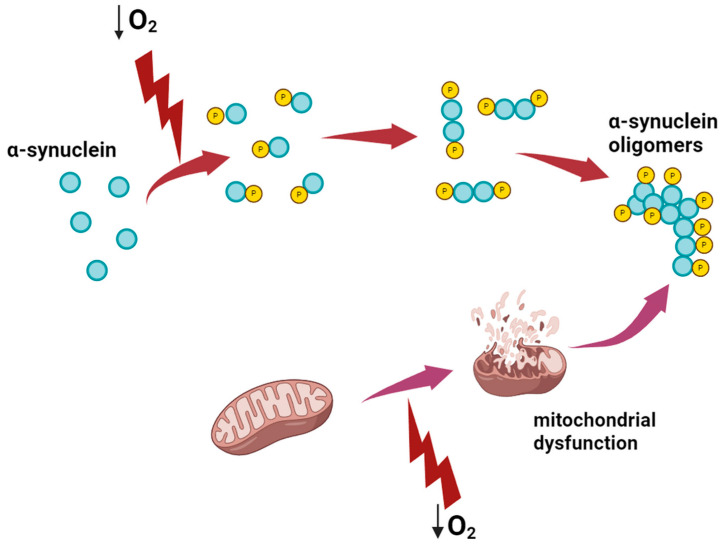
“Moreover, chronic hypoxia is thought to trigger α-syn phosphorylation and aggregation, which interacts with hypoxia-induced mitochondrial dysfunction to worsen PD progression.265”
From Antiageing strategy for neurodegenerative diseases: from mechanisms to clinical advances (2025) · cites this paper as [265]
Self-check
Percentages, sums and reported differences re-computed from the paper’s own numbers.
The self-check needs the paper’s full text.
Citations
Cites
Jaakkola, P., Mole, D. R., Tian, Y.-M., Wilson, M. I., Gielbert, J., Gaskell, S. J., Kriegsheim, A. V., Hebestreit, H. F., Mukherji, M., Schofield, C. J., et al. (2001) · Science · doi:10.1126/science.1059796 · Cited by 5,535
HIFα Targeted for VHL-Mediated Destruction by Proline Hydroxylation: Implications for O 2 Sensing
Ivan, M., Kondo, K., Yang, H., Kim, W., Valiando, J., Ohh, M., Salic, A., Asara, J. M., Lane, W. S., & Kaelin Jr., W. G. (2001) · Science · doi:10.1126/science.1059817 · Cited by 4,735
Epidemiology of Parkinson's disease
de Lau, L. M., & Breteler, M. M. (2006) · The Lancet Neurology · doi:10.1016/s1474-4422(06)70471-9 · Cited by 4,110
Kim, J.-W., Tchernyshyov, I., Semenza, G. L., & Dang, C. V. (2006) · Cell Metabolism · doi:10.1016/j.cmet.2006.02.002 · Cited by 3,905 · cited 1×
“An essential aspect concerning the involvement of HIF-1 in pathogenesis pertains to its impact on inflammatory mechanisms.”
BackgroundMutations in the DJ-1 Gene Associated with Autosomal Recessive Early-Onset Parkinsonism
Bonifati, V., Rizzu, P., van Baren, M. J., Schaap, O., Breedveld, G. J., Krieger, E., Dekker, M. C. J., Squitieri, F., Ibanez, P., Joosse, M., et al. (2003) · Science · doi:10.1126/science.1077209 · Cited by 2,778 · cited 1×
“Cobalt can displace the sole free iron in these active sites, thereby deactivating these hydroxylases.”
BackgroundA conserved family of prolyl-4-hydroxylases that modify HIF
Bruick, R. K., & McKnight, S. L. (2001) · Science · doi:10.1126/science.1066373 · Cited by 2,549 · cited 1×
“The neurons in the brain lack the ability to synthesize or store glucose, relying entirely on the glucose transport across the blood–brain barrier facilitated by GLUT transporters, with GLUT1 and GLUT3 being predominant in the mammalian brain.”
BackgroundChallenges in the diagnosis of Parkinson's disease
Tolosa, E., Garrido, A., Scholz, S. W., & Poewe, W. (2021) · The Lancet Neurology · doi:10.1016/s1474-4422(21)00030-2 · Cited by 1,874 · cited 1×
“Parkinson’s disease (PD) ranks as the second most common neurodegenerative disorder [5], representing the fore-most serious movement disorder globally.”
BackgroundHIF-1α pathway: role, regulation and intervention for cancer therapy
Masoud, G. N., & Li, W. (2015) · Acta Pharmaceutica Sinica B · doi:10.1016/j.apsb.2015.05.007 · Cited by 1,871
Semenza, G. L., Jiang, B.-H., Leung, S. W., Passantino, R., Concordet, J.-P., Maire, P., & Giallongo, A. (1996) · Journal of Biological Chemistry · doi:10.1074/jbc.271.51.32529 · Cited by 1,752 · cited 1×
“Several studies have highlighted the neuroprotective role of HIF-1 against beta-amyloid peptide toxicity [103,104], a topic that will be extensively discussed in subsequent sections.”
BackgroundHypoxia-Inducible Factor-1 (HIF-1)
Ke, Q., & Costa, M. (2006) · Molecular Pharmacology · doi:10.1124/mol.106.027029 · Cited by 1,646 · cited 1×
“…factor that triggers a cell survival program in conditions of oxygen deprivation, activating over 100 genes that encompass various cellular processes involved in hypoxia adaptation, including angiogenesis, erythropoiesis, energy metabolism, cell proliferation, and cell cycle control [9].”
Background
Research works printed but not linked: 2
- Tarkowska A. Hypoxic-Ischemic Brain Injury after Perinatal Asphyxia as a Possible Factor in the Pathology of Alzheimer’s Disease Cerebral Ischemia Exon Publications Brisbane, QLD, Australia 2021 45 60 34905310
- Sethuraman A. Rao P. Pranay A. Xu K. LaManna J.C. Puchowicz M.A. Chronic Ketosis Modulates HIF1α-Mediated Inflammatory Response in Rat Brain Oxygen Transport to Tissue XLII Springer Berlin/Heidelberg, Germany 2021 3 7
Cited by
Antiageing strategy for neurodegenerative diseases: from mechanisms to clinical advances
Jiang, Q., Liu, J., Huang, S., Wang, X.-Y., Chen, X., Liu, G.-H., Ye, K., Song, W., Masters, C. L., Wang, J., et al. (2025) · Signal Transduction and Targeted Therapy · doi:10.1038/s41392-025-02145-7 · Cited by 165
“265 Additionally, a large-scale epidemiological study demonstrated that infectious diseases, including pulmonary infections, increase the risk of AD and PD dementia (PDD).”
Hypoxia and aging: molecular mechanisms, diseases, and therapeutic targets
Nisar, A., Khan, S., Li, W., Hu, L., Samarawickrama, P. N., Gold, N. M., Zi, M., Mehmood, S. A., Miao, J., & He, Y. (2024) · MedComm · doi:10.1002/mco2.786 · Cited by 38
Jalouli, M. (2025) · International Journal of Molecular Sciences · doi:10.3390/ijms26041752 · Cited by 34
Potential Roles of Hypoxia-Inducible Factor-1 in Alzheimer’s Disease: Beneficial or Detrimental?
Lin, T., Huang, C.-R., Lin, K.-J., Hsieh, Y.-H., Chen, S., Lin, Y., Chao, A., & Yang, D. (2024) · Antioxidants · doi:10.3390/antiox13111378 · Cited by 34
Porel, P., Bala, K., & Aran, K. R. (2024) · Inflammopharmacology · doi:10.1007/s10787-024-01585-x · Cited by 28
“The creation of more Aβ in AD may be attributed to dysregulation of HIF-1α-mediated APP processing (Mitroshina and Vedunova 2024).”
Metadata
- Authors
- Mitroshina, E. V., & Vedunova, M. V.
- Affiliations
- Institute of Biology and Biomedicine, Lobachevsky State University of Nizhny Novgorod, 23 Gagarin Avenue, 603022 Nizhny Novgorod, Russia
- N. I. Lobachevsky State University of Nizhny Novgorod (RU)
- Venue
- International Journal of Molecular Sciences
- Publisher
- MDPI AG
- Published
- 2024-04-23
- Volume
- 25
- Issue
- 9
- Pages
- 4581
- ISSN
- 1422-0067 (ISSN-L)
- PMC
- PMC11083463
- OpenAlex
- W4395043914
- Cited by
- 48
- References
- 177
- Citations by year
- 2026: 27 · 2025: 13 · 2024: 8
- FWCI
- 2.45
- Type
- journal article
- Language
- en
- Open access
- gold
- doi.org
- Licence
- Locations
- International Journal of Molecular Sciences (publishedVersion, cc-by)
- PubMed Central (publishedVersion, cc-by)
- PubMed (publishedVersion)
- Funders
- Russian Science Foundation (RSF) (22-15-00178)
- Topics
- Life Sciences › Neuroscience › Neurology › Neurological Disease Mechanisms and Treatments
- Life Sciences › Neuroscience › Cellular and Molecular Neuroscience › Alzheimer's disease research and treatments
- Life Sciences › Neuroscience › Neurology › Neuroinflammation and Neurodegeneration Mechanisms
- Keywords
- oxygen homeostasis, hypoxia, HIF-1, HIF-1α, neurodegeneration, Alzheimer's disease, Parkinson's disease, pathogenesis, therapeutic target
- MeSH terms
- Alzheimer Disease, Animals, Hypoxia, Homeostasis, Humans, Oxygen, Parkinson Disease, Neurodegenerative Diseases, Hypoxia-Inducible Factor 1, Hypoxia-Inducible Factor 1, alpha Subunit
About these checks
Registry, retraction, Cites and statistics results are computed, not judged, with one exception: a printed reference that no index lists is read once by a model before it counts as a citation error. Claims are extracted by a model and kept only when their quote appears verbatim in the text; each cited source is then checked, with a model’s help, for whether it says what the claim relies on. Those verdicts can be wrong — read the claim’s quote and the cited source before relying on one.
Statistics and arithmetic are recomputed, not judged.
Confidence bands are shown only for fields calibrated on our annotated test set. None is calibrated yet, so no band is shown.
What counts as a claim ›How we measure confidence ›How we check this ›
Are you an author, or do you see a problem with this page? Request a review
Data sources
Bibliographic data: Semantic Scholar, OpenAlex, Crossref.
Contains information from the Semantic Scholar Academic Graph Datasets, made available under the ODC Attribution License (ODC-BY 1.0).
Semantic Scholar’s data is described in: Kinney, R., et al. (2023). The Semantic Scholar Open Data Platform. arXiv:2301.10140.
