

The Known, the Unknown and the Future of the Pathophysiology of Endometriosis
Open accessThe DOI matches its Crossref record; 340 of the 342 references it cites were found in a registry or an index.
Abstract
Endometriosis is one of the most common causes of chronic pelvic pain and infertility, affecting 10% of women of reproductive age. A delay of up to 9 years is estimated between the onset of symptoms and the diagnosis of endometriosis. Endometriosis is currently defined as the presence of endometrial epithelial and stromal cells at ectopic sites; however, advances in research on endometriosis have some authors believing that endometriosis should be re-defined as “a fibrotic condition in which endometrial stroma and epithelium can be identified”. There are several theories on the etiology of the disease, but the origin of endometriosis remains unclear. This review addresses the role of microRNAs (miRNAs), which are naturally occurring post-transcriptional regulatory molecules, in endometriotic lesion development, the inflammatory environment within the peritoneal cavity, including the role that cytokines play during the development of the disease, and how animal models have helped in our understanding of the pathology of this enigmatic disease.
Overview
The claims and statistics of this paper haven’t been checked yet.
Free: it reads the open-access text and checks the first 5 claims that cite a source we can check. Create a free account to check every claim.
Integrity signals
Registry
Cites
Statistics
Figures
Verification
Claims the paper makes
The claims and statistics of this paper haven’t been checked yet.
Free: it reads the open-access text and checks the first 5 claims that cite a source we can check. Create a free account to check every claim.
Claims other papers make about this one
Each is checked against this paper’s own text: does it say what the citing paper says it does?
The source backs part of the claim, not all of it — or backs it for a different population, condition or comparison.
In the citing paper
“Although this may seem rational, up-front medical therapy is seldom adopted to treat AWE and primary surgical excision is recommended [3, 4, 10].”
From Trocar scar abdominal wall adenomyoma following laparoscopic hysterectomy: case report (2024) · cites this paper as [10]
Experimental — accuracy not yet measuredThe check wasn’t confident either way, so it gives no verdict — never disputed.
In the citing paper
“Tissue aerosolization produced by pneumoperitoneum or directs contact of tissues with the abdominal wall injured by trocar insertion are thought to be the main mechanisms for AWE development [6, 10].”
From Trocar scar abdominal wall adenomyoma following laparoscopic hysterectomy: case report (2024) · cites this paper as [10]
Experimental — accuracy not yet measured
Self-check
Percentages, sums and reported differences re-computed from the paper’s own numbers.
The self-check needs the paper’s full text.
Citations
Cites
Bartel (2004) · doi:10.1016/s0092-8674(04)00045-5 · Cited by 34,714
The C. elegans heterochronic gene lin-4 encodes small RNAs with antisense complementarity to lin-14
Lee, R. C., Feinbaum, R. L., & Ambros, V. (1993) · Cell · doi:10.1016/0092-8674(93)90529-y · Cited by 12,948 · cited 2×
“Ambros’s group described a 22-nucleotide RNA encoded by lin-4, a gene in Caenorhabditis elegans involved in larval development that does not code for a protein but can instead bind to the lin-14 transcript and regulate its expression [150,152,153].”
BackgroundMacrophages in Tissue Repair, Regeneration, and Fibrosis
Wynn, T. A., & Vannella, K. M. (2016) · Immunity · doi:10.1016/j.immuni.2016.02.015 · Cited by 4,481 · cited 1×
“Macrophages can play an important role in tissue repair, regeneration and fibrosis development [314,315].”
BackgroundGiudice, L. C., & Kao, L. C. (2004) · The Lancet · doi:10.1016/s0140-6736(04)17403-5 · Cited by 3,166 · cited 3×
“Surgical procedures usually include excision, laser ablation of endometriotic implants on the peritoneal surface, excision or drainage or ablation of endometriomas and interruption of nerve pathways [2].”
BackgroundRevised American Society for Reproductive Medicine classification of endometriosis: 1996
American Society for Reproductive Medicine (1997) · Fertility and Sterility · doi:10.1016/s0015-0282(97)81391-x · Cited by 3,018 · cited 2×
“However, this staging system does not correlate the pain symptoms and the risk of infertility [8,9].”
BackgroundMany roads to maturity: microRNA biogenesis pathways and their regulation
Winter, J., Jung, S., Keller, S., Gregory, R. I., & Diederichs, S. (2009) · Nature Cell Biology · doi:10.1038/ncb0309-228 · Cited by 2,656
ESHRE guideline: management of women with endometriosis
Dunselman, G. A. J., Vermeulen, N., Becker, C., Calhaz-Jorge, C., D'Hooghe, T., De Bie, B., Heikinheimo, O., Horne, A. W., Kiesel, L., Nap, A., et al. (2014) · Human Reproduction · doi:10.1093/humrep/det457 · Cited by 2,211 · cited 1×
“These techniques are highly recommended, especially in cases where the tubal function is compromised [179], but the cost of these treatments could be a limitation for some women [180].”
BackgroundEndometriosis: pathogenesis and treatment
Vercellini, P., Viganò, P., Somigliana, E., & Fedele, L. (2014) · Nature Reviews Endocrinology · doi:10.1038/nrendo.2013.255 · Cited by 1,940 · cited 2×
“…with endometriosis include painful menstruation (dysmenorrhea), cyclical or non-cyclical abdominal pain, recurrent painful urination (dysuria), pain during and after sexual intercourse (dyspareunia), painful defecation (dyschezia), gastrointestinal discomfort [11] and decreased libido [12,13].”
BackgroundGiudice, L. C. (2010) · New England Journal of Medicine · doi:10.1056/nejmcp1000274 · Cited by 1,924 · cited 3×
“Surgical procedures usually include excision, laser ablation of endometriotic implants on the peritoneal surface, excision or drainage or ablation of endometriomas and interruption of nerve pathways [2].”
BackgroundOverview of the IL ‐1 family in innate inflammation and acquired immunity
Dinarello, C. A. (2018) · Immunological Reviews · doi:10.1111/imr.12621 · Cited by 1,866 · cited 1×
“The IL-1 family also includes cytokines such as IL-33 [116].”
Background
Cited by
Pathogenesis of Endometriosis and Endometriosis-Associated Cancers
Adilbayeva, A., & Kunz, J. (2024) · International Journal of Molecular Sciences · doi:10.3390/ijms25147624 · Cited by 107
“Ultimately, estrogens promote cellular survival and sustain the inflammatory response primarily through ER β , thereby perpetuating a vicious cycle resulting in chronic inflammation that drives endometriosis development [96].”
BackgroundDatkhayeva, Z., Iskakova, A., Mireeva, A., Seitaliyeva, A., Skakova, R., Kulniyazova, G., Shayakhmetova, A., Koshkimbayeva, G., Sarmuldayeva, C., Nurseitova, L., et al. (2025) · Medicina · doi:10.3390/medicina61050811 · Cited by 33
“His hypothesis proposed that persistent estrogen stimulation, chronic inflammatory responses, and genetic alterations might contribute to the malignant transformation of endometriotic cells [12,18,32].”
Dysfunction of natural killer cells promotes immune escape and disease progression in endometriosis
Jiang, W., Xu, W., & Chen, F. (2025) · Frontiers in Immunology · doi:10.3389/fimmu.2025.1657605 · Cited by 28
Unraveling the Core of Endometriosis: The Impact of Endocrine Disruptors
Moustakli, E., Potiris, A., Grigoriadis, T., Zikopoulos, A., Drakaki, Ε., Zouganeli, I., Theofanakis, C., Gerede, A., Zachariou, A., Domali, E., et al. (2025) · International Journal of Molecular Sciences · doi:10.3390/ijms26157600 · Cited by 17
“The existence of endometrial-like tissue outside the uterus, mainly on pelvic organs such as the ovaries, fallopian tubes, and peritoneum, is a hallmark of endometriosis, a chronic, estrogen-dependent gynecological condition [1].”
Barrea, L., Verde, L., Annunziata, G., Chedraui, P. A., Petraglia, F., Cucalón, G., Camajani, E., Caprio, M., Gorini, S., Iorio, G. G., et al. (2025) · Current Obesity Reports · doi:10.1007/s13679-025-00662-8 · Cited by 30
Erraji, H., Ghanmi, A. E., Louanjli, N., Benahmed, M., Mansouri, F. E., Zarqaoui, M., & Ghazi, B. (2025) · Frontiers in Genetics · doi:10.3389/fgene.2025.1597287 · Cited by 13
The endocrine aspects of endometriosis
Petraglia, F., Vannuccini, S., Dolmans, M., Speciale, A. R., Bourdon, M., Marcellin, L., Donnez, J., & Chapron, C. (2025) · European Journal of Endocrinology · doi:10.1093/ejendo/lvaf192 · Cited by 18
Alotaibi, F. T. (2025) · International Journal of Molecular Sciences · doi:10.3390/ijms26135998 · Cited by 13
“The pathophysiology of endometriosis involves complicated immune, hormonal, and inflammatory interactions that disrupt normal tissue dynamics [1–3].”
Ferroptosis in Endometriosis: Traditional Chinese Medicine Interventions and Mechanistic Insights
Lan, D., Huang, S., Li, J., Zhou, S., Deng, J., Qin, S., Zhou, T., Meng, F., & Li, W. (2025) · The American Journal of Chinese Medicine · doi:10.1142/s0192415x25500156 · Cited by 11
Adamyan, L. V., Pivazyan, L. G., Mailova, K. S., Peshkova, I. O., & Stepanian, A. A. (2024) · Russian Journal of Human Reproduction · doi:10.17116/repro20243006161 · Cited by 11
Impact of gut microbiota on endometriosis: linking physical injury to mental health
Li, Y., Hu, Q., Ling, L., Liufeng, Y., Ge, J., & Wu, X. (2025) · Frontiers in Cellular and Infection Microbiology · doi:10.3389/fcimb.2025.1526063 · Cited by 10
The connection between endometriosis and secondary dysmenorrhea
Begum, I. A. (2025) · Journal of Reproductive Immunology · doi:10.1016/j.jri.2025.104425 · Cited by 12
How transcription factors regulate apoptosis in endometriosis (Review)
Ouyang, Z., Deng, J., Zhang, L., & Shen, F. (2025) · Molecular Medicine Reports · doi:10.3892/mmr.2025.13654 · Cited by 6
“…inflammatory, fibrotic and oestrogen‑dependent disease caused by ectopic endometrial glands and stroma; these ectopic tissues are located mainly in the ovaries, pelvic peritoneum and rectovaginal diaphragm, and they are rarely located in tissues such as the diaphragm, pleura and pericardium (1,2).”
The Nexus of Iron, Senescence, and Fibrosis in Endometriosis: A Narrative Review
Patel, R., Kalthur, G., Datta, R., Shah, S., & Dutta, R. (2025) · Reproductive Sciences · doi:10.1007/s43032-025-01999-0 · Cited by 6
“Fibrosis, leading to scarring, adhesions, and tissue hard-ening, is increasingly appreciated as a fundamental pathological feature of endometriosis [26 ].”
InfluentialSafdarpour, S., Nadri, P., & Azari‐Dolatabad, N. (2025) · Reproductive Sciences · doi:10.1007/s43032-025-01896-6 · Cited by 6
“Moreover, the progression of endometriosis can be monitored by liquid biopsies that follow exosomes and cytokines secreted by macrophages [89].”
Douxfils, J., Didembourg, M., Maitrot‐Mantelet, L., Chapron, C., Descamps, P., Trémollières, F., & Chabbert‐Buffet, N. (2025) · Journal of the Endocrine Society · doi:10.1210/jendso/bvaf190 · Cited by 6
“Endometriosis, characterized by ectopic growth of endometrial-like tissue outside the uterus, affects 2% to 10% of reproductive-aged women and up to 50% of women experiencing infertility or chronic pelvic pain [18].”
Peritoneal Endometriosis Impairs Ovarian Reserve and Increases Atresia in a Rat Model
Ricci, A. G., Bengochea, T., Olivares, C. N., del Valle, S., Simone, J., Gemzell‐Danielsson, K., Barañao, R. I., Meresman, G. F., & Bilotas, M. A. (2025) · Biomedicines · doi:10.3390/biomedicines13020348 · Cited by 5
“The roles of estrogen and progesterone in the pathophysiology of endometriosis are extensively documented [43].”
Modern view on the experimental creation of endometriosis in animal models (own data)
Adamyan, L. V., Михалева, Л. М., Сереженков, В. А., Tkachev, N. А., Pivazyan, L. G., Mailova, K. S., Avetisyan, J. S., & Stepanian, A. A. (2024) · Russian Journal of Human Reproduction · doi:10.17116/repro20243006155 · Cited by 6
Ülger, G., Yıldız, H., Akay, K., Yıldızbakan, A., Aytan, P., Yazıcı, G., & Aytan, H. (2025) · International Journal of Gynecology & Obstetrics · doi:10.1002/ijgo.70610 · Cited by 6
Sorrentino, F., Nappi, L., Vona, L., Vasciaveo, L., Campitiello, M. R., Vitrani, P., Taurino, G., Tinelli, R., & Grandone, E. (2026) · Cancers · doi:10.3390/cancers18081233 · Cited by 4
“This concept is summarized in the Endometriotic Disease Theory (EDT), which reframes endometriosis as a systemic disorder driven by genetic and epigenetic alterations [17].”
InfluentialLi, F., Tao, H., Wei, Y., Meng, R., Li, Y., Lifang, N., Zhang, Y. L., & Chang, J. (2024) · Frontiers in Bioscience-Landmark · doi:10.31083/j.fbl2912421 · Cited by 3
Statins: Is it New Weaponry against Endometriosis?
Salam, S., Deeba, F., Banu, J., Ishrat, S., Saha, C., Sinha, S., Patel, P., & Haque, M. (2025) · Advances in Human Biology · doi:10.4103/aihb.aihb_25_25 · Cited by 3
Govahi, A., Rokhgireh, S., Arjmand, F., Barati, M., Ajdary, M., Chaichian, S., & Mirgaloybayat, S. (2025) · BioMed Research International · doi:10.1155/bmri/9911726 · Cited by 2
“Endometriosis a ff ects approximately 10% of all women of reproductive age, and its prevalence increases to 20% – 50% in infertile women [1].”
Loughran, A., Daken, K., du Plessis, C., & Mullens, A. B. (2025) · International Journal of Environmental Research and Public Health · doi:10.3390/ijerph22111706 · Cited by 6
“Despite these serious impacts, the condition is currently under-researched [7,8].”
Looking at endometriosis–diagnosis and disease mechanisms through a mechanical lens
Thomsen, T., Petite, E., Pierce, C. A., Ellis, T., Acharya, P., & Sohn, L. L. (2026) · Frontiers in Medicine · doi:10.3389/fmed.2026.1716836 · Cited by 2
“…pathways of endometriosis, including retrograde menstruation (24, 25), immune dysregulation (26), hormonal imbalance (27), stem cell involvement (28), epigenetic regulation alterations (26), and external lifestyle factors (26), the exact cause of this disease remains unknown (4, 6, 29, 30).”
In Vivo Shadows and In Vitro Light: The Early Embryological Journey Amid Endometriosis
Mrugacz, G., Mospinek, A., Modrzyńska-Olejniczak, M., Byczkowski, B., Radaj, E., & Olcha, P. (2025) · Biology · doi:10.3390/biology14080957 · Cited by 1
“This, as evidenced, correlates with poor oocyte quality [22,40,59,82,89–91].”
InfluentialKhantwal, G., Panthari, P., & Saini, R. K. (2026) · Foods · doi:10.3390/foods15071178 · Cited by 1
Motakef, H. I., Hani, S. B., Aqoulah, E. A. A., Basyouni, N., Alshammari, L. S., Mahmoud, S. K. M., Siam, B. G. A. E., Moqbel, E. S., Motakef, Z. I., Diab, F., et al. (2026) · Frontiers in Public Health · doi:10.3389/fpubh.2026.1795899 · Cited by 4
Wein, H., Iglesias-Moreno, P., Apostolov, A., Salumets, A., Muzzio, D. O., & Sola‐Leyva, A. (2026) · Journal of Extracellular Vesicles · doi:10.1002/jev2.70296 · Cited by 1
Torres-Reverón, A., Ortiz, J. M. V., Cruz, M. L., Vélez-López, O., Flores, I., & Appleyard, C. B. (2026) · Biology of Reproduction · doi:10.1093/biolre/ioag107 · Cited by 1
“…include chronic pelvic pain, dysmenorrhea (menstrual pain), dyspareunia (painful intercourse), dysuria (painful urination), dyschezia (painful defecation), metrorrhagia (intermenstrual bleeding), gastrointestinal disturbances, fatigue, and infertility necessitating lifelong management [ 1– 4].”
Salivary microRNA testing for endometriosis: clinical evaluation in an endometriosis center
Ormos, M., Schneider, M., Heimer, J., Dobosi, A., Höhl, M., & Heubner, M. L. (2026) · European Journal of Obstetrics & Gynecology and Reproductive Biology · doi:10.1016/j.ejogrb.2026.115341 · Cited by 2
Zhang, S., Zha, L., Liu, C., Wang, A., Guo, Y., & Qian, K. X. (2026) · Current Issues in Molecular Biology · doi:10.3390/cimb48080832 · Cited by 1
“EMS pathogenesis is closely associated with the “retrograde menstruation” theory: endometrial fragments reflux into the peritoneal cavity, then adhere, implant, and grow to form ectopic lesions [130,131].”
Coutinho, L. M., Bernacchioni, C., Casalechi, M., Vannuccini, S., Francisco, A. M. C., Petraglia, F., & dos Reis, F. M. (2024) · Journal of Endometriosis and Uterine Disorders · doi:10.1016/j.jeud.2024.100093 · Cited by 1
Endometriosis – hormones and treatment
Obrycka, P., Soczyńska, J., Gawełczyk, W., Tomecka, P., & Mozdziak, P. E. (2024) · Medical Journal of Cell Biology · doi:10.2478/acb-2024-0008 · Cited by 3
Beyond pelvic pathology: retinal microvascular rarefaction as a systemic marker in endometriosis
Keyif, B., Sezer, T., Çolak, K., Gündogdu, Z. B., & Meydan, B. (2025) · BMC Women s Health · doi:10.1186/s12905-025-03899-6 · Cited by 1
“The pathogenesis of endometriosis involves multiple complex mechanisms, including retrograde menstruation, immune dysfunction, and neovascularization [1–3].”
Trocar scar abdominal wall adenomyoma following laparoscopic hysterectomy: case report
Prospero, R., Carafa, A., Sagrada, P. F., Ahmed, N., Scagnelli, P., Ballabio, M. M., Garuti, G., & Soligo, M. (2024) · Journal of Surgical Case Reports · doi:10.1093/jscr/rjae650
“Tissue aerosolization produced by pneumoperitoneum or directs contact of tissues with the abdominal wall injured by trocar insertion are thought to be the main mechanisms for AWE development [6, 10].”
Lintas, C., Azzarà, A., Panasiti, V., & Gurrieri, F. (2025) · Biomedicines · doi:10.3390/biomedicines13081922 · Cited by 1
“Recent studies have also indicated that specific microRNAs and long non-coding RNAs may be dysregulated, further contributing to increased estrogen levels in EMS [17].”
Yang, X., Meng, Y., Feng, H., Long, Y., Zheng, Z., Li, X., & Ye, Q. (2025) · Frontiers in Medicine · doi:10.3389/fmed.2025.1626575
Maharani, M., Sutrisno, S., Winarsih, S., Endharti, A. T., Wıyasa, I. W. A., Khotimah, H., Indrawan, I. W. A., & Hendarto, H. (2025) · Tropical Journal of Natural Product Research · doi:10.26538/tjnpr/v9i9.20
Study on the role of miR-146b-3p in the occurrence and development of endometriosis
Zhang, Y., & Han, D. (2025) · Turkish Journal of Biochemistry · doi:10.1515/tjb-2025-0222
Huang, R., Li, Y., & Zhang, Y. (2025) · Pflügers Archiv - European Journal of Physiology · doi:10.1007/s00424-025-03137-w
YuHan, D. U. A. N., HeLin, W. A. N. G., & ZHANG, K. (2025) · Scientia Sinica Vitae · doi:10.1360/ssv-2024-0352
When the Body Hurts, the Mind Suffers: Endometriosis and Mental Health
Marano, G., d’Abate, C., Ianes, I., Costantini, E., Lisci, F. M., Traversi, G., Gaetani, E., Napolitano, D., & Mazza, M. (2026) · Psychiatry International · doi:10.3390/psychiatryint7010009 · Cited by 1
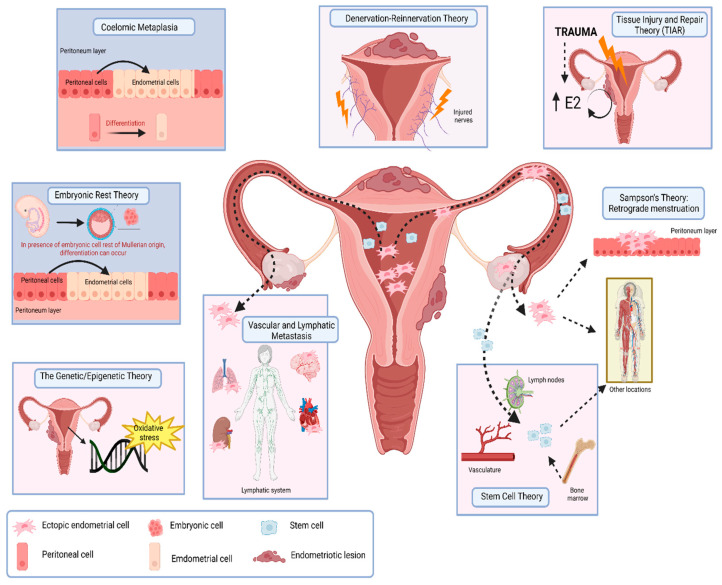
“It suggests that undifferentiated Müllerian remnants present in the peritoneum may be induced to develop into functional endometrial tissue in response to hormonal or environmental triggers [30].”
InfluentialDIAGNOSIS, TREATMENT AND SOMATIC MANIFESTATION OF ENDOMETRIOSIS: AN UPDATED REVIEW
Bugała, A. A., Markuszewska, A., Wendt, J., Andrzejewski, A., Raether, D., Wcisłek, O., & Chmielecka, U. (2026) · International Journal of Innovative Technologies in Social Science · doi:10.31435/ijitss.1(49).2026.4578
Effects of E2/ERβ on follicular granulosa cells and on AMH/Smad signalling in endometriosis
Li, X., Liu, C., Wu, L., Li, Y., Xiao, L. Y., & Huang, W. (2026) · Human Fertility · doi:10.1080/14647273.2026.2638250
Al-Jefout, M. M., & Артымук, Н. В. (2026) · Fundamental and Clinical Medicine · doi:10.23946/2500-0764-2026-11-1-100-110
MYC: unveiling novel therapeutic avenues for endometriosis
Ge, X., Yue, C., Zhang, M., Wang, M., Liu, J., Jiang, A., & Yu, Z. (2026) · Molecular Biology Reports · doi:10.1007/s11033-026-11716-y
Endometriosis: the current state of the problem
Buzovskaya, N. V., Morozov, A. M., Isaev, Y. A., Sorokovikova, T., Imranova, K., Alikhanyan, A., & Ryabkova, V. (2026) · Vrach · doi:10.29296/25877305-2026-03-18
Farzizadeh, N., Najmi, Z., Amoozgar, M., Amin‐Beidokhti, M., Hariri, A., Khosravi, A., Iravani, S., & Zarrabi, A. (2026) · RSC Advances · doi:10.1039/d5ra07723k
Yang, P., & Hu, F. (2026) · Journal of Radiation Research and Applied Sciences · doi:10.1016/j.jrras.2026.102422
MGST3 Promotes Endometriosis Progression by Suppressing Ferroptosis
Hu, Y., Zhang, L., Zhu, L., Chen, N., yu, G., Feng, Y., & Jin, P. (2026) · Cell Biochemistry and Biophysics · doi:10.1007/s12013-026-02079-z
Suleimanova, S. T., Yarmolinskaya, M. I., Selkov, S. А., & Соколов, Д. И. (2026) · Medical academic journal · doi:10.17816/maj642079
Balunathan, N., Usharani, G., & Venkatachalam, P. (2026) · International Journal of Infertility & Fetal Medicine · doi:10.5005/jp-journals-10016-1416
Maldonado, G., Espinoza, C., Arias, A., Munoz, A., Cabrera, G., Johnson, M. C., Espinoza, J. P., Gutiérrez, I., González, P., Owen, G., et al. (2026) · Cells and Development · doi:10.1016/j.cdev.2026.204096
Bernardi, J. A., Cintra, M. T. R., Lima, M. F. P., Gomes, M. K. O., & de Marqui, A. B. T. (2026) · Anais da Academia Brasileira de Ciências · doi:10.1590/0001-3765202620241498
Kiżewska, M., Siwiec, A., Morawska, M., Szymczyk, K., Dargacz, A., Szczepańska, D., Ożga, A., Kozikowska, J., Owczarzak, M., Gajos, A., et al. (2026) · Humanities & Social Sciences Reviews · doi:10.18510/hssr.2026.1423
“Increasing evidence supports a link between endometriosis and endothelial dysfunction, systemic inflammation, and prothrombotic states (Ochoa Bernal & Fazleabas, 2024), as well as impaired vascular function and a modestly elevated cardiovascular risk profile in affected individuals (Poeta do Couto…”
Navigating endometriosis diagnostic delay in 2040: Future directions in noninvasive diagnosis
Acar, B., Kocan, D., Vorawandthanachai, T., Antoun, M. E. A., Zahra, O., Karam, J., Paruchuri, T., Pace, L. A., Zhang, A., Combs, A. L., et al. (2026) · Journal of Endometriosis and Pelvic Pain Disorders · doi:10.1177/22840265261470266
Study on the role of miR-433-3p in the occurrence and development of endometriosis
Wang, L., Bai, J., & Zhu, X. (2026) · Nucleosides Nucleotides & Nucleic Acids · doi:10.1080/15257770.2026.2718818
Genetic architecture of endometriosis: risk factors, comorbidities and clinical implications
Montgomery, G. W., McGrath, I. M., Overgaard, M. T., Nyegaard, M., & Mortlock, S. (2026) · Human Reproduction Update · doi:10.1093/humupd/dmag023 · Cited by 2
Metadata
- Authors
- Ochoa Bernal, M. A., & Fazleabas, A. T.
- Affiliations
- Department of Obstetrics, Gynecology & Reproductive Biology, Michigan State University, Grand Rapids, MI 49503, USA
- Michigan State University (US)
- Corresponding author
- Fazleabas, Asgerally T.
- Venue
- International Journal of Molecular Sciences
- Publisher
- MDPI AG
- Published
- 2024-05-27
- Volume
- 25
- Issue
- 11
- Pages
- 5815
- ISSN
- 1422-0067 (ISSN-L)
- PMC
- PMC11172035
- OpenAlex
- W4399055521
- Cited by
- 59
- References
- 342
- Citations by year
- 2026: 25 · 2025: 27 · 2024: 7
- FWCI
- 4.13
- Type
- journal article
- Language
- en
- Open access
- gold
- doi.org
- Licence
- Locations
- International Journal of Molecular Sciences (publishedVersion, cc-by)
- PubMed Central (publishedVersion, cc-by)
- PubMed (publishedVersion)
- Funders
- NIH (HD 042280, HD 083273, HD 099090, HD087166)
- Eunice Kennedy Shriver National Institute of Child Health and Human Development of the National Institutes of Health (HD 042280, HD 083273, HD 099090, HD087166)
- Topics
- Health Sciences › Medicine › Reproductive Medicine › Endometriosis Research and Treatment
- Health Sciences › Medicine › Obstetrics and Gynecology › Ectopic Pregnancy Diagnosis and Management
- Health Sciences › Medicine › Obstetrics and Gynecology › Gynecological conditions and treatments
- Keywords
- endometriosis, pathophysiology, microRNA, post-transcriptional regulation, peritonitis, cytokines, endometriosis etiology, chronic pelvic pain, infertility, fibrosis
- MeSH terms
- Animals, Disease Models, Animal, Endometriosis, Endometrium, Female, Humans, Cytokines, MicroRNAs
About these checks
Registry, retraction, Cites and statistics results are computed, not judged, with one exception: a printed reference that no index lists is read once by a model before it counts as a citation error. Claims are extracted by a model and kept only when their quote appears verbatim in the text; each cited source is then checked, with a model’s help, for whether it says what the claim relies on. Those verdicts can be wrong — read the claim’s quote and the cited source before relying on one.
Statistics and arithmetic are recomputed, not judged.
Confidence bands are shown only for fields calibrated on our annotated test set. None is calibrated yet, so no band is shown.
What counts as a claim ›How we measure confidence ›How we check this ›
Are you an author, or do you see a problem with this page? Request a review
Data sources
Bibliographic data: Semantic Scholar, OpenAlex, Crossref.
Contains information from the Semantic Scholar Academic Graph Datasets, made available under the ODC Attribution License (ODC-BY 1.0).
Semantic Scholar’s data is described in: Kinney, R., et al. (2023). The Semantic Scholar Open Data Platform. arXiv:2301.10140.
