

Primary Cell Culture as a Model System for Evolutionary Molecular Physiology
Open accessThe DOI matches its Crossref record; 144 of the 145 references it cites were found in a registry or an index.
Abstract
Primary cell culture is a powerful model system to address fundamental questions about organismal physiology at the cellular level, especially for species that are difficult, or impossible, to study under natural or semi-natural conditions. Due to their ease of use, primary fibroblast cultures are the dominant model system, but studies using both somatic and germ cells are also common. Using these models, genome evolution and phylogenetic relationships, the molecular and biochemical basis of differential longevities among species, and the physiological consequences of life history evolution have been studied in depth. With the advent of new technologies such as gene editing and the generation of induced pluripotent stem cells (iPSC), the field of molecular evolutionary physiology will continue to expand using both descriptive and experimental approaches.
Overview
The claims and statistics of this paper haven’t been checked yet.
Free: it reads the open-access text and checks the first 5 claims that cite a source we can check. Create a free account to check every claim.
Integrity signals
Registry
Cites
Statistics
Figures
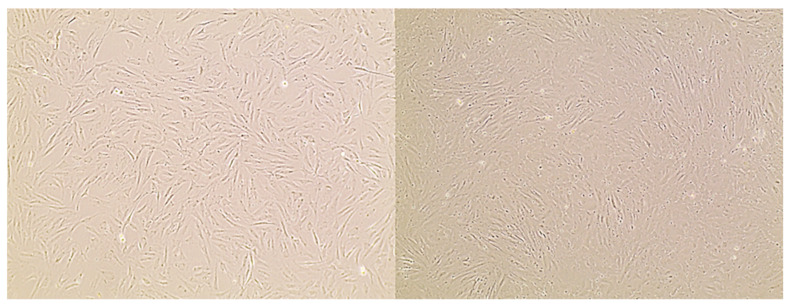
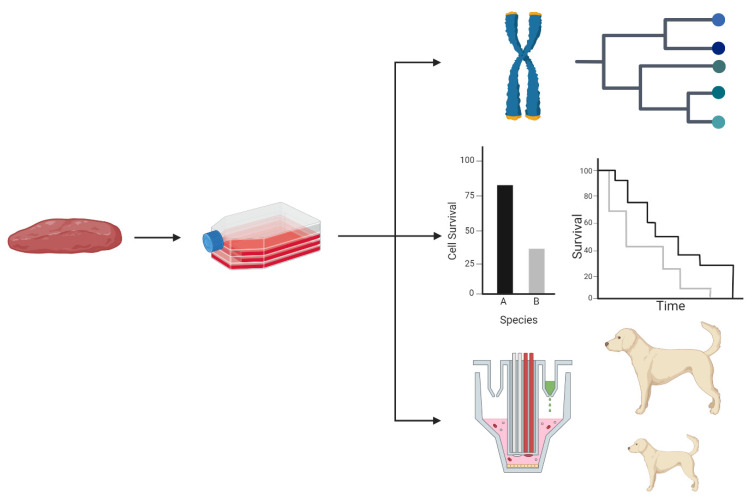
Verification
Claims the paper makes
The claims and statistics of this paper haven’t been checked yet.
Free: it reads the open-access text and checks the first 5 claims that cite a source we can check. Create a free account to check every claim.
Claims other papers make about this one
Each is checked against this paper’s own text: does it say what the citing paper says it does?
The source backs part of the claim, not all of it — or backs it for a different population, condition or comparison.
In the citing paper
“As primary cell cultures are derived from individual donors, they also allow incorporation of biological variables such as age, sex, disease state, and tissue origin into the experimental design”
From Primary cell cultures versus immortalized cell lines: critical comparative insights into biological fidelity and translational applications (2026) · cites this paper as Harper 2024
Experimental — accuracy not yet measuredThe source backs part of the claim, not all of it — or backs it for a different population, condition or comparison.
In the citing paper
“Under appropriate extracellular matrix and tissue-specific growth factor conditions, primary cells can retain tissue-specific morphology, cell-surface and cytosolic markers, signaling pathways, lineage identity and functional competence.”
From Primary cell cultures versus immortalized cell lines: critical comparative insights into biological fidelity and translational applications (2026) · cites this paper as Harper 2024
Experimental — accuracy not yet measuredThe source backs part of the claim, not all of it — or backs it for a different population, condition or comparison.
In the citing paper
“In contrast, primary cells are isolated directly from tissues and can more directly preserve native tissue-associated molecular, epigenetic, metabolic, and functional states (Harper 2024).”
From Primary cell cultures versus immortalized cell lines: critical comparative insights into biological fidelity and translational applications (2026) · cites this paper as Harper 2024
Experimental — accuracy not yet measuredThe cited source says what the claim attributes to it.
In the citing paper
“In contrast, primary cell cultures preserve native morphology, signaling pathways, and functional characteristics of their tissue of origin, providing a more physiologically relevant model.”
From Primary cell cultures versus immortalized cell lines: critical comparative insights into biological fidelity and translational applications (2026) · cites this paper as Harper 2024
The cited source says what the claim attributes to it.
In the citing paper
“These features allow primary cells to more closely recapitulate in vivo conditions and support studies of cell physiology, cellular metabolism,”
From Primary cell cultures versus immortalized cell lines: critical comparative insights into biological fidelity and translational applications (2026) · cites this paper as Harper 2024
Self-check
Percentages, sums and reported differences re-computed from the paper’s own numbers.
The self-check needs the paper’s full text.
Citations
Cites
Takahashi, K., & Yamanaka, S. (2006) · Cell · doi:10.1016/j.cell.2006.07.024 · Cited by 26,673 · cited 1×
“Induced pluripotent stem cells (iPSC) were first described in 2006 [122] and refers to the generation of a pluripotent stem cell via the forced expression of key transcriptional regulators in somatic cells.”
BackgroundGenetic and transcriptional evolution alters cancer cell line drug response
Ben-David, U., Siranosian, B., Ha, G., Tang, H., Oren, Y., Hinohara, K., Strathdee, C. A., Dempster, J., Lyons, N. J., Burns, R., et al. (2018) · Nature · doi:10.1038/s41586-018-0409-3 · Cited by 931
Life history evolution: successes, limitations, and prospects
Stearns, S. C. (2000) · Naturwissenschaften · doi:10.1007/s001140050763 · Cited by 820 · cited 1×
“According to the tenets of life history theory, species tend to adopt a lifestyle that maximizes their reproductive fitness and lies along a ‘slow–fast’ axis [93].”
MethodHigh-molecular-mass hyaluronan mediates the cancer resistance of the naked mole rat
Tian, X., Azpurua, J., Hine, C., Vaidya, A., Myakishev-Rempel, M., Ablaeva, J., Mao, Z., Nevo, E., Gorbunova, V., & Seluanov, A. (2013) · Nature · doi:10.1038/nature12234 · Cited by 784 · cited 1×
“There is also evidence that the remarkable longevity of the naked mole rat may be due, at least in part, to the ability of their cells to resist malignant transformation due to differences in cell behavior [86] and biochemistry [87–89].”
BackgroundEstablishing Cerebral Organoids as Models of Human-Specific Brain Evolution
Pollen, A. A., Bhaduri, A., Andrews, M. G., Nowakowski, T. J., Meyerson, O. S., Mostajo-Radji, M. A., Di Lullo, E., Alvarado, B., Bedolli, M., Dougherty, M. L., et al. (2019) · Cell · doi:10.1016/j.cell.2019.01.017 · Cited by 600
Pan, C., Kumar, C., Bohl, S., Klingmueller, U., & Mann, M. (2009) · Molecular & Cellular Proteomics · doi:10.1074/mcp.m800258-mcp200 · Cited by 561 · cited 1×
“…however, primary cells maintain the morphology typical of a given cell type, as well as the cell surface and cytosolic markers that are critical for normal cellular function, making primary cell cultures a powerful model to study how these cells would behave in vivo [30]. would behave in vivo [30].”
BackgroundCorrò, C., Novellasdemunt, L., & Li, V. S. W. (2020) · American Journal of Physiology-Cell Physiology · doi:10.1152/ajpcell.00120.2020 · Cited by 561
Pérez, V. I., Buffenstein, R., Masamsetti, V., Leonard, S., Salmon, A. B., Mele, J., Andziak, B., Yang, T., Edrey, Y., Friguet, B., et al. (2009) · Proceedings of the National Academy of Sciences · doi:10.1073/pnas.0809620106 · Cited by 418
Hypersensitivity to contact inhibition provides a clue to cancer resistance of naked mole-rat
Seluanov, A., Hine, C., Azpurua, J., Feigenson, M., Bozzella, M., Mao, Z., Catania, K. C., & Gorbunova, V. (2009) · Proceedings of the National Academy of Sciences · doi:10.1073/pnas.0905252106 · Cited by 381 · cited 1×
“There is also evidence that the remarkable longevity of the naked mole rat may be due, at least in part, to the ability of their cells to resist malignant transformation due to differences in cell behavior [86] and biochemistry [87–89].”
BackgroundSulak, M., Fong, L., Mika, K., Chigurupati, S., Yon, L., Mongan, N. P., Emes, R. D., & Lynch, V. J. (2016) · eLife · doi:10.7554/elife.11994 · Cited by 339 · cited 1×
“On the other hand, body size does correlate with a p53-mediated DNA damage response in elephants [102], and reproductive history may also be an important modulator of cellular function, at least in mammals [103].”
Background
Research works printed but not linked: 1
- Baker H.J. Lindsey J.R. Wesibroth S.H. The Laboratory Rat: Biology and Diseases Elsevier Amsterdam, The Netherlands 2013 Volume 1
Cited by
Klassen, M.-C., Balázs, A., Zöllner, J., Cleve, N., Czichon, L., von Schledorn, L., Hegermann, J., Nawroth, J. C., Roth, D., Mielenz, M., et al. (2025) · Stem Cell Research & Therapy · doi:10.1186/s13287-025-04737-0 · Cited by 6
“Moreover, gene editing, particularly at the clonal level, remains challenging in both systems, making the generation of isogeneic control lines impractical.”
Marathe, K., Gupta, D., Barve, K. H., & Bodas, D. (2025) · Brain Research Bulletin · doi:10.1016/j.brainresbull.2025.111662 · Cited by 8
Ilyina, A., Leonteva, A. A., Berezutskaya, E., Abdurakhmanova, M., Ermakov, M. S., Mishinov, S. V., Kuligina, E. V., Vladimirov, S., Bogachek, M. V., Richter, V. A., et al. (2025) · International Journal of Molecular Sciences · doi:10.3390/ijms26167789 · Cited by 7
“Patient-derived cell culture is a useful model to address the fundamental questions in evolutionary physiology since primary cells retain a «normal» phenotype that recapitulates how the cells would behave in vivo [41].”
Modelling sex differences of neurological disorders in vitro
Castro‐Aldrete, L., Einsiedler, M., Cuní‐López, C., Vanhaelen, Q., Silvestri, A., Ferretti, M. T., de Gennaro, M. E., Putignano, G., Guix, M., Marino, N., et al. (2025) · Nature Reviews Bioengineering · doi:10.1038/s44222-025-00355-w · Cited by 4
“Because primary cultures are obtained directly from donor tissue, cellular mechanisms are not changed to overcome senescence as in immortalized cell lines 96 .”
Nie, R., Zhang, Q.-Y., Feng, Z.-Y., Tan, J., Huang, K., Xu, N., Zou, C., Zhang, Y.-Q., Mou, L.-P., Dong, H., et al. (2026) · Bioactive Materials · doi:10.1016/j.bioactmat.2025.12.010 · Cited by 8
“After the initial adaptation to the in vitro environment, the biological characteristics, genetic material and phenotypic characteristics of the primary cells from P2-P6 passages were highly similar to those of the cells in vivo, which could better reflect the physiological function in vivo [36,37].”
Metadata
- Authors
- Harper, J. M.
- Affiliations
- Sam Houston State University (US)
- Corresponding author
- Harper, James M.
- ORCID
- Harper, James M.
- Venue
- International Journal of Molecular Sciences
- Publisher
- MDPI AG
- Published
- 2024-07-19
- Volume
- 25
- Issue
- 14
- Pages
- 7905
- ISSN
- 1422-0067 (ISSN-L)
- PMC
- PMC11277064
- OpenAlex
- W4400823825
- Cited by
- 26
- References
- 145
- Citations by year
- 2026: 16 · 2025: 10
- FWCI
- 0.99
- Type
- journal article
- Language
- en
- Open access
- gold
- doi.org
- Licence
- Locations
- International Journal of Molecular Sciences (publishedVersion, cc-by)
- PubMed Central (publishedVersion, cc-by)
- PubMed (publishedVersion)
- Funders
- Department of Biological Sciences and the Office of Research and Sponsored Programs at Sam Houston State University
- Topics
- Life Sciences › Biochemistry, Genetics and Molecular Biology › Aging › Genetics, Aging, and Longevity in Model Organisms
- Life Sciences › Biochemistry, Genetics and Molecular Biology › Genetics › Evolution and Genetic Dynamics
- Life Sciences › Biochemistry, Genetics and Molecular Biology › Molecular Biology › Developmental Biology and Gene Regulation
- Keywords
- primary cell culture, fibroblast culture, somatic cells, germ cells, genome evolution, phylogenetic relationships, species longevity, life history evolution, genome editing, induced pluripotent stem cells
- MeSH terms
- Animals, Fibroblasts, Humans, Models, Biological, Phylogeny, Evolution, Molecular, Induced Pluripotent Stem Cells, Primary Cell Culture
About these checks
Registry, retraction, Cites and statistics results are computed, not judged, with one exception: a printed reference that no index lists is read once by a model before it counts as a citation error. Claims are extracted by a model and kept only when their quote appears verbatim in the text; each cited source is then checked, with a model’s help, for whether it says what the claim relies on. Those verdicts can be wrong — read the claim’s quote and the cited source before relying on one.
Statistics and arithmetic are recomputed, not judged.
Confidence bands are shown only for fields calibrated on our annotated test set. None is calibrated yet, so no band is shown.
What counts as a claim ›How we measure confidence ›How we check this ›
Are you an author, or do you see a problem with this page? Request a review
How to cite
Cite CoChat for the checks on this page, and the paper for its own findings.
- This page
- CoChat. (2026). Citation check: Primary Cell Culture as a Model System for Evolutionary Molecular Physiology. https://app.cochat.ai/papers/10.3390/ijms25147905
- The paper
- Harper, J. M. (2024). Primary Cell Culture as a Model System for Evolutionary Molecular Physiology. International Journal of Molecular Sciences. https://doi.org/10.3390/ijms25147905
Data sources
Bibliographic data: Semantic Scholar, OpenAlex, Crossref.
Contains information from the Semantic Scholar Academic Graph Datasets, made available under the ODC Attribution License (ODC-BY 1.0).
Semantic Scholar’s data is described in: Kinney, R., et al. (2023). The Semantic Scholar Open Data Platform. arXiv:2301.10140.
