

Animal Models of Autistic-like Behavior in Rodents: A Scoping Review and Call for a Comprehensive Scoring System
Open accessThe DOI matches its Crossref record; 212 of the 213 references it cites were found in a registry or an index; 4 of the 165 sources its claims cite were checked for support.
Abstract
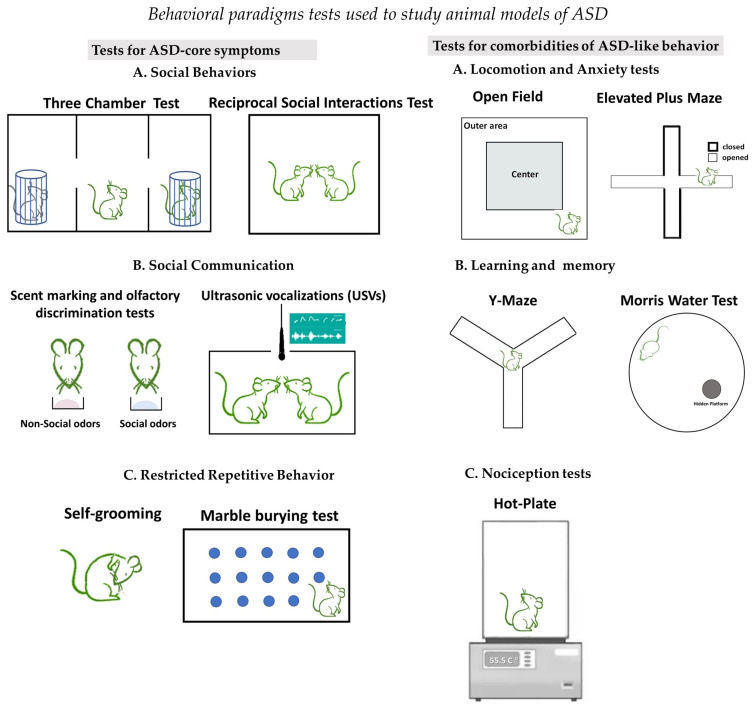
Appropriate animal models of human diseases are a cornerstone in the advancement of science and medicine. To create animal models of neuropsychiatric and neurobehavioral diseases such as autism spectrum disorder (ASD) necessitates the development of sufficient neurobehavioral measuring tools to translate human behavior to expected measurable behavioral features in animals. If possible, the severity of the symptoms should also be assessed. Indeed, at least in rodents, adequate neurobehavioral and neurological tests have been developed. Since ASD is characterized by a number of specific behavioral trends with significant severity, animal models of autistic-like behavior have to demonstrate the specific characteristic features, namely impaired social interactions, communication deficits, and restricted, repetitive behavioral patterns, with association to several additional impairments such as somatosensory, motor, and memory impairments. Thus, an appropriate model must show behavioral impairment of a minimal number of neurobehavioral characteristics using an adequate number of behavioral tests. The proper animal models enable the study of ASD-like-behavior from the etiologic, pathogenetic, and therapeutic aspects. From the etiologic aspects, models have been developed by the use of immunogenic substances like polyinosinic-polycytidylic acid (PolyIC), lipopolysaccharide (LPS), and propionic acid, or other well-documented immunogens or pathogens, like Mycobacterium tuberculosis. Another approach is the use of chemicals like valproic acid, polychlorinated biphenyls (PCBs), organophosphate pesticides like chlorpyrifos (CPF), and others. These substances were administered either prenatally, generally after the period of major organogenesis, or, especially in rodents, during early postnatal life. In addition, using modern genetic manipulation methods, genetic models have been created of almost all human genetic diseases that are manifested by autistic-like behavior (i.e., fragile X, Rett syndrome, SHANK gene mutation, neuroligin genes, and others). Ideally, we should not only evaluate the different behavioral modes affected by the ASD-like behavior, but also assess the severity of the behavioral deviations by an appropriate scoring system, as applied to humans. We therefore propose a scoring system for improved assessment of ASD-like behavior in animal models.
Overview
CoChat Summary
TL;DR
This scoping review surveys genetic and non-genetic animal models of ASD-like behavior and argues that most studies assess only some core behavioral domains without grading severity. It proposes a 0–3 per-domain scoring system, with a minimal total score of 5 and maximum of 12, to define a full ASD-like model.
Key findings
- Non-genetic models include maternal immune activation (PolyIC, LPS, propionic acid, *Mycobacterium tuberculosis*) and chemical exposures (valproic acid [VPA], polychlorinated biphenyls [PCBs], chlorpyrifos [CPF]); genetic models include *MECP2*, *FMR1*, *SHANK*, *NLGN*, and BTBR mice.
- The SFARI Gene Mouse Models module listed more than 252 genetic mouse models, 6 copy number variation mouse models, 45 induced mouse models, and 8 inbred mouse models at the time of publication.
- Examples reported: VPA-treated ICR mice (300 mg on PND 4) showed male-predominant ASD-like deficits and altered antioxidant genes, with later changes in 146 neuropathology/neurophysiology genes; VPA-treated marmosets (200 mg, GD 60–66) showed 1037 differentially expressed genes positively correlated with human ASD brain expression; PCB (25 mg/kg, GD 3 to parturition) impaired social recognition; CPF (5 mg, GDs 12–15) reduced social preference and enhanced restricted interest.
- Proposed scoring: social interaction, communication, and social motivation scored 0–3, with at least two of the three tested and a minimal social subfield total of 3; at least one non-communicative feature must be abnormal; the minimal total score defining autistic-like behavior across mandatory domains is 5 and the maximum is 12.
Methods
- Design: scoping/narrative review of animal models of autistic-like behavior, with a call for a comprehensive scoring system.
- Data/sample: published rodent, zebrafish, and nonhuman primate studies, plus genetic models summarized in Table 3 and counts from the SFARI Gene database.
- Main analysis: qualitative synthesis of behavioral assays and model types, followed by proposal of a severity scoring system; no primary experimental data are reported.
Limitations
- Stated: the proposed scoring system is theoretical and must be tested with a large sample of animals and appropriate sensitivity/specificity statistics.
- Stated: many models assess only a few typical ASD-like behaviors, and none of the reviewed studies graded behavioral deviations by severity as required for human ASD diagnosis.
- Evident from the text: the review does not report a systematic search strategy or formal quality appraisal, and the proposed score thresholds are not empirically validated within the paper.
Model-written summary. Check it against the paper before relying on it.
Integrity signals
Registry
Cites
Statistics
Figures
Verification
Claims the paper makes
2 Valid · 5 Not valid · 94 Not checked · 33 Own results and interpretations
The cited sources support only part of this claim — read each source’s verdict below.
In the paper
“Generally, almost all reported studies on mouse models with known ASD risk genes and mutations described that mouse with specific mutations or deletions demonstrated good face validity of autistic-like behavior from the mild phenotype to severe behavioral impairments [91,92,93,94].”
§ Animal Models of Autistic-like Behavior in Rodents: A Scoping Review and Call for a Comprehensive Scoring System > 4. Genetic Models in Rodents for ASD-like Behaviors
What the sources say
- Could not verifycites [91] Basu S.N. Kollu R. Banerjee-Basu S. AutDB: A gene reference resource for autism research Nucleic Acids Res. 2009 37 D832 D836 10.1093/nar/gkn835 19015121 PMC2686502 sourceExperimental — accuracy not yet measured
Our copy of AutDB (Basu, Kollu & Banerjee-Basu, NAR 2009) is entirely a description of a curated ASD gene reference database: the Abstract, INTRODUCTION, DISEASE-SPECIFIC KNOWLEDGE MODEL, AutDB: THE AUTISM GENE DATABASE, DISCUSSION and PERSPECTIVE sections deal with collecting and annotating candidate genes (rAut, sAut, iAut, fAut) and with human genetic evidence (linkage, association, CNVs, syndromic forms). No passage addresses mouse or other animal models, gene-targeted mutations/deletions in mice, behavioral testing, or 'face validity' of autistic-like behaviour (searched: mouse model face validity, animal models knockout mice behavioral assays, mouse mutants behavioral phenotypes, functional candidates model organism). The DISCUSSION only mentions 'building predictive disease models using bioinformatics (manuscript in preparation)', which is computational, not behavioural. Nothing in our copy supports the attributed statement, and nothing contradicts it, so the claim cannot be checked against this source. (LLM, conf=0.70)
- Not checked yetcites [92] Möhrle D. Fernández M. Peñagarikano O. Frick A. Allman B. Schmid S. What we can learn from a genetic rodent model about autism Neurosci. Biobehav. Rev. 2020 109 29 53 10.1016/j.neubiorev.2019.12.015 31887338 source
Checked before — its earlier verdict is held back until a new check runs.
- Not checked yetcites [93] Pasciuto E. Borrie S.C. Kanellopoulos A.K. Santos A.R. Cappuyns E. D’Andrea L. Pacini L. Bagni C. Autism Spectrum Disorders: Translating human deficits into mouse behavior Neurobiol. Learn. Mem. 2015 124 71 87 10.1016/j.nlm.2015.07.013 26220900 source
Checked before — its earlier verdict is held back until a new check runs.
- Partly supportedcites [94] Provenzano G. Chelini G. Bozzi Y. Genetic control of social behavior: Lessons from mutant mice Behav. Brain Res. 2017 325 237 250 10.1016/j.bbr.2016.11.005 27825935 sourceExperimental — accuracy not yet measured
Split into 2 atoms — 0 confirmed, 2 partially supported, 0 disputed, 0 misattributed, 0 unverifiable. Expand the claim to see per-atom verdicts.
boostedstates an association- Asserted: passes — The authors put it forward as true.
- Checkable: passes — It can be checked against evidence.
- Load-bearing: unclear — It is unclear whether the paper’s conclusions depend on it.
- Based: passes — The paper gives a reason why it holds.
- Rests on 2 assumptions not shown here.
- Could not verify
The cited sources that could be checked couldn’t confirm or dispute this claim.
In the paper
“The increase in the levels of repetitive self-grooming was gender specific and was observed only in heterozygous (Shank3+/-) or homozygous (Shank3-/-) male mice, but not in females.”
§ Animal Models of Autistic-like Behavior in Rodents: A Scoping Review and Call for a Comprehensive Scoring System > 4. Genetic Models in Rodents for ASD-like Behaviors > 4.1. Animals with Single Gene Mutations
What the sources say
- Could not verifycites [112] Bozdagi O. Sakurai T. Papapetrou D. Wang X. Dickstein D.L. Takahashi N. Kajiwara Y. Yang M. Katz A.M. Scattoni M.L. Haploinsufficiency of the autism-associated Shank3 gene leads to deficits in synaptic function, social interaction, and social communication Mol. Autism 2010 1 15 10.1186/2040-2392-1-15 21167025 PMC3019144 sourceExperimental — accuracy not yet measured
Our full-text copy of Bozdagi et al. (2010) contains no grooming or repetitive-behaviour assay anywhere: the behavioural battery listed in Methods > Behavioral analyses and reported in Results > 'Behavioral analyses of Shank3 heterozygotes' covers developmental milestones, the three-chamber social approach task, male-female reciprocal social interaction with social sniffing and ultrasonic vocalizations (P = 0.02; P = 0.003), and olfactory habituation/dishabituation only. Searches for 'self-grooming', 'repetitive behavior', 'stereotypy' and 'marble burying' returned no matching passage. Moreover, Results > 'Generation and characterization of a Shank3-deficient mouse' states the reported studies focused on heterozygotes and that 'a comprehensive investigation of the knockout mice ... is now in progress', so no Shank3-/- behavioural comparison is presented here. The claimed gender-specific grooming effect therefore cannot be checked against this source. (LLM, conf=0.72)
plain- Asserted: passes — The authors put it forward as true.
- Checkable: passes — It can be checked against evidence.
- Load-bearing: unclear — It is unclear whether the paper’s conclusions depend on it.
- Based: passes — The paper gives a reason why it holds.
- Could not verify
Every source the paper cites for this claim was checked and supports it.
In the paper
“Interestingly, single administration of the NMDA receptor partial coagonist d-cycloserine abolished abnormal grooming phenotype in adult Nlgn1-KO mice.”
§ Animal Models of Autistic-like Behavior in Rodents: A Scoping Review and Call for a Comprehensive Scoring System > 4. Genetic Models in Rodents for ASD-like Behaviors > 4.1. Animals with Single Gene Mutations
What the sources say
- Supportedcites [120] Blundell J. Blaiss C.A. Etherton M.R. Espinosa F. Tabuchi K. Walz C. Bolliger M.F. Südhof T.C. Powell C.M. Neuroligin-1 deletion results in impaired spatial memory and increased repetitive behavior J. Neurosci. 2010 30 2115 2129 10.1523/JNEUROSCI.4517-09.2010 20147539 PMC2824441 source
The Results section 'Systemic D-Cycloserine Rescues the Increased Repetitive Behavior in NL1 KO Mice' (p. ~7) reports that a single systemic dose of DCS (20 mg/kg, given 30 min before testing) eliminated the genotype difference in grooming (KO+DCS vs WT+DCS, p=0.78), while vehicle-treated KO mice groomed significantly more (p<0.005); the Discussion states DCS-treated NL1 KO mice 'revealed completely normal levels of grooming.' The Introduction confirms this was done 'in adult mice.' Only wording differs: our copy calls DCS an NMDA receptor 'co-agonist' rather than 'partial coagonist,' which does not change the substance. (LLM, conf=0.92)
plainstates a cause- Asserted: passes — The authors put it forward as true.
- Checkable: passes — It can be checked against evidence.
- Load-bearing: unclear — It is unclear whether the paper’s conclusions depend on it.
- Based: passes — The paper gives a reason why it holds.
- Supported
In the paper
“Further studies revealed changes in the expression of 146 neuropathology and neurophysiology genes, some of them known to be involved in the neuropathology of ASD [76].”
§ Animal Models of Autistic-like Behavior in Rodents: A Scoping Review and Call for a Comprehensive Scoring System > 3. Non-Genetic Models of ASD-like Behaviors > 3.2. Chemical Models of ASD-like Behaviors
What the sources say
- Not checked yetcites [76] Weinstein-Fudim L. Ergaz Z. Turgeman G. Yanai J. Szyf M. Ornoy A. Gender Related Changes in Gene Expression Induced by Valproic Acid in A Mouse Model of Autism and the Correction by S-adenosyl Methionine. Does It Explain the Gender Differences in Autistic Like Behavior? Int. J. Mol. Sci. 2019 20 5278 10.3390/ijms20215278 31652960 PMC6862653 source
plainstates an association- Asserted: passes — The authors put it forward as true.
- Checkable: passes — It can be checked against evidence.
- Load-bearing: unclear — It is unclear whether the paper’s conclusions depend on it.
- Based: passes — The paper gives a reason why it holds.
A result the paper reports from its own data — it cites no other source for it, so there is none to check. The quote shows it is in the paper.
In the paper
“VPA models exhibited neurobehavioral deficits typical of ASD that were more prominent in males.”
§ Animal Models of Autistic-like Behavior in Rodents: A Scoping Review and Call for a Comprehensive Scoring System > 3. Non-Genetic Models of ASD-like Behaviors > 3.2. Chemical Models of ASD-like Behaviors
plainstates an association- Asserted: passes — The authors put it forward as true.
- Checkable: passes — It can be checked against evidence.
- Load-bearing: unclear — It is unclear whether the paper’s conclusions depend on it.
- Based: passes — The paper gives a reason why it holds.
58 more claims
Create a free account to see all 134 claims and to verify the 161 references still open.
- It may state two separate claims as one. 55
- Probably not a substantial claim. 26
Self-check
Percentages, sums and reported differences re-computed from the paper’s own numbers.
Each contradiction between two passages listed here was confirmed by an independent check.
Rated minor: it would not touch a result — a value no result rests on, a p-value that stays on the same side of the significance level, or a conflict that is clerical, resolved elsewhere in the paper, or outside its own findings.
In the paper
§ Animal Models of Autistic-like Behavior in Rodents: A Scoping Review and Call for a Comprehensive Scoring System > 4. Genetic Models in Rodents for ASD-like Behaviors
“Shank3A−/− mice preserved normal social communication, deficit for social novelty recognition, striatal hypertrophy, increased neuronal complexity, and dendritic arbors.”
§ Animal Models of Autistic-like Behavior in Rodents: A Scoping Review and Call for a Comprehensive Scoring System > 4. Genetic Models in Rodents for ASD-like Behaviors > 4.1. Animals with Single Gene Mutations
“The abnormal behavior observed in Shank3B−/− mice was accompanied by significant striatal hypertrophy, increased neuronal complexity and dendritic arbors”
Rated minor: it would not touch a result — a value no result rests on, a p-value that stays on the same side of the significance level, or a conflict that is clerical, resolved elsewhere in the paper, or outside its own findings.
In the paper
§ Animal Models of Autistic-like Behavior in Rodents: A Scoping Review and Call for a Comprehensive Scoring System > 3. Non-Genetic Models of ASD-like Behaviors > 3.2. Chemical Models of ASD-like Behaviors
“Bisphenol A exposure to Sprague Dawley rats in utero or early postnatal life is associated with an increased risk of ASD-like behavior, manifested as altered social behavior in the partition test and three-chamber test, increased anxiety exhibited on elevated plus maze test, sociosexual preferences recorded from the ultrasonic vocalizations (USVs) during social contact with the opposite sex [78]”
§ Animal Models of Autistic-like Behavior in Rodents: A Scoping Review and Call for a Comprehensive Scoring System > References
“78. Bell M.R. Thompson L.M. Rodriguez K. Gore A.C. Two-hit exposure to polychlorinated biphenyls at gestational and juvenile life stages: 1. Sexually dimorphic effects on social and anxiety-like behaviors”
Rated minor: it would not touch a result — a value no result rests on, a p-value that stays on the same side of the significance level, or a conflict that is clerical, resolved elsewhere in the paper, or outside its own findings.
In the paper
§ Animal Models of Autistic-like Behavior in Rodents: A Scoping Review and Call for a Comprehensive Scoring System > 4. Genetic Models in Rodents for ASD-like Behaviors
“Tabuchi et al. [122]”
§ Animal Models of Autistic-like Behavior in Rodents: A Scoping Review and Call for a Comprehensive Scoring System > References
“122. Radyushkin K. Hammerschmidt K. Boretius S. Varoqueaux F. El-Kordi A. Ronnenberg A. Winter D. Frahm J. Fischer J. Brose N. Neuroligin-3-deficient mice: Model of a monogenic heritable form of autism with an olfactory deficit”
Rated minor: it would not touch a result — a value no result rests on, a p-value that stays on the same side of the significance level, or a conflict that is clerical, resolved elsewhere in the paper, or outside its own findings.
In the paper
§ Animal Models of Autistic-like Behavior in Rodents: A Scoping Review and Call for a Comprehensive Scoring System > 4. Genetic Models in Rodents for ASD-like Behaviors
“Scattoni et al. [127]McFarlane et al. [128]Scattoni et al. [129]Wöhr et al. [130]Meyza et al. [131]Dodero et al. [132]”
§ Animal Models of Autistic-like Behavior in Rodents: A Scoping Review and Call for a Comprehensive Scoring System > References
“130. Wöhr M. Silverman J.L. Scattoni M.L. Turner S.M. Harris M.J. Saxena R. Crawley J.N. Developmental delays and reduced pup ultrasonic vocalizations but normal sociability in mice lacking the postsynaptic cell adhesion protein neuroligin2”
Citations
Cites
Diagnostic and Statistical Manual of Mental Disorders
American Psychiatric Association (2013) · doi:10.1176/appi.books.9780890425596 · Cited by 116,369
Diagnostic and Statistical Manual of Mental Disorders
(2012) · SpringerReference · doi:10.1007/springerreference_121117 · Cited by 20,570
Shrestha, S., & Offer, S. M. (2016) · Medical Epigenetics · doi:10.1159/000444713 · Cited by 8,914
Rett syndrome is caused by mutations in X-linked MECP2, encoding methyl-CpG-binding protein 2
Amir, R. E., Van den Veyver, I. B., Wan, M., Tran, C. Q., Francke, U., & Zoghbi, H. Y. (1999) · Nature Genetics · doi:10.1038/13810 · Cited by 4,990
Autism as a strongly genetic disorder: evidence from a British twin study
Bailey, A., Le Couteur, A., Gottesman, I., Bolton, P., Simonoff, E., Yuzda, E., & Rutter, M. (1995) · Psychological Medicine · doi:10.1017/s0033291700028099 · Cited by 2,461
FMRP Stalls Ribosomal Translocation on mRNAs Linked to Synaptic Function and Autism
Darnell, J. C., Van Driesche, S. J., Zhang, C., Hung, K. Y. S., Mele, A., Fraser, C. E., Stone, E. F., Chen, C., Fak, J. J., Chi, S. W., et al. (2011) · Cell · doi:10.1016/j.cell.2011.06.013 · Cited by 2,072 · cited 1×
“FMRP is present in the brain on proximal dendrites and axons of neuronal cell bodies and mainly associated with polyribosomes [155–157].”
BackgroundAnimal models of neuropsychiatric disorders
Nestler, E. J., & Hyman, S. E. (2010) · Nature Neuroscience · doi:10.1038/nn.2647 · Cited by 2,023 · cited 1×
“…to humans; etiologic (construct) validity (relevance), when pathophysiological processes in animals are similar to those that cause disease in humans; and predictive validity (pharmacologic sensitivity), when animals respond to medications that are effective to treat the human disease [8].”
BackgroundAdvances in autism genetics: on the threshold of a new neurobiology
Abrahams, B. S., & Geschwind, D. H. (2008) · Nature Reviews Genetics · doi:10.1038/nrg2346 · Cited by 1,866 · cited 1×
“It is accepted that about 10–20% of ASD cases are related to defined rare mutations, ge-netic syndromes with highly penetrant chromosomal abnormalities, and de novo copy number [86,87] (Table 3).”
BackgroundMutations of the X-linked genes encoding neuroligins NLGN3 and NLGN4 are associated with autism
Study, P. A. R. I. S., Jamain, S., Quach, H., Betancur, C., Råstam, M., Colineaux, C., Gillberg, I. C., Soderstrom, H., Giros, B., Leboyer, M., et al. (2003) · Nature Genetics · doi:10.1038/ng1136 · Cited by 1,851
Durand, C. M., Betancur, C., Boeckers, T. M., Bockmann, J., Chaste, P., Fauchereau, F., Nygren, G., Rastam, M., Gillberg, I. C., Anckarsäter, H., et al. (2007) · Nature Genetics · doi:10.1038/ng1933 · Cited by 1,602
Cited by
Microglial involvement in autism spectrum disorder: insights from human data and iPSC models
Michels, S., Mali, A. S., Jäntti, H., Rezaie, M., & Malm, T. (2025) · Brain Behavior and Immunity · doi:10.1016/j.bbi.2025.106071 · Cited by 17
Sex-Specific Behavioral Features of the Prenatal Valproic Acid Rat Model of Autism Spectrum Disorder
Mamali, P. M., Dignon, C., Ngwenya, A., & Maseko, B. C. (2025) · Brain Sciences · doi:10.3390/brainsci15040388 · Cited by 11
Echefu, B. E., Becker, M., Stein, D. J., & Ornoy, A. (2025) · NeuroSci · doi:10.3390/neurosci6020027 · Cited by 8
Self-citationAdès, N., & Bouslama‐Oueghlani, L. (2026) · Molecular Psychiatry · doi:10.1038/s41380-026-03490-x · Cited by 8
Developmental Disturbances in Animal Models of Autism Spectrum Disorder
László, K., Bačová, Z., Zelena, D., & Bakoš, J. (2025) · Developmental Neurobiology · doi:10.1002/dneu.22977 · Cited by 7
Maio, A. D., Yahyavi, I., Buzzelli, V., Motta, Z., Ascone, F., Putignani, L., Usiello, A., Pollegioni, L., Trezza, V., & Errico, F. (2025) · Journal of Neurochemistry · doi:10.1111/jnc.70095 · Cited by 6
Chivchibashi-Pavlova, D., & Bratoeva, K. Z. (2025) · Veterinární Medicína · doi:10.17221/87/2024-vetmed · Cited by 6
Minuti, A., Floramo, A., Argento, V., Anchesi, I., Muscarà, C., Calabrò, M., & Silvestro, S. (2026) · Antioxidants · doi:10.3390/antiox15020242 · Cited by 6
Wang, M., Liang, Z., Zhuang, H., Cao, X., Ma, G., Sun, Y., Yan, X., Ran, X., Guan, H., & Shen, L. (2025) · Molecular Neurobiology · doi:10.1007/s12035-025-05567-0 · Cited by 5
Dougnon, G., & Matsui, H. (2025) · Translational Psychiatry · doi:10.1038/s41398-025-03741-5 · Cited by 4
Jia, X., Gao, S., Liu, X., Feng, Z., Wang, X. X., Lan, K., Lu, Y., Han, L., Wei, Y. B., & Liu, J. (2025) · European Archives of Psychiatry and Clinical Neuroscience · doi:10.1007/s00406-025-02031-x · Cited by 4
Palanivelu, L., Chen, Y.-Y., Liang, Y., Li, S., Chang, C.-W., Huang, Y.-T., & Lo, Y. (2025) · NeuroImage · doi:10.1016/j.neuroimage.2025.121344 · Cited by 4
Tewelde, E. G., Morvai, B., Zachár, G., & Pogány, Á. (2025) · Life · doi:10.3390/life15071058 · Cited by 4
Aboul‐Fotouh, S., Zohny, S. M., Hassan, G. A. M., Eissa, A. M., ElShahawi, H. H., Abdelraouf, S. M., Ahmed, M. Y., Rabei, M. R., Hassan, F. E., Mahmoud, A. N., et al. (2025) · NeuroToxicology · doi:10.1016/j.neuro.2025.103350 · Cited by 4
Echefu, B. E., Becker, M., Bazylevich, A., & Ornoy, A. (2026) · Reproductive Toxicology · doi:10.1016/j.reprotox.2026.109228 · Cited by 2
Self-citationDisturbances of the placenta–brain axis in germ-free pregnant mice
Herrington, R. T. B., Lyu, Z., Raman, R., Seda, S. E., Snyder, C., Bivens, N. J., Lei, Z., Islam, T., Sumner, L. W., Joshi, T., et al. (2026) · Biology of Reproduction · doi:10.1093/biolre/ioag103 · Cited by 2
Lee, J., Sayes, C. M., Mu, Y., Giesy, J. P., & Shin, H. (2026) · Journal of Hazardous Materials · doi:10.1016/j.jhazmat.2026.142401 · Cited by 2
Ávila, D. S., Pereira, C. M. M., Bezerra, I. C., Viçozzi, G. P., Silva, A., da Silva, A. J., Padilha, H. A., Cordeiro, E. D. S., Silva, A. C., de Oliveira, D. C., et al. (2025) · ACS Omega · doi:10.1021/acsomega.4c10748 · Cited by 1
Teaching developmental neurobiology with inclusion and valuing of neurodivergent learners
Verma, I., Duncan, R. K., Miller, H. L., & Uhler, M. D. (2025) · Developmental Biology · doi:10.1016/j.ydbio.2025.11.007 · Cited by 1
Alaskar, M. K., Alonazi, M. A., Bacha, A. G. B., Alamri, A. M., Abuaish, S., Aloudah, H. S., Alahmed, M. F., Almnaizel, A. T., & El‐Ansary, A. K. (2026) · Translational Neuroscience · doi:10.1515/tnsci-2025-0402 · Cited by 1
Pereira, R. O., Almeida-Souza, T. H., de Santana, A. L. S., dos Santos, J. R., & Silva, A. M. D. O. E. (2026) · Brain Research · doi:10.1016/j.brainres.2026.150523 · Cited by 1
Papavranoussi-Daponte, D., Marinos, F., Matala, E., & Skaliora, I. (2026) · Journal of Neuroscience Research · doi:10.1002/jnr.70156 · Cited by 1
Ziętek, M. M., Viscomi, M. P., Czyrska, J., Winiarczyk, D., Małachowska, D., Szafrańska, K., Małachowska, E. D., Cybulska, M., Horbańczuk, J. O., & Sampino, S. (2025) · Animal Science Papers and Reports · doi:10.2478/aspr-2025-0003 · Cited by 1
Rahdar, M., Salimi, M., Eskandari, K., Nazari, M., Davoudi, S., Raoufy, M. R., Mirnajafi‐Zadeh, J., Hosseinmardi, N., Behzadi, G., & Janahmadi, M. (2025) · Progress in Neuro-Psychopharmacology and Biological Psychiatry · doi:10.1016/j.pnpbp.2025.111507
Siegler, P. N. (2025) · Carolina Digital Repository (University of North Carolina at Chapel Hill) · doi:10.17615/mbyb-6c22
Animal Models in Autism Research (and beyond): A Narrative Review
Salvo, M. D. (2026) · Revista de Discapacidad Clínica y Neurociencias · doi:10.14198/dcn.30761
Cabedo, V. L. (2025) · Gredos (University of Salamanca) · doi:10.14201/gredos.169626
Rodenticides and their impact on brain function
Raj, A., & Kumar, P. (2026) · Elsevier eBooks · doi:10.1016/b978-0-443-44287-2.00014-4
Songbirds as neuroethological models for the study of social behaviours and their disorders
Tewelde, E. G. (2026) · Eötvös Loránd Tudományegyetem · doi:10.15476/elte.2025.431
Blumenthal, K. H., McLellan, J., & de Water, J. V. (2026) · Frontiers in Psychiatry · doi:10.3389/fpsyt.2026.1794161
Zeng, J., ji, Y., Zou, Y., Tan, J., Wu, T., Shen, C., Huang, T., Xiong, S., Liu, M., Yang, M., et al. (2026) · Animal Models and Experimental Medicine · doi:10.1002/ame2.70268
Harvey, S. (2025) · Research Commons (University of Waikato)
Animal models of autism spectrum disorder: Bridging biology to behaviour
Olondo, P. M., & d’Exaerde, A. D. K. (2026) · Developmental Medicine & Child Neurology · doi:10.1111/dmcn.70465
Comparative Proteomic Analysis of the Striatum in Heterozygous and Null DAT Knockout Rats
Mittenberg, A. G., Belskaya, A. D., Shabelnikov, S., Fesenko, Z. S., Sylko, P. A., Gainetdinov, R. R., Volnova, A. B., & Vaganova, A. N. (2026) · International Journal of Molecular Sciences · doi:10.3390/ijms27177758
Kynurenine Pathway and Its Metabolites in Autism Spectrum Disorder: a Close Link
Xiao, Y., Li-Chen, Q., De-Chang, R., Yu-Chen, L., Ürey, H., Lan-lan, Z., Bayram, H., Ghiladi, R. A., Duan, Y., & Li, M. (2026) · PROGRESS IN BIOCHEMISTRY AND BIOPHYSICS · doi:10.3724/j.pibb.2026.0268
Guo, Y. (2026) · Research Square · doi:10.21203/rs.3.rs-10784918/v1
Domingues, B. R. R., Félix, G. S., Bezerra, M. F. L., de Medeiros, P. S., & de Freitas, R. L. (2026) · bioRxiv (Cold Spring Harbor Laboratory) · doi:10.64898/2026.10.09.757959
Echefu, B. E., Becker, M., & Ornoy, A. (2026) · Cells · doi:10.3390/cells15201896
Self-citationAutism: epidemiology, genetics, molecular mechanisms, clinical features, diagnosis, and management
Fan, R., Wang, Y., & Miao, T. (2026) · Molecular Biomedicine · doi:10.1186/s43556-026-00613-2
Metadata
- Authors
- Ornoy, A., Echefu, B., & Becker, M.
- Affiliations
- Hebrew University of Jerusalem (IL)
- Ariel University (IL)
- Corresponding author
- Ornoy, Asher
- Venue
- International Journal of Molecular Sciences
- Publisher
- MDPI AG
- Published
- 2024-09-28
- Volume
- 25
- Issue
- 19
- Pages
- 10469
- ISSN
- 1422-0067 (ISSN-L)
- PMC
- PMC11477392
- OpenAlex
- W4402998174
- Semantic Scholar
- b5a7bc97c17efd7adfcf4de0c23e5783c068d915
- Cited by
- 41
- References
- 213
- Citations by year
- 2026: 22 · 2025: 19
- FWCI
- 1.69
- Type
- journal article
- Language
- en
- Open access
- gold
- doi.org
- Licence
- Locations
- International Journal of Molecular Sciences (publishedVersion, cc-by)
- Preprints.org (submittedVersion, cc-by)
- PubMed Central (publishedVersion, cc-by)
- PubMed (publishedVersion)
- Topics
- Life Sciences › Neuroscience › Cognitive Neuroscience › Autism Spectrum Disorder Research
- Life Sciences › Biochemistry, Genetics and Molecular Biology › Genetics › Genetics and Neurodevelopmental Disorders
- Life Sciences › Neuroscience › Endocrine and Autonomic Systems › Neuroendocrine regulation and behavior
- Keywords
- autism spectrum disorder, animal models of autism, autism-like behavior, rodent models, behavioral assessment, social interaction deficits, communication difficulties, restricted and repetitive behaviors, prenatal immune challenge, valproic acid, chlorpyrifos, genetic animal models, fragile X syndrome, Rett syndrome, neuroligins, Mycobacterium tuberculosis, polyinosinic-polycytidylic acid, lipopolysaccharide, propionic acid
- MeSH terms
- Autism Spectrum Disorder, Animals, Autistic Disorder, Behavior, Animal, Disease Models, Animal, Humans, Rodentia, Mice, Rats
About these checks
Registry, retraction, Cites and statistics results are computed, not judged, with one exception: a printed reference that no index lists is read once by a model before it counts as a citation error. Claims are extracted by a model and kept only when their quote appears verbatim in the text; each cited source is then checked, with a model’s help, for whether it says what the claim relies on. Those verdicts can be wrong — read the claim’s quote and the cited source before relying on one.
The claim verdicts this report counts are experimental: their accuracy is not yet measured.
A language model drew the claims from the paper on 2026-11-19, under version 3 of the claim definition (model deepseek-v4.1-flash, prompt extract-v3).
A second model labelled each claim on 2026-11-19 (model jev-1.13-20260917, definition revision gold-guideline-v0.2).
Cited sources are checked with a language model’s help (qwen3.8-omni-flash).
Statistics and arithmetic are recomputed, not judged.
Confidence bands are shown only for fields calibrated on our annotated test set. None is calibrated yet, so no band is shown.
What counts as a claim ›How we measure confidence ›How we check this ›
Are you an author, or do you see a problem with this page? Request a review
Data sources
Bibliographic data: Semantic Scholar, OpenAlex, Crossref.
Contains information from the Semantic Scholar Academic Graph Datasets, made available under the ODC Attribution License (ODC-BY 1.0).
Semantic Scholar’s data is described in: Kinney, R., et al. (2023). The Semantic Scholar Open Data Platform. arXiv:2301.10140.
