

Mechanisms and Strategies to Overcome Drug Resistance in Colorectal Cancer
Open accessThe DOI matches its Crossref record; 244 of the 249 references it cites were found in a registry or an index; 263 of the 340 sources its claims cite were checked for support.
Abstract
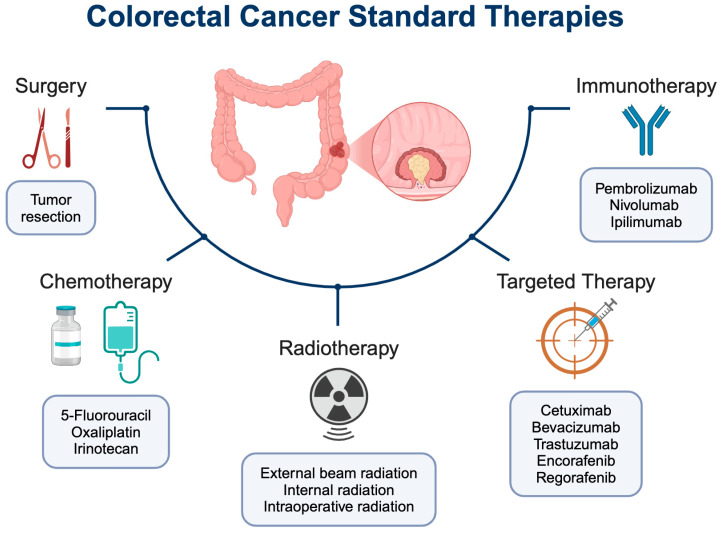
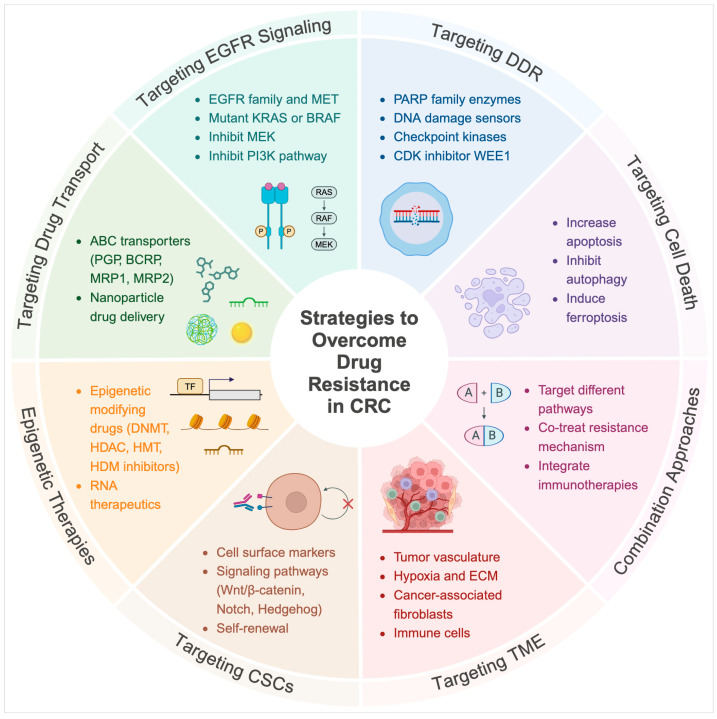
Colorectal cancer (CRC) is a major cause of cancer-related mortality worldwide, with a significant impact on public health. Current treatment options include surgery, chemotherapy, radiotherapy, molecular-targeted therapy, and immunotherapy. Despite advancements in these therapeutic modalities, resistance remains a significant challenge, often leading to treatment failure, poor progression-free survival, and cancer recurrence. Mechanisms of resistance in CRC are multifaceted, involving genetic mutations, epigenetic alterations, tumor heterogeneity, and the tumor microenvironment. Understanding these mechanisms at the molecular level is crucial for identifying novel therapeutic targets and developing strategies to overcome resistance. This review provides an overview of the diverse mechanisms driving drug resistance in sporadic CRC and discusses strategies currently under investigation to counteract this resistance. Several promising strategies are being explored, including targeting drug transport, key signaling pathways, DNA damage response, cell death pathways, epigenetic modifications, cancer stem cells, and the tumor microenvironment. The integration of emerging therapeutic approaches that target resistance mechanisms aims to enhance the efficacy of current CRC treatments and improve patient outcomes.
Overview
CoChat Summary
TL;DR
This review summarizes the diverse mechanisms driving drug resistance in sporadic colorectal cancer (CRC)—including drug transport/metabolism, signaling pathway alterations, DNA damage response and cell death defects, epigenetic changes, tumor heterogeneity/CSCs/DTPs, and the tumor microenvironment—and discusses therapeutic strategies under investigation to overcome it. It concludes that combination approaches targeting multiple resistance mechanisms, guided by molecular profiling, hold the most promise.
Key findings
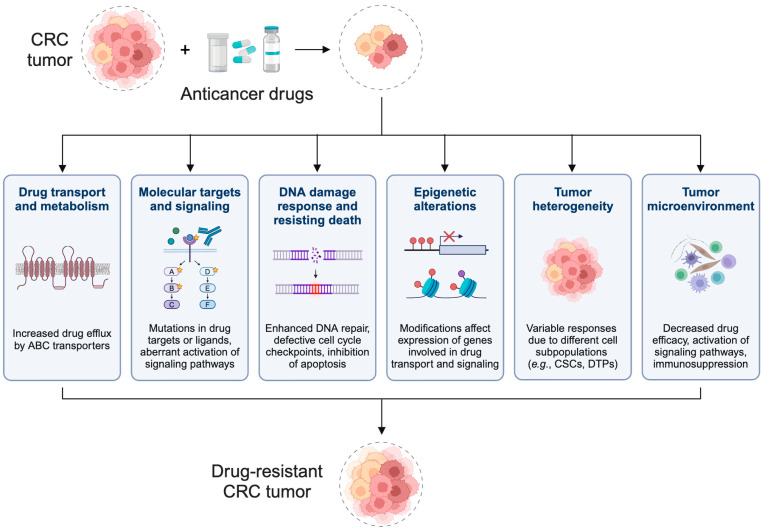
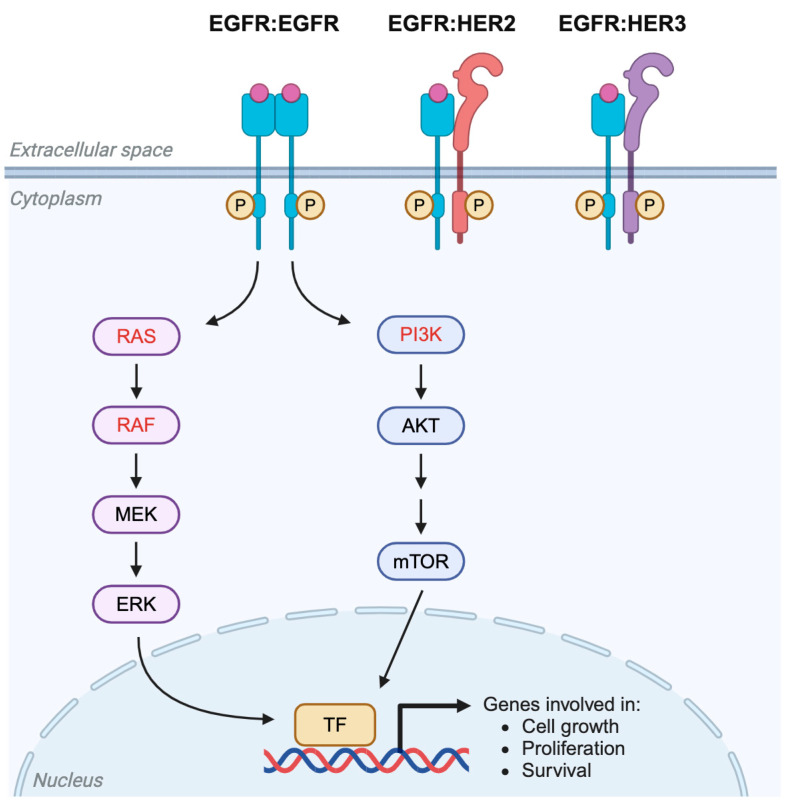
- Drug resistance in CRC is multifactorial and can be intrinsic or acquired; recurrence occurs in 30–40% of patients who complete treatment, mostly within the first 2–3 years, and resistance has been reported to develop in nearly all CRC patients. Mechanisms include ABC transporter–mediated efflux (PGP/MDR1, BCRP, MRP1/2), altered drug metabolism (GSTs, UGTs, CYPs), secondary mutations/alternative pathway activation (EGFR, RAS/BRAF, PI3K/AKT/mTOR, HER2/MET), enhanced DNA damage response, defective apoptosis/autophagy, epigenetic alterations, CSCs, EMT, DTPs, and the TME.
- Key molecular features: APC mutated in ~80% of CRCs, KRAS ~40%, BRAF 10–15%, TP53 50–60%, SMAD4 ~15%, PIK3CA ~20%; CIN accounts for ~85% of sporadic CRCs, MSI ~15%, CIMP ~20%. Consensus molecular subtypes: 87% of samples assigned to CMS1–4 (CMS1 14%, CMS2 37%, CMS3 13%, CMS4 23%), with 13% mixed features.
- Strategies under investigation include targeting ABC transporters (e.g., miRNA mimics miR-133b, miR-142-3p, miR-297, miR-522; nanomedicine), EGFR and alternative pathways (Sym004, anti-HER2/anti-MET, KRAS-G12C inhibitors sotorasib/adagrasib, BRAF+EGFR+MEK combinations), DDR (PARP, ATM, WEE1 inhibitors), cell death pathways (BH3 mimetics, IAP antagonist TL32711, chloroquine/hydroxychloroquine, ferroptosis inducers RSL3/erastin), epigenetic therapies (DNMT, HDAC, EZH2, KDM1A/KDM4 inhibitors; ncRNA modulation), CSCs (LGR5 antibody–drug conjugates, MCLA-158, BiTEs, oncolytic viruses, Wnt/Notch/Hh inhibition, differentiation therapy), and the TME (anti-angiogenic agents, HIF inhibitors, hypoxia-activated prodrug evofosfamide, ECM/LOX targeting, CAF targeting, ICIs, CAR-T cells).
- The review concludes that CRC heterogeneity and multiple resistance mechanisms make it unlikely that one therapy can eliminate all CRC cells; combination therapies and precision medicine guided by genomic, epigenomic, and molecular profiling are emphasized.
Methods
- Design: narrative review providing an overview of drug resistance mechanisms in sporadic CRC and strategies under investigation to counteract resistance.
- Data: published literature, with references cited throughout; no primary patient data or experimental study is reported.
- Main analysis: narrative synthesis of mechanisms and therapeutic approaches; no systematic search strategy, inclusion criteria, or quantitative meta-analysis is described.
Limitations
- Stated: the paper does not include an explicit limitations section for the review itself.
- Evident: as a narrative review, it lacks a described systematic search strategy, inclusion/exclusion criteria, and quantitative synthesis, so selection and interpretation of evidence may be subject to bias.
- Evident: the scope is sporadic CRC, and many discussed strategies are preclinical or still under investigation, with clinical utility and biomarker-based patient selection not yet established.
Model-written summary. Check it against the paper before relying on it.
Integrity signals
Registry
Cites
Statistics
Figures
Verification
Claims the paper makes
219 Valid · 5 Not valid · 40 Not checked · 59 Own results and interpretations
At least one cited source doesn’t support this claim or points to a different paper, and none confirmed it — see the verdicts below.
In the paper
“Polymeric polylactide-co-glycolic acid (PLGA) NPs were also shown to increase the cytotoxicity of chemotherapy drugs, such as 5-FU and irinotecan, in CRC cell lines [113,114].”
§ Mechanisms and Strategies to Overcome Drug Resistance in Colorectal Cancer > 4. Strategies to Overcome Drug Resistance > 4.1. Targeting ABC Membrane Transporters
What the sources say
- Not checked — no full text of the sourcecites [113] Emami J. Maghzi P. Hasanzadeh F. Sadeghi H. Mirian M. Rostami M. PLGA-PEG-RA-based polymeric micelles for tumor targeted delivery of irinotecan Pharm. Dev. Technol. 2018 23 41 54 10.1080/10837450.2017.1340950 28608760 source
- Disputedcites [114] Ghasemi Toudeshkchouei M. Zahedi P. Shavandi A. Microfluidic-Assisted Preparation of 5-Fluorouracil-Loaded PLGA Nanoparticles as a Potential System for Colorectal Cancer Therapy Materials 2020 13 1483 10.3390/ma13071483 32218241 PMC7177286 sourceExperimental — accuracy not yet measured
In Results and Discussion §3.5 (page unavailable), the paper reports more cell death with neat 5-FU than with 5-FU-loaded PLGA nanoparticles in both CRC cell lines—the opposite of increased cytotoxicity relative to the free drug. The study evaluates 5-FU, not irinotecan. (LLM, conf=0.89)
Checked by a reasoning model — may be wrong.
plainstates a cause- Asserted: passes — The authors put it forward as true.
- Checkable: passes — It can be checked against evidence.
- Load-bearing: unclear — It is unclear whether the paper’s conclusions depend on it.
- Based: passes — The paper gives a reason why it holds.
Every source the paper cites for this claim was checked and supports it.
In the paper
“CRC is commonly associated with mutations in key driver genes including APC, KRAS, BRAF, TP53, SMAD4, and PIK3CA [12].”
§ Mechanisms and Strategies to Overcome Drug Resistance in Colorectal Cancer > 1. Introduction > 1.3. Genetic Mutations and Associated Molecular Pathways
What the sources say
- Supportedcites [12] Carethers J.M. Jung B.H. Genetics and Genetic Biomarkers in Sporadic Colorectal Cancer Gastroenterology 2015 149 1177 1190.e3 10.1053/j.gastro.2015.06.047 26216840 PMC4589489 source
The sections on non-hypermutated sporadic CRCs describe APC, KRAS, PIK3CA, TP53 and SMAD4 as altered genes, including mutations and, for some, loss of heterozygosity. The section on hypermutated sporadic CRCs identifies BRAF mutation as common in sporadic MSI-H CRCs. No page numbers are provided in the supplied passages. (LLM, conf=0.90)
plainstates an association- Asserted: passes — The authors put it forward as true.
- Checkable: passes — It can be checked against evidence.
- Load-bearing: unclear — It is unclear whether the paper’s conclusions depend on it.
- Based: passes — The paper gives a reason why it holds.
- Supported
Every source the paper cites for this claim was checked and supports it.
In the paper
“CRC presents different types of epigenetic alterations, including DNA methylation, histone modifications, and non-coding RNA (ncRNA)-associated changes [21,23].”
§ Mechanisms and Strategies to Overcome Drug Resistance in Colorectal Cancer > 1. Introduction > 1.4. Epigenetic Alterations and Associated Molecular Pathways
What the sources say
- Supportedcites [21] Jung G. Hernandez-Illan E. Moreira L. Balaguer F. Goel A. Epigenetics of colorectal cancer: Biomarker and therapeutic potential Nat. Rev. Gastroenterol. Hepatol. 2020 17 111 130 10.1038/s41575-019-0230-y 31900466 PMC7228650 source
The Principles of epigenetics section identifies DNA methylation, histone modifications, and ncRNA regulators as implicated in CRC. The Introduction likewise lists these as topics of epigenetic alteration and regulation in CRC. (LLM, conf=0.95)
- Supportedcites [23] Sadida H.Q. Abdulla A. Marzooqi S.A. Hashem S. Macha M.A. Akil A.S.A. Bhat A.A. Epigenetic modifications: Key players in cancer heterogeneity and drug resistance Transl. Oncol. 2024 39 101821 10.1016/j.tranon.2023.101821 37931371 PMC10654239 source
The review’s “Epigenetic mechanisms in cancer” section identifies DNA methylation, histone modification, and non-coding RNA as epigenetic mechanisms. Its discussion of colorectal cancer also gives examples involving methylation and histone acetylation, and links miR-126 expression to colorectal cancer. Page numbers are unavailable in our copy. (LLM, conf=0.88)
plain- Asserted: passes — The authors put it forward as true.
- Checkable: passes — It can be checked against evidence.
- Load-bearing: unclear — It is unclear whether the paper’s conclusions depend on it.
- Based: passes — The paper gives a reason why it holds.
- Supported
Every source the paper cites for this claim was checked and supports it.
In the paper
“Reduced drug influx is a common mechanism of resistance, often resulting from decreased expression of transporters responsible for drug uptake, such as membrane solute carrier (SLC) family proteins [43].”
§ Mechanisms and Strategies to Overcome Drug Resistance in Colorectal Cancer > 3. Mechanisms of Drug Resistance > 3.1. Drug Transport and Metabolism
What the sources say
- Supportedcites [43] Puris E. Fricker G. Gynther M. The Role of Solute Carrier Transporters in Efficient Anticancer Drug Delivery and Therapy Pharmaceutics 2023 15 364 10.3390/pharmaceutics15020364 36839686 PMC9966068 source
Section 4 states that insufficient anticancer drug delivery into cancer cells can result from down-regulation of membrane influx transporters. Section 6 identifies acquired down-regulation of SLC transporters responsible for anticancer drug uptake as a cause of ineffective treatment. The paper frames this as a mechanism of anticancer drug resistance, without quantifying how common it is. (LLM, conf=0.88)
plainstates a cause- Asserted: passes — The authors put it forward as true.
- Checkable: passes — It can be checked against evidence.
- Load-bearing: unclear — It is unclear whether the paper’s conclusions depend on it.
- Based: passes — The paper gives a reason why it holds.
- Supported
Every source the paper cites for this claim was checked and supports it.
In the paper
“Furthermore, the tumor microenvironment (TME) plays a significant role in mediating resistance.”
§ Mechanisms and Strategies to Overcome Drug Resistance in Colorectal Cancer > 3. Mechanisms of Drug Resistance
What the sources say
- Supportedcites [41] Wang Q. Shen X. Chen G. Du J. Drug Resistance in Colorectal Cancer: From Mechanism to Clinic Cancers 2022 14 2928 10.3390/cancers14122928 35740594 PMC9221177 source
Section 9, “Tumor Microenvironment,” states that TME components can act as therapeutic barriers and provide a sanctuary in which tumor cells escape drug-mediated death and develop resistance. The Conclusions also explicitly identify the TME as a focus in drug resistance. The provided passages do not give page numbers. (LLM, conf=0.93)
plainstates a cause- Asserted: passes — The authors put it forward as true.
- Checkable: passes — It can be checked against evidence.
- Load-bearing: unclear — It is unclear whether the paper’s conclusions depend on it.
- Based: passes — The paper gives a reason why it holds.
- Supported
165 more claims · 118 with their cited sources checked
Create a free account to see all 323 claims and to verify the 11 references still open.
- It may state two separate claims as one. 130
- Probably not a substantial claim. 39
Claims other papers make about this one
Each is checked against this paper’s own text: does it say what the citing paper says it does?
The source backs part of the claim, not all of it — or backs it for a different population, condition or comparison.
In the citing paper
“Mutations in the PIK3CA gene, which encodes the p110α catalytic subunit of Class I PI3K, occur in approximately 15–20% of colorectal cancers and represent one of the most common alterations affecting this pathway [17,18].”
From Overcoming Resistance to Anti-EGFR Therapies: Mechanisms of Cetuximab and Panitumumab Resistance and Emerging Combination Strategies (2026) · cites this paper as [18]
Experimental — accuracy not yet measuredThe source backs part of the claim, not all of it — or backs it for a different population, condition or comparison.
In the citing paper
“BRAF is a serine/threonine protein kinase (signal transduction protein) and activating mutations in it accounts for around ten to fifteen percent of CRCs, mainly the BRAF V600E—a point mutation and a biomarker of poor prognosis [18,20,21,22].”
From Overcoming Resistance to Anti-EGFR Therapies: Mechanisms of Cetuximab and Panitumumab Resistance and Emerging Combination Strategies (2026) · cites this paper as [18]
Experimental — accuracy not yet measuredThe cited source says what the claim attributes to it.
In the citing paper
“Mutations in RAS, importantly, the KRAS-mutated tumors, are associated with around forty percent of CRCs [12,18,19], while NRAS is less frequent but remains a clinically relevant contributor to tumor heterogeneity.”
From Overcoming Resistance to Anti-EGFR Therapies: Mechanisms of Cetuximab and Panitumumab Resistance and Emerging Combination Strategies (2026) · cites this paper as [18]
Self-check
Percentages, sums and reported differences re-computed from the paper’s own numbers.
Each contradiction between two passages listed here was confirmed by an independent check.
Rated minor: it would not touch a result — a value no result rests on, a p-value that stays on the same side of the significance level, or a conflict that is clerical, resolved elsewhere in the paper, or outside its own findings.
In the paper
§ Mechanisms and Strategies to Overcome Drug Resistance in Colorectal Cancer > 2. Therapeutic Approaches for Colorectal Cancer > 2.2. Targeted Therapies
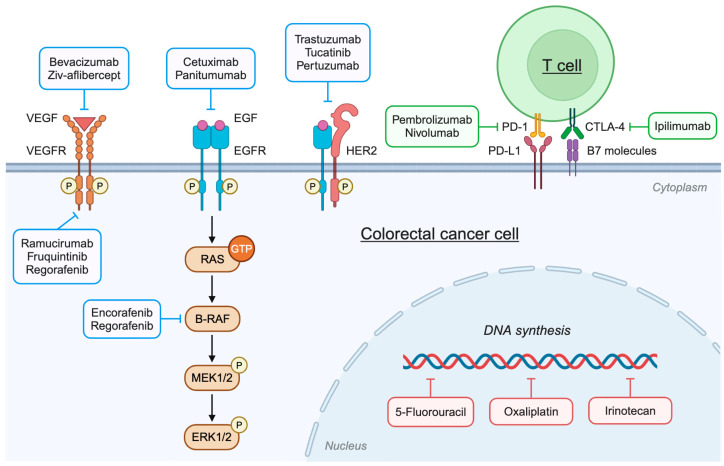
“Anti-EGFR therapies, such as EGFR tyrosine kinase inhibitors cetuximab and panitumumab, block or slow down the growth of tumor cells.”
§ Mechanisms and Strategies to Overcome Drug Resistance in Colorectal Cancer > 4. Strategies to Overcome Drug Resistance > 4.2. Targeting EGFR and Alternative Pathways
“Targeting molecules involved in these resistance mechanisms would help to overcome resistance to anti-EGFR monoclonal antibody (mAb) therapies like cetuximab and panitumumab.”
Cited works that were retracted
Works this paper cites that were later retracted, from the retraction notices publishers deposit. Major when the notice came out before this paper was published.
A note, not an issue: for example, a cited work that was retracted only after this paper was published, which its authors could not have known.
In the paper
“Furthermore, EGF-targeted 5-FU-loaded PLGA NPs were developed to selectively target CRC cells expressing high levels of EGFR and showed higher rates of cytotoxicity and apoptosis and lower rates of tumor growth compared to non-targeted or non-NP treatments [115].”
Cited work 10.1186/s12885-020-06803-7 · retracted 2026-08-22 · notice 10.1186/s12885-026-16805-6 · this paper published 2025-02-25
Citations
Cites
1 retracted
Wu, P., Zhou, Q., Zhu, H., Zhuang, Y., & Bao, J. (2020) · BMC Cancer · doi:10.1186/s12885-020-06803-7 · Cited by 97 · cited 1×
“Furthermore, EGF-targeted 5-FU-loaded PLGA NPs were developed to selectively target CRC cells expressing high levels of EGFR and showed higher rates of cytotoxicity and apoptosis and lower rates of tumor growth compared to non-targeted or non-NP treatments [115].”
RetractedBray, F., Laversanne, M., Sung, H., Ferlay, J., Siegel, R. L., Soerjomataram, I., & Jemal, A. (2024) · CA: a cancer journal for clinicians · doi:10.3322/caac.21834 · Cited by 27,064
Coussens, L. M., & Werb, Z. (2002) · Nature · doi:10.1038/nature01322 · Cited by 15,111 · cited 1×
“The TME is also characterized by chronic inflammation, which is linked to tumor cell proliferation, survival, and metastasis [94].”
Epithelial-Mesenchymal Transitions in Development and Disease
Thiery, J. P., Acloque, H., Huang, R. Y. J., & Nieto, M. A. (2009) · Cell · doi:10.1016/j.cell.2009.11.007 · Cited by 9,931 · cited 1×
“Epithelial–mesenchymal transition is a cellular process that involves switching from an epithelial to a mesenchymal cell phenotype and occurs during normal physiological processes, such as development and wound healing [73].”
Siegel, R. L., Giaquinto, A. N., & Jemal, A. (2024) · CA: A Cancer Journal for Clinicians · doi:10.3322/caac.21820 · Cited by 9,533 · cited 2×
“The incidence rates for CRC in the United States from 2016 to 2020 were 35.3 per 100,000 people, with 40.7 in 100,000 for men and 30.6 per 100,000 for women [1].”
InfluentialMolecular mechanisms of epithelial–mesenchymal transition
Lamouille, S., Xu, J., & Derynck, R. (2014) · Nature Reviews Molecular Cell Biology · doi:10.1038/nrm3758 · Cited by 8,091 · cited 1×
“During EMT, cells downregulate expression of the epithelial cell adhesion protein E-cadherin and upregulate expression of EMT transcription factors, including SNAIL, ZEB, and TWIST families, leading to a loss of cell–cell adhesion and polarity and a gain in cell motility [74].”
Microenvironmental regulation of tumor progression and metastasis
Quail, D. F., & Joyce, J. A. (2013) · Nature Medicine · doi:10.1038/nm.3394 · Cited by 7,994 · cited 1×
“Stromal cells within the TME are attractive therapeutic targets because they are genetically stable with reduced risk of developing resistance [223].”
Vogelstein, B., Papadopoulos, N., Velculescu, V. E., Zhou, S., Diaz, L. A., & Kinzler, K. W. (2013) · Science · doi:10.1126/science.1235122 · Cited by 7,863 · cited 1×
“Sequential mutations in driver genes—known as the adenoma–carcinoma sequence—are thought to occur at the transitions from normal epithelium to pre-malignant tumor to malignant tumor [19].”
The consensus molecular subtypes of colorectal cancer
Guinney, J., Dienstmann, R., Wang, X., de Reyniès, A., Schlicker, A., Soneson, C., Marisa, L., Roepman, P., Nyamundanda, G., Angelino, P., et al. (2015) · Nature Medicine · doi:10.1038/nm.3967 · Cited by 5,170 · cited 2×
“…inconsistencies among CRC subtype classifications, an international consortium formed across expert groups and developed a gene expression-based classification system based on six different published CRC subtyping platforms to systematically assign CRC consensus molecular subtypes (CMS) [28].”
Ferroptosis: past, present and future
Li, J., Cao, F., Yin, H.-L., Huang, Z.-J., Lin, Z.-T., Mao, N., Sun, B., & Wang, G. (2020) · Cell Death & Disease · doi:10.1038/s41419-020-2298-2 · Cited by 4,171 · cited 1×
“Factors that induce ferroptosis can affect glutathione peroxidase (GPX) activity through different pathways, resulting in decreased cellular antioxidant capacity and accumulation of lipid ROS, eventually leading to oxidative damage and cell death [153].”
Cited by
Kantha, A., Das, D., Pai, E., Kumar, T., & Pandey, M. (2025) · World Journal of Surgical Oncology · doi:10.1186/s12957-025-04117-1 · Cited by 29
“…found in CMS1, the BEACON regimen—which consists of cetuximab, binimetinib, and encorafenib—has also demonstrated efficacy in treating BRAF-mutant mCRC. Adjuvant chemotherapy is not clearly linked to improved overall survival in CMS1 malignancies as compared to standard chemotherapy ([53]– [54]).”
Unveiling the tumor microenvironment in colorectal cancer therapeutic resistance
Han, J., Liang, W., & Li, K. (2026) · Frontiers in Cell and Developmental Biology · doi:10.3389/fcell.2025.1753180 · Cited by 21
“Drug resistance can be intrinsic, present at diagnosis, or acquired during treatment, often leading to tumor recurrence and metastasis (Haynes and Manogaran, 2025; Oktavianda and Giselvania, 2024).”
Immunotherapy in GI Cancers: Lessons from Key Trials and Future Clinical Applications
Peshin, S., Bashir, F., Kodali, N. A., Dharia, A. A., Zaiter, S., Singal, S., & Moka, N. (2025) · Antibodies · doi:10.3390/antib14030058 · Cited by 18
“Alternatively, VEGF inhibitors like bevacizumab or novel LAG-3 inhibitors may help overcome resistance by modulating the tumor microenvironment [57,58].”
Shahsavani, M. B., Heidari, M., Yousefi, R., & Moosavi‐Movahedi, A. A. (2025) · Chemical Biology & Drug Design · doi:10.1111/cbdd.70208 · Cited by 16
“…share chal- lenges—dose-limiting toxicities, nonspecific cytotoxicity, and multifactorial drug resistance arising from enhanced DNA repair, decreased uptake, or increased efflux (Galluzzi et al. 2012; Dilruba and Kalayda 2016; Haynes and Manogaran 2025; Richardson et al. 2023; Matsuo et al. 2010).”
Colorectal cancer pathogenesis, oncogenic signaling networks and targeted therapeutic advances
Chen, Y., Zhang, J., Ding, Y., Zhu, F., & Chen, Y. (2026) · Molecular Biomedicine · doi:10.1186/s43556-026-00433-4 · Cited by 17
“Drug resistance is a critical, multimechanistic challenge in cancer treatment, involving both endogenous and exogenous factors [314].”
Xu, C., Li, T., Zhang, L., Zhang, Q., Cai, S., Fu, Q., & Zhang, S. (2026) · Neoplasia · doi:10.1016/j.neo.2025.101267 · Cited by 11
“Colon cancers account for ~70% of CRC, while rectal cancers represent ~30% [2].”
Lu, Y., Lan, R., Fan, Q., Tang, H., Hu, D., Zhang, S., Lin, X., Wang, R., Zhao, R., Sun, H., et al. (2025) · The ISME Journal · doi:10.1093/ismejo/wraf130 · Cited by 8
“Although chemotherapy is a common treatment method for CRC, drug resistance remains a significant challenge, leading to treatment failure, reduced progression-free survival, and increased cancer recurrence rates [97].”
Kolour, H. R., Bahrami, N., Mojarad, E. N., Sadeghi, A., Shamsara, M., & Fatemi, N. (2025) · Discover Oncology · doi:10.1007/s12672-025-03905-1 · Cited by 6
“Resistance often develops through alterations in signaling pathways and metabolic adaptations such as increased efflux transporter expression or mutations in topoisomerase I [113].”
Chen, Y., & Tang, D. (2025) · Future Oncology · doi:10.1080/14796694.2025.2558287 · Cited by 6
Abdelrazik, N. M., Patel, A., Conn, A., Sutton, C. W., Kantamneni, S., & Shnyder, S. D. (2025) · Cells · doi:10.3390/cells14120929 · Cited by 7
Chrzan, J., Drabczyk, A. K., Siemińska, I., et al. (2025) · Molecules · doi:10.3390/molecules30112437 · Cited by 5
Ghavimi, R., Rahimian, L., Mohammadi, M., Dutta, O., Mohan, H., Chouljenko, V. N., Omolekan, T. O., Chamcheu, J. C., & Kousoulas, K. G. (2025) · Molecular Therapy Oncology · doi:10.1016/j.omton.2025.201100 · Cited by 14
“167 As OVs infect tumor cells and induce cell lysis, they release TAAs and other immunostimulatory molecules like type I IFNs, IFN γ , TNF-α , and IL-12.”
Martín‐Encinas, E., Fuertes, M., Masdeu, C., Selas, A., & Alonso, C. (2025) · Expert Opinion on Investigational Drugs · doi:10.1080/13543784.2025.2532447 · Cited by 5
“In this context, novel approaches based on precision medicine and immunotherapy are emerging in clinics to enhance chemotherapy efficacy [7].”
El-Hema, H. S., Fekey, H. M. E., Hawata, M. A., Hussein, M. F., Elhendawy, A. T., & Abdel‐Rahman, A. A. ‐. (2026) · Journal of Molecular Structure · doi:10.1016/j.molstruc.2026.145461 · Cited by 8
Curcumol Targets the VHL/HIF-1α Axis to Suppress Glycolysis-Driven Progression in Colorectal Cancer
Wang, G., Yue, Z., Yin, G., Zhu, L., Zhou, W., Sun, R., Bi, T., Zhao, L. B., Bian, Y., & Tang, D. (2025) · Cancers · doi:10.3390/cancers17183000 · Cited by 4
“Although chemotherapy has extended survival rate in certain cases, its overall efficacy remains unsatisfactory due to frequent emergence of therapeutic resistance [4].”
Wang, Q., Liu, Z., & Jin, K. (2026) · International Journal of Nanomedicine · doi:10.2147/ijn.s581940 · Cited by 4
“9,31 This is the urgent need that has led to nanomedicine taking the center stage in the study of oncology.”
Zhou, F., Shang, L., Li, J., Zhang, M., Wang, S., Cai, Y., Lin, Q., Gao, H., & Yang, S. (2025) · Chemico-Biological Interactions · doi:10.1016/j.cbi.2025.111750 · Cited by 5
The impact of epigenetics on tumor metabolism: Friend or foe in drug response?
Castelli, S., Franchini, M., Ferraro, L., & Mangraviti, N. (2026) · Frontiers in Epigenetics and Epigenomics · doi:10.3389/freae.2026.1755829 · Cited by 3
“Among these, inhibitors targeting HMTs and histone demethylases (HDMs) are currently under investigation for their potential to suppress colorectal cancer cell proliferation and enhance sensitivity to chemotherapy (Haynes and Manogaran, 2025).”
Yu, H., Kong, M., Chen, J., Liu, J., Shan, K., Zhang, G., Jiang, R., Zheng, Y., Chen, Q., Zhang, R., et al. (2025) · Biochemical Pharmacology · doi:10.1016/j.bcp.2025.117588 · Cited by 2
MKRN1 degrades AGC1 to trigger chemotherapy resistance of colorectal Cancer
Wang, Y., Mu, Q., Guo, J., et al. (2025) · Molecular Medicine · doi:10.1186/s10020-025-01287-2 · Cited by 2
“The primary treatment for patients with colorectal cancer involves a combination of surgery and chemotherapy (Haynes and Manogaran 2025).”
Khattab, A. T., El-Keey, M. M., Beltagy, D. M., & Salem, M. M. (2025) · Cell Biochemistry and Biophysics · doi:10.1007/s12013-025-01929-6 · Cited by 3
Xu, X., Wang, Z., Huang, A., Qiao, Z., Ge, Y., Wen, H., Cheng, J., Zhao, Y., & Liang, X. (2025) · RSC Advances · doi:10.1039/d5ra07312j · Cited by 2
Speck-Planche, A., & Cordeiro, M. N. D. S. (2025) · International Journal of Molecular Sciences · doi:10.3390/ijms262311453 · Cited by 2
“It is widely recognized that CRC involves an intricate combination of genetic mutations, epigenetic alterations, and environmental factors, leading to uncontrolled proliferation of colonic epithelial cells and metastasis [3].”
Alharthi, F. R., Althagafi, H. A. E., Jafri, I., et al. (2025) · Rhizosphere · doi:10.1016/j.rhisph.2025.101133 · Cited by 2
Phosphoinositide-dependent kinase 1 (PDK1) in cancer: molecular insights and therapeutic strategies
Algheribe, S., Zagzoog, A., Boudjelal, M., & Islam, I. (2026) · Frontiers in Chemistry · doi:10.3389/fchem.2026.1767926 · Cited by 6
Qiu, S., Li, S., Chen, Y., Ma, X., Fu, H., & Zhao, B. (2026) · Translational Oncology · doi:10.1016/j.tranon.2026.102886 · Cited by 4
“CRC evolves in response to treatment, and the emergence of resistant subclones or de novo mutations often compromises initial therapeutic responses [233].”
Mohammad-Jafarieh, P., Avci, Ç. B., Nezamdoust, F. V., Rahbarghazi, R., Khalilnezhad, A., Shahriyari, E., & Vosough, M. (2026) · Cancer Cell International · doi:10.1186/s12935-026-04226-1 · Cited by 1
“Along with genetic makeup and metabolic factors involved in the resistance of CRC cases, the tumoricidal properties of most of the therapeutics have been assessed in two-dimensional (2D) culture systems that cannot recapitulate the in vivo-like conditions [9].”
Νikolouzakis, Τ. Κ., Souglakos, J., Kantidakis, E. E., Achilleos, K., van Staden, T., & Chrysos, E. (2026) · Cancers · doi:10.3390/cancers18071062 · Cited by 2
Henrykowska, G., Bartusik-Aebisher, D., Dynarowicz, K., Ramesh, T. S., Smolak, B., & Aebisher, D. (2026) · Pharmaceuticals · doi:10.3390/ph19071041 · Cited by 1
“BRAF is a serine/threonine protein kinase (signal transduction protein) and activating mutations in it accounts for around ten to fifteen percent of CRCs, mainly the BRAF V600E— a point mutation and a biomarker of poor prognosis [18,20–22].”
Circular RNAs: A key modulator of established cancer hallmarks
Samad, M. A., Ahmad, I., Shakil, S., Zaidi, S. K., Wasi, S., Al-Abbasi, F. A., Alhashmi, M. H., & Tabrez, S. (2026) · Critical Reviews in Oncology/Hematology · doi:10.1016/j.critrevonc.2026.105146 · Cited by 1
Gao, Z., Wang, X., Shen, Z., Liu, J.-H., Wang, X., Wu, S., & Jin, X. S. (2025) · World Journal of Gastroenterology · doi:10.3748/wjg.v31.i24.108298 · Cited by 2
Harmych, S. J., & Singh, B. (2026) · Cancer Medicine · doi:10.1002/cam4.72305
“Treatment resistance is traditionally divided into genetic and nongenetic mechanisms [10, 13, 14].”
Zhang, W., & Chen, Z. (2026) · Letters in Drug Design & Discovery · doi:10.1016/j.lddd.2026.100473
A ferroptosis nanoplatform for overcoming radioresistance in KRAS-mutant colorectal cancer
Deng, L., Zhang, P., Qin, X., Tang, L., Liu, R., Li, F., 肖江卫, & Zhao, M. (2026) · Biomaterials · doi:10.1016/j.biomaterials.2026.124596
Mihaylova, R., Bebrivenski, N., Zheleva‐Dimitrova, D., Simeonova, R., Lozanova, V. V., Alexova, R., Mitev, V., Gevrenova, R., & Momekov, G. (2026) · Molecules · doi:10.3390/molecules31040710
“Despite advances in surgical resection, adjuvant chemotherapy, and molecular stratification, durable disease control in advanced CRC remains difficult to achieve, largely due to adaptive resistance mechanisms rather than insufficient initial tumor response [3,4].”
Abuaisha, A. M., Arslan, H. I., Nekay, E., et al. (2026) · Molecular and Cellular Biochemistry · doi:10.1007/s11010-026-05634-7
Lago, N. M., Ares, M., Maseda, A. C., Martelo, M. P., Covela, M., Montés, A. F., Gómez, J. D. L. C., Villarroel, P. G., López, M. R., Iruegas, M. E. P., et al. (2026) · ESMO Gastrointestinal Oncology · doi:10.1016/j.esmogo.2026.100411
“15-17 Within this framework, actionable fusions may represent a surrogate marker of broader genomic complexity rather than acting solely as isolated oncogenic drivers.”
Sen, S., Mitra, S., & Karati, D. (2026) · Nanomedicine · doi:10.1080/17435889.2026.2628241 · Cited by 1
Dai, L., Meng, P., Hu, J., Dou, H., Li, S., & Zhang, X. (2026) · Cellular Signalling · doi:10.1016/j.cellsig.2026.112847
Ka'arayeno, A. J., & Cita, E. E. (2026) · Majalah Kesehatan Indonesia · doi:10.47679/makein.2026287
Antiproliferative Effects of Ferulic Acid on DLD-1 Colorectal Cancer Cells
Bilici, E., & Akkoç, S. (2026) · MIDDLE BLACK SEA JOURNAL OF HEALTH SCIENCE · doi:10.19127/mbsjohs.1931801
Yu, M., Dong, P., Geng, Z., Gong, Y., Cui, W., Song, W., Liu, Y. W., Yu, W., Ren, L., Lv, J., et al. (2026) · Computational Biology and Chemistry · doi:10.1016/j.compbiolchem.2026.108927
Bruceine D induces ferroptosis in colorectal cancer by inhibiting STAT3 activity
Huang, S., Wang, Z., Li, D., Sun, X., Xue, E., Tan, S., Gao, H., Xie, X., Zhang, H., & Chen, W. (2026) · Current Molecular Pharmacology · doi:10.1016/j.cmp.2026.09.007
Niu, Z., Qiu, D., & Xu, P. (2026) · bioRxiv (Cold Spring Harbor Laboratory) · doi:10.64898/2026.05.17.725749
Targeting the TME-Autophagy Axis to Overcome Cancer Drug Resistance
Gong, Y. (2025) · Highlights in Science Engineering and Technology · doi:10.54097/wbp6y702
“…can synergistically enhance the effects of etanercept (TNF-α neutralizing agent) to inhibit TNF-α-mediated inflammatory signals [13], reverse compensatory autophagy induced by mTOR inhibition when combined with rapamycin [14] or restore T-cell immune responses when combined with pembrolizumab [15].”
Ashayeri, M., Hatami, M., Haratian, A., Mahdoudi, M., Sheikh, H., Rajati, S., Baniasadi, F., & Amini, E. (2026) · BioNanoScience · doi:10.1007/s12668-026-02815-y · Cited by 1
“Moreover, the CRC drug resistance, often occurring during the advanced or metastatic state, is further considered as the main challenge for new therapeutic interventions [ 3, 4].”
Applying biotechnology to overcome cancer drug resistance and improve public health outcomes
Adjei, F. A., Frempong, B. K., & Afriyie, A. (2026) · Osong Public Health and Research Perspectives · doi:10.24171/j.phrp.2025.0336
“These agents are engineered to bind more effectively to mutated targets, thereby counteracting resistance-conferring alterations that would otherwise reduce drug efficacy [ 44].”
Kiran, N. S., Sagar, Y. N., Badrakiya, K., Chatterjee, A., Alsaidan, O. A., Bhattacharya, S., & Prajapati, B. G. (2025) · Journal of Drug Delivery Science and Technology · doi:10.1016/j.jddst.2025.107523
Precision Medicine in Colorectal Cancer
Chawda, D., Tyagi, N., Mubashra, Srivastava, A., Shukla, A., & Srivastava, S. (2026) · Cancer drug discovery and develogment/Cancer drug discovery and development · doi:10.1007/978-3-032-24071-2_2
Resistance of Colorectal Cancer Stem Cells to Modern Therapies: A Systematic Review
Rustemov, S., Sabitova, A., Bertleuova, A., Abidi, S. H., & Bulanin, D. S. (2026) · International Journal of Molecular Sciences · doi:10.3390/ijms27146285
“Notably, approximately 30 to 40% of patients experience relapse following standard treatment, underscoring therapeutic resistance [3].”
InfluentialSignaling pathways in colorectal cancer: Implications for DNA repair and treatment response
Ponamgi, S. P. D., & Peela, S. (2026) · Elsevier eBooks · doi:10.1016/b978-0-443-43976-6.00015-6
Rogacz, Z., Pacuła, W., Janas, W., Markiewka, M., Wala, P., Madej, M., & Strzałka‐Mrozik, B. (2026) · Cancers · doi:10.3390/cancers18152507
Shadab, A., Haider, M. F., & Abohassan, M. (2026) · Naunyn-Schmiedeberg s Archives of Pharmacology · doi:10.1007/s00210-026-05735-6
Sitholumusa, M. U. I., Deng, S., Li, Z., Zhang, Y. F., Li, M., Chen, B., Zhao, J., Sun, C., & Kai, G. (2026) · Clinical Traditional Medicine and Pharmacology · doi:10.1016/j.ctmp.2026.200295 · Cited by 2
Li, M., Wang, J., & Yao, X. (2026) · Journal of Radiation Research and Applied Sciences · doi:10.1016/j.jrras.2026.102711
PLA2G16 deficiency enhances oxaliplatin sensitivity in colorectal cancer
Yang, F., Wu, H., Luo, X., Jiang, L., Liu, H., Zhang, Z., Wu, W., 黄志纯, Tan, Z., & Pan, J. (2026) · Tissue and Cell · doi:10.1016/j.tice.2026.103554 · Cited by 1
Qiao, Y., Yu, S., Li, C., Meng, D., Niu, J. Q., Yu, D. R., Wu, X. M., Wu, H. X., & Sun, W. (2026) · Biomaterials Research · doi:10.34133/bmr.0399
“Colorectal cancer (CRC) is the third most common malignant tumor in the world, with the third highest incidence and mortality rate in the world, seriously threatening human health [ 1 – 3 ].”
DNA damage response dysregulation in colorectal cancer
Veerabhadrappa, B., Roy, S., Kozhiparambath, A., Lachaud, A., & Dyavaiah, M. (2026) · Elsevier eBooks · doi:10.1016/b978-0-443-43976-6.00016-8
Ercan, E., Yalçınkaya, T., Levent, B., & Çarhan, A. (2026) · Journal of Biochemical and Molecular Toxicology · doi:10.1002/jbt.70936
He, Y., 李廷慧, Sun, H., & Yang, J. (2026) · Archives of Microbiology · doi:10.1007/s00203-026-05023-0
“Yeling He 1 · Tinghui Li 1 · Hui Sun 1 · Jing Yang 1 targeted therapy, and immunotherapy, long-term prognosis remains heavily influenced by tumor heterogeneity, treat - ment resistance, and recurrence (Haynes and Manogaran 2025; Oh et al. 2025).”
MELATONIN ENHANCES TOPOTECAN SENSITIVITY IN RESISTANT SW480/TPT COLORECTAL CANCER CELLS
Rameshknia, V., Movahhedi, M., Akhavan, A., Valizadeh, A., & Yousefi, B. (2024) · Studies in Medical Sciences · doi:10.61186/umj.35.12.950
Gürsoy, G., & Çiçek, Z. (2026) · Çukurova medical journal (Online)/Çukurova medical journal · doi:10.17826/cumj.1912929
Manoochehri, H., Mousavi, M. J., Darabi, A. H., et al. (2026) · Cancer Treatment and Research Communications · doi:10.1016/j.ctarc.2026.101317
CALB2 Expression Is Associated with Tumor Progression and Prognosis in Colorectal Adenocarcinoma
Yang, F., Liu, Y., Luo, N., Li, Q., & Hu, G. (2026) · Genes · doi:10.3390/genes17050510
“Furthermore, the clinical response of advanced-stage disease to systemic therapies exhibits https://doi.org/10.3390/genes17050510 substantial heterogeneity, often complicated by the emergence of primary or acquired resistance, which limits long-term survival benefits [31].”
InfluentialLiu, H., Chen, Z., Hao, J., Dong, Z., Guo, Y., Qiu, M., Zhang, X., Gao, M., Zhang, H., & Zhang, M. (2025) · Journal of Cell Communication and Signaling · doi:10.1002/ccs3.70054
Bozalı, K., Koç, S., Özkan, B. N., İnce, Z., Beyaztaş, H., & Guler, E. M. (2026) · Journal of Applied Toxicology · doi:10.1002/jat.70401
Ma, W., Zhou, S., HUANG, Y., Tang, X., & Wang, S. (2026) · World Journal of Surgical Oncology · doi:10.1186/s12957-026-04450-z
“Clinically, surgery combined with multimodal therapy is more commonly used for locally advanced cases [32, 33].”
Ramos-Silva, J. A., Lara-Hernández, G., Fuentes-Garibay, J. A., Pérez-Soto, E., Flores-Berrios, E. P., & Avilés‐Arnaut, H. (2026) · Molecules · doi:10.3390/molecules31142414
Wang, M., Wen, X., Yang, M., Zhang, J., Gu, J., & Lu, T. (2026) · Journal of Gastroenterology · doi:10.1007/s00535-026-02440-2
Zhang, L., Duan, X., Liu, M., & Li, X. (2025) · Frontiers in Pharmacology · doi:10.3389/fphar.2026.1693452
“However, significant heterogeneity exists among these studies in terms of experimental models (Haynes and Manogaran, 2025; Hofmann et al., 2023; She and Xu, 2024), dosing regimens, and outcome measures.”
Ma, Z., Gong, X., & Liu, F. (2026) · Frontiers in Oncology · doi:10.3389/fonc.2026.1784749
“The mechanisms of chemoresistance are complex and multifactorial, involving genetic mutations, epigenetic regulation, activation of cancer stem cell properties, and remodeling of the tumor microenvironment (35, 37).”
A novel small molecule inhibitor targeting KHSRP methylation suppresses colon cancer progression
Chen, S., Zhang, N., Zhang, Y., Fang, J., Tang, Z., Zhang, D., Tang, X., Yu, Y., Xia, M., Yi, Y., et al. (2026) · Acta Pharmaceutica Sinica B · doi:10.1016/j.apsb.2026.06.031 · Cited by 1
“Despite significant advancements in chemotherapy and targeted therapies, such as 5-fluorouracil, oxaliplatin, regorafenib and EGFR inhibitors, the challenges of therapeutic resistance and tumor recurrence persist, particularly in advanced stages of the disease 1 — 4 .”
Jaballah-Gabteni, A., Ayed, I. B., Yaïche, H., Jemii, N. B., Wider, D., Ardhaoui, M., Fehri, E., Maaloul, A., Habbechi, E., Ennaifer, E., et al. (2025) · Clinical & Translational Oncology · doi:10.1007/s12094-025-04176-6
“A significant limitation in current treatment strategies is that targeted therapies against EGFR often do not take into account the EGFR expression pattern, despite their critical role in tumor progression and therapy response [7].”
Hashimoto, M., Urabe, S., Hata, T., Chinen, Y., Haruna, K., Takeda, M., Sekido, Y., Hamabe, A., Ogino, T., Miyoshi, N., et al. (2026) · British Journal of Cancer · doi:10.1038/s41416-026-03379-0
“The poor prognosis after recurrence is mainly due to the emergence of chemoresistant tumours that initially respond to chemotherapy, resulting in limited treatment options available once resistance develops [13, 14].”
CWH43 Suppresses Ferroptosis-Associated Vulnerability Through Redox Adaptation in Colorectal Cancer
Tsai, K., Wei, P., Lee, C.-C., Batzorig, U., Huang, C.-Y., & Chang, Y. (2026) · International Journal of Molecular Sciences · doi:10.3390/ijms27198830
“Chemotherapy resistance may result from several mechanisms, such as gene mutations, alterations in the tumor microenvironment, and increased intracellular drug efflux [4].”
Azizzadeh, B., Mihanfar, A., & Majidinia, M. (2026) · Cancer Treatment and Research Communications · doi:10.1016/j.ctarc.2026.101426
Song, Z., & Xv, J. (2026) · Bioorganic Chemistry · doi:10.1016/j.bioorg.2026.110581
Metadata
- Authors
- Haynes, J., & Manogaran, P.
- Affiliations
- Marshall University (US)
- Corresponding author
- Haynes, Jennifer
- ORCID
- Manogaran, Prasath
- Venue
- International Journal of Molecular Sciences
- Publisher
- MDPI AG
- Published
- 2025-02-25
- Volume
- 26
- Issue
- 5
- Pages
- 1988
- ISSN
- 1422-0067 (ISSN-L)
- PMC
- PMC11901061
- OpenAlex
- W4407920293
- Cited by
- 82
- References
- 249
- Citations by year
- 2026: 57 · 2025: 24
- FWCI
- 9.46
- Type
- journal article
- Language
- en
- Open access
- gold
- doi.org
- Licence
- Locations
- International Journal of Molecular Sciences (publishedVersion, cc-by)
- PubMed Central (publishedVersion, cc-by)
- PubMed (publishedVersion)
- Topics
- Health Sciences › Medicine › Oncology › Colorectal Cancer Treatments and Studies
- Health Sciences › Medicine › Oncology › Drug Transport and Resistance Mechanisms
- Health Sciences › Medicine › Oncology › Cancer Cells and Metastasis
- Keywords
- colorectal cancer, drug resistance, resistance mechanisms, epigenetic modifications, tumor heterogeneity, tumor microenvironment, drug transporters, DNA damage response, cell death pathways, cancer stem cells, signaling pathways, therapeutic target
- MeSH terms
- Animals, Antineoplastic Agents, Humans, Neoplastic Stem Cells, Colorectal Neoplasms, Signal Transduction, Drug Resistance, Neoplasm, Epigenesis, Genetic, Molecular Targeted Therapy, Tumor Microenvironment
About these checks
Registry, retraction, Cites and statistics results are computed, not judged, with one exception: a printed reference that no index lists is read once by a model before it counts as a citation error. Claims are extracted by a model and kept only when their quote appears verbatim in the text; each cited source is then checked, with a model’s help, for whether it says what the claim relies on. Those verdicts can be wrong — read the claim’s quote and the cited source before relying on one.
The claim verdicts this report counts are experimental: their accuracy is not yet measured.
A language model drew the claims from the paper on 2026-10-10, under version 3 of the claim definition (model deepseek-v4.1-flash, prompt extract-v3).
A second model labelled each claim on 2026-10-10 (model jev-1.13-20260917, definition revision gold-guideline-v0.2).
Cited sources are checked with a language model’s help (gpt-6-sol).
Statistics and arithmetic are recomputed, not judged.
Confidence bands are shown only for fields calibrated on our annotated test set. None is calibrated yet, so no band is shown.
What counts as a claim ›How we measure confidence ›How we check this ›
Are you an author, or do you see a problem with this page? Request a review
Data sources
Bibliographic data: Semantic Scholar, OpenAlex, Crossref.
Contains information from the Semantic Scholar Academic Graph Datasets, made available under the ODC Attribution License (ODC-BY 1.0).
Semantic Scholar’s data is described in: Kinney, R., et al. (2023). The Semantic Scholar Open Data Platform. arXiv:2301.10140.
