

The DOI matches its Crossref record; 36 of the 36 references it cites were found in a registry or an index; 14 of the 35 sources its claims cite were checked for support.
Initial Cybersecurity Framework in the New Capital City of Indonesia: Factors, Objectives, and Technology
Open accessAbstract
As a newly built city and the new capital of Indonesia, Ibu Kota Nusantara (IKN), is expected to become known worldwide as an economic driver, a symbol of national identity, and a sustainable city. As the nation’s capital, IKN will become the location for running central government activities and hosting representatives of foreign countries and international organizations or institutions. However, there is no concept of cybersecurity in IKN associated with existing functions and expectations of the city. This study identifies the initial cybersecurity framework in the new capital city of Indonesia, IKN. A PRISMA systematic review was used to identify variables and design an initial framework. The initial framework was then validated by cybersecurity and smart city experts. The results show that the recommended cybersecurity framework involved IKN’s factors as a livable city, a smart city, and a city with critical infrastructure. We applied five security objectives supported by risk management, governance, security awareness, and the latest security technology to these factors.
Overview
AI snapshot
Written from the paper’s full text.
TL;DR
This paper proposes an initial cybersecurity framework for Indonesia’s new capital city, Ibu Kota Nusantara (IKN), by treating IKN as a livable city, a smart city, and a city with critical infrastructure. It identifies five security objectives—confidentiality, integrity, availability, privacy, and safety—supported by risk management, governance, security awareness, and security technologies.
Key findings
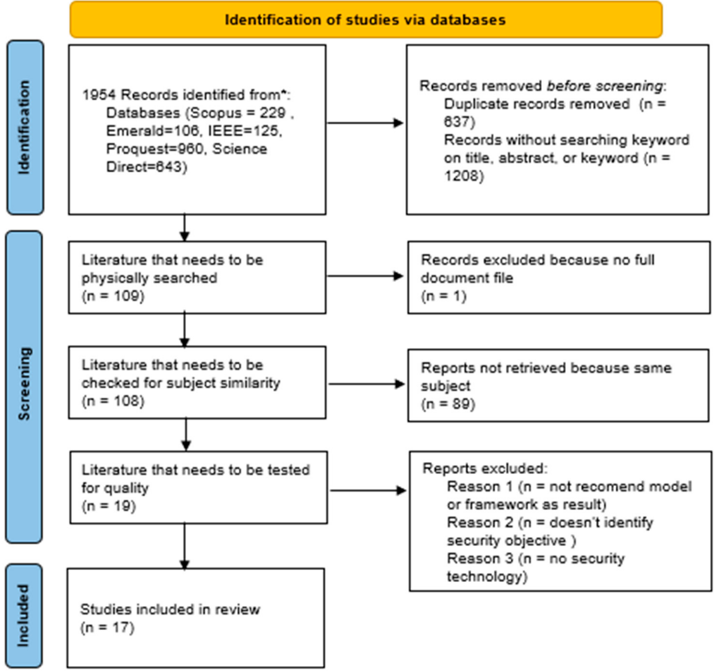
- The PRISMA systematic review identified 1,954 articles, selected 109 for full-paper screening, excluded 92, and included 17 pieces of literature for analysis.
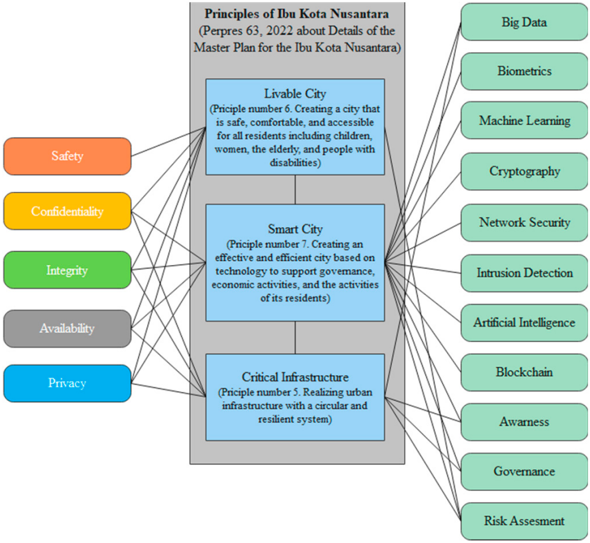
- The proposed framework links three IKN factors—smart city, livable city, and critical infrastructure—to five cybersecurity objectives: confidentiality (C), integrity (I), availability (A), privacy (P), and safety (S).
- Eleven information technologies were identified for IKN cybersecurity: risk assessment, big data, governance, awareness, blockchain, biometrics, machine learning, cryptography, network security, artificial intelligence, and intrusion detection. Blockchain and artificial intelligence were the two most widely used information technologies in the reviewed literature.
- Three experts validated the framework: all agreed on three of the eight IKN development principles related to cybersecurity, corresponding to principles 5, 6, and 7. They also suggested further research on accountability, authentication, and auditability as sub-security objectives.
Methods
- The study used a PRISMA systematic literature review to answer: “What is the initial cybersecurity framework for IKN?” Search keywords were cybersecurity AND ((smart AND city) OR (livable AND city) OR (critical AND infrastructure)), limited to journal articles and conference proceedings from 2016 to 2022 in English across Emerald, IEEE Xplore, ProQuest, ScienceDirect, and Scopus.
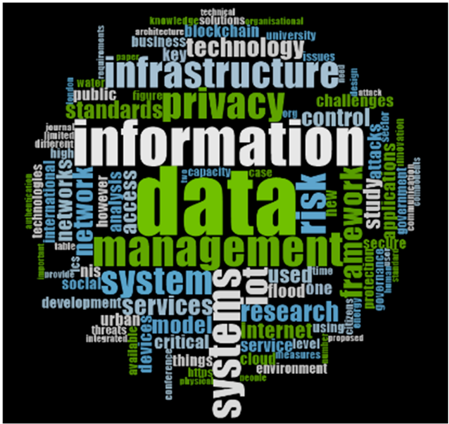
- Analysis used NVIVO 12 word cloud and word map features to identify IKN factors, security objectives, and security-control technologies from the 17 included articles.
- The designed framework was validated through structured interviews with three experts who had worked or researched cybersecurity in the government administration sector for at least ten years, representing Indonesia’s National Cyber and Crypto Agency, smart city master-plan practitioners, and information security academics.
Limitations
- The paper states that although the Economist Intelligence Unit provides a more detailed livable city description, there are limitations in research related to the livable city assessment matrix; future work could use that matrix or build a custom livability assessment index.
- The paper states that cybersecurity keywords in the literature search limited the information obtained regarding technology trends, and that “Ibu Kota Nusantara,” IKN, and “new capital city” are not commonly used scientific phrases.
- Evident from the text: the framework is initial and validated by only three experts, with no implementation or empirical testing reported; the review included only 17 articles, and most discussion concerned smart cities, with only two pieces of literature discussing livable cities.
Model-written summary. Check it against the paper before relying on it.
Integrity signals
Registry
Cites
Statistics
Figures
Verification
Claims the paper makes
24 Own interpretation · 16 No basis given · 12 Not checked yet · 12 Own result · 7 Own method · 5 Supported · 3 Partly supported · 3 Sources not found · 1 Supported so far · 1 Couldn’t confirm · 1 No full text of the sources · accuracy not yet measured
The cited sources that could be checked couldn’t confirm or dispute this claim.
In the paper
“Based on its function as the center for implementing central and local government activities, IKN is also required to implement an electronic-based government system, or SPBE [6], at the national level and the smart city concept at the world level [7].”
§ Initial Cybersecurity Framework in the New Capital City of Indonesia: Factors, Objectives, and Technology > 1. Introduction
What the sources say
- Could not verifycites [7] Maja, 2020, Development of Smart Rural Village Indicators in Line With Industry 4.0, IEEE Access sourceExperimental — accuracy not yet measured
The “A. SMART CITY” section defines the smart-city concept, but does not discuss IKN or a requirement for it to implement that concept at the world level. Searches for IKN, Indonesia’s capital, and a world-level smart-city requirement found no passage addressing the attributed claim. (LLM, conf=0.76)
plaindirect- Asserted: passes — The authors put it forward as true.
- Checkable: passes — It can be checked against evidence.
- Load-bearing: passes — The paper’s conclusions depend on it.
- Based: passes — The paper gives a reason why it holds.
- Could not verify
None of the sources cited for this claim have been checked yet.
In the paper
“Most literature recommends specific safeguards for certain threats so that only one [28,[37][38][39]42] or two security objectives are discussed [26,29,40,41].”
§ Initial Cybersecurity Framework in the New Capital City of Indonesia: Factors, Objectives, and Technology > 3. Results
What the sources say
- Not matchedcites [28,[37][38][39]42]
Couldn’t be matched to a paper in Crossref, so it can’t be checked.
- Could not verifycites [26] 2020, Environmental safety and living in a smart city, Interdiscip. Descr. Complex Syst. sourceExperimental — accuracy not yet measured
The Discussion (p. 7) argues that emerging problems should be addressed holistically rather than individually. However, our copy does not say that most literature recommends threat-specific safeguards or discusses only one or two security objectives; searches for those terms and the proposed contrast found no such assessment. (LLM, conf=0.70)
- Not checked yetcites [29] Erastus, L., Jere, N., and Shava, F.B. (2020, January 18–22). Secure Information Infrastructure Framework Components for a Smart City: A Case Study of Windhoek. Proceedings of the 2020 IST-Africa Conference (IST-Africa), Kampala, Uganda.
- Not checked — no full text of the sourcecites [40] Mohammad, R.M.A., and Abdulqader, M.M. (2020, January 28–30). Exploring cyber security measures in smart cities. Proceedings of the 2020 21st International Arab Conference on Information Technology (ACIT), Giza, Egypt. source
- Not checked — no full text of the sourcecites [41] Alromaihi, S., Elmedany, W., and Balakrishna, C. (2018, January 6–8). Cyber security challenges of deploying IoT in smart cities for healthcare applications. Proceedings of the 2018 6th International Conference on Future Internet of Things and Cloud Workshops (FiCloudW), Barcelona, Spain. source
plaindirect- Asserted: passes — The authors put it forward as true.
- Checkable: passes — It can be checked against evidence.
- Load-bearing: unclear — It is unclear whether the paper’s conclusions depend on it.
- Based: passes — The paper gives a reason why it holds.
- Not matched
The sources with a verdict support this claim; the rest weren’t checked yet, have no full text we could read, or their verdicts aren’t rated yet.
In the paper
“Aspects of critical infrastructure are also widely found in life support [26,28] and government services [28,29] in smart cities.”
§ Initial Cybersecurity Framework in the New Capital City of Indonesia: Factors, Objectives, and Technology > 3. Results
What the sources say
- Supportedcites [26] 2020, Environmental safety and living in a smart city, Interdiscip. Descr. Complex Syst. source
The Discussion (p. 7) defines critical infrastructure as interconnected services and systems essential to the public and government, including the maintenance of public health and environmental conditions. In its discussion of smart cities, the paper treats these as connected infrastructure concerns, supporting the sentence’s broad paraphrase. (LLM, conf=0.87)
- Not checked — no full text of the sourcecites [28] Espada, 2017, Vulnerability assessment of urban community and critical infrastructures for integrated flood risk management and climate adaptation strategies, Int. J. Disaster Resil. Built Environ. source
- Not checked yetcites [29] Erastus, L., Jere, N., and Shava, F.B. (2020, January 18–22). Secure Information Infrastructure Framework Components for a Smart City: A Case Study of Windhoek. Proceedings of the 2020 IST-Africa Conference (IST-Africa), Kampala, Uganda.
plaincorrelational- Asserted: passes — The authors put it forward as true.
- Checkable: passes — It can be checked against evidence.
- Load-bearing: unclear — It is unclear whether the paper’s conclusions depend on it.
- Based: passes — The paper gives a reason why it holds.
- Supported
Every source the paper cites for this claim was checked and supports it.
In the paper
“Another security objective identified was safety [26].”
§ Initial Cybersecurity Framework in the New Capital City of Indonesia: Factors, Objectives, and Technology > 3. Results
What the sources say
- Supportedcites [26] 2020, Environmental safety and living in a smart city, Interdiscip. Descr. Complex Syst. source
The Objectives section (p. 2) says smart-city systems require greater attention to safety and security. The Abstract (p. 1) likewise identifies environmental safety as an issue that must be addressed, supporting safety as an objective. (LLM, conf=0.88)
plain- Asserted: passes — The authors put it forward as true.
- Checkable: passes — It can be checked against evidence.
- Load-bearing: unclear — It is unclear whether the paper’s conclusions depend on it.
- Based: passes — The paper gives a reason why it holds.
- Supported
The paper states this without a source or data behind it here, so there is nothing to check it against. The quote shows it is in the paper.
In the paper
“We applied five security objectives supported by risk management, governance, security awareness, and the latest security technology to these factors.”
§ Initial Cybersecurity Framework in the New Capital City of Indonesia: Factors, Objectives, and Technology > Abstract
plain- Asserted: passes — The authors put it forward as true.
- Checkable: passes — It can be checked against evidence.
- Load-bearing: passes — The paper’s conclusions depend on it.
- Based: passes — The paper gives a reason why it holds.
In the paper
“The literature review also confirmed the objective of information security, as stated in ISO 27001:2022, as a cybersecurity objective.”
§ Initial Cybersecurity Framework in the New Capital City of Indonesia: Factors, Objectives, and Technology > 4. Discussion
What the sources say
- Not checked yetcites [25] (2022). Information Security, Cybersecurity and Privacy Protection-Information Security Management System-Requirements (Standard No. ISO/IEC 27001:2022).
plain- Asserted: passes — The authors put it forward as true.
- Checkable: passes — It can be checked against evidence.
- Load-bearing: passes — The paper’s conclusions depend on it.
- Based: passes — The paper gives a reason why it holds.
The paper states this without a source or data behind it here, so there is nothing to check it against. The quote shows it is in the paper.
In the paper
“Thus, there were four objectives found in the literature as a combination of information security and privacy protection.Those objectives were confidentiality (C), integrity (I), availability (A), and privacy (P).”
§ Initial Cybersecurity Framework in the New Capital City of Indonesia: Factors, Objectives, and Technology > 3. Results
plain- Asserted: passes — The authors put it forward as true.
- Checkable: passes — It can be checked against evidence.
- Load-bearing: passes — The paper’s conclusions depend on it.
- Based: passes — The paper gives a reason why it holds.
The paper states this without a source or data behind it here, so there is nothing to check it against. The quote shows it is in the paper.
In the paper
“The discussion on cybersecurity and human safety found a relationship between critical infrastructure and smart cities.”
§ Initial Cybersecurity Framework in the New Capital City of Indonesia: Factors, Objectives, and Technology > 4. Discussion
plaincorrelational- Asserted: passes — The authors put it forward as true.
- Checkable: passes — It can be checked against evidence.
- Load-bearing: unclear — It is unclear whether the paper’s conclusions depend on it.
- Based: passes — The paper gives a reason why it holds.
The paper states this without a source or data behind it here, so there is nothing to check it against. The quote shows it is in the paper.
In the paper
“In addition, some literatures combined them with privacy.”
§ Initial Cybersecurity Framework in the New Capital City of Indonesia: Factors, Objectives, and Technology > 3. Results
plaincorrelational- Asserted: passes — The authors put it forward as true.
- Checkable: passes — It can be checked against evidence.
- Load-bearing: unclear — It is unclear whether the paper’s conclusions depend on it.
- Based: passes — The paper gives a reason why it holds.
The paper states this without a source or data behind it here, so there is nothing to check it against. The quote shows it is in the paper.
In the paper
“As for technology used in IKN cybersecurity, all cybersecurity technology is used in smart cities, while securing critical infrastructure is more about the cybersecurity management of big data.”
§ Initial Cybersecurity Framework in the New Capital City of Indonesia: Factors, Objectives, and Technology > 4. Discussion
plain- Asserted: passes — The authors put it forward as true.
- Checkable: passes — It can be checked against evidence.
- Load-bearing: passes — The paper’s conclusions depend on it.
- Based: passes — The paper gives a reason why it holds.
- Probably not a substantial claim. 51
- It may state two separate claims as one. 19
- The quote only partly states this claim. 2
Every source the paper cites for this claim was checked and supports it.
In the paper
“PRISMA accommodates quality assessment for each literature example and assesses the strength of evidence [14].”
§ Initial Cybersecurity Framework in the New Capital City of Indonesia: Factors, Objectives, and Technology > 2. Methodology
What the sources say
- Supportedcites [14] Kitchenham, 2022, SEGRESS: Software Engineering Guidelines for REporting Secondary Studies, IEEE Trans. Softw. Eng. source
Section 3.1.2 says PRISMA addressed the issues related to quality assessment. Section 3.3 explains that PRISMA 2020 uses the more specific term ‘risk of bias’ for individual studies and recommends certainty assessment to assess confidence in the body of evidence for a finding. The claim is supported as a broad paraphrase, though it does not preserve that terminology. (LLM, conf=0.87)
plain- Asserted: passes — The authors put it forward as true.
- Checkable: passes — It can be checked against evidence.
- Load-bearing: fails — The paper’s conclusions may not depend on it.
- Based: passes — The paper gives a reason why it holds.
Probably not a substantial claim. The paper’s conclusions may not depend on it. It may state two separate claims as one.
- Supported
The cited sources support only part of this claim — read each source’s verdict below.
In the paper
“From 17 pieces of literature, we found that only 1 piece of literature did not discuss smart cities, while 2 pieces of literature discussed livable cities supporting smart cities [26,27].”
§ Initial Cybersecurity Framework in the New Capital City of Indonesia: Factors, Objectives, and Technology > 3. Results
What the sources say
- Supportedcites [26] 2020, Environmental safety and living in a smart city, Interdiscip. Descr. Complex Syst. source
The citation identifies this paper as one of the pieces discussing liveability in relation to smart cities. The Objectives (p. 3) explicitly discuss creating “smart, safe and liveable cities of the future.” The count of 17 pieces is the citing authors’ own finding, not a finding attributed to this source. (LLM, conf=0.88)
- Partly supportedcites [27] Appio, 2019, Understanding Smart Cities: Innovation ecosystems, technological advancements, and societal challenges, Technol. Soc. Chang. sourceExperimental — accuracy not yet measured
Section 4 (‘Quality of life in smart cities’) and Section 4.2 (‘Smart Living’) discuss how smart-city initiatives can improve residents’ quality of life, so the paper fits the cited topic broadly. They do not establish the more specific characterization that livable cities support smart cities. The tally of 17 pieces is presented as the citing authors’ own finding, not as a finding attributed to this source. (LLM, conf=0.76)
plain- Asserted: passes — The authors put it forward as true.
- Checkable: passes — It can be checked against evidence.
- Load-bearing: unclear — It is unclear whether the paper’s conclusions depend on it.
- Based: passes — The paper gives a reason why it holds.
It may state two separate claims as one.
- Supported
Every source the paper cites for this claim was checked and supports it.
In the paper
“Safety was added into objectives because this article clearly states that a livable smart city must address security, environmental safety, and protection.”
§ Initial Cybersecurity Framework in the New Capital City of Indonesia: Factors, Objectives, and Technology > 3. Results
What the sources say
- Supportedcites [26] 2020, Environmental safety and living in a smart city, Interdiscip. Descr. Complex Syst. source
The Abstract (p. 1) explicitly says it is necessary to address security, environmental safety and protection, alongside the long-term sustainable liveability of future smart cities. That supports the reason the citing sentence gives for adding safety as an objective; the decision to add it is the citing authors’ own. (LLM, conf=0.94)
boosteddirect- Asserted: passes — The authors put it forward as true.
- Checkable: passes — It can be checked against evidence.
- Load-bearing: passes — The paper’s conclusions depend on it.
- Based: passes — The paper gives a reason why it holds.
It may state two separate claims as one.
- Supported
Every source the paper cites for this claim was checked and supports it.
In the paper
“Livability is an issue in smart cities related to the focus of smart city development on quality of life and innovation ecosystems [27].”
§ Initial Cybersecurity Framework in the New Capital City of Indonesia: Factors, Objectives, and Technology > 3. Results
What the sources say
- Supportedcites [27] Appio, 2019, Understanding Smart Cities: Innovation ecosystems, technological advancements, and societal challenges, Technol. Soc. Chang. source
The Introduction and motivation states that smart cities strive to improve citizens’ quality of life through innovation. Section 4, “Quality of life in smart cities,” links innovation ecosystems to efforts to improve community quality of life, supporting the claim’s characterization of livability as a smart-city issue. (LLM, conf=0.90)
plaincorrelational- Asserted: passes — The authors put it forward as true.
- Checkable: passes — It can be checked against evidence.
- Load-bearing: fails — The paper’s conclusions may not depend on it.
- Based: passes — The paper gives a reason why it holds.
Probably not a substantial claim. The paper’s conclusions may not depend on it.
- Supported
The cited sources support only part of this claim — read each source’s verdict below.
In the paper
“| 1 | Risk Assessment | [26-28] |”
- Also stated in: § 5. Conclusions · plain
“| 2 | Big Data | [28] |”
- Also stated in: § 5. Conclusions · plain
“| 3 | Governance | [29,32,35] |”
§ Initial Cybersecurity Framework in the New Capital City of Indonesia: Factors, Objectives, and Technology > 5. Conclusions
What the sources say
- Partly supportedcites [26] 2020, Environmental safety and living in a smart city, Interdiscip. Descr. Complex Syst. sourceExperimental — accuracy not yet measured
The cited table row identifies risk assessment, and the Discussion (p. 8) does recommend risk assessment to protect future smart-city populations. It discusses pandemic and public-health measures, however, not risk assessment as an information technology for IKN cybersecurity. (LLM, conf=0.85)
- Could not verifycites [27] Appio, 2019, Understanding Smart Cities: Innovation ecosystems, technological advancements, and societal challenges, Technol. Soc. Chang. sourceExperimental — accuracy not yet measured
Section 6, “Towards a research agenda” (page unavailable), discusses smart-city risks, including cyberattacks, and proposes studying the risks and benefits of smart-city initiatives. A search for “risk assessment” and “cybersecurity” found no passage identifying risk assessment as a cybersecurity technology for IKN. (LLM, conf=0.72)
- Not checked — no full text of the sourcecites [28] Espada, 2017, Vulnerability assessment of urban community and critical infrastructures for integrated flood risk management and climate adaptation strategies, Int. J. Disaster Resil. Built Environ. source
- Not checked yetcites [29] Erastus, L., Jere, N., and Shava, F.B. (2020, January 18–22). Secure Information Infrastructure Framework Components for a Smart City: A Case Study of Windhoek. Proceedings of the 2020 IST-Africa Conference (IST-Africa), Kampala, Uganda.
- Not checked — no full text of the sourcecites [32] Vitunskaite, 2019, Smart cities and cyber security: Are we there yet?A comparative study on the role of standards, third party risk management and security ownership, Comput. Secur. source
- Supportedcites [35] Shukla, M., Johnson, S.D., and Jones, P. (2019, January 3–4). Does the NIS implementation strategy effectively address cyber security risks in the UK?. Proceedings of the 2019 International Conference on Cyber Security and Protection of Digital Services (Cyber Security), Oxford, UK. source
The citation appears in the citing paper’s “Risk Assessment” row. The source’s “Cyber Security Risk Management under NIS” section describes a cybersecurity assessment framework and indicators of good practice for managing cyber risk, supporting that row. This citation does not, by itself, attribute the longer list of technologies to this source. (LLM, conf=0.87)
plain- Asserted: passes — The authors put it forward as true.
- Checkable: passes — It can be checked against evidence.
- Load-bearing: passes — The paper’s conclusions depend on it.
- Based: passes — The paper gives a reason why it holds.
It may state two separate claims as one. The quote only partly states this claim.
- Also stated in: § 5. Conclusions · plain
Every source the paper cites for this claim was checked and supports it.
In the paper
“If associated with technological developments, livability, security, and safety were the three issues related to smart cities [26].”
§ Initial Cybersecurity Framework in the New Capital City of Indonesia: Factors, Objectives, and Technology > 3. Results
What the sources say
- Supportedcites [26] 2020, Environmental safety and living in a smart city, Interdiscip. Descr. Complex Syst. source
The Abstract (p. 1) identifies security, environmental safety, and long-term liveability as issues for future smart cities, to be addressed using available technology. The Objectives (p. 3) likewise links technological solutions with safer, liveable smart cities. (LLM, conf=0.91)
plaincorrelational- Asserted: passes — The authors put it forward as true.
- Checkable: passes — It can be checked against evidence.
- Load-bearing: fails — The paper’s conclusions may not depend on it.
- Based: passes — The paper gives a reason why it holds.
Probably not a substantial claim. The paper’s conclusions may not depend on it.
- Supported
The cited sources support only part of this claim — read each source’s verdict below.
In the paper
“There is a need for security in livability because many systems in use are not designed to be robust against cybercrime [9].”
§ Initial Cybersecurity Framework in the New Capital City of Indonesia: Factors, Objectives, and Technology > 1. Introduction
What the sources say
- Partly supportedcites [9] Ukwandu, E., Ben-Farah, M.A., Hindy, H., Bures, M., Atkinson, R., Tachtatzis, C., Andonovic, I., and Bellekens, X. (2022). Cyber-Security Challenges in Aviation Industry: A Review of Current and Future Trends. Information, 13. sourceExperimental — accuracy not yet measured
Section 4 describes vulnerabilities in aviation systems, including exploitable design flaws in satellite-communication terminals, and the Introduction says stronger cyber-defence is imperative. The paper does not establish the broader claim that many systems used for livability were not designed to withstand cybercrime. (LLM, conf=0.84)
plaindirect- Asserted: passes — The authors put it forward as true.
- Checkable: passes — It can be checked against evidence.
- Load-bearing: passes — The paper’s conclusions depend on it.
- Based: passes — The paper gives a reason why it holds.
It may state two separate claims as one.
- Partly supported
A result the paper reports from its own data — it cites no other source for it, so there is none to check. The quote shows it is in the paper.
In the paper
“In the initial investigation, the word livability was not found in any of literature.”
§ Initial Cybersecurity Framework in the New Capital City of Indonesia: Factors, Objectives, and Technology > 3. Results
plain- Asserted: passes — The authors put it forward as true.
- Checkable: passes — It can be checked against evidence.
- Load-bearing: fails — The paper’s conclusions may not depend on it.
- Based: passes — The paper gives a reason why it holds.
Probably not a substantial claim. The paper’s conclusions may not depend on it.
A result the paper reports from its own data — it cites no other source for it, so there is none to check. The quote shows it is in the paper.
In the paper
“From the validation process, all experts agreed to define the proposed technology on the framework as the latest technology in cybersecurity.”
§ Initial Cybersecurity Framework in the New Capital City of Indonesia: Factors, Objectives, and Technology > 4. Discussion
plain- Asserted: passes — The authors put it forward as true.
- Checkable: passes — It can be checked against evidence.
- Load-bearing: fails — The paper’s conclusions may not depend on it.
- Based: passes — The paper gives a reason why it holds.
Probably not a substantial claim. The paper’s conclusions may not depend on it.
- Rests on an assumption: The three experts are qualified to validate the cybersecurity framework.
None of the sources cited for this claim have been checked yet.
In the paper
“Safety was found in the literature about livable cities, especially when discussing the threat to human safety, such as a natural risk in the form of flooding.”
§ Initial Cybersecurity Framework in the New Capital City of Indonesia: Factors, Objectives, and Technology > 3. Results
plaincorrelational- Asserted: passes — The authors put it forward as true.
- Checkable: passes — It can be checked against evidence.
- Load-bearing: fails — The paper’s conclusions may not depend on it.
- Based: passes — The paper gives a reason why it holds.
Probably not a substantial claim. The paper’s conclusions may not depend on it.
The paper states this without a source or data behind it here, so there is nothing to check it against. The quote shows it is in the paper.
In the paper
“In practice, livability is often mentioned together with sustainability.”
§ Initial Cybersecurity Framework in the New Capital City of Indonesia: Factors, Objectives, and Technology > 3. Results
plaincorrelational- Asserted: passes — The authors put it forward as true.
- Checkable: passes — It can be checked against evidence.
- Load-bearing: fails — The paper’s conclusions may not depend on it.
- Based: fails — The paper may give no reason why it holds.
Probably not a substantial claim. The paper’s conclusions may not depend on it. The paper may give no reason why it holds.
A result the paper reports from its own data — it cites no other source for it, so there is none to check. The quote shows it is in the paper.
In the paper
“Additionally, 109 articles were selected during the screening stage for the full paper to be downloaded and their quality tested.”
§ Initial Cybersecurity Framework in the New Capital City of Indonesia: Factors, Objectives, and Technology > 2. Methodology
plain- Asserted: passes — The authors put it forward as true.
- Checkable: passes — It can be checked against evidence.
- Load-bearing: fails — The paper’s conclusions may not depend on it.
- Based: passes — The paper gives a reason why it holds.
Probably not a substantial claim. The paper’s conclusions may not depend on it.
The paper states this without a source or data behind it here, so there is nothing to check it against. The quote shows it is in the paper.
In the paper
“These two critical infrastructure goals are often referred to as safety and security in the literature.”
§ Initial Cybersecurity Framework in the New Capital City of Indonesia: Factors, Objectives, and Technology > 3. Results
plain- Asserted: passes — The authors put it forward as true.
- Checkable: passes — It can be checked against evidence.
- Load-bearing: fails — The paper’s conclusions may not depend on it.
- Based: fails — The paper may give no reason why it holds.
Probably not a substantial claim. The paper’s conclusions may not depend on it. The paper may give no reason why it holds.
The paper states this without a source or data behind it here, so there is nothing to check it against. The quote shows it is in the paper.
In the paper
“In addition, the analysis also found privacy and safety, so overall, there are five cybersecurity goals in IKN, namely confidentiality, integrity, availability, privacy, and safety.”
§ Initial Cybersecurity Framework in the New Capital City of Indonesia: Factors, Objectives, and Technology > 4. Discussion
plain- Asserted: passes — The authors put it forward as true.
- Checkable: passes — It can be checked against evidence.
- Load-bearing: passes — The paper’s conclusions depend on it.
- Based: passes — The paper gives a reason why it holds.
It may state two separate claims as one.
The paper states this without a source or data behind it here, so there is nothing to check it against. The quote shows it is in the paper.
In the paper
“Identified factors are in line with the 5th, 6th, and 7th of the IKN development principles.”
§ Initial Cybersecurity Framework in the New Capital City of Indonesia: Factors, Objectives, and Technology > 5. Conclusions
plaincorrelational- Asserted: passes — The authors put it forward as true.
- Checkable: passes — It can be checked against evidence.
- Load-bearing: fails — The paper’s conclusions may not depend on it.
- Based: fails — The paper may give no reason why it holds.
Probably not a substantial claim. The paper’s conclusions may not depend on it. The paper may give no reason why it holds.
The paper states this without a source or data behind it here, so there is nothing to check it against. The quote shows it is in the paper.
In the paper
“Most of the discussion was about cybersecurity in smart cities, but there is a connection between smart cities, livable cities, and critical infrastructure.”
§ Initial Cybersecurity Framework in the New Capital City of Indonesia: Factors, Objectives, and Technology > 4. Discussion
plaincorrelational- Asserted: passes — The authors put it forward as true.
- Checkable: passes — It can be checked against evidence.
- Load-bearing: fails — The paper’s conclusions may not depend on it.
- Based: passes — The paper gives a reason why it holds.
Probably not a substantial claim. The paper’s conclusions may not depend on it. It may state two separate claims as one.
The paper states this without a source or data behind it here, so there is nothing to check it against. The quote shows it is in the paper.
In the paper
“In addition, managerial technologies for risk assessment, governance, and awareness are widely recommended.”
§ Initial Cybersecurity Framework in the New Capital City of Indonesia: Factors, Objectives, and Technology > 3. Results
boosted- Asserted: passes — The authors put it forward as true.
- Checkable: passes — It can be checked against evidence.
- Load-bearing: fails — The paper’s conclusions may not depend on it.
- Based: passes — The paper gives a reason why it holds.
Probably not a substantial claim. The paper’s conclusions may not depend on it.
A result the paper reports from its own data — it cites no other source for it, so there is none to check. The quote shows it is in the paper.
In the paper
“After a thorough search using spreadsheet software, no search keywords were found in the abstract and keywords of several articles; thus, they had to be removed from the search results.”
§ Initial Cybersecurity Framework in the New Capital City of Indonesia: Factors, Objectives, and Technology > 2. Methodology
plaindirect- Asserted: passes — The authors put it forward as true.
- Checkable: passes — It can be checked against evidence.
- Load-bearing: fails — The paper’s conclusions may not depend on it.
- Based: passes — The paper gives a reason why it holds.
Probably not a substantial claim. The paper’s conclusions may not depend on it. It may state two separate claims as one.
A result the paper reports from its own data — it cites no other source for it, so there is none to check. The quote shows it is in the paper.
In the paper
“An analysis of IKN's factors found that livable cities and critical infrastructure are part of a smart city.”
§ Initial Cybersecurity Framework in the New Capital City of Indonesia: Factors, Objectives, and Technology > 4. Discussion
plaincorrelational- Asserted: passes — The authors put it forward as true.
- Checkable: passes — It can be checked against evidence.
- Load-bearing: passes — The paper’s conclusions depend on it.
- Based: passes — The paper gives a reason why it holds.
It may state two separate claims as one.
The paper states this without a source or data behind it here, so there is nothing to check it against. The quote shows it is in the paper.
In the paper
“Based on the literature review related to cybersecurity in IKN, the interconnection between all identified components is shown in Figure 3.”
§ Initial Cybersecurity Framework in the New Capital City of Indonesia: Factors, Objectives, and Technology > 4. Discussion
plaincorrelational- Asserted: passes — The authors put it forward as true.
- Checkable: passes — It can be checked against evidence.
- Load-bearing: fails — The paper’s conclusions may not depend on it.
- Based: passes — The paper gives a reason why it holds.
Probably not a substantial claim. The paper’s conclusions may not depend on it.
The paper states this without a source or data behind it here, so there is nothing to check it against. The quote shows it is in the paper.
In the paper
“Privacy was discussed if the security threat related to people's data.”
§ Initial Cybersecurity Framework in the New Capital City of Indonesia: Factors, Objectives, and Technology > 3. Results
plaincorrelational- Asserted: passes — The authors put it forward as true.
- Checkable: passes — It can be checked against evidence.
- Load-bearing: fails — The paper’s conclusions may not depend on it.
- Based: passes — The paper gives a reason why it holds.
Probably not a substantial claim. The paper’s conclusions may not depend on it.
A result the paper reports from its own data — it cites no other source for it, so there is none to check. The quote shows it is in the paper.
In the paper
“For the results of the SLR, we found 17 works of literature after conducting the SLR flow diagram illustrated in Figure 1.”
- Also stated in: § 2. Methodology · plain
“The result of the literature review included 17 pieces for analysis.”
§ Initial Cybersecurity Framework in the New Capital City of Indonesia: Factors, Objectives, and Technology > 2. Methodology
plain- Asserted: passes — The authors put it forward as true.
- Checkable: passes — It can be checked against evidence.
- Load-bearing: fails — The paper’s conclusions may not depend on it.
- Based: passes — The paper gives a reason why it holds.
Probably not a substantial claim. The paper’s conclusions may not depend on it.
- Also stated in: § 2. Methodology · plain
A result the paper reports from its own data — it cites no other source for it, so there is none to check. The quote shows it is in the paper.
In the paper
“At the screening stage, 92 articles were excluded.”
§ Initial Cybersecurity Framework in the New Capital City of Indonesia: Factors, Objectives, and Technology > 2. Methodology
plain- Asserted: passes — The authors put it forward as true.
- Checkable: passes — It can be checked against evidence.
- Load-bearing: fails — The paper’s conclusions may not depend on it.
- Based: passes — The paper gives a reason why it holds.
Probably not a substantial claim. The paper’s conclusions may not depend on it.
A result the paper reports from its own data — it cites no other source for it, so there is none to check. The quote shows it is in the paper.
In the paper
“Blockchain and Artificial Intelligence are the two most widely used information technologies.”
§ Initial Cybersecurity Framework in the New Capital City of Indonesia: Factors, Objectives, and Technology > 3. Results
plain- Asserted: passes — The authors put it forward as true.
- Checkable: passes — It can be checked against evidence.
- Load-bearing: unclear — It is unclear whether the paper’s conclusions depend on it.
- Based: passes — The paper gives a reason why it holds.
It may state two separate claims as one. The quote only partly states this claim.
A result the paper reports from its own data — it cites no other source for it, so there is none to check. The quote shows it is in the paper.
In the paper
“At the identification stage, a search was conducted using keywords and criteria defined in the PRISMA protocol, and 1954 articles were obtained.”
§ Initial Cybersecurity Framework in the New Capital City of Indonesia: Factors, Objectives, and Technology > 2. Methodology
plain- Asserted: passes — The authors put it forward as true.
- Checkable: passes — It can be checked against evidence.
- Load-bearing: fails — The paper’s conclusions may not depend on it.
- Based: passes — The paper gives a reason why it holds.
Probably not a substantial claim. The paper’s conclusions may not depend on it.
A conclusion the paper draws from its own results — it cites no other source for it, so there is none to check. The quote shows it is in the paper.
In the paper
“The authentication method supports a variety of data secrecy methods in a system.”
§ Initial Cybersecurity Framework in the New Capital City of Indonesia: Factors, Objectives, and Technology > 4. Discussion
plaindirect- Asserted: passes — The authors put it forward as true.
- Checkable: passes — It can be checked against evidence.
- Load-bearing: fails — The paper’s conclusions may not depend on it.
- Based: fails — The paper may give no reason why it holds.
Probably not a substantial claim. The paper’s conclusions may not depend on it. The paper may give no reason why it holds.
A conclusion the paper draws from its own results — it cites no other source for it, so there is none to check. The quote shows it is in the paper.
In the paper
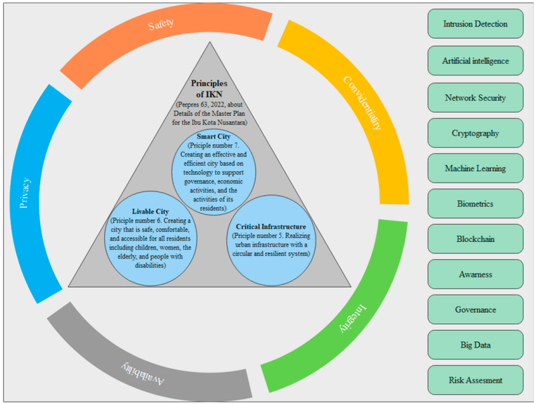
“Therefore, as shown in Figure 4, cybersecurity in IKN is implemented by seeing IKN as a smart city, a livable city, and having critical infrastructure to ensure confidentiality, integrity, availability, privacy, and safety by using existing security technology.”
§ Initial Cybersecurity Framework in the New Capital City of Indonesia: Factors, Objectives, and Technology > 4. Discussion
plaindirect- Asserted: passes — The authors put it forward as true.
- Checkable: passes — It can be checked against evidence.
- Load-bearing: passes — The paper’s conclusions depend on it.
- Based: passes — The paper gives a reason why it holds.
It may state two separate claims as one.
- Rests on an assumption: The concepts of smart city, livable city, and critical infrastructure can adequately represent IKN for cybersecurity framework purposes.
In the paper
“Officially, IKN will be a unique provincial-level regional government unit as its territory will be the capital city of the Republic of Indonesia [1], and and it will be managed by the IKN Authority.”
§ Initial Cybersecurity Framework in the New Capital City of Indonesia: Factors, Objectives, and Technology > 1. Introduction
What the sources say
- Not checked yetcites [1] Pemerintah Indones (2022, October 13). Undang-Undang Republik Indonesia Nomor 3 Tahun 2022 Tentang Ibu Kota Negara, Available online: https://www.presidenri.go.id/.
plain- Asserted: passes — The authors put it forward as true.
- Checkable: passes — It can be checked against evidence.
- Load-bearing: fails — The paper’s conclusions may not depend on it.
- Based: passes — The paper gives a reason why it holds.
Probably not a substantial claim. The paper’s conclusions may not depend on it. It may state two separate claims as one.
A conclusion the paper draws from its own results — it cites no other source for it, so there is none to check. The quote shows it is in the paper.
In the paper
“In the end, critical infrastructure exists in every dimension of a smart city because, in a smart city, the connectivity between service infrastructure is very high.”
§ Initial Cybersecurity Framework in the New Capital City of Indonesia: Factors, Objectives, and Technology > 4. Discussion
plaindirect- Asserted: passes — The authors put it forward as true.
- Checkable: fails — It may be too vague to check against evidence.
- Load-bearing: fails — The paper’s conclusions may not depend on it.
- Based: passes — The paper gives a reason why it holds.
Probably not a substantial claim. It may be too vague to check against evidence. The paper’s conclusions may not depend on it. It may state two separate claims as one.
What the paper did — it cites no source for this, so there is none to check. The quote shows it is in the paper.
In the paper
“Furthermore, cybersecurity keywords in the literature search also limit the information obtained regarding technology trends.”
§ Initial Cybersecurity Framework in the New Capital City of Indonesia: Factors, Objectives, and Technology > 5. Conclusions
plaindirect- Asserted: passes — The authors put it forward as true.
- Checkable: passes — It can be checked against evidence.
- Load-bearing: passes — The paper’s conclusions depend on it.
- Based: passes — The paper gives a reason why it holds.
Probably not a substantial claim.
A conclusion the paper draws from its own results — it cites no other source for it, so there is none to check. The quote shows it is in the paper.
In the paper
“For example, confidentiality can be achieved by maintaining authentication and auditability, and integrity is supported by accountability.”
§ Initial Cybersecurity Framework in the New Capital City of Indonesia: Factors, Objectives, and Technology > 4. Discussion
plaindirect- Asserted: passes — The authors put it forward as true.
- Checkable: passes — It can be checked against evidence.
- Load-bearing: fails — The paper’s conclusions may not depend on it.
- Based: passes — The paper gives a reason why it holds.
Probably not a substantial claim. The paper’s conclusions may not depend on it.
A conclusion the paper draws from its own results — it cites no other source for it, so there is none to check. The quote shows it is in the paper.
In the paper
“Therefore, IKN cybersecurity needs to be viewed as an edge case in cybersecurity for livable cities, smart cities, and critical infrastructure.”
§ Initial Cybersecurity Framework in the New Capital City of Indonesia: Factors, Objectives, and Technology > 1. Introduction
plain- Asserted: passes — The authors put it forward as true.
- Checkable: fails — It may be too vague to check against evidence.
- Load-bearing: passes — The paper’s conclusions depend on it.
- Based: passes — The paper gives a reason why it holds.
Probably not a substantial claim. It may be too vague to check against evidence.
A conclusion the paper draws from its own results — it cites no other source for it, so there is none to check. The quote shows it is in the paper.
In the paper
“Therefore, IKN security can also be seen as smart city security.”
§ Initial Cybersecurity Framework in the New Capital City of Indonesia: Factors, Objectives, and Technology > 1. Introduction
plaincorrelational- Asserted: passes — The authors put it forward as true.
- Checkable: passes — It can be checked against evidence.
- Load-bearing: fails — The paper’s conclusions may not depend on it.
- Based: passes — The paper gives a reason why it holds.
Probably not a substantial claim. The paper’s conclusions may not depend on it.
What the paper did — it cites no source for this, so there is none to check. The quote shows it is in the paper.
In the paper
“All the SLR phases were carried out collaboratively by all authors in an iterative process considering each author's assessments.Thus, any discrepancies were discussed until a unanimous agreement was reached.”
§ Initial Cybersecurity Framework in the New Capital City of Indonesia: Factors, Objectives, and Technology > 2. Methodology
plain- Asserted: passes — The authors put it forward as true.
- Checkable: passes — It can be checked against evidence.
- Load-bearing: fails — The paper’s conclusions may not depend on it.
- Based: passes — The paper gives a reason why it holds.
Probably not a substantial claim. The paper’s conclusions may not depend on it. It may state two separate claims as one.
A conclusion the paper draws from its own results — it cites no other source for it, so there is none to check. The quote shows it is in the paper.
In the paper
“There is also a suggestion to use a standard cybersecurity framework such as NIST, but the proposed framework complements the NIST framework by adding privacy as a security objective.”
§ Initial Cybersecurity Framework in the New Capital City of Indonesia: Factors, Objectives, and Technology > 4. Discussion
plaindirect- Asserted: passes — The authors put it forward as true.
- Checkable: passes — It can be checked against evidence.
- Load-bearing: fails — The paper’s conclusions may not depend on it.
- Based: passes — The paper gives a reason why it holds.
Probably not a substantial claim. The paper’s conclusions may not depend on it.
A conclusion the paper draws from its own results — it cites no other source for it, so there is none to check. The quote shows it is in the paper.
In the paper
“Those discussions mean that livability includes a smart economy, smart living, a smart society, and smart governance in a smart city context.”
§ Initial Cybersecurity Framework in the New Capital City of Indonesia: Factors, Objectives, and Technology > 4. Discussion
plain- Asserted: passes — The authors put it forward as true.
- Checkable: passes — It can be checked against evidence.
- Load-bearing: fails — The paper’s conclusions may not depend on it.
- Based: fails — The paper may give no reason why it holds.
Probably not a substantial claim. The paper’s conclusions may not depend on it. The paper may give no reason why it holds.
What the paper did — it cites no source for this, so there is none to check. The quote shows it is in the paper.
In the paper
“The three experts represent the National Cyber and Crypto Agency (the organization in charge of cybersecurity in Indonesia), practitioners whose role is to prepare smart city master plans, and academics in the field of information security.”
§ Initial Cybersecurity Framework in the New Capital City of Indonesia: Factors, Objectives, and Technology > 4. Discussion
plain- Asserted: passes — The authors put it forward as true.
- Checkable: passes — It can be checked against evidence.
- Load-bearing: fails — The paper’s conclusions may not depend on it.
- Based: passes — The paper gives a reason why it holds.
Probably not a substantial claim. The paper’s conclusions may not depend on it. It may state two separate claims as one.
- Rests on an assumption: The three experts are qualified to validate the cybersecurity framework.
In the paper
“The type of security control used for cybersecurity is similar to information security; however, it is used to mitigate cyber security risks in cyberspace, such as cybercrime and safety [11].”
§ Initial Cybersecurity Framework in the New Capital City of Indonesia: Factors, Objectives, and Technology > 1. Introduction
What the sources say
- Not checked yetcites [11] (2012). ISO/IEC JTC 1/SC 27 Information security, cybersecurity and privacy protection. ISO/IEC 27032: 2012 Information Technology—Security Techniques—Guidelines for Cybersecurity, International Electrotechnical Commission (IEC).
plaincorrelational- Asserted: passes — The authors put it forward as true.
- Checkable: passes — It can be checked against evidence.
- Load-bearing: fails — The paper’s conclusions may not depend on it.
- Based: passes — The paper gives a reason why it holds.
Probably not a substantial claim. The paper’s conclusions may not depend on it. It may state two separate claims as one.
In the paper
“This research referred to PRISMA (Preferred Reporting Items for Systematic Reviews and Meta-analyses) [13].”
§ Initial Cybersecurity Framework in the New Capital City of Indonesia: Factors, Objectives, and Technology > 2. Methodology
What the sources say
- Not matchedcites [13] Page, 2021, The PRISMA 2020 statement: An updated guideline for reporting systematic reviews, Syst. Rev.
Couldn’t be matched to a paper in Crossref, so it can’t be checked.
plain- Asserted: passes — The authors put it forward as true.
- Checkable: passes — It can be checked against evidence.
- Load-bearing: fails — The paper’s conclusions may not depend on it.
- Based: passes — The paper gives a reason why it holds.
Probably not a substantial claim. The paper’s conclusions may not depend on it.
- Not matched
A conclusion the paper draws from its own results — it cites no other source for it, so there is none to check. The quote shows it is in the paper.
In the paper
“For example, confidentiality can be achieved by maintaining authentication and auditability, and integrity is supported by accountability.”
§ Initial Cybersecurity Framework in the New Capital City of Indonesia: Factors, Objectives, and Technology > 4. Discussion
plaindirect- Asserted: passes — The authors put it forward as true.
- Checkable: passes — It can be checked against evidence.
- Load-bearing: fails — The paper’s conclusions may not depend on it.
- Based: passes — The paper gives a reason why it holds.
Probably not a substantial claim. The paper’s conclusions may not depend on it.
A conclusion the paper draws from its own results — it cites no other source for it, so there is none to check. The quote shows it is in the paper.
In the paper
“This technology can be replaced by a new one in the future.”
§ Initial Cybersecurity Framework in the New Capital City of Indonesia: Factors, Objectives, and Technology > 4. Discussion
plain- Asserted: passes — The authors put it forward as true.
- Checkable: fails — It may be too vague to check against evidence.
- Load-bearing: fails — The paper’s conclusions may not depend on it.
- Based: passes — The paper gives a reason why it holds.
Probably not a substantial claim. It may be too vague to check against evidence. The paper’s conclusions may not depend on it.
A conclusion the paper draws from its own results — it cites no other source for it, so there is none to check. The quote shows it is in the paper.
In the paper
“Although only two pieces of literature discuss livable cities with risk assessment of the technology, livable cities cannot be eliminated because this is part of the IKN development principles.”
§ Initial Cybersecurity Framework in the New Capital City of Indonesia: Factors, Objectives, and Technology > 4. Discussion
plaindirect- Asserted: passes — The authors put it forward as true.
- Checkable: passes — It can be checked against evidence.
- Load-bearing: passes — The paper’s conclusions depend on it.
- Based: passes — The paper gives a reason why it holds.
Probably not a substantial claim.
A conclusion the paper draws from its own results — it cites no other source for it, so there is none to check. The quote shows it is in the paper.
In the paper
“Furthermore, considering the relationship between the development of smart cities and the critical infrastructure of the government administration sector, part of security for IKN can also be defined as critical infrastructure security.”
§ Initial Cybersecurity Framework in the New Capital City of Indonesia: Factors, Objectives, and Technology > 1. Introduction
plaincorrelational- Asserted: passes — The authors put it forward as true.
- Checkable: fails — It may be too vague to check against evidence.
- Load-bearing: fails — The paper’s conclusions may not depend on it.
- Based: passes — The paper gives a reason why it holds.
Probably not a substantial claim. It may be too vague to check against evidence. The paper’s conclusions may not depend on it.
What the paper did — it cites no source for this, so there is none to check. The quote shows it is in the paper.
In the paper
“A PRISMA systematic review was used to identify variables and design an initial framework.”
§ Initial Cybersecurity Framework in the New Capital City of Indonesia: Factors, Objectives, and Technology > Abstract
plaindirect- Asserted: passes — The authors put it forward as true.
- Checkable: passes — It can be checked against evidence.
- Load-bearing: passes — The paper’s conclusions depend on it.
- Based: passes — The paper gives a reason why it holds.
Probably not a substantial claim.
A conclusion the paper draws from its own results — it cites no other source for it, so there is none to check. The quote shows it is in the paper.
In the paper
“Cybersecurity in critical infrastructure is more about security management through security governance, risk assessment, and security awareness.”
§ Initial Cybersecurity Framework in the New Capital City of Indonesia: Factors, Objectives, and Technology > 4. Discussion
plain- Asserted: passes — The authors put it forward as true.
- Checkable: fails — It may be too vague to check against evidence.
- Load-bearing: passes — The paper’s conclusions depend on it.
- Based: fails — The paper may give no reason why it holds.
Probably not a substantial claim. It may be too vague to check against evidence. The paper may give no reason why it holds.
In the paper
“With this point of view, cybersecurity is organized with the same goals or principles as information security.”
§ Initial Cybersecurity Framework in the New Capital City of Indonesia: Factors, Objectives, and Technology > 1. Introduction
What the sources say
- Not checked yetcites [10] Andrew, M., Rashid, A., Chivers, H., Schneider, S., Lupu, E., and Danezis, G. (2021). The Cyber Security Body of Knowledge, University of Bristol.
plain- Asserted: passes — The authors put it forward as true.
- Checkable: passes — It can be checked against evidence.
- Load-bearing: fails — The paper’s conclusions may not depend on it.
- Based: passes — The paper gives a reason why it holds.
Probably not a substantial claim. The paper’s conclusions may not depend on it.
A conclusion the paper draws from its own results — it cites no other source for it, so there is none to check. The quote shows it is in the paper.
In the paper
“These proposed technologies are implemented as a list of security technologies standardized by Indonesian cybersecurity institutions.”
§ Initial Cybersecurity Framework in the New Capital City of Indonesia: Factors, Objectives, and Technology > 4. Discussion
plain- Asserted: passes — The authors put it forward as true.
- Checkable: passes — It can be checked against evidence.
- Load-bearing: fails — The paper’s conclusions may not depend on it.
- Based: fails — The paper may give no reason why it holds.
Probably not a substantial claim. The paper’s conclusions may not depend on it. The paper may give no reason why it holds.
A conclusion the paper draws from its own results — it cites no other source for it, so there is none to check. The quote shows it is in the paper.
In the paper
“These three security objectives can be described as support for confidentiality, integrity, and availability.”
§ Initial Cybersecurity Framework in the New Capital City of Indonesia: Factors, Objectives, and Technology > 4. Discussion
plaincorrelational- Asserted: passes — The authors put it forward as true.
- Checkable: passes — It can be checked against evidence.
- Load-bearing: fails — The paper’s conclusions may not depend on it.
- Based: passes — The paper gives a reason why it holds.
Probably not a substantial claim. The paper’s conclusions may not depend on it.
A conclusion the paper draws from its own results — it cites no other source for it, so there is none to check. The quote shows it is in the paper.
In the paper
“As for technology used in IKN cybersecurity, all cybersecurity technology is used in smart cities, while securing critical infrastructure is more about the cybersecurity management of big data.”
§ Initial Cybersecurity Framework in the New Capital City of Indonesia: Factors, Objectives, and Technology > 4. Discussion
plaindirect- Asserted: passes — The authors put it forward as true.
- Checkable: passes — It can be checked against evidence.
- Load-bearing: fails — The paper’s conclusions may not depend on it.
- Based: fails — The paper may give no reason why it holds.
Probably not a substantial claim. The paper’s conclusions may not depend on it. The paper may give no reason why it holds.
In the paper
“Privacy and safety are not in the possibilities mentioned in ISO 27001:2022, but by using the existing looseness of definitions, privacy and safety are grouped under security objectives.”
§ Initial Cybersecurity Framework in the New Capital City of Indonesia: Factors, Objectives, and Technology > 4. Discussion
What the sources say
- Not checked yetcites [25] (2022). Information Security, Cybersecurity and Privacy Protection-Information Security Management System-Requirements (Standard No. ISO/IEC 27001:2022).
plain- Asserted: passes — The authors put it forward as true.
- Checkable: passes — It can be checked against evidence.
- Load-bearing: passes — The paper’s conclusions depend on it.
- Based: passes — The paper gives a reason why it holds.
Probably not a substantial claim. It may state two separate claims as one.
A conclusion the paper draws from its own results — it cites no other source for it, so there is none to check. The quote shows it is in the paper.
In the paper
“After determining that cybersecurity technology in IKN is related to livable cities, smart cities, and critical infrastructure, the specified security technologies can continue to develop according to threat trends and developments in information technology.”
§ Initial Cybersecurity Framework in the New Capital City of Indonesia: Factors, Objectives, and Technology > 4. Discussion
plaincorrelational- Asserted: passes — The authors put it forward as true.
- Checkable: fails — It may be too vague to check against evidence.
- Load-bearing: fails — The paper’s conclusions may not depend on it.
- Based: passes — The paper gives a reason why it holds.
Probably not a substantial claim. It may be too vague to check against evidence. The paper’s conclusions may not depend on it.
In the paper
“As a newly built city, IKN will be expected to become an economic driver, a national identity symbol, and a sustainable global city [2].”
§ Initial Cybersecurity Framework in the New Capital City of Indonesia: Factors, Objectives, and Technology > 1. Introduction
What the sources say
- Not checked yetcites [2] Presiden Republik Indonesia (2022, November 01). Peraturan Presiden Republik Indonesia Nomor 63 Tahun 2022 Tentang Perincian Rencana Induk Ibu Kota Nusantara, Available online: https://www.presidenri.go.id/.
plain- Asserted: passes — The authors put it forward as true.
- Checkable: passes — It can be checked against evidence.
- Load-bearing: fails — The paper’s conclusions may not depend on it.
- Based: passes — The paper gives a reason why it holds.
Probably not a substantial claim. The paper’s conclusions may not depend on it. It may state two separate claims as one.
A conclusion the paper draws from its own results — it cites no other source for it, so there is none to check. The quote shows it is in the paper.
In the paper
“A livable city is part of a smart city, focusing on innovative ecosystems and quality of life.”
§ Initial Cybersecurity Framework in the New Capital City of Indonesia: Factors, Objectives, and Technology > 4. Discussion
plaincorrelational- Asserted: passes — The authors put it forward as true.
- Checkable: passes — It can be checked against evidence.
- Load-bearing: fails — The paper’s conclusions may not depend on it.
- Based: fails — The paper may give no reason why it holds.
Probably not a substantial claim. The paper’s conclusions may not depend on it. The paper may give no reason why it holds. It may state two separate claims as one.
The paper states this without a source or data behind it here, so there is nothing to check it against. The quote shows it is in the paper.
In the paper
“However, there is no concept of cybersecurity in IKN associated with existing functions and expectations of the city.”
§ Initial Cybersecurity Framework in the New Capital City of Indonesia: Factors, Objectives, and Technology > Abstract
plain- Asserted: passes — The authors put it forward as true.
- Checkable: passes — It can be checked against evidence.
- Load-bearing: passes — The paper’s conclusions depend on it.
- Based: fails — The paper may give no reason why it holds.
Probably not a substantial claim. The paper may give no reason why it holds.
The paper states this without a source or data behind it here, so there is nothing to check it against. The quote shows it is in the paper.
In the paper
“Although security is needed to ensure the achievement of expectations for IKN, there is currently a need for a cybersecurity concept that has proven compatibility with the IKN principle.”
§ Initial Cybersecurity Framework in the New Capital City of Indonesia: Factors, Objectives, and Technology > 1. Introduction
plain- Asserted: passes — The authors put it forward as true.
- Checkable: fails — It may be too vague to check against evidence.
- Load-bearing: passes — The paper’s conclusions depend on it.
- Based: passes — The paper gives a reason why it holds.
Probably not a substantial claim. It may be too vague to check against evidence.
A conclusion the paper draws from its own results — it cites no other source for it, so there is none to check. The quote shows it is in the paper.
In the paper
“Auditability and accountability will be used in case of a confidentiality or integrity breach.”
§ Initial Cybersecurity Framework in the New Capital City of Indonesia: Factors, Objectives, and Technology > 4. Discussion
plaindirect- Asserted: passes — The authors put it forward as true.
- Checkable: passes — It can be checked against evidence.
- Load-bearing: fails — The paper’s conclusions may not depend on it.
- Based: passes — The paper gives a reason why it holds.
Probably not a substantial claim. The paper’s conclusions may not depend on it.
A conclusion the paper draws from its own results — it cites no other source for it, so there is none to check. The quote shows it is in the paper.
In the paper
“In other words, a livable city covers four of the six aspects of a smart city.”
§ Initial Cybersecurity Framework in the New Capital City of Indonesia: Factors, Objectives, and Technology > 4. Discussion
plain- Asserted: passes — The authors put it forward as true.
- Checkable: passes — It can be checked against evidence.
- Load-bearing: fails — The paper’s conclusions may not depend on it.
- Based: passes — The paper gives a reason why it holds.
Probably not a substantial claim. The paper’s conclusions may not depend on it.
A conclusion the paper draws from its own results — it cites no other source for it, so there is none to check. The quote shows it is in the paper.
In the paper
“The initial proposed framework is designed to preserve confidentiality, integrity, availability, safety, and privacy.”
§ Initial Cybersecurity Framework in the New Capital City of Indonesia: Factors, Objectives, and Technology > 5. Conclusions
plain- Asserted: passes — The authors put it forward as true.
- Checkable: passes — It can be checked against evidence.
- Load-bearing: passes — The paper’s conclusions depend on it.
- Based: passes — The paper gives a reason why it holds.
Probably not a substantial claim.
- Rests on an assumption: The concepts of smart city, livable city, and critical infrastructure can adequately represent IKN for cybersecurity framework purposes.
A conclusion the paper draws from its own results — it cites no other source for it, so there is none to check. The quote shows it is in the paper.
In the paper
“Still, when implementing security, the technology used differs from other cybersecurity technologies in smart cities.”
§ Initial Cybersecurity Framework in the New Capital City of Indonesia: Factors, Objectives, and Technology > 4. Discussion
plain- Asserted: passes — The authors put it forward as true.
- Checkable: passes — It can be checked against evidence.
- Load-bearing: fails — The paper’s conclusions may not depend on it.
- Based: fails — The paper may give no reason why it holds.
Probably not a substantial claim. The paper’s conclusions may not depend on it. The paper may give no reason why it holds.
The authors state this as an assumption.
The higher the frequency of a word in the literature, the more scholars have the same understanding of the concept.
“This study assumes that the higher the frequency is, the more scholars have the same understanding of this concept [24].”
The paper relies on this without support.
The security referred to in the IKN Master Plan relates to having a livable city, availability of access to critical infrastructure, and a balanced occupancy ratio.
“With regard to these three principles, the security referred to in the IKN Master Plan is more related to having a livable city, the availability of access to critical infrastructure, and a balanced occupancy ratio.”
The paper relies on this without support.
The IKN Master Plan contains three principles related to security: circular and resilient urban infrastructure; a safe, comfortable, and affordable city for all residents; and an effective and efficient technology-based city.
“there are at least three principle for the development of IKN that can be related to security, namely: realizing urban infrastructure with a circular and resilient system; creating a city that is safe, comfortable and affordable for all residents including children, women, the elderly, and persons with disabilities; creating an effective and efficient city based on technology to support governance”
The paper relies on this without support.
The concepts of smart city, livable city, and critical infrastructure can adequately represent IKN for cybersecurity framework purposes.
“This research used smart cities, livable cities, and critical infrastructure as replacement concepts for the “Ibu Kota Nusantara”, or the new capital city of Indonesia.”
The paper relies on this without support.
The three experts are qualified to validate the cybersecurity framework.
“The three experts represent the National Cyber and Crypto Agency (the organization in charge of cybersecurity in Indonesia), practitioners whose role is to prepare smart city master plans, and academics in the field of information security.”
Citations
Cites
The PRISMA 2020 statement: an updated guideline for reporting systematic reviews
Page, M. J., McKenzie, J. E., Bossuyt, P. M., Boutron, I., Hoffmann, T. C., Mulrow, C. D., Shamseer, L., Tetzlaff, J. M., Akl, E. A., Brennan, S. E., et al. (2021) · Systematic Reviews · doi:10.1186/s13643-021-01626-4 · Cited by 13,874
The PRISMA 2020 Statement: An Updated Guideline for Reporting Systematic Reviews
Page, M. J., McKenzie, J. E., Bossuyt, P. M., Boutron, I., Hoffmann, T. C., Mulrow, C. D., Shamseer, L., Tetzlaff, J. M., Akl, E. A., Brennan, S. E., et al. (2021) · International Journal of Surgery · doi:10.1016/j.ijsu.2021.105906 · Cited by 11,748
The PRISMA 2020 statement: an updated guideline for reporting systematic reviews
Page, M. J., McKenzie, J., Bossuyt, P., Boutron, I., Hoffmann, T., mulrow, C., Shamseer, L., Tetzlaff, J., Akl, E., Brennan, S. E., et al. (2020) · doi:10.31222/osf.io/v7gm2_v1 · Cited by 8,090
Systematic literature reviews in software engineering – A tertiary study
Kitchenham, B., Pretorius, R., Budgen, D., Pearl Brereton, O., Turner, M., Niazi, M., & Linkman, S. (2010) · Information and Software Technology · doi:10.1016/j.infsof.2010.03.006 · Cited by 1,230
Appio, F. P., Lima, M., & Paroutis, S. (2019) · Technological Forecasting and Social Change · doi:10.1016/j.techfore.2018.12.018 · Cited by 747
Blockchain-based authentication and authorization for smart city applications
Esposito, C., Ficco, M., & Gupta, B. B. (2020) · Information Processing & Management · doi:10.1016/j.ipm.2020.102468 · Cited by 406
IoT Privacy and Security Challenges for Smart Home Environments
Lin, H., & Bergmann, N. (2016) · Information · doi:10.3390/info7030044 · Cited by 398
Security and privacy challenges in smart cities
Braun, T., Fung, B. C. M., Iqbal, F., & Shah, B. (2018) · Sustainable Cities and Society · doi:10.1016/j.scs.2018.02.039 · Cited by 387
Security and Privacy in Smart Cities: Challenges and Opportunities
Cui, L., Xie, G., Qu, Y., Gao, L., & Yang, Y. (2018) · IEEE Access · doi:10.1109/access.2018.2853985 · Cited by 329
SEGRESS: Software Engineering Guidelines for REporting Secondary Studies
Kitchenham, B., Madeyski, L., & Budgen, D. (2023) · IEEE Transactions on Software Engineering · doi:10.1109/tse.2022.3174092 · Cited by 219
Research works printed but not linked: 1
- Erastus, L., Jere, N., and Shava, F.B. (2020, January 18–22). Secure Information Infrastructure Framework Components for a Smart City: A Case Study of Windhoek. Proceedings of the 2020 IST-Africa Conference (IST-Africa), Kampala, Uganda.
Cited by
Sorted by citations
Local Government Cybersecurity Landscape: A Systematic Review and Conceptual Framework
Hossain, S. T., Yiğitcanlar, T., Nguyen, K., & Xu, Y. (2024) · Applied Sciences · doi:10.3390/app14135501 · Cited by 89
Cybersecurity in local governments: A systematic review and framework of key challenges
Hossain, S. T., Yiğitcanlar, T., Nguyen, K., & Xu, Y. (2025) · Urban Governance · doi:10.1016/j.ugj.2024.12.010 · Cited by 57
Smart City Development in the New Capital City: Indonesian Government Plans
Rifaid, R., Abdurrahman, A., Baharuddin, T., & Kusuma, B. M. A. (2023) · Journal of Contemporary Governance and Public Policy · doi:10.46507/jcgpp.v4i2.141 · Cited by 54
Implementation of environmental policies on the development of a new capital city in Indonesia
Nurkaidah, Anas, A., & Baharuddin, T. (2024) · Cogent Social Sciences · doi:10.1080/23311886.2023.2297764 · Cited by 34
Putro, P. A. W., Sensuse, D. I., & Wibowo, W. S. (2023) · Information and Computer Security · doi:10.1108/ics-03-2023-0031 · Cited by 20
Self-citation
Metadata
- Authors
- Sensuse, D. I., Putro, P. A. W., Rachmawati, R., & Sunindyo, W. D.
- Affiliations
- University of Indonesia (ID)
- Universitas Gadjah Mada (ID)
- Bandung Institute of Technology (ID)
- Corresponding author
- Sensuse, Dana Indra
- Venue
- Information
- Publisher
- MDPI AG
- Published
- 2022-12-14
- Volume
- 13
- Issue
- 12
- Pages
- 580
- ISSN
- 2078-2489 (ISSN-L)
- OpenAlex
- W4311788913
- Semantic Scholar
- 1db9df16088abd843f43f0b6c3d6eeb11673f4f0
- Cited by
- 33
- References
- 35
- Citations by year
- 2026: 4 · 2025: 12 · 2024: 9 · 2023: 8
- FWCI
- 5.06
- Type
- journal article
- Language
- en
- Open access
- gold
- doi.org
- Licence
- Locations
- Information (publishedVersion, cc-by)
- DOAJ (DOAJ: Directory of Open Access Journals) (submittedVersion, cc-by-sa)
- Funders
- Indonesian Collaborative Research Program 2022 from Universitas Indonesia (NKB 1071/UN2.RST/HKP.05.00/2022)
- Topics
- Physical Sciences › Computer Science › Information Systems › Information and Cyber Security
- Social Sciences › Urban Studies › Smart Cities and Technologies
- Physical Sciences › Computer Science › Computer Networks and Communications › Cybersecurity and Information Systems
- Keywords
- cybersecurity framework, Ibu Kota Nusantara, new capital city, smart cities, critical infrastructure, security objectives, risk management, cybersecurity governance, security awareness, security technology, urban livability
About these checks
Registry, retraction, Cites and statistics results are computed, not judged, with one exception: a printed reference that no index lists is read once by a model before it counts as a citation error. Claims are extracted by a model and kept only when their quote appears verbatim in the text; each cited source is then checked, with a model’s help, for whether it says what the claim relies on. Those verdicts can be wrong — read the claim’s quote and the cited source before relying on one.
A language model drew the claims from the paper on 2026-11-07, under version 3 of the claim definition (model deepseek-v4.1-flash, prompt extract-v3).
A second model labelled each claim on 2026-11-07 (model jev-1.13-20260917, definition revision gold-guideline-v0.2).
Cited sources are checked with a language model’s help (gpt-6-sol).
Statistics and arithmetic are recomputed, not judged.
Confidence bands are shown only for fields calibrated on our annotated test set. None is calibrated yet, so no band is shown.
What counts as a claim ›How we measure confidence ›How we check this ›
Are you an author, or do you see a problem with this page? Request a review
