

The DOI matches its Crossref record; 2 of the 2 references it cites were found in a registry or an index.
Evaluation of the Use and Acceptance of an AR Mobile App in High School Students Using the TAM Model
Abstract
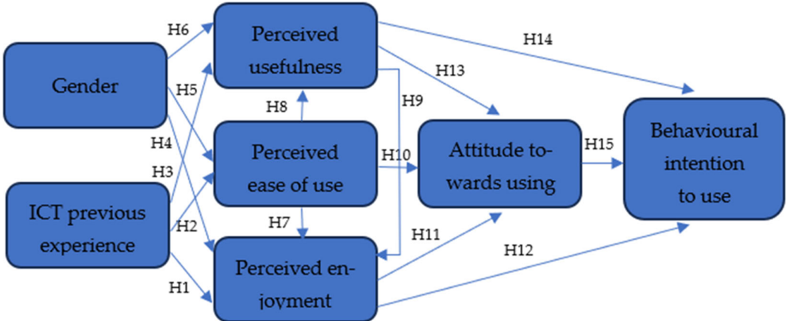
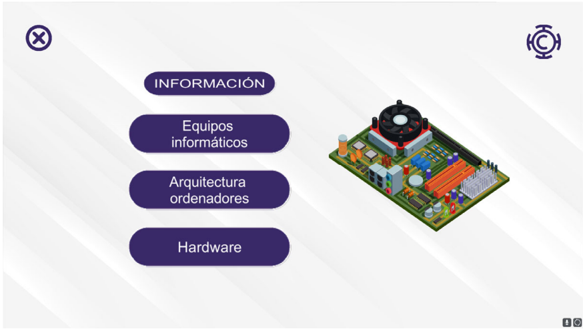
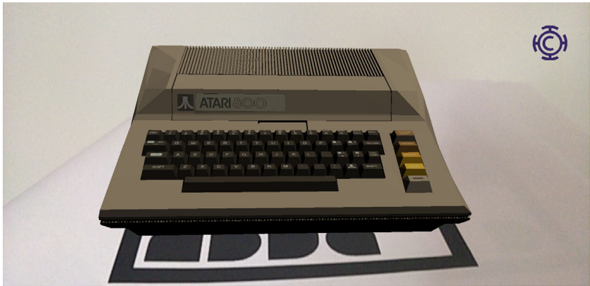
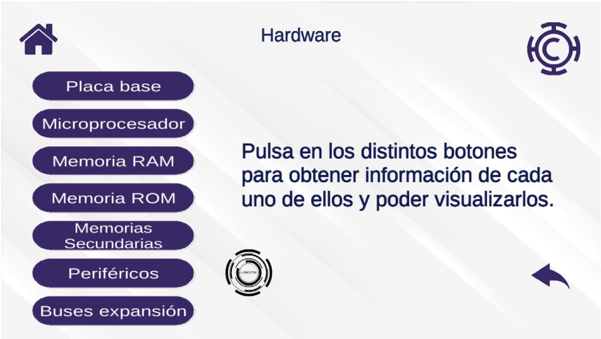
Augmented Reality (AR) has emerged as a promising educational tool, offering new opportunities to enhance learning through immersive and interactive experiences. This study aimed to evaluate the degree of acceptance of AR by secondary school students using the Technology Acceptance Model (TAM) as the theoretical framework. A quasi-experimental post-test design was implemented with a sample of 321 students (ages 14–17) who engaged with ComputAR, a mobile AR application developed specifically for a didactic unit on computer systems. Data were collected through a validated TAM questionnaire encompassing five dimensions: “perceived usefulness”, “perceived ease of use”, “perceived enjoyment”, “attitude towards using”, and “behavioural intention to use”. The results indicate a high level of acceptance of AR-based educational tools. Significant differences were found in “perceived ease of use” depending on gender, with male students reporting higher ease, while no gender differences emerged in “perceived usefulness” or “behavioural intention”. Additionally, ICT previous experience was shown to positively affect “perceived enjoyment”, ease of use, and usefulness. In conclusion, these findings confirm the relevance of AR for fostering student motivation and engagement.
Overview
The claims and statistics of this paper haven’t been checked yet.
Run the check — free, no account needed. It reads the open-access text and checks the sources it cites.
Integrity signals
Registry
Cites
Statistics
Figures

Verification
Claims the paper makes
The claims and statistics of this paper haven’t been checked yet.
Run the check — free, no account needed. It reads the open-access text and checks the sources it cites.
Claims other papers make about this one
Each is checked against this paper’s own text: does it say what the citing paper says it does?
In the citing paper
“Studies focusing on secondary school students similarly show that familiarity and perceived utility can predict students' willingness to adopt emerging learning technologies (Amores-Valencia et al., 2025;Papakostas et al., 2023).”
From Cheating in the second year of generative AI chatbots: a follow-up study on high school student cheating behaviors (2026) · cites this paper as Amores-Valencia et al., 2025
Self-check
Percentages, sums and reported differences re-computed from the paper’s own numbers.
The self-check needs the paper’s full text.
Citations
Cites
Perceived usefulness, perceived ease of use, and user acceptance of information technology
Davis, F. D. (1989) · MIS Quarterly · doi:10.2307/249008 · Cited by 68,483
Lampropoulos, G., Keramopoulos, E., Diamantaras, K., & Evangelidis, G. (2022) · Applied Sciences · doi:10.3390/app12136809 · Cited by 462
Research works printed but not linked: 62
- 2018, Incidencia de las TIC en la enseñanza en el sistema educativo español: Una revisión de la investigación, Rev. Educ. Distancia, 56, 1
- 2018, Perspectivas de los alumnos de Educación Primaria y Secundaria sobre el uso escolar de las TIC, Rev. Educ. Siglo XXI, 36, 229, 10.6018/j/333071 · DOI
- 2015, Reflexiones educativas sobre las tecnologías de la información y la comunicación (TIC), Rev. Tecnol. Cienc. Educ., 1, 19
- 2025, Evaluation of the use and acceptance of mobile apps in higher education using the TAM model, RIED, 28, 107
- Mojarro-Aliaño, A. (2019). Mobile Learning en la Educación Superior: Una Alternativa Educativa en Entornos Interactivos de Aprendizaje. [Doctoral’s Thesis]. Available online: https://acortar.link/pesJVk.
- 2022, Diseño e implementación de un simulador basado en realidad aumentada móvil para la enseñanza de la física en la educación superior, Rev. Elec. Tecnol. Educ., 80, 66
- 2023, Efectos de la aplicación de proyectos de objetos virtuales de aprendizaje (ovas) en la motivación y el rendimiento académico de los estudiantes, Rev. Cient. Multidiscip., 7, 5954
- Amores-Valencia, A., Burgos, D., and Branch-Bedoya, J. (2022). Influence of motivation and academic performance in the use of Augmented Reality in education. A systematic review. Front. Psychol., 13. · DOI · Paper page
- Kirikkaya, 2019, The effect of the use of augmented reality applications on the academic success and motivation of 7th grade students, J. Balt. Sci. Educ., 18, 362, 10.33225/jbse/19.18.362 · DOI
- 2016, The educational possibilities of augmented reality, J. New Approaches Educ. Res., 5, 44, 10.7821/naer.2016.1.140 · DOI
- 2017, Proyecto Quick Natura. Tecnologías móviles aplicadas a rutas botánicas urbanas, Model. Sci. Educ. Learn., 10, 185, 10.4995/msel.2017.6661 · DOI
- Tuzel, 2017, El uso de las redes sociales y la cultura popular para una mejor comprensión intercultural, Comunicar, 51, 63, 10.3916/C51-2017-06 · DOI
- 2017, Herramientas y propuestas de innovación basadas en la tecnología de realidad aumentada aplicadas a la literatura infantil y juvenil, Tejuelo, 25, 217
- Sanz, 2017, Percepciones y valoraciones de la utilización de los libros digitales en Educación Superior, Rev. Cient. Iberoam. Tecnol. Educ., 6, 39
- Baabdullah, 2022, Usage of augmented reality (AR) and development of e-learning outcomes: An empirical evaluation of students’ e-learning experience, Comput. Educ., 177, 104383, 10.1016/j.compedu.2021.104383 · DOI
- Cabero-Almenara, J., Barroso-Osuna, J., Llorente-Cejudo, C., and Fernández-Martínez, M. (2019). Educational uses of augmented reality (AR): Experiences in educational science. Sustainability, 11. · DOI
- Valls, 2016, Motivación y mejora académica utilizando realidad aumentada para el estudio de modelos tridimensionales arquitectónicos, Educ. Knowl. Soc., 17, 45, 10.14201/eks20161714564 · DOI
- Schaffernak, H., Moesl, B., Vorraber, W., and Koglbauer, I.V. (2020). Potential Augmented Reality Application Areas for Pilot Education: An Exploratory Study. Educ. Sci., 10. · DOI
- Seifert, 2019, Diseño y validación del cuestionario sobre percepciones y actitudes hacia el aprendizaje por dispositivos móviles, Pixel-Bit, 54, 45, 10.12795/pixelbit.2019.i54.03 · DOI
- Huang, 2017, Creating e-shopping multisensory flow experience through augmented-reality interactive technology, Internet Res., 27, 449, 10.1108/IntR-11-2015-0321 · DOI
- Buchner, 2022, The impact of augmented reality on cognitive load and performance: A systematic review, J. Comput. Assist. Learn., 38, 285, 10.1111/jcal.12617 · DOI
- Juan, 2019, An augmented reality app to learn to interpret the nutritional information on labels of real packaged foods, Front. Comput. Sci., 1, 1, 10.3389/fcomp.2019.00001 · DOI
- 2017, Prospectiva hacia el Aprendizaje Móvil en Estudiantes Universitarios, Form. Univ., 10, 101, 10.4067/S0718-50062017000100011 · DOI
- McLean, 2019, Shopping in the digital world: Examining customer engagement through augmented reality mobile applications, Comput. Hum. Behav., 101, 210, 10.1016/j.chb.2019.07.002 · DOI
- 2020, La trascendencia de la Realidad Aumentada en la motivación estudiantil. Una revisión sistemática y meta-análisis, Alteridad, 15, 36
- Rezaee, S., Sadeghi, A., Shakeri, M., and Choi, S.M. (2021). Personalized Augmented Reality Based Tourism System: Big Data and User Demographic Contexts. Appl. Sci., 11. · DOI
- Elfeky, 2023, The effectiveness of virtual classrooms in developing academic motivation across gender groups, Ann. For. Res., 66, 2005
- Buchner, 2021, Generative learning strategies do not diminish primary students’ attitudes towards augmented reality, Educ. Inf. Technol., 26, 701
- Altun, 2021, Writing an expository text using augmented reality: Students’ performance and perceptions, Educ. Inf. Technol., 1, 845
- Hanafi, 2017, Improving students’ motivation in learning ICT course with the use of a mobile augmented reality learning environment, IOP Conf. Ser. Mater. Sci. Eng., 226, 012114, 10.1088/1757-899X/226/1/012114 · DOI
- Lin, H.C.K., Lin, Y.H., Wang, T.H., Su, L.K., and Huang, Y.M. (2021). Effects of incorporating Augmented Reality into a Board Game for High School Students’ Learning Motivation and Acceptance in Health Education. Sustainability, 13. · DOI
- Bursztyn, 2017, Assessment of student learning using augmented reality Grand Canyon field trips for mobile smart devices, Geosphere, 13, 260, 10.1130/GES01404.1 · DOI
- 2017, Advantages and challenges associated with augmented reality for education: A systematic review of the literature, Educ. Res. Rev., 20, 1, 10.1016/j.edurev.2016.11.002 · DOI · Paper page
- 2019, The effectiveness of augmented reality in infant education: A BLS and CPR learning study in 5-year-old students, Pixel-Bit, 55, 157
- Cheng, 2023, The Effects of Augmented Reality on Social Skills in Children with an Autism Diagnosis: A Preliminary Systematic Review, J. Autism Dev. Dis., 53, 1317
- 2023, Experiencia formativa sobre el uso de realidad aumentada con estudiantes del grado de Pedagogía, Rev. Tecnol. Cienc. Educ., 24, 119
- Hadi, 2022, Developing augmented reality-based learning media and users’ intention to use it for teaching accounting ethics, Educ. Inf. Technol., 27, 643, 10.1007/s10639-021-10531-1 · DOI
- Sat, 2023, Comparison and evaluation of augmented reality technologies for designing interactive materials, Educ. Inf. Technol., 28, 11545, 10.1007/s10639-023-11646-3 · DOI
- Del-Rio-Guerra, M.S., Martin-Gutiérrez, J., Lopez-Chao, V.A., Flores-Parra, R., and Ramírez-Sosa, M.A. (2019). AR graphic representation of musical notes for self-learning on guitar. Appl. Sci., 9. · DOI
- Tarng, W., Lin, Y.J., and Ou, K.L. (2021). A virtual experiment for learning the principle of daniell cell based on augmented reality. Appl. Sci., 11. · DOI
- Gómez-Tone, H.C., Martin-Gutiérrez, J., Valencia-Anci, L., and Mora-Luis, C.E. (2020). International comparative pilot study of spatial skill development in engineering students through autonomous augmented reality-based training. Symmetry, 12. · DOI
- Gallego-Pérez, O.M. (2018). Estudio y Análisis Sobre Las Posibilidades Educativas de la Realidad Aumentada Como Herramienta de Producción de Experiencias Formativas Por Parte del Alumnado Universitario. [Ph.D. Thesis, Universidad de Córdoba]. Available online: https://acortar.link/MpdWhO.
- McMillan, J.H., and Schumacher, S. (2005). Investigación Educativa, Pearson Adison Wesley. Available online: https://acortar.link/Oaunt.
- Silva, 2013, Metodología cuantitativa: Abordaje desde la complementariedad en ciencias sociales, Rev. Cienc. Soc., 141, 25
- 2019, Entornos virtuales de aprendizaje: Modelo ampliado de aceptación de la tecnología, Rev. Elect. Investig. Educ., 21, e22
- Ursavaş, Ö.F. (2022). Conducting Technology Acceptance Research in Education: Theory, Models, Implementation, and Analysis, Springer. · DOI
- Millapi, A., and Tardon, M. (2015). Uso de Realidad Aumentada en el Ámbito Educativo Para el Desarrollo de Aplicaciones que Enseñen y Entretengan (Edutainment). [Grado’s Thesis, Universidad Nacional de la Patagonia]. Available online: https://acortar.link/y3Qfi7.
- Wong, 2024, Observing student engagement during augmented reality learning in early primary school, J. Comput. Educ., 11, 181, 10.1007/s40692-022-00253-9 · DOI
- Chen, 2024, Design and Evaluation for Improving Lantern Culture Learning Experience with Augmented Reality, Int. J. Hum. Comput. Interact., 40, 1465, 10.1080/10447318.2023.2193513 · DOI
- Prasittichok, 2024, Technological solutions to fostering students’ moral courage: An augmented reality-based contextual gaming approach, Cogent Educ., 11, 2378276, 10.1080/2331186X.2024.2378276 · DOI
- Nelson, 2025, The effectiveness of learning media based on digital augmented reality (AR) technology on the learning outcomes of martial arts, Retos, 63, 878, 10.47197/retos.v63.108948 · DOI
- Gill, 2025, Enhancing learning in design for manufacturing and assembly: The effects of augmented reality and game-based learning on student’s intrinsic motivation, Interact. Technol. Smart Educ., 22, 61, 10.1108/ITSE-11-2023-0221 · DOI
- Omarov, 2024, Applying an augmented reality game-based learning environment in physical education classes to enhance sports motivation, Retos, 60, 269, 10.47197/retos.v60.109170 · DOI
- Kim, 2025, Creating augmented reality-based experiences for aviation weather training: Challenges, opportunities, and design implications for 3D authoring, Ergonomics, 68, 374, 10.1080/00140139.2024.2329696 · DOI
- Lu, 2024, The Impact of Augmented Reality on Motor Skills in Piano Education: Improving the Left-Hand Technique with AR Piano, Int. J. Hum. Comput. Interact., 41, 8398, 10.1080/10447318.2024.2408627 · DOI
- Kulkarni, 2024, Adoption and usage of augmented reality-based virtual laboratories tool for engineering studies, J. Inf. Technol. Educ. Innov. Pract., 23, 101
- 2024, Transmedia skill derived from the process of converting films into educational games with augmented reality and artificial intelligence, J. New Approaches Educ. Res., 13, 15, 10.1007/s44322-024-00015-8 · DOI
- Nikou, 2024, Development and validation of the teachers’ augmented reality competences (TARC) scale, J. Comput. Educ., 11, 1041, 10.1007/s40692-023-00288-6 · DOI
- Akinradewo, O., Hafez, M., Aigbavboa, C., Ebekozien, A., Adekunle, P., and Otasowie, O. (2024). Innovating Built Environment Education to Achieve SDG 4: Key Drivers for Integrating Augmented Reality Technologies. Sustainability, 16. · DOI
- Ventoulis, E., and Xinogalos, S. (2023). AR The Gods of Olympus: Design and Pilot Evaluation of an Augmented Reality Educational Game for Greek Mythology. Multimodal Technol. Interact., 7. · DOI
- Tuta, J., and Luić, L. (2024). D-Learning: An Experimental Approach to Determining Student Learning Outcomes Using Augmented Reality (AR) Technology. Educ. Sci., 14. · DOI
- Rizki, 2024, Cooperative model, digital game, and augmented reality-based learning to enhance students’ critical thinking skills and learning motivation, J. Pedagog. Res., 8, 339
Cited by
Sorted by citations
Chen, R., Lee, V. R., Kuo, A. C., Pope, D. C., & Miles, S. (2026) · Educational technology research and development · doi:10.1007/s11423-026-10587-1 · Cited by 8
Metadata
- Authors
- Amores-Valencia, A., Burgos, D., & Branch-Bedoya, J. W.
- Venue
- Information
- Publisher
- MDPI AG
- Published
- 2025-08-28
- Volume
- 16
- Issue
- 9
- Pages
- 743
- ISSN
- 2078-2489
- Cited by
- 4
- References
- 2
- Language
- en
- Funders
- Research Institute for Innovation and Technology in Education (UNIR iTED) at the Universidad Internacional de La Rioja (UNIR) (018549)
About these checks
Registry, retraction, Cites and statistics results are computed, not judged, with one exception: a printed reference that no index lists is read once by a model before it counts as a citation error. Claims are extracted by a model and kept only when their quote appears verbatim in the text; each cited source is then checked, with a model’s help, for whether it says what the claim relies on. Those verdicts can be wrong — read the claim’s quote and the cited source before relying on one.
Statistics and arithmetic are recomputed, not judged.
Confidence bands are shown only for fields calibrated on our annotated test set. None is calibrated yet, so no band is shown.
What counts as a claim ›How we measure confidence ›How we check this ›
Are you an author, or do you see a problem with this page? Request a review
How to cite
Cite CoChat for the checks on this page, and the paper for its own findings.
- This page
- CoChat. (2026). Citation check: Evaluation of the Use and Acceptance of an AR Mobile App in High School Students Using the TAM Model. https://app.cochat.ai/papers/10.3390/info16090743
- The paper
- Amores-Valencia, A., Burgos, D., & Branch-Bedoya, J. W. (2025). Evaluation of the Use and Acceptance of an AR Mobile App in High School Students Using the TAM Model. Information. https://doi.org/10.3390/info16090743
