

The DOI matches its Crossref record; 2 of the 2 references it cites were found in a registry or an index.
Deep Learning for Enterprise Systems Implementation Lifecycle Challenges: Research Directions
Abstract
Transforming the state-of-the-art definition and anatomy of enterprise systems (ESs) seems to some academics and practitioners as an unavoidable destiny. Value depletion lead by early retirement and/or replacement of ESs solutions has been a constant throughout the past decade. That did drive an enormous amount of research that works on addressing the problems leading to the resource drain. The resource waste had persisted throughout the ESs implementation lifecycle phases and dimensions especially post-live phases; leading to depleting the value of the social and technical dimensions of the lifecycle. Parallel to this research stream, the momentum gained by deep learning (DL) algorithms and platforms has been exponentially growing to fuel the advancements toward artificial intelligence and automated augmentation. Correspondingly, this paper is set out to present five key research directions through which DL would take part as a contributor towards the transformation of the ESs state-of-the-art. The paper reviews the ESs implementation lifecycle challenges and the intersection with DL research conducted on ESs by analyzing and synthesizing key basket journals (list of the Association of Information Systems). The paper also presents results from several experiments showcasing the effectiveness of DL in adding a level of augmentation to ESs by analyzing a large set of data extracted from the Atlassian Jira Software Issue Tracking System across different ecosystems. The paper then concludes by presenting the research directions and discussing socio-technical research courses that work on key frontiers identified within this scholarly work.
Overview
The claims and statistics of this paper haven’t been checked yet.
Run the check — free, no account needed. It reads the open-access text and checks the sources it cites.
Integrity signals
Registry
Cites
Statistics
Figures
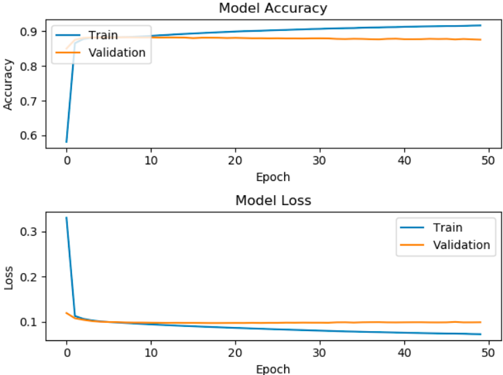
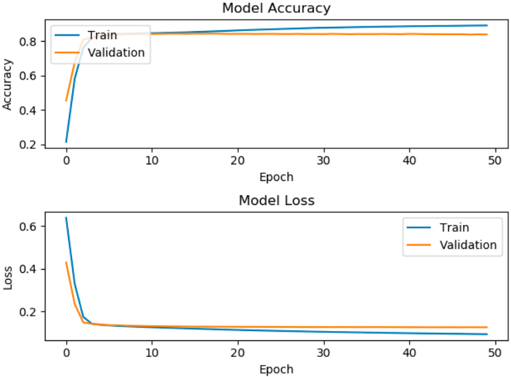
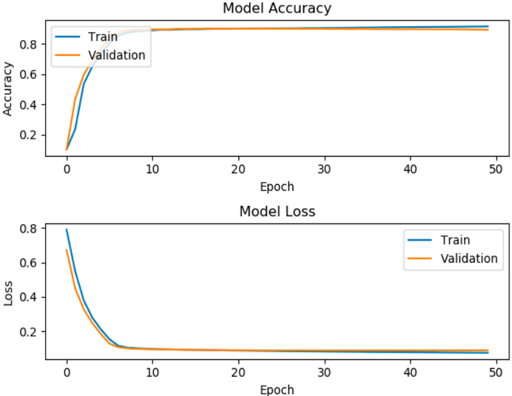
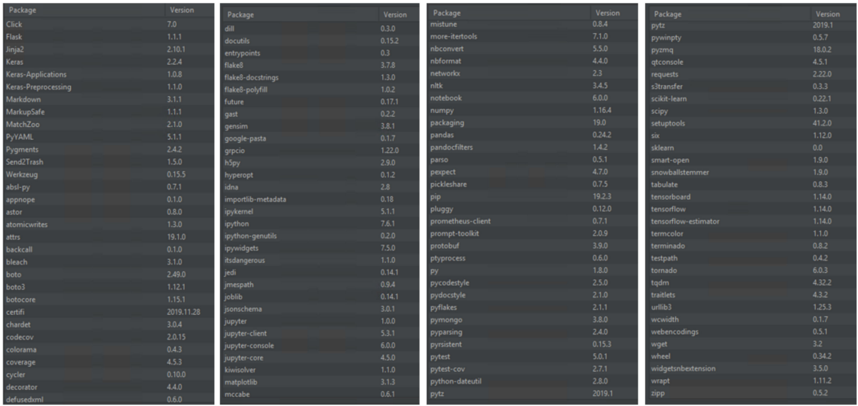
Verification
Claims the paper makes
The claims and statistics of this paper haven’t been checked yet.
Run the check — free, no account needed. It reads the open-access text and checks the sources it cites.
Claims other papers make about this one
Each is checked against this paper’s own text: does it say what the citing paper says it does?
The source backs part of the claim, not all of it — or backs it for a different population, condition or comparison.
In the citing paper
“If the management does not address the problems that arise in the post-implementation stage, they might face new challenges before fully adopting the ERP system successfully (Hassanien & Elragal, 2021; Govindaraju et al., 2016).”
From ERP Post-Implementation Phase: Deployment of the Unified Theory of Acceptance and Use of Technology (UTAUT) Model on User Acceptance (2023) · cites this paper as Hassanien & Elragal, 2021
Experimental — accuracy not yet measured
Self-check
Percentages, sums and reported differences re-computed from the paper’s own numbers.
The self-check needs the paper’s full text.
Citations
Cites
LeCun, Y., Bengio, Y., & Hinton, G. (2015) · Nature · doi:10.1038/nature14539 · Cited by 84,126
A Survey of Deep Learning: Platforms, Applications and Emerging Research Trends
Hatcher, W. G., & Yu, W. (2018) · IEEE Access · doi:10.1109/access.2018.2830661 · Cited by 654
Research works printed but not linked: 114
- Deng, 2014, Deep Learning: Methods and Applications, Found. Trends Signal Process., 7, 197, 10.1561/2000000039 · DOI · Paper page
- Najafabadi, 2015, Deep Learning applications and challenges in big data analytics, J. Big Data, 2, 1, 10.1186/s40537-014-0007-7 · DOI · Paper page
- Boza, 2015, The interoperability force in the ERP field, Enterp. Inf. Syst., 9, 257, 10.1080/17517575.2013.866697 · DOI
- Markus, 2000, The Enterprise System Experience—From Adoption to Success, Fram. Domains IT Res. Manag. Proj. Futur. Through Past, 173, 173
- Esteves, J.M.J., and Pastor, J.A. (1999, January 25–26). An ERP Life-cycle-based Research Agenda. Proceedings of the 1st International Workshop in Enterprise Management & Resource Planning, Venice, Italy.
- Markus, 2000, Learning from adopters’ experiences with ERP: Problems encountered and success achieved, J. Inf. Technol., 15, 245
- Alter, 2013, Theory of Workarounds, Commun. Assoc. Inf. Syst., 34, 1
- Volkoff, 2007, Technological Embeddedness and Organizational Change, Organ. Sci., 18, 832, 10.1287/orsc.1070.0288 · DOI
- Lindley, 2008, The hidden financial costs of ERP software, Manag. Financ., 34, 78
- Law, 2010, Managing the full ERP Life-Cycle: Considerations of maintenance and support requirements and IT governance practice as integral elements of the formula for successful ERP adoption, Comput. Ind., 61, 297, 10.1016/j.compind.2009.10.004 · DOI
- Sarkis, 2003, Managing large-scale global enterprise resource planning systems: A case study at Texas Instruments, Int. J. Inf. Manag., 23, 431, 10.1016/S0268-4012(03)00070-7 · DOI
- Hustad, 2011, A study of the ERP Project Life Cycles in Small-and-Medium-Sized Enterprises: Critical Issues and Lessons Learned, World Acad. Sci. Eng. Technol., 5, 85
- 2016, Solving misfits in ERP implementations by SMEs, Inf. Syst. J., 26, 369, 10.1111/isj.12090 · DOI
- Schmidhuber, J. (2015). Deep Learning. Scholarpedia, 10. · DOI
- Tang, 2015, Deep learning for sentiment analysis: Successful approaches and future challenges, Wiley Interdiscip. Rev. Data Min. Knowl. Discov., 5, 292, 10.1002/widm.1171 · DOI
- Bengio, Y. (2009). Learning Deep Architectures for AI, Now Publishers Inc. · DOI
- Craswell, N., Mitra, B., Yilmaz, E., Campos, D., and Voorhees, E.M. (arXiv, 2020). Overview of the TREC 2019 deep learning track, arXiv. · DOI
- Collobert, R., and Weston, J. (2008, January 5–9). A Unified Architecture for Natural Language Processing: Deep Neural Networks with Multitask Learning. Proceedings of the 25th International Conference on Machine Learning, Helsinki, Finland. · DOI · Paper page
- Glorot, X., and Bengio, Y. (2010, January 13–15). Understanding the difficulty of training deep feedforward neural networks. Proceedings of the 13th International Conference on Artificial Intelligence and Statistics, Sardinia, Italy.
- Baldi, P. (2012, January 2). Autoencoders, Unsupervised Learning, and Deep Architectures. Proceedings of the ICML Workshop on Unsupervised and Transfer Learning. JMLR Workshop and Conference Proceedings, Bellevue, WA, USA.
- Erhan, D., Bengio, Y., Courville, A., Manzagol, P.-A., and Vincent, P. (2010, January 13–15). Why Does Unsupervised Pre-Training Help Deep Learning?. Proceedings of the Thirteenth International Conference on Artificial Intelligence and Statistics. JMLR Workshop and Conference Proceedings, Saradinia, Italy.
- Hinton, 2006, A Fast Learning Algorithm for Deep Belief Nets, Neural Comput., 18, 1527, 10.1162/neco.2006.18.7.1527 · DOI · Paper page
- Hinton, 2006, Reducing the dimensionality of data with neural networks, Science, 313, 504, 10.1126/science.1127647 · DOI · Paper page
- Bengio, 2007, Scaling Learning Algorithms towards AI, Large Scale Kernel Mach., 34, 1
- Hinton, G. (2012). A Practical Guide to Training Restricted Boltzmann Machines. Neural Networks: Tricks of the Trade, Springer. · DOI · Paper page
- Sarikaya, 2014, Application of deep belief networks for natural language understanding, IEEE Trans. Audio Speech Lang. Process., 22, 778, 10.1109/TASLP.2014.2303296 · DOI
- Jiang, 2018, Text classification based on deep belief network and softmax regression, Neural Comput. Appl., 29, 61, 10.1007/s00521-016-2401-x · DOI · Paper page
- Zhang, X., and LeCun, Y. (2015). Text Understanding from Scratch. arXiv.
- Zeiler, M.D., and Fergus, R. (2014, January 6–12). Visualizing and understanding convolutional networks. Proceedings of the European Conference on Computer Vision, Zurich, Switzerland. · DOI · Paper page
- Le, H.T., Cerisara, C., and Denis, A. (2018). Do Convolutional Networks need to be Deep for Text Classification?. arXiv.
- Schmidhuber, J., Graves, A., Gomez, F., and Hochreiter, S. (2015). The Recurrent Neural Networks, Cambridge University Press. Available online: https://people.idsia.ch/~juergen/rnnbook.html.
- Guo, 2020, A Deep Look into neural ranking models for information retrieval, Inf. Process. Manag., 57, 102067, 10.1016/j.ipm.2019.102067 · DOI
- Li, H., and Lu, Z. (2016, January 17–21). Deep learning for information retrieval. Proceedings of the 39th Conference on Research and Development in Information Retrieval, Pisa, Italy. · DOI
- Goldberg, Y. (2020, December 11). Neural Network Methods in Natural Language Processing; Synthesis Lectures on Human Language Technologies 10.1. Available online: https://doi.org/10.2200/S00762ED1V01Y201703HLT037. · DOI · Paper page
- Mikolov, T., Chen, K., Corrado, G., and Dean, J. Efficient estimation of word representations in vector space. arXiv, 2013.
- Allen, C., and Hospedales, T. (2019, January 10–15). Analogies explained: Towards understanding word embeddings. Proceedings of the International Conference on Machine Learning, Long Beach, CA, USA.
- Mueller, J., and Thyagarajan, A. (2016, January 12–17). Siamese recurrent architectures for learning sentence similarity. Proceedings of the 30th AAAI Conference on Artificial Intelligence, Phoenix, AZ, USA. · DOI · Paper page
- Zhang, 2018, A survey on deep learning for big data, Inf. Fusion, 42, 146, 10.1016/j.inffus.2017.10.006 · DOI · Paper page
- Jauro, 2020, Deep learning architectures in emerging cloud computing architectures: Recent development, challenges and next research trend, Appl. Soft Comput. J., 96, 106582, 10.1016/j.asoc.2020.106582 · DOI
- Li, 2020, The Deep Learning Compiler: A Comprehensive Survey, IEEE Trans. Parallel Distrib. Syst., 32, 708, 10.1109/TPDS.2020.3030548 · DOI
- Fan, Y., Pang, L., Hou, J., Guo, J., Lan, Y., and Cheng, X. (2017). MatchZoo: A Toolkit for Deep Text Matching. arXiv.
- Haddara, M., and Elragal, A. (2011, January 5–7). ERP lifecycle: When to retire your ERP system?. Proceedings of the International Conference on ENTERprise Information Systems, Berlin/Heidelberg, Germany. · DOI
- Elragal, A., and Hassanien, H.E. (2019). Augmenting Advanced Analytics into Enterprise Systems: A Focus on Post-Implementation Activities. Systems, 7. · DOI
- Chung, 2000, ERP adoption: A technological evolution approach, Int. J. Agil. Manag. Syst., 2, 24, 10.1108/14654650010312570 · DOI
- Bhatti, 2014, Acquisition (Purchasing) of ERP systems from organizational buying behavior perspective, Int. J. Bus. Soc. Res., 4, 33
- Brown, W. (2004, January 10–13). Enterprise resource planning (ERP) implementation planning and structure: A recipe for ERP success. Proceedings of the 32nd Annual ACM SIGUCCS Conference on User Services, Baltimore, MD, USA. · DOI
- Haines, M.N., and Goodhue, D.L. (2000, January 21–24). ERP Implementations: The Role of Implementation Partners and Knowledge Transfer. Proceedings of the Institute of Rural Management Conference, Anchorage, AL, USA.
- Nah, 2001, Critical factors for successful implementation of enterprise systems, Bus. Process Manag. J., 7, 285, 10.1108/14637150110392782 · DOI
- Hecht, S., Wittges, H., and Krcmar, H. (2011, January 9–11). IT capabilities in ERP maintenance—A review of the ERP post-implementation literature. Proceedings of the European Conference on Information Systems, Helsinki, Finland.
- Light, 2001, The maintenance implifications of the customization of ERP software, J. Softw. Maint. Evol., 13, 415, 10.1002/smr.240 · DOI
- Donovan, 2001, Successful ERP Implementation the First Time, Perform. Improv., 25, 1
- Umble, 2000, Avoiding ERP implementation failure, Ind. Manag., 44, 25
- Rasmy, M., Tharwat, A., and Ashraf, S. (November, January 31). Enterprise resource planning (ERP) implementation in the Egyptian organizational context. Proceedings of the European and Mediterranean Conference on Information Systems, Cairo, Egypt.
- Muscatello, 2006, Enterprise Resource Planning (ERP): A Postimplementation Cross-Case Analysis, Inf. Resour. Manag. J., 19, 61, 10.4018/irmj.2006070105 · DOI
- Wang, 2007, Improving enterprise resource planning (ERP) fit to organizational process through knowledge transfer, Int. J. Inf. Manag., 27, 200, 10.1016/j.ijinfomgt.2007.02.002 · DOI
- Osnes, 2018, ERP Systems in Multinational Enterprises: A literature Review of Post-implementation Challenges, Procedia Comput. Sci., 138, 541, 10.1016/j.procs.2018.10.074 · DOI
- Somers, T.M., and Nelson, K. (2001, January 3–6). The impact of critical success factors across the stages of enterprise resource planning implementations. Proceedings of the 34th Annual Hawaii International Conference on System Sciences, Maui, HI, USA.
- Sun, 2005, Achievement assessment for enterprise resource planning (ERP) system implementations based on critical success factors (CSFs), Int. J. Prod. Econ., 98, 189, 10.1016/j.ijpe.2004.05.013 · DOI
- Huang, 2004, Assessing risk in ERP projects: Identify and prioritize the factors, Ind. Manag. Data Syst., 104, 681, 10.1108/02635570410561672 · DOI
- Von Brocke, J., Simons, A., Niehaves, B., Riemer, K., Plattfaut, R., and Cleven, A. (2009, January 8–10). Reconstructing the Giant: On the Importance of Rigour in Documenting the Literature Search Process. Proceedings of the 17th European Conference on Information Systems, Verona, Italy.
- Cooper, 1988, Organizing knowledge syntheses: A taxonomy of literature reviews, Knowl. Soc., 1, 104
- Randolph, 2009, A Guide to Writing the Dissertation Literature Review, Pract. Assess. Res. Eval., 14, 1
- Fryling, 2015, Investigating the Effect of Customization on Rework in a Higher Education Enterprise Resource Planning (ERP) Post-Implementation Environment: A System Dynamics Approach, J. Inf. Technol. Case Appl. Res., 17, 8
- Windeler, 2017, Technical systems development risk factors: The role of empowering leadership in lowering developers’ stress, Inf. Syst. Res., 28, 775, 10.1287/isre.2017.0716 · DOI
- Zhang, 2020, Cloud Services vs. On-Premises Software: Competition Under Security Risk and Product Customization, Inf. Syst. Res., 31, 848, 10.1287/isre.2019.0919 · DOI
- Chadhar, 2018, Organizational Learning and ERP Post-implementation Phase: A Situated Learning Perspective, J. Inf. Technol., 19, 138
- Ravichandran, 2018, Exploring the relationships between IT competence, innovation capacity and organizational agility, J. Strateg. Inf. Syst., 27, 22, 10.1016/j.jsis.2017.07.002 · DOI
- Tian, 2015, How Do Enterprise Resource Planning Systems Affect Firm Risk? Post-Implementation Impact, MIS Q., 39, 39, 10.25300/MISQ/2015/39.1.03 · DOI
- Laumer, 2017, Information quality, user satisfaction, and the manifestation of workarounds: A qualitative and quantitative study of enterprise content management system users, Eur. J. Inf. Syst., 26, 333, 10.1057/s41303-016-0029-7 · DOI
- Cram, 2016, Information systems control: A review and framework for emerging information systems processes, J. Assoc. Inf. Syst., 17, 216
- Bala, 2018, Employee dispositions to job and organization as antecedents and consequences of information systems use, Inf. Syst. J., 28, 650, 10.1111/isj.12152 · DOI
- Lederman, 2015, Tick a box, any box: A case study on the unintended consequences of system misuse in a hospital emergency department, J. Inf. Technol. Teach. Cases, 5, 74, 10.1057/jittc.2015.13 · DOI
- Deng, 2015, More than providing “solutions”: Towards an understanding of customer-oriented citizenship behaviours of IS professionals, Inf. Syst. J., 25, 489, 10.1111/isj.12051 · DOI
- Laumer, 2016, Work routines as an object of resistance during information systems implementations: Theoretical foundation and empirical evidence, Eur. J. Inf. Syst., 25, 317, 10.1057/ejis.2016.1 · DOI
- Malaurent, 2020, Learning from Workaround Practices: The Challenge of Enterprise System Implementations in Multinational Corporations, Inf. Syst. J., 30, 639, 10.1111/isj.12272 · DOI
- Recker, 2016, Reasoning about Discontinuance of Information System Use, J. Inf. Technol. Theory Appl., 17, 41
- Lin, 2018, User Resistance to the Implementation of Information Systems: A Psychological Contract Breach Perspective, J. Assoc. Inf. Syst., 19, 306
- Bygstad, 2020, Architectural alignment of process innovation and digital infrastructure in a high-tech hospital, Eur. J. Inf. Syst., 29, 220, 10.1080/0960085X.2020.1728201 · DOI
- Tong, 2015, The Road to Early Success: Impact of System Use in the Swift Response Phase, Inf. Syst. Res., 26, 418, 10.1287/isre.2015.0578 · DOI
- Morana, 2018, Designing Process Guidance Systems, J. Assoc. Inf. Syst., 20, 1
- Sykes, 2015, Support Structures and Their Impacts on Employee Outcomes: A Longitudinal Filed Study of an Enterprise System Implementation, MIS Q., 39, 473, 10.25300/MISQ/2015/39.2.09 · DOI
- Liu, 2018, Leveraging Social Capital to Obtain Top Management Support in Complex, Cross-Functional IT Projects, J. Assoc. Inf. Syst., 16, 707
- Gregor, 2020, The Anatomy of a Design Principle, J. Assoc. Inf. Syst., 21, 1622
- Gopal, 2020, Is the grass greener? On the strategic implications of moving along the value chain for IT service providers, Inf. Syst. Res., 31, 148, 10.1287/isre.2019.0879 · DOI
- Ortu, M., Destefanis, G., Adams, B., Murgia, A., Marchesi, M., and Tonelli, R. (2015, January 21). The JIRA repository dataset: Understanding social aspects of software development. Proceedings of the 11th International Conference on Predictive Models and Data Analytics in Software Engineering, Beijing, China. · DOI
- Prakash, 2020, Characteristic of enterprise collaboration system and its implementation issues in business management, Int. J. Bus. Intell. Data Min., 16, 49
- Zeyer, A., Bahar, P., Irie, K., Schluter, R., and Ney, H. (2019, January 14–18). A Comparison of Transformer and LSTM Encoder Decoder Models for ASR. Proceedings of the IEEE Automatic Speech Recognition and Understanding Workshop, Sentosa, Singapore. · DOI
- Vaswani, A., Shazeer, N., Parmar, N., Uszkoreit, J., Jones, L., Gomez, A.N., Kaiser, Ł., and Polosukhin, I. (2017). Attention is all you need. arXiv.
- Kulkarni, 2018, Business Intelligence Capability: The Effect of Top Management and the Mediating Roles of User Participation and Analytical Decision Making Orientation, J. Assoc. Inf. Syst., 18, 516
- Recker, 2019, Information systems as representations: A review of the theory and evidence, J. Assoc. Inf. Syst., 20, 735
- Widjaja, 2020, Monitoring the complexity of its architectures: Design principles and an its artifact, J. Assoc. Inf. Syst., 21, 664
- Ma, 2019, Cross-level moderation of team cohesion in individuals’ utilitarian and hedonic information processing: Evidence in the context of team-based gamified training, J. Assoc. Inf. Syst., 20, 161
- Carter, 2020, IT Identity: A Measure and Empirical Investigation of its Utility to IS Research, J. Assoc. Inf. Syst., 21, 2
- Shollo, 2016, Towards an understanding of the role of business intelligence systems in organisational knowing, Inf. Syst. J., 26, 339, 10.1111/isj.12071 · DOI
- Seddon, 2017, How does business analytics contribute to business value?, Inf. Syst. J., 27, 237, 10.1111/isj.12101 · DOI
- Greenwood, 2019, How does the implementation of enterprise information systems affect a professional’s mobility? An empirical study, Inf. Syst. Res., 30, 563, 10.1287/isre.2018.0817 · DOI
- Mettler, 2016, Are business users social? A design experiment exploring information sharing in enterprise social systems, J. Inf. Technol., 31, 101, 10.1057/jit.2015.28 · DOI · Paper page
- Grainger, 2015, The long and winding road of enterprise system implementation: Finding success or failure?, J. Inf. Technol. Teach. Cases, 5, 92, 10.1057/jittc.2015.11 · DOI
- Schneider, 2018, How do requirements evolve over time? A case study investigating the role of context and experiences in the evolution of enterprise software requirements, J. Inf. Technol., 33, 151, 10.1057/s41265-016-0001-y · DOI
- Fay, 2018, The Effect of Big Data and Analytics on Firm Performance: An Econometric Analysis Considering Industry Characteristics, J. Manag. Inf. Syst., 35, 488, 10.1080/07421222.2018.1451955 · DOI
- Lai, 2016, Technology Evaluation and Imitation: Do They Have Differential or Dichotomous Effects on ERP Adoption and Assimilation in China?, J. Manag. Inf. Syst., 33, 1209, 10.1080/07421222.2016.1267534 · DOI
- Cui, 2020, Managing Knowledge Distance: IT-Enabled Inter-Firm Knowledge Capabilities in Collaborative Innovation, J. Manag. Inf. Syst., 37, 217, 10.1080/07421222.2019.1705504 · DOI
- Rossi, 2020, Balancing fluid and cemented routines in a digital workplace, J. Strateg. Inf. Syst., 29, 101616, 10.1016/j.jsis.2020.101616 · DOI
- Baptista, 2020, Digital work and organisational transformation: Emergent Digital/Human work configurations in modern organisations, J. Strateg. Inf. Syst., 29, 101618, 10.1016/j.jsis.2020.101618 · DOI
- Koo, 2019, Congruent patterns of outsourcing capabilities: A bilateral perspective, J. Strateg. Inf. Syst., 28, 101580, 10.1016/j.jsis.2019.101580 · DOI
- Baesens, 2016, Transformational Issues of Big Data and Analytics in Networked Business, MIS Q., 40, 807, 10.25300/MISQ/2016/40:4.03 · DOI
- Gust, 2017, How a Traditional Company Seeded New Analytics Capabilities, MIS Q. Exec., 16, 10
- Mocker, 2020, How to avoid enterprise systems landscape complexity, MIS Q. Exec., 19, 57, 10.17705/2msqe.00025 · DOI
- Lauterbach, 2020, Achieving Effective Use When Digitalizing Work: The Role of Representational Complexity, Rev. Lit. Arts Am., 44, 1023
- Venkatesh, 2019, Governance and ICT4D initiative success: A longitudinal field study of ten villages in rural India, MIS Q. Manag. Inf. Syst., 43, 1081
- Setia, 2020, The Takeoff of Open Source Software: A Signaling Perspective Based on Community Activities, MIS Q. Manag. Inf. Syst., 44, 1439, 10.25300/MISQ/2020/12576 · DOI
- Shao, 2016, Effectiveness of top management support in enterprise systems success: A contingency perspective of fit between leadership style and system life-cycle, Eur. J. Inf. Syst., 25, 131, 10.1057/ejis.2015.6 · DOI
- Hedman, 2015, Information system integration in mergers and acquisitions: Research ahead, Eur. J. Inf. Syst., 24, 117, 10.1057/ejis.2015.2 · DOI
- Bala, H., Hossain, M.M., Bhagwatwar, A., and Feng, X. (2020). Ownership and governance, scope, and empowerment: How does context affect enterprise systems implementation in organisations in the Arab World?. Eur. J. Inf. Syst., 1–27. · DOI
Cited by
Mohamad Zain, M. R., Tajul Urus, S., Trinh, T., Amirul, S. M., & Tuan Mat, T. Z. (2023) · Asia-Pacific Management Accounting Journal · doi:10.24191/apmaj.v18i1-05 · Cited by 6
Metadata
- Authors
- Hassanien, H. E.-D., & Elragal, A.
- Affiliations
- Department of Computer Science, Electrical and Space Engineering/Faculty of Information Systems, Luleå University of Technology, SE-971 87 Luleå, Sweden
- Venue
- Informatics
- Publisher
- MDPI AG
- Published
- 2021-02-20
- Volume
- 8
- Issue
- 1
- Pages
- 11
- ISSN
- 2227-9709
- Cited by
- 5
- References
- 2
- Language
- en
About these checks
Registry, retraction, Cites and statistics results are computed, not judged, with one exception: a printed reference that no index lists is read once by a model before it counts as a citation error. Claims are extracted by a model and kept only when their quote appears verbatim in the text; each cited source is then checked, with a model’s help, for whether it says what the claim relies on. Those verdicts can be wrong — read the claim’s quote and the cited source before relying on one.
Statistics and arithmetic are recomputed, not judged.
Confidence bands are shown only for fields calibrated on our annotated test set. None is calibrated yet, so no band is shown.
What counts as a claim ›How we measure confidence ›How we check this ›
Are you an author, or do you see a problem with this page? Request a review
Data sources
Bibliographic data: Semantic Scholar, OpenAlex, Crossref.
Contains information from the Semantic Scholar Academic Graph Datasets, made available under the ODC Attribution License (ODC-BY 1.0).
Semantic Scholar’s data is described in: Kinney, R., et al. (2023). The Semantic Scholar Open Data Platform. arXiv:2301.10140.
