

The DOI matches its Crossref record; 68 of the 71 references it cites were found in a registry or an index.
Age, Sex and Previous Comorbidities as Risk Factors Not Associated with SARS-CoV-2 Infection for Long COVID-19: A Systematic Review and Meta-Analysis
Open accessAbstract
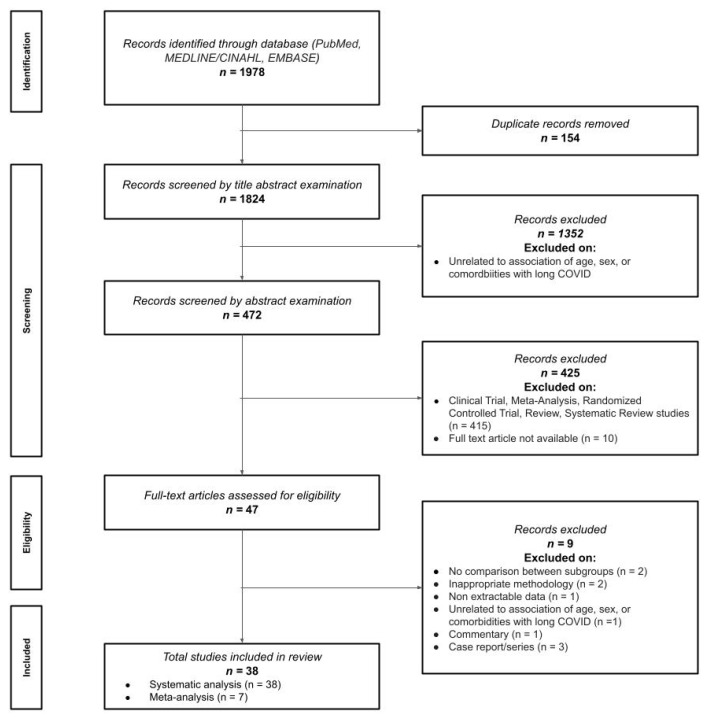
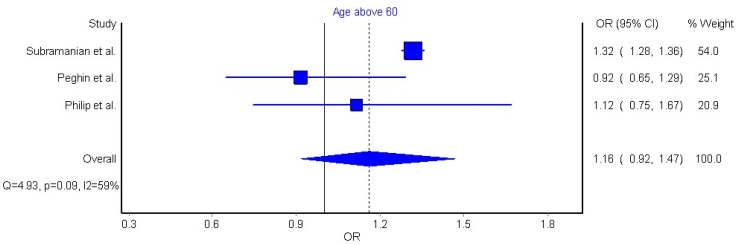
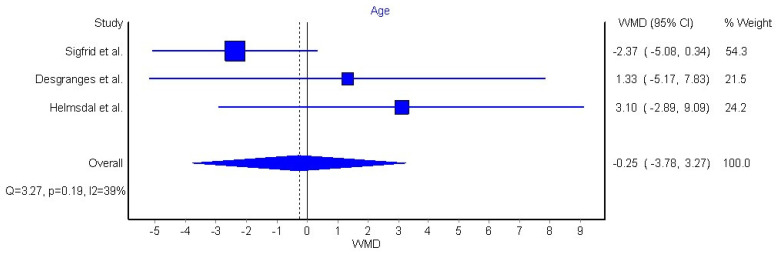
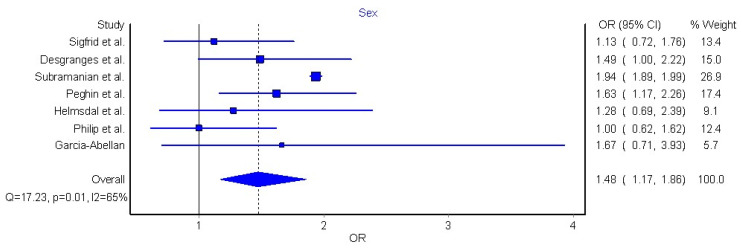
Identification of predictors of long COVID-19 is essential for managing healthcare plans of patients. This systematic literature review and meta-analysis aimed to identify risk factors not associated with Severe Acute Respiratory Syndrome Coronavirus 2 (SARS-CoV-2) infection, but rather potentially predictive of the development of long COVID-19. MEDLINE, CINAHL, PubMed, EMBASE, and Web of Science databases, as well as medRxiv and bioRxiv preprint servers were screened through 15 September 2022. Peer-reviewed studies or preprints evaluating potential pre-SARS-CoV-2 infection risk factors for the development of long-lasting symptoms were included. The methodological quality was assessed using the Quality in Prognosis Studies (QUIPSs) tool. Random-effects meta-analyses with calculation of odds ratio (OR) were performed in those risk factors where a homogenous long COVID-19 definition was used. From 1978 studies identified, 37 peer-reviewed studies and one preprint were included. Eighteen articles evaluated age, sixteen articles evaluated sex, and twelve evaluated medical comorbidities as risk factors of long COVID-19. Overall, single studies reported that old age seems to be associated with long COVID-19 symptoms (n = 18); however, the meta-analysis did not reveal an association between old age and long COVID-19 (n = 3; OR 0.86, 95% CI 0.73 to 1.03, p = 0.17). Similarly, single studies revealed that female sex was associated with long COVID-19 symptoms (n = 16); which was confirmed in the meta-analysis (n = 7; OR 1.48, 95% CI 1.17 to 1.86, p = 0.01). Finally, medical comorbidities such as pulmonary disease (n = 4), diabetes (n = 1), obesity (n = 6), and organ transplantation (n = 1) were also identified as potential risk factors for long COVID-19. The risk of bias of most studies (71%, n = 27/38) was moderate or high. In conclusion, pooled evidence did not support an association between advancing age and long COVID-19 but supported that female sex is a risk factor for long COVID-19. Long COVID-19 was also associated with some previous medical comorbidities.
Overview
The claims and statistics of this paper haven’t been checked yet.
Run the check — free, no account needed. It reads the open-access text and checks the sources it cites.
Integrity signals
Registry
Cites
Statistics
Figures
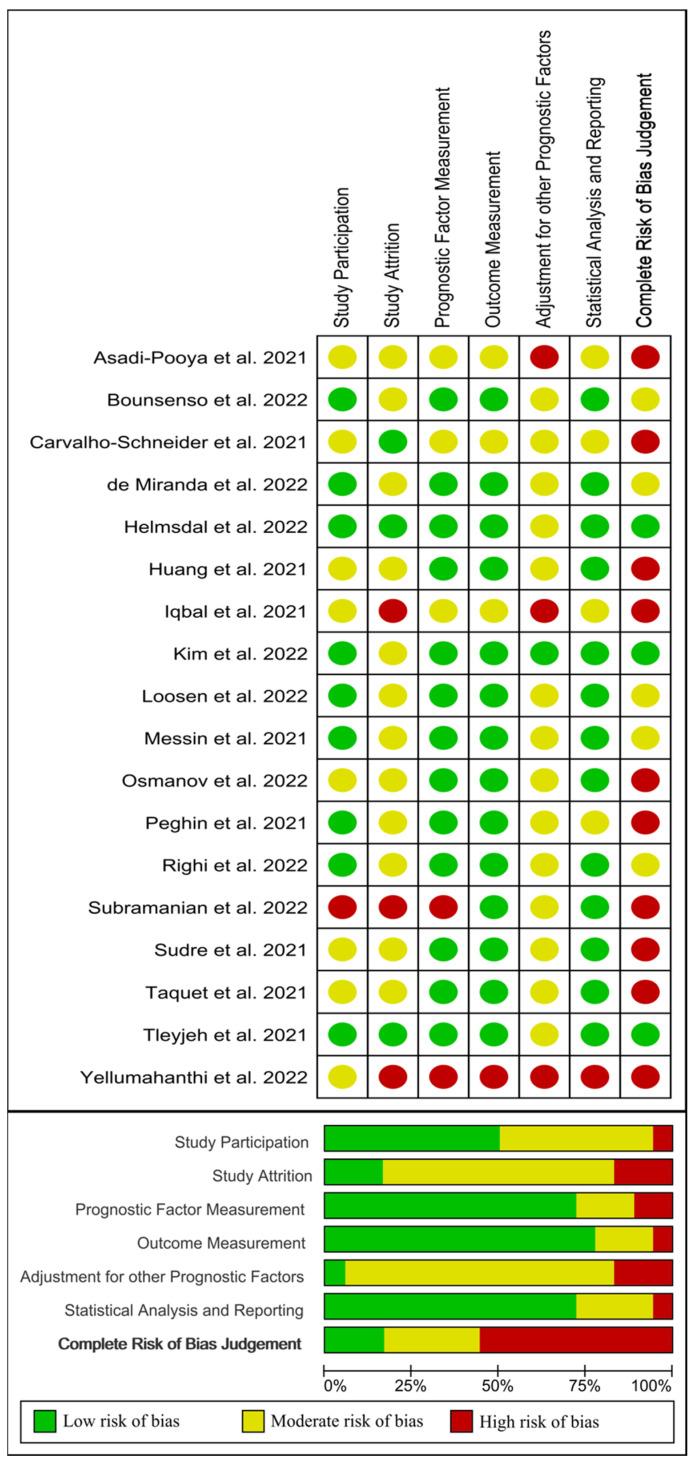
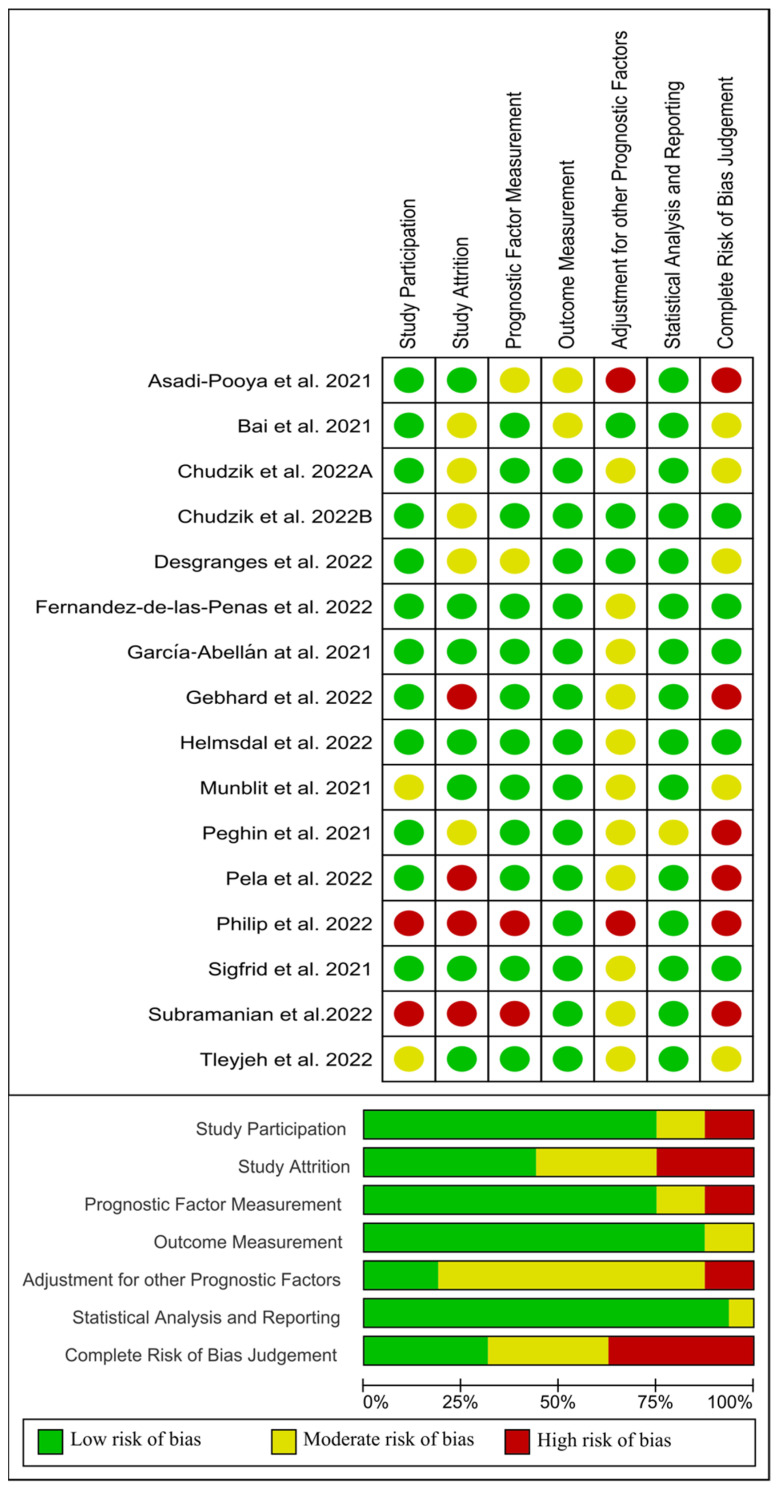
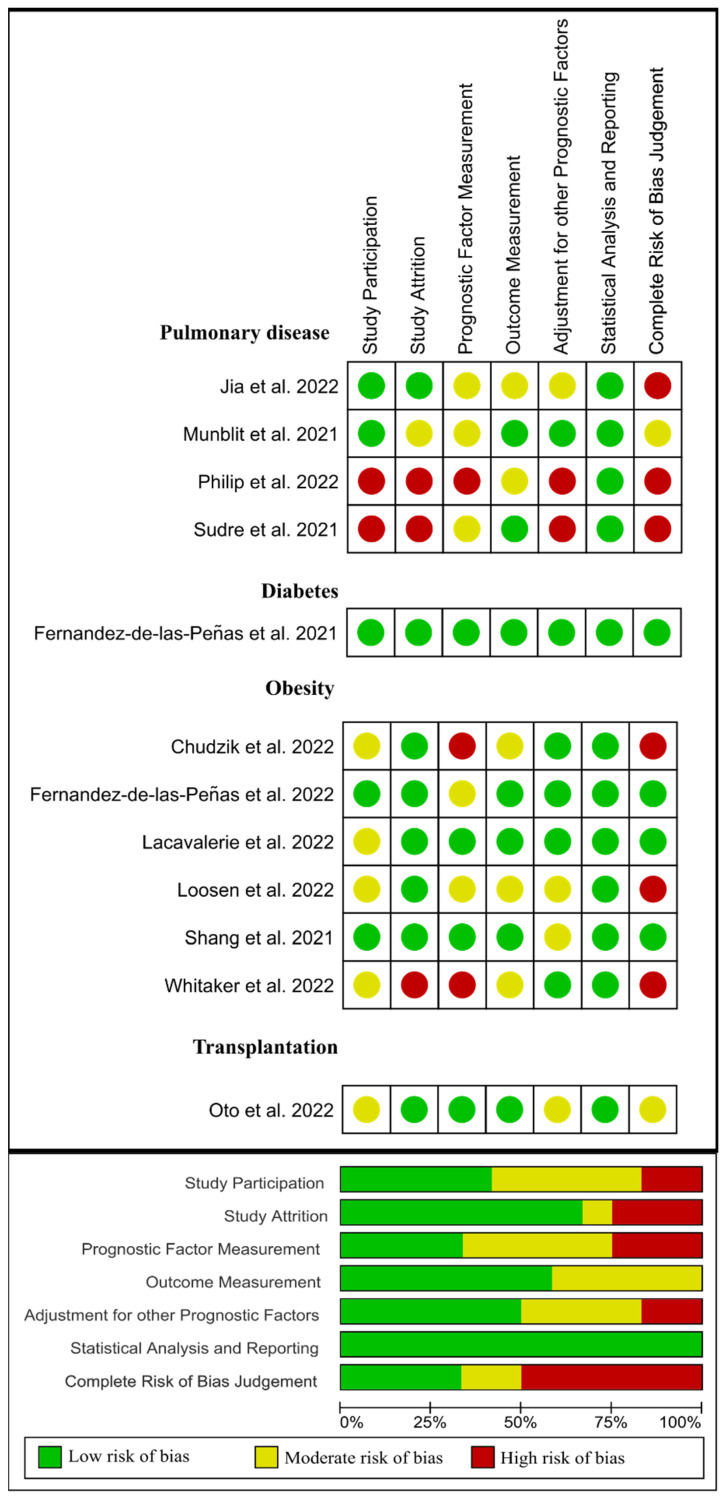
Verification
Claims the paper makes
The claims and statistics of this paper haven’t been checked yet.
Run the check — free, no account needed. It reads the open-access text and checks the sources it cites.
Claims other papers make about this one
Each is checked against this paper’s own text: does it say what the citing paper says it does?
The source backs part of the claim, not all of it — or backs it for a different population, condition or comparison.
In the citing paper
“Since pre-existing comorbidities, such as asthma, diabetes, obesity, and immunosuppressive conditions, can also be associated with higher risks of long COVID [3,7,8]”
From Protective effect of COVID-19 vaccination against long COVID syndrome: A systematic review and meta-analysis (2023) · cites this paper as [7]
Experimental — accuracy not yet measured
Self-check
Percentages, sums and reported differences re-computed from the paper’s own numbers.
The self-check needs the paper’s full text.
Citations
Cites
1 retracted
RETRACTED: 6-month consequences of COVID-19 in patients discharged from hospital: a cohort study
Huang, C., Huang, L., Wang, Y., Li, X., Ren, L., Gu, X., Kang, L., Guo, L., Liu, M., Zhou, X., et al. (2021) · The Lancet · doi:10.1016/s0140-6736(20)32656-8 · Cited by 4,084
RetractedThe PRISMA 2020 statement: An updated guideline for reporting systematic reviews
Page, M. J., McKenzie, J. E., Bossuyt, P. M., Boutron, I., Hoffmann, T. C., Mulrow, C. D., Shamseer, L., Tetzlaff, J. M., Akl, E. A., Brennan, S. E., et al. (2021) · BMJ · doi:10.1136/bmj.n71 · Cited by 108,283
Nalbandian, A., Sehgal, K., Gupta, A., Madhavan, M. V., McGroder, C., Stevens, J. S., Cook, J. R., Nordvig, A. S., Shalev, D., Sehrawat, T. S., et al. (2021) · Nature Medicine · doi:10.1038/s41591-021-01283-z · Cited by 4,862
Assessing Bias in Studies of Prognostic Factors
Hayden, J. A., van der Windt, D. A., Cartwright, J. L., Côté, P., & Bombardier, C. (2013) · Annals of Internal Medicine · doi:10.7326/0003-4819-158-4-201302190-00009 · Cited by 3,287
A clinical case definition of post-COVID-19 condition by a Delphi consensus
Soriano, J. B., Murthy, S., Marshall, J. C., Relan, P., & Diaz, J. V. (2021) · The Lancet Infectious Diseases · doi:10.1016/s1473-3099(21)00703-9 · Cited by 3,075
Attributes and predictors of long COVID
Sudre, C. H., Murray, B., Varsavsky, T., Graham, M. S., Penfold, R. S., Bowyer, R. C., Pujol, J. C., Klaser, K., Antonelli, M., Canas, L. S., et al. (2021) · Nature Medicine · doi:10.1038/s41591-021-01292-y · Cited by 2,707
Sex and gender: modifiers of health, disease, and medicine
Mauvais-Jarvis, F., Bairey Merz, N., Barnes, P. J., Brinton, R. D., Carrero, J.-J., DeMeo, D. L., De Vries, G. J., Epperson, C. N., Govindan, R., Klein, S. L., et al. (2020) · The Lancet · doi:10.1016/s0140-6736(20)31561-0 · Cited by 2,001
Long covid—mechanisms, risk factors, and management
Crook, H., Raza, S., Nowell, J., Young, M., & Edison, P. (2021) · BMJ · doi:10.1136/bmj.n1648 · Cited by 1,655
Chen, C., Haupert, S. R., Zimmermann, L., Shi, X., Fritsche, L. G., & Mukherjee, B. (2022) · The Journal of Infectious Diseases · doi:10.1093/infdis/jiac136 · Cited by 1,448
Long COVID or post-COVID-19 syndrome: putative pathophysiology, risk factors, and treatments
Yong, S. J. (2021) · Infectious Diseases · doi:10.1080/23744235.2021.1924397 · Cited by 1,339
Cited by
Sorted by citations
Watanabe, A., Iwagami, M., Yasuhara, J., Takagi, H., & Kuno, T. (2023) · Vaccine · doi:10.1016/j.vaccine.2023.02.008 · Cited by 304
COVID-19 and its long-term sequelae: what do we know in 2023?
Lippi, G., Sanchis‐Gomar, F., & Henry, B. M. (2023) · Polskie Archiwum Medycyny Wewnętrznej · doi:10.20452/pamw.16402 · Cited by 191
Self-citationCatalà, M., Mercadé‐Besora, N., Kolde, R., Trinh, N. T., Roel, E., Burn, E., Rathod‐Mistry, T., Kostka, K., Man, W. Y., Delmestri, A., et al. (2024) · The Lancet Respiratory Medicine · doi:10.1016/s2213-2600(23)00414-9 · Cited by 179
Interventions for the management of long covid (post-covid condition): living systematic review
Zeraatkar, D., Ling, M., Kirsh, S., Jassal, T., Shahab, M., Movahed, H., Talukdar, J. R., Walch, A., Chakraborty, S. P., Turner, T., et al. (2024) · BMJ · doi:10.1136/bmj-2024-081318 · Cited by 149
Long COVID: a review and proposed visualization of the complexity of long COVID
Perumal, R., Shunmugam, L., Naidoo, K., Karim, S. S. A., Wilkins, D., Demo, A. G., Bréchot, C., Parthasarathy, S., Vahlne, A. G., & Nikolich‐Žugich, J. (2023) · Frontiers in Immunology · doi:10.3389/fimmu.2023.1117464 · Cited by 140
Metadata
- Authors
- Notarte, K. I., de Oliveira, M. H. S., Peligro, P. J., Velasco, J. V., Macaranas, I., Ver, A. T., Pangilinan, F. C., Pastrana, A., Goldrich, N., Kavteladze, D., Gellaco, M. M. L., Liu, J., Lippi, G., Henry, B. M., & Fernández-de-las-Peñas, C.
- Affiliations
- Johns Hopkins University (US)
- Universidade Estadual de Maringá (BR)
- University of Santo Tomas (PH)
- New York Medical College (US)
- University of Verona (IT)
- Cincinnati Children's Hospital Medical Center (US)
- Department of Physical Therapy, Occupational Therapy, Physical Medicine and Rehabilitation, Universidad Rey Juan Carlos, 28933 Madrid, Spain
- ORCID
- Venue
- Journal of Clinical Medicine
- Publisher
- MDPI AG
- Published
- 2022-12-09
- Volume
- 11
- Issue
- 24
- Pages
- 7314
- ISSN
- 2077-0383 (ISSN-L)
- PMC
- PMC9787827
- OpenAlex
- W4311974713
- Cited by
- 209
- References
- 71
- Citations by year
- 2026: 19 · 2025: 55 · 2024: 78 · 2023: 56 · 2022: 1
- FWCI
- 6.86
- Type
- journal article
- Language
- en
- Open access
- gold
- doi.org
- Licence
- Locations
- Journal of Clinical Medicine (publishedVersion, cc-by)
- PubMed Central (publishedVersion, cc-by)
- PubMed (publishedVersion)
- DOAJ (DOAJ: Directory of Open Access Journals) (submittedVersion, cc-by-sa)
- Funders
- Fondo Europeo De Desarrollo Regional—Recursos REACT-UE del Programa Operativo de Madrid 2014–2020
- Topics
- Health Sciences › Medicine › Clinical Neurology › Long-Term Effects of COVID-19
- Health Sciences › Medicine › Infectious Diseases › COVID-19 Clinical Research Studies
- Health Sciences › Medicine › Infectious Diseases › SARS-CoV-2 and COVID-19 Research
- Keywords
- long COVID, risk factors, age, sex differences, female sex as risk factor, comorbidities, obesity, diabetes mellitus, lung disease, organ transplantation, COVID-19 pandemic, prognostic factors, risk of bias
About these checks
Registry, retraction, Cites and statistics results are computed, not judged, with one exception: a printed reference that no index lists is read once by a model before it counts as a citation error. Claims are extracted by a model and kept only when their quote appears verbatim in the text; each cited source is then checked, with a model’s help, for whether it says what the claim relies on. Those verdicts can be wrong — read the claim’s quote and the cited source before relying on one.
Statistics and arithmetic are recomputed, not judged.
Confidence bands are shown only for fields calibrated on our annotated test set. None is calibrated yet, so no band is shown.
What counts as a claim ›How we measure confidence ›How we check this ›
Are you an author, or do you see a problem with this page? Request a review
