

Motor Capacities in Boys with High Functioning Autism: Which Evaluations to Choose?
Open accessThe DOI matches its Crossref record; 43 of the 43 references it cites were found in a registry or an index.
Abstract
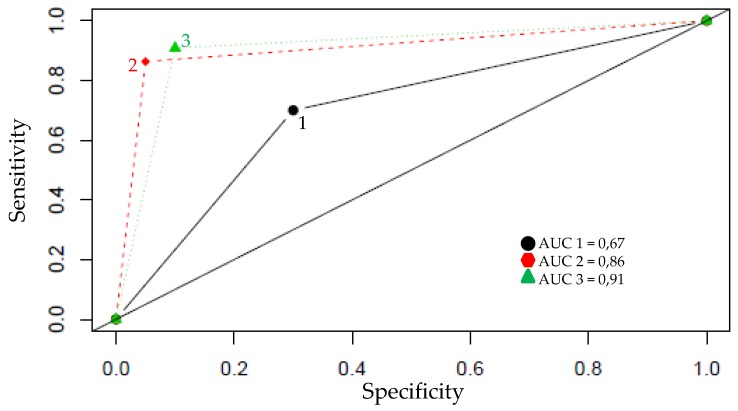
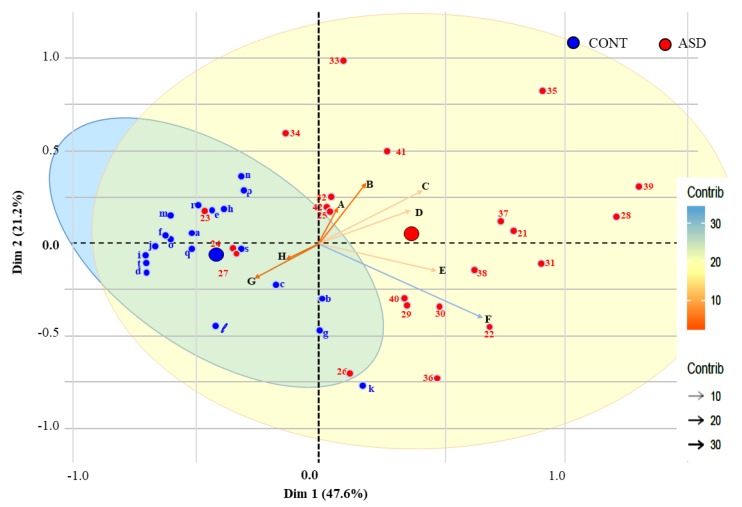
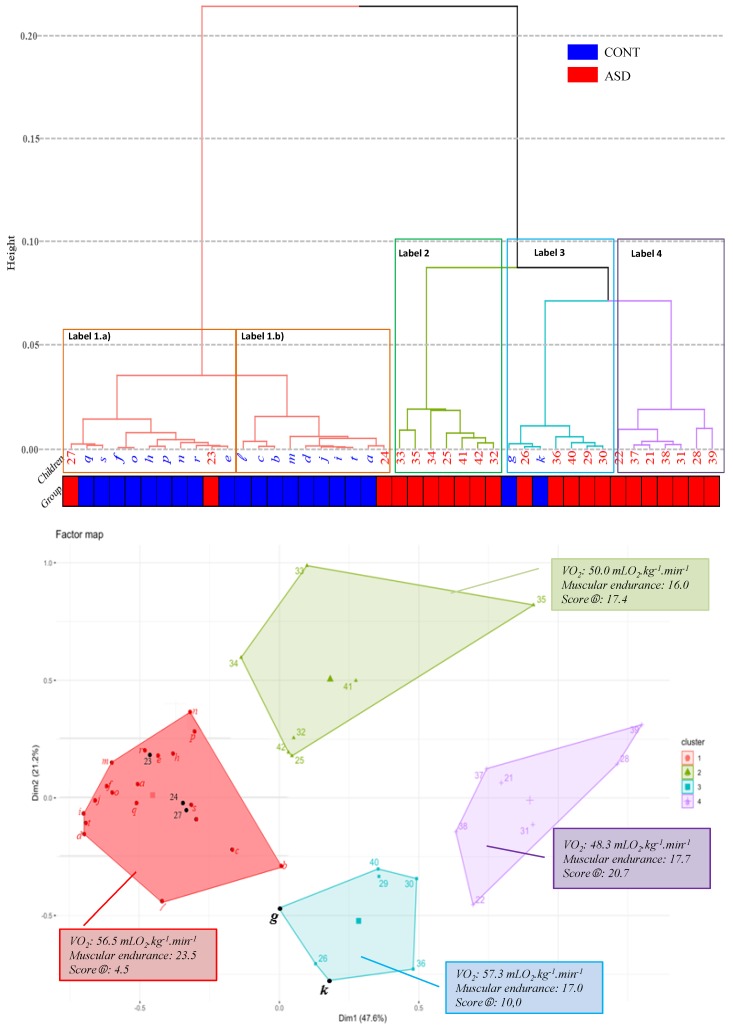
The difficulties with motor skills in children with autism spectrum disorders (ASD) has become a major focus of interest. Our objectives were to provide an overall profile of motor capacities in children with ASD compared to neurotypically developed children through specific tests, and to identify which motor tests best discriminate children with or without ASD. Twenty-two male children with ASD (ASD—10.7 ± 1.3 years) and twenty controls (CONT—10.0 ± 1.6 years) completed an evaluation with 42 motor tests from European Physical Fitness Test Battery (EUROFIT), the Physical and Neurological Exam for Subtle Signs (PANESS) and the Movement Assessment Battery for Children ( M-ABC). However, it was challenging to design a single global classifier to integrate all these features for effective classification due to the issue of small sample size. To this end, we proposed a hierarchical ensemble classification method to combine multilevel classifiers by gradually integrating a large number of features from different motor assessments. In the ASD group, flexibility, explosive power and strength scores (p < 0.01) were significantly lower compared to the control group. Our results also showed significant difficulties in children with ASD for dexterity and ball skills (p < 0.001). The principal component analysis and agglomerative hierarchical cluster analysis allowed for the classification of children based on motor tests, correctly distinguishing clusters between children with and without motor impairments.
Overview
The claims and statistics of this paper haven’t been checked yet.
Free: it reads the open-access text and checks the first 5 claims that cite a source we can check. Create a free account to check every claim.
Integrity signals
Registry
Cites
Statistics
Figures
Verification
Claims the paper makes
The claims and statistics of this paper haven’t been checked yet.
Free: it reads the open-access text and checks the first 5 claims that cite a source we can check. Create a free account to check every claim.
Claims other papers make about this one
Each is checked against this paper’s own text: does it say what the citing paper says it does?
The cited source doesn’t support the claim as written.
In the citing paper
“Odeh et al. [54] found lower balance scores in ASD on the MABC-2 and BOT-2, whereas three studies found no differences [49, 51, 53] questioning sensitivity across the spectrum.”
From Static and dynamic balance in children and adolescents with autism spectrum disorder compared with typically developing peers: a systematic review and meta-analysis (2026) · cites this paper as [53]
Checked by a reasoning model — may be wrong.
Experimental — accuracy not yet measuredThe source backs part of the claim, not all of it — or backs it for a different population, condition or comparison.
In the citing paper
“Meta-analysis of the MABC balance subscale showed a moderate effect favoring TD (SMD = − 0.66; I2 = 37%), [29, 51–53]”
From Static and dynamic balance in children and adolescents with autism spectrum disorder compared with typically developing peers: a systematic review and meta-analysis (2026) · cites this paper as [53]
Experimental — accuracy not yet measuredThe cited source says what the claim attributes to it.
In the citing paper
“Two studies reported poorer balance in the ASD group than in TD peers, [34, 52] while three found no significant differences. [49, 51, 53]”
Self-check
Percentages, sums and reported differences re-computed from the paper’s own numbers.
The self-check needs the paper’s full text.
Citations
Cites
Diagnostic and Statistical Manual of Mental Disorders
American Psychiatric Association (2013) · doi:10.1176/appi.books.9780890425596 · Cited by 116,369
Modern Applied Statistics with S
Venables, W. N., & Ripley, B. D. (2002) · Statistics and Computing · doi:10.1007/978-0-387-21706-2 · Cited by 24,305
Regularization and Variable Selection Via the Elastic Net
Zou, H., & Hastie, T. (2005) · Journal of the Royal Statistical Society Series B: Statistical Methodology · doi:10.1111/j.1467-9868.2005.00503.x · Cited by 20,957
Health benefits of physical activity: the evidence
Warburton, D. E. R. (2006) · Canadian Medical Association Journal · doi:10.1503/cmaj.051351 · Cited by 8,007 · cited 1×
“Lack of physical activity is regarded as a life course risk factor for cardiovascular disease, diabetes, cancer, and obesity [15].”
BackgroundLord, C., Risi, S., Lambrecht, L., Cook, E. H., Leventhal, B. L., DiLavore, P. C., Pickles, A., & Rutter, M. (2000) · Journal of Autism and Developmental Disorders · doi:10.1023/a:1005592401947 · Cited by 7,520 · cited 4×
“In the present study, boys aged 7 and 8 were tested on Band 2, those between 9 and 10 were tested on Band 3 and those between 11 and 12 were tested on Band 4, in reference to the classification of Henderson and Sugden [21].”
MethodInfluentialVariations in the pattern of pubertal changes in boys
Marshall, W. A., & Tanner, J. M. (1970) · Archives of Disease in Childhood · doi:10.1136/adc.45.239.13 · Cited by 5,147 · cited 2×
“The pubertal stage of children was assessed using the Tanner criteria [24].”
BackgroundMethodPenedo, F. J., & Dahn, J. R. (2005) · Current Opinion in Psychiatry · doi:10.1097/00001504-200503000-00013 · Cited by 2,851 · cited 1×
“Conversely, meeting guidelines for physical activity for children—defined as 60 min of moderate-to-vigorous intensity daily physical activity—is associated with beneficial health outcomes across a variety of physical and mental conditions [16].”
BackgroundWechsler Intelligence Scale for Children, Fourth Edition
Wechsler, D. (2012) · PsycTESTS Dataset · doi:10.1037/t15174-000 · Cited by 1,577
Motor coordination in autism spectrum disorders: A synthesis and meta-analysis
Fournier, K. A., Hass, C. J., Naik, S. K., Lodha, N., & Cauraugh, J. H. (2010) · Journal of Autism and Developmental Disorders · doi:10.1007/s10803-010-0981-3 · Cited by 1,271 · cited 3×
“Some mechanisms were proposed to better understand the motor deficits observed in ASD, such as abnormalities in the cerebellum, a key element in sensorimotor control [46], or dysfunctions in frontal–striatal connections, which are involved in motor, cognitive, and behavioral functions within the brain [3].”
BackgroundConsensus Paper: The Cerebellum's Role in Movement and Cognition
Koziol, L. F., Budding, D., Andreasen, N., D’Arrigo, S., Bulgheroni, S., Imamizu, H., Ito, M., Manto, M., Marvel, C., Parker, K., et al. (2014) · The Cerebellum · doi:10.1007/s12311-013-0511-x · Cited by 1,133 · cited 1×
“Some mechanisms were proposed to better understand the motor deficits observed in ASD, such as abnormalities in the cerebellum, a key element in sensorimotor control [46], or dysfunctions in frontal–striatal connections, which are involved in motor, cognitive, and behavioral functions within the brain [3].”
Background
Research works printed but not linked: 2
- American College of Sports Medicine Physical Fitness Assessment Manual 4th ed. Lippincott Williams & Wilkins Baltimore, MD, USA 2014
- Denckla M. Roeltgen D. Disorders of Motor Function and Control Elsevier Amsterdam, The Netherlands 1992
Cited by
van Rentergem, J. A. A., Deserno, M. K., & Geurts, H. M. (2021) · Clinical Psychology Review · doi:10.1016/j.cpr.2021.102033 · Cited by 143
Motor Impairments in Children with Autism Spectrum Disorder: A Systematic Review and Meta-analysis
Kangarani‐Farahani, M., Malik, M. A., & Zwicker, J. G. (2023) · Journal of Autism and Developmental Disorders · doi:10.1007/s10803-023-05948-1 · Cited by 174
“The poor motor performance in children with ASD might affect their functional performance as shown in several studies using Vineland Adaptive Behavior Scale (Bricout et al., 2019; Guest et al., 2017; Odeh et al., 2020; Sumner et al., 2016), Developmental Coordination Disorder Questionnaire (DCDQ) (Bhat, 2020; Biffi et…”
InfluentialMonteiro, C. E. L., Silva, E. D., Sodré, R. D. S., Costa, F., Trindade, A. S., Bunn, P. D. S., Silva, G. V. D. L. C. E., Masi, F. D., & Dantas, E. H. M. (2022) · International Journal of Environmental Research and Public Health · doi:10.3390/ijerph192114081 · Cited by 67
“The TGMD-2 evaluates the performance of fundamental motor skills without distinguishing any pathology [44], and the M-ABC-2 assesses lags in motor coordination [45].”
BackgroundA scoping review of the motor impairments in autism spectrum disorder
da Silva, S. H., Felippin, M. R., Medeiros, L. D. O., Hedin‐Pereira, C., & Nogueira‐Campos, A. A. (2025) · Neuroscience & Biobehavioral Reviews · doi:10.1016/j.neubiorev.2025.106002 · Cited by 38
Effect of Daily Physical Activity on Sleep Characteristics in Children with Autism Spectrum Disorder
Nguyen, D., Guinot, M., & Bricout, V. (2021) · Sports · doi:10.3390/sports9070091 · Cited by 26
“Nevertheless, some studies have reported shortened total sleep duration associated with difficulty falling asleep, frequent night-time awakening, and early morning awakening in children with ASD [4,5,7,29].”
BackgroundSelf-citationMotor Coordination Assessment in Autism Spectrum Disorder: A Systematic Review
Piccolo, A., Raciti, C., Cara, M. D., Portaro, S., Muratore, R., Domenico, C. D., Fulgenzi, A., Settimo, C., Quartarone, A., Cucinotta, F., et al. (2025) · Diagnostics · doi:10.3390/diagnostics15172118 · Cited by 19
“…[39], and De Francesco et al. [45] confirmed this difference across different diagnostic groups (ASD, ADHD, TD), while research by Bricout et al. [38] and Odeh et al. [32] used MABC-2 in combination with other tools to define specific motor profiles in ASD, revealing marked impairments in…”
InfluentialPerfil de crianças com transtorno do espectro autista
Magalhães, J. M., da Silva, T. M., Silva, F. D. C., de Alencar, M. D. F. B., Neta, M. M. R., Alencar, D. D. C., & Arisawa, E. Â. L. S. (2021) · Research Society and Development · doi:10.33448/rsd-v10i4.13880 · Cited by 8
Gender Differences, Motor Skills and Physical Fitness Heterogeneity in Adults with Down’s Syndrome
Covain, S., Baillieul, S., Nguyen, D., Guinot, M., Doutreleau, S., & Bricout, V. (2023) · Journal of Clinical Medicine · doi:10.3390/jcm12041367 · Cited by 9
“With reference to our previous work [23] and according to the definition given by the American College of Sports Medicine [24], (that precise that health-related physical fitness includes at least the evaluation of body composition, aerobic components (VO2), muscular strength and flexibility), motor capacities were ev…”
MethodSelf-citationKoumenidou, M., Kotzamanidou, M. C., Panoutsakopoulos, V., Siaperas, P., Misailidou, V., & Tsalis, G. A. (2023) · Healthcare · doi:10.3390/healthcare11222986 · Cited by 10
“The participant rested his non-preferred hand on the rectangle and with the hand to be examined made small tapping movements (right and left) from one disk to another as quickly as possible for 25 complete cycles [37].”
MethodAtun‐Einy, O., Amir-Kawas, S., & Krasovsky, T. (2022) · Research in Autism · doi:10.1016/j.rasd.2022.102064 · Cited by 8
Wright, F. V., Wright, A., Bauve, C., & Evans, K. (2023) · Disability and Rehabilitation · doi:10.1080/09638288.2023.2198257 · Cited by 6
ŞAHAN, A. K., Öztürk, N., Kutukcu, E. C., Aksu, H., Tunagür, M. T., & Arıkan, H. (2022) · Focus on Autism and Other Developmental Disabilities · doi:10.1177/10883576221108110 · Cited by 4
“…research indicates that children and/or adolescents with mild to moderate autism have lower fitness parameters (speed, coordination, flexibility, strength, and power) and lower PA levels compared with their TD peers (Bricout et al., 2018; Bricout et al., 2019; Pan et al., 2016; Tyler et al., 2014).”
BackgroundShiri, V., Hosseini, A., & Pishyareh, E. (2024) · Archives of Neuroscience · doi:10.5812/ans-143284 · Cited by 5
Sex Differences in Sleep and Physical Activity Patterns in Autism Spectrum Disorder
Bricout, V., Covain, S., Paterno, J., & Guinot, M. (2024) · Clocks & Sleep · doi:10.3390/clockssleep6040049 · Cited by 5
Self-citationOckerman, J., Velghe, S., BLADEL, A. V., Auvinet, E., Saldien, J., Klingels, K., Bar‐On, L., & Verbecque, E. (2024) · European Journal of Physical and Rehabilitation Medicine · doi:10.23736/s1973-9087.24.08187-5 · Cited by 7
“two studies explored differences in postural control in overweight children 53 and children with asd 31 compared to their td peers using the tandem walk backward 31 and forward.”
InfluentialPrevalence of motor tests in autism spectrum disorder people
Quedas, C. L. R., Honda, R. T. D. Q., Costa, C. C. S., de Sá, K. S. G., Corrêa, F. H., de Mattos, Y. C. M., & Gorla, J. I. (2022) · International Journal of Family & Community Medicine · doi:10.15406/ijfcm.2022.06.00270 · Cited by 4
KOÇAK, Ç. V., Ergin, M., Koçak, C., Nebol, M. S., Erbaş, M. K., Canlı, U., & Aldhahi, M. I. (2026) · Healthcare · doi:10.3390/healthcare14131838 · Cited by 1
“Among motor skills, flexibility and handgrip strength are particularly affected and are critical for independent functioning in daily life [14,15].”
Blanco-Martínez, N., González-Devesa, D., Varela, S., Carballo-Afonso, R., & Ayán, C. (2026) · Autism Research · doi:10.1002/aur.70347 · Cited by 1
“However, the total PANESS score reported in two studies indicated significantly poorer overall performance in the ASD group (Bricout et al. 2019; MacNeil and Mostofsky 2012).”
InfluentialArtchoudane, S., Ramanathan, M., Bhavanani, A. B., Muruganandam, P., & Jatiya, L. (2021) · International Journal of Health Systems and Translational Medicine · doi:10.4018/ijhstm.2021010104 · Cited by 8
Nguyen, D. (2022) · IntechOpen eBooks · doi:10.5772/intechopen.102534 · Cited by 2
sedehi, A. A. B., Ghasemi, A., Kashi, A., & Azimzadeh, E. (2021) · Pedagogy of Physical Culture and Sports · doi:10.15561/26649837.2021.0303 · Cited by 1
Martín-Díaz, P., Carratalá-Tejada, M., Navarro-López, V., Fernández-González, P., & Cuesta-Gómez, A. (2026) · European Journal of Pediatrics · doi:10.1007/s00431-026-06871-0
“Preliminary evidence indicates significant balance impairments in ASD compared with TD. Meta-analysis of the MABC balance subscale showed a moderate effect favoring TD (SMD = − 0.66; I 2 = 37%), [29, 51–53] consistent with reports of postural deficits in ASD.”
InfluentialPENGEMBANGAN ELECTRONIC MODUL PEMBELAJARAN PENDIDIKAN JASMANI UNTUK SISWA DENGAN HAMBATAN AUTIS
Mu’arifin, M. (2022) · Gelanggang Pendidikan Jasmani Indonesia/Gelanggang · doi:10.17977/um040v6i2p104-117
Metadata
- Authors
- BRICOUT, V.-A., PACE, M., DUMORTIER, L., MIGANEH, S., MAHISTRE, Y., & GUINOT, M.
- Affiliations
- Inserm (FR)
- Corresponding author
- BRICOUT, Véronique-Aurélie
- Venue
- Journal of Clinical Medicine
- Publisher
- MDPI AG
- Published
- 2019-09-21
- Volume
- 8
- Issue
- 10
- Pages
- 1521
- ISSN
- 2077-0383 (ISSN-L)
- PMC
- PMC6832130
- OpenAlex
- W2974761053
- Cited by
- 23
- References
- 42
- Citations by year
- 2026: 3 · 2025: 2 · 2024: 3 · 2023: 4 · 2022: 6 · 2021: 5
- FWCI
- 1.60
- Type
- journal article
- Language
- en
- Open access
- gold
- doi.org
- Licence
- Locations
- Journal of Clinical Medicine (publishedVersion, cc-by)
- Europe PMC (PubMed Central) (publishedVersion, cc-by)
- PubMed Central (publishedVersion, cc-by)
- PubMed (publishedVersion)
- DOAJ (DOAJ: Directory of Open Access Journals) (submittedVersion)
- Topics
- Life Sciences › Neuroscience › Cognitive Neuroscience › Autism Spectrum Disorder Research
- Social Sciences › Psychology › Developmental and Educational Psychology › Children's Physical and Motor Development
- Health Sciences › Medicine › Psychiatry and Mental health › Child Nutrition and Feeding Issues
- Keywords
- autism spectrum disorder, high-functioning autism, motor abilities, motor function assessment, motor impairment, flexibility, explosive power, muscle strength, dexterity, ball skills, children, EUROFIT, Movement Assessment Battery for Children
About these checks
Registry, retraction, Cites and statistics results are computed, not judged, with one exception: a printed reference that no index lists is read once by a model before it counts as a citation error. Claims are extracted by a model and kept only when their quote appears verbatim in the text; each cited source is then checked, with a model’s help, for whether it says what the claim relies on. Those verdicts can be wrong — read the claim’s quote and the cited source before relying on one.
Statistics and arithmetic are recomputed, not judged.
Confidence bands are shown only for fields calibrated on our annotated test set. None is calibrated yet, so no band is shown.
What counts as a claim ›How we measure confidence ›How we check this ›
Are you an author, or do you see a problem with this page? Request a review
Data sources
Bibliographic data: Semantic Scholar, OpenAlex, Crossref.
Contains information from the Semantic Scholar Academic Graph Datasets, made available under the ODC Attribution License (ODC-BY 1.0).
Semantic Scholar’s data is described in: Kinney, R., et al. (2023). The Semantic Scholar Open Data Platform. arXiv:2301.10140.
