

The Multifaceted Role of T-Helper Responses in Host Defense against Aspergillus fumigatus
Open accessThe DOI matches its Crossref record; 125 of the 125 references it cites were found in a registry or an index.
Abstract
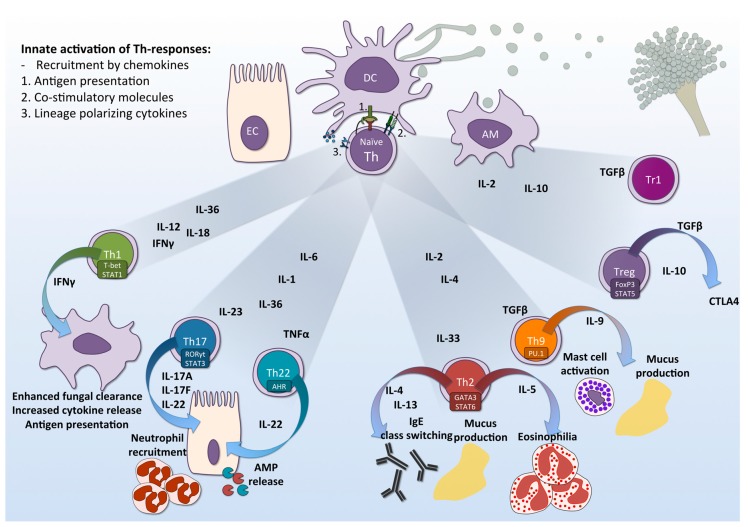
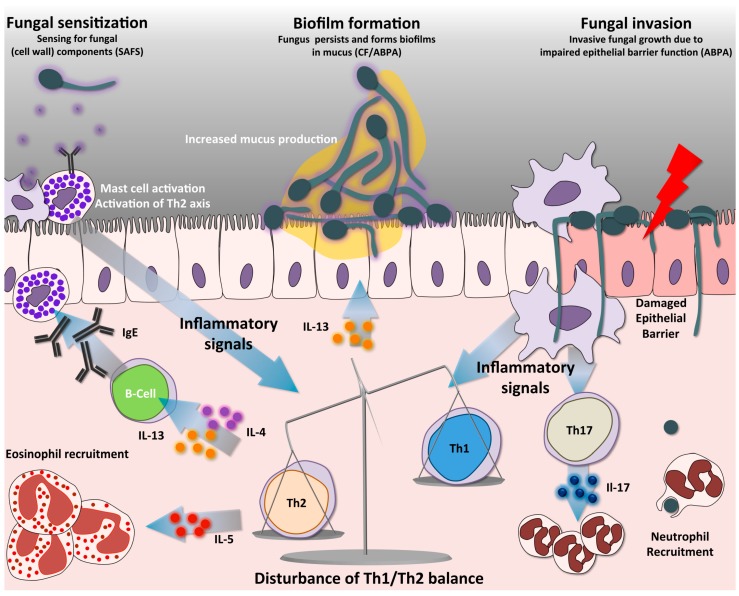
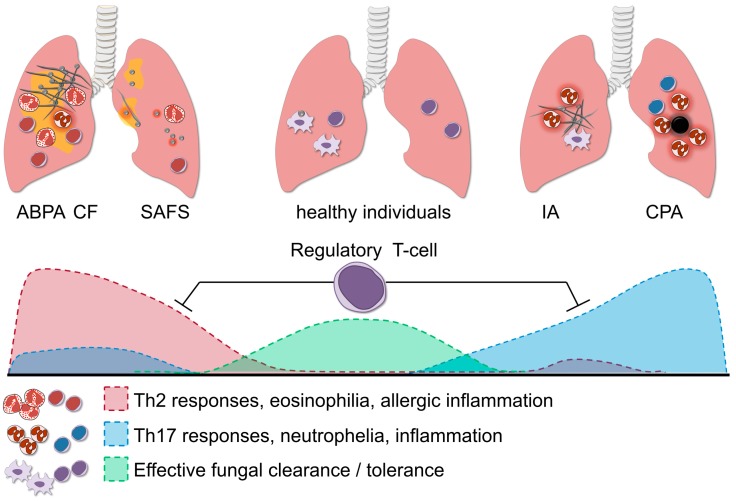
The ubiquitous opportunistic fungal pathogen Aspergillus fumigatus rarely causes infections in immunocompetent individuals. A healthy functional innate immune system plays a crucial role in preventing Aspergillus-infection. This pivotal role for the innate immune system makes it a main research focus in studying the pathogenesis of aspergillosis. Although sometimes overshadowed by the innate immune response, the adaptive immune response, and in particular T-helper responses, also represents a key player in host defense against Aspergillus. Virtually all T-helper subsets have been described to play a role during aspergillosis, with the Th1 response being crucial for fungal clearance. However; morbidity and mortality of aspergillosis can also be partly attributed to detrimental immune responses resulting from adaptive immune activation. Th2 responses benefit fungal persistence; and are the foundation of allergic forms of aspergillosis. The Th17 response has two sides; although crucial for granulocyte recruitment, it can be involved in detrimental immunopathology. Regulatory T-cells, the endogenous regulators of inflammatory responses, play a key role in controlling detrimental inflammatory responses during aspergillosis. The current knowledge of the adaptive immune response against A. fumigatus is summarized in this review. A better understanding on how T-helper responses facilitate clearance of Aspergillus-infection and control inflammation can be the fundamental basis for understanding the pathogenesis of aspergillosis and for the development of novel host-directed therapies.
Overview
The claims and statistics of this paper haven’t been checked yet.
Free: it reads the open-access text and checks the first 5 claims that cite a source we can check. Create a free account to check every claim.
Integrity signals
Registry
Cites
Statistics
Figures
Verification
Claims the paper makes
The claims and statistics of this paper haven’t been checked yet.
Free: it reads the open-access text and checks the first 5 claims that cite a source we can check. Create a free account to check every claim.
Claims other papers make about this one
Each is checked against this paper’s own text: does it say what the citing paper says it does?
In the citing paper
“Significantly, T cells play a critical role in immunopathogenesis of chronic noninvasive forms of Aspergillus disease, such as asthma, CF, ABPA (317), and possibly CPA.”
From Aspergillus fumigatus and Aspergillosis in 2019 (2019) · cites this paper as [317]
Self-check
Percentages, sums and reported differences re-computed from the paper’s own numbers.
The self-check needs the paper’s full text.
Citations
Cites
Meijer, L., Nelson, D. J., Riazanski, V., Gabdoulkhakova, A. G., Hery-Arnaud, G., Le Berre, R., Loaëc, N., Oumata, N., Galons, H., Nowak, E., et al. (2016) · Journal of Innate Immunity · doi:10.1159/000444256 · Cited by 4,992
Hidden Killers: Human Fungal Infections
Brown, G. D., Denning, D. W., Gow, N. A. R., Levitz, S. M., Netea, M. G., & White, T. C. (2012) · Science Translational Medicine · doi:10.1126/scitranslmed.3004404 · Cited by 4,284 · cited 1×
“Antifungal resistance and a persistent dysregulated immune response in patients with aspergillosis limits the efficacy of antifungal medication [101].”
BackgroundA distinct lineage of CD4 T cells regulates tissue inflammation by producing interleukin 17
Park, H., Li, Z., Yang, X. O., Chang, S. H., Nurieva, R., Wang, Y.-H., Wang, Y., Hood, L., Zhu, Z., Tian, Q., et al. (2005) · Nature Immunology · doi:10.1038/ni1261 · Cited by 4,265 · cited 1×
“However, with the description of the Th17 subset in 2005 [51], the understanding of how T-helper responses mediate protection against aspergillosis had to be revisited.”
BackgroundVignali, D. A. A., Collison, L. W., & Workman, C. J. (2008) · Nature Reviews Immunology · doi:10.1038/nri2343 · Cited by 3,463
Infection in Solid-Organ Transplant Recipients
Fishman, J. A. (2007) · New England Journal of Medicine · doi:10.1056/nejmra064928 · Cited by 1,950 · cited 2×
“Infections with Aspergillus spp. have emerged as important opportunistic fungal pathogens in patients with a severely compromised immune system such as those receiving solid organ transplant (SOT) [1,2] and hematopoietic stem cell transplantation (HSCT) [3].”
BackgroundRomani, L. (2011) · Nature Reviews Immunology · doi:10.1038/nri2939 · Cited by 1,793
Generation of pathogenic TH17 cells in the absence of TGF-β signalling
Ghoreschi, K., Laurence, A., Yang, X.-P., Tato, C. M., McGeachy, M. J., Konkel, J. E., Ramos, H. L., Wei, L., Davidson, T. S., Bouladoux, N., et al. (2010) · Nature · doi:10.1038/nature09447 · Cited by 1,388
Marr, K. A., Carter, R. A., Boeckh, M., Martin, P., & Corey, L. (2002) · Blood · doi:10.1182/blood-2002-05-1496 · Cited by 957
Pathogen-induced human TH17 cells produce IFN-γ or IL-10 and are regulated by IL-1β
Zielinski, C. E., Mele, F., Aschenbrenner, D., Jarrossay, D., Ronchi, F., Gattorno, M., Monticelli, S., Lanzavecchia, A., & Sallusto, F. (2012) · Nature · doi:10.1038/nature10957 · Cited by 919
Interleukin-22: Immunobiology and Pathology
Dudakov, J. A., Hanash, A. M., & van den Brink, M. R. M. (2015) · Annual Review of Immunology · doi:10.1146/annurev-immunol-032414-112123 · Cited by 905 · cited 1×
“Upon activation, Th17 cells also release IL-22, which triggers epithelial cells to produce antimicrobial peptides such as β-defensin 2 and lipocalin-2 [57].”
Background
Cited by
Aspergillus fumigatus and Aspergillosis in 2019
Latgé, J.-P., & Chamilos, G. (2019) · Clinical Microbiology Reviews · doi:10.1128/cmr.00140-18 · Cited by 1,400
Pathogenicity and virulence of Aspergillus fumigatus
Earle, K., Valero, C., Conn, D. P., Vere, G., Cook, P. C., Bromley, M., Bowyer, P., & Gago, S. (2023) · Virulence · doi:10.1080/21505594.2023.2172264 · Cited by 132
Exploring the immunopathology of type 2 inflammatory airway diseases
Albloushi, S., & Al-Ahmad, M. S. (2024) · Frontiers in Immunology · doi:10.3389/fimmu.2024.1285598 · Cited by 95
Wurster, S., Watowich, S. S., & Kontoyiannis, D. P. (2022) · Frontiers in Immunology · doi:10.3389/fimmu.2022.1018202 · Cited by 81
The Interactions Between Candida albicans and Mucosal Immunity
Zhou, Y., Cheng, L., Lei, Y. L., Ren, B., & Zhou, X. (2021) · Frontiers in Microbiology · doi:10.3389/fmicb.2021.652725 · Cited by 77
“Furthermore, Th1 cell response and IFN-γ production are essential during neutrophil and macrophage inhibiting processes against fungal invasion (Netea et al., 2015; Dewi et al., 2017).”
BackgroundWurster, S., Albert, N. D., Bharadwaj, U., Kasembeli, M. M., Tarrand, J. J., Daver, N. G., & Kontoyiannis, D. P. (2022) · Frontiers in Immunology · doi:10.3389/fimmu.2022.838344 · Cited by 67
Aspergillus fumigatus biology, immunopathogenicity and drug resistance
van de Veerdonk, F. L., Carvalho, A., Wauters, J., Chamilos, G., & Verweij, P. E. (2025) · Nature Reviews Microbiology · doi:10.1038/s41579-025-01180-z · Cited by 70
“Upon activation, CD4 + T cells differentiate into subsets such as T helper (T H ) 1, T H 2 and T H 17 cells, which produce different cytokines and play distinct roles in the immune response 109 .”
Interplay of Cytokines and Chemokines in Aspergillosis
Shankar, J., Thakur, R., Clemons, K. V., & Stevens, D. A. (2024) · Journal of Fungi · doi:10.3390/jof10040251 · Cited by 59
“They initiate the allergic or inflammatory response with dominant Th2 and They initiate the allergic or in fl ammatory response with dominant Th2 and Th9-type cell immunity with the help of IL-4, IL-5, IL-13, and IL-9 [113,115,116].”
BackgroundBatista-Duharte, A., Téllez-Martínez, D., de Andrade, C. R., Portuondo, D. L., Jellmayer, J. A., Polesi, M. C., & Carlos, I. Z. (2018) · Fungal Biology · doi:10.1016/j.funbio.2018.08.004 · Cited by 52
Palmieri, F., Koutsokera, A., Bernasconi, E., Junier, P., von Garnier, C., & Ubags, N. D. J. (2022) · Frontiers in Medicine · doi:10.3389/fmed.2022.832510 · Cited by 66
Seldeslachts, L., Staels, F., Gkountzinopoulou, M., Jacobs, C., Tielemans, B., Vanhoffelen, E., Reséndiz-Sharpe, A., Herdt, L. D., Haughton, J., Prezzemolo, T., et al. (2024) · EBioMedicine · doi:10.1016/j.ebiom.2024.105347 · Cited by 41
Covid-19-Associated Pulmonary Aspergillosis: The Other Side of the Coin
Costantini, C., van de Veerdonk, F. L., & Romani, L. R. (2020) · Vaccines · doi:10.3390/vaccines8040713 · Cited by 36
“In addition, an excessive Th17 response in COVID-19 patients [50,51] may change the protective antifungal role of Th17 cells into a detrimental role [52].”
BackgroundImmunomodulation as a Therapy for Aspergillus Infection: Current Status and Future Perspectives
Lauruschkat, C. D., Einsele, H., & Loeffler, J. (2018) · Journal of Fungi · doi:10.3390/jof4040137 · Cited by 32
“It has the capacity to induce protective responses of the innate and adaptive immune systems against Aspergillus [43].”
BackgroundBromodomain inhibitor I‐BET151 suppresses immune responses during fungal–immune interaction
Domínguez‐Andrés, J., Ferreira, A. V., Jansen, T., Smithers, N. N., Prinjha, R. K., Furze, R. C., & Netea, M. G. (2019) · European Journal of Immunology · doi:10.1002/eji.201848081 · Cited by 35
Gu, X., Hua, Y., Zhang, Y.-D., Bao, D., Lv, J., & HU, H.-F. (2021) · Polish Journal of Microbiology · doi:10.33073/pjm-2021-003 · Cited by 34
NLRX1 is a key regulator of immune signaling during invasive pulmonary aspergillosis
Kastelberg, B., Tubau‐Juni, N., Ayubi, T., Leung, A., Leber, A. J., Hontecillas, R., Bassaganya-Riera, J., & Kale, S. D. (2020) · PLoS Pathogens · doi:10.1371/journal.ppat.1008854 · Cited by 26
Chauvin, D., Hust, M., Schütte, M., Chesnay, A., Parent, C., Moreira, G. M. S. G., Arroyo, J., Sanz, A. B., Pugnière, M., Martineau, P., et al. (2019) · Frontiers in Microbiology · doi:10.3389/fmicb.2019.00600 · Cited by 25
“Surprisingly, no significant differences were observed in the recruitment of dendritic cells (including activated), even though these cells (among other subsets) are known to be at the origin of CD4 T-cells activation in lymphoid nodes through antigen presentation process (Rivera and Pamer, 2009), inducing either a Th…”
BackgroundKumaresan, P. R., Wurster, S., Bavisi, K., da Silva, T. A., Hauser, P. J., Kinnitt, J., Albert, N. D., Bharadwaj, U., Neelapu, S. S., & Kontoyiannis, D. P. (2024) · mBio · doi:10.1128/mbio.03413-23 · Cited by 23
Komorowski, A. S., Hall, C. W., Atwal, S., Johnstone, R., WALKER, R. E., Mertz, D., Piessens, E., Yamamura, D. L. R., & Kasper, E. M. (2024) · Clinical Microbiology and Infection · doi:10.1016/j.cmi.2024.05.013 · Cited by 23
Aspergillus�fumigatus enhances human NK cell activity by regulating M1 macrophage polarization
Zhang, X., He, D., Gao, S., Wei, Y., & Wang, L. (2019) · Molecular Medicine Reports · doi:10.3892/mmr.2019.10365 · Cited by 22
“fumigatus) is an environmentally ubiquitous, spore-forming mould saprophyte that causes disease in individuals with poor immunity (1).”
BackgroundInvasive Aspergillosis in the Current Era
Herrera, S., Magyar, U., & Husain, S. (2025) · Infectious Disease Clinics of North America · doi:10.1016/j.idc.2025.01.002 · Cited by 19
Bocci, M. G., Cascarano, L., Capecchi, G., Lesci, A., Sabatini, V., Rubino, D., Stazi, G. V., Garotto, G., Carrara, S., Vulcano, A., et al. (2025) · Journal of Fungi · doi:10.3390/jof11090617 · Cited by 25
“These observations highlight the necessity of a balanced adaptive immune response in IA—one that ensures pathogen clearance while preventing immune-mediated injury [30,31].”
Dynamic Surface Proteomes of Allergenic Fungal Conidia
Blango, M. G., Pschibul, A., Rivieccio, F., Krüger, T., Rafiq, M., Jia, L., Zheng, T., Goldmann, M., Voltersen, V., Li, J., et al. (2020) · Journal of Proteome Research · doi:10.1021/acs.jproteome.0c00013 · Cited by 19
Unconventional T cells – New players in antifungal immunity
Dunne, M. R., Wagener, J., Loeffler, J., Doherty, D. G., & Rogers, T. R. (2021) · Clinical Immunology · doi:10.1016/j.clim.2021.108734 · Cited by 22
Pfavayi, L. T., Sibanda, E., & Mutapi, F. (2020) · International Archives of Allergy and Immunology · doi:10.1159/000506009 · Cited by 18
Lauruschkat, C. D., Page, L., White, P. L., Etter, S., Davies, H. E., Duckers, J. M., Ebel, F., Schnack, E., Backx, M., Dragan, M., et al. (2021) · Journal of Fungi · doi:10.3390/jof7060462 · Cited by 20
“Specifically, increased IL-17 response has been associated with chronic lung diseases that predispose to airway colonization by molds including Aspergillus [58,59] and can promote fungal persistence and tissue inflammation [1,60].”
BackgroundThakur, R., Shishodia, S. K., Sharma, A., Chauhan, A., Kaur, S., & Shankar, J. (2024) · Current Research in Microbial Sciences · doi:10.1016/j.crmicr.2024.100220 · Cited by 16
“It has the capacity to induce protective responses of the innate and adaptive immune systems against Aspergillus (Dewi et al., 2017) .”
BackgroundLung Microbiota: From Healthy Lungs to Development of Chronic Obstructive Pulmonary Disease
Stankovic, M. M. (2025) · International Journal of Molecular Sciences · doi:10.3390/ijms26041403 · Cited by 19
“Furthermore, the pathogenic fungus Aspergillus spp. that exists in healthy lungs can trigger Th1, Th2, and Th17 responses [29,68].”
Aerts, R., Ricaño-Ponce, I., Bruno, M., Mercier, T., Rosati, D., Maertens, J. A., Kumar, V., Carvalho, A., Netea, M. G., Hoenigl, M., et al. (2024) · Mycopathologia · doi:10.1007/s11046-024-00831-8 · Cited by 13
Li, L.-Y., Zhang, H.-R., Jiang, Z., Chang, Y., & Shao, C. (2018) · Chinese Medical Journal · doi:10.4103/0366-6999.244103 · Cited by 12
“Th1 cytokines such as interleukin (IL)‐12, interferon (IFN)‐γ, tumor necrosis factor (TNF)‐α can promote the differentiation of Th0 cells into Th1 cells, and eliminate aspergillus.[6] However, in immune‐compromised patients, AMs and neutrophilic granulocytes cannot kill hyphae and conidia effectively.”
BackgroundInfluentialKinetic Host Defense of the Mice Infected with Aspergillus Fumigatus
Su, H., Li, C., Wang, Y., Li, Y., Dong, L., Li, L., Zhu, J., Zhang, Q., Liu, G., Xu, J., et al. (2019) · Future Microbiology · doi:10.2217/fmb-2019-0043 · Cited by 13
Cerebral Aspergillosis: Diagnostic Challenges, Therapeutic Strategies, and Future Research
Chantelot, L., Sitterlé, E., Poirée, S., Jullien, V., Danion, F., & Serris, A. (2025) · CNS Drugs · doi:10.1007/s40263-025-01241-0 · Cited by 14
“It occurs mainly in patients with immunosuppression, particularly in patients with phagocytosis impairment and defective T-cell responses [1], leading to a high mortality rate despite aggressive therapy.”
Strickland, A. B., Sun, D., Sun, P., Chen, Y., Liu, G., & Shi, M. (2022) · ImmunoHorizons · doi:10.4049/immunohorizons.2100117 · Cited by 13
Nasiri-Jahrodi, A., Barati, M., Ahmadabad, H. N., Badali, H., & Morovati, H. (2024) · Human Immunology · doi:10.1016/j.humimm.2024.110763 · Cited by 12
Pérez‐Cantero, A., Serrano, D. R., Navarro-Rodríguez, P., Schätzlein, A. G., Uchegbu, I. F., Torrado, J. J., & Capilla, J. (2019) · Pharmaceutics · doi:10.3390/pharmaceutics11090456 · Cited by 11
“Our results also showed a slight increase in the Th2 response in the treated animals that, combined with the increase of the Th17 response promoted by IL-17, can display a positive effect due to its anti-inflammatory and tissue protection properties [46].”
ResultTischer‐Zimmermann, S., Salzer, E., Bitencourt, T. A., Frank, N., Freimüller, C., Stemberger, J., Maecker‐Kolhoff, B., Blasczyk, R., Witt, V., Fritsch, G., et al. (2023) · Frontiers in Immunology · doi:10.3389/fimmu.2023.988947 · Cited by 9
“Frontiers in Immunology 13 Despite the impact of CD8 T cells, especially the importance of different CD4 Th subsets in controlling IFDs has been shown previously (47).”
BackgroundSpecial Issue: Mucosal Fungal Infections
Richardson, J., & Naglik, J. R. (2018) · Journal of Fungi · doi:10.3390/jof4020043 · Cited by 9
“[7], who review the factors that influence effective adaptive clearance (Th1/Th17) and allergic hypersensitivity/detrimental immune pathology (Th2/Th17).”
Wang, Y., Zhang, L., Sun, Y., & Zhang, Y. (2025) · International Archives of Allergy and Immunology · doi:10.1159/000547550 · Cited by 10
“IL-12 promotes Th1 differentiation, leading to the release of GM-CSF, interferon-gamma (IFN-γ), TNF-α, and IL-2, which enhance macrophage antifungal activity [72–74].”
Lee, M. K., Kim, S. B., Lee, J.-H., Lee, S. J., Kim, S., Lee, W., Yong, S. J., Lee, J., & Shin, B. (2021) · Journal of Thoracic Disease · doi:10.21037/jtd-20-1815 · Cited by 9
“Thus, outcomes are generally poor because of insufficient defense mechanisms in patients as well as the aforementioned limitations in treatment (5).”
BackgroundThe sino-nasal warzone: transcriptomic and genomic studies on sino-nasal aspergillosis in dogs
Valdes, I. D., de Ruijter, A. B. P. H., Torres, C., Breuker, J. C. A., Wösten, H. A. B., & de Cock, H. (2020) · npj Biofilms and Microbiomes · doi:10.1038/s41522-020-00163-7 · Cited by 10
Dewi, I. M. W., Fauziah, N., Ekawardhani, S., Andriyoko, B., Adawıyah, R., Hartantri, Y., Soeroto, A. Y., Alisjahbana, B., Denning, D. W., & Wahyuningsih, R. (2023) · Medical Mycology · doi:10.1093/mmy/myad036 · Cited by 7
Self-citationCommander-in-chief: monocytes rally the troops for defense against aspergillosis
Wang, K., Espinosa, V., & Rivera, A. (2023) · Current Opinion in Immunology · doi:10.1016/j.coi.2023.102371 · Cited by 8
Xu, L., Xu, R.-A., Zhang, D., Su, S., Xu, H., Wu, Q., & Li, Y. (2018) · Infection and Drug Resistance · doi:10.2147/idr.s172949 · Cited by 7
Evaluating the Role of STAT3 in CD4 + T Cells in Susceptibility to Invasive Aspergillosis
Gohir, W., McTaggart, L. R., Kus, J. V., Mazzulli, T., Kumar, D., Humar, A., & Husain, S. (2021) · Infection and Immunity · doi:10.1128/iai.00035-21 · Cited by 6
Fungal Aeroallergen Sensitization Patterns among Airway-Allergic Patients in Zagazig, Egypt
Mokhtar, G. A. E., Gebriel, M. G., Hammad, N., Roman, S. W., Attia, O., Behiry, A., Ismail, N. A., Sayed, M. S. A. E. A. E., Hadhoud, A. N., Osama, Y. A., et al. (2023) · Journal of Fungi · doi:10.3390/jof9020185 · Cited by 7
“It was reported that frequent exposures to fungal allergens induce T helper 1, 2, and 17 immune responses and chronic inflammation in airways [66].”
BackgroundBruno, M., Matzaraki, V., van de Veerdonk, F. L., Kumar, V., & Netea, M. G. (2021) · Infection and Immunity · doi:10.1128/iai.00005-21 · Cited by 6
“can contribute to detrimental immunopathology during fungal infections (45, 46).”
BackgroundDewi, I. M. W., Bruno, M., Janssen, N. A. F., Gresnigt, M. S., van Laarhoven, A., van Crevel, R., & van de Veerdonk, F. L. (2025) · Cytokine · doi:10.1016/j.cyto.2025.157018 · Cited by 4
Self-citationAbdullahi, I. N., Shuwa, H. A., Emeribe, A. U., Adekola, H. A., & Dangana, A. (2018) · Tzu Chi Medical Journal · doi:10.4103/tcmj.tcmj_46_18 · Cited by 4
“This results in a diagnostic challenge for clinicians who either misdiagnose it or diagnose the disease after the death of the patient [9-11].”
BackgroundInfluentialToychiev, A., Гафнер, Н. В., Belotserkovets, V., Sekler, D., Tashpulatova, S. A., & Osipova, S. (2024) · Tropical Doctor · doi:10.1177/00494755241226488 · Cited by 4
Immunopathogenesis of Aspergillosis
Singh, S., Kanaujia, R., & Rudramurthy, S. M. (2022) · IntechOpen eBooks · doi:10.5772/intechopen.98782 · Cited by 5
Signaling events driving Aspergillus fumigatus-induced eosinophil activation
Adam, J., Graf, L.-M., Westermann, S., Voehringer, D., & Krappmann, S. (2024) · International Journal of Medical Microbiology · doi:10.1016/j.ijmm.2024.151641 · Cited by 4
Invasive Pulmonary Aspergillosis in Non-Neutropenic Patients: An Evolving Clinical Paradigm
Morena, R., Morrone, H. L., Serapide, F., & Russo, A. (2025) · Diagnostics · doi:10.3390/diagnostics16010034 · Cited by 3
“Th1 responses are crucial for controlling fungal infections, while Th2 responses can promote inflammation and tissue damage [25,26].”
Does SARS-CoV-2 Possess “Allergen-Like” Epitopes?
Rubio‐Casillas, A., Cowley, D., Uversky, V. N., Redwan, E. M. M. M., Brogna, C., & Piscopo, M. (2025) · COVID · doi:10.3390/covid5040055 · Cited by 3
“Such a shift is associated with the production of cytokines such as IL-4, IL-5, and IL-13, contributing to disease progression [125–128].”
Hu, Y., Wang, X., Wu, H., Deng, H., Gao, F., & Wu, Y. (2025) · Frontiers in Immunology · doi:10.3389/fimmu.2025.1687790 · Cited by 3
Allergic Bronchopulmonary Aspergillosis
McCrary, K. (2019) · Springer eBooks · doi:10.1007/978-3-030-05147-1_21 · Cited by 2
Biologie et diagnostic des infections à Aspergillus
Gangneux, J., Bouchara, J. P., & Chabasse, D. (2013) · Cited by 3
Allergic Bronchopulmonary Aspergillosis
Chan, L. T., Nwankwo, L., & Shah, A. (2021) · Elsevier eBooks · doi:10.1016/b978-0-08-102723-3.00200-6 · Cited by 2
Tan, C., Wu, A., & Li, C. (2026) · Probiotics and Antimicrobial Proteins · doi:10.1007/s12602-026-11005-x · Cited by 1
“IL-23, secreted by dendritic cells and macrophages, functions as an upstream regulator to maintain and expand Th17-mediated immunity, thereby supporting these anti-fungal responses [107, 108].”
Allergic Bronchopulmonary Aspergillosis
McCrary, K. (2019) · Springer eBooks · doi:10.1007/978-3-319-58726-4_21-1 · Cited by 1
Innate Immune Responses in the Alternaria-Dendritic Cell Interaction
Luo, M. (2018) · VTechWorks (Virginia Tech)
Aspergillus : allergène ou agent infectieux, un choix orienté par l’hôte
Fréalle, É. (2020) · Revue française d'allergologie · doi:10.1016/j.reval.2020.02.033
Aspergilose broncopulmonar alérgica
Abreu, D. B., Silva, D., & Plácido, J. L. (2022) · Revista Portuguesa de Imunoalergologia · doi:10.32932/rpia.2022.06.080 · Cited by 4
Walker, R. (2023) · OSF Preprints (OSF Preprints) · doi:10.31219/osf.io/sybeq
Research Progress of CD4+T Lymphocytes in Invasive Pulmonary Fungal Infection
高, 亚. (2023) · Advances in Clinical Medicine · doi:10.12677/acm.2023.134921
Aspergillosis in Lung Cancer: A Narrative Literature Review
Yarsy, P. R., & Munir, S. M. (2023) · Bioscientia Medicina Journal of Biomedicine and Translational Research · doi:10.37275/bsm.v8i3.935 · Cited by 1
Falcon, R. M. G., Asedillo, K. F. Y., Gilo, A. J. G., Hawson, H. C. C., Ong, S. M. A., Palis, L. C. M., Villanueva, A. M. G., Yaneza, A. G. D., & Dacones, L. S. (2026) · Molecular Biology Reports · doi:10.1007/s11033-026-11945-1
Mi, J., Dong, Y., Xu, Z., Liang, Y., Wu, X., & Liang, J. (2026) · BMC Microbiology · doi:10.1186/s12866-026-05300-4
“In contrast, the robust Th1 response during the acute inflammatory phase in PTB may limit early fungal colonization, and cavities often resolve with effective therapy, reducing persistent colonization opportunities [44, 45].”
A review on the process immune system's interaction with mycobiota and pathogenic fungi
Rafiee, M., Karimi, S., Ziaaldini, M. A. A., & Nikoomanesh, F. (2026) · Journal of Translational Medical Research · doi:10.66224/jbums.33.2.86
Metadata
- Authors
- Dewi, I., Van de Veerdonk, F., & Gresnigt, M.
- Affiliations
- Radboud University Nijmegen (NL)
- Department of Experimental Internal Medicine and Radboud Center for Infectious diseases (RCI), Radboud University Medical Center, Geert Grooteplein Zuid 10, 6525 GA Nijmegen, The Netherlands
- Corresponding author
- Gresnigt, Mark
- Venue
- Journal of Fungi
- Publisher
- MDPI AG
- Published
- 2017-10-04
- Volume
- 3
- Issue
- 4
- Pages
- 55
- ISSN
- 2309-608X (ISSN-L)
- PMC
- PMC5753157
- OpenAlex
- W2761510753
- Cited by
- 69
- References
- 124
- Citations by year
- 2026: 3 · 2025: 10 · 2024: 10 · 2023: 8 · 2022: 5 · 2021: 10 · 2020: 6 · 2019: 8 · 2018: 8
- FWCI
- 0.92
- Type
- journal article
- Language
- en
- Open access
- gold
- doi.org
- Licence
- Locations
- Journal of Fungi (publishedVersion, cc-by)
- PubMed Central (publishedVersion, cc-by)
- PubMed (publishedVersion)
- DOAJ (DOAJ: Directory of Open Access Journals) (submittedVersion, cc-by-sa)
- Funders
- Lembaga Pengelola Dana Pendidikan
- Topics
- Health Sciences › Medicine › Infectious Diseases › Antifungal resistance and susceptibility
- Health Sciences › Medicine › Pulmonary and Respiratory Medicine › Asthma and respiratory diseases
- Life Sciences › Biochemistry, Genetics and Molecular Biology › Molecular Biology › Fungal and yeast genetics research
- Keywords
- Aspergillus fumigatus, aspergillosis, T helper cells, Th1 response, Th2 immune response, Th17 response, regulatory T cells, adaptive immune response, host defense, allergic bronchopulmonary aspergillosis, immunopathology, host-directed therapy, fungal clearance
About these checks
Registry, retraction, Cites and statistics results are computed, not judged, with one exception: a printed reference that no index lists is read once by a model before it counts as a citation error. Claims are extracted by a model and kept only when their quote appears verbatim in the text; each cited source is then checked, with a model’s help, for whether it says what the claim relies on. Those verdicts can be wrong — read the claim’s quote and the cited source before relying on one.
Statistics and arithmetic are recomputed, not judged.
Confidence bands are shown only for fields calibrated on our annotated test set. None is calibrated yet, so no band is shown.
What counts as a claim ›How we measure confidence ›How we check this ›
Are you an author, or do you see a problem with this page? Request a review
Data sources
Bibliographic data: Semantic Scholar, OpenAlex, Crossref.
Contains information from the Semantic Scholar Academic Graph Datasets, made available under the ODC Attribution License (ODC-BY 1.0).
Semantic Scholar’s data is described in: Kinney, R., et al. (2023). The Semantic Scholar Open Data Platform. arXiv:2301.10140.
