

The Multifaceted Role of T-Helper Responses in Host Defense against Aspergillus fumigatus
Open accessThe DOI matches its Crossref record; 125 of the 125 references it cites were found in a registry or an index.
Abstract
The ubiquitous opportunistic fungal pathogen Aspergillus fumigatus rarely causes infections in immunocompetent individuals. A healthy functional innate immune system plays a crucial role in preventing Aspergillus-infection. This pivotal role for the innate immune system makes it a main research focus in studying the pathogenesis of aspergillosis. Although sometimes overshadowed by the innate immune response, the adaptive immune response, and in particular T-helper responses, also represents a key player in host defense against Aspergillus. Virtually all T-helper subsets have been described to play a role during aspergillosis, with the Th1 response being crucial for fungal clearance. However; morbidity and mortality of aspergillosis can also be partly attributed to detrimental immune responses resulting from adaptive immune activation. Th2 responses benefit fungal persistence; and are the foundation of allergic forms of aspergillosis. The Th17 response has two sides; although crucial for granulocyte recruitment, it can be involved in detrimental immunopathology. Regulatory T-cells, the endogenous regulators of inflammatory responses, play a key role in controlling detrimental inflammatory responses during aspergillosis. The current knowledge of the adaptive immune response against A. fumigatus is summarized in this review. A better understanding on how T-helper responses facilitate clearance of Aspergillus-infection and control inflammation can be the fundamental basis for understanding the pathogenesis of aspergillosis and for the development of novel host-directed therapies.
Overview
The claims and statistics of this paper haven’t been checked yet.
Free: it reads the open-access text and checks the first 5 claims that cite a source we can check. Create a free account to check every claim.
Integrity signals
Registry
Cites
Statistics
Figures
Verification
Claims the paper makes
The claims and statistics of this paper haven’t been checked yet.
Free: it reads the open-access text and checks the first 5 claims that cite a source we can check. Create a free account to check every claim.
Claims other papers make about this one
Each is checked against this paper’s own text: does it say what the citing paper says it does?
In the citing paper
“Significantly, T cells play a critical role in immunopathogenesis of chronic noninvasive forms of Aspergillus disease, such as asthma, CF, ABPA (317), and possibly CPA.”
From Aspergillus fumigatus and Aspergillosis in 2019 (2019) · cites this paper as [317]
Self-check
Percentages, sums and reported differences re-computed from the paper’s own numbers.
The self-check needs the paper’s full text.
Citations
Cites
Meijer, L., Nelson, D. J., Riazanski, V., Gabdoulkhakova, A. G., Hery-Arnaud, G., Le Berre, R., Loaëc, N., Oumata, N., Galons, H., Nowak, E., et al. (2016) · Journal of Innate Immunity · doi:10.1159/000444256 · Cited by 4,992
Hidden Killers: Human Fungal Infections
Brown, G. D., Denning, D. W., Gow, N. A. R., Levitz, S. M., Netea, M. G., & White, T. C. (2012) · Science Translational Medicine · doi:10.1126/scitranslmed.3004404 · Cited by 4,284 · cited 1×
“Antifungal resistance and a persistent dysregulated immune response in patients with aspergillosis limits the efficacy of antifungal medication [101].”
BackgroundA distinct lineage of CD4 T cells regulates tissue inflammation by producing interleukin 17
Park, H., Li, Z., Yang, X. O., Chang, S. H., Nurieva, R., Wang, Y.-H., Wang, Y., Hood, L., Zhu, Z., Tian, Q., et al. (2005) · Nature Immunology · doi:10.1038/ni1261 · Cited by 4,265 · cited 1×
“However, with the description of the Th17 subset in 2005 [51], the understanding of how T-helper responses mediate protection against aspergillosis had to be revisited.”
BackgroundVignali, D. A. A., Collison, L. W., & Workman, C. J. (2008) · Nature Reviews Immunology · doi:10.1038/nri2343 · Cited by 3,463
Infection in Solid-Organ Transplant Recipients
Fishman, J. A. (2007) · New England Journal of Medicine · doi:10.1056/nejmra064928 · Cited by 1,950 · cited 2×
“Infections with Aspergillus spp. have emerged as important opportunistic fungal pathogens in patients with a severely compromised immune system such as those receiving solid organ transplant (SOT) [1,2] and hematopoietic stem cell transplantation (HSCT) [3].”
BackgroundRomani, L. (2011) · Nature Reviews Immunology · doi:10.1038/nri2939 · Cited by 1,793
Generation of pathogenic TH17 cells in the absence of TGF-β signalling
Ghoreschi, K., Laurence, A., Yang, X.-P., Tato, C. M., McGeachy, M. J., Konkel, J. E., Ramos, H. L., Wei, L., Davidson, T. S., Bouladoux, N., et al. (2010) · Nature · doi:10.1038/nature09447 · Cited by 1,388
Marr, K. A., Carter, R. A., Boeckh, M., Martin, P., & Corey, L. (2002) · Blood · doi:10.1182/blood-2002-05-1496 · Cited by 957
Pathogen-induced human TH17 cells produce IFN-γ or IL-10 and are regulated by IL-1β
Zielinski, C. E., Mele, F., Aschenbrenner, D., Jarrossay, D., Ronchi, F., Gattorno, M., Monticelli, S., Lanzavecchia, A., & Sallusto, F. (2012) · Nature · doi:10.1038/nature10957 · Cited by 919
Interleukin-22: Immunobiology and Pathology
Dudakov, J. A., Hanash, A. M., & van den Brink, M. R. M. (2015) · Annual Review of Immunology · doi:10.1146/annurev-immunol-032414-112123 · Cited by 905 · cited 1×
“Upon activation, Th17 cells also release IL-22, which triggers epithelial cells to produce antimicrobial peptides such as β-defensin 2 and lipocalin-2 [57].”
BackgroundAgarwal, R., Chakrabarti, A., Shah, A., Gupta, D., Meis, J. F., Guleria, R., Moss, R., Denning, D. W., & ABPA complicating asthma ISHAM working group (2013) · Clinical & Experimental Allergy · doi:10.1111/cea.12141 · Cited by 896 · cited 2×
“A more severe form of allergic response to Aspergillus is allergic bronchopulmonary aspergillosis (ABPA), which is associated with prolonged fungal exposure and typically occurs in individuals with a hypersensitive immune response, where airway inflammation, eosinophilia, and abundant production of Aspergillus-specifi…”
BackgroundThe link between fungi and severe asthma: A summary of the evidence
Denning, D. W., O'Driscoll, B. R., Hogaboam, C. M., Bowyer, P., & Niven, R. M. (2006) · European Respiratory Journal · doi:10.1183/09031936.06.00074705 · Cited by 824 · cited 1×
“It is increasingly recognized that in a significant group of patients, their severe asthma is associated with fungal exposure [71].”
BackgroundRomani, L. (2004) · Nature Reviews Immunology · doi:10.1038/nri1255 · Cited by 758 · cited 1×
“Nevertheless, recently it has become apparent that the adaptive immune response, and in particular T-helper responses also play a crucial role in pulmonary host defense [15] and the pathogenesis of aspergillosis [16].”
BackgroundHuman CD25highFoxp3pos regulatory T cells differentiate into IL-17–producing cells
Koenen, H. J. P. M., Smeets, R. L., Vink, P. M., van Rijssen, E., Boots, A. M. H., & Joosten, I. (2008) · Blood · doi:10.1182/blood-2008-01-133967 · Cited by 736 · cited 1×
“Another discovery that complicates our understanding of the T-helper responses is that regulatory T-cells can co-express IL-17 and potentially contribute to detrimental immunopathology [119].”
BackgroundGlucocorticoids and invasive fungal infections
Lionakis, M. S., & Kontoyiannis, D. P. (2003) · The Lancet · doi:10.1016/s0140-6736(03)14904-5 · Cited by 669
IL‐23 and the Th17 pathway promote inflammation and impair antifungal immune resistance
Zelante, T., De Luca, A., Bonifazi, P., Montagnoli, C., Bozza, S., Moretti, S., Belladonna, M. L., Vacca, C., Conte, C., Mosci, P., et al. (2007) · European Journal of Immunology · doi:10.1002/eji.200737409 · Cited by 555 · cited 3×
“Increased Th17 responses are attributed to severe immunopathology characterized by massive neutrophil infiltrates in the lung parenchyma and impairment of fungal clearance [66].”
BackgroundInfluentialDefective tryptophan catabolism underlies inflammation in mouse chronic granulomatous disease
Romani, L., Fallarino, F., De Luca, A., Montagnoli, C., D’Angelo, C., Zelante, T., Vacca, C., Bistoni, F., Fioretti, M. C., Grohmann, U., et al. (2008) · Nature · doi:10.1038/nature06471 · Cited by 535 · cited 1×
“Supplementation with natural kynurenines were able to reverse this hyperinflammatory response [99].”
BackgroundThe Spectrum of Fungal Allergy
Simon-Nobbe, B., Denk, U., Pöll, V., Rid, R., & Breitenbach, M. (2008) · International Archives of Allergy and Immunology · doi:10.1159/000107578 · Cited by 524 · cited 1×
“To date, over 150 fungal allergens have been identified [74], with the most numerous found in A.”
BackgroundThe Beta-Glucan Receptor Dectin-1 Recognizes Specific Morphologies of Aspergillus fumigatus
Steele, C., Rapaka, R. R., Metz, A., Pop, S. M., Williams, D. L., Gordon, S., Kolls, J. K., & Brown, G. D. (2005) · PLoS Pathogens · doi:10.1371/journal.ppat.0010042 · Cited by 509 · cited 2×
“Resident alveolar macrophages (AM) engulf conidia and release different cytokines and chemokines, including TNFα, MIP1-α, IL-1β, IL-1α, IL-6, G-CSF and GM-CSF [21], leading to further recruitment of innate effector cells including the dendritic cells (DCs) [9].”
BackgroundSaenz, S. A., Taylor, B. C., & Artis, D. (2008) · Immunological Reviews · doi:10.1111/j.1600-065x.2008.00713.x · Cited by 484
Th1 and Th17 cells: Adversaries and collaborators
Damsker, J. M., Hansen, A. M., & Caspi, R. R. (2010) · Annals of the New York Academy of Sciences · doi:10.1111/j.1749-6632.2009.05133.x · Cited by 419
Requisite Role for the Dectin-1 β-Glucan Receptor in Pulmonary Defense against Aspergillus fumigatus
Werner, J. L., Metz, A. E., Horn, D., Schoeb, T. R., Hewitt, M. M., Schwiebert, L. M., Faro-Trindade, I., Brown, G. D., & Steele, C. (2009) · The Journal of Immunology · doi:10.4049/jimmunol.0804250 · Cited by 412 · cited 1×
“Deficiency in dectin-1 is associated with a defective Th17 response, and therefore impaired neutrophil recruitment and excessive fungal growth [56,58].”
BackgroundPerruccio, K., Tosti, A., Burchielli, E., Topini, F., Ruggeri, L., Carotti, A., Capanni, M., Urbani, E., Mancusi, A., Aversa, F., et al. (2005) · Blood · doi:10.1182/blood-2005-05-1775 · Cited by 391 · cited 2×
“Adoptive transfer of in vitro-generated CD4+ T-cells in patients receiving allogeneic HSCT has been shown to improve clearance of Aspergillus infection and confer protection against invasive aspergillosis [104,116].”
BackgroundThe development and in vivo function of T helper 9 cells
Kaplan, M. H., Hufford, M. M., & Olson, M. R. (2015) · Nature Reviews Immunology · doi:10.1038/nri3824 · Cited by 384 · cited 2×
“Th9 cells are known to mediate inflammation, infection and allergy, and this lineage is differentiated in the presence of Th2-polarizing cytokine IL-4, in combination with IL-2 and TGFβ [90].”
BackgroundInflammatory Monocytes Facilitate Adaptive CD4 T Cell Responses during Respiratory Fungal Infection
Hohl, T. M., Rivera, A., Lipuma, L., Gallegos, A., Shi, C., Mack, M., & Pamer, E. G. (2009) · Cell Host & Microbe · doi:10.1016/j.chom.2009.10.007 · Cited by 337 · cited 1×
“Monocytes also contribute significantly to the induction of T-helper responses during Aspergillus-infection, which is thought to be mediated through their differentiation into CD11b+ DCs [22].”
BackgroundBozza, S., Gaziano, R., Spreca, A., Bacci, A., Montagnoli, C., di Francesco, P., & Romani, L. (2002) · The Journal of Immunology · doi:10.4049/jimmunol.168.3.1362 · Cited by 332 · cited 4×
“Pulmonary DCs of mice infected with A. fumigatus undergo maturation upon migration, shown by increased expression of the T-cell stimulatory molecules CD80 and CD86 [24].”
BackgroundInfluentialGrünig, G., Corry, D. B., Leach, M. W., Seymour, B. W. P., Kurup, V. P., & Rennick, D. M. (1997) · The Journal of Experimental Medicine · doi:10.1084/jem.185.6.1089 · Cited by 320
Risk Factors for Invasive Aspergillosis in Solid-Organ Transplant Recipients: A Case-Control Study
Gavalda, J., Len, O., San Juan, R., Aguado, J. M., Fortun, J., Lumbreras, C., Moreno, A., Munoz, P., Blanes, M., Ramos, A., et al. (2005) · Clinical Infectious Diseases · doi:10.1086/430602 · Cited by 317 · cited 2×
“Infections with Aspergillus spp. have emerged as important opportunistic fungal pathogens in patients with a severely compromised immune system such as those receiving solid organ transplant (SOT) [1,2] and hematopoietic stem cell transplantation (HSCT) [3].”
Backgroundde Luca, A., Smeekens, S. P., Casagrande, A., Iannitti, R., Conway, K. L., Gresnigt, M. S., Begun, J., Plantinga, T. S., Joosten, L. A. B., van der Meer, J. W. M., et al. (2014) · Proceedings of the National Academy of Sciences · doi:10.1073/pnas.1322831111 · Cited by 313 · cited 1×
“Administration of recombinant IL-1 receptor antagonist (IL-1Ra) decreases immunopathology and contribute to a better outcome in Th17-mediated inflammation as a result of Aspergillus-infection in a murine cystic fibrosis model [112] and in a murine CGD model [113].”
BackgroundSelf-citationTolerance induced by inhaled antigen involves CD4+ T cells expressing membrane-bound TGF-β and FOXP3
Ostroukhova, M., Seguin-Devaux, C., Oriss, T. B., Dixon-McCarthy, B., Yang, L., Ameredes, B. T., Corcoran, T. E., & Ray, A. (2004) · Journal of Clinical Investigation · doi:10.1172/jci200420509 · Cited by 285
Interferon-gamma as adjunctive immunotherapy for invasive fungal infections: a case series
Delsing, C. E., Gresnigt, M. S., Leentjens, J., Preijers, F., Frager, F. A., Kox, M., Monneret, G., Venet, F., Bleeker-Rovers, C. P., van de Veerdonk, F. L., et al. (2014) · BMC Infectious Diseases · doi:10.1186/1471-2334-14-166 · Cited by 271 · cited 1×
“fumigatus in immunocompromised individuals and CGD patients, improving outcome and reducing mortality [106,107,109].”
BackgroundSelf-citationCytokine‐ and T Helper–Dependent Lung Mucosal Immunity in Mice with Invasive Pulmonary Aspergillosis
Cenci, E., Mencacci, A., Fè d'Ostiani, C., Del Sero, G., Mosci, P., Montagnoli, C., Bacci, A., & Romani, L. (1998) · The Journal of Infectious Diseases · doi:10.1086/314493 · Cited by 254 · cited 5×
“Aspergillus-antigen specific T-cells have been found in patients as well as healthy individuals [32–34], and in animal mode of Aspergil us-infection [35,36].”
BackgroundInfluentialLong-Term Interferon- Therapy for Patients with Chronic Granulomatous Disease
Marciano, B. E., Wesley, R., De Carlo, E. S., Anderson, V. L., Barnhart, L. A., Darnell, D., Malech, H. L., Gallin, J. I., & Holland, S. M. (2004) · Clinical Infectious Diseases · doi:10.1086/422993 · Cited by 251 · cited 1×
“fumigatus in immunocompromised individuals and CGD patients, improving outcome and reducing mortality [106,107,109].”
BackgroundGalactosaminogalactan, a New Immunosuppressive Polysaccharide of Aspergillus fumigatus
Fontaine, T., Delangle, A., Simenel, C., Coddeville, B., van Vliet, S. J., van Kooyk, Y., Bozza, S., Moretti, S., Schwarz, F., Trichot, C., et al. (2011) · PLoS Pathogens · doi:10.1371/journal.ppat.1002372 · Cited by 241 · cited 1×
“By diminishing the Th17 response, GAG was able to decrease neutrophil recruitment, thereby increasing susceptibility of WT mice to invasive aspergillosis [60,61].”
BackgroundBioengineering T cells to target carbohydrate to treat opportunistic fungal infection
Kumaresan, P. R., Manuri, P. R., Albert, N. D., Maiti, S., Singh, H., Mi, T., Roszik, J., Rabinovich, B., Olivares, S., Krishnamurthy, J., et al. (2014) · Proceedings of the National Academy of Sciences · doi:10.1073/pnas.1312789111 · Cited by 237 · cited 1×
“By generating a T-cell that expresses dectin-1 that activates CD28 and CD3ζ (referred as D-CAR), a T-cell can directly recognize the fungus and induce its anti-fungal effect [118].”
BackgroundAspergillus fumigatus : Principles of Pathogenesis and Host Defense
Hohl, T. M., & Feldmesser, M. (2007) · Eukaryotic Cell · doi:10.1128/ec.00274-07 · Cited by 237
Iannitti, R. G., Napolioni, V., Oikonomou, V., De Luca, A., Galosi, C., Pariano, M., Massi-Benedetti, C., Borghi, M., Puccetti, M., Lucidi, V., et al. (2016) · Nature Communications · doi:10.1038/ncomms10791 · Cited by 235 · cited 1×
“Administration of recombinant IL-1 receptor antagonist (IL-1Ra) decreases immunopathology and contribute to a better outcome in Th17-mediated inflammation as a result of Aspergillus-infection in a murine cystic fibrosis model [112] and in a murine CGD model [113].”
BackgroundT Cell–Mediated Host Immune Defenses in the Lung
Chen, K., & Kolls, J. K. (2013) · Annual Review of Immunology · doi:10.1146/annurev-immunol-032712-100019 · Cited by 233 · cited 1×
“Nevertheless, recently it has become apparent that the adaptive immune response, and in particular T-helper responses also play a crucial role in pulmonary host defense [15] and the pathogenesis of aspergillosis [16].”
BackgroundT Cell Vaccination in Mice with Invasive Pulmonary Aspergillosis
Cenci, E., Mencacci, A., Bacci, A., Bistoni, F., Kurup, V. P., & Romani, L. (2000) · The Journal of Immunology · doi:10.4049/jimmunol.165.1.381 · Cited by 223 · cited 6×
“Aspergillus-antigen specific T-cells have been found in patients as well as healthy individuals [32–34], and in animal mode of Aspergil us-infection [35,36].”
BackgroundInfluentialTh1 and Th2 cytokines in mice with invasive aspergillosis
Cenci, E., Perito, S., Enssle, K. H., Mosci, P., Latgé, J. P., Romani, L., & Bistoni, F. (1997) · Infection and Immunity · doi:10.1128/iai.65.2.564-570.1997 · Cited by 217
Fungi: the neglected allergenic sources
Crameri, R., Garbani, M., Rhyner, C., & Huitema, C. (2014) · Allergy · doi:10.1111/all.12325 · Cited by 207 · cited 1×
“There are estimates that fungal molecules represent approximately 16% of the known allergens [72,73].”
BackgroundPediatric severe asthma with fungal sensitization is mediated by steroid-resistant IL-33
Castanhinha, S., Sherburn, R., Walker, S., Gupta, A., Bossley, C. J., Buckley, J., Ullmann, N., Grychtol, R., Campbell, G., Maglione, M., et al. (2015) · Journal of Allergy and Clinical Immunology · doi:10.1016/j.jaci.2015.01.016 · Cited by 206 · cited 6×
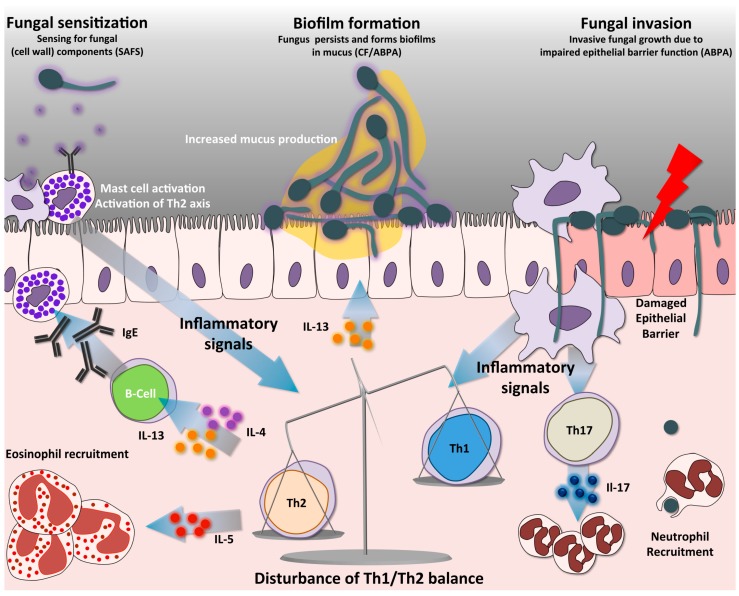
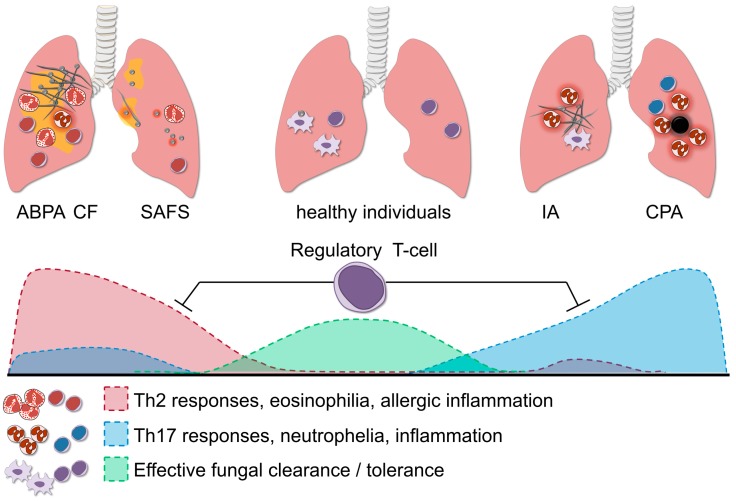
“SAFS = Severe asthma with fungal sensitization; ABPA = Allergic bronchopulmonary aspergillosis; CF = Cystic fibrosis.”
BackgroundInfluentialCenci, E., Mencacci, A., Del Sero, G., Bacci, A., Montagnoli, C., d'Ostiani, C. F., Mosci, P., Bachmann, M., Bistoni, F., Kopf, M., et al. (1999) · The Journal of Infectious Diseases · doi:10.1086/315142 · Cited by 205 · cited 9×
“The fact that a shift towards Th1 rather than Th2 is required for protection is especially highlighted in IFNγ deficient mice with an impaired protective antifungal immunity, and excessive Th2 responses [46].”
BackgroundInfluentialMontagnoli, C., Fallarino, F., Gaziano, R., Bozza, S., Bellocchio, S., Zelante, T., Kurup, W. P., Pitzurra, L., Puccetti, P., & Romani, L. (2006) · The Journal of Immunology · doi:10.4049/jimmunol.176.3.1712 · Cited by 203 · cited 6×
“Furthermore, IFNγ levels in this early phase of infection partially condition the subsequent adaptive immune response by inducing J. Fungi 2017, 3, 55 8 of 17 IDO-dependent tolerogenic DCs, which subsequently activate tolerogenic Treg that produce IL-10 and TGFβ, inhibit Th2 cells, and prevent fungal allergy [94].”
BackgroundInfluentialRomani, L., Bistoni, F., Gaziano, R., Bozza, S., Montagnoli, C., Perruccio, K., Pitzurra, L., Bellocchio, S., Velardi, A., Rasi, G., et al. (2004) · Blood · doi:10.1182/blood-2003-11-4036 · Cited by 201
Update of the WHO/IUIS A llergen Nomenclature Database based on analysis of allergen sequences
Radauer, C., Nandy, A., Ferreira, F., Goodman, R. E., Larsen, J. N., Lidholm, J., Pomés, A., Raulf‐Heimsoth, M., Rozynek, P., Thomas, W. R., et al. (2014) · Allergy · doi:10.1111/all.12348 · Cited by 185 · cited 1×
“There are estimates that fungal molecules represent approximately 16% of the known allergens [72,73].”
BackgroundBozza, S., Clavaud, C., Giovannini, G., Fontaine, T., Beauvais, A., Sarfati, J., D'Angelo, C., Perruccio, K., Bonifazi, P., Zagarella, S., et al. (2009) · The Journal of Immunology · doi:10.4049/jimmunol.0900961 · Cited by 176
Interferon- and Tumor Necrosis Factor- Protect Mice from Invasive Aspergillosis
Nagai, H., Guo, J., Choi, H., & Kurup, V. (1995) · Journal of Infectious Diseases · doi:10.1093/infdis/172.6.1554 · Cited by 174
Rivera, A., Hohl, T. M., Collins, N., Leiner, I., Gallegos, A., Saijo, S., Coward, J. W., Iwakura, Y., & Pamer, E. G. (2011) · Journal of Experimental Medicine · doi:10.1084/jem.20100906 · Cited by 155 · cited 2×
“Deficiency in dectin-1 is associated with a defective Th17 response, and therefore impaired neutrophil recruitment and excessive fungal growth [56,58].”
BackgroundCytokines and fungal infections
Antachopoulos, C., & Roilides, E. (2005) · British Journal of Haematology · doi:10.1111/j.1365-2141.2005.05498.x · Cited by 154
Kreindler, J. L., Steele, C., Nguyen, N., Chan, Y. R., Pilewski, J. M., Alcorn, J. F., Vyas, Y. M., Aujla, S. J., Finelli, P., Blanchard, M., et al. (2010) · Journal of Clinical Investigation · doi:10.1172/jci42388 · Cited by 150 · cited 1×
“fumigatus that induce a strong Treg response, a high concentration of vitamin D3 in the serum was observed, whereas patients with ABPA that exhibited a predominant Th2 response had a lower vitamin D3 serum concentration [96].”
BackgroundGresnigt, M. S., Bozza, S., Becker, K. L., Joosten, L. A. B., Abdollahi-Roodsaz, S., van der Berg, W. B., Dinarello, C. A., Netea, M. G., Fontaine, T., De Luca, A., et al. (2014) · PLoS Pathogens · doi:10.1371/journal.ppat.1003936 · Cited by 142 · cited 4×
“On the one hand, the Th17 response is activated by stimulation of dectin-1 with β-glucans, whereas on the other hand, galactosaminogalactan (GAG) can inhibit Th17 responses in vitro and in vivo, via induction of IL-1Ra [60].”
BackgroundInfluentialSelf-citationImmunotherapeutic approaches to treatment of fungal diseases
Armstrong-James, D., Brown, G. D., Netea, M. G., Zelante, T., Gresnigt, M. S., van de Veerdonk, F. L., & Levitz, S. M. (2017) · The Lancet Infectious Diseases · doi:10.1016/s1473-3099(17)30442-5 · Cited by 135 · cited 1×
“Therefore, restoration of dysregulated immune responses, by using immune-based therapies, is believed to be a promising strategy to improve the clinical outcome of fungal infections [102].”
BackgroundSelf-citationChamilos, G., Ganguly, D., Lande, R., Gregorio, J., Meller, S., Goldman, W. E., Gilliet, M., & Kontoyiannis, D. P. (2010) · PLoS ONE · doi:10.1371/journal.pone.0012955 · Cited by 132 · cited 1×
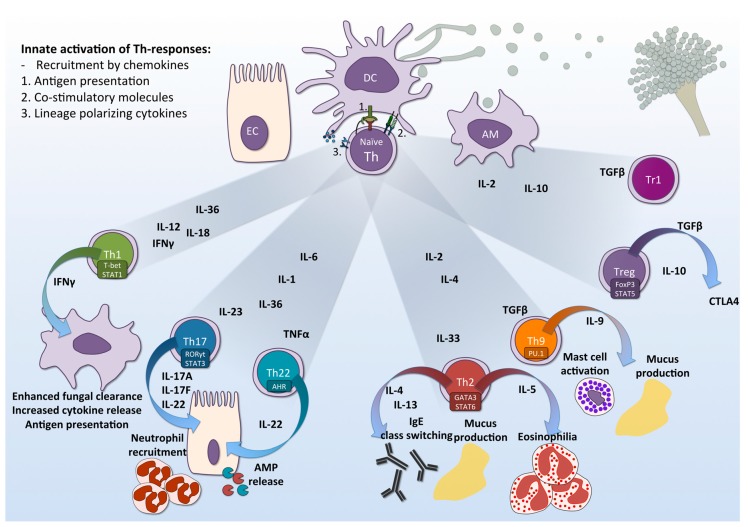
“Infection of human DCs with Aspergillus hyphae but not dormant conidia results in abundant production of IL-23, subsequently inducing a Th17 response [31].”
BackgroundA mast cell-ILC2-Th9 pathway promotes lung inflammation in cystic fibrosis
Moretti, S., Renga, G., Oikonomou, V., Galosi, C., Pariano, M., Iannitti, R. G., Borghi, M., Puccetti, M., De Zuani, M., Pucillo, C. E., et al. (2017) · Nature Communications · doi:10.1038/ncomms14017 · Cited by 132 · cited 1×
“fumigatus in cystic fibrosis, and blockade of the Th9 response in this setting could represent a novel therapeutic strategy to reduce infection associated inflammation [92].”
BackgroundBächer, P., Kniemeyer, O., Schönbrunn, A., Sawitzki, B., Assenmacher, M., Rietschel, E., Steinbach, A., Cornely, O. A., Brakhage, A. A., Thiel, A., et al. (2013) · Mucosal Immunology · doi:10.1038/mi.2013.107 · Cited by 130 · cited 2×
“Similar to the pro-inflammatory T-cell lineages, the Treg [32,34] and Type (1) regulatory T-cells (Tr1) [34,94] cells found during aspergillosis in both humans as well as murine models show Aspergillus-specificity.”
BackgroundGessner, M. A., Werner, J. L., Lilly, L. M., Nelson, M. P., Metz, A. E., Dunaway, C. W., Chan, Y. R., Ouyang, W., Brown, G. D., Weaver, C. T., et al. (2012) · Infection and Immunity · doi:10.1128/iai.05939-11 · Cited by 130 · cited 1×
“Dectin-1 mediated induction of IL-22 is crucial for releasing antimicrobial peptides that play an important role in fungal clearance [59].”
BackgroundFei, M., Bhatia, S., Oriss, T. B., Yarlagadda, M., Khare, A., Akira, S., Saijo, S., Iwakura, Y., Fallert Junecko, B. A., Reinhart, T. A., et al. (2011) · Proceedings of the National Academy of Sciences · doi:10.1073/pnas.1015476108 · Cited by 127 · cited 1×
“TNFα release by DCs can determine whether Th17 or Th2 responses are induced leading to either neutrophil or eosinophil-mediated inflammation [30].”
BackgroundChai, L. Y. A., Van De Veerdonk, F., Marijnissen, R. J., Cheng, S., Khoo, A. L., Hectors, M., Lagrou, K., Vonk, A. G., Maertens, J., Joosten, L. A. B., et al. (2010) · Immunology · doi:10.1111/j.1365-2567.2009.03211.x · Cited by 127 · cited 1×
“In vitro stimulation of circulating T-cells demonstrates a preference towards an induction of a Th1 profile [43,69], however, lung derived T-cells isolated from COPD patients were found to have a preference to a Th17 phenotype [69].”
BackgroundTh17 responses and host defense against microorganisms: an overview
Van De Veerdonk, F. L., Gresnigt, M. S., Kullberg, B. J., Van Der Meer, J. W. M., Joosten, L. A. B., & Netea, M. G. (2009) · BMB Reports · doi:10.5483/bmbrep.2009.42.12.776 · Cited by 127
Self-citationPulmonary Th17 Antifungal Immunity Is Regulated by the Gut Microbiome
McAleer, J. P., Nguyen, N. L. H., Chen, K., Kumar, P., Ricks, D. M., Binnie, M., Armentrout, R. A., Pociask, D. A., Hein, A., Yu, A., et al. (2016) · The Journal of Immunology · doi:10.4049/jimmunol.1502566 · Cited by 125 · cited 1×
“The presence of segmented filamentous bacteria can influence the pulmonary adaptive immune response partly by increasing Th17 cells population in the lungs [70].”
BackgroundInterference of Aspergillus fumigatus with the immune response
Heinekamp, T., Schmidt, H., Lapp, K., Pähtz, V., Shopova, I., Köster-Eiserfunke, N., Krüger, T., Kniemeyer, O., & Brakhage, A. A. (2015) · Seminars in Immunopathology · doi:10.1007/s00281-014-0465-1 · Cited by 123
Lack of Toll IL-1R8 Exacerbates Th17 Cell Responses in Fungal Infection
Bozza, S., Zelante, T., Moretti, S., Bonifazi, P., DeLuca, A., D’Angelo, C., Giovannini, G., Garlanda, C., Boon, L., Bistoni, F., et al. (2008) · The Journal of Immunology · doi:10.4049/jimmunol.180.6.4022 · Cited by 122 · cited 1×
“Tir8−/− mice were more susceptible to infection and exhibited a higher inflammatory pathology; this finding highlighted the possible role of TIR8 in orchestrating protective response or immunopathology against fungal infection [68].”
BackgroundAntifungal type 1 responses are upregulated in IL-10-deficient mice
Sero, G. D., Mencacci, A., Cenci, E., d’Ostiani, C. F., Montagnoli, C., Bacci, A., Mosci, P., Köpf, M., & Romani, L. R. (1999) · Microbes and Infection · doi:10.1016/s1286-4579(99)00245-2 · Cited by 122 · cited 1×
“In addition, IL-10 released by Th2 cells also negatively impacts protective Th1 responses in aspergillosis models, by suppressing pro-inflammatory cytokines and chemokines, inhibiting T-cell activation and IFNγ production, and promoting a Th2 response [47].”
BackgroundIL‐17/Th17 in anti‐fungal immunity: What's new?
Zelante, T., De Luca, A., D' Angelo, C., Moretti, S., & Romani, L. (2009) · European Journal of Immunology · doi:10.1002/eji.200839102 · Cited by 113 · cited 1×
“Despite the important role of Th17 for fungal clearance, uncontrolled or prolonged Th17 activation is detrimental to the host, by causing pulmonary damage and persistent inflammation [64,65].”
BackgroundThe IL‐36 receptor pathway regulates Aspergillus fumigatus‐induced Th1 and Th17 responses
Gresnigt, M. S., Rösler, B., Jacobs, C. W. M., Becker, K. L., Joosten, L. A. B., van der Meer, J. W. M., Netea, M. G., Dinarello, C. A., & van de Veerdonk, F. L. (2013) · European Journal of Immunology · doi:10.1002/eji.201242711 · Cited by 108 · cited 1×
“In addition, novel IL-1 cytokines IL-36α,β,γ and IL-36Ra can also regulate the induction of Th17 responses by Aspergillus [53].”
BackgroundSelf-citationInvasive aspergillosis in chronic granulomatous disease
Segal, B. H., & Romani, L. R. (2009) · Medical Mycology · doi:10.1080/13693780902736620 · Cited by 107 · cited 1×
“Imbalance of the Th17/Treg axis in certain conditions contributes to the pathogenesis of aspergillosis [98].”
BackgroundCytokine Networking in Lungs of Immunocompetent Mice in Response to Inhaled Aspergillus fumigatus
Brieland, J. K., Jackson, C., Menzel, F., Loebenberg, D., Cacciapuoti, A., Halpern, J., Hurst, S., Muchamuel, T., Debets, R., Kastelein, R., et al. (2001) · Infection and Immunity · doi:10.1128/iai.69.3.1554-1560.2001 · Cited by 105 · cited 1×
“fumigatus show elevated IL-18 in bronchoalveolar lavages and lung tissues [40], which could suggest a role for IL-18 in host defense against Aspergillus.”
BackgroundMurdock, B. J., Shreiner, A. B., McDonald, R. A., Osterholzer, J. J., White, E. S., Toews, G. B., & Huffnagle, G. B. (2011) · Infection and Immunity · doi:10.1128/iai.00508-10 · Cited by 105
Immune reconstitution following hematopoietic stem-cell transplantation
Geddes, M. N., & Storek, J. (2007) · Best Practice & Research Clinical Haematology · doi:10.1016/j.beha.2006.09.009 · Cited by 104
Pathophysiology and immunology of allergic bronchopulmonary aspergillosis
Moss, R. B. (2005) · Medical Mycology · doi:10.1080/13693780500052255 · Cited by 102 · cited 2×
“The pathogenesis of these allergic forms of aspergillosis is thought to be mediated predominantly by a hyperactive Th2 response (Figure 2), leading to airway hypersensitivity, IgE production and persistent airway inflammation [45].”
BackgroundImmune Correlates of Protection in Human Invasive Aspergillosis
Camargo, J. F., & Husain, S. (2014) · Clinical Infectious Diseases · doi:10.1093/cid/ciu337 · Cited by 99 · cited 1×
“Resident alveolar macrophages (AM) engulf conidia and release different cytokines and chemokines, including TNFα, MIP1-α, IL-1β, IL-1α, IL-6, G-CSF and GM-CSF [21], leading to further recruitment of innate effector cells including the dendritic cells (DCs) [9].”
BackgroundExogenous Interferon-γ Immunotherapy for Invasive Fungal Infections in Kidney Transplant Patients
Armstrong-James, D., Teo, I. A., Shrivastava, S., Petrou, M. A., Taube, D., Dorling, A., & Shaunak, S. (2010) · American Journal of Transplantation · doi:10.1111/j.1600-6143.2010.03094.x · Cited by 97
Interaction of the pathogenic mold Aspergillus fumigatus with lung epithelial cells
Osherov, N. (2012) · Frontiers in Microbiology · doi:10.3389/fmicb.2012.00346 · Cited by 96
Th17 cells in the setting of Aspergillus infection and pathology
Zelante, T., Bozza, S., De Luca, A., D'angelo, C., Bonifazi, P., Moretti, S., Giovannini, G., Bistoni, F., & Romani, L. (2009) · Medical Mycology · doi:10.1080/13693780802140766 · Cited by 94 · cited 1×
“Despite the important role of Th17 for fungal clearance, uncontrolled or prolonged Th17 activation is detrimental to the host, by causing pulmonary damage and persistent inflammation [64,65].”
BackgroundMurdock, B. J., Falkowski, N. R., Shreiner, A. B., Sadighi Akha, A. A., McDonald, R. A., White, E. S., Toews, G. B., & Huffnagle, G. B. (2012) · Infection and Immunity · doi:10.1128/iai.05529-11 · Cited by 87 · cited 1×
“In addition to the high Th2 response, Th17 responses also significantly contribute to the detrimental inflammatory response observed in Aspergillus related allergy, by stimulating excessive neutrophil recruitment [81,85,86].”
BackgroundRamirez-Ortiz, Z. G., & Means, T. K. (2012) · Virulence · doi:10.4161/viru.22295 · Cited by 84 · cited 1×
“fumigatus by specifically activating naïve CD4+ T-cells and triggering their differentiation into disparate lineages of effector cells [23] (Figure 1).”
BackgroundBecker, K. L., Gresnigt, M. S., Smeekens, S. P., Jacobs, C. W., Magis‐Escurra, C., Jaeger, M., Wang, X., Lubbers, R., Oosting, M., Joosten, L. A. B., et al. (2015) · Clinical & Experimental Allergy · doi:10.1111/cea.12354 · Cited by 83 · cited 1×
“This disturbed ration is characterized by elevated IL-5 and IL-13, and a low IFNγ response in comparison to non-allergic controls [80].”
BackgroundSelf-citationGafa, V., Lande, R., Gagliardi, M. C., Severa, M., Giacomini, E., Remoli, M. E., Nisini, R., Ramoni, C., Di Francesco, P., Aldebert, D., et al. (2006) · Infection and Immunity · doi:10.1128/iai.74.3.1480-1489.2006 · Cited by 83 · cited 3×
“Human DCs, stimulated with A. fumigatus conidia, trigger significant production of IL-12, which is the main cytokine inducing IFNγ-producing T-cells [27].”
BackgroundWan, L., Zhang, Y., Lai, Y., Jiang, M., Song, Y., Zhou, J., Zhang, Z., Duan, X., Fu, Y., Liao, L., et al. (2015) · Journal of Clinical Oncology · doi:10.1200/jco.2014.60.5121 · Cited by 81 · cited 1×
“Adjunctive therapy of GM-CSF and IFNγ alongside antifungal treatment was also able to improve disease outcome in both neutropenic and non-neutropenic patients [105,110,111].”
BackgroundTodeschini, Murari, Bonesi, Pizzolo, Verlato, Tecchio, Meneghini, Franchini, Giuffrida, Perona, et al. (1999) · European Journal of Clinical Investigation · doi:10.1046/j.1365-2362.1999.00474.x · Cited by 81
First Line of Defense: Innate Cell-Mediated Control of Pulmonary Aspergillosis
Espinosa, V., & Rivera, A. (2016) · Frontiers in Microbiology · doi:10.3389/fmicb.2016.00272 · Cited by 77
Antifungal Th Immunity: Growing up in Family
Borghi, M., Renga, G., Puccetti, M., Oikonomou, V., Palmieri, M., Galosi, C., Bartoli, A., & Romani, L. (2014) · Frontiers in Immunology · doi:10.3389/fimmu.2014.00506 · Cited by 75 · cited 1×
“The Th9 subset has only recently been described [89], and is closely associated to the Th2 response.”
BackgroundClinical-scale generation of human anti-Aspergillus T cells for adoptive immunotherapy
Tramsen, L., Koehl, U., Tonn, T., Latgé, J.-P., Schuster, F. R., Borkhardt, A., Uharek, L., Quaritsch, R., Beck, O., Seifried, E., et al. (2008) · Bone Marrow Transplantation · doi:10.1038/bmt.2008.271 · Cited by 74
LUCA, A. D., Bozza, S., Zelante, T., Zagarella, S., D'Angelo, C., Perruccio, K., Vacca, C., Carvalho, A., Cunha, C., Aversa, F., et al. (2010) · Cellular and Molecular Immunology · doi:10.1038/cmi.2010.43 · Cited by 74 · cited 1×
“Mice defective in this pathway exhibited a stronger Th17 response manifested by infiltration of neutrophils in the lungs, decreased Th1/Treg response, and higher fungal burden and immunopathology [20].”
BackgroundLathrop, M. J., Brooks, E. M., Nick, B., Sokocevic, D., Borg, Z. D., Goodwin, M., Loi, R., Cruz, F. F., Dunaway, C. W., Steele, C. H., et al. (2014) · Stem Cells Translational Medicine · doi:10.5966/sctm.2013-0061 · Cited by 73 · cited 1×
“fumigatus hyphal extract, administration of mesenchymal stromal cells (MSC) was shown to significantly decrease airway hyper-responsiveness, through reduction of Th17-mediated inflammation [88].”
BackgroundStuehler, C., Kuenzli, E., Jaeger, V. K., Baettig, V., Ferracin, F., Rajacic, Z., Kaiser, D., Bernardini, C., Forrer, P., Weisser, M., et al. (2015) · Journal of Infectious Diseases · doi:10.1093/infdis/jiv143 · Cited by 70 · cited 3×
“Adoptive transfer of in vitro-generated CD4+ T-cells in patients receiving allogeneic HSCT has been shown to improve clearance of Aspergillus infection and confer protection against invasive aspergillosis [104,116].”
BackgroundCenci, E., Mencacci, A., Del Sero, G., Bistoni, F., & Romani, L. (1997) · The Journal of Infectious Diseases · doi:10.1086/514027 · Cited by 69
Jolink, H., de Boer, R., Hombrink, P., Jonkers, R. E., van Dissel, J. T., Falkenburg, J. H. F., & Heemskerk, M. H. M. (2017) · Journal of Infection · doi:10.1016/j.jinf.2016.10.010 · Cited by 65 · cited 1×
“In vitro stimulation of circulating T-cells demonstrates a preference towards an induction of a Th1 profile [43,69], however, lung derived T-cells isolated from COPD patients were found to have a preference to a Th17 phenotype [69].”
BackgroundAllergic bronchopulmonary aspergillosis: New concepts of pathogenesis and treatment
Wark, P. A. B., & Gibson, P. G. (2001) · Respirology · doi:10.1046/j.1440-1843.2001.00289.x · Cited by 62
Rotjanapan, P., Chen, Y., Chakrabarti, A., Li, R. Y., Rudramurthy, S. M., Yu, J., Kung, H., Watcharananan, S. P., Tan, A. L., Saffari, S. E., et al. (2017) · Medical Mycology · doi:10.1093/mmy/myx029 · Cited by 60
Barrios, C. S., Johnson, B. D., Henderson, J. D., Fink, J. N., Kelly, K. J., & Kurup, V. P. (2005) · Clinical & Experimental Immunology · doi:10.1111/j.1365-2249.2005.02905.x · Cited by 54 · cited 1×
“Interaction of CD28 on T-cell surface with its ligand CD80 (B7-1) or CD86 (B7-2) on APCs and OX40 with OX40L has been shown to contribute to the immunological process of allergic forms of aspergillosis [26].”
BackgroundIgE and eosinophil regulation in a murine model of allergic aspergillosis
Kurup, V. P., Choi, H., Murali, P. S., & Coffman, R. L. (1994) · Journal of Leukocyte Biology · doi:10.1002/jlb.56.5.593 · Cited by 52
Gafa, V., Remoli, M. E., Giacomini, E., Gagliardi, M. C., Lande, R., Severa, M., Grillot, R., & Coccia, E. M. (2007) · Microbes and Infection · doi:10.1016/j.micinf.2007.03.015 · Cited by 51 · cited 1×
“In addition, upon engulfment of conidia, DCs induce the migration of T-helper cells by releasing the chemokines CCL3, CCL4, CXCL10 and CCL20 [25].”
BackgroundThe IL-17F/IL-17RC Axis Promotes Respiratory Allergy in the Proximal Airways
LUCA, A. D., Pariano, M., Cellini, B., Costantini, C., Villella, V. R., Jose, S. S., Palmieri, M., Borghi, M., Galosi, C., Paolicelli, G., et al. (2017) · Cell Reports · doi:10.1016/j.celrep.2017.07.063 · Cited by 51 · cited 2×
“In addition to the high Th2 response, Th17 responses also significantly contribute to the detrimental inflammatory response observed in Aspergillus related allergy, by stimulating excessive neutrophil recruitment [81,85,86].”
BackgroundMorton, C. O., Bouzani, M., Loeffler, J., & Rogers, T. R. (2012) · Frontiers in Microbiology · doi:10.3389/fmicb.2012.00413 · Cited by 50
Lother, J., Breitschopf, T., Krappmann, S., Morton, C. O., Bouzani, M., Kurzai, O., Gunzer, M., Hasenberg, M., Einsele, H., & Loeffler, J. (2014) · International Journal of Medical Microbiology · doi:10.1016/j.ijmm.2014.08.009 · Cited by 49 · cited 1×
“Different subsets of DCs exhibit distinct responses to the fungus, where monocyte-derived DC (moDC) and myeloid DC (mDC) show greatest similarities, producing pro-inflammatory cytokines IL-1β, TNFα, chemokines IL-8, CXCL1, as well as anti-inflammatory cytokines IL-4 and IL-10 specifically upon stimulation with hyphae…”
BackgroundBandera, A., Trabattoni, D., Ferrario, G., Cesari, M., Franzetti, F., Clerici, M., & Gori, A. (2008) · Infection · doi:10.1007/s15010-008-7378-7 · Cited by 48 · cited 1×
“Adjunctive therapy of GM-CSF and IFNγ alongside antifungal treatment was also able to improve disease outcome in both neutropenic and non-neutropenic patients [105,110,111].”
BackgroundCroston, T. L., Nayak, A. P., Lemons, A. R., Goldsmith, W. T., Gu, J. K., Germolec, D. R., Beezhold, D. H., & Green, B. J. (2016) · Clinical & Experimental Allergy · doi:10.1111/cea.12783 · Cited by 48 · cited 1×
“fumigatus conidia and is known to mediate immunopathology in response to chronic allergen airway exposure [49].”
BackgroundDysregulation in lung immunity — The protective and pathologic Th17 response in infection
Way, E. E., Chen, K., & Kolls, J. K. (2013) · European Journal of Immunology · doi:10.1002/eji.201343713 · Cited by 47
Παπαδοπούλου, Α., Kaloyannidis, P., Yannaki, E., & Cruz, C. C. (2015) · Critical Reviews in Oncology/Hematology · doi:10.1016/j.critrevonc.2015.10.005 · Cited by 47 · cited 1×
“Adoptive transfer of in vitro-generated CD4+ T-cells in patients receiving allogeneic HSCT has been shown to improve clearance of Aspergillus infection and confer protection against invasive aspergillosis [104,116].”
BackgroundGresnigt, M. S., Rekiki, A., Rasid, O., Savers, A., Jouvion, G., Dannaoui, E., Parlato, M., Fitting, C., Brock, M., Cavaillon, J.-M., et al. (2016) · Scientific Reports · doi:10.1038/srep26490 · Cited by 41 · cited 3×
“On the one hand, the Th17 response is activated by stimulation of dectin-1 with β-glucans, whereas on the other hand, galactosaminogalactan (GAG) can inhibit Th17 responses in vitro and in vivo, via induction of IL-1Ra [60].”
BackgroundSelf-citationImmunotherapy of aspergillosis
Carvalho, A., Cunha, C., Bistoni, F., & Romani, L. R. (2011) · Clinical Microbiology and Infection · doi:10.1111/j.1469-0691.2011.03681.x · Cited by 39
Gresnigt, M. S., Becker, K. L., Smeekens, S. P., Jacobs, C. W. M., Joosten, L. A. B., van der Meer, J. W. M., Netea, M. G., & van de Veerdonk, F. L. (2013) · The Journal of Immunology · doi:10.4049/jimmunol.1202601 · Cited by 39
Self-citationHomma, T., Kato, A., Bhushan, B., Norton, J. E., Suh, L. A., Carter, R. G., Gupta, D. S., & Schleimer, R. P. (2015) · American Journal of Respiratory Cell and Molecular Biology · doi:10.1165/rcmb.2015-0062oc · Cited by 39 · cited 1×
“fumigatus activates protease receptor (PAR-2) and PTPN11 (SHP2), a phosphatase that inhibits IFN signaling, hence skewing the T-cell response preferably to Th2 [48].”
BackgroundJolink, H., Hagedoorn, R. S., Lagendijk, E. L., Drijfhout, J. W., van Dissel, J. T., Falkenburg, J. H. F., & Heemskerk, M. H. M. (2014) · Haematologica · doi:10.3324/haematol.2013.098830 · Cited by 38 · cited 3×
“T-cells specific to fungal catalase and Crf1 that express CD154 and IFNγ were identified in patients recovering from invasive aspergillosis, whereas these cells were absent in patients with progressive infection [33].”
BackgroundInfluentialArmstrong‐James, D. P. H., Turnbull, S. A., Teo, I., Stark, J., Rogers, N. J., Rogers, T. R. F., Bignell, E., & Haynes, K. (2009) · The Journal of Infectious Diseases · doi:10.1086/605931 · Cited by 35 · cited 1×
“Furthermore, impairment of the IFNγ response is associated with increased interleukin-17a expression and attributes to mortality in mice with invasive aspergillosis [67].”
BackgroundPattern recognition receptors and their role in invasive aspergillosis
Gresnigt, M. S., Netea, M. G., & van de Veerdonk, F. L. (2012) · Annals of the New York Academy of Sciences · doi:10.1111/j.1749-6632.2012.06759.x · Cited by 34
Self-citationNguyen, N. L. H., Pilewski, J. M., Celedón, J. C., Mandalapu, S., Blanchard, M. L., DeRicco, A., Hartigan, E., Alcorn, J. F., & Kolls, J. K. (2015) · Asthma Research and Practice · doi:10.1186/s40733-015-0003-5 · Cited by 33 · cited 1×
“fumigatus-specific Th2 responses in cystic fibrosis patients [97].”
BackgroundInnate Lung Defense during Invasive Aspergillosis: New Mechanisms
Garth, J. M., & Steele, C. H. (2017) · Journal of Innate Immunity · doi:10.1159/000455125 · Cited by 33
Th17 cytokine deficiency in patients with Aspergillus skull base osteomyelitis
Delsing, C. E., Becker, K. L., Simon, A., Kullberg, B. J., Bleeker‐Rovers, C. P., van de Veerdonk, F. L., & Netea, M. G. (2015) · BMC Infectious Diseases · doi:10.1186/s12879-015-0891-2 · Cited by 32 · cited 1×
“Additional evidence for the importance of the Th17 response in host defense against Aspergillus-infection is provided by the observation that patients with Aspergillus skull base osteomyelitis have defects in Th17 responses [62].”
BackgroundTh2 and Th9 responses in patients with chronic mucocutaneous candidiasis and hyper‐IgE syndrome
Becker, K., Rösler, B., Wang, X., Lachmandas, E., Kamsteeg, M., Jacobs, C. W. M., Joosten, L. A. B., Netea, M. G., & van de Veerdonk, F. L. (2016) · Clinical & Experimental Allergy · doi:10.1111/cea.12787 · Cited by 32 · cited 1×
“However in patients with hyper IgE syndrome (HIES) caused by STAT3 mutation, this IL-9 response was significantly lower in the presence of IL-4, which could be due to the deficiency of Th17 cell subset in these patients [91].”
BackgroundSafdar, A., Rodriguez, G. H., Zuniga, J., Akhrass, F. A., Georgescu, G., & Pande, A. (2012) · Acta Haematologica · doi:10.1159/000342121 · Cited by 29 · cited 1×
“Adjunctive therapy of GM-CSF and IFNγ alongside antifungal treatment was also able to improve disease outcome in both neutropenic and non-neutropenic patients [105,110,111].”
BackgroundBedke, T., Iannitti, R. G., LUCA, A. D., Giovannini, G., Fallarino, F., Berges, C., Latgé, J., Einsele, H., Romani, L. R., & Topp, M. S. (2014) · Immunology and Cell Biology · doi:10.1038/icb.2014.34 · Cited by 26
WANG, J. M., DENIS, M., FOURNFER, M., & LAVIOLETTE, M. (1994) · Scandinavian Journal of Immunology · doi:10.1111/j.1365-3083.1994.tb03334.x · Cited by 26
Allergic bronchopulmonary aspergillosis: New concepts of pathogenesis and treatment
Wark, P. A. B., & Gibson, P. G. (2001) · Respirology · doi:10.1111/j.1440-1843.2001.00289.x · Cited by 23 · cited 1×
“Bronchoalveolar lavage (BAL) of ABPA patients showed the presence of infiltrates rich in eosinophils, neutrophils, lymphocytes and often fungal hyphae [78,79].”
BackgroundMulligan, J. K., Mulligan, R. M., Atkinson, C., & Schlosser, R. J. (2011) · International Forum of Allergy & Rhinology · doi:10.1002/alr.20055 · Cited by 22
Smeekens, S. P., Henriet, S. S. V., Gresnigt, M. S., Joosten, L. A. B., Hermans, P. W. M., Netea, M. G., Warris, A., & van de Veerdonk, F. L. (2012) · Journal of Interferon & Cytokine Research · doi:10.1089/jir.2011.0046 · Cited by 20 · cited 1×
“PBMC from patients with chronic granulomatous disease exhibited a lower IL-17A production upon stimulation with Aspergillus and Candida compared to healthy donors, and this might contribute to ineffective fungal clearance in these patients [63].”
BackgroundSelf-citationSehgal, I. S., & Agarwal, R. (2015) · CHEST Journal · doi:10.1378/chest.15-0069 · Cited by 18 · cited 6×
“SAFS = Severe asthma with fungal sensitization; ABPA = Allergic bronchopulmonary aspergillosis; CF = Cystic fibrosis.”
BackgroundInfluentialClearance of Aspergillus fumigatus is impaired in the airway in allergic inflammation
Fukahori, S., Matsuse, H., Tsuchida, T., Kawano, T., Nishino, T., Fukushima, C., & Kohno, S. (2014) · Annals of Allergy Asthma & Immunology · doi:10.1016/j.anai.2014.05.011 · Cited by 17 · cited 1×
“fumigatus results in increased Th17 response, which could lead to persistent inflammation and defective fungal clearance [87].”
BackgroundRaijmakers, R. P. H., Sprenkeler, E. G. G., Aleva, F. E., Jacobs, C. W. M., Kanneganti, T.-D., Joosten, L. A. B., van de Veerdonk, F. L., & Gresnigt, M. S. (2017) · Scientific Reports · doi:10.1038/s41598-017-11738-4 · Cited by 16 · cited 1×
“fumigatus also induces regulatory T-cells with a Th17-like phenotype [120], however, it remains to be determined to what extent these cells contribute to the detrimental immunopathology seen during aspergillosis.”
BackgroundSelf-citationImmunotherapy of invasive fungal infection in hematopoietic stem cell transplant recipients
Lehrnbecher, T., Schmidt, S., Tramsen, L., & Klingebiel, T. E. (2013) · Frontiers in Oncology · doi:10.3389/fonc.2013.00017 · Cited by 12 · cited 1×
“Clinical-scale generation of anti-Aspergillus T-cells can be achieved by stimulating T-cells with a single antigenic epitope, however, whole fungal extract generates T-cells with more efficient anti-fungal properties [116,117].”
BackgroundStructural aspects of fungal allergens
Crameri, R. (2015) · Seminars in Immunopathology · doi:10.1007/s00281-014-0458-0 · Cited by 10
Bonnet, S., Duléry, R., Regany, K., Bouketouche, M., Magro, L., Coiteux, V., Alfandari, S., Berthon, C., Quesnel, B., & Yakoub‐Agha, I. (2017) · Current Research in Translational Medicine · doi:10.1016/j.retram.2017.05.003 · Cited by 7 · cited 1×
“Despite the development of strict antifungal treatment regimens, the mortality and morbidity due to aspergillosis remained relatively unchanged within the past few years [7,100].”
BackgroundIgE serum concentration against airborne fungi in children with respiratory allergies
Bezerra, G. F. D. B., Haidar, D. M. C., da Silva, M. A. C. N., Filho, W. E. M., dos Santos, R. M., Rosa, I. G., Viana, G. M. D. C., Zaror, L. C., & Nascimento, M. D. D. S. B. (2016) · Allergy Asthma and Clinical Immunology · doi:10.1186/s13223-016-0128-y · Cited by 6
Cited by
Aspergillus fumigatus and Aspergillosis in 2019
Latgé, J.-P., & Chamilos, G. (2019) · Clinical Microbiology Reviews · doi:10.1128/cmr.00140-18 · Cited by 1,400
Pathogenicity and virulence of Aspergillus fumigatus
Earle, K., Valero, C., Conn, D. P., Vere, G., Cook, P. C., Bromley, M., Bowyer, P., & Gago, S. (2023) · Virulence · doi:10.1080/21505594.2023.2172264 · Cited by 132
Exploring the immunopathology of type 2 inflammatory airway diseases
Albloushi, S., & Al-Ahmad, M. S. (2024) · Frontiers in Immunology · doi:10.3389/fimmu.2024.1285598 · Cited by 95
Wurster, S., Watowich, S. S., & Kontoyiannis, D. P. (2022) · Frontiers in Immunology · doi:10.3389/fimmu.2022.1018202 · Cited by 81
The Interactions Between Candida albicans and Mucosal Immunity
Zhou, Y., Cheng, L., Lei, Y. L., Ren, B., & Zhou, X. (2021) · Frontiers in Microbiology · doi:10.3389/fmicb.2021.652725 · Cited by 77
“Furthermore, Th1 cell response and IFN-γ production are essential during neutrophil and macrophage inhibiting processes against fungal invasion (Netea et al., 2015; Dewi et al., 2017).”
Background
Metadata
- Authors
- Dewi, I., Van de Veerdonk, F., & Gresnigt, M.
- Affiliations
- Radboud University Nijmegen (NL)
- Department of Experimental Internal Medicine and Radboud Center for Infectious diseases (RCI), Radboud University Medical Center, Geert Grooteplein Zuid 10, 6525 GA Nijmegen, The Netherlands
- Corresponding author
- Gresnigt, Mark
- Venue
- Journal of Fungi
- Publisher
- MDPI AG
- Published
- 2017-10-04
- Volume
- 3
- Issue
- 4
- Pages
- 55
- ISSN
- 2309-608X (ISSN-L)
- PMC
- PMC5753157
- OpenAlex
- W2761510753
- Cited by
- 69
- References
- 124
- Citations by year
- 2026: 3 · 2025: 10 · 2024: 10 · 2023: 8 · 2022: 5 · 2021: 10 · 2020: 6 · 2019: 8 · 2018: 8
- FWCI
- 0.92
- Type
- journal article
- Language
- en
- Open access
- gold
- doi.org
- Licence
- Locations
- Journal of Fungi (publishedVersion, cc-by)
- PubMed Central (publishedVersion, cc-by)
- PubMed (publishedVersion)
- DOAJ (DOAJ: Directory of Open Access Journals) (submittedVersion, cc-by-sa)
- Funders
- Lembaga Pengelola Dana Pendidikan
- Topics
- Health Sciences › Medicine › Infectious Diseases › Antifungal resistance and susceptibility
- Health Sciences › Medicine › Pulmonary and Respiratory Medicine › Asthma and respiratory diseases
- Life Sciences › Biochemistry, Genetics and Molecular Biology › Molecular Biology › Fungal and yeast genetics research
- Keywords
- Aspergillus fumigatus, aspergillosis, T helper cells, Th1 response, Th2 immune response, Th17 response, regulatory T cells, adaptive immune response, host defense, allergic bronchopulmonary aspergillosis, immunopathology, host-directed therapy, fungal clearance
About these checks
Registry, retraction, Cites and statistics results are computed, not judged, with one exception: a printed reference that no index lists is read once by a model before it counts as a citation error. Claims are extracted by a model and kept only when their quote appears verbatim in the text; each cited source is then checked, with a model’s help, for whether it says what the claim relies on. Those verdicts can be wrong — read the claim’s quote and the cited source before relying on one.
Statistics and arithmetic are recomputed, not judged.
Confidence bands are shown only for fields calibrated on our annotated test set. None is calibrated yet, so no band is shown.
What counts as a claim ›How we measure confidence ›How we check this ›
Are you an author, or do you see a problem with this page? Request a review
Data sources
Bibliographic data: Semantic Scholar, OpenAlex, Crossref.
Contains information from the Semantic Scholar Academic Graph Datasets, made available under the ODC Attribution License (ODC-BY 1.0).
Semantic Scholar’s data is described in: Kinney, R., et al. (2023). The Semantic Scholar Open Data Platform. arXiv:2301.10140.
