

Role of Hydrophobins in Aspergillus fumigatus
Open accessThe DOI matches its Crossref record; 55 of the 55 references it cites were found in a registry or an index.
Abstract
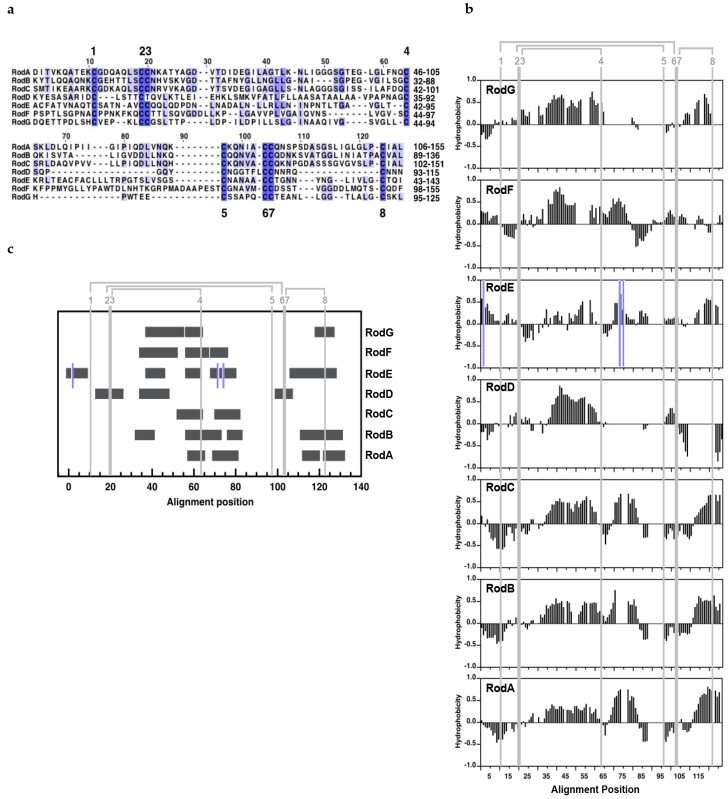
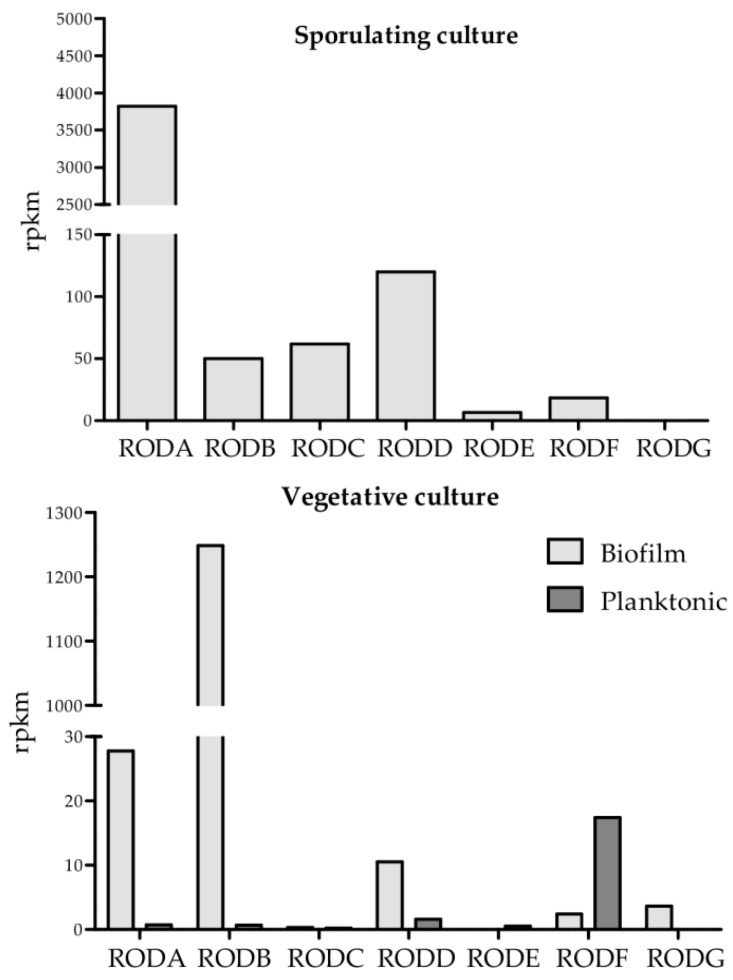
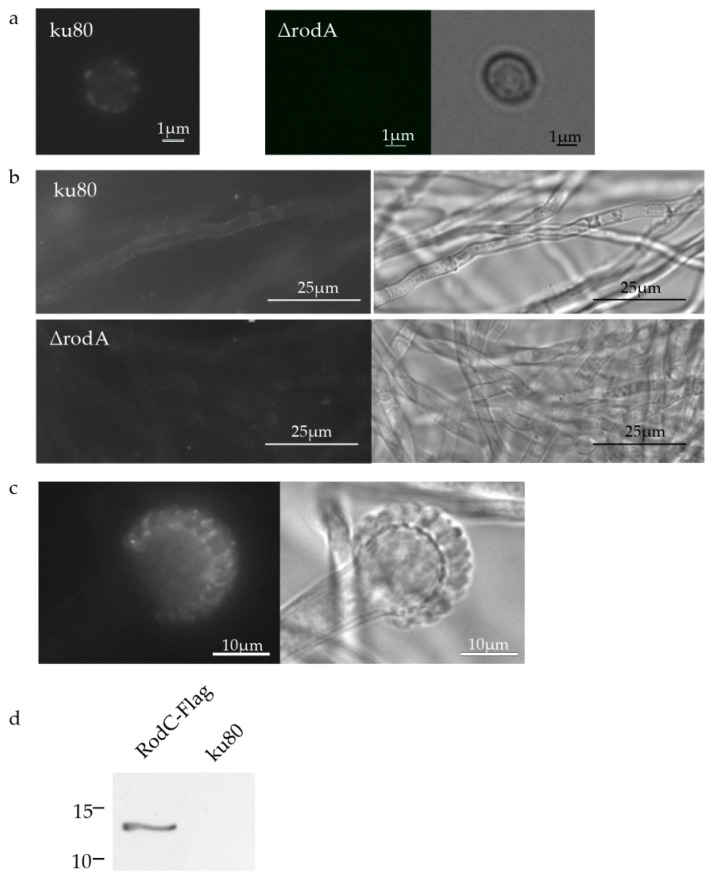
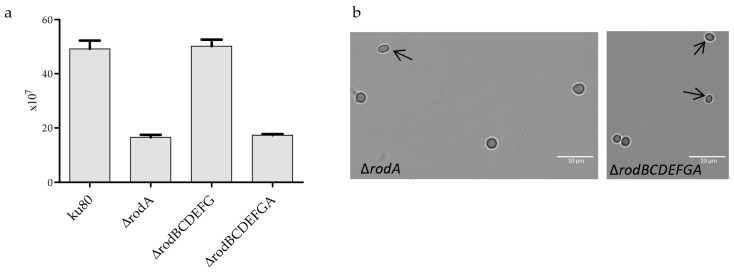
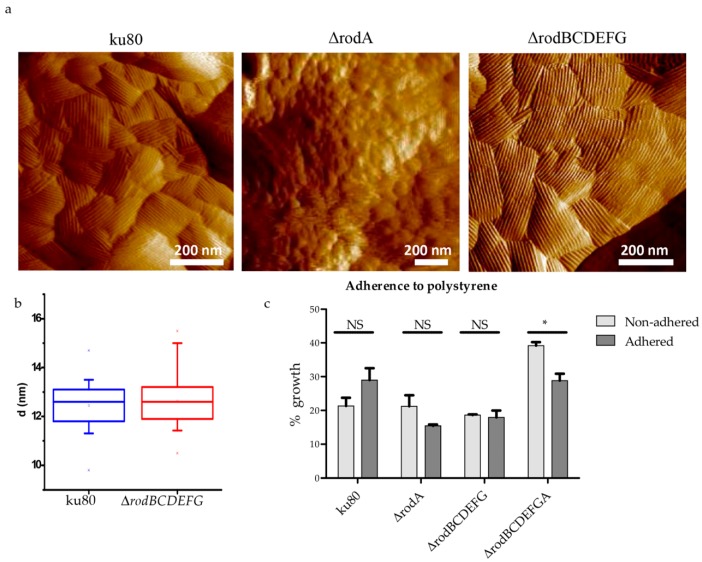
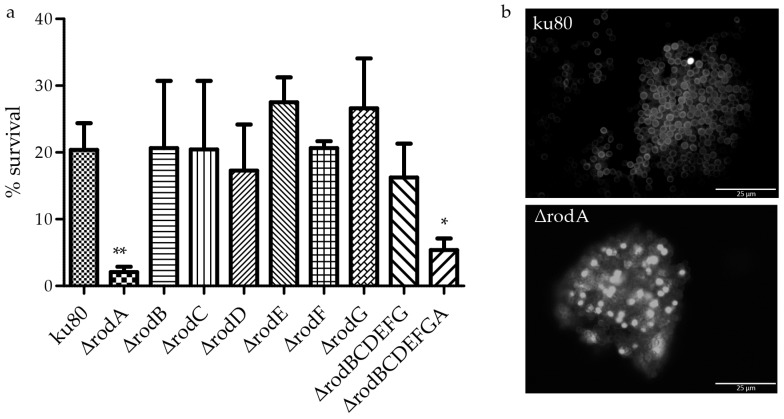
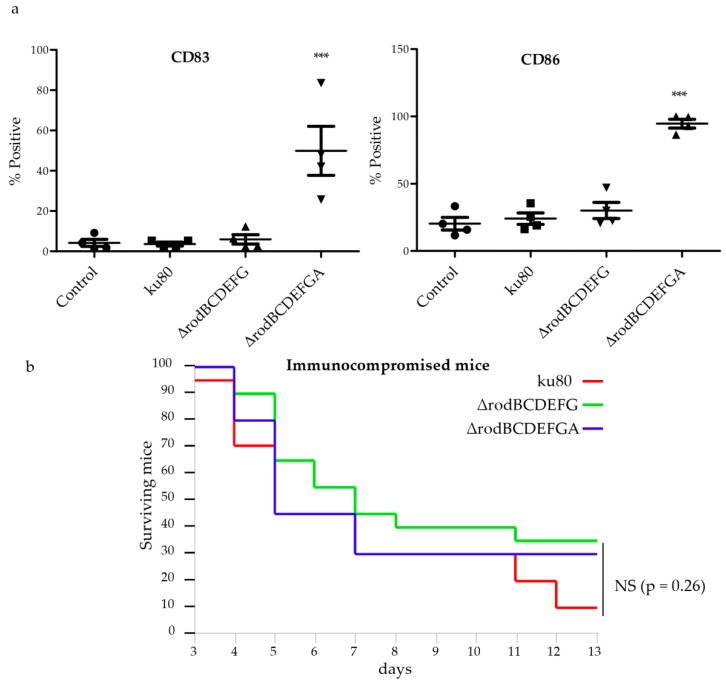
Resistance of Aspergillus fumigatus conidia to desiccation and their capacity to reach the alveoli are partly due to the presence of a hydrophobic layer composed of a protein from the hydrophobin family, called RodA, which covers the conidial surface. In A. fumigatus there are seven hydrophobins (RodA–RodG) belonging to class I and III. Most of them have never been studied. We constructed single and multiple hydrophobin-deletion mutants until the generation of a hydrophobin-free mutant. The phenotype, immunogenicity, and virulence of the mutants were studied. RODA is the most expressed hydrophobin in sporulating cultures, whereas RODB is upregulated in biofilm conditions and in vivo Only RodA, however, is responsible for rodlet formation, sporulation, conidial hydrophobicity, resistance to physical insult or anionic dyes, and immunological inertia of the conidia. None of the hydrophobin plays a role in biofilm formation or its hydrophobicity. RodA is the only needed hydrophobin in A. fumigatus, conditioning the structure, permeability, hydrophobicity, and immune-inertia of the cell wall surface in conidia. Moreover, the defect of rodlets on the conidial cell wall surface impacts on the drug sensitivity of the fungus.
Overview
The claims and statistics of this paper haven’t been checked yet.
Free: it reads the open-access text and checks the first 5 claims that cite a source we can check. Create a free account to check every claim.
Integrity signals
Registry
Cites
Statistics
Figures
Verification
Claims the paper makes
The claims and statistics of this paper haven’t been checked yet.
Free: it reads the open-access text and checks the first 5 claims that cite a source we can check. Create a free account to check every claim.
Claims other papers make about this one
Each is checked against this paper’s own text: does it say what the citing paper says it does?
The source backs part of the claim, not all of it — or backs it for a different population, condition or comparison.
In the citing paper
“The presence of different carbohydrate and protein molecules on the conidial surface, appearing as compensatory reactions to rodlet mutation, was responsible for dendritic cell activation.”
From Aspergillus fumigatus and Aspergillosis in 2019 (2019) · cites this paper as [472]
Experimental — accuracy not yet measuredThe source backs part of the claim, not all of it — or backs it for a different population, condition or comparison.
In the citing paper
“In contrast to the parental conidia, mutant conidia lacking disulfide bridges within RodA or expressing RodA carrying the double (I115S/I146G) mutation activated dendritic cells with the subsequent secretion of proinflammatory cytokines.”
From Aspergillus fumigatus and Aspergillosis in 2019 (2019) · cites this paper as [472]
Experimental — accuracy not yet measuredThe source backs part of the claim, not all of it — or backs it for a different population, condition or comparison.
In the citing paper
“The reason is that the conidial outer layer of these mutants is covered by a layer of glycoproteins responsible for conidial hydrophilicity.”
From Aspergillus fumigatus and Aspergillosis in 2019 (2019) · cites this paper as [472]
Experimental — accuracy not yet measuredThe check wasn’t confident either way, so it gives no verdict — never disputed.
In the citing paper
“Other point mutations in the hydrophobic residues of one or preferably the two amyloid regions (I115S/I146G point mutation) of the RodA protein have modified the size of the rodlet fibers and delayed the production of the rodlet, leading to partial coverage of the conidial surface by rodlets.”
From Aspergillus fumigatus and Aspergillosis in 2019 (2019) · cites this paper as [472]
Experimental — accuracy not yet measuredIn the citing paper
“Even though the rodlets are present in these mutants, the conidia of these mutants remain hydrophilic, like the conidia of the rodA mutant or the cysteine point-mutated mutant.”
From Aspergillus fumigatus and Aspergillosis in 2019 (2019) · cites this paper as [472]
9 more claims about this paper
Create a free account to see every claim other papers make about this one.
Self-check
Percentages, sums and reported differences re-computed from the paper’s own numbers.
The self-check needs the paper’s full text.
Citations
Cites
Kim, D., Pertea, G., Trapnell, C., Pimentel, H., Kelley, R., & Salzberg, S. L. (2013) · Genome Biology · doi:10.1186/gb-2013-14-4-r36 · Cited by 12,668 · cited 1×
“fumigatus Af293 genome using TopHat2 with the default setting [25].”
MethodJalview Version 2—a multiple sequence alignment editor and analysis workbench
Waterhouse, A. M., Procter, J. B., Martin, D. M. A., Clamp, M., & Barton, G. J. (2009) · Bioinformatics · doi:10.1093/bioinformatics/btp033 · Cited by 11,399
ExPASy: the proteomics server for in-depth protein knowledge and analysis
Gasteiger, E. (2003) · Nucleic Acids Research · doi:10.1093/nar/gkg563 · Cited by 5,595 · cited 1×
“Hydrophobicity profiles were obtained at the ExPASy server using the Eisenberg scale with default parameters [21].”
MethodMultiple Sequence Alignment Using ClustalW and ClustalX
Thompson, J. D., Gibson, T. J., & Higgins, D. G. (2003) · Current Protocols in Bioinformatics · doi:10.1002/0471250953.bi0203s00 · Cited by 2,971 · cited 1×
“The sequence alignment obtained with ClustalW [18] was manually edited and visualized with Jalview [19].”
MethodAspergillus fumigatus and Aspergillosis
Latgé, J.-P. (1999) · Clinical Microbiology Reviews · doi:10.1128/cmr.12.2.310 · Cited by 2,307 · cited 1×
“The airborne spores (called conidia) are inhaled by the human population and can cause a wide range of diseases, from common allergies to fatal infections [5].”
BackgroundHentzer, M., Riedel, K., Rasmussen, T. B., Heydorn, A., Andersen, J. B., Parsek, M. R., Rice, S. A., Eberl, L., Molin, S., Høiby, N., et al. (2002) · Microbiology · doi:10.1099/00221287-148-1-87 · Cited by 1,050 · cited 1×
“The Pseudomonas aeruginosa strain used in this study was Pa14, a bacterial strain labeled with the green-fluorescent protein GFP (a kind gift of Niels Høiby, Copenhagen University Hospital, Denmark) [16].”
MethodA Short Polypeptide Marker Sequence Useful for Recombinant Protein Identification and Purification
Hopp, T. P., Prickett, K. S., Price, V. L., Libby, R. T., March, C. J., Pat Cerretti, D., Urdal, D. L., & Conlon, P. J. (1988) · Bio/Technology · doi:10.1038/nbt1088-1204 · Cited by 957 · cited 1×
“The Flag-tag DNA sequence added was AGC GGA GAC TAT AAG GAC GAT GAC GAT AAG AGC GGA, codifying for the Flag-tag protein sequence SGDYKDDDDKSG [31].”
MethodSurface hydrophobin prevents immune recognition of airborne fungal spores
Aimanianda, V., Bayry, J., Bozza, S., Kniemeyer, O., Perruccio, K., Elluru, S. R., Clavaud, C., Paris, S., Brakhage, A. A., Kaveri, S. V., et al. (2009) · Nature · doi:10.1038/nature08264 · Cited by 792 · cited 6×
“fumigatus conidia by host innate cells, such as DCs [7].”
BackgroundInfluentialSelf-citationHydrophobins: the protein-amphiphiles of filamentous fungi
Linder, M. B., Szilvay, G. R., Nakari-Setälä, T., & Penttilä, M. E. (2005) · FEMS Microbiology Reviews · doi:10.1016/j.femsre.2005.01.004 · Cited by 657 · cited 1×
“Rodlets formed by class I hydrophobins show the hallmarks of amyloid fibers [1,43].”
BackgroundHydrophobins: Proteins that Change the Nature of the Fungal Surface
Wessels, J. G. H. (1996) · Advances in Microbial Physiology · doi:10.1016/s0065-2911(08)60154-x · Cited by 438 · cited 1×
“The surfactant and amphipathic nature of the hydrophobin layers help in the formation of essential aerial structures of filamentous fungi, such as hyphae, fruiting bodies, and spores [3].”
Background
Cited by
Aspergillus fumigatus and Aspergillosis in 2019
Latgé, J.-P., & Chamilos, G. (2019) · Clinical Microbiology Reviews · doi:10.1128/cmr.00140-18 · Cited by 1,400
Self-citationMolecular Mechanisms of Conidial Germination in Aspergillus spp
Baltussen, T. J. H., Zoll, J., Verweij, P. E., & Melchers, W. J. G. (2019) · Microbiology and Molecular Biology Reviews · doi:10.1128/mmbr.00049-19 · Cited by 155
“stresses like desiccation, physical damage, and drugs (96).”
BackgroundPathophysiological aspects of Aspergillus colonization in disease
Gago, S., Denning, D. W., & Bowyer, P. (2018) · Medical Mycology · doi:10.1093/mmy/myy076 · Cited by 135
“76 RodA assembles into a multilayer system on the outer conidia surface.”
BackgroundPathogenicity and virulence of Aspergillus fumigatus
Earle, K., Valero, C., Conn, D. P., Vere, G., Cook, P. C., Bromley, M., Bowyer, P., & Gago, S. (2023) · Virulence · doi:10.1080/21505594.2023.2172264 · Cited by 132
“Namely, RodA is responsible for the assembly of the rodlet layer that confers hydrophobicity to the conidia and mediates adherence with host collagen and albumin [153,154].”
BackgroundSpecial Issue: Fungal Cell Wall
Beauvais, A., & Latgé, J. (2018) · Journal of Fungi · doi:10.3390/jof4030091 · Cited by 104
“These two layers are responsible for the hydrophobicity of the conidium and its resistance to physical disruption, UV, and desiccation [10].”
Self-citation
Metadata
- Authors
- Valsecchi, I., Dupres, V., Stephen-Victor, E., Guijarro, J., Gibbons, J., Beau, R., Bayry, J., Coppee, J.-Y., Lafont, F., Latgé, J.-P., & Beauvais, A.
- Affiliations
- Institut Pasteur (FR)
- Centre for Infection and Immunity, Institut Pasteur de Lille-CNRS UMR8204-INSERM U1019-CHRU Lille-Université Lille, 59655 Lille, France
- Institut National de la Santé et de la Recherche Médicale, Unité 1138, 75006 Paris, France
- Clark University (US)
- Inserm (FR)
- Transcriptome et Epigénome, Institut Pasteur, 75015 Paris, France
- Centre National de la Recherche Scientifique (FR)
- Corresponding author
- Beauvais, Anne
- Venue
- Journal of Fungi
- Publisher
- MDPI AG
- Published
- 2017-12-24
- Volume
- 4
- Issue
- 1
- Pages
- 2
- ISSN
- 2309-608X (ISSN-L)
- PMC
- PMC5872305
- OpenAlex
- W2779031679
- Cited by
- 123
- References
- 55
- Citations by year
- 2026: 14 · 2025: 12 · 2024: 12 · 2023: 16 · 2022: 19 · 2021: 18 · 2020: 13 · 2019: 10 · 2018: 8
- FWCI
- 6.53
- Type
- journal article
- Language
- en
- Open access
- gold
- doi.org
- Licence
- Locations
- Journal of Fungi (publishedVersion, cc-by)
- Europe PMC (PubMed Central) (publishedVersion, cc-by)
- PubMed Central (publishedVersion, cc-by)
- PubMed (publishedVersion)
- HAL (submittedVersion)
- HAL (submittedVersion, cc-by)
- DOAJ (DOAJ: Directory of Open Access Journals) (submittedVersion, cc-by-sa)
- LillOA (Université de Lille (University Of Lille)) (submittedVersion, other-oa)
- Funders
- the International Network Transversal Program of Institut Pasteur (PTR 529)
- Topics
- Health Sciences › Medicine › Infectious Diseases › Antifungal resistance and susceptibility
- Life Sciences › Biochemistry, Genetics and Molecular Biology › Molecular Biology › Fungal and yeast genetics research
- Health Sciences › Medicine › Infectious Diseases › Fungal Infections and Studies
- Keywords
- hydrophobins, Aspergillus fumigatus, Roda, rodlets, virulence, biofilm formation, sporulation, antifungal susceptibility, deletion mutants, fungal cell wall
About these checks
Registry, retraction, Cites and statistics results are computed, not judged, with one exception: a printed reference that no index lists is read once by a model before it counts as a citation error. Claims are extracted by a model and kept only when their quote appears verbatim in the text; each cited source is then checked, with a model’s help, for whether it says what the claim relies on. Those verdicts can be wrong — read the claim’s quote and the cited source before relying on one.
Statistics and arithmetic are recomputed, not judged.
Confidence bands are shown only for fields calibrated on our annotated test set. None is calibrated yet, so no band is shown.
What counts as a claim ›How we measure confidence ›How we check this ›
Are you an author, or do you see a problem with this page? Request a review
Data sources
Bibliographic data: Semantic Scholar, OpenAlex, Crossref.
Contains information from the Semantic Scholar Academic Graph Datasets, made available under the ODC Attribution License (ODC-BY 1.0).
Semantic Scholar’s data is described in: Kinney, R., et al. (2023). The Semantic Scholar Open Data Platform. arXiv:2301.10140.
