

Immune Response of Galleria mellonella against Human Fungal Pathogens
Open accessThe DOI matches its Crossref record; 114 of the 114 references it cites were found in a registry or an index.
Abstract
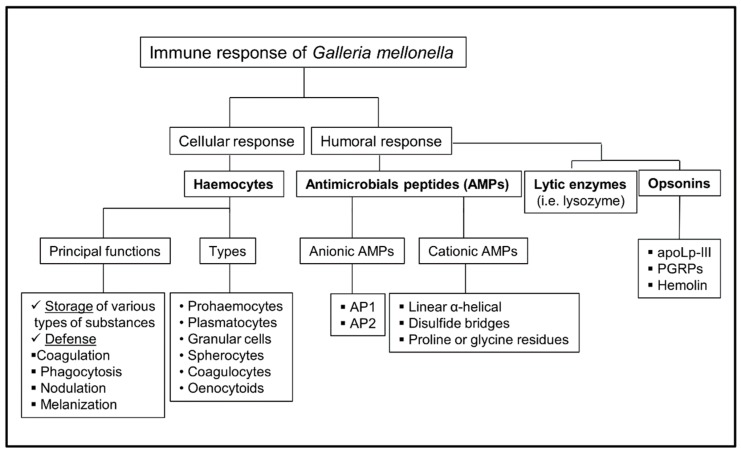
In many aspects, the immune response against pathogens in insects is similar to the innate immunity in mammals. This has caused a strong interest in the scientific community for the use of this model in research of host–pathogen interactions. In recent years, the use of Galleria mellonella larvae, an insect belonging to the Lepidoptera order, has emerged as an excellent model to study the virulence of human pathogens. It is a model that offers many advantages; for example, it is easy to handle and establish in every laboratory, the larvae have a low cost, and they tolerate a wide range of temperatures, including human temperature 37 °C. The immune response of G. mellonella is innate and is divided into a cellular component (hemocytes) and humoral component (antimicrobial peptides, lytic enzymes, and peptides and melanin) that work together against different intruders. It has been shown that the immune response of this insect has a great specificity and has the ability to distinguish between different classes of microorganisms. In this review, we delve into the different components of the innate immune response of Galleria mellonella, and how these components manifest in the infection of fungal pathogens including Candida albicans, Aspergillus fumigatus, Cryptococcus neoformans, and Histoplasma capsulatum.
Overview
The claims and statistics of this paper haven’t been checked yet.
Free: it reads the open-access text and checks the first 5 claims that cite a source we can check. Create a free account to check every claim.
Integrity signals
Registry
Cites
Statistics
Figures
Verification
Claims the paper makes
The claims and statistics of this paper haven’t been checked yet.
Free: it reads the open-access text and checks the first 5 claims that cite a source we can check. Create a free account to check every claim.
Claims other papers make about this one
Each is checked against this paper’s own text: does it say what the citing paper says it does?
The source backs part of the claim, not all of it — or backs it for a different population, condition or comparison.
In the citing paper
“G. mellonella has a single innate immune system that is highly similar to the mammalian innate immune system [40,41]”
From The F 1 F o -ATP synthase α subunit of Candida albicans induces inflammatory responses by controlling amino acid catabolism (2023) · cites this paper as [41]
Experimental — accuracy not yet measuredThe source backs part of the claim, not all of it — or backs it for a different population, condition or comparison.
In the citing paper
“Apart from the mouse models of IPA, alternative minihost models of IPA in Drosophila, Galleria, and zebrafish have been used successfully to screen the virulence of mutants (180–184).”
From Aspergillus fumigatus and Aspergillosis in 2019 (2019) · cites this paper as [184]
Experimental — accuracy not yet measuredThe cited source says what the claim attributes to it.
In the citing paper
“G. mellonella is a well-established model to study host immune responses induced by C. albicans [40,41].”
From The F 1 F o -ATP synthase α subunit of Candida albicans induces inflammatory responses by controlling amino acid catabolism (2023) · cites this paper as [41]
Self-check
Percentages, sums and reported differences re-computed from the paper’s own numbers.
The self-check needs the paper’s full text.
Citations
Cites
Antimicrobial peptides of multicellular organisms
Zasloff, M. (2002) · Nature · doi:10.1038/415389a · Cited by 8,457 · cited 1×
“These molecules play a fundamental role in host defense and are produced mainly in the fat body, in both the digestive and reproductive tract, and subsequently are released into the hemolymph [26].”
BackgroundWisplinghoff, H., Bischoff, T., Tallent, S. M., Seifert, H., Wenzel, R. P., & Edmond, M. B. (2004) · Clinical Infectious Diseases · doi:10.1086/421946 · Cited by 4,496
The immune response of Drosophila
Hoffmann, J. A. (2003) · Nature · doi:10.1038/nature02021 · Cited by 1,553 · cited 1×
“Recent studies have revealed that the innate immune response has great specificity, in addition to having the ability to distinguish between different classes of microorganisms [55].”
BackgroundBIOLOGICAL MEDIATORS OF INSECT IMMUNITY
Gillespie and, J. P., Kanost, M. R., & Trenczek, T. (1997) · Annual Review of Entomology · doi:10.1146/annurev.ento.42.1.611 · Cited by 1,347
Antimicrobial peptides in insects; structure and function
Bulet, P., Hetru, C., Dimarcq, J.-L., & Hoffmann, D. (1999) · Developmental & Comparative Immunology · doi:10.1016/s0145-305x(99)00015-4 · Cited by 1,041
Tsai, C. J.-Y., Loh, J. M. S., & Proft, T. (2016) · Virulence · doi:10.1080/21505594.2015.1135289 · Cited by 778 · cited 5×
“Although many studies mention that only plasmatocytes are involved in phagocytosis, it has been shown that both plasmatocytes and granular cells participate in this process as well as in encapsulation [5,19,22].”
BackgroundMethodInfluentialBoman, H. G., & Hultmark, D. (1987) · Annual Review of Microbiology · doi:10.1146/annurev.mi.41.100187.000535 · Cited by 740
Casadevall, A., & Perfect, J. R. (1998) · ASM Press eBooks · doi:10.1128/9781555818241 · Cited by 661
Invertebrate Immunity: Basic Concepts and Recent Advances
Ratcliffe, N. A., Rowley, A. F., Fitzgerald, S. W., & Rhodes, C. P. (1985) · International Review of Cytology · doi:10.1016/s0074-7696(08)62351-7 · Cited by 603 · cited 1×
“Melanin produces the accumulation of nodules, which can be visible in histological sections whose main function is to contain the replication of microorganisms [42,43].”
BackgroundSteenbergen, J. N., Shuman, H. A., & Casadevall, A. (2001) · Proceedings of the National Academy of Sciences · doi:10.1073/pnas.261418798 · Cited by 511
Research works printed but not linked: 1
- Soderhall K.S. Smith V.J. The prophenoloxidase activating system. The biochemistry of its activation and role in arthropod cellular immunity, with special reference to crustacenad Immunity Arthropods 1986 251 285 · DOI
Cited by
Aspergillus fumigatus and Aspergillosis in 2019
Latgé, J.-P., & Chamilos, G. (2019) · Clinical Microbiology Reviews · doi:10.1128/cmr.00140-18 · Cited by 1,400
Galleria mellonella as a Suitable Model of Bacterial Infection: Past, Present and Future
Ménard, G., Rouillon, A., Cattoir, V., & Donnio, P.-Y. (2021) · Frontiers in Cellular and Infection Microbiology · doi:10.3389/fcimb.2021.782733 · Cited by 252
“Coagulocytes are involved in the hemolymph coagulation (clotting) corresponding to the first line of defense after exposure to a pathogen (Trevijano-Contador and Zaragoza, 2018).”
BackgroundCutuli, M. A., Petronio Petronio, G., Vergalito, F., Magnifico, I., Pietrangelo, L., Venditti, N., & Di Marco, R. (2019) · Virulence · doi:10.1080/21505594.2019.1621649 · Cited by 187
Burns and biofilms: priority pathogens and in vivo models
Maslova, E., Eisaiankhongi, L., Sjöberg, F., & McCarthy, R. R. (2021) · npj Biofilms and Microbiomes · doi:10.1038/s41522-021-00243-2 · Cited by 151
Piatek, M. E., Sheehan, G., & Kavanagh, K. A. (2021) · Antibiotics · doi:10.3390/antibiotics10121545 · Cited by 113
“levels of melanisation of treated larvae [18,19].”
BackgroundSilva, K. A., Uekane, T. M., de Miranda, J. F., Ruiz, L. F., da Motta, J. C. B., Silva, C. B., Pitangui, N. D. S., Gonzalez, A. G. M., Fernandes, F. F., & Lima, A. R. (2021) · Biocatalysis and Agricultural Biotechnology · doi:10.1016/j.bcab.2021.102032 · Cited by 108
de Jong, A. W., & Hagen, F. (2019) · Mycopathologia · doi:10.1007/s11046-019-00351-w · Cited by 95
Candida auris: A Decade of Understanding of an Enigmatic Pathogenic Yeast
Kean, R., Brown, J., Gulmez, D., Ware, A., & Ramage, G. (2020) · Journal of Fungi · doi:10.3390/jof6010030 · Cited by 86
Galleria mellonella Larvae as a Model for Investigating Fungal—Host Interactions
Curtis, A., Binder, U., & Kavanagh, K. A. (2022) · Frontiers in Fungal Biology · doi:10.3389/ffunb.2022.893494 · Cited by 82
“Insect haemocytes demonstrate specificity and capability to distinguish between classes of microorganisms inducing an appropriate response (Trevijano-Contador and Zaragoza, 2018).”
BackgroundInsects and Public Health: An Overview
Belluco, S., Bertola, M., Montarsi, F., Martino, G. D., Granato, A., Stella, R., Martinello, M., Bordin, F., & Mutinelli, F. (2023) · Insects · doi:10.3390/insects14030240 · Cited by 77
“In addition, the innate immune system of insects shares a high degree of structural and functional homology with the mammalian innate immune system [38,39].”
BackgroundExtracellular Vesicles from Aspergillus flavus Induce M1 Polarization In Vitro
Brauer, V. S., Pessoni, A. M., Bitencourt, T. A., de Paula, R. G., Rocha, L. D. O., Goldman, G. H., & Almeida, F. B. D. R. (2020) · mSphere · doi:10.1128/msphere.00190-20 · Cited by 75
“mellonella model, which functionally mimics the mammal innate immune system and displays important functions such as phagocytosis and reactive oxygen species production (50, 51), we demonstrated that A.”
BackgroundRearing and Maintenance of Galleria mellonella and Its Application to Study Fungal Virulence
Firacative, C., Khan, A., Duan, S., Paim, K. F., Leemon, D. M., & Meyer, W. (2020) · Journal of Fungi · doi:10.3390/jof6030130 · Cited by 81
“Furthermore, in many aspects, the immune response against pathogens in insects is similar to the innate immunity in mammals [38,43].”
BackgroundGalleria mellonella as a screening tool to study virulence factors of Aspergillus fumigatus
Durieux, M.-F., Melloul, É., Jemel, S., Roisin, L., Dardé, M., Guillot, J., Dannaoui, É., & Botterel, F. (2021) · Virulence · doi:10.1080/21505594.2021.1893945 · Cited by 74
“melanization, and secretion of antimicrobial peptides [16].”
BackgroundMiltefosine as an alternative strategy in the treatment of the emerging fungus Candida auris
Barreto, T. L., Rossato, L. L., de Freitas, A. L. D., Meis, J. F. G. M., Lopes, L. B., Colombo, A. L., & Ishida, K. (2020) · International Journal of Antimicrobial Agents · doi:10.1016/j.ijantimicag.2020.106049 · Cited by 57
Functional Characterization of Secreted Aspartyl Proteases in Candida parapsilosis
Singh, D. K., Németh, T., Papp, A., Tóth, R., Lukácsi, S., Hrušková‐Heidingsfeldová, O., Dostál, J., Vágvölgyi, C., Bajtay, Z., Józsi, M., et al. (2019) · mSphere · doi:10.1128/msphere.00484-19 · Cited by 60
Galleria mellonella as a Model for the Study of Fungal Pathogens: Advantages and Disadvantages
Giammarino, A., Bellucci, N., & Angiolella, L. (2024) · Pathogens · doi:10.3390/pathogens13030233 · Cited by 51
“The immediate contact with microorganisms (bacteria, fungi, viruses, protozoa) determines the transcription of genes for the synthesis of AMPs [52].”
BackgroundMicrobiology's next top model: Galleria in the molecular age
Dinh, H., Semenec, L., Kumar, S. S., Short, F. L., & Cain, A. K. (2021) · Pathogens and Disease · doi:10.1093/femspd/ftab006 · Cited by 62
Filho, C. M. B., da Silva, L. C. N., da Silva, M. V., Løbner‐Olesen, A., Struve, C., Krogfelt, K. A., Correia, M. T. D. S., & Oliva, M. L. V. (2020) · Frontiers in Microbiology · doi:10.3389/fmicb.2020.00424 · Cited by 55
Lozoya‐Pérez, N. E., Clavijo-Giraldo, D. M., Martínez-Duncker, I., García-Carnero, L. C., López-Ramírez, L. A., Niño‐Vega, G. A., & Mora-Montes, H. M. (2020) · Journal of Fungi · doi:10.3390/jof6040323 · Cited by 48
“mellonella larvae stand out from the other invertebrates because they can grow at 37 ◦C, allowing the study of Sporothrix thermodimorphic traits [35,37]; possess immunological cells, named hemocytes, that are found in the hemolymphand can perform fungal phagocytosis like mammalian macrophages [35,38,39].”
BackgroundSilva, L. N., Campos-Silva, R., Ramos, L. S., Trentin, D. D. S., Macêdo, A. J., Branquinha, M. H., & dos Santos, A. L. S. (2018) · FEMS Yeast Research · doi:10.1093/femsyr/foy082 · Cited by 43
Faster Cryptococcus Melanization Increases Virulence in Experimental and Human Cryptococcosis
de Sousa, H. R., de Oliveira, G. P., Frazão, S. D. O., Gorgonha, K. C. D. M., Rosa, C. P., Garcez, E. M., Lucas, J., Correia, A. F., de Freitas, W. F., Borges, H. M., et al. (2022) · Journal of Fungi · doi:10.3390/jof8040393 · Cited by 43
Early Virulence Predictors during the Candida Species–Galleria mellonella Interaction
García-Carnero, L. C., Clavijo-Giraldo, D. M., Gómez-Gaviria, M., Lozoya‐Pérez, N. E., Tamez-Castrellón, A. K., López-Ramírez, L. A., & Mora-Montes, H. M. (2020) · Journal of Fungi · doi:10.3390/jof6030152 · Cited by 39
“Melanin is synthesized in response to mechanical damage and as a defense mechanism when invading particles or microorganisms enter into the hemocele, being a key process in sclerotization, wound healing, and in defense reactions [49].”
Backgroundde Miranda, J. F., Belo, G. M. P., de Lima, L. S., Silva, K. A., Uekane, T. M., Gonzalez, A. G. M., Castelo‐Branco, V. N., Pitangui, N. D. S., Fernandes, F. F., & Lima, A. R. (2023) · Food Chemistry · doi:10.1016/j.foodchem.2023.135556 · Cited by 45
Vertyporokh, L., & Wojda, I. (2020) · Journal of Invertebrate Pathology · doi:10.1016/j.jip.2020.107327 · Cited by 41
Reis, F. C. G., Costa, J. H., Honorato, L., Nimrichter, L., Fill, T. P., & Rodrigues, M. L. (2021) · Frontiers in Immunology · doi:10.3389/fimmu.2021.654574 · Cited by 38
“mellonella is innate and relies on the activity of hemocytes in combination with antimicrobial peptides and lytic enzymes, among others (33).”
BackgroundAnimal Models to Study Mucormycosis
Jacobsen, I. D. (2019) · Journal of Fungi · doi:10.3390/jof5020027 · Cited by 38
“It should be mentioned that the limited standardization is not only a challenge for mucormycosis research but a general issue for animal models, for example, models for invasive aspergillosis (reviewed in References [115,116]).”
BackgroundInfluentialTorres, M., Pinzón, E. N., Rey, F. M., Martinez, H., Parra‐Giraldo, C. M., & Ramírez, A. M. C. (2020) · Frontiers in Cellular and Infection Microbiology · doi:10.3389/fcimb.2020.00199 · Cited by 36
“One of the main features of Galleria mellonella that makes it a good model of mycosis are the phagocytic cells, which are the first line of defense against fungal infections (Trevijano-Contador and Zaragoza, 2019).”
BackgroundImmunomodulatory Potential of Fungal Extracellular Vesicles: Insights for Therapeutic Applications
Nenciarini, S., & Cavalieri, D. (2023) · Biomolecules · doi:10.3390/biom13101487 · Cited by 37
“This species displays an innate response enhanced by a group of blood cells, called haemocytes, that are able to internalise the pathogens, and resemble phagocytic activity [248].”
BackgroundVertyporokh, L., Hułas‐Stasiak, M., & Wojda, I. (2019) · Insect Science · doi:10.1111/1744-7917.12706 · Cited by 32
Pereira, M. F., & Rossi, C. C. (2020) · Apmis · doi:10.1111/apm.13082 · Cited by 31
Stączek, S., Zdybicka‐Barabas, A., Wiater, A., Pleszczyńska, M., & Cytryńska, M. (2020) · Pathogens and Disease · doi:10.1093/femspd/ftaa062 · Cited by 31
Molecular mechanisms that govern infection and antifungal resistance in Mucorales
Lax, C., Nicolás, F. E., Navarro, E., & Garre, V. (2024) · Microbiology and Molecular Biology Reviews · doi:10.1128/mmbr.00188-22 · Cited by 35
“However, one of the major limitations of the G. mellonella model is the lack of mutant collections and the scarcity of reliable companies that provide larvae under optimal conditions (127).”
BackgroundGranato, M. Q., de Mello, T. P., Nascimento, R., Pereira, M. D., Rosa, T. L. S. A., Pessolani, M. C. V., McCann, M., Devereux, M. M., Branquinha, M. H., dos Santos, A. L. S., et al. (2021) · Frontiers in Microbiology · doi:10.3389/fmicb.2021.641258 · Cited by 27
“G. mellonella larvae melanization process occurs in response to trauma or microbial cell invasion through the activation of phenoloxidase (Trevijano-Contador and Zaragoza, 2019).”
Backgroundde Jong, A. W., Veldhuizen, D. V., Groot, A. T., & Hagen, F. (2022) · Entomologia Experimentalis et Applicata · doi:10.1111/eea.13237 · Cited by 26
Qiu, L., Zhang, J., Song, J.-Z., Hu, S.-J., Zhang, T.-S., Li, Z., Wang, J.-J., & Cheng, W. (2020) · International Journal of Biological Macromolecules · doi:10.1016/j.ijbiomac.2020.10.271 · Cited by 24
Hesketh-Best, P. J., Mouritzen, M. V., Shandley-Edwards, K., Billington, R. A., & Upton, M. (2021) · Pathogens and Disease · doi:10.1093/femspd/ftab003 · Cited by 23
Galleria mellonella as an Invertebrate Model for Studying Fungal Infections
Marena, G. D., Thomaz, L., Nosanchuk, J. D., & Taborda, C. P. (2025) · Journal of Fungi · doi:10.3390/jof11020157 · Cited by 25
“Against fungi, the enzyme acts on the cell wall, resulting in the inhibition of fungal growth [22].”
Cryptococcus neoformans Virulence Assay Using a Galleria mellonella Larvae Model System
Stempinski, P. R., Smith, D. F. Q., & Casadevall, A. (2022) · BIO-PROTOCOL · doi:10.21769/bioprotoc.4480 · Cited by 23
Two sporulated Bacillus enhance immunity in Galleria mellonella protecting against Candida albicans
de Barros, P. P., Rossoni, R. D., Ribeiro, F. D. C., Silva, M. P., de Souza, C. M., Jorge, A. O. C., & Junqueira, J. C. (2019) · Microbial Pathogenesis · doi:10.1016/j.micpath.2019.05.023 · Cited by 21
Kong, Q., Cao, Z., Lv, N., Zhang, H., Liu, Y., Hu, L., & Li, J. (2020) · Frontiers in Microbiology · doi:10.3389/fmicb.2020.00836 · Cited by 21
“Based on our successful application of this model to verify bacterial infection in previous studies, we used it for our in vivo experiments in the present work as well (Li et al., 2018; Lu et al., 2018; Trevijano-Contador and Zaragoza, 2018).”
MethodGalleria mellonella—A Model for the Study of aPDT—Prospects and Drawbacks
Bugyna, L., Kendra, S., & Bujdáková, H. (2023) · Microorganisms · doi:10.3390/microorganisms11061455 · Cited by 19
Jiang, T., Tang, J., Wu, Z., Sun, Y., Tan, J., & Yang, L. (2020) · BMC Microbiology · doi:10.1186/s12866-020-01960-y · Cited by 19
Qiu, L., Nie, S., Hu, S.-J., Wang, S., Wang, J.-J., & Guo, K. (2020) · Pesticide Biochemistry and Physiology · doi:10.1016/j.pestbp.2020.104732 · Cited by 19
Torres, M., de Cock, H., & Ramírez, A. M. C. (2020) · Journal of Fungi · doi:10.3390/jof6030155 · Cited by 24
“In general, invertebrate alternatives used to model fungal infections like amoeboid models [53,102], Caenorhabditis elegans [103–105], Drosophila melanogaster [63,106,107], Tenebrio molitor [108], Bombyx mori [60], and Galleria mellonella [65,67,109,110] (Figure 1 and Table 1) have gained importance, amongst others, a…”
BackgroundA Straightforward Method for the Isolation and Cultivation of Galleria mellonella Hemocytes
Admella, J., & Torrents, E. (2022) · International Journal of Molecular Sciences · doi:10.3390/ijms232113483 · Cited by 18
Efficacy of voriconazole in vitro and in invertebrate model of cryptococcosis
Spadari, C. D. C., de Bastiani, F. W. M. D. S., Pisani, P. B. B., Melo, A. S. D. A., & Ishida, K. (2019) · Archives of Microbiology · doi:10.1007/s00203-019-01789-8 · Cited by 18
Vandermeulen, M. D., Lorenz, M. C., & Cullen, P. J. (2024) · Genetics · doi:10.1093/genetics/iyae122 · Cited by 15
Advances in Molecular Tools and In Vivo Models for the Study of Human Fungal Pathogenesis
Malavia, D., Gow, N. A. R., & Usher, J. (2020) · Microorganisms · doi:10.3390/microorganisms8060803 · Cited by 17
“Galleria mellonella— the wax moth [168,170,214] [215,216] [165,214] [214,217] [214,217] X X [218]”
BackgroundPelliccia, S., Russomanno, P., Barone, S., Mateu, B., Alfano, A. I., Miranda, M., Coretti, L., Lembo, F., Piccolo, M., Irace, C., et al. (2024) · Journal of Medicinal Chemistry · doi:10.1021/acs.jmedchem.4c01109 · Cited by 15
da Silva, F. P., Fernandes, K. M., de Freitas, L. L., Cascardo, R. D. S., Bernardes, R. C., de Oliveira, L. L., Martins, G. F., & Vanetti, M. C. D. (2021) · Research in Microbiology · doi:10.1016/j.resmic.2021.103836 · Cited by 14
Reis, N. F., de Jesus, M. C. S., de Souza, L. C. D. S. V., Alcântara, L. M., Rodrigues, J. A. D. C., Brito, S. C. P., Penna, P. D. A., Vieira, C. S., Silva, J. R. S., Penna, B., et al. (2023) · Journal of Fungi · doi:10.3390/jof9111053 · Cited by 13
“Thus, it is possible to hypothesize that larva morbidity is a result of higher fungal loads as the immune system—although proportionally stimulated, reaching greater hemocyte recruitment—fails [26,49].”
BackgroundAggarwal, C., Paul, S., Nain, V., Tripathi, V., Paul, B., & Khan, M. A. (2021) · Journal of Invertebrate Pathology · doi:10.1016/j.jip.2021.107562 · Cited by 12
Furtado, A. A., Daniele-Silva, A., de Oliveira, I. R. R., Mendes, R. F. V., dos Santos, E. C. G., Carvalho, E., Damasceno, I. Z., Parente, A. M. E. S., de Sena, K. X. D. F. R., da Silva-Júnior, A. A., et al. (2022) · Pharmacological Research · doi:10.1016/j.phrs.2022.106245 · Cited by 10
Berryhill, B. A., Gil‐Gil, T., Witzany, C., Goldberg, D. A., Vega, N. M., Regoes, R. R., & Levin, B. R. (2025) · Proceedings of the National Academy of Sciences · doi:10.1073/pnas.2507914122 · Cited by 13
Bertout, S., Laroche, L., Roger, F., Krasteva, D., Drakulovski, P., & Bellet, V. (2023) · Pathogens · doi:10.3390/pathogens12060758 · Cited by 11
“KG, Duren, Germany) with modifications as previously described [30].”
BackgroundMethodHussain, A., Ali, M. W., AlJabr, A. M., & Al-Kahtani, S. N. (2020) · Journal of Fungi · doi:10.3390/jof6040232 · Cited by 11
Curtis, A., Walshe, K., & Kavanagh, K. A. (2023) · Cells · doi:10.3390/cells12071065 · Cited by 10
“The mass spectrometry proteomics data have been deposited to the ProteomeXchange Consortium via the PRIDE [28] partner repository with the dataset identifier PXD036787.”
BackgroundMethodGenotypic diversity, virulence, and molecular genetic tools in Histoplasma
Sepúlveda, V. E., Goldman, W. E., & Matute, D. R. (2024) · Microbiology and Molecular Biology Reviews · doi:10.1128/mmbr.00076-23 · Cited by 10
Geng, T., Lu, F., Zhu, F., & Wang, S. (2021) · Developmental & Comparative Immunology · doi:10.1016/j.dci.2021.104171 · Cited by 9
The Immune System of Triatomines
Salcedo-Porras, N., & Lowenberger, C. A. (2021) · Entomology in focus · doi:10.1007/978-3-030-64548-9_14 · Cited by 9
Wang, J.-J., Yin, Y., Song, J.-Z., Hu, S.-J., Cheng, W., & Qiu, L. (2021) · PLoS ONE · doi:10.1371/journal.pone.0249350 · Cited by 9
“bassiana, the host immune response will produce cytotoxic molecules such as ROS when it infects insects [41].”
BackgroundA Falciformispora senegalensis grain model in Galleria mellonella larvae
Ma, J., Konings, M., Verbon, A., & van de Sande, W. W. J. (2023) · Medical Mycology · doi:10.1093/mmy/myad070 · Cited by 8
Asensio-López, J., Lázaro-Díez, M., Hernández-Cruz, T. M., Blanco‐Cabra, N., Sorzabal-Bellido, I., Arroyo-Urea, E. M., Buetas, E., González-Paredes, A., Ortíz-de-Solórzano, C., Burgui, S., et al. (2024) · Biofilm · doi:10.1016/j.bioflm.2024.100178 · Cited by 11
Schindler, Y., Rahav, G., Nissan, I., Valenci, G. Z., Ravins, M., Hanski, E., Ment, D., Tekes-Manova, D., & Maor, . (2023) · Frontiers in Cellular and Infection Microbiology · doi:10.3389/fcimb.2023.1168530 · Cited by 8
Current Status and Trends in Alternative Models to Study Fungal Pathogens
Junqueira, J. C., & Mylonakis, E. E. (2019) · Journal of Fungi · doi:10.3390/jof5010012 · Cited by 8
“[12] report, Zaragoza and coworkers [13] discuss how the immune components of G.”
BackgroundPietrykowska‐Tudruj, E., Staniec, B., Wojda, I., & Wagner, G. (2025) · The European Zoological Journal · doi:10.1080/24750263.2025.2457502 · Cited by 7
“A further advantage is the known genome, because it permits genetic manipulation for obtaining mutant lines (Fields & Johnston 2005; Trevijano-Contador & Zaragoza 2018).”
de Siqueira, K. A., Liotti, R. G., de Sousa, J. R., Vendruscolo, S. J., de Souza, G. B., de Vasconcelos, L. G., Januário, A. H., Mendes, T. A. D. O., & Soares, M. A. (2021) · 3 Biotech · doi:10.1007/s13205-021-02942-1 · Cited by 7
“mellonella a viable option for studying human infections (Trevijano-Contador et al. 2015; Trevijano-Contador and Zaragoza 2019).”
BackgroundInfluentialGarcia, J. A., Vu, K., Thompson, G. R., & Gelli, A. (2022) · Journal of Fungi · doi:10.3390/jof8050455 · Cited by 7
Takács, T., Németh, M. T., Bohner, F., Vágvölgyi, C., Jankovics, F., Wilson, D., & Gácser, A. (2022) · Open Biology · doi:10.1098/rsob.220077 · Cited by 8
“According to TrevijanoContador&Zaragoza,Galleria larvae are suitable for the investigation of innate immunity and its response to fungal infections [42].”
BackgroundNguyen, T. T. H., Chen, P., Wang, P., Wang, W.-H., Lan, C., Backert, S., & Kao, M. (2025) · Virulence · doi:10.1080/21505594.2025.2548620 · Cited by 6
“The proliferation of hemocytes triggers cellular immune responses, including phagocytosis, nodulation, and melanogenesis, providing a robust defense mechanism [23,54].”
Immunosuppressive effect of Plantago major on the innate immunity of Galleria mellonella
Kaya, S. (2023) · PeerJ · doi:10.7717/peerj.15982 · Cited by 6
Shi, D., Yang, Z., Liao, W., Liu, C., Zhao, L., Su, H., Wang, X., Mei, H., Chen, M., Song, Y., et al. (2024) · IMA Fungus · doi:10.1186/s43008-023-00134-5 · Cited by 6
Citrobacter braakii Isolated from Salami and Soft Cheese: An Emerging Food Safety Hazard?
Pasquali, F., Crippa, C., Lucchi, A., Francati, S., Dindo, M. L., & Manfreda, G. (2025) · Foods · doi:10.3390/foods14111887 · Cited by 6
Kryukov, V. Y., Kosman, E., Tomilova, O. G., Polenogova, O. V., Rotskaya, U. N., Yaroslavtseva, O. N., Салимова, Д. Р., Kryukova, N. A., & Berestetskiy, A. (2023) · Mycotoxin Research · doi:10.1007/s12550-023-00479-1 · Cited by 6
Mattos, L. M. M., Hottum, H. M., Pires, D. C., Segat, B. B., Horn, A., Fernandes, C., & Pereira, M. D. (2023) · FEMS Yeast Research · doi:10.1093/femsyr/foad052 · Cited by 6
Kaczmarek, A., & Boguś, M. I. (2025) · Journal of Insect Physiology · doi:10.1016/j.jinsphys.2025.104779 · Cited by 5
Kaya, S., GENÇ, T. T., & Günay, M. (2025) · Entomologia Experimentalis et Applicata · doi:10.1111/eea.13607 · Cited by 6
“…are induced during fungal and bacterial infections (e.g., C. albicans and Bacillus thuring-iensis ) and also physical stress and temperature (Bergin et al., 2006; Trevijano-Contador & Zaragoza, 2018; Sheehan & Kavanagh, 2018; Taszłow et al., 2017; Mowlds et al., 2008; Mowlds & Kavanagh, 2008.).”
Duong, T. T. T., Lin, W. C., Tsai, Y., Liao, C., Huang, Y.-T., Po-Ren, H., & Kao, C. (2026) · Microbiology Spectrum · doi:10.1128/spectrum.02474-25 · Cited by 5
“The larval immune system of G. mellonella shows remarkable structural and functional similarities to the innate immune response of mammals, but no adaptive immune system has been reported (36).”
Guevara, M. A., Francis, J. D., Lu, J., Manning, S. D., Doster, R. S., Moore, R. E., & Gaddy, J. A. (2022) · ACS Infectious Diseases · doi:10.1021/acsinfecdis.2c00453 · Cited by 5
An ELISA-based method for Galleria mellonella apolipophorin-III quantification
Ramírez-Sotelo, U., García-Carnero, L. C., Martínez-Álvarez, J. A., Gómez-Gaviria, M., & Mora-Montes, H. M. (2024) · PeerJ · doi:10.7717/peerj.17117 · Cited by 5
PiggyBac-mediated transgenesis and CRISPR–Cas9 knockout in the greater wax moth, Galleria mellonella
Pearce, J. C., Campbell, J. S., Prior, J. L., Titball, R. W., & Wakefield, J. G. (2026) · Lab Animal · doi:10.1038/s41684-025-01665-7 · Cited by 5
Fusarium musae Infection in Animal and Plant Hosts Confirms Its Cross-Kingdom Pathogenicity
Tava, V., Reséndiz-Sharpe, A., Vanhoffelen, E., Saracchi, M., Cortesi, P., Lagrou, K., Velde, G. V., & Pasquali, M. (2025) · Journal of Fungi · doi:10.3390/jof11020090 · Cited by 4
Unraveling Burkholderia cenocepacia H111 fitness determinants using two animal models
Paszti, S., Gualdi, S., Torres, M., Augusto, L. A., Harrison, F., & Eberl, L. (2025) · mSystems · doi:10.1128/msystems.01354-24 · Cited by 4
“For instance, the G. mellonella (greater wax moth or honeycomb moth) model is widely used due to its innate immunity being very similar to the immunity of mammals (31), and it has been demonstrated that it is a more accurate model for Bcc than other organisms such as C. elegans (29).”
Obermeier, M., Esparza-Mora, M. A., Heese, O., Cohen, N., Varma, S. J., Tober‐Lau, P., Hartl, J., Kurth, F., Berman, J. G., & Ralser, M. (2025) · Journal of Medical Microbiology · doi:10.1099/jmm.0.002046 · Cited by 4
“‘_ w’ indicates that the drug was dissolved in water rather than DMSO. drugs during infection [17, 18].”
Odporność owadów - mechanizmy adaptacyjne i strategie przetrwania
Kordaczuk, J. (2024) · Postępy Biochemii · doi:10.18388/pb.2021_519 · Cited by 4
Torres, M., & Ramírez, A. M. C. (2023) · Methods in molecular biology · doi:10.1007/978-1-0716-3199-7_2 · Cited by 4
Li, S., Liu, Y., Weng, L., Zhao, Y., Zhang, Y., Zhang, Z., Yang, Y., Chen, Q., Liu, X., & Zhang, H. (2023) · Virulence · doi:10.1080/21505594.2023.2190645 · Cited by 3
“mellonella has a single innate immune system that is highly similar to the mammalian innate immune system [40,41] and could provide a specifical”
BackgroundCandra, A., & Darge, H. F. (2025) · Biocatalysis and Agricultural Biotechnology · doi:10.1016/j.bcab.2025.103713 · Cited by 3
Öztürk, Ş., Erol, H. B., Kaşkatepe, B., & Huang, W. (2025) · Pathogens · doi:10.3390/pathogens14121248 · Cited by 3
“The immune system of G. mellonella shares similarities with the innate immune system of mammals [17].”
Takahashi, R., Khemlani, A. H. J., Loh, J. M. S., Radcliff, F. J., Proft, T., & Tsai, C. J. (2023) · Immunology and Cell Biology · doi:10.1111/imcb.12692 · Cited by 3
“32 As reported previously, circulating hemocyte counts increase following infection and increasing hemocyte density reflects the pathogenicity of the infecting pathogen.”
BackgroundNanoparticle-induced systemic toxicity and immune response in Galleria mellonella larvae
Payoe, S., Gadar, K., Emmanuel Flahaut, B., McCarthy, R. R., & Stenbeck, G. (2025) · Frontiers in Pharmacology · doi:10.3389/fphar.2025.1625472 · Cited by 3
Galleria Mellonella Larvae as an In vitro Model for Testing Microbial Pathogenicity
Gniazdo, D., Sasal, W., Omelaniuk, A., Brudz, W., & Kaca, W. (2023) · Postępy Mikrobiologii - Advancements of Microbiology · doi:10.2478/am-2023-0015 · Cited by 3
Morphological and pathogenic investigation of the emerging fungal threat Emergomyces africanus
Albergoni, E. C., de Oliveira, H. C., Honorato, L., Valdez, A. F., Sena, B. A. G., Castelli, R. F., Rodrigues, A. J. C., Marcon, B. H., Robert, A. W., Nimrichter, L., et al. (2024) · Microbiology Spectrum · doi:10.1128/spectrum.00863-24 · Cited by 3
“Therefore, to address our hypothesis that the host could influence the surface molecular pattern of E. africanus , we obtained hemocytes, the most effective immune cells of G. mellonella (15), 2 h after fungal infection, and searched for the presence of phagocytized fungi.”
BackgroundDoyle, A. A., Kelada, M., Charleton, C., Devine, R., Walsh, J. M. D., Bergin, R., Kavanagh, K. A., & Stephens, J. C. (2025) · Results in Chemistry · doi:10.1016/j.rechem.2025.102403 · Cited by 3
Er, A., Aşkun, T., GÜNER, P., & Şengül, S. M. (2024) · International Journal of Nature and Life Sciences · doi:10.47947/ijnls.1586882 · Cited by 2
Maqueda-Cabrera, E. E., & Cuéllar‐Cruz, M. (2026) · Current Microbiology · doi:10.1007/s00284-025-04715-y · Cited by 2
“However, this immune response alone is insufficient to control established yeast infections, such as N. glabratus at an inoculum of 1 × 10 6 cells/larva.”
de Andrade, V. M., de Oliveira, V. D. M., Barcick, U., Ramu, V. G., Heras, M., Bardají, E., Castanho, M. A. R. B., Zelanis, A., de Oliveira, A. C., Junqueira, J. C., et al. (2024) · Microbial Pathogenesis · doi:10.1016/j.micpath.2024.106607 · Cited by 2
The role of Pep4 protease in Cryptococcus neoformans cell survival and virulence factors
Felizardo, G., Padilla, A. A. Á., de Melo, A. T., Lima, R. F., Jannuzzi, G. P., Martho, K. F., de Almeida, S. R., Ferreira, K. S., Pascon, R. C., & Vallim, M. A. (2025) · Fungal Biology · doi:10.1016/j.funbio.2025.101611 · Cited by 2
Wirth, F., Staudt, K. J., de Araújo, B. V., & Ishida, K. (2022) · Future Microbiology · doi:10.2217/fmb-2021-0291 · Cited by 2
Alternative in-vivo models of mucormycosis
Scheler, J., & Binder, U. (2024) · Frontiers in Cellular and Infection Microbiology · doi:10.3389/fcimb.2024.1343834 · Cited by 2
Metadata
- Authors
- Trevijano-Contador, N., & Zaragoza, O.
- Affiliations
- Albert Einstein College of Medicine, Bronx 10461, NY, USA
- Mycology Reference Laboratory, National Centre for Microbiology, Instituto de Salud Carlos III, Majadahonda, 28220 Madrid, Spain
- ORCID
- Zaragoza, Oscar
- Venue
- Journal of Fungi
- Publisher
- MDPI AG
- Published
- 2018-12-26
- Volume
- 5
- Issue
- 1
- Pages
- 3
- ISSN
- 2309-608X (ISSN-L)
- PMC
- PMC6463112
- OpenAlex
- W2905989696
- Cited by
- 134
- References
- 113
- Citations by year
- 2026: 12 · 2025: 22 · 2024: 18 · 2023: 18 · 2022: 13 · 2021: 19 · 2020: 22 · 2019: 9 · 2018: 1
- FWCI
- 1.30
- Type
- journal article
- Language
- en
- Open access
- gold
- dx.doi.org
- Licence
- Locations
- Journal of Fungi (publishedVersion, cc-by)
- Europe PMC (PubMed Central) (publishedVersion, cc-by)
- PubMed Central (publishedVersion, cc-by)
- PubMed (publishedVersion)
- LA Referencia (Red Federada de Repositorios Institucionales de Publicaciones Científicas) (submittedVersion, cc-by)
- DOAJ (DOAJ: Directory of Open Access Journals) (submittedVersion, cc-by-sa)
- Topics
- Life Sciences › Immunology and Microbiology › Immunology › Invertebrate Immune Response Mechanisms
- Health Sciences › Medicine › Infectious Diseases › Antifungal resistance and susceptibility
- Life Sciences › Immunology and Microbiology › Immunology › Immune Response and Inflammation
- Keywords
- Galleria mellonella, innate immunity, insect immunity, fungal pathogens, host-pathogen interaction, hemocytes, antimicrobial peptides, melanization, Candida albicans, Aspergillus fumigatus, Cryptococcus neoformans, Histoplasma capsulatum, virulence, infection model
About these checks
Registry, retraction, Cites and statistics results are computed, not judged, with one exception: a printed reference that no index lists is read once by a model before it counts as a citation error. Claims are extracted by a model and kept only when their quote appears verbatim in the text; each cited source is then checked, with a model’s help, for whether it says what the claim relies on. Those verdicts can be wrong — read the claim’s quote and the cited source before relying on one.
Statistics and arithmetic are recomputed, not judged.
Confidence bands are shown only for fields calibrated on our annotated test set. None is calibrated yet, so no band is shown.
What counts as a claim ›How we measure confidence ›How we check this ›
Are you an author, or do you see a problem with this page? Request a review
Data sources
Bibliographic data: Semantic Scholar, OpenAlex, Crossref.
Contains information from the Semantic Scholar Academic Graph Datasets, made available under the ODC Attribution License (ODC-BY 1.0).
Semantic Scholar’s data is described in: Kinney, R., et al. (2023). The Semantic Scholar Open Data Platform. arXiv:2301.10140.
