

Immune Response of Galleria mellonella against Human Fungal Pathogens
Open accessThe DOI matches its Crossref record; 114 of the 114 references it cites were found in a registry or an index.
Abstract
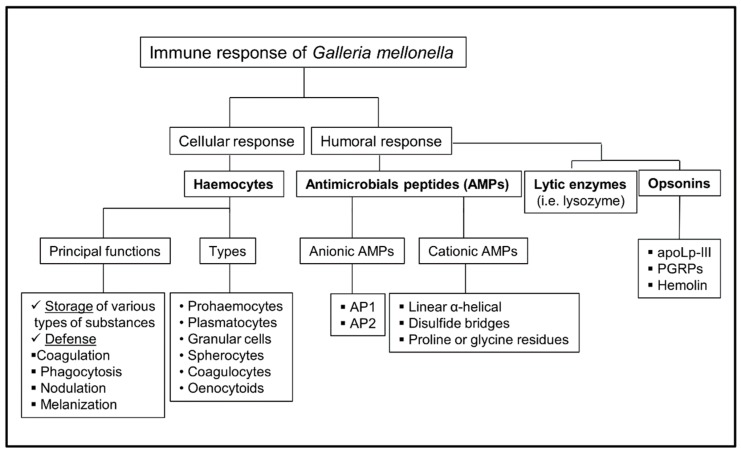
In many aspects, the immune response against pathogens in insects is similar to the innate immunity in mammals. This has caused a strong interest in the scientific community for the use of this model in research of host–pathogen interactions. In recent years, the use of Galleria mellonella larvae, an insect belonging to the Lepidoptera order, has emerged as an excellent model to study the virulence of human pathogens. It is a model that offers many advantages; for example, it is easy to handle and establish in every laboratory, the larvae have a low cost, and they tolerate a wide range of temperatures, including human temperature 37 °C. The immune response of G. mellonella is innate and is divided into a cellular component (hemocytes) and humoral component (antimicrobial peptides, lytic enzymes, and peptides and melanin) that work together against different intruders. It has been shown that the immune response of this insect has a great specificity and has the ability to distinguish between different classes of microorganisms. In this review, we delve into the different components of the innate immune response of Galleria mellonella, and how these components manifest in the infection of fungal pathogens including Candida albicans, Aspergillus fumigatus, Cryptococcus neoformans, and Histoplasma capsulatum.
Overview
The claims and statistics of this paper haven’t been checked yet.
Free: it reads the open-access text and checks the first 5 claims that cite a source we can check. Create a free account to check every claim.
Integrity signals
Registry
Cites
Statistics
Figures
Verification
Claims the paper makes
The claims and statistics of this paper haven’t been checked yet.
Free: it reads the open-access text and checks the first 5 claims that cite a source we can check. Create a free account to check every claim.
Claims other papers make about this one
Each is checked against this paper’s own text: does it say what the citing paper says it does?
The source backs part of the claim, not all of it — or backs it for a different population, condition or comparison.
In the citing paper
“G. mellonella has a single innate immune system that is highly similar to the mammalian innate immune system [40,41]”
From The F 1 F o -ATP synthase α subunit of Candida albicans induces inflammatory responses by controlling amino acid catabolism (2023) · cites this paper as [41]
Experimental — accuracy not yet measuredThe source backs part of the claim, not all of it — or backs it for a different population, condition or comparison.
In the citing paper
“Apart from the mouse models of IPA, alternative minihost models of IPA in Drosophila, Galleria, and zebrafish have been used successfully to screen the virulence of mutants (180–184).”
From Aspergillus fumigatus and Aspergillosis in 2019 (2019) · cites this paper as [184]
Experimental — accuracy not yet measuredThe cited source says what the claim attributes to it.
In the citing paper
“G. mellonella is a well-established model to study host immune responses induced by C. albicans [40,41].”
From The F 1 F o -ATP synthase α subunit of Candida albicans induces inflammatory responses by controlling amino acid catabolism (2023) · cites this paper as [41]
Self-check
Percentages, sums and reported differences re-computed from the paper’s own numbers.
The self-check needs the paper’s full text.
Citations
Cites
Antimicrobial peptides of multicellular organisms
Zasloff, M. (2002) · Nature · doi:10.1038/415389a · Cited by 8,457 · cited 1×
“These molecules play a fundamental role in host defense and are produced mainly in the fat body, in both the digestive and reproductive tract, and subsequently are released into the hemolymph [26].”
BackgroundWisplinghoff, H., Bischoff, T., Tallent, S. M., Seifert, H., Wenzel, R. P., & Edmond, M. B. (2004) · Clinical Infectious Diseases · doi:10.1086/421946 · Cited by 4,496
The immune response of Drosophila
Hoffmann, J. A. (2003) · Nature · doi:10.1038/nature02021 · Cited by 1,553 · cited 1×
“Recent studies have revealed that the innate immune response has great specificity, in addition to having the ability to distinguish between different classes of microorganisms [55].”
BackgroundBIOLOGICAL MEDIATORS OF INSECT IMMUNITY
Gillespie and, J. P., Kanost, M. R., & Trenczek, T. (1997) · Annual Review of Entomology · doi:10.1146/annurev.ento.42.1.611 · Cited by 1,347
Antimicrobial peptides in insects; structure and function
Bulet, P., Hetru, C., Dimarcq, J.-L., & Hoffmann, D. (1999) · Developmental & Comparative Immunology · doi:10.1016/s0145-305x(99)00015-4 · Cited by 1,041
Tsai, C. J.-Y., Loh, J. M. S., & Proft, T. (2016) · Virulence · doi:10.1080/21505594.2015.1135289 · Cited by 778 · cited 5×
“Although many studies mention that only plasmatocytes are involved in phagocytosis, it has been shown that both plasmatocytes and granular cells participate in this process as well as in encapsulation [5,19,22].”
BackgroundMethodInfluentialBoman, H. G., & Hultmark, D. (1987) · Annual Review of Microbiology · doi:10.1146/annurev.mi.41.100187.000535 · Cited by 740
Casadevall, A., & Perfect, J. R. (1998) · ASM Press eBooks · doi:10.1128/9781555818241 · Cited by 661
Invertebrate Immunity: Basic Concepts and Recent Advances
Ratcliffe, N. A., Rowley, A. F., Fitzgerald, S. W., & Rhodes, C. P. (1985) · International Review of Cytology · doi:10.1016/s0074-7696(08)62351-7 · Cited by 603 · cited 1×
“Melanin produces the accumulation of nodules, which can be visible in histological sections whose main function is to contain the replication of microorganisms [42,43].”
BackgroundSteenbergen, J. N., Shuman, H. A., & Casadevall, A. (2001) · Proceedings of the National Academy of Sciences · doi:10.1073/pnas.261418798 · Cited by 511
Purification of a Peptidoglycan Recognition Protein from Hemolymph of the Silkworm, Bombyx mori
Yoshida, H., Kinoshita, K., & Ashida, M. (1996) · Journal of Biological Chemistry · doi:10.1074/jbc.271.23.13854 · Cited by 500
Chapter 4 The Capsule of the Fungal Pathogen Cryptococcus neoformans
Zaragoza, O., Rodrigues, M. L., De Jesus, M., Frases, S., Dadachova, E., & Casadevall, A. (2009) · Advances in Applied Microbiology · doi:10.1016/s0065-2164(09)01204-0 · Cited by 457 · cited 2×
“The most characteristic consist basically of the increase in the size of the capsule [95,99,100] and the formation of titan cells [101–105].”
BackgroundGalleria mellonella as a Model System To Study Cryptococcus neoformans Pathogenesis
Mylonakis, E., Moreno, R., El Khoury, J. B., Idnurm, A., Heitman, J., Calderwood, S. B., Ausubel, F. M., & Diener, A. (2005) · Infection and Immunity · doi:10.1128/iai.73.7.3842-3850.2005 · Cited by 433 · cited 2×
“Cryptococcus neoformans can infect and kill larvae [11], and this insect has been frequently used to investigate virulence of clinical and environmental strains.”
BackgroundMethodExploiting the potential of insects for in vivo pathogenicity testing of microbial pathogens
Kavanagh, K., & Reeves, E. P. (2004) · FEMS Microbiology Reviews · doi:10.1016/j.femsre.2003.09.002 · Cited by 381 · cited 1×
“The process of nodulation occurs when pathogens are recognized and killed by trapping them in hemocyte aggregates (nodules), whereas melanization occurs inside the nodules [16,22].”
BackgroundThe Cryptococcus neoformans Capsule: a Sword and a Shield
O'Meara, T. R., & Alspaugh, J. A. (2012) · Clinical Microbiology Reviews · doi:10.1128/cmr.00001-12 · Cited by 364 · cited 1×
“The most characteristic consist basically of the increase in the size of the capsule [95,99,100] and the formation of titan cells [101–105].”
BackgroundCorrelation between virulence of Candida albicans mutants in mice and Galleria mellonella larvae
Brennan, M. (2002) · FEMS Immunology and Medical Microbiology · doi:10.1016/s0928-8244(02)00374-7 · Cited by 357
Cryptococcal cell morphology affects host cell interactions and pathogenicity
Okagaki, L. H., Strain, A. K., Nielsen, J. N., Charlier, C., Baltes, N. J., Chrétien, F., Heitman, J., Dromer, F., & Nielsen, K. (2010) · PLoS Pathogens · doi:10.1371/journal.ppat.1000953 · Cited by 345
Browne, N., Heelan, M., & Kavanagh, K. A. (2013) · Maynooth University ePrints and eTheses Archive (Maynooth University) · Cited by 330
Browne, N., Heelan, M., & Kavanagh, K. A. (2013) · Virulence · doi:10.4161/viru.25906 · Cited by 324 · cited 1×
“Prohemocytes are a small cell type that have a large nucleus and the ability to differentiate into different cell types [20].”
BackgroundFungal cell gigantism during mammalian infection
Zaragoza, O., García-Rodas, R., Nosanchuk, J. D., Cuenca-Estrella, M., Rodríguez-Tudela, J. L., & Casadevall, A. (2010) · PLoS Pathogens · doi:10.1371/journal.ppat.1000945 · Cited by 311
Methods for using Galleria mellonella as a model host to study fungal pathogenesis
Fuchs, B. B., O’Brien, E., El Khoury, J. B., & Mylonakis, E. (2010) · Virulence · doi:10.4161/viru.1.6.12985 · Cited by 308
Tucker, S. C., & Casadevall, A. (2002) · Proceedings of the National Academy of Sciences · doi:10.1073/pnas.052702799 · Cited by 306
Yu, X.-Q., & Kanost, M. R. (2000) · Journal of Biological Chemistry · doi:10.1074/jbc.m003021200 · Cited by 288
Mechanisms by which pesticides affect insect immunity
James, R. R., & Xu, J. (2012) · Journal of Invertebrate Pathology · doi:10.1016/j.jip.2011.12.005 · Cited by 279 · cited 1×
“mellonella is innate, and it is composed of three parts: physical as well as chemical barriers that protect the insect from the external environment, the humoral response, and the cellular response [17].”
BackgroundBergin, D., Reeves, E. P., Renwick, J., Wientjes, F. B., & Kavanagh, K. (2005) · Infection and Immunity · doi:10.1128/iai.73.7.4161-4170.2005 · Cited by 254 · cited 1×
“Once internalized, several killing mechanisms are induced, such as the production of superoxide, which leads to the destruction of the pathogen [24,25].”
BackgroundInsect immunity: evolutionary roots of the mammalian innate immune system
Vilmos, P. (1998) · Immunology Letters · doi:10.1016/s0165-2478(98)00023-6 · Cited by 251 · cited 1×
“The Insecta class (insects) are a large and very diverse group of invertebrate animals that contains more than one million described species [2].”
BackgroundVogel, H., Altincicek, B., Glöckner, G., & Vilcinskas, A. (2011) · BMC Genomics · doi:10.1186/1471-2164-12-308 · Cited by 249
Development of an insect model for the in vivo pathogenicity testing of yeasts
Cotter, G. (2000) · FEMS Immunology and Medical Microbiology · doi:10.1016/s0928-8244(99)00185-6 · Cited by 233
Dynamic changes in the morphology of Cryptococcus neoformans during murine pulmonary infection
Feldmesser, M., Kress, Y., & Casadevall, A. (2001) · Microbiology · doi:10.1099/00221287-147-8-2355 · Cited by 220
Doering, T. L. (2009) · Annual Review of Microbiology · doi:10.1146/annurev.micro.62.081307.162753 · Cited by 220 · cited 1×
“The most characteristic consist basically of the increase in the size of the capsule [95,99,100] and the formation of titan cells [101–105].”
BackgroundPurification and characterization of eight peptides from Galleria mellonella immune hemolymph
Cytryńska, M., Mak, P., Zdybicka-Barabas, A., Suder, P., & Jakubowicz, T. (2007) · Peptides · doi:10.1016/j.peptides.2006.11.010 · Cited by 204 · cited 2×
“mellonella, two of these peptides, purified from the hemolymph, AP1 and AP2, have been described [31,34].”
BackgroundPossible primary ecological niche of Cryptococcus neoformans
Lazera, M. S., Cavalcanti, M. A. S., Londero, A. T., Trilles, L., Nishikawa, M. M., & Wanke, B. (2000) · Medical Mycology · doi:10.1080/714030957 · Cited by 197
Titan cells in Cryptococcus neoformans: cells with a giant impact
Zaragoza, O., & Nielsen, K. (2013) · Current Opinion in Microbiology · doi:10.1016/j.mib.2013.03.006 · Cited by 196
Reeves, E. P., Messina, C. G. M., Doyle, S., & Kavanagh, K. (2004) · Mycopathologia · doi:10.1023/b:myco.0000038434.55764.16 · Cited by 183 · cited 1×
“Recently, the use of this model in the mycology field has been applied to Aspergillus fumigatus [7], Candida albicans [8–10], and Cryptococcus neoformans [11].”
MethodTojo, S., Naganuma, F., Arakawa, K., & Yokoo, S. (2000) · Journal of Insect Physiology · doi:10.1016/s0022-1910(99)00223-1 · Cited by 171 · cited 2×
“The main processes of cellular response include coagulation, nodulation, phagocytosis, encapsulation, and melanization [19].”
BackgroundBrown, S. E., Howard, A., Kasprzak, A. B., Gordon, K. H. J., & East, P. D. (2009) · Insect Biochemistry and Molecular Biology · doi:10.1016/j.ibmb.2009.09.004 · Cited by 161 · cited 1×
“Cationic AMPs are basically classified into three groups based on their structure: (a) linear α-helical peptides without cysteine residues (among them, cepropins and moricins are active against bacteria and filamentous fungi [27–29]); (b) peptides with a structure stabilized with disulfide bridges, such as the cystein…”
BackgroundBlacklock, B. J., & Ryan, R. O. (1994) · Insect Biochemistry and Molecular Biology · doi:10.1016/0965-1748(94)90015-9 · Cited by 159 · cited 1×
“apolipophorin-III (apoLp-III) is a protein that facilities lipid transport [51] and it has been associated with pathogen recognition and apoptosis [52].”
BackgroundAltincicek, B., Stötzel, S., Wygrecka, M., Preissner, K. T., & Vilcinskas, A. (2008) · The Journal of Immunology · doi:10.4049/jimmunol.181.4.2705 · Cited by 158 · cited 1×
“Oenocytoids, which represent 5–10% of the total hemocytes, contain cytoplasmic phenoloxidase and participate in the melanization of the hemolymph [21].”
BackgroundThe Complexity of Fungal β-Glucan in Health and Disease: Effects on the Mononuclear Phagocyte System
Camilli, G., Tabouret, G., & Quintin, J. (2018) · Frontiers in Immunology · doi:10.3389/fimmu.2018.00673 · Cited by 155
Scorzoni, L., de Lucas, M. P., Mesa-Arango, A. C., Fusco-Almeida, A. M., Lozano, E., Cuenca-Estrella, M., Mendes-Giannini, M. J., & Zaragoza, O. (2013) · PLoS ONE · doi:10.1371/journal.pone.0060047 · Cited by 150
Bergin, D. A., Murphy, L., Keenan, J., CLYNES, M. M., & Kavanagh, K. A. (2006) · Microbes and Infection · doi:10.1016/j.micinf.2006.03.005 · Cited by 149
Söderhäll, K., & Smith, V. J. (1986) · Proceedings in life sciences · doi:10.1007/978-3-642-70768-1_15 · Cited by 141
Götz, P. (1986) · Proceedings in life sciences · doi:10.1007/978-3-642-70768-1_12 · Cited by 138 · cited 1×
“Melanin produces the accumulation of nodules, which can be visible in histological sections whose main function is to contain the replication of microorganisms [42,43].”
BackgroundCryptococcus: From Human Pathogen to Model Yeast
(2010) · ASM Press eBooks · doi:10.1128/9781555816858 · Cited by 137
Pathogenicity of Aspergillus fumigatus mutants assessed in Galleria mellonella matches that in mice
Slater, J. L., Gregson, L., Denning, D. W., & Warn, P. A. (2011) · Medical Mycology · doi:10.3109/13693786.2010.523852 · Cited by 136
Sherry, L., Rajendran, R., Lappin, D. F., Borghi, E., Perdoni, F., Falleni, M., Tosi, D., Smith, K., Williams, C., Jones, B., et al. (2014) · BMC Microbiology · doi:10.1186/1471-2180-14-182 · Cited by 134
The encapsulation of foreign tissue implants in Galleria mellonella larvae
Schmit, A. R., & Ratcliffe, N. A. (1977) · Journal of Insect Physiology · doi:10.1016/0022-1910(77)90027-0 · Cited by 133 · cited 1×
“This promotes the second step, which is adhesion of plasmatocytes to the pathogen to complete the process [23].”
BackgroundBinding of hemolin to bacterial lipopolysaccharide and lipoteichoic acid
Yu, X., & Kanost, M. R. (2002) · European Journal of Biochemistry · doi:10.1046/j.1432-1033.2002.02830.x · Cited by 125
Cryptococcus neoformans can form titan-like cells in vitro in response to multiple signals
Trevijano-Contador, N., de Oliveira, H. C., García-Rodas, R., Rossi, S. A., Llorente, I., Zaballos, Á., Janbon, G., Ariño, J., & Zaragoza, Ó. (2018) · PLoS Pathogens · doi:10.1371/journal.ppat.1007007 · Cited by 124
Self-citationMesa-Arango, A. C., Forastiero, A., Bernal-Martínez, L., Cuenca-Estrella, M., Mellado, E., & Zaragoza, O. (2013) · Medical Mycology · doi:10.3109/13693786.2012.737031 · Cited by 121
Aperis, G., Fuchs, B. B., Anderson, C. A., Warner, J. E., Calderwood, S. B., & Mylonakis, E. E. (2007) · Microbes and Infection · doi:10.1016/j.micinf.2007.02.016 · Cited by 120 · cited 1×
“This model offers several advantages which can be highlighted: it is an easy model to implement in the laboratory without the need to invest a large amount of money; due to their size and life cycle, the larvae are easy to handle and there is no need for personnel with specialized expertise; it is easy to determine th…”
BackgroundCandida-Host Interactions in HIV Disease: Implications for Oropharyngeal Candidiasis
Fidel, P. L. (2011) · Advances in Dental Research · doi:10.1177/0022034511399284 · Cited by 119
Genome Sequence of Galleria mellonella (Greater Wax Moth)
Lange, A., Beier, S., Huson, D. H., Parusel, R., Iglauer, F., & Frick, J.-S. (2018) · Genome Announcements · doi:10.1128/genomea.01220-17 · Cited by 112 · cited 1×
“Although its genome has been recently sequenced [13], it is not possible to perform genetic manipulations.”
BackgroundJackson, J. C., Higgins, L. A., & Lin, X. (2009) · PLoS ONE · doi:10.1371/journal.pone.0004224 · Cited by 104 · cited 1×
“suggested that absence of melanin at the surface unmasks some fungal PAMPs (such as β-1,3-glucan), which triggers an excessive immune response that has deleterious effects on the larvae [88].”
BackgroundFallon, J. P., Troy, N., & Kavanagh, K. (2011) · Virulence · doi:10.4161/viru.2.5.17811 · Cited by 100
García-Rodas, R., Casadevall, A., Rodríguez-Tudela, J. L., Cuenca-Estrella, M., & Zaragoza, O. (2011) · PLoS ONE · doi:10.1371/journal.pone.0024485 · Cited by 99
Smith, L. M., Dixon, E. F., & May, R. C. (2015) · Cellular Microbiology · doi:10.1111/cmi.12394 · Cited by 99
Galleria mellonellaas a model host for human pathogens
Junqueira, J. C. (2012) · Virulence · doi:10.4161/viru.22493 · Cited by 96
Sheehan, G., & Kavanagh, K. A. (2017) · Virulence · doi:10.1080/21505594.2017.1370174 · Cited by 94 · cited 1×
“It has been shown that the number of circulating hemocytes fluctuate during the first hours of infection [76] but tend to decrease with time, in association with the severity of the disease [73].”
BackgroundMowlds, P., Coates, C. J., Renwick, J. A. A., & Kavanagh, K. A. (2009) · Microbes and Infection · doi:10.1016/j.micinf.2009.11.004 · Cited by 89 · cited 1×
“Administration of β-glucan augments the density of hemocytes in the hemolymph and also increases the expression of some AMP-encoding genes [82].”
Venn-Watson, S., Daniels, R., & Smith, C. (2012) · Diseases of Aquatic Organisms · doi:10.3354/dao02471 · Cited by 88
Maguire, R., Duggan, O., & Kavanagh, K. A. (2016) · Cell Biology and Toxicology · doi:10.1007/s10565-016-9329-x · Cited by 88
Using Galleria mellonella–Candida albicans Infection Model to Evaluate Antifungal Agents
Li, D.-D., Deng, L., Hu, G.-H., Zhao, L.-X., Hu, D.-D., Jiang, Y.-Y., & Wang, Y. (2013) · Biological and Pharmaceutical Bulletin · doi:10.1248/bpb.b13-00270 · Cited by 87
Correction: Fungal Cell Gigantism during Mammalian Infection
Zaragoza, O., García-Rodas, R., Nosanchuk, J. D., Cuenca-Estrella, M., Rodríguez-Tudela, J. L., & Casadevall, A. (2010) · PLoS Pathogens · doi:10.1371/annotation/0675044c-d80f-456f-bb63-4f85fb1d0c33 · Cited by 83
Brown, S. E., Howard, A., Kasprzak, A. B., Gordon, K. H. J., & East, P. D. (2007) · Insect Biochemistry and Molecular Biology · doi:10.1016/j.ibmb.2007.10.009 · Cited by 83
Kelly, J., & Kavanagh, K. A. (2010) · Journal of Medical Microbiology · doi:10.1099/jmm.0.025494-0 · Cited by 83
Yu, K. H., Kim, K. N., Lee, J. H., Lee, H.-S., Kim, S., Cho, K. Y., Nam, M. H., & Lee, I. H. (2002) · Developmental & Comparative Immunology · doi:10.1016/s0145-305x(02)00027-7 · Cited by 82
Langen, G., Imani, J., Altincicek, B., Kieseritzky, G., Kogel, K., & Vilcinskas, A. (2006) · Biological Chemistry · doi:10.1515/bc.2006.071 · Cited by 81 · cited 1×
“Cationic AMPs are basically classified into three groups based on their structure: (a) linear α-helical peptides without cysteine residues (among them, cepropins and moricins are active against bacteria and filamentous fungi [27–29]); (b) peptides with a structure stabilized with disulfide bridges, such as the cystein…”
BackgroundFallon, J. P., Reeves, E. P., & Kavanagh, K. (2011) · Microbiology · doi:10.1099/mic.0.043786-0 · Cited by 80 · cited 1×
“fumigatus, such as fumagillin, can decrease the phagocytic and antifungal activity of hemocytes, which highlights another mechanism by which this mold can interfere with the larva immune response [86].”
BackgroundInhibition of Growth and Secreted Aspartyl Proteinase Production in Candida Albicans by Lysozyme
Wu, T., Samaranayake, L. P., Leung, W. K., & Sullivan, P. A. (1999) · Journal of Medical Microbiology · doi:10.1099/00222615-48-8-721 · Cited by 74
Galleria mellonellaas a model host to studyParacoccidioides lutziiandHistoplasma capsulatum
Thomaz, L., García‐Rodas, R., Guimaraes, A. J., Taborda, C. P., Zaragoza, Ó., & Nosanchuk, J. D. (2013) · Virulence · doi:10.4161/viru.23047 · Cited by 73
Renwick, J. A. A., Reeves, E. P., Wientjes, F. B., & Kavanagh, K. A. (2006) · Developmental & Comparative Immunology · doi:10.1016/j.dci.2006.06.007 · Cited by 73 · cited 1×
“Once internalized, several killing mechanisms are induced, such as the production of superoxide, which leads to the destruction of the pathogen [24,25].”
BackgroundAshida, M., & Yoshida, H. (1988) · Insect Biochemistry · doi:10.1016/0020-1790(88)90031-5 · Cited by 71
Correction: Cryptococcal Cell Morphology Affects Host Cell Interactions and Pathogenicity
Okagaki, L. H., Strain, A. K., Nielsen, J. N., Charlier, C., Baltes, N. J., Chrétien, F., Heitman, J., Dromer, F., & Nielsen, K. (2010) · PLoS Pathogens · doi:10.1371/annotation/1b59fd9e-9ac9-4ea8-a083-14c413c80b03 · Cited by 71
Candida bloodstream infection in neonates
Benjamin, D. K., Garges, H. P., & Steinbach, W. J. (2003) · Seminars in Perinatology · doi:10.1016/s0146-0005(03)00061-2 · Cited by 70
Galleria mellonella as a host model to study Candida glabrata virulence and antifungal efficacy
Ames, L., Duxbury, S. J. N., Pawlowska, B. J., Ho, H.-L., Haynes, K., & Bates, S. (2017) · Virulence · doi:10.1080/21505594.2017.1347744 · Cited by 70
Apolipophorin III: a lipid-triggered molecular switch
Weers, P. M. M., & Ryan, R. O. (2003) · Insect Biochemistry and Molecular Biology · doi:10.1016/j.ibmb.2003.06.013 · Cited by 67 · cited 1×
“albicans surface is apolipophorin III [78], which is an apolipoprotein involved in lipid trafficking during insect flight [79].”
BackgroundFunctional analysis of four Gloverin‐like genes in the silkworm, Bombyx mori
Kawaoka, S., Katsuma, S., Daimon, T., Isono, R., Omuro, N., Mita, K., & Shimada, T. (2007) · Archives of Insect Biochemistry and Physiology · doi:10.1002/arch.20223 · Cited by 66
Galleria mellonella as model host for the trans-kingdom pathogen Fusarium oxysporum
Navarro‐Velasco, G. Y., Prados‐Rosales, R., Ortiz‐Urquiza, A., Quesada‐Moraga, E., & Pietro, A. D. (2011) · Fungal Genetics and Biology · doi:10.1016/j.fgb.2011.08.004 · Cited by 65 · cited 1×
“mellonella, and its virulence depends on the inoculum size and conidia germination and hypha proliferation [107].”
BackgroundSun, D., Ziegler, R., Milligan, C. E., Fahrbach, S. E., & Schwartz, L. M. (1995) · Journal of Neurobiology · doi:10.1002/neu.480260110 · Cited by 63 · cited 1×
“apolipophorin-III (apoLp-III) is a protein that facilities lipid transport [51] and it has been associated with pathogen recognition and apoptosis [52].”
BackgroundDavis, J. M., Huang, M., Botts, M. R., Hull, C. M., & Huttenlocher, A. (2016) · Infection and Immunity · doi:10.1128/iai.00506-16 · Cited by 62
Kashino, S. S., Singer-Vermes, L. M., Calich, V. L. G., & Burger, E. (1990) · Mycopathologia · doi:10.1007/bf02282801 · Cited by 60 · cited 1×
“Infection models of these fungi in mice can be very long (even months, see [110]), which poses a great limitation to assessing their virulence traits.”
BackgroundScorzoni, L., Silva, A. C. A. D. P. E., Singulani, J. D. L., Sangalli-Leite, F., de Oliveira, H. C., da Silva, R. A. M., Fusco‐Almeida, A. M., & Mendes‐Giannini, M. J. S. (2015) · Virulence · doi:10.1080/21505594.2015.1085277 · Cited by 58
Kim, C. H., Lee, J. H., Kim, I., Seo, S. J., Son, S. M., Lee, K. Y., & Lee, I. H. (2004) · Molecules and Cells · doi:10.1016/s1016-8478(23)13036-6 · Cited by 58
Isolation and characterization of bacteria‐induced protein P4 from hemolymph of Manduca sexta
Ladendorff, N. E., & Kanost, M. R. (1990) · Archives of Insect Biochemistry and Physiology · doi:10.1002/arch.940150104 · Cited by 55
Dunphy, G. B., Oberholzer, U., Whiteway, M. S., ZAKARIAN, R. J., & Boomer, I. (2003) · Canadian Journal of Microbiology · doi:10.1139/w03-064 · Cited by 55
Purification and Characterization of Lysozyme from Hemolymph of Heliothis virescens Larvae
Lockey, T. D., & Ourth, D. D. (1996) · Biochemical and Biophysical Research Communications · doi:10.1006/bbrc.1996.0434 · Cited by 54
Sowa-Jasiłek, A., Zdybicka‐Barabas, A., Stączek, S., Wydrych, J., Mak, P., Jakubowicz, T., & Cytryńska, M. (2014) · Peptides · doi:10.1016/j.peptides.2014.01.012 · Cited by 53 · cited 2×
“mellonella, two of these peptides, purified from the hemolymph, AP1 and AP2, have been described [31,34].”
Importance of adhesins in virulence of Paracoccidioides spp.
de Oliveira, H. C., da Silva, J. D. F., Scorzoni, L., Marcos, C. M., Rossi, S. A., Silva, A. C. A. D. P. E., Assato, P. A., da Silva, R. A. M., Fusco‐Almeida, A. M., & Mendes‐Giannini, M. J. S. (2015) · Frontiers in Microbiology · doi:10.3389/fmicb.2015.00303 · Cited by 52
Galleria mellonella lysozyme induces apoptotic changes in Candida albicans cells
Sowa-Jasiłek, A., Zdybicka‐Barabas, A., Stączek, S., Wydrych, J., Skrzypiec, K., Mak, P., Deryło, K., Tchórzewski, M., & Cytryńska, M. (2016) · Microbiological Research · doi:10.1016/j.micres.2016.10.003 · Cited by 51 · cited 1×
“degradation of the cell wall, but to induction of apoptosis in the yeast cells [84].”
Fusarium pathogenesis investigated using Galleria mellonella as a heterologous host
Coleman, J. J., Muhammed, M., Kasperkovitz, P. V., Vyas, J. M., & Mylonakis, E. (2011) · Fungal Biology · doi:10.1016/j.funbio.2011.09.005 · Cited by 49 · cited 2×
“mellonella, despite both forms being effectively phagocytosed by the hemocytes [108].”
BackgroundA Multi-Host Approach for the Systematic Analysis of Virulence Factors in Cryptococcus neoformans
Desalermos, A., Tan, X., Rajamuthiah, R., Arvanitis, M., Wang, Y., Li, D., Kourkoumpetis, T. K., Fuchs, B. B., & Mylonakis, E. (2015) · Journal of Infectious Diseases · doi:10.1093/infdis/jiu441 · Cited by 49
Sheehan, G., Clarke, G., & Kavanagh, K. A. (2018) · BMC Microbiology · doi:10.1186/s12866-018-1208-6 · Cited by 47 · cited 3×
“fumigatus induces the accumulation of AMPs and immune receptors [85].”
BackgroundInfluentialTrevijano-Contador, N., Herrero-Fernández, I., García-Barbazán, I., Scorzoni, L., Rueda, C., Rossi, S. A., García-Rodas, R., & Zaragoza, O. (2015) · Virulence · doi:10.4161/21505594.2014.986412 · Cited by 46
Self-citationAn invertebrate model to evaluate virulence in Aspergillus fumigatus: The role of azole resistance
Gomez-Lopez, A., Forastiero, A., Cendejas-Bueno, E., Gregson, L., Mellado, E., Howard, S. J., Livermore, J. L., Hope, W. W., & Cuenca-Estrella, M. (2014) · Medical Mycology · doi:10.1093/mmy/myt022 · Cited by 43 · cited 1×
“mellonella model has been widely used in this pathogen for studies of virulence, survival, susceptibility, and antifungal resistance [56,57].”
MethodSilva, L. N., Campos-Silva, R., Ramos, L. S., Trentin, D. D. S., Macêdo, A. J., Branquinha, M. H., & dos Santos, A. L. S. (2018) · FEMS Yeast Research · doi:10.1093/femsyr/foy082 · Cited by 43
Hemolin—A lepidopteran anti-viral defense factor?
Terenius, O. (2007) · Developmental & Comparative Immunology · doi:10.1016/j.dci.2007.09.006 · Cited by 42 · cited 1×
“There are studies that have observed an increase in the production of hemolin after infection with bacteria and viruses [53,54].”
BackgroundKim, C. H., Shin, Y. P., Noh, M. Y., Jo, Y. H., Han, Y. S., Seong, Y., & Lee, I. H. (2010) · Journal of Biological Chemistry · doi:10.1074/jbc.m110.134940 · Cited by 40 · cited 2×
“Base on current knowledge, one of the main receptors involved in this recognition is GmCD8 [77], which can also recognize other microbial pathogens.”
BackgroundThe effect of Galleria mellonella apolipophorin III on yeasts and filamentous fungi
Zdybicka‐Barabas, A., Stączek, S., Mak, P., Piersiak, T., Skrzypiec, K., & Cytryńska, M. (2011) · Journal of Insect Physiology · doi:10.1016/j.jinsphys.2011.11.003 · Cited by 39 · cited 5×
“Most of these molecules recognize and bind to lipopolysaccharides (LPS), peptidoglycan, and β-1,3-glucan [47–50]. apolipophorin-III (apoLp-III) is a protein that facilities lipid transport [51] and it has been associated with pathogen recognition and apoptosis [52].”
BackgroundInfluentialWarpeha, K. M., Park, Y.-D., & Williamson, P. R. (2013) · Applied and Environmental Microbiology · doi:10.1128/aem.03697-12 · Cited by 38
[Lysozyme as antibacterial agent in honey and bees venom].
Mohrig, W., & Messner, B. (1968) · PubMed · Cited by 32
Alcázar‐Fuoli, L., Buitrago, M. J., Gómez‐López, A., & Mellado, E. (2015) · Virulence · doi:10.1080/21505594.2015.1025192 · Cited by 30
Micafungin Elicits an Immunomodulatory Effect in Galleria mellonella and Mice
Fuchs, B. B., Li, Y., Li, D., Johnston, T., Hendricks, G. L., Li, G., Rajamuthiah, R., & Mylonakis, E. E. (2015) · Mycopathologia · doi:10.1007/s11046-015-9940-z · Cited by 29
Stączek, S., Zdybicka‐Barabas, A., Mak, P., Sowa-Jasiłek, A., Kędracka–Krok, S., Jankowska, U., Suder, P., Wydrych, J., Grygorczuk-Płaneta, K., Jakubowicz, T., et al. (2017) · Journal of Insect Physiology · doi:10.1016/j.jinsphys.2017.12.009 · Cited by 29 · cited 1×
“albicans can alter the proportion of apoLp-III-free and apoLp-III-bound in the hemolymph [80], suggesting that they also participate in the recognition of fungal pathogens.”
BackgroundTreatment of critically ill patients with candidemia
Mensa, J., Pitart, C., & Marco, F. (2008) · International Journal of Antimicrobial Agents · doi:10.1016/s0924-8579(08)70007-4 · Cited by 26
Wang, X., Rocheleau, T. A., Fuchs, J. F., & Christensen, B. M. (2006) · Cellular Microbiology · doi:10.1111/j.1462-5822.2006.00732.x · Cited by 25
Muñoz-Gómez, A., Corredor, M., Benítez‐Páez, A., & Peláez, C. (2014) · PLoS ONE · doi:10.1371/journal.pone.0112179 · Cited by 24 · cited 2×
“oxysporum is highly dynamic and dependent on the inoculum size (104 or 106 conidia per larva) and on the incubation temperature (25 or 37 °C ) [109].”
BackgroundTrevijano‐Contador, N., & Zaragoza, Ó. (2014) · Virulence · doi:10.4161/viru.28775 · Cited by 24 · cited 2×
“To reduce these bioethical problems, there is a strong trend to apply the “3 Rs” rule in experiments that involve animal use, which are: reduce the numbers of animals; refine the protocols to increase animal comfort and reduce pain; replace animals for other models that do not have bioethical problems associated [1].”
BackgroundSelf-citationMoralez, A. T. P., Perini, H. F., Furlaneto-Maia, L., Almeida, R. S., Panagio, L. A., & Furlaneto, M. C. (2016) · Virulence · doi:10.1080/21505594.2016.1140297 · Cited by 23
Banville, N., Fallon, J. P., McLoughlin, K., & Kavanagh, K. A. (2011) · Microbes and Infection · doi:10.1016/j.micinf.2011.07.001 · Cited by 22 · cited 1×
“Inhibition of hemocyte function with cytochalasin and nocodazole enhances the susceptibility of the larvae to the infection [75].”
BackgroundSynergy of lysozyme and lanoconazole on the morphology of Candida albicans
Nishiyama, Y. (2001) · QJM · doi:10.1093/jmicro/50.1.41 · Cited by 22
Santos, R. B., Scorzoni, L., Namba, A. M., Rossoni, R. D., Jorge, A. O. C., & Junqueira, J. C. (2018) · Medical Mycology · doi:10.1093/mmy/myy032 · Cited by 18
The effects of peroxidase on the enzymatic and candidacidal activities of lysozyme
Lee, J.-Y., Kim, Y., Chang, J., Park, M., & Kho, H. (2010) · Archives of Oral Biology · doi:10.1016/j.archoralbio.2010.06.001 · Cited by 16
Method Evaluation for Total β-Human Chorionic Gonadotropin Using Urine and the ADVIA Centaur
Halldórsdóttir, A. M., Carayannopoulos, M. O., Scrivner, M., & Gronowski, A. M. (2003) · Clinical Chemistry · doi:10.1373/49.8.1421 · Cited by 10 · cited 1×
“The results obtained with this model have been shown to have a strong correlation with mammal models [60,61].”
Research works printed but not linked: 1
- Soderhall K.S. Smith V.J. The prophenoloxidase activating system. The biochemistry of its activation and role in arthropod cellular immunity, with special reference to crustacenad Immunity Arthropods 1986 251 285 · DOI
Cited by
Aspergillus fumigatus and Aspergillosis in 2019
Latgé, J.-P., & Chamilos, G. (2019) · Clinical Microbiology Reviews · doi:10.1128/cmr.00140-18 · Cited by 1,400
Galleria mellonella as a Suitable Model of Bacterial Infection: Past, Present and Future
Ménard, G., Rouillon, A., Cattoir, V., & Donnio, P.-Y. (2021) · Frontiers in Cellular and Infection Microbiology · doi:10.3389/fcimb.2021.782733 · Cited by 252
“Coagulocytes are involved in the hemolymph coagulation (clotting) corresponding to the first line of defense after exposure to a pathogen (Trevijano-Contador and Zaragoza, 2018).”
BackgroundCutuli, M. A., Petronio Petronio, G., Vergalito, F., Magnifico, I., Pietrangelo, L., Venditti, N., & Di Marco, R. (2019) · Virulence · doi:10.1080/21505594.2019.1621649 · Cited by 187
Burns and biofilms: priority pathogens and in vivo models
Maslova, E., Eisaiankhongi, L., Sjöberg, F., & McCarthy, R. R. (2021) · npj Biofilms and Microbiomes · doi:10.1038/s41522-021-00243-2 · Cited by 151
Piatek, M. E., Sheehan, G., & Kavanagh, K. A. (2021) · Antibiotics · doi:10.3390/antibiotics10121545 · Cited by 113
“levels of melanisation of treated larvae [18,19].”
Background
Metadata
- Authors
- Trevijano-Contador, N., & Zaragoza, O.
- Affiliations
- Albert Einstein College of Medicine, Bronx 10461, NY, USA
- Mycology Reference Laboratory, National Centre for Microbiology, Instituto de Salud Carlos III, Majadahonda, 28220 Madrid, Spain
- ORCID
- Zaragoza, Oscar
- Venue
- Journal of Fungi
- Publisher
- MDPI AG
- Published
- 2018-12-26
- Volume
- 5
- Issue
- 1
- Pages
- 3
- ISSN
- 2309-608X (ISSN-L)
- PMC
- PMC6463112
- OpenAlex
- W2905989696
- Cited by
- 134
- References
- 113
- Citations by year
- 2026: 12 · 2025: 22 · 2024: 18 · 2023: 18 · 2022: 13 · 2021: 19 · 2020: 22 · 2019: 9 · 2018: 1
- FWCI
- 1.30
- Type
- journal article
- Language
- en
- Open access
- gold
- dx.doi.org
- Licence
- Locations
- Journal of Fungi (publishedVersion, cc-by)
- Europe PMC (PubMed Central) (publishedVersion, cc-by)
- PubMed Central (publishedVersion, cc-by)
- PubMed (publishedVersion)
- LA Referencia (Red Federada de Repositorios Institucionales de Publicaciones Científicas) (submittedVersion, cc-by)
- DOAJ (DOAJ: Directory of Open Access Journals) (submittedVersion, cc-by-sa)
- Topics
- Life Sciences › Immunology and Microbiology › Immunology › Invertebrate Immune Response Mechanisms
- Health Sciences › Medicine › Infectious Diseases › Antifungal resistance and susceptibility
- Life Sciences › Immunology and Microbiology › Immunology › Immune Response and Inflammation
- Keywords
- Galleria mellonella, innate immunity, insect immunity, fungal pathogens, host-pathogen interaction, hemocytes, antimicrobial peptides, melanization, Candida albicans, Aspergillus fumigatus, Cryptococcus neoformans, Histoplasma capsulatum, virulence, infection model
About these checks
Registry, retraction, Cites and statistics results are computed, not judged, with one exception: a printed reference that no index lists is read once by a model before it counts as a citation error. Claims are extracted by a model and kept only when their quote appears verbatim in the text; each cited source is then checked, with a model’s help, for whether it says what the claim relies on. Those verdicts can be wrong — read the claim’s quote and the cited source before relying on one.
Statistics and arithmetic are recomputed, not judged.
Confidence bands are shown only for fields calibrated on our annotated test set. None is calibrated yet, so no band is shown.
What counts as a claim ›How we measure confidence ›How we check this ›
Are you an author, or do you see a problem with this page? Request a review
Data sources
Bibliographic data: Semantic Scholar, OpenAlex, Crossref.
Contains information from the Semantic Scholar Academic Graph Datasets, made available under the ODC Attribution License (ODC-BY 1.0).
Semantic Scholar’s data is described in: Kinney, R., et al. (2023). The Semantic Scholar Open Data Platform. arXiv:2301.10140.
