

Bioprocess Control: Current Progress and Future Perspectives
Open accessThe DOI matches its Crossref record; 135 of the 136 references it cites were found in a registry or an index.
Abstract
Typical bioprocess comprises of different unit operations wherein a near optimal environment is required for cells to grow, divide, and synthesize the desired product. However, bioprocess control caters to unique challenges that arise due to non-linearity, variability, and complexity of biotech processes. This article presents a review of modern control strategies employed in bioprocessing. Conventional control strategies (open loop, closed loop) along with modern control schemes such as fuzzy logic, model predictive control, adaptive control and neural network-based control are illustrated, and their effectiveness is highlighted. Furthermore, it is elucidated that bioprocess control is more than just automation, and includes aspects such as system architecture, software applications, hardware, and interfaces, all of which are optimized and compiled as per demand. This needs to be accomplished while keeping process requirement, production cost, market value of product, regulatory constraints, and data acquisition requirements in our purview. This article aims to offer an overview of the current best practices in bioprocess control, monitoring, and automation.
Overview
The claims and statistics of this paper haven’t been checked yet.
Free: it reads the open-access text and checks the first 5 claims that cite a source we can check. Create a free account to check every claim.
Integrity signals
Registry
Cites
Statistics
Figures
Verification
Claims the paper makes
The claims and statistics of this paper haven’t been checked yet.
Free: it reads the open-access text and checks the first 5 claims that cite a source we can check. Create a free account to check every claim.
Claims other papers make about this one
Each is checked against this paper’s own text: does it say what the citing paper says it does?
The source backs part of the claim, not all of it — or backs it for a different population, condition or comparison.
In the citing paper
“When developing a software sensor, different techniques could be employed individually or in combination, in parallel or in sequence (Randek and Mandenius 2018; Rathore et al. 2021).”
From Software sensors in the monitoring of microalgae cultivations (2024) · cites this paper as Rathore et al. 2021
Experimental — accuracy not yet measured
Self-check
Percentages, sums and reported differences re-computed from the paper’s own numbers.
The self-check needs the paper’s full text.
Citations
Cites
State-of-the-art in artificial neural network applications: A survey
Abiodun, O. I., Jantan, A., Omolara, A. E., Dada, K. V., Mohamed, N. A., & Arshad, H. (2018) · Heliyon · doi:10.1016/j.heliyon.2018.e00938 · Cited by 3,054 · cited 1×
“Application of neural networks (NN) is already established to solve complex tasks in different engineering, medical, and other domains [73].”
BackgroundArtificial intelligence to deep learning: machine intelligence approach for drug discovery
Gupta, R., Srivastava, D., Sahu, M., Tiwari, S., Ambasta, R. K., & Kumar, P. (2021) · Molecular Diversity · doi:10.1007/s11030-021-10217-3 · Cited by 1,473
Machine Learning for Molecular Simulation
Noé, F., Tkatchenko, A., Müller, K.-R., & Clementi, C. (2020) · Annual Review of Physical Chemistry · doi:10.1146/annurev-physchem-042018-052331 · Cited by 956
Quality by design for biopharmaceuticals
Rathore, A. S., & Winkle, H. (2009) · Nature Biotechnology · doi:10.1038/nbt0109-26 · Cited by 830
Self-citationQuality by Design in Biopharmaceuticals
Yang, H. (2016) · doi:10.1201/9781315371726-7 · Cited by 543
Roadmap for implementation of quality by design (QbD) for biotechnology products
Rathore, A. S. (2009) · Trends in Biotechnology · doi:10.1016/j.tibtech.2009.06.006 · Cited by 411 · cited 1×
“QbD implementation involves identification of critical quality attributes (CQAs), comprising of physical, chemical, biological properties and other characteristics that need to be maintained in the desired limit, range or distribution [21].”
BackgroundSelf-citationProcess analytical technology (PAT) for biopharmaceutical products
Rathore, A. S., Bhambure, R., & Ghare, V. (2010) · Analytical and Bioanalytical Chemistry · doi:10.1007/s00216-010-3781-x · Cited by 368 · cited 1×
“Moreover, one of the guiding principles of quality by design (QbD) is to incorporate the use of modern control strategies and process analytical technology (PAT) tools so as to deliver consistent process performance and product quality [19,20].”
BackgroundSelf-citationTrends in Upstream and Downstream Process Development for Antibody Manufacturing
Gronemeyer, P., Ditz, R., & Strube, J. (2014) · Bioengineering · doi:10.3390/bioengineering1040188 · Cited by 329 · cited 1×
“The biologic manufacturing platform comprises of multiple upstream and downstream unit operations with the former including cell culture, cultivation, and harvesting unit operations, and the latter including multistep chromatography, filtration, and diafiltration [10].”
MethodRecent trends on hybrid modeling for Industry 4.0
Sansana, J., Joswiak, M. N., Castillo, I., Wang, Z., Rendall, R., Chiang, L. H., & Reis, M. S. (2021) · Computers & Chemical Engineering · doi:10.1016/j.compchemeng.2021.107365 · Cited by 296 · cited 1×
“Model predictive control (MPC) has been widely attempted for bioprocess optimization [57,58].”
MethodBioprocess engineering aspects of heterologous protein production in Pichia pastoris: A review
Potvin, G., Ahmad, A., & Zhang, Z. (2012) · Biochemical Engineering Journal · doi:10.1016/j.bej.2010.07.017 · Cited by 269
Research works printed but not linked: 8
- Available online: https://www.nature.com/articles/d43747-020-00765-2#:~:text=From%20the%20publishers%20of%20Nature,attract%20partners%20and%20dealmaking%20opportunities (accessed on 11 February 2021)
- Fabbrini D. Simonini C. Lundkvist J. Carredano E. Otero D. Addressing the challenge of complex buffer management an in-line conditioning collaboration BioProcess Int. 2017 15 43 46
- Lyon D. Achieving active control of cell culture performance with the aid of machine learning techniques, Abstracts Proceedings of the 74th Northwest Regional Meeting of the American Chemical Society NORM-298 Portland, OR, USA 16–19 June 2019
- Humbird D. Fei Q. Scale-Up Considerations for Biofuels Biotechnology for Biofuel Production and Optimization Eckert C.A. Trinh C.T. Elsevier Amsterdam, The Netherlands 2016 513 537
- Jiang M. Braatz R.D. Integrated control of continuous (bio)pharmaceutical manufacturing Am. Pharm Rev. 2016 19 110 115
- Ahmad S.K. Guenard R. Romero-Torres S. Antoniou C. Hybrid model identification for monoclonal antibody production bioreactor—A digital twin Am. Pharm Rev. 2019 22 1 12
- Das P. Mishra S. Nayak B. The colossal role of QbD and PAT tools in the pharmaceutical process automation Int. J. Pharma Res. Health Sci. 2017 5 1909 1923
- Tung G. Morris K. Perrone P. Reinbigler R. Miller S. Lai C. The value of plug-and-play automation in single-use technology BioProcess Int. 2019 17 12 19
Cited by
Modern Sensor Tools and Techniques for Monitoring, Controlling, and Improving Cell Culture Processes
Reyes, S. J., Durocher, Y., Pham, P. L., & Henry, O. (2022) · Processes · doi:10.3390/pr10020189 · Cited by 130
Butean, A., Cutean, I., Barbero, R., Enriquez, J., & Matei, A. (2025) · Processes · doi:10.3390/pr13082544 · Cited by 132
Artificial intelligence technologies in bioprocess: Opportunities and challenges
Cheng, Y., Bi, X., Xu, Y., Liu, Y., Li, J., Du, G., Lv, X., & Liu, L. (2022) · Bioresource Technology · doi:10.1016/j.biortech.2022.128451 · Cited by 129
Challenges in the Development of Soft Sensors for Bioprocesses: A Critical Review
Brunner, V., Siegl, M., Geier, D., & Becker, T. (2021) · Frontiers in Bioengineering and Biotechnology · doi:10.3389/fbioe.2021.722202 · Cited by 100
“This type of control, also called inferential control, plays an important role in the automation of bioprocesses, since by far not all process quantities to be closed-loop controlled can be measured directly (Rathore et al., 2021).”
BackgroundBioprocessing 4.0: a pragmatic review and future perspectives
Isoko, K., Cordiner, J. L., Kis, Z., & Moghadam, P. Z. (2024) · Digital Discovery · doi:10.1039/d4dd00127c · Cited by 97
Model Predictive Control—A Stand Out among Competitors for Fed-Batch Fermentation Improvement
Bolmanis, E., Dubencovs, K., Šuleiko, A., & Vanags, J. (2023) · Fermentation · doi:10.3390/fermentation9030206 · Cited by 101
Mahanty, B. (2023) · Biotechnology and Bioengineering · doi:10.1002/bit.28503 · Cited by 81
Bioprocessing 4.0 in Biomanufacturing: Paving the Way for Sustainable Bioeconomy
Pandey, K., Pandey, M., Kumar, V., Aggarwal, U., & Singhal, B. (2024) · Systems Microbiology and Biomanufacturing · doi:10.1007/s43393-023-00206-y · Cited by 58
“This comprehensive automation strategy requires the continuous practice of data access and sharing that is still not meaningfully taken up by bioprocessing industries [62].”
Software sensors in the monitoring of microalgae cultivations
Porras Reyes, L., Havlik, I., & Beutel, S. (2024) · Reviews in Environmental Science and Bio/Technology · doi:10.1007/s11157-023-09679-8 · Cited by 48
“Partially created in Biorender.com mechanistic model, support vector regression (SVR) together with random forest regression (RFR), both data-driven approaches, among others (Rathore et al. 2021; Havlik et al. 2022).”
Duong‐Trung, N., Born, S., Kim, J. W., Schermeyer, M., Paulick, K., Borisyak, M., Bournazou, M. N. C., Werner, T., Scholz, R., Schmidt-Thieme, L., et al. (2022) · Biochemical Engineering Journal · doi:10.1016/j.bej.2022.108764 · Cited by 67
Eskandari, A., Nezhad, N. G., Leow, T. C., Rahman, M. B. A., & Oslan, S. N. (2023) · World Journal of Microbiology and Biotechnology · doi:10.1007/s11274-023-03851-6 · Cited by 60
“Model predictive con-trol (MPC) has become increasingly important in the field of optimizing the bioprocess (Rathore et al. 2021).”
Advances in bioreactor control for production of biotherapeutic products
Nikita, S., Mishra, S., Gupta, K., Runkana, V., Gomes, J., & Rathore, A. S. (2023) · Biotechnology and Bioengineering · doi:10.1002/bit.28346 · Cited by 52
“This is mostly due to the incomplete understanding of processes that manufacturers typically have, due to process complexity and large amount of data required to estimate model parameters and its validation (Mears et al., 2017; Narayanan et al., 2020; Farzan et al., 2017; Rathore et al., 2021).”
BackgroundMethodSelf-citationProcess analytical technology as key‐enabler for digital twins in continuous biomanufacturing
Schmidt, A., Helgers, H., Lohmann, L. J., Vetter, F. L., Juckers, A., Mouellef, M., Zobel‐Roos, S., & Strube, J. (2022) · Journal of Chemical Technology & Biotechnology · doi:10.1002/jctb.7008 · Cited by 50
Control strategy for biopharmaceutical production by model predictive control
Eslami, T., & Jungbauer, A. (2024) · Biotechnology Progress · doi:10.1002/btpr.3426 · Cited by 57
“190 Overall, the success of MPC in various fields outside of biotechnology highlights its potential for application in bioprocess optimization and control.”
BackgroundA New Era of Discovery: How Artificial Intelligence has Revolutionized the Biotechnology
Ali, M. I., Shabbir, K., Ali, S., Mohsin, M., Kumar, A., Aziz, M., Zubair, M., & Sultan, H. M. (2024) · Nepal Journal of Biotechnology · doi:10.54796/njb.v12i1.312 · Cited by 73
“In order to optimize process conditions and ensure product consistency, deep learning algorithms can evaluate complicated bioprocess data in real-time and provide feedback for automated control systems [33].”
Afedzi, A. E. K., Afrakomah, G. S., Gyan, K., Khan, J., Seidu, R., Baidoo, T., Sultan, I. N., Tareen, A. K., & Parakulsuksatid, P. (2025) · Sustainability · doi:10.3390/su17020499 · Cited by 54
Majumdar, S., Desai, R., Hans, A. K., Dandekar, P. P., & Jain, R. D. (2024) · Molecular Biotechnology · doi:10.1007/s12033-024-01060-6 · Cited by 50
“[99, 100] Along with process control, these strategies can also be used to predict product quality profiles.”
Current challenges and recent advances on the path towards continuous biomanufacturing
Drobnjaković, M., Hart, R., Kulvatunyou, B., Ivezic, N., & Srinivasan, V. (2023) · Biotechnology Progress · doi:10.1002/btpr.3378 · Cited by 52
“30 However, due to the high process complexity and many variable parameters, control strategies that are based on data-driven (primarily ML) or hybrid models are also gaining traction. disturbances and unmodeled dynamics in a fed-batch bioreactor.”
BackgroundInfluentialA roadmap for model-based bioprocess development
Mu'azzam, K., da Silva, F. V. S., Murtagh, J., & Sousa-Gallagher, M. J. (2024) · Biotechnology Advances · doi:10.1016/j.biotechadv.2024.108378 · Cited by 70
Tuning of PID Controllers Using Reinforcement Learning for Nonlinear System Control
Bujgoi, G., & Șendrescu, D. (2025) · Processes · doi:10.3390/pr13030735 · Cited by 60
“For these reasons, to design a PID controller for a biotechnological process, it is necessary first to obtain a linearized model after which various tuning methods can be applied [17].”
Rathore, A. S., Nikita, S., & Jesubalan, N. G. (2022) · Biosensors and Bioelectronics X · doi:10.1016/j.biosx.2022.100263 · Cited by 51
Self-citationIndustrial internet of things: What does it mean for the bioprocess industries?
Borgosz, L., & Dikicioǧlu, D. (2023) · Biochemical Engineering Journal · doi:10.1016/j.bej.2023.109122 · Cited by 46
“When combined with powerful analytics, edge and cloud computing, ML and AI, soft sensors can be very powerful not only to develop next generation control strategies, but also to improve the process in real-time [48].”
BackgroundCan digital twin efforts shape microorganism-based alternative food?
Helmy, M., Elhalis, H., Rashid, M. M., & Selvarajoo, K. (2024) · Current Opinion in Biotechnology · doi:10.1016/j.copbio.2024.103115 · Cited by 33
Advances in Komagataella phaffii Engineering for the Production of Renewable Chemicals and Proteins
Carneiro, C. V. G. C., Serra, L. A., Pacheco, T. F., Ferreira, L. M. M., Brandão, L. T. D., Freitas, M. N. D. M., Trichez, D., & de Almeida, J. R. M. (2022) · Fermentation · doi:10.3390/fermentation8110575 · Cited by 43
Aguilar-Gallardo, C., & Ana Bonora-Centelles, A. (2024) · Applied Sciences · doi:10.3390/app14031303 · Cited by 34
“Traditional bioreactors rely on feedback and control loops tracking setpoint values [38,39].”
BackgroundGasset, A., G., V. W. J. B., Mirabent, F., Sales‐Vallverdú, A., Garcia‐Ortega, X., Montesinos, J. L. G., Manzano, T., & Valero, F. (2024) · Frontiers in Bioengineering and Biotechnology · doi:10.3389/fbioe.2024.1439638 · Cited by 30
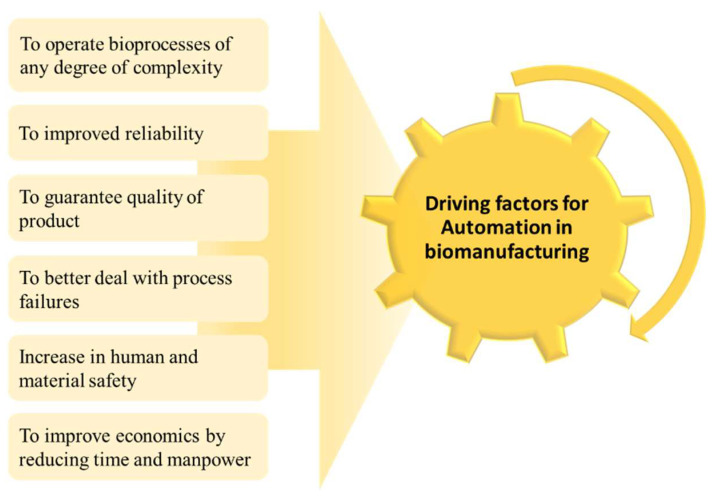
“It is particularly essential in dealing with process failures appropriately (Alford, 2006; Rathore et al., 2021; Stanke and Hitzmann, 2013).”
BackgroundMethodAI-Driven Precision Fermentation: From Restaurant Food Waste to Sustainable Protein Production
Kanwal, N., Zhang, M., Khan, S., & Batool, U. (2025) · Food and Bioprocess Technology · doi:10.1007/s11947-025-03981-9 · Cited by 28
“Furthermore, closed-loop control and adaptive optimization represent the highest level of AI integration in biomanufacturing workflows (Rathore et al., 2021).”
Current and future technologies for monitoring cultured meat: A review
Pawar, D., Presti, D. L., Silvestri, S., Schena, E., & Massaroni, C. (2023) · Food Research International · doi:10.1016/j.foodres.2023.113464 · Cited by 27
Bioprocess in‐line monitoring and control using Raman spectroscopy and Indirect Hard Modeling (IHM)
Müller, D. H., Börger, M., Thien, J., & Koß, H. (2024) · Biotechnology and Bioengineering · doi:10.1002/bit.28724 · Cited by 32
“As a result, these processes rely on in ‐ line monitoring and control to increase process productivity and product quality (Esmonde ‐ White et al., 2022; Hirsch et al., 2019; Rathore et al., 2021).”
BackgroundMethodInfluentialSteps toward a digital twin for functional food production with increased health benefits
Sørensen, H. M., Cunningham, D., Balakrishnan, R., Maye, S., Macleod, G. H. B., Brabazon, D., Loscher, C. E., & Freeland, B. H. (2023) · Current Research in Food Science · doi:10.1016/j.crfs.2023.100593 · Cited by 26
“As the markets of functional food ingredients continue to grow and evolve, the industry must keep investing and implementing these tools, to remain efficient and capable of meeting consumer demands (Rathore et al., 2021; Narayanan et al., 2020).”
BackgroundrAAV Manufacturing: The Challenges of Soft Sensing during Upstream Processing
Iglesias, C. F., Ristovski, M., Bolić, M., & Čuperlović‐Culf, M. (2023) · Bioengineering · doi:10.3390/bioengineering10020229 · Cited by 24
PID controls: the forgotten bioprocess parameters
Harcum, S. W., Elliott, K. S., Skelton, B. A., Klaubert, S. R., Dahodwala, H., & Lee, K. H. (2022) · Discover Chemical Engineering · doi:10.1007/s43938-022-00008-z · Cited by 23
“For biologic processes, most PID tuning studies have focused on microbial fermentation processes [18, 19], where the interaction of pH and DO control is not as strong due to non-bicarbonate buffered systems [20].”
BackgroundMethods and Analysis of Biological Contaminants in the Biomanufacturing Industry
Janghorban, M., Kazemi, S., Tormon, R., Ngaju, P., & Pandey, R. (2023) · Chemosensors · doi:10.3390/chemosensors11050298 · Cited by 22
Dan, A., Liu, B., Patil, U., Manuraj, B. N. M., Gandhi, R., Buchel, J., Chundawat, S. P. S., Guo, W., & Ramachandran, R. (2025) · Control Engineering Practice · doi:10.1016/j.conengprac.2024.106198 · Cited by 20
Alternative proteins production: current scenario, bioreactor types, and scale-up strategies
Vandenberghe, L. P. D. S., de Mello, A. F. M., Machado, C. M. B., Biagini, G., de Mattos, P. B. G., Piazenski, I. N., Candelário, J. P. M., & Soccol, C. R. (2024) · Systems Microbiology and Biomanufacturing · doi:10.1007/s43393-024-00309-0 · Cited by 22
Zhang, Y., Ishikawa, M., Jiang, N., & Zhang, X. (2026) · Fermentation · doi:10.3390/fermentation12020103 · Cited by 20
“This enables automatic fine-tuning like adding nutrients or adjusting aeration, streamlining processes for better consistency and higher yields [217,218].”
Model predictive control for steady-state performance in integrated continuous bioprocesses
Pappenreiter, M., Döbele, S., Striedner, G., Jungbauer, A., & Sissolak, B. (2022) · Bioprocess and Biosystems Engineering · doi:10.1007/s00449-022-02759-z · Cited by 19
Müller, D. H., Flake, C., Brands, T., & Koß, H. (2023) · Biotechnology and Bioengineering · doi:10.1002/bit.28424 · Cited by 28
“Especially in highly dynamic bioprocesses that often use raw materials of inconsistent quality, on‐ or in‐line monitoring can increase process productivity and product quality (Esmonde‐White et al., 2022; Hirsch et al., 2019; Rathore et al., 2021).”
BackgroundMorabito, B., Pohlodek, J., Kranert, L., Espinel‐Ríos, S., & Findeisen, R. (2022) · IFAC-PapersOnLine · doi:10.1016/j.ifacol.2022.07.562 · Cited by 15
“Furthermore, modern feedback control strategies are included within the guidelines of the quality-by-design concept encouraged by regulatory agencies (Rathore et al., 2021).”
BackgroundWheels turning: CHO cell modeling moves into a digital biomanufacturing era
Ranpura, S. A., Maralingannavar, V., Gheorghe, A.-G., Ma, E., Morrissey, J., Betenbaugh, M. J., & Demirhan, D. (2025) · Computational and Structural Biotechnology Journal · doi:10.1016/j.csbj.2025.06.035 · Cited by 16
“The end goal is to create an interconnected and responsive bioproduction system that can adapt to process variability and ensure high titers and consistency product quality across all stages [170].”
Microfluidic systems as a novel approach for microalgal bioprocess
Karacaoğlu, B., İnan, B., & Özçimen, D. B. (2023) · Biochemical Engineering Journal · doi:10.1016/j.bej.2023.108959 · Cited by 15
Multivariable robust tube-based nonlinear model predictive control of mammalian cell cultures
Dewasme, L., Mäkinen, M., & Chotteau, V. (2024) · Computers & Chemical Engineering · doi:10.1016/j.compchemeng.2024.108592 · Cited by 18
“Min–max and multi-stage MPC strategies are computationally demanding (Rathore et al., 2021) but benefit from the slow dynamics of bioprocesses.”
Oetomo, B., Luo, L., Qu, Y., Discepola, M., Kentish, S. E., & Gras, S. L. (2025) · Digital Chemical Engineering · doi:10.1016/j.dche.2024.100211 · Cited by 15
Rodriguez-Mata, A. E., Gómez-Vidal, E., Lucho-Constantino, C. A., Medrano-Hermosillo, J. A., Baray-Arana, R. E., & Pérez, P. A. L. (2023) · Processes · doi:10.3390/pr11041234 · Cited by 13
Chandrasekaran, K., Chandrasekaran, K., Jayaraman, G., & Bhatt, N. (2025) · Chemical Engineering Journal · doi:10.1016/j.cej.2025.165116 · Cited by 12
KT-Biologics I (KTB1): A dynamic simulation model for continuous biologics manufacturing
Boskabadi, M. R., Ramin, P., Kager, J., Sin, G., & Mansouri, S. S. (2024) · Computers & Chemical Engineering · doi:10.1016/j.compchemeng.2024.108770 · Cited by 11
Automated quality analysis in continuous downstream processes for small-scale applications
Tallvod, S., Espinoza, D., Gomis-Fons, J., Andersson, N., & Nilsson, B. (2023) · Journal of Chromatography A · doi:10.1016/j.chroma.2023.464085 · Cited by 11
Improved control strategies for the environment within cell culture bioreactors
Jones, J., Kindembe, D., Branton, H., Lawal, N., Lopez-Montero, E., Mack, J., Shi, S., Patton, R. J., & Montague, G. A. (2023) · Food and Bioproducts Processing · doi:10.1016/j.fbp.2023.02.004 · Cited by 10
Modified fractional order PID structure for non‐integer model bioreactor control
Maurya, P., Paul, N., Prasad, D., & Singh, R. S. (2024) · The Canadian Journal of Chemical Engineering · doi:10.1002/cjce.25254 · Cited by 10
Model-Based Adaptive Control of Bioreactors—A Brief Review
Lyubenova, V., Ignatova, M., Zoteva, D., & Roeva, O. N. (2024) · Mathematics · doi:10.3390/math12142205 · Cited by 10
Gate-based GWNet for process quality filter and multioutput prediction
Chen, S., He, Q., Tu, P., Qiao, S., Zhang, H., & Liu, X. (2024) · Expert Systems with Applications · doi:10.1016/j.eswa.2024.125921 · Cited by 11
Thyden, R., Dominko, T., Weathers, P. J., dos Santos, A., Perreault, L. R., Reddig, D., Kloster, J., & Gaudette, G. R. (2024) · Systems Microbiology and Biomanufacturing · doi:10.1007/s43393-024-00280-w · Cited by 14
“…enzymes, and vaccines, have been affordably mass produced and globally distributed; however, affordable mass production of next generation foods and medicines, including the products of cellular agriculture, and cell therapies is possible but is still technically and economically limited [29, 35].”
Influentialdo Nascimento, J. F. C., dos Reis, B. D., Neto, Á. D. B., Lerin, L. A., de Oliveira, J. V., de Paula, A. V., & Remonatto, D. (2024) · Biocatalysis and Agricultural Biotechnology · doi:10.1016/j.bcab.2024.103240 · Cited by 10
Recent Advances in Microalgae Cultivation Systems: Toward Autonomous Architecture
Sangregorio‐Soto, V., Mayorga, E. Y., & Perafán, R. D. L. H. (2026) · Fermentation · doi:10.3390/fermentation12030147 · Cited by 12
Ibáñez, F., Puentes-Cantor, H., Bárzaga-Martell, L., Saa, P. A., Agosin, E. E., & Pérez‐Correa, J. R. (2024) · Computers & Chemical Engineering · doi:10.1016/j.compchemeng.2024.108706 · Cited by 12
Evaluation of single-use optical and electrochemical pH sensors in upstream bioprocessing
Fratz‐Berilla, E. J., Kohnhorst, C. L., Trunfio, N., Bush, X., Gyorgypal, A., & Agarabi, C. D. (2024) · Heliyon · doi:10.1016/j.heliyon.2024.e25512 · Cited by 10
“This is generally accomplished through a two-sided control loop [3,4] in which the bioreactor controller receives the measurements taken from the pH sensor and either increases the percentage of carbon dioxide in the gas mix if the pH is higher than the setpoint or turns on a pump to add base (e.g.…”
BackgroundAsiedu, N. Y., Bamaalabong, P. P., Johnson, J. E., Bonsu, J. K., & Addo, A. (2024) · Journal of Engineering and Applied Science · doi:10.1186/s44147-024-00517-4 · Cited by 8
“Bioprocess control model relates important process inputs and outputs [45], and their size variations include the following: microbial cell (a few mm 3 ), shake flask (100–1000 mL), laboratory bioreactor (1–50 L), pilot scale (0.3–10 m 3 ), and plant scale (2–500 m 3 ).”
InfluentialAllampalli, S. S. P., & Sivaprakasam, S. (2024) · World Journal of Microbiology and Biotechnology · doi:10.1007/s11274-024-03993-1 · Cited by 10
“So the revamping involves optimal utilization of resources and implementation of robust measuring, monitoring, modelling, and control techniques (Simutis and Lübbert 2015; Rathore et al. 2021; Mondal et al. 2023; Wainaina and Taherzadeh 2023).”
InfluentialHu, J., Noor, N. D. M., Kamarudin, N. H. A., & Ali, M. S. M. (2025) · International Journal of Green Energy · doi:10.1080/15435075.2025.2518196 · Cited by 8
“Modern bioprocess control strategies like fuzzy logic and neural networks enhance productivity and quality (Rathore et al. 2021).”
Bolmanis, E., Galvanauskas, V., Grīgs, O., Vanags, J., & Kazāks, A. (2025) · Fermentation · doi:10.3390/fermentation11070411 · Cited by 8
Banerjee, S., & Lahiri, S. K. (2026) · Systems Microbiology and Biomanufacturing · doi:10.1007/s43393-026-00460-w · Cited by 7
“Sensor noise, drift, and intermittent failure further degrade prediction reliability (Rathore et al. 2021).”
Mercado, E., Mbiki, S., Harcum, S. W., & Gilmore, J. (2023) · Biochemical Engineering Journal · doi:10.1016/j.bej.2023.109042 · Cited by 6
Breen, L., Flynn, J., Bergin, A., Flampouri, E., & Butler, M. (2024) · Biotechnology Progress · doi:10.1002/btpr.3469 · Cited by 7
“11 While some of these parameters such as temperature, agitation, pH and dissolved oxygen (DO) have been routinely controlled to defined ranges of set-points by PID controllers, others have relied upon manual sampling and off-line analysis.”
Zeh, N., Bräuer, M., Raab, N., Handrick, R., & Otte, K. (2022) · Scientific Reports · doi:10.1038/s41598-022-06272-x · Cited by 6
Binary separation control in preparative gradient chromatography using iterative learning control
Espinoza, D., Andersson, N., & Nilsson, B. (2022) · Journal of Chromatography A · doi:10.1016/j.chroma.2022.463078 · Cited by 6
Deep learning adaptive Model Predictive Control of Fed-Batch Cultivations
Krausch, N., Doff-Sotta, M., Cannon, M., Neubauer, P. B., & Bournazou, M. N. C. (2025) · Computers & Chemical Engineering · doi:10.1016/j.compchemeng.2025.109344 · Cited by 7
Ergot alkaloid control in biotechnological processes and pharmaceuticals (a mini review)
Volnin, A., Parshikov, A., Tsybulko, N. S., Мизина, П. Г., & Sidelnikov, N. I. (2024) · Frontiers in Toxicology · doi:10.3389/ftox.2024.1463758 · Cited by 5
Bioprocessing and Market Aspects of Antimicrobial Peptides
Mihooliya, K. N., & Kumari, A. (2024) · Springer eBooks · doi:10.1007/978-3-031-67515-7_7 · Cited by 7
Advances in modeling analysis for multi-parameter bioreactor process control
Lin, X., Li, K., Wu, C., Zhang, C., Zhang, G., & Huo, X. (2025) · Biotechnology and Bioprocess Engineering · doi:10.1007/s12257-024-00174-7 · Cited by 7
AIoE-Enhanced Multi-objective Optimization for Sustainable Bioprocesses in Smart Bioreactors
Abdi, H., & Nozari, H. (2025) · Springer eBooks · doi:10.1007/978-981-96-7202-8_2 · Cited by 5
Robust control designs for microalgae cultivation in continuous photobioreactors
Rodríguez-Jara, M., Ramírez-Castelán, C. E., Samano-Perfecto, Q., Ricardez‐Sandoval, L., & Puebla, H. (2023) · International Journal of Chemical Reactor Engineering · doi:10.1515/ijcre-2022-0115 · Cited by 5
The need for integrated systems biology approaches for biotechnological applications
Selvarajoo, K. (2021) · Biotechnology Notes · doi:10.1016/j.biotno.2021.08.002 · Cited by 5
DL based real-time prediction of product formation in biopharmaceutical manufacturing
Alam, M. N., Bhat, S. U., Kodamana, H., & Rathore, A. S. (2024) · Computer-aided chemical engineering/Computer aided chemical engineering · doi:10.1016/b978-0-443-28824-1.50511-1 · Cited by 4
Self-citationDynamic Energy Budget model for E. coli growth in carbon and nitrogen limitation conditions
Matyja, K., & Lech, M. (2024) · Applied Microbiology and Biotechnology · doi:10.1007/s00253-024-13245-9 · Cited by 5
“The simulations and predictions obtained from mathematical models of these processes are not overvalued in these aspects (Luo et al. 2021; Rathore et al. 2021).”
Robust Control Based on Modeling Error Compensation of Microalgae Anaerobic Digestion
Rodríguez-Jara, M., Velasco-Pérez, A., Vian, J., Carmona, S. E. V., & Puebla, H. (2022) · Fermentation · doi:10.3390/fermentation9010034 · Cited by 4
Scale-up constraint from lab scale to industrial scale
Kareem, F., Qadeer, Q., Idriss, I. M., Hashmi, Z., & Sumaiya, S. (2025) · Elsevier eBooks · doi:10.1016/b978-0-443-31476-6.00021-x · Cited by 5
Acosta-Pavas, J. C., Corrales, D. C., Villela, S. M. A., Georgakilas, G. K., Fillaudeau, L., & Aceves-Lara, C. A. (2026) · ACS Omega · doi:10.1021/acsomega.5c11633 · Cited by 3
Song, D., Zhang, C., Wu, Y., & Yang, L. (2026) · Foods · doi:10.3390/foods15071195 · Cited by 3
Arun, A. P., Sreenivasan, N., & Sarode, M. (2026) · Food Engineering Reviews · doi:10.1007/s12393-026-09453-w · Cited by 4
Non-Invasive Estimation of Acetates Using Off-Gas Information for Fed-Batch E. coli Bioprocess
Matukaitis, M., Masaitis, D., Urniežius, R., Zlatkus, L., & Vaitkus, V. (2022) · International Electronic Conference on Processes (ECP) · doi:10.3390/ecp2022-12668 · Cited by 3
Ban, D. K., Hajian, R., Chan, M., Abdolrahimi, S., Barron, F. E., Datta, S., & Aran, K. (2024) · GEN Biotechnology · doi:10.1089/genbio.2024.0043 · Cited by 3
Rodimtsev, S. A. (2022) · Sel skokhozyaistvennaya Biologiya · doi:10.15389/agrobiology.2022.3.591eng · Cited by 2
Economic Nonlinear Model Predictive Control of Continuous Viral Bioreactors
Inguva, P., Paoli, L. T., & Braatz, R. D. (2024) · IFAC-PapersOnLine · doi:10.1016/j.ifacol.2024.09.037 · Cited by 2
Shoshi, A., Gündüz, B., & Miehe, R. (2024) · Procedia CIRP · doi:10.1016/j.procir.2024.08.276 · Cited by 4
Optimal control of uncertain batch processes via Koopman expectation-assisted gradient methods
Zadravec, D., & Ferdelji, N. (2025) · Computers & Chemical Engineering · doi:10.1016/j.compchemeng.2025.109353 · Cited by 3
Austerjost, J., Knöchelmann, E., Kruse, T., Kilian, J., Quaas, B., & Olszowy, M. W. (2025) · SLAS TECHNOLOGY · doi:10.1016/j.slast.2025.100353 · Cited by 2
Shear stress optimization and smart control strategies toward AI-integrated tissue culture systems
Kim, H., & Kim, J. (2026) · Biomedical Materials · doi:10.1088/1748-605x/ae3e48 · Cited by 3
“To address these issues, the development of physiologically relevant artificial organ models is urgently needed [1].”
Xavier, V. L., do Vale, H. M. M., & de Almeida, J. R. M. (2026) · Brazilian Journal of Microbiology · doi:10.1007/s42770-026-01955-3 · Cited by 4
“Inadequate control of temperature, oxygen availability, pH and accumulation of inhibitory metabolites can reduce target microorganism viability and favor contaminant proliferation, directly linking process design to product safety and field efficacy [ 61–63].”
Grey-box modeling framework for consolidated bioprocessing systems: an endpoint-guided approach
Yeboah, M. K., & Söffker, D. (2026) · Bioresources and Bioprocessing · doi:10.1186/s40643-026-01101-9 · Cited by 2
“Mechanistic models are physically interpretable, but they are difficult to calibrate reliably for CBP because many interacting biological effects are only partly understood and experimental observations are often limited (Pérez et al. 2020; Rathore et al. 2021).”
Introduction to Bioprocess Technology
Khan, F., Khan, S. A., Sharma, G., Vishvakarma, R., Farooqui, A., Siddiqui, M. H., & Vimal, A. (2024) · Springer eBooks · doi:10.1007/978-981-97-1451-3_1 · Cited by 5
Roeva, O. N., Slavov, T. N., & Kralev, J. K. (2024) · Processes · doi:10.3390/pr12091795 · Cited by 2
Optimal operation of parallel mini-bioreactors in bioprocess development using multi-stage MPC
Krausch, N., Kim, J. W., Lucia, S., Groß, S., Barz, T., Neubauer, P. B., & Bournazou, M. N. C. (2022) · Computer-aided chemical engineering/Computer aided chemical engineering · doi:10.1016/b978-0-323-95879-0.50179-x · Cited by 2
Optimal operation of parallel mini-bioreactors in bioprocess development using multi-stage MPCPreprint
Krausch, N., Kim, J. W., Lucia, S., Groß, S., Barz, T., Neubauer, P. B., & Bournazou, M. N. C. (2021) · bioRxiv (Cold Spring Harbor Laboratory) · doi:10.1101/2021.12.17.472671 · Cited by 2
“Model predictive control is a method that has been widely used in the chemical industry and has also shown good success in several simulation studies in bioprocess engineering but has had little application in real experiments (Rathore et al., 2021).”
MethodRodríguez-García, E. E., Soto-Mendoza, A., & Guajardo, D. (2023) · Portland International Conference on Management of Engineering and Technology (PICMET) · doi:10.23919/picmet59654.2023.10216904 · Cited by 3
“Furthermore, ANN trains control algorithms to optimize the control parameters of the process with data-driven computational models [19].”
MethodMurugan, C., Subbian, S., Kaliyaperumal, S., Sadasivuni, K. K., Siddiqui, M. I. H., Muthusamy, S., Rosen, M. A., Prakash, C., & Chan, C. K. (2024) · Heliyon · doi:10.1016/j.heliyon.2024.e32210 · Cited by 2
“Optimizing critical parameters such as pH, agitation rate, and temperature of a bioreactor using advanced control technologies aids in achieving higher cell growth [4,5].”
Colín-Robles, J. D. J., Torres, I., Ibarra-Manzano, M.-A., Avina‐Cervantes, J. G., & Alcaraz-González, V. (2024) · Journal of Process Control · doi:10.1016/j.jprocont.2024.103323 · Cited by 1
Efficient Hybrid Parallel Scheme for Caputo Time-Fractional PDEs on Multicore Architectures
Shams, M., & Carpentieri, B. (2025) · Fractal and Fractional · doi:10.3390/fractalfract9090607 · Cited by 1
“The past few decades have witnessed rapid progress in computational biology, personalized medicine, and medical diagnostics, driven in part by advances in the modeling and simulation of biological processes [1–3].”
Reducing parameter uncertainty in kinetic models: A new strategy for experimental design
Matyja, K. (2025) · Ecological Modelling · doi:10.1016/j.ecolmodel.2025.111424 · Cited by 1
AAOSC: Adaptive agent-oriented system control
Mansouri, S. S., Reuthe, E., Boskabadi, M. R., & Savoie, C. J. (2026) · Current Opinion in Chemical Engineering · doi:10.1016/j.coche.2026.101253 · Cited by 1
Flores, B. C., Panca, P. H., Quispe, J. R. P., Mollocondo, C. I. M., Mamani, G. Q., Vargas, J. C. J., & Torres‐Cruz, F. (2026) · Journal Of Biochemical Technology · doi:10.51847/q27bv1w51d · Cited by 1
Metadata
- Authors
- Rathore, A. S., Mishra, S., Nikita, S., & Priyanka, P.
- Affiliations
- Indian Institute of Technology Delhi (IN)
- Corresponding author
- Rathore, Anurag S.
- Venue
- Life
- Publisher
- MDPI AG
- Published
- 2021-06-13
- Volume
- 11
- Issue
- 6
- Pages
- 557
- ISSN
- 2075-1729 (ISSN-L)
- PMC
- PMC8231968
- OpenAlex
- W3172356271
- Semantic Scholar
- a9f2fae0202cda29dbe2f1d0fed758959192b30e
- Cited by
- 141
- References
- 136
- Citations by year
- 2026: 29 · 2025: 32 · 2024: 39 · 2023: 22 · 2022: 15 · 2021: 4
- FWCI
- 2.71
- Type
- journal article
- Language
- en
- Open access
- gold
- doi.org
- Licence
- Locations
- Life (publishedVersion, cc-by)
- PubMed Central (publishedVersion, cc-by)
- PubMed (publishedVersion)
- DOAJ (DOAJ: Directory of Open Access Journals) (submittedVersion, cc-by-sa)
- Funders
- Department of Biotechnology, Ministry of Science and Technology, India (BT/COE/34/SP15097/2015)
- Biotechnology Industry Research Assistance Council (BT/NBM0159/04/2019)
- Topics
- Physical Sciences › Engineering › Control and Systems Engineering › Advanced Control Systems Optimization
- Life Sciences › Biochemistry, Genetics and Molecular Biology › Molecular Biology › Viral Infectious Diseases and Gene Expression in Insects
- Physical Sciences › Chemical Engineering › Fluid Flow and Transfer Processes › Fluid Dynamics and Mixing
- Keywords
- bioprocess control, bioprocess automation, fuzzy logic control, model predictive control, adaptive control, neural network control, open-loop and closed-loop control, bioprocess monitoring
About these checks
Registry, retraction, Cites and statistics results are computed, not judged, with one exception: a printed reference that no index lists is read once by a model before it counts as a citation error. Claims are extracted by a model and kept only when their quote appears verbatim in the text; each cited source is then checked, with a model’s help, for whether it says what the claim relies on. Those verdicts can be wrong — read the claim’s quote and the cited source before relying on one.
Statistics and arithmetic are recomputed, not judged.
Confidence bands are shown only for fields calibrated on our annotated test set. None is calibrated yet, so no band is shown.
What counts as a claim ›How we measure confidence ›How we check this ›
Are you an author, or do you see a problem with this page? Request a review
Data sources
Bibliographic data: Semantic Scholar, OpenAlex, Crossref.
Contains information from the Semantic Scholar Academic Graph Datasets, made available under the ODC Attribution License (ODC-BY 1.0).
Semantic Scholar’s data is described in: Kinney, R., et al. (2023). The Semantic Scholar Open Data Platform. arXiv:2301.10140.
