

Bim Expression Promotes the Clearance of Mononuclear Phagocytes during Choroidal Neovascularization, Mitigating Scar Formation in Mice
Open accessThe DOI matches its Crossref record; 49 of the 50 references it cites were found in a registry or an index.
Abstract
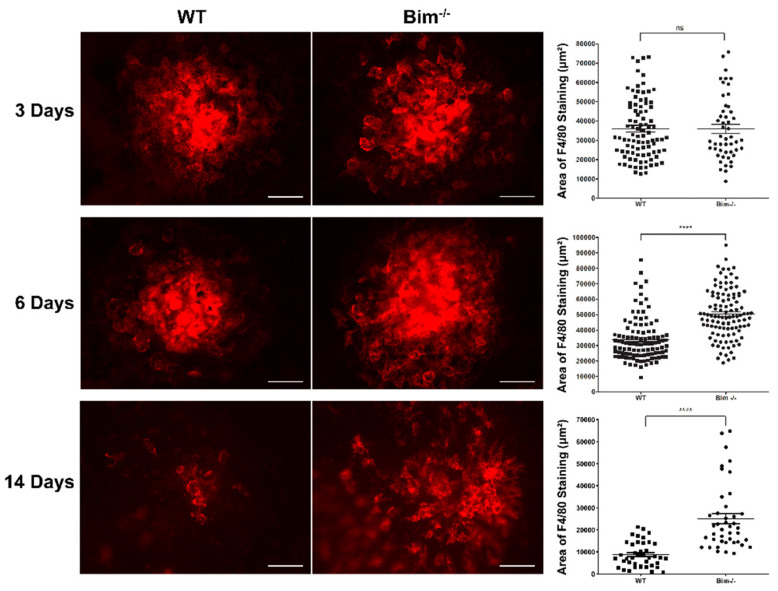
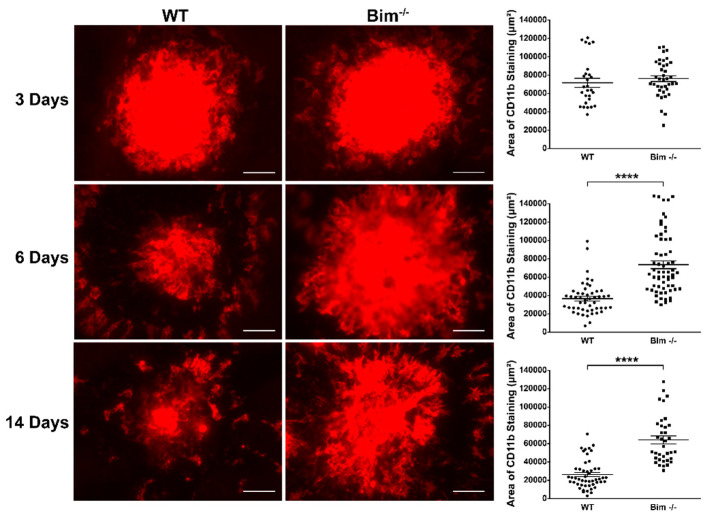
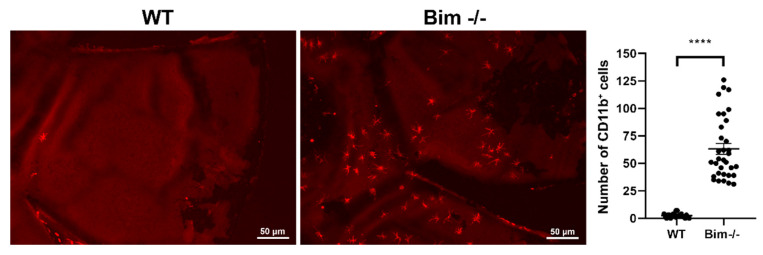
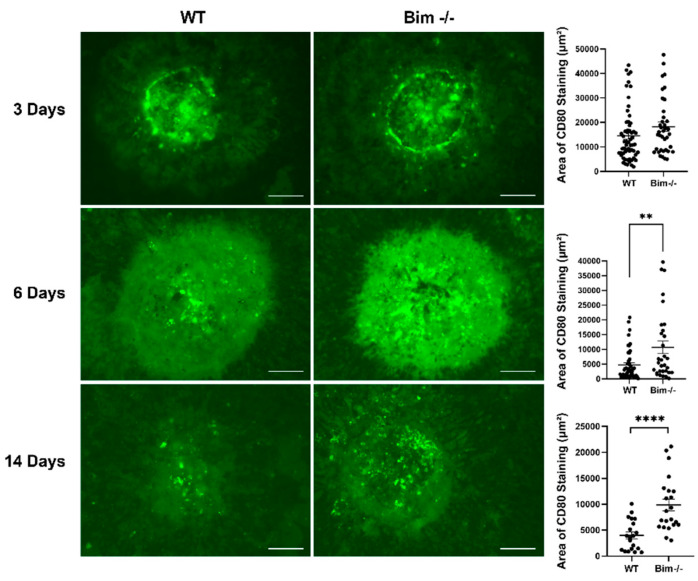
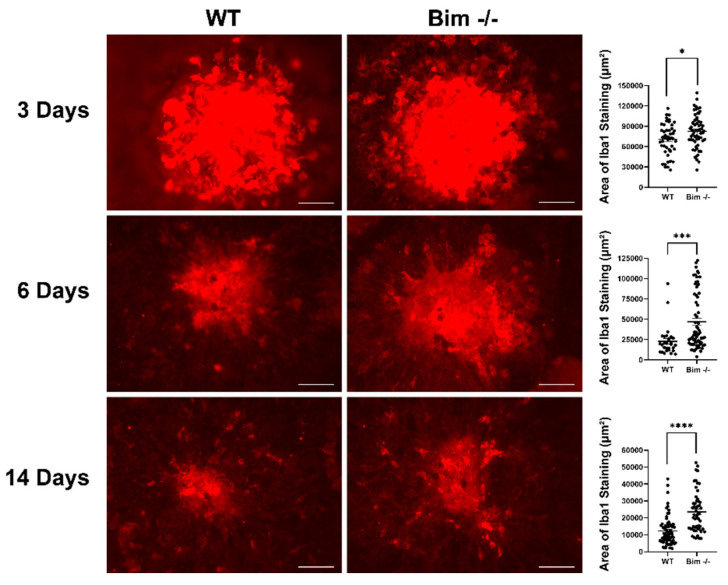
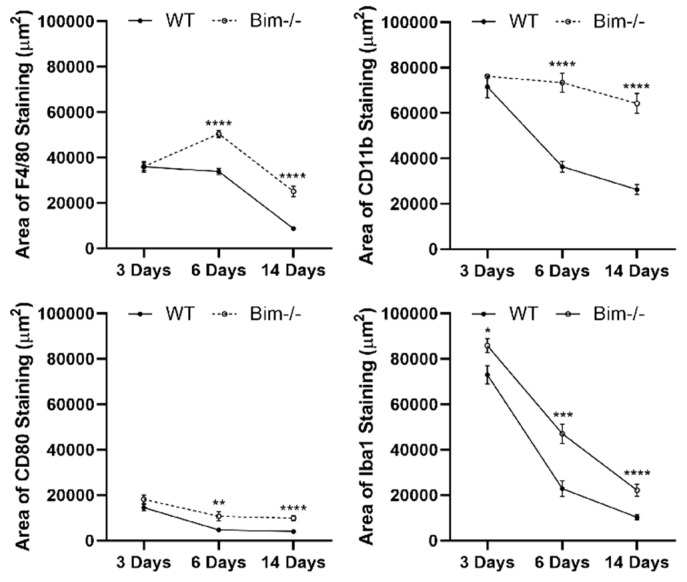
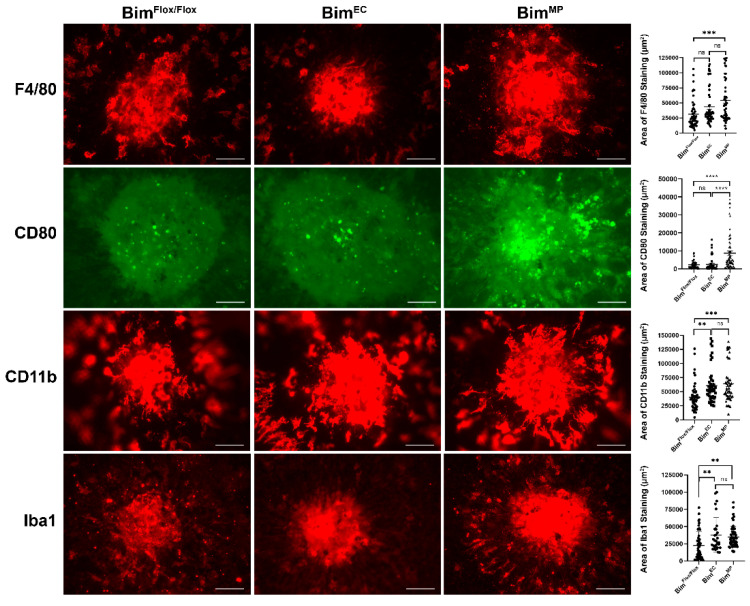
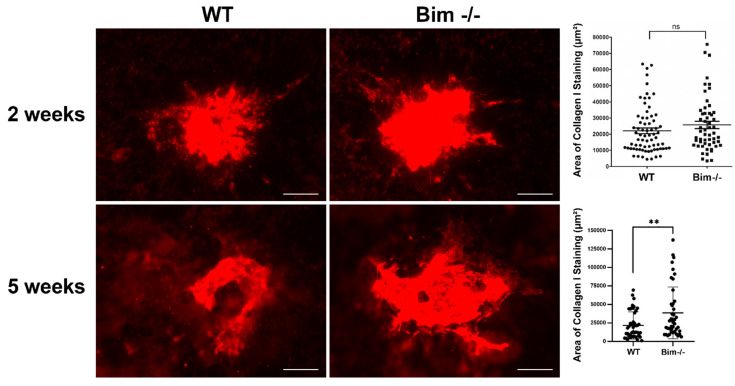
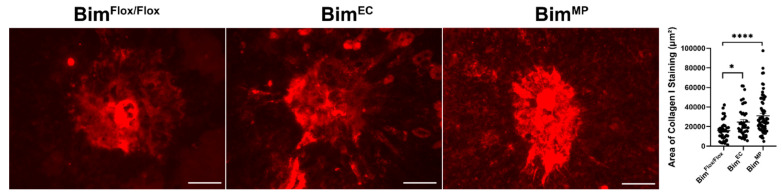
Inflammation is increasingly recognized as an important modulator in the pathogenesis of neovascular age-related macular degeneration (nAMD). Although significant progress has been made in delineating the pathways that contribute to the recruitment of inflammatory cells and their contribution to nAMD, we know little about what drives the resolution of these inflammatory responses. Gaining a better understanding of how immune cells are cleared in the choroid will give a novel insight into how sustained inflammation could influence the pathogenesis of nAMD. The pro-apoptotic Bcl-2 family member Bim is a master regulator of immune cell homeostasis. In its absence, immune cell lifespan and numbers increase. Most therapeutic regimes that squelch inflammation do so by enhancing immune cell apoptosis through enhanced Bim expression and activity. To test the hypothesis that Bim expression tempers inflammation during the pathogenesis of nAMD, we used the mouse laser-induced choroidal neovascularization (CNV) model in which inflammation acts as a facilitator of CNV. Here, we showed minimal to no change in the recruitment of F4/80-, CD80-, CD11b-, and Iba1-positive myeloid-derived mononuclear phagocytes to the site of laser photocoagulation in the absence of Bim expression. However, the resolution of these cells from the choroid of Bim-deficient (Bim -/-) mice was significantly diminished following laser photocoagulation. With time, we noted increased scar formation, demonstrated by collagen I staining, in Bim -/- mice with no change in the resolution of neovascularization compared to wild-type littermates. We also noted that mice lacking Bim expression in mononuclear phagocytes (BimFlox/Flox; Lyz2-Cre (BimMP) mice) had delayed resolution of F4/80-, CD80-, CD11b-, and Iba1-positive cells, while those lacking Bim expression in endothelial cells (BimFlox/Flox; Cad5-Cre (BimEC) mice) had delayed resolution of only CD11b- and Iba1-positive cells. Both BimMP and BimEC mice demonstrated increased scar formation, albeit to differing degrees. Thus, our studies show that resolving inflammation plays an important role in moderating scar formation in nAMD, and it is impacted by Bim expression in both the endothelium and mononuclear phagocyte lineages.
Overview
The claims and statistics of this paper haven’t been checked yet.
Free: it reads the open-access text and checks the first 5 claims that cite a source we can check. Create a free account to check every claim.
Integrity signals
Registry
Cites
Statistics
Figures
Verification
Claims the paper makes
The claims and statistics of this paper haven’t been checked yet.
Free: it reads the open-access text and checks the first 5 claims that cite a source we can check. Create a free account to check every claim.
Claims other papers make about this one
Each is checked against this paper’s own text: does it say what the citing paper says it does?
The source backs part of the claim, not all of it — or backs it for a different population, condition or comparison.
In the citing paper
“Our recent preclinical studies showed that mice lacking Bim expression are unable to effectively clear mononuclear phagocytes leading to increased subretinal fibrosis and scarring during CNV [25].”
From Thrombospondin-1, BIM and CFH polymorphisms and response to anti-VEGF treatment in neovascular age- related macular degeneration patients (2024) · cites this paper as [25]
Experimental — accuracy not yet measuredThe cited source says what the claim attributes to it.
In the citing paper
“TSP1 and BIM play key roles in immunosuppression and macrophage clearance in CNV [18, 25].”
From Thrombospondin-1, BIM and CFH polymorphisms and response to anti-VEGF treatment in neovascular age- related macular degeneration patients (2024) · cites this paper as [25]
Self-check
Percentages, sums and reported differences re-computed from the paper’s own numbers.
The self-check needs the paper’s full text.
Citations
Cites
Macrophage plasticity and polarization: in vivo veritas
Sica, A., & Mantovani, A. (2012) · Journal of Clinical Investigation · doi:10.1172/jci59643 · Cited by 6,335
Abnormal blood vessel development and lethality in embryos lacking a single VEGF allele
Carmeliet, P., Ferreira, V., Breier, G., Pollefeyt, S., Kieckens, L., Gertsenstein, M., Fahrig, M., Vandenhoeck, A., Harpal, K., Eberhardt, C., et al. (1996) · Nature · doi:10.1038/380435a0 · Cited by 4,117
Heterozygous embryonic lethality induced by targeted inactivation of the VEGF gene
Ferrara, N., Carver-Moore, K., Chen, H., Dowd, M., Lu, L., O'Shea, K. S., Powell-Braxton, L., Hillan, K. J., & Moore, M. W. (1996) · Nature · doi:10.1038/380439a0 · Cited by 3,628
M-1/M-2 Macrophages and the Th1/Th2 Paradigm
Mills, C. D., Kincaid, K., Alt, J. M., Heilman, M. J., & Hill, A. M. (2000) · The Journal of Immunology · doi:10.4049/jimmunol.164.12.6166 · Cited by 3,287 · cited 1×
“M1 macrophages are inflammatory macrophages that, once activated, produce proinflammatory cytokines and nitric oxide [26].”
BackgroundAge-related macular degeneration
Jager, R. D., Mieler, W. F., & Miller, J. W. (2008) · New England Journal of Medicine · doi:10.1056/nejmra0801537 · Cited by 1,379
What is the proper way to apply the multiple comparison test?
Lee, S., & Lee, D. K. (2018) · Korean Journal of Anesthesiology · doi:10.4097/kja.d.18.00242 · Cited by 1,052
Microglial Activation and Chronic Neurodegeneration
Lull, M. E., & Block, M. L. (2010) · Neurotherapeutics · doi:10.1016/j.nurt.2010.05.014 · Cited by 1,047 · cited 1×
“Should activation be sustained, the release of angiogenic and inflammatory factors ensues, leading to neuronal and RPE degeneration [27,28].”
BackgroundPhillipson, M., Heit, B., Colarusso, P., Liu, L., Ballantyne, C. M., & Kubes, P. (2006) · The Journal of Experimental Medicine · doi:10.1084/jem.20060925 · Cited by 711
Han, C., Jin, J., Xu, S., Liu, H., Li, N., & Cao, X. (2010) · Nature Immunology · doi:10.1038/ni.1908 · Cited by 455
Alva, J. A., Zovein, A. C., Monvoisin, A., Murphy, T., Salazar, A., Harvey, N. L., Carmeliet, P., & Iruela‐Arispe, M. L. (2006) · Developmental Dynamics · doi:10.1002/dvdy.20643 · Cited by 455
Corada, M., Nyqvist, D., Orsenigo, F., Caprini, A., Giampietro, C., Taketo, M. M., Iruela-Arispe, M. L., Adams, R. H., & Dejana, E. (2010) · Developmental Cell · doi:10.1016/j.devcel.2010.05.006 · Cited by 318
Sennlaub, F., Auvynet, C., Calippe, B., Lavalette, S., Poupel, L., Hu, S. J., Dominguez, E., Camelo, S., Levy, O., Guyon, E., et al. (2013) · EMBO Molecular Medicine · doi:10.1002/emmm.201302692 · Cited by 314
Leukocyte adhesion: CD11/CD18 integrins and intercellular adhesion molecules
Gahmberg, C. G. (1997) · Current Opinion in Cell Biology · doi:10.1016/s0955-0674(97)80117-2 · Cited by 278
Tsutsumi, C., Sonoda, K.-H., Egashira, K., Qiao, H., Hisatomi, T., Nakao, S., Ishibashi, M., Charo, I. F., Sakamoto, T., Murata, T., et al. (2003) · Journal of Leukocyte Biology · doi:10.1189/jlb.0902436 · Cited by 277 · cited 2×
“Mice lacking monocyte chemoattractant protein 1/CCL2 receptor (Ccr2-deficient mice) demonstrated a significant decrease in early macrophage recruitment and subsequent CNV compared to control mice [9].”
BackgroundIntegrin-dependent phagocytosis – spreading from microadhesion to new concepts
Dupuy, A. G., & Caron, E. (2008) · Journal of Cell Science · doi:10.1242/jcs.018036 · Cited by 244
Hutcheson, J., Scatizzi, J. C., Siddiqui, A. M., Haines, G. K., Wu, T., Li, Q.-Z., Davis, L. S., Mohan, C., & Perlman, H. (2008) · Immunity · doi:10.1016/j.immuni.2007.12.015 · Cited by 221
A Bcl-2-dependent molecular timer regulates the lifespan and immunogenicity of dendritic cells
Hou, W.-S., & Van Parijs, L. (2004) · Nature Immunology · doi:10.1038/ni1071 · Cited by 184
Local apoptosis mediates clearance of macrophages from resolving inflammation in mice
Gautier, E. L., Ivanov, S., Lesnik, P., & Randolph, G. J. (2013) · Blood · doi:10.1182/blood-2013-01-478206 · Cited by 168
Ocular blood flow in diabetes and age-related macular degeneration
Pemp, B., & Schmetterer, L. (2008) · Canadian Journal of Ophthalmology · doi:10.1139/i08-049 · Cited by 167
Bcl-2 Controls Dendritic Cell Longevity In Vivo
Nopora, A., & Brocker, T. (2002) · The Journal of Immunology · doi:10.4049/jimmunol.169.6.3006 · Cited by 138
Non-apoptotic role of BID in inflammation and innate immunity
Yeretssian, G., Correa, R. G., Doiron, K., Fitzgerald, P., Dillon, C. P., Green, D. R., Reed, J. C., & Saleh, M. (2011) · Nature · doi:10.1038/nature09982 · Cited by 137
Histone H2AX is integral to hypoxia-driven neovascularization
Economopoulou, M., Langer, H. F., Celeste, A., Orlova, V. V., Choi, E. Y., Ma, M., Vassilopoulos, A., Callen, E., Deng, C., Bassing, C. H., et al. (2009) · Nature Medicine · doi:10.1038/nm.1947 · Cited by 131
Cruz-Guilloty, F., Saeed, A. M., Echegaray, J. J., Duffort, S., Ballmick, A., Tan, Y., Betancourt, M., Viteri, E., Ramkhellawan, G. C., Ewald, E., et al. (2013) · International Journal of Inflammation · doi:10.1155/2013/503725 · Cited by 117
Schmid, M. C., Avraamides, C. J., Foubert, P., Shaked, Y., Kang, S. W., Kerbel, R. S., & Varner, J. A. (2011) · Cancer Research · doi:10.1158/0008-5472.can-11-0588 · Cited by 113
Scholz, R., Caramoy, A., Bhuckory, M. B., Rashid, K., Chen, M., Xu, H., Grimm, C., & Langmann, T. (2015) · Journal of Neuroinflammation · doi:10.1186/s12974-015-0422-5 · Cited by 111 · cited 1×
“Should activation be sustained, the release of angiogenic and inflammatory factors ensues, leading to neuronal and RPE degeneration [27,28].”
BackgroundFaridi, M. H., Khan, S. Q., Zhao, W., Lee, H. W., Altintas, M. M., Zhang, K., Kumar, V., Armstrong, A. R., Carmona-Rivera, C., Dorschner, J. M., et al. (2017) · Journal of Clinical Investigation · doi:10.1172/jci88442 · Cited by 111
Hofmann, J. J., Briot, A., Enciso, J., Zovein, A. C., Ren, S., Zhang, Z. W., Radtke, F., Simons, M., Wang, Y., & Iruela-Arispe, M. L. (2012) · Development · doi:10.1242/dev.084871 · Cited by 110
Means, T. K., & Luster, A. D. (2010) · Nature Immunology · doi:10.1038/ni0810-691 · Cited by 99
Cuttler, A. S., LeClair, R. J., Stohn, J. P., Wang, Q., Sorenson, C. M., Liaw, L., & Lindner, V. (2011) · genesis · doi:10.1002/dvg.20769 · Cited by 99
Self-citationEckle, T., Hughes, K., Ehrentraut, H., Brodsky, K. S., Rosenberger, P., Choi, D., Ravid, K., Weng, T., Xia, Y., Blackburn, M. R., et al. (2013) · The FASEB Journal · doi:10.1096/fj.13-228551 · Cited by 98
Gautier, E. L., Huby, T., Saint-Charles, F., Ouzilleau, B., Chapman, M. J., & Lesnik, P. (2008) · The Journal of Immunology · doi:10.4049/jimmunol.180.10.6941 · Cited by 77
Alfredsson, J., Puthalakath, H., Martin, H. M., Strasser, A., & Nilsson, G. P. (2004) · Cell Death and Differentiation · doi:10.1038/sj.cdd.4401537 · Cited by 72
Negative regulators of angiogenesis: important targets for treatment of exudative AMD
Farnoodian, M., Wang, S., Dietz, J. A., Nickells, R. W., Sorenson, C. M., & Sheibani, N. (2017) · Clinical Science · doi:10.1042/cs20170066 · Cited by 71
Self-citationLack of thrombospondin 1 and exacerbation of choroidal neovascularization
Wang, S., Sorenson, C. M., & Sheibani, N. (2012) · Archives of Ophthalmology · doi:10.1001/archopthalmol.2011.1892 · Cited by 61 · cited 4×
“In contrast, thrombospondin-1-deficient (Thbs1-/-) mice demonstrated a significant increase in the recruitment of F4/80-positive macrophages three days after laser photocoagulation and subsequently increased CNV [10].”
BackgroundSelf-citationSonoda, K.-H., Sasa, Y., Qiao, H., Tsutsumi, C., Hisatomi, T., Komiyama, S., Kubota, T., Sakamoto, T., Kawano, Y.-I., & Ishibashi, T. (2003) · The Journal of Immunology · doi:10.4049/jimmunol.171.5.2652 · Cited by 51
Kirschnek, S., Ying, S., Fischer, S. F., Häcker, H., Villunger, A., Hochrein, H., & Häcker, G. (2005) · The Journal of Immunology · doi:10.4049/jimmunol.174.2.671 · Cited by 51
Pillars Article: M-1/M-2 Macrophages and the Th1/Th2 Paradigm. J. Immunol. 2000. 164: 6166–6173
Mills, C. D., Kincaid, K., Alt, J. M., Heilman, M. J., & Hill, A. M. (2017) · The Journal of Immunology · doi:10.4049/jimmunol.1701141 · Cited by 48
Scatizzi, J. C., Hutcheson, J., Pope, R. M., Firestein, G. S., Koch, A. E., Mavers, M., Smason, A., Agrawal, H., Haines, G. K., Chandel, N. S., et al. (2010) · Arthritis & Rheumatism · doi:10.1002/art.27198 · Cited by 46
Impact of conditional deletion of the pro-apoptotic BCL-2 family member BIM in mice
Herold, M. J., Stuchbery, R., Mérino, D., Willson, T. A., Strasser, A., Hildeman, D. A., & Bouillet, P. (2014) · Cell Death and Disease · doi:10.1038/cddis.2014.409 · Cited by 39
Bim is responsible for the inherent sensitivity of the developing retinal vasculature to hyperoxia
Wang, S., Park, S., Fei, P., & Sorenson, C. M. (2011) · Developmental Biology · doi:10.1016/j.ydbio.2010.10.034 · Cited by 38
Self-citationAugis, V., Airiau, K., Josselin, M., Turcq, B., Mahon, F.-X., & Belloc, F. (2013) · PLoS ONE · doi:10.1371/journal.pone.0078582 · Cited by 35 · cited 2×
“Individuals carrying a C→T substitution (c456C > T; T allele BIM BH3 single nucleotide polymorphism (SNP)) within the BIM BH3 domain (death-initiating domain) have lower basal Bim expression [38], while those with the C allele have higher basal Bim expression.”
BackgroundBim suppresses the development of SLE by limiting myeloid inflammatory responses
Tsai, F., Homan, P., Agrawal, H., Misharin, A. V., Abdala‐Valencia, H., Haines, G. K., Dominguez, S. T., Bloomfield, C. L., Saber, R., Chang, A., et al. (2017) · The Journal of Experimental Medicine · doi:10.1084/jem.20170479 · Cited by 33
Ying, H.-Q., Chen, J., He, B.-S., Pan, Y.-Q., Wang, F., Deng, Q.-W., Sun, H.-L., Liu, X., & Wang, S.-K. (2015) · Scientific Reports · doi:10.1038/srep11348 · Cited by 29 · cited 1×
“This synonymous Bim polymorphism has a C allele frequency that varies from 43 to 87%, depending on the population [38,40,41].”
BackgroundSelf-citationCardona, A. F., CLICaP, O. B. O. T., Rojas, L., Wills, B., Arrieta, O., Carranza, H., Vargas, C., Otero, J., Corrales-Rodriguez, L., Martín, C., et al. (2016) · Oncotarget · doi:10.18632/oncotarget.12112 · Cited by 29 · cited 1×
“This synonymous Bim polymorphism has a C allele frequency that varies from 43 to 87%, depending on the population [38,40,41].”
BackgroundLudwig, L. M., Nassin, M. L., Hadji, A., & LaBelle, J. L. (2016) · Frontiers in Pediatrics · doi:10.3389/fped.2016.00135 · Cited by 27
BH3-only proteins in rheumatoid arthritis: potential targets for therapeutic intervention
Hutcheson, J., & Perlman, H. (2008) · Oncogene · doi:10.1038/onc.2009.54 · Cited by 26
Wang, S., Zaitoun, I. S., Johnson, R. P., Jamali, N., Gürel, Z., Wintheiser, C. M., Strasser, A., Lindner, V., Sheibani, N., & Sorenson, C. M. (2017) · PLoS ONE · doi:10.1371/journal.pone.0178198 · Cited by 26
Self-citationPlesa, M., Gagné, V., Glisovic, S., Younan, M., Sharif-Askari, B., Laverdière, C., Alos, N., Leclerc, J., Sallan, S. E., Neuberg, D. S., et al. (2017) · The Pharmacogenomics Journal · doi:10.1038/s41397-017-0002-4 · Cited by 23
Targeted Thrombospondin-1 Expression in Ocular Vascular Development and Neovascularization
Sorenson, C. M., Wang, S., Darjatmoko, S. R., Gürel, Z., Liu, B., & Sheibani, N. (2021) · Frontiers in Cell and Developmental Biology · doi:10.3389/fcell.2021.671989 · Cited by 17
Self-citation
Cited by
Assessment of Choroidal Vasculature and Innate Immune Cells in the Eyes of Albino and Pigmented Mice
Zaitoun, I. S., Song, Y., Zaitoun, H. B., Sorenson, C. M., & Sheibani, N. (2022) · Cells · doi:10.3390/cells11203329 · Cited by 16
Self-citationSorenson, C. M., Gurel, Z., Song, Y.-S., Peterson, K. D., Blodi, B. A., & Sheibani, N. (2024) · PLOS ONE · doi:10.1371/journal.pone.0297135 · Cited by 5
Self-citationEditorial – Connective Tissue Growth Factor: A Key Factor Among Mediators of Tissue Fibrosis
Sheibani, N. (2022) · Journal of Ophthalmic and Vision Research · doi:10.18502/jovr.v17i4.12294 · Cited by 3
Self-citationSheibani, N., Song, Y., Farnoodian, M., Inampudi, S., Hanna, B. A., Wang, S., Darjatmoko, S. R., & Sorenson, C. M. (2024) · International Journal of Molecular Sciences · doi:10.3390/ijms251910254 · Cited by 2
Self-citationSheibani, N., Wang, S., Darjatmoko, S. R., & Sorenson, C. M. (2026) · Experimental Eye Research · doi:10.1016/j.exer.2026.111152
Self-citation
Metadata
- Authors
- Wang, S., Zaitoun, I. S., Darjatmoko, S. R., Sheibani, N., & Sorenson, C. M.
- Affiliations
- University of Wisconsin–Madison (US)
- Corresponding author
- Sorenson, Christine M.
- Venue
- Life
- Publisher
- MDPI AG
- Published
- 2022-01-29
- Volume
- 12
- Issue
- 2
- Pages
- 208
- ISSN
- 2075-1729 (ISSN-L)
- PMC
- PMC8878746
- OpenAlex
- W4210467568
- Cited by
- 7
- References
- 50
- Citations by year
- 2026: 3 · 2024: 2 · 2022: 2
- FWCI
- 0.89
- Type
- journal article
- Language
- en
- Open access
- gold
- doi.org
- Licence
- Locations
- Life (publishedVersion, cc-by)
- PubMed Central (publishedVersion, cc-by)
- PubMed (publishedVersion)
- DOAJ (DOAJ: Directory of Open Access Journals) (submittedVersion, cc-by-sa)
- Funders
- National Institutes of Health (EY030076)
- Topics
- Health Sciences › Medicine › Ophthalmology › Retinal Diseases and Treatments
- Health Sciences › Medicine › Ophthalmology › Ocular Diseases and Behçet’s Syndrome
- Life Sciences › Immunology and Microbiology › Immunology › Phagocytosis and Immune Regulation
- Keywords
- building information modeling, choroidal neovascularization, neovascular age-related macular degeneration, mononuclear phagocytes, inflammation resolution, apoptosis, scar formation, myeloid-derived cells, endothelial cells, laser-induced choroidal neovascularization, choroid
About these checks
Registry, retraction, Cites and statistics results are computed, not judged, with one exception: a printed reference that no index lists is read once by a model before it counts as a citation error. Claims are extracted by a model and kept only when their quote appears verbatim in the text; each cited source is then checked, with a model’s help, for whether it says what the claim relies on. Those verdicts can be wrong — read the claim’s quote and the cited source before relying on one.
Statistics and arithmetic are recomputed, not judged.
Confidence bands are shown only for fields calibrated on our annotated test set. None is calibrated yet, so no band is shown.
What counts as a claim ›How we measure confidence ›How we check this ›
Are you an author, or do you see a problem with this page? Request a review
Data sources
Bibliographic data: Semantic Scholar, OpenAlex, Crossref.
Contains information from the Semantic Scholar Academic Graph Datasets, made available under the ODC Attribution License (ODC-BY 1.0).
Semantic Scholar’s data is described in: Kinney, R., et al. (2023). The Semantic Scholar Open Data Platform. arXiv:2301.10140.
