

Beyond the Risk of Biofilms: An Up-and-Coming Battleground of Bacterial Life and Potential Antibiofilm Agents
Open accessThe DOI matches its Crossref record; 185 of the 185 references it cites were found in a registry or an index.
Abstract
Microbial pathogens and their virulence factors like biofilms are one of the major factors which influence the disease process and its outcomes. Biofilms are a complex microbial network that is produced by bacteria on any devices and/or biotic surfaces to escape harsh environmental conditions and antimicrobial effects. Due to the natural protective nature of biofilms and the associated multidrug resistance issues, researchers evaluated several natural anti-biofilm agents, including bacteriophages and their derivatives, honey, plant extracts, and surfactants for better destruction of biofilm and planktonic cells. This review discusses some of these natural agents that are being put into practice to prevent biofilm formation. In addition, we highlight bacterial biofilm formation and the mechanism of resistance to antibiotics.
Overview
The claims and statistics of this paper haven’t been checked yet.
Free: it reads the open-access text and checks the first 5 claims that cite a source we can check. Create a free account to check every claim.
Integrity signals
Registry
Cites
Statistics
Figures
Verification
Claims the paper makes
The claims and statistics of this paper haven’t been checked yet.
Free: it reads the open-access text and checks the first 5 claims that cite a source we can check. Create a free account to check every claim.
Claims other papers make about this one
Each is checked against this paper’s own text: does it say what the citing paper says it does?
The source backs part of the claim, not all of it — or backs it for a different population, condition or comparison.
In the citing paper
“Accumulation of small bacterial clusters and bacterial layers subsequently results in the formation of plaque biofilm12.”
From Recent advances in the pathogenesis and prevention strategies of dental calculus (2024) · cites this paper as [12]
Experimental — accuracy not yet measured
Self-check
Percentages, sums and reported differences re-computed from the paper’s own numbers.
The self-check needs the paper’s full text.
Citations
Cites
Flemming, H.-C., & Wingender, J. (2010) · Nature Reviews Microbiology · doi:10.1038/nrmicro2415 · Cited by 10,137 · cited 1×
“The cells found in biofilms resist adverse environmental conditions as they are encapsulated within a protective hard shell called extracellular polymeric substances (EPS) [8,9].”
BackgroundEffect of essential oils on pathogenic bacteria
Nazzaro, F., Fratianni, F., De Martino, L., Coppola, R., & De Feo, V. (2013) · Pharmaceuticals · doi:10.3390/ph6121451 · Cited by 2,186
Molecular mechanisms of biofilm-based antibiotic resistance and tolerance in pathogenic bacteria
Hall, C. W., & Mah, T.-F. (2017) · FEMS Microbiology Reviews · doi:10.1093/femsre/fux010 · Cited by 2,031 · cited 3×
“Such enzymes are produced and diffused into the matrix of a biofilm to prevent the antibiotics from accessing the nonresistant cells [49].”
BackgroundBiofilms: the matrix revisited
Branda, S. S., Vik, Å., Friedman, L., & Kolter, R. (2005) · Trends in Microbiology · doi:10.1016/j.tim.2004.11.006 · Cited by 1,791 · cited 1×
“The cells found in biofilms resist adverse environmental conditions as they are encapsulated within a protective hard shell called extracellular polymeric substances (EPS) [8,9].”
BackgroundBacteria and archaea on Earth and their abundance in biofilms
Flemming, H.-C., & Wuertz, S. (2019) · Nature Reviews Microbiology · doi:10.1038/s41579-019-0158-9 · Cited by 1,729 · cited 1×
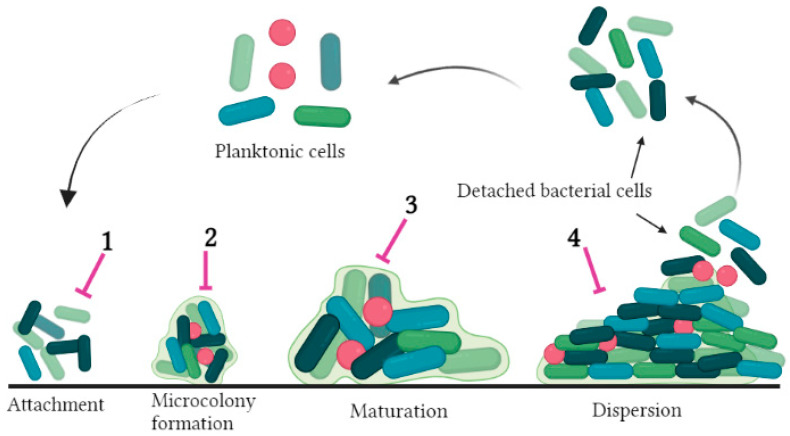
“A more comprehensive explanation of biofilm was provided by Flemming and Wuertz, who defined biofilm as groups of microbes with a distinct multicellular life cycle that undergo division and form clusters, microcolonies, and larger groups [5].”
BackgroundAntibiotics versus biofilm: an emerging battleground in microbial communities
Sharma, D., Misba, L., & Khan, A. U. (2019) · Antimicrobial Resistance & Infection Control · doi:10.1186/s13756-019-0533-3 · Cited by 1,553
Biofilm Matrixome: Extracellular Components in Structured Microbial Communities
Karygianni, L., Ren, Z., Koo, H., & Thurnheer, T. (2020) · Trends in Microbiology · doi:10.1016/j.tim.2020.03.016 · Cited by 1,487 · cited 2×
“The bundles of microcolonies result in macrocolonies with the substratum cells displacement to form voids and channels which support the exchange of waste products and nutrients by infiltrating fluid into the biofilm [31].”
BackgroundMechanism of the Initial Events in the Sorption of Marine Bacteria to Surfaces
MARSHALL, K. C., STOUT, R., & MITCHELL, R. (1971) · Journal of General Microbiology · doi:10.1099/00221287-68-3-337 · Cited by 1,016
Walters, M. C., Roe, F., Bugnicourt, A., Franklin, M. J., & Stewart, P. S. (2003) · Antimicrobial Agents and Chemotherapy · doi:10.1128/aac.47.1.317-323.2003 · Cited by 988
Rumbaugh, K. P., & Sauer, K. (2020) · Nature Reviews Microbiology · doi:10.1038/s41579-020-0385-0 · Cited by 907 · cited 2×
“Concomitantly, genes involved in EPS or polysaccharide synthesis and fimbriae synthesis are downregulated [32].”
Background
Research works printed but not linked: 1
- 70. Abdurahman, M.; Tosun, I.; Durukan, I.; Khorshidtalab, M.; KILIÇ, A. Four Temperate bacteriophages from methicillin-resistant Staphylococcus aureus show broad bactericidal and biofilm removal activities. Kafkas Univ. Vet. Fak. Derg. 2021 , 27 , 29-36.
Cited by
Microbial Biofilms: Applications, Clinical Consequences, and Alternative Therapies
Ali, A., Zahra, A., Kamthan, M., Husain, F. M., Albalawi, T., Zubair, M., Alatawy, R., Abid, M., & Noorani, M. S. (2023) · Microorganisms · doi:10.3390/microorganisms11081934 · Cited by 128
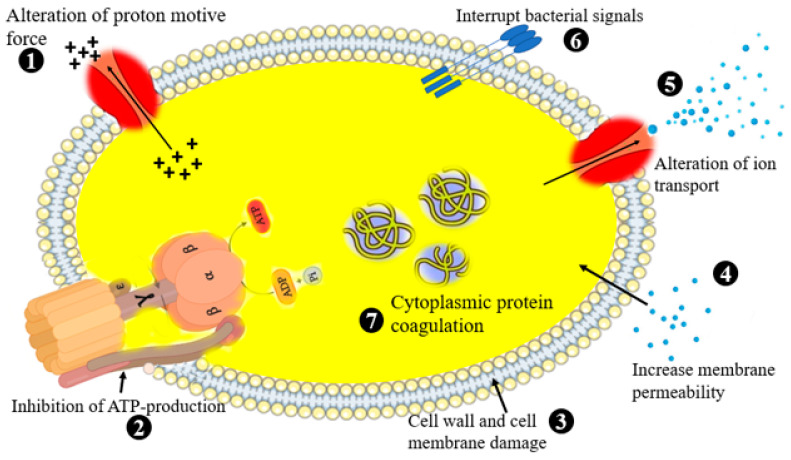
“The phytoextracts and volatile essential oils are known to hamper biofilm production using several different mechanisms, such as damaging the membrane and the membrane proteins forming leaky channels and inhibiting ATP production, interrupting the signals, and thereby the communication between cells [133,134].”
BackgroundRecent advances in the pathogenesis and prevention strategies of dental calculus
Wei, Y., Dang, G.-P., Ren, Z.-Y., Wan, M.-C., Wang, C.-Y., Li, H.-B., Zhang, T., Tay, F. R., & Niu, L.-N. (2024) · npj Biofilms and Microbiomes · doi:10.1038/s41522-024-00529-1 · Cited by 43
Araújo, D., Silva, A. R., Fernandes, R., Serra, P., Barros, M. M., Campos, A. M., Oliveira, R., Silva, S. M., Almeida, C., & Castro, J. (2024) · Pathogens · doi:10.3390/pathogens13040320 · Cited by 45
Śmiga, M., & Olczak, T. (2025) · FEMS Microbiology Reviews · doi:10.1093/femsre/fuaf019 · Cited by 34
“Stages of biofilm formation comprise coa ggr egation, coadhesion, maturation, and dispersion, and require physical and metabolic relationships between bacteria (Wang et al. 2023 , Zeineldin et al. 2023 ).”
Teklemariam, A. D., Al-Hindi, R. R., Alharbi, M. G., Alotibi, I., Azhari, S. A., Qadri, I., Alamri, T. A., Esmael, A., & Harakeh, S. (2023) · Antibiotics · doi:10.3390/antibiotics12030497 · Cited by 20
“Biofilms are formed as a network of microbial communities, protecting the microbes from any external damage while providing mechanical stability and adhesion to surfaces [10].”
BackgroundSelf-citationRetractedAl-Hindi, R. R., Alharbi, M. G., Alotibi, I., Azhari, S. A., Algothmi, K. M., & Esmael, A. (2023) · Frontiers in Microbiology · doi:10.3389/fmicb.2023.1135806 · Cited by 24
“Salmonella virulence is attributed to the formation of biofilms, because bacteria in the complex biofilm communities are more resistant to antibiotics, resulting in a chronic Salmonella carries infection (GonzalezEscobedo et al., 2011; Gonzalez-Escobedo and Gunn, 2013; Zeineldin et al., 2023).”
BackgroundSelf-citationPeptide-based strategies for overcoming biofilm-associated infections: a comprehensive review
Manobala, T. (2024) · Critical Reviews in Microbiology · doi:10.1080/1040841x.2024.2390597 · Cited by 24
“Biofilm structures primarily comprise approximately 10% bacterial cells, with the remaining 90% consisting of matrix components (Zeineldin et al. 2023). considering the widespread association of bacterial biofilms in a multitude of human related infections, it becomes imperative to design or derive…”
Microbiologically influenced corrosion in petrodiesel-biodiesel storage system: A review
Aslan, C., Baihaqi, B., Devianto, H., Wonoputri, V., & Harimawan, A. (2025) · Biomass and Bioenergy · doi:10.1016/j.biombioe.2025.108075 · Cited by 18
Camps, J., Iftimie, S. M., Arenas, M., Castañé, H., Jiménez-Franco, A., Castro, A., & Joven, J. (2023) · Chemico-Biological Interactions · doi:10.1016/j.cbi.2023.110553 · Cited by 17
Jin, Y., Lin, J., Sathiyaseelan, A., Zhang, X., & Wang, M. (2023) · Journal of Drug Delivery Science and Technology · doi:10.1016/j.jddst.2023.105269 · Cited by 16
Pavlović, M. O., Kolarević, S., Đorđević, J. Z., & Vuković‐Gačić, B. (2024) · Plants · doi:10.3390/plants13121616 · Cited by 14
“Notably, these bacteria exhibit a higher binding affinity for inflamed or compromised cells, emphasizing the importance of employing natural antioxidants and anti-inflammatory agents, such as plant extracts, particularly in pathological conditions [9,66,67].”
BackgroundWang, N., Mu, W., Kolesnik, I. A., Potkin, V. I., Li, L., Feng, X., Shi, X., Deng, L., Li, Y., & Li, W. (2025) · ACS Applied Materials & Interfaces · doi:10.1021/acsami.5c20613 · Cited by 12
Facing Foodborne Pathogen Biofilms with Green Antimicrobial Agents: One Health Approach
Godínez, A. K. K., Villicaña, C., Heredia, J. B., Valdez-Torres, J. B., Muy‐Rangel, M. D., & León‐Félix, J. (2025) · Molecules · doi:10.3390/molecules30081682 · Cited by 10
“…animals has driven the emergence and spread of antibiotic-resistant bacteria [6] To combat biofilm-related AMR, researchers have explored various natural anti-biofilm agents, including bacteriophages and plant extracts, which show promise in targeting biofilm and planktonic cells alike [52].”
Husain, F. M., Al‐Shabib, N. A., Khan, J. A., Khan, J. M., & Adil, M. (2024) · International Dairy Journal · doi:10.1016/j.idairyj.2024.105955 · Cited by 8
Assessment of the potential susceptibility of planktonic cells and bacterial biofilms by diosgenin
Costa, M. D. S., da Silva, A. R. P., Araújo, N. J. S., Paulo, C. L. R., Alencar, G. G., de.Alencar, M. A. S., Moura, T. F., Lima, C. M. G., de Freitas, T. S., Barbosa‐Filho, J. M., et al. (2024) · Food Bioscience · doi:10.1016/j.fbio.2024.105106 · Cited by 7
Terzić, J. N., Stanković, M. M., & Stefanović, O. D. (2024) · Microbial Pathogenesis · doi:10.1016/j.micpath.2024.107219 · Cited by 5
Ferreira, T. L., Sá, L. G. D. A. V., Cabral, V. P. D. F., Rodrigues, D. S., Moreira, L. E. A., de Souza, B. O., Cavalcanti, B. C., Magalhães, H. I. F., Lima, I. S. P., Leitão, A. C., et al. (2025) · Biofouling · doi:10.1080/08927014.2025.2540534 · Cited by 2
“It should be noted that biofilms are important virulence factors associated with therapeutic failure and are also associated with antimicrobial resistance (Zeineldin et al. 2023).”
Tucakov, L., Tomić, A., Šovljanski, O., Aćimović, M., & Miljković, A. R. (2025) · Antibiotics · doi:10.3390/antibiotics14111100 · Cited by 4
“Studies have shown that N. sativa disrupts extracellular polysaccharide synthesis and inhibits enzymes such as glucosyl-transferase, thereby impairing the structural integrity of cariogenic biofilms [8,9].”
Mustapha, I. Z., Mustamand, M., Caesar, D., & Gu, X. (2026) · Cureus · doi:10.7759/cureus.108151 · Cited by 1
Yan, W., Huang, L., Yan, Q., Wang, J., Weng, Q., & Zheng, J. (2026) · LWT · doi:10.1016/j.lwt.2026.119689 · Cited by 2
Nesrullah, Z., AL-Rubaiee, G. H., & Zaki, N. H. (2023) · Israa University Journal for Applied Science · doi:10.52865/rnln4662 · Cited by 3
Fuica-Carrasco, C., Olivares-Caro, L., Parra-Sepúlveda, C., Pérez, A. J., Mardones, C., García, A., & Hernández, V. (2024) · Food Bioscience · doi:10.1016/j.fbio.2024.104990 · Cited by 1
Ev, I., Danilova, E. I., In, C., Chelpachenko, O. E., Борисович, Ф. С., Bondarenko, T. A., & Bekpergenova, A. V. (2023) · Meditsinskiy sovet = Medical Council · doi:10.21518/ms2023-184
Microbial Biofilms in Pharmaceuticals: Challenges, Mechanisms, and Innovative Solutions
Kumari, M., Sadhu, P., Shah, N., Talele, C., & Aundhia, C. J. (2024) · International Journal of Pharmaceutical and Phytopharmacological Research · doi:10.51847/tn5pejzfhb
Therapeutic potential of umbelliferone in the management of periodontal disease
Ferreira, L. T. B., Villarreal, C. F., & Juíz, P. J. L. (2025) · Cuadernos de Educación y Desarrollo · doi:10.55905/cuadv17n4-139
Shaw, R., & Maitra, S. (2026) · Elsevier eBooks · doi:10.1016/b978-0-443-36388-7.00004-5
Musil, O., & Klíma, K. (2026) · Nanomaterials · doi:10.3390/nano16110642 · Cited by 1
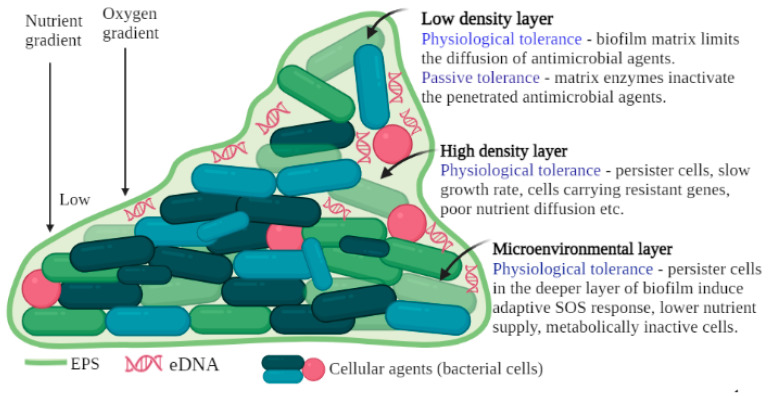
“A mature biofilm exhibits a three-tiered organization: high-density layer, low-density layer and microenvironmental layer [30].”
Metadata
- Authors
- Zeineldin, M., Esmael, A., Al-Hindi, R. R., Alharbi, M. G., Ashenafi Bekele, D., & Teklemariam, A. D.
- Affiliations
- Benha University (EG)
- University of Nebraska–Lincoln (US)
- King Abdulaziz University (SA)
- Department of Microbiology, Immunology and Veterinary Public Health, College of Veterinary Medicine and Agriculture, Addis Ababa University, Bishoftu P.O. Box 34, Ethiopia
- Corresponding author
- Esmael, Ahmed
- Al-Hindi, Rashad R.
- Venue
- Life
- Publisher
- MDPI AG
- Published
- 2023-02-11
- Volume
- 13
- Issue
- 2
- Pages
- 503
- ISSN
- 2075-1729 (ISSN-L)
- PMC
- PMC9959329
- OpenAlex
- W4320496894
- Cited by
- 27
- References
- 185
- Citations by year
- 2026: 4 · 2025: 7 · 2024: 9 · 2023: 7
- FWCI
- 0.71
- Type
- journal article
- Language
- en
- Open access
- gold
- doi.org
- Licence
- Locations
- Life (publishedVersion, cc-by)
- PubMed Central (publishedVersion, cc-by)
- PubMed (publishedVersion)
- e-space (Manchester Metropolitan University) (submittedVersion)
- Lirias (KU Leuven) (submittedVersion, cc-by)
- DOAJ (DOAJ: Directory of Open Access Journals) (submittedVersion, cc-by-sa)
- Figshare (submittedVersion, cc-by)
- Topics
- Life Sciences › Biochemistry, Genetics and Molecular Biology › Molecular Biology › Bacterial biofilms and quorum sensing
- Physical Sciences › Engineering › Ocean Engineering › Marine Biology and Environmental Chemistry
- Life Sciences › Agricultural and Biological Sciences › Food Science › Essential Oils and Antimicrobial Activity
- Keywords
- biofilm, antibiofilm agents, multidrug resistance, antibiotic resistance mechanisms, bacteriophages, honey, plant extracts, surfactants, virulence factors, planktonic cells, biofilm inhibition
About these checks
Registry, retraction, Cites and statistics results are computed, not judged, with one exception: a printed reference that no index lists is read once by a model before it counts as a citation error. Claims are extracted by a model and kept only when their quote appears verbatim in the text; each cited source is then checked, with a model’s help, for whether it says what the claim relies on. Those verdicts can be wrong — read the claim’s quote and the cited source before relying on one.
Statistics and arithmetic are recomputed, not judged.
Confidence bands are shown only for fields calibrated on our annotated test set. None is calibrated yet, so no band is shown.
What counts as a claim ›How we measure confidence ›How we check this ›
Are you an author, or do you see a problem with this page? Request a review
Data sources
Bibliographic data: Semantic Scholar, OpenAlex, Crossref.
Contains information from the Semantic Scholar Academic Graph Datasets, made available under the ODC Attribution License (ODC-BY 1.0).
Semantic Scholar’s data is described in: Kinney, R., et al. (2023). The Semantic Scholar Open Data Platform. arXiv:2301.10140.
