

Exposed Areas Above Sea Level on Earth >3.5 Gyr Ago: Implications for Prebiotic and Primitive Biotic Chemistry
Open accessThe DOI matches its Crossref record; 54 of the 54 references it cites were found in a registry or an index.
Abstract
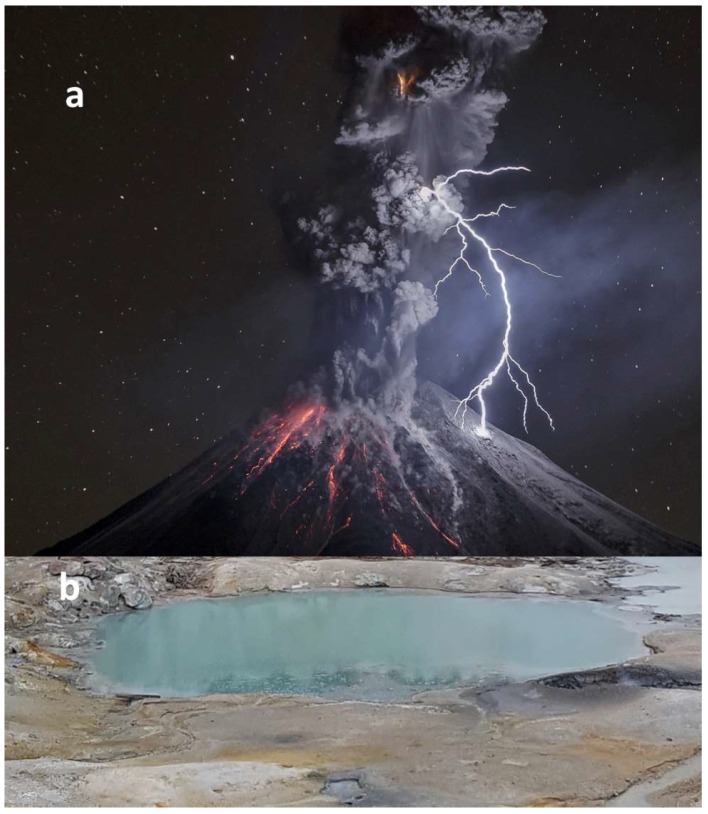
How life began on Earth is still largely shrouded in mystery. One of the central ideas for various origins of life scenarios is Darwin’s “warm little pond”. In these small bodies of water, simple prebiotic compounds such as amino acids, nucleobases, and so on, were produced from reagents such as hydrogen cyanide and aldehydes/ketones. These simple prebiotic compounds underwent further reactions, producing more complex molecules. The process of chemical evolution would have produced increasingly complex molecules, eventually yielding a molecule with the properties of information storage and replication prone to random mutations, the hallmark of both the origin of life and evolution. However, there is one problematic issue with this scenario: On the Earth >3.5 Gyr ago there would have likely been no exposed continental crust above sea level. The only land areas that protruded out of the oceans would have been associated with hotspot volcanic islands, such as the Hawaiian island chain today. On these long-lived islands, in association with reduced gas-rich eruptions accompanied by intense volcanic lightning, prebiotic reagents would have been produced that accumulated in warm or cool little ponds and lakes on the volcano flanks. During seasonal wet–dry cycles, molecules with increasing complexity could have been produced. These islands would have thus been the most likely places for chemical evolution and the processes associated with the origin of life. The islands would eventually be eroded away and their chemical evolution products would have been released into the oceans where Darwinian evolution ultimately produced the biochemistry associated with all life on Earth today.
Overview
The claims and statistics of this paper haven’t been checked yet.
Free: it reads the open-access text and checks the first 5 claims that cite a source we can check. Create a free account to check every claim.
Integrity signals
Registry
Cites
Statistics
Figures
![Figure 4 Aerial view taken in 1965 of ice-covered Lake Waiau in the Pu‘u Waiau cinder cone near the summit of the Mauna Kea volcano on the island of Hawai‘i (USGS Library, Denver; Photo KPA-N183].](https://figures.cochat.ai/paper-figures/2c06cb8cb1094ab7a01150a55613111d/exposed-areas-above-sea-level-on-earth-gt-3-5-gyr-ago-implications-for-prebiotic-figure-4.jpg)
Verification
Claims the paper makes
The claims and statistics of this paper haven’t been checked yet.
Free: it reads the open-access text and checks the first 5 claims that cite a source we can check. Create a free account to check every claim.
Claims other papers make about this one
Each is checked against this paper’s own text: does it say what the citing paper says it does?
The cited source says what the claim attributes to it.
In the citing paper
“Volcanoes emerging through a global ocean would be the original land masses on the Hadean Earth (Van Kranendonk, 2010; Bada and Korenaga, 2018), analogous to Hawaii and Iceland today.”
From The Hot Spring Hypothesis for an Origin of Life (2020) · cites this paper as Bada and Korenaga, 2018
Self-check
Percentages, sums and reported differences re-computed from the paper’s own numbers.
The self-check needs the paper’s full text.
Citations
Cites
Wilde, S. A., Valley, J. W., Peck, W. H., & Graham, C. M. (2001) · Nature · doi:10.1038/35051550 · Cited by 1,744 · cited 2×
“4 Gyr ago [25,26], the volume of continents and their exposed area are poorly constrained.”
BackgroundHotspots and mantle plumes: Some phenomenology
Sleep, N. H. (1990) · Journal of Geophysical Research: Solid Earth · doi:10.1029/jb095ib05p06715 · Cited by 1,119
Oxygen-isotope evidence from ancient zircons for liquid water at the Earth's surface 4,300 Myr ago
Mojzsis, S. J., Harrison, T. M., & Pidgeon, R. T. (2001) · Nature · doi:10.1038/35051557 · Cited by 863 · cited 2×
“4 Gyr ago [25,26], the volume of continents and their exposed area are poorly constrained.”
BackgroundScaling of temperature- and stress-dependent viscosity convection
Solomatov, V. S. (1995) · Physics of Fluids · doi:10.1063/1.868624 · Cited by 642 · cited 2×
“In any case, the tectonic regime before plate tectonics would probably have been stagnant id c nvection, as it is the ost natural st le of thermal convection with strongly temperature-dependent viscosity [32].”
BackgroundArmstrong, R. L. (1981) · Philosophical Transactions of the Royal Society of London. Series A, Mathematical and Physical Sciences · doi:10.1098/rsta.1981.0122 · Cited by 618 · cited 1×
“However, the composition of sea spray (and thus rainwater) on the early Earth was likely much different than today because of the ancient ocean composition [14], being depleted in Mg2+ and enriched in Fe2+ relative to today.”
BackgroundInitiation and evolution of plate tectonics on Earth: Theories and observations
Korenaga, J. (2013) · Annual Review of Earth and Planetary Sciences · doi:10.1146/annurev-earth-050212-124208 · Cited by 533 · cited 2×
“When such a transition took place is widely debated [27]; many geologists are content with the operat on of plate tect nics at least back to ~3 Gyr ago [28], and some suggest that the geochemistry of zircon pushes its onset to >4.”
BackgroundSelf-citationCondie, K. C., & Aster, R. C. (2010) · Precambrian Research · doi:10.1016/j.precamres.2010.03.008 · Cited by 490
Potentially biogenic carbon preserved in a 4.1 billion-year-old zircon
Bell, E. A., Boehnke, P., Harrison, T. M., & Mao, W. L. (2015) · Proceedings of the National Academy of Sciences · doi:10.1073/pnas.1517557112 · Cited by 474 · cited 1×
“If exposed areas above sea level were scarce, were WLPs indeed plausible on the early Earth? This is a critical issue because it was in this period that life arose based on microfossil and geochemical fossil evidence [7,8].”
BackgroundSaito, M. A., Sigman, D. M., & Morel, F. M. M. (2003) · Inorganica Chimica Acta · doi:10.1016/s0020-1693(03)00442-0 · Cited by 440 · cited 1×
“[13], the early oceans would have had high concentrations of Fe+2 and “the relative availability of trace metals would have been similar to that of a sulfidic system, Fe > Mn, Ni, Co >> Cd, Zn, Cu .”
BackgroundThe Miller volcanic spark discharge experiment
Johnson, A. P., Cleaves, H. J., Dworkin, J. P., Glavin, D. P., Lazcano, A., & Bada, J. L. (2008) · Science · doi:10.1126/science.1161527 · Cited by 376 · cited 2×
“Evidence for this volcanic-island-based prebiotic synthesis of organic compounds has been provided from analyses of samples Stanley Miller archived from one of his classic 1950s spark discharge experiments [48,49].”
BackgroundSelf-citationThe geologic history of seawater pH
Halevy, I., & Bachan, A. (2017) · Science · doi:10.1126/science.aal4151 · Cited by 376 · cited 2×
“In the lit ature on early Earth, it is commonly ss med that high radiogenic heat production in the past resulted in higher heat flux [33,34].”
BackgroundArchean geodynamics and the thermal evolution of Earth
Korenaga, J. (2006) · Geophysical Monograph Series · doi:10.1029/164gm03 · Cited by 356 · cited 1×
“First, past plate motion was likely to be slower than present [20,39], and the maximum seafloor age could have been as old as 400 Myr [40].”
BackgroundSelf-citationLarge gem diamonds from metallic liquid in Earth’s deep mantle
Smith, E. M., Shirey, S. B., Nestola, F., Bullock, E. S., Wang, J., Richardson, S. H., & Wang, W. (2016) · Science · doi:10.1126/science.aal1303 · Cited by 349
Zahnle, K., Schaefer, L., & Fegley, B. (2010) · Cold Spring Harbor Perspectives in Biology · doi:10.1101/cshperspect.a004895 · Cited by 298 · cited 1×
“The atmospheric composition was likely to have been drastically different before and after the transition to plate tectonics [43].”
BackgroundAlteration of oceanic crust and geologic cycling of chlorine and water
Ito, E., Harris, D. M., & Anderson, A. T. (1983) · Geochimica et Cosmochimica Acta · doi:10.1016/0016-7037(83)90188-6 · Cited by 297 · cited 1×
“5 × 10¹⁴ g/yr [20], and such positive net water influx has also been suggested by the global water cycle [23].”
BackgroundNd isotopes and tectonics of 1.9-1.7 Ga crustal genesis
Jonathan Patchett, P., & Arndt, N. T. (1986) · Earth and Planetary Science Letters · doi:10.1016/0012-821x(86)90001-4 · Cited by 255
Stribling, R., & Miller, S. L. (1987) · Origins of life and evolution of the biosphere · doi:10.1007/bf02386466 · Cited by 252 · cited 1×
“For example, Miller estimated that the early ocean maximum hydrogen cyanide (HCN) concentration, an important reagent in a variety of prebiotic syntheses, was ~4 μM based on the stability, production, and destruction of HCN during circulation through hydrothermal vents [9].”
BackgroundRapid emergence of subaerial landmasses and onset of a modern hydrologic cycle 2.5 billion years ago
Bindeman, I. N., Zakharov, D. O., Palandri, J., Greber, N. D., Dauphas, N., Retallack, G. J., Hofmann, A., Lackey, J. S., & Bekker, A. (2018) · Nature · doi:10.1038/s41586-018-0131-1 · Cited by 235 · cited 2×
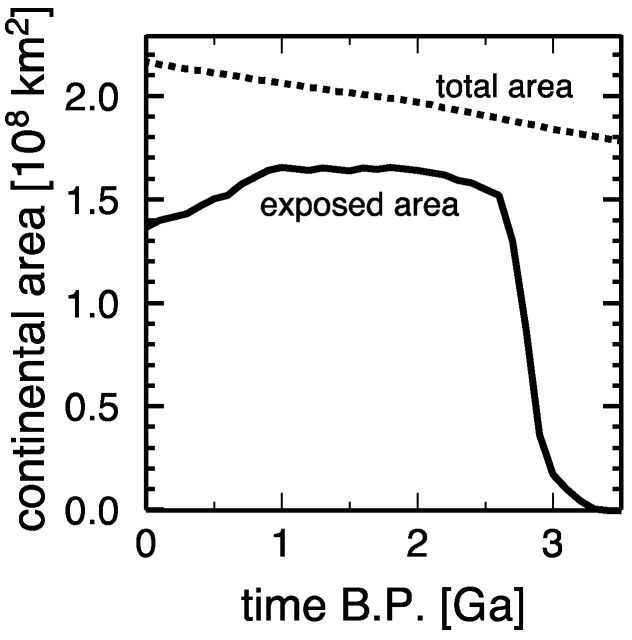
“Spatially expansive exposure horizons can be identified in the Precambrian sedimentary record only after ~3 Gyr ago [20], and this is consistent with the abundant occurrence of submarine flood basalt magmatism in the Archean [21] and with the oxygen isotope record of shales [22].”
BackgroundOrigin of the RNA world: The fate of nucleobases in warm little ponds
Pearce, B. K. D., Pudritz, R. E., Semenov, D. A., & Henning, T. K. (2017) · Proceedings of the National Academy of Sciences · doi:10.1073/pnas.1710339114 · Cited by 210 · cited 1×
“[2] used a linear growth model to estimate exposed”
MethodNew insights into prebiotic chemistry from Stanley Miller's spark discharge experiments
Bada, J. L. (2013) · Chemical Society Reviews · doi:10.1039/c3cs35433d · Cited by 209 · cited 2×
“Evidence for this volcanic-island-based prebiotic synthesis of organic compounds has been provided from analyses of samples Stanley Miller archived from one of his classic 1950s spark discharge experiments [48,49].”
BackgroundSelf-citationGlobal water cycle and the coevolution of the Earth’s interior and surface environment
Korenaga, J., Planavsky, N. J., & Evans, D. A. D. (2017) · Philosophical Transactions of the Royal Society A: Mathematical, Physical and Engineering Sciences · doi:10.1098/rsta.2015.0393 · Cited by 206 · cited 6×
“Spatially expansive exposure horizons can be identified in the Precambrian sedimentary record only after ~3 Gyr ago [20], and this is consistent with the abundant occurrence of submarine flood basalt magmatism in the Archean [21] and with the oxygen isotope record of shales [22].”
BackgroundInfluentialSelf-citationConstraints on Hadean geodynamics from mineral inclusions in >4Ga zircons
Hopkins, M. D., Harrison, T. M., & Manning, C. E. (2010) · Earth and Planetary Science Letters · doi:10.1016/j.epsl.2010.08.010 · Cited by 167
Nimmo, F. (2015) · Treatise on Geophysics · doi:10.1016/b978-0-444-53802-4.00139-1 · Cited by 162 · cited 1×
“Existing models of core evolution implicitly assume the continuous operation of plate tectonics since the beginning of Earth’s history [37], but the efficiency of core cooling would be lower without plate tectonics.”
BackgroundCrustal evolution and mantle dynamics through Earth history
Korenaga, J. (2018) · Philosophical Transactions of the Royal Society A: Mathematical, Physical and Engineering Sciences · doi:10.1098/rsta.2017.0408 · Cited by 158 · cited 1×
“A recent geochemical modeling of Sm-Nd isotope systems suggests that plate tectonics could have started soon after the solidification of the putative magma ocean [30,31].”
BackgroundSelf-citationBecker, S., Schneider, C., Okamura, H., Crisp, A., Amatov, T., Dejmek, M., & Carell, T. (2018) · Nature Communications · doi:10.1038/s41467-017-02639-1 · Cited by 153
Burcar, B., Pasek, M., Gull, M., Cafferty, B. J., Velasco, F., Hud, N. V., & Menor‐Salván, C. (2016) · Angewandte Chemie International Edition · doi:10.1002/anie.201606239 · Cited by 141
King, S. D., & Adam, C. (2014) · Physics of The Earth and Planetary Interiors · doi:10.1016/j.pepi.2014.07.006 · Cited by 141
Darwin’s warm little pond revisited: from molecules to the origin of life
Follmann, H., & Brownson, C. (2009) · Die Naturwissenschaften · doi:10.1007/s00114-009-0602-1 · Cited by 140
Plate tectonics, flood basalts and the evolution of Earth’s oceans
Korenaga, J. (2008) · Terra Nova · doi:10.1111/j.1365-3121.2008.00843.x · Cited by 127 · cited 4×
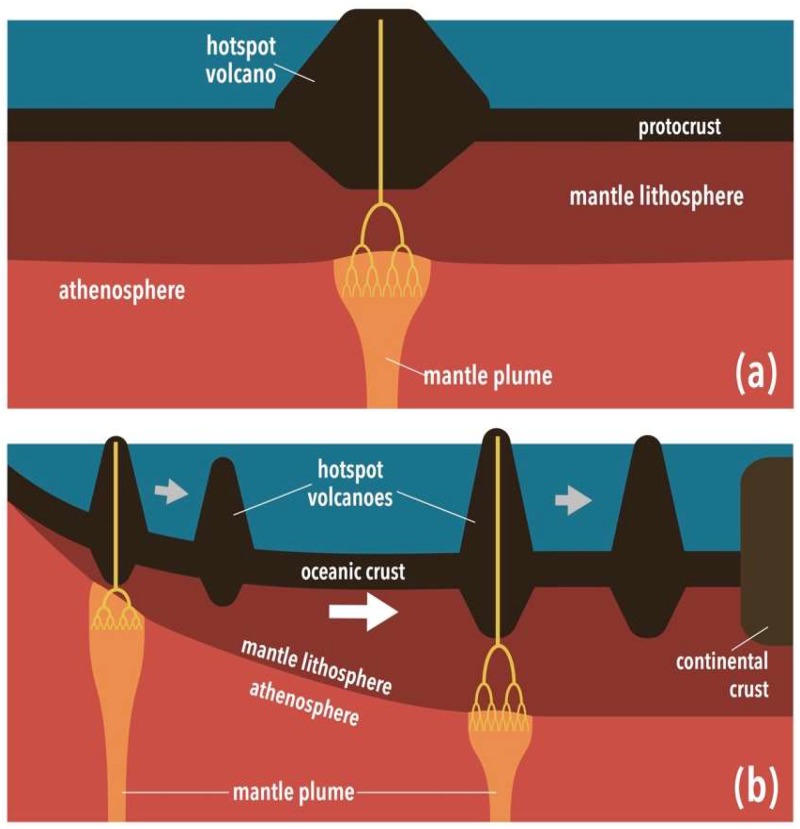
“Because of plate motion, which not only influences magma supply but also activates seafloor subsidence, the life-time of subaerial volcanoes reduced to the present-day level, that is, ~10 Myr, although a longer life-time (~100 Myr) could also have been possible for volcanoes formed on sufficiently old seafloor (Figure…”
BackgroundInfluentialSelf-citationRosas, J. C., & Korenaga, J. (2018) · Earth and Planetary Science Letters · doi:10.1016/j.epsl.2018.04.051 · Cited by 126 · cited 1×
“A recent geochemical modeling of Sm-Nd isotope systems suggests that plate tectonics could have started soon after the solidification of the putative magma ocean [30,31].”
BackgroundSelf-citationWhy was flood volcanism on submerged continental platforms so common in the Precambrian?
Arndt, N. (1999) · Precambrian Research · doi:10.1016/s0301-9268(99)00030-3 · Cited by 125 · cited 6×
“Even with twice as voluminous oceans, these hotspot islands could long have been subaerial, because, without plate motion, islands could keep growing with magma flux from stationary mantle plumes until they become subaerial, Knowledge of the surface environment in the early Archean and the Hadean remains elusive [24].”
BackgroundInfluentialCampbell, I. H. (2003) · American Journal of Science · doi:10.2475/ajs.303.4.319 · Cited by 116
Charles Darwin and the Origin of Life
Peretó, J., Bada, J. L., & Lazcano, A. (2009) · Origins of Life and Evolution of Biospheres · doi:10.1007/s11084-009-9172-7 · Cited by 112 · cited 2×
“In his classic 1871 letter to his friend Joseph Dalton Hooker he noted “But if (and oh what a big if) we could conceive in some warm little pond” [1].”
BackgroundSelf-citationEvolution of the early Earth: Constraints from 143Nd142Nd isotopic systematics
McCulloch, M. T., & Bennett, V. C. (1993) · Lithos · doi:10.1016/0024-4937(93)90038-e · Cited by 96
Sulfidic Anion Concentrations on Early Earth for Surficial Origins-of-Life Chemistry
Ranjan, S., Todd, Z. R., Sutherland, J. D., & Sasselov, D. D. (2018) · Astrobiology · doi:10.1089/ast.2017.1770 · Cited by 86 · cited 2×
“In the lit ature on early Earth, it is commonly ss med that high radiogenic heat production in the past resulted in higher heat flux [33,34].”
BackgroundEstimating the formation age distribution of continental crust by unmixing zircon ages
Korenaga, J. (2017) · Earth and Planetary Science Letters · doi:10.1016/j.epsl.2017.11.039 · Cited by 86
Self-citationDeep Origin of Hotspots--the Mantle Plume Model
DePaolo, D. J., & Manga, M. (2003) · Science · doi:10.1126/science.1083623 · Cited by 78 · cited 1×
“Slow plate motion, coupled with the production of copious amounts of lava [42], would have helped to build more massive hotspot volcanoes on the early Earth, thereby increasing their chance to become subaerial.”
BackgroundA Field Trip to the Archaean in Search of Darwin’s Warm Little Pond
Damer, B. (2016) · Life · doi:10.3390/life6020021 · Cited by 75
Geological and Geochemical Constraints on the Origin and Evolution of Life
Sleep, N. H. (2018) · Astrobiology · doi:10.1089/ast.2017.1778 · Cited by 72 · cited 1×
“Knowledge of the surface environment in the early Archean and the Hadean remains elusive [24].”
BackgroundSurvival of Amino Acids in Micrometeorites During Atmospheric Entry
GLAVIN, D. P., & Bada, J. L. (2001) · Astrobiology · doi:10.1089/15311070152757456 · Cited by 71 · cited 1×
“But the survival of extraterrestrial organic molecules, mainly in the form of interplanetary dust particles (IDPs), during atmospheric passage and heating is a major concern [10,11].”
BackgroundSelf-citationPitfalls in modeling mantle convection with internal heat production
Korenaga, J. (2017) · Journal of Geophysical Research: Solid Earth · doi:10.1002/2016jb013850 · Cited by 71
Self-citationHilton, D. R., McMurtry, G. M., & Kreulen, R. (1997) · Geophysical Research Letters · doi:10.1029/97gl03046 · Cited by 62 · cited 3×
“Today, a primordial helium isotopic component is prese t in gases from the Hawai‘i volcano Kilauae [46] and it has been recently suggested that abiotic CH4 + H2 are constituents of the sublithospheric mantle [47].”
BackgroundCruz, J. V., Antunes, P., Amaral, C., França, Z., & Nunes, J. C. (2006) · Journal of Volcanology and Geothermal Research · doi:10.1016/j.jvolgeores.2006.03.008 · Cited by 62
Griffin, W. L., Huang, J.-X., Thomassot, É., Gain, S., Toledo, V., & O'Reilly, S. Y. (2018) · Mineralogy and Petrology · doi:10.1007/s00710-018-0575-x · Cited by 51 · cited 2×
“Today, a primordial helium isotopic component is prese t in gases from the Hawai‘i volcano Kilauae [46] and it has been recently suggested that abiotic CH4 + H2 are constituents of the sublithospheric mantle [47].”
BackgroundCan mantle convection be self-regulated?
Korenaga, J. (2016) · Science Advances · doi:10.1126/sciadv.1601168 · Cited by 27 · cited 1×
“However, the relation between heat production and heat flux is not so simple because, with the effect of mantle melting taken into account, a hotter mantle is likely to convect more slowly, rather than more rapidly [35].”
BackgroundSelf-citationDeep Layer of Sediments in Alpine Lake in the Tropical Mid-Pacific
WOODCOCK, A. H., Rubin, M., & Duce, R. A. (1966) · Science · doi:10.1126/science.154.3749.647 · Cited by 25
Caveats to Exogenous Organic Delivery from Ablation, Dilution, and Thermal Degradation
Mehta, C., Perez, A., Thompson, G., & Pasek, M. A. (2018) · Life · doi:10.3390/life8020013 · Cited by 23
How does small-scale convection manifest in surface heat flux?
Korenaga, J. (2009) · Earth and Planetary Science Letters · doi:10.1016/j.epsl.2009.08.015 · Cited by 17 · cited 1×
“Second, with this longer time scale for oceanic plates, it becomes possible for them to be thermally equilibrated with internal heat production [41], and further seafloor subsidence would be prevented.”
BackgroundSelf-citationDelparte, D. M., Belt, M., Nishioka, C., Turner, N. R., Richardson, R., & Ericksen, T. L. (2014) · Arctic Antarctic and Alpine Research · doi:10.1657/1938-4246-46.4.709 · Cited by 15
Hawaiian Alpine Lake Level, Rainfall Trends, and Spring Flow
WOODCOCK, A. H. (1980) · ScholarSpace (University of Hawaii at Manoa) · Cited by 11
Deamer, D. W. (2017) · Proceedings of the National Academy of Sciences · doi:10.1073/pnas.1715433114 · Cited by 6
Darwin the geologist in southern South America
Dott, R. H., & Dalziel, I. W. D. (2016) · Earth Sciences History · doi:10.17704/1944-6178-35.2.303 · Cited by 3
Prebiotic Synthesis in Volcanic Discharges: Exposing Ash to Volcanic/Primordial Gas Atmospheres
Scheu, B., Dingwell, D. B., Cimarelli, C., Bada, J. L., Chalmers, J. H., & Burton, A. S. (2017) · AGUFM · Cited by 1
Self-citation(2008) · doi:10.1130/2008.2440(14
Research works printed but not linked: 2
- Buick R. The earliest records of life on Earth Planets and Life: The Emerging Science of Astrobiology Woodruff T.S. III John B. Cambridge University Press Cambridge, UK 2007 237 264
- Massey J.E. Physicochemical influences on phytoplankton production in a tropical alpine lake Archiv. Hydrobiol. 1981 91 133 143
Cited by
The Hot Spring Hypothesis for an Origin of Life
Damer, B., & Deamer, D. (2020) · Astrobiology · doi:10.1089/ast.2019.2045 · Cited by 478
“The setting is the Hadean Earth, *4 billion years ago by which time a global ocean has formed, with emerging volcanic land masses (Pearce et al., 2018).”
BackgroundInfluentialSecular change and the onset of plate tectonics on Earth
Palin, R. M., Santosh, M., Cao, W., Li, S.-S., Hernández-Uribe, D., & Parsons, A. (2020) · Earth-Science Reviews · doi:10.1016/j.earscirev.2020.103172 · Cited by 355
Hadean geodynamics and the nature of early continental crust
Korenaga, J. (2021) · Precambrian Research · doi:10.1016/j.precamres.2021.106178 · Cited by 136
Self-citationWas There Land on the Early Earth?
Korenaga, J. (2021) · Life · doi:10.3390/life11111142 · Cited by 98
“They only suggested that, based on the work of Van Kranendonk [210] and Bada and Korenaga [11], volcanoes emerging through a global ocean would be the original landmass on the Hadean Earth.”
BackgroundSelf-citationAlkaline lake settings for concentrated prebiotic cyanide and the origin of life
Toner, J. D., & Catling, D. C. (2019) · Geochimica et Cosmochimica Acta · doi:10.1016/j.gca.2019.06.031 · Cited by 85
“…landmasses may have been present as early as the Hadean based on evidence from zircons (Harrison, 2009), possibly associated with hotspot volcanism (Bada and Korenaga, 2018), and there is strong evidence for landmasses in the early Archean based on 3.8 Ga sediments in Greenland (Nutman et al.,…”
BackgroundInfluential
Metadata
- Authors
- Bada, J. L., & Korenaga, J.
- Affiliations
- Scripps Institution of Oceanography (US)
- Yale University (US)
- Corresponding author
- Bada, Jeffrey L.
- Venue
- Life
- Publisher
- MDPI AG
- Published
- 2018-11-04
- Volume
- 8
- Issue
- 4
- Pages
- 55
- ISSN
- 2075-1729 (ISSN-L)
- PMC
- PMC6316429
- OpenAlex
- W2899323343
- Cited by
- 51
- References
- 54
- Citations by year
- 2026: 2 · 2025: 9 · 2024: 11 · 2023: 8 · 2022: 4 · 2021: 6 · 2020: 6 · 2019: 5
- FWCI
- 2.28
- Type
- journal article
- Language
- en
- Open access
- gold
- dx.doi.org
- Licence
- Locations
- Life (publishedVersion, cc-by)
- Europe PMC (PubMed Central) (publishedVersion, other-oa)
- PubMed Central (publishedVersion, cc-by)
- PubMed (publishedVersion)
- eScholarship (California Digital Library) (submittedVersion, cc-by)
- DOAJ (DOAJ: Directory of Open Access Journals) (submittedVersion, cc-by-sa)
- eScholarship (California Digital Library) (submittedVersion)
- Funders
- U.S. Geological Survey
- Topics
- Physical Sciences › Physics and Astronomy › Astronomy and Astrophysics › Origins and Evolution of Life
- Physical Sciences › Earth and Planetary Sciences › Paleontology › Paleontology and Stratigraphy of Fossils
- Physical Sciences › Environmental Science › Global and Planetary Change › Earth Systems and Cosmic Evolution
- Keywords
- origin of life, prebiotic chemistry, chemical evolution, early Earth, continental crust, volcanic lightning, wetting-drying cycles, amino acids, nucleobases, hydrogen cyanide
About these checks
Registry, retraction, Cites and statistics results are computed, not judged, with one exception: a printed reference that no index lists is read once by a model before it counts as a citation error. Claims are extracted by a model and kept only when their quote appears verbatim in the text; each cited source is then checked, with a model’s help, for whether it says what the claim relies on. Those verdicts can be wrong — read the claim’s quote and the cited source before relying on one.
Statistics and arithmetic are recomputed, not judged.
Confidence bands are shown only for fields calibrated on our annotated test set. None is calibrated yet, so no band is shown.
What counts as a claim ›How we measure confidence ›How we check this ›
Are you an author, or do you see a problem with this page? Request a review
Data sources
Bibliographic data: Semantic Scholar, OpenAlex, Crossref.
Contains information from the Semantic Scholar Academic Graph Datasets, made available under the ODC Attribution License (ODC-BY 1.0).
Semantic Scholar’s data is described in: Kinney, R., et al. (2023). The Semantic Scholar Open Data Platform. arXiv:2301.10140.
