

The Origin of Prebiotic Information System in the Peptide/RNA World: A Simulation Model of the Evolution of Translation and the Genetic Code
Open accessPublished version of a preprint
The DOI matches its Crossref record; 119 of the 126 references it cites were found in a registry or an index; 38 of the 170 sources its claims cite were checked for support.
Abstract
The Origin of Prebiotic Information System in the Peptide/RNA World...
Overview
CoChat Summary
## TL;DR
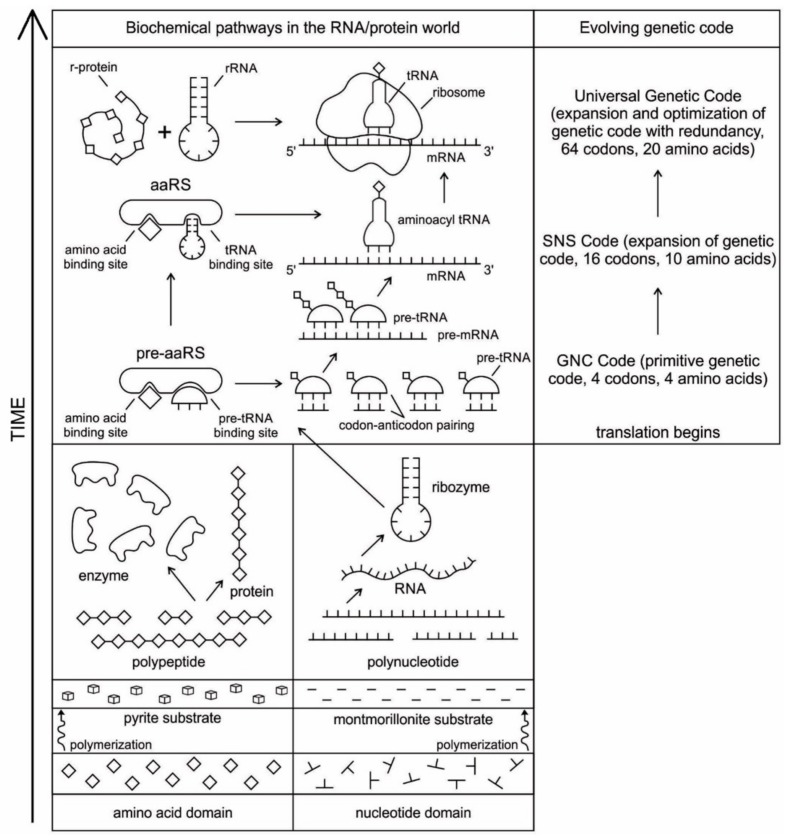
The paper proposes a speculative, simulation-based model in which translation and the genetic code emerged stepwise in a peptide/RNA world, before DNA, through coevolution of RNA, peptides, aaRS, mRNA, tRNA, and ribosomes. It argues that the genetic code developed in three stages—GNC, SNS, and the universal code—and that the authors’ CATI software and AnyLogic visualizations illustrate these transitions.
## Key findings
- The authors propose three stages of genetic-code evolution: a primitive GNC code with 4 codons for 4 amino acids (glycine, alanine, aspartic acid, valine), a transitional SNS code with 16 codons for 10 amino acids, and the universal genetic code with 64 codons specifying 20 amino acids and 3 start/stop signals.
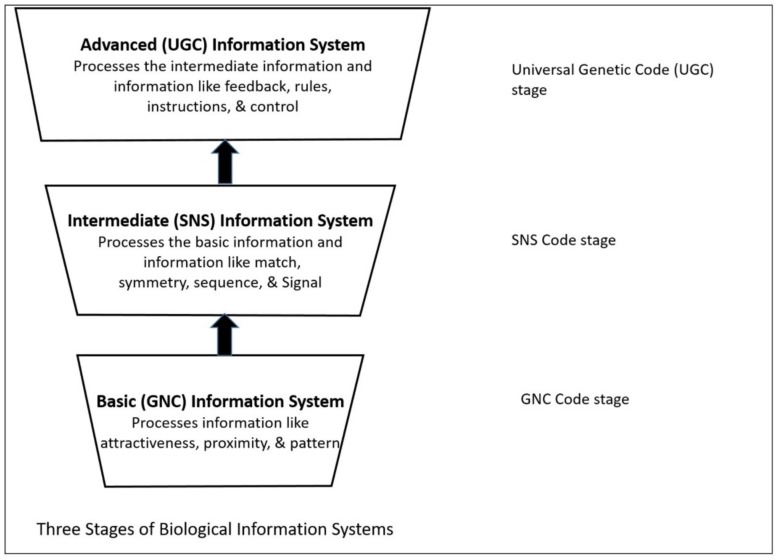
- They argue that the prebiotic information system evolved cumulatively from basic (GNC) to intermediate (SNS) to advanced (universal genetic code) information, with increasing use of rules, feedback, and algorithms as translation machinery became more complex.
- The paper reports that the universal code uses 61 codons for amino acids and 3 codons for start/stop, and that redundancy/wobble reduce translation errors; it also states that about 31 tRNAs and 20 aaRS enzymes assign the 64 codons in the final stage.
- The authors developed CATI (Codon-Amino Acid-Translator-Imitator) to translate numerical codons to amino acids and back, and say it can handle random sequences, reverse translation, and DNA codon conversion; they also used AnyLogic to simulate and visualize three translation-machine stages.
## Methods
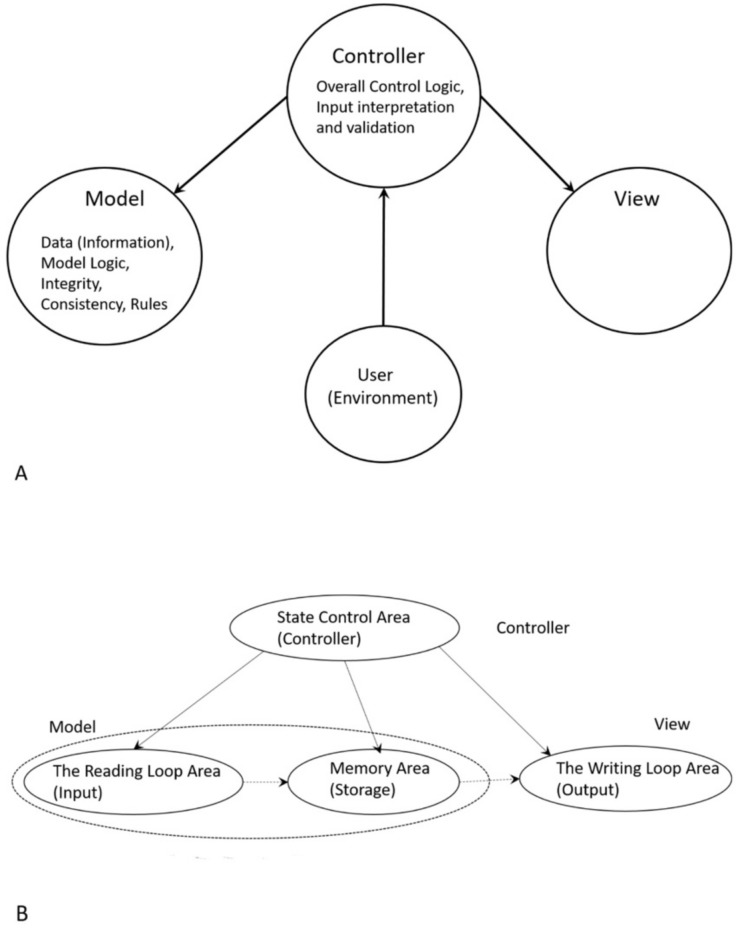
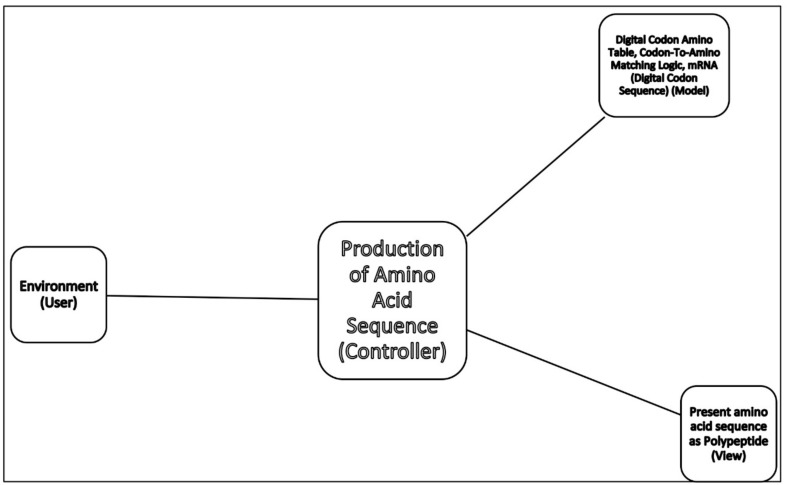
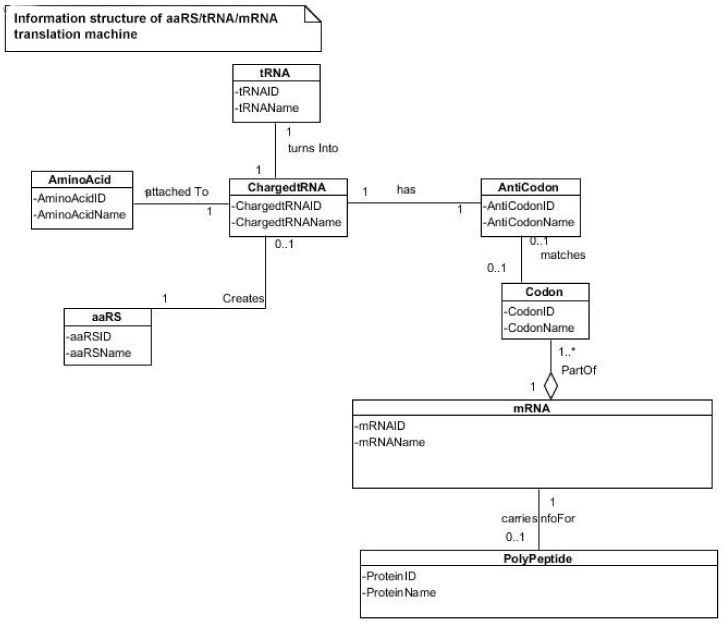
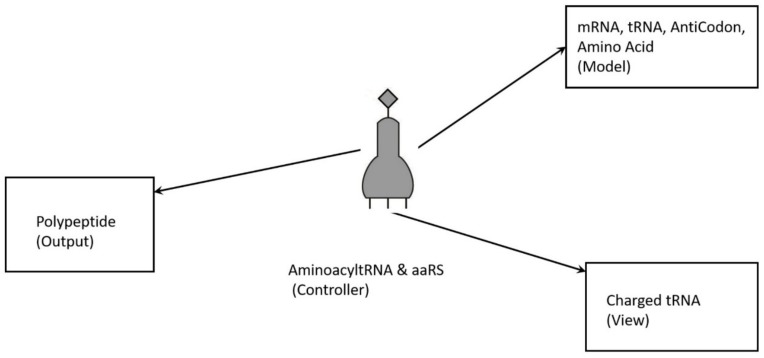
- Conceptual/review-style paper that reconstructs proposed biochemical pathways for the origin of translation and the genetic code in a peptide/RNA world using the Model-View-Controller (MVC) framework.
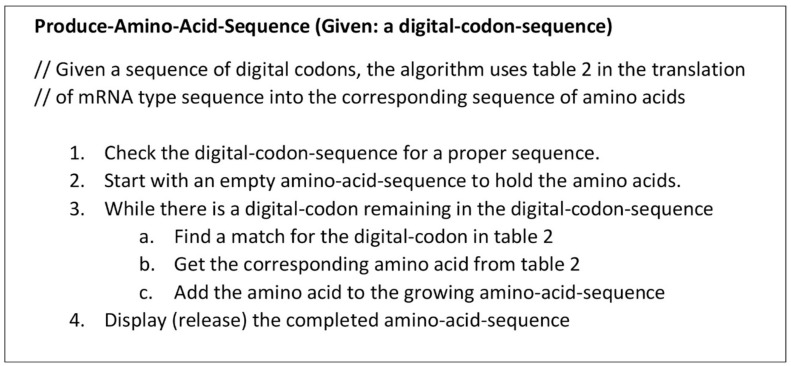
- Software component: the authors built CATI to convert letter codons into numerical codons and simulate codon–amino-acid translation in both directions.
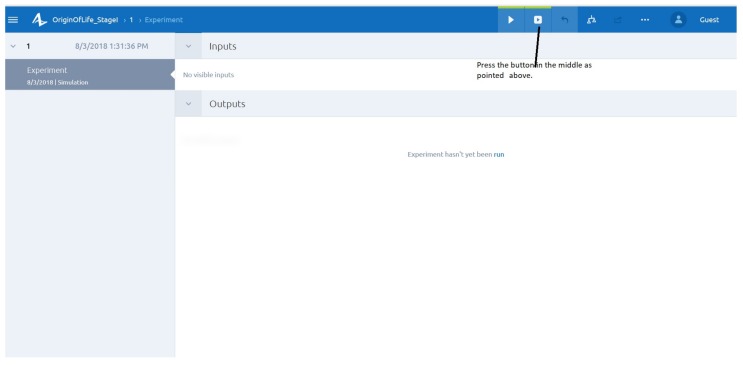
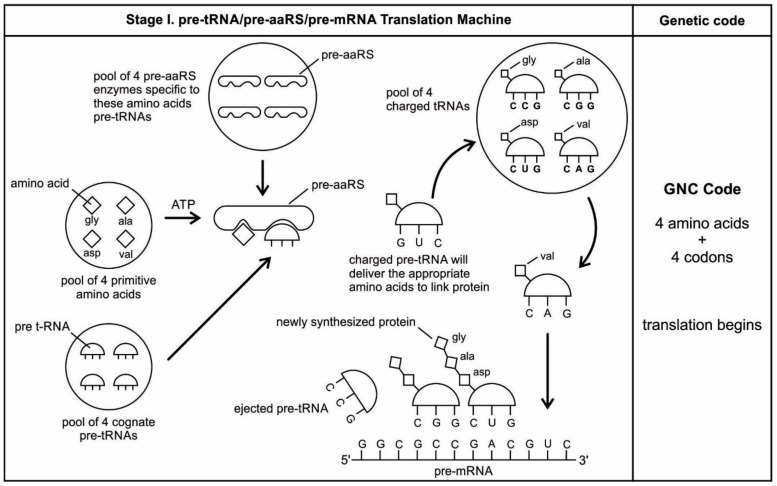
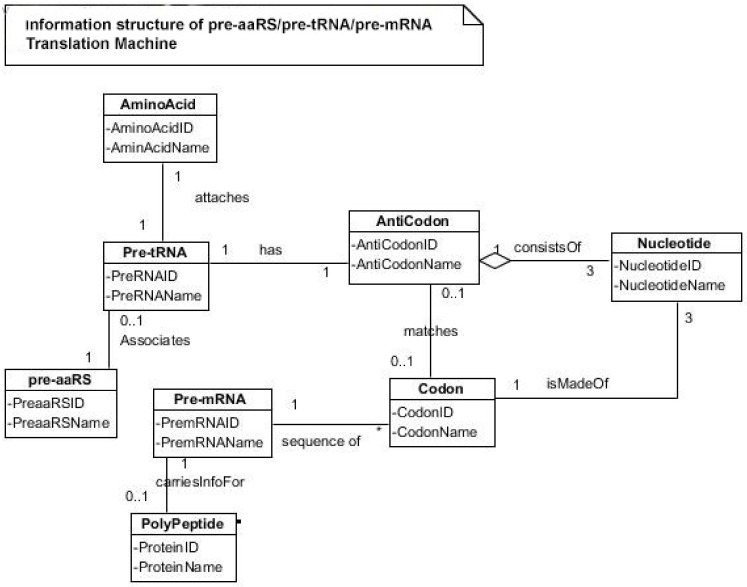
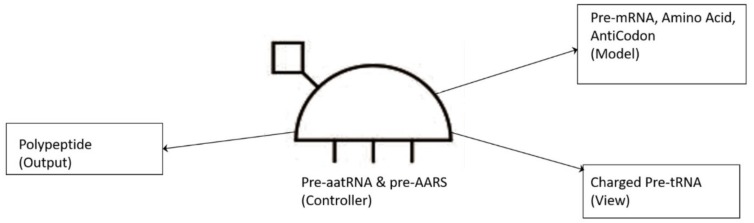
- Simulation component: they used AnyLogic to visualize translation machine evolution in three stages: pre-aaRS/pre-tRNA/pre-mRNA, aaRS/tRNA/mRNA, and aaRS/tRNA/mRNA/ribosome.
## Limitations
- The paper explicitly says its scenarios for the origin of translation machinery and the genetic code are “sketchy and speculative.”
- It states that the simulation “simply visualizes the translation process without any provision for parameter changes,” and that parameterization is planned for the future.
- Evident from the text: the paper provides no empirical dataset or experimental validation for the proposed origin-of-life pathway; the conclusions are based on narrative synthesis, modeling, and visualization rather than direct observation.
Model-written summary. Check it against the paper before relying on it.
Integrity signals
Registry
Cites
Statistics
Figures
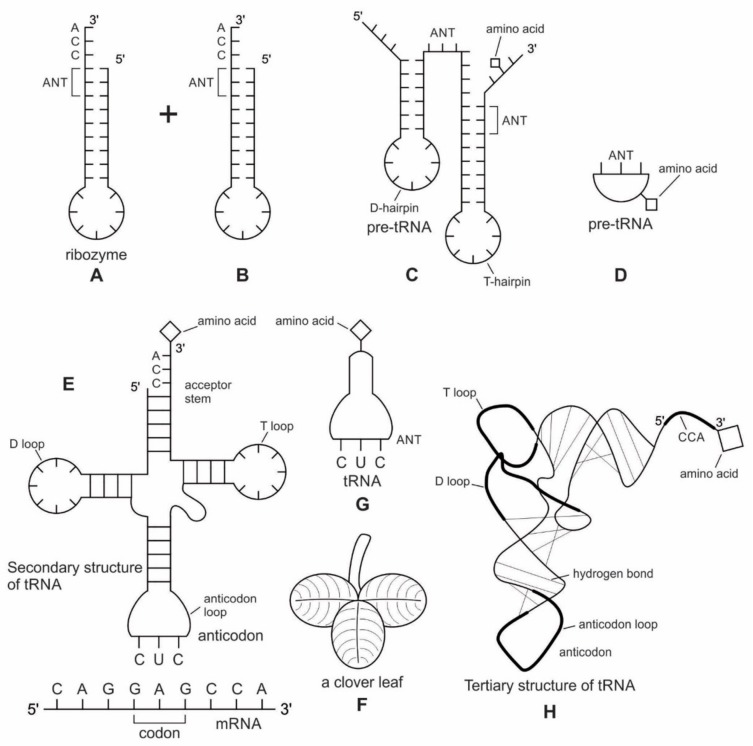
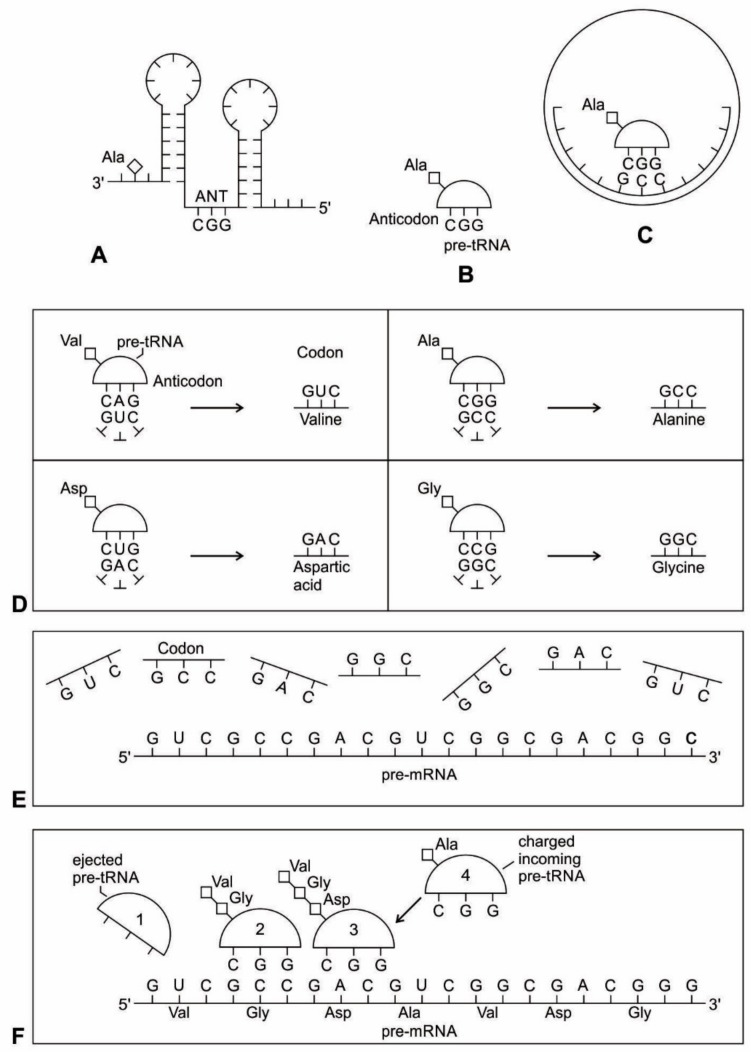
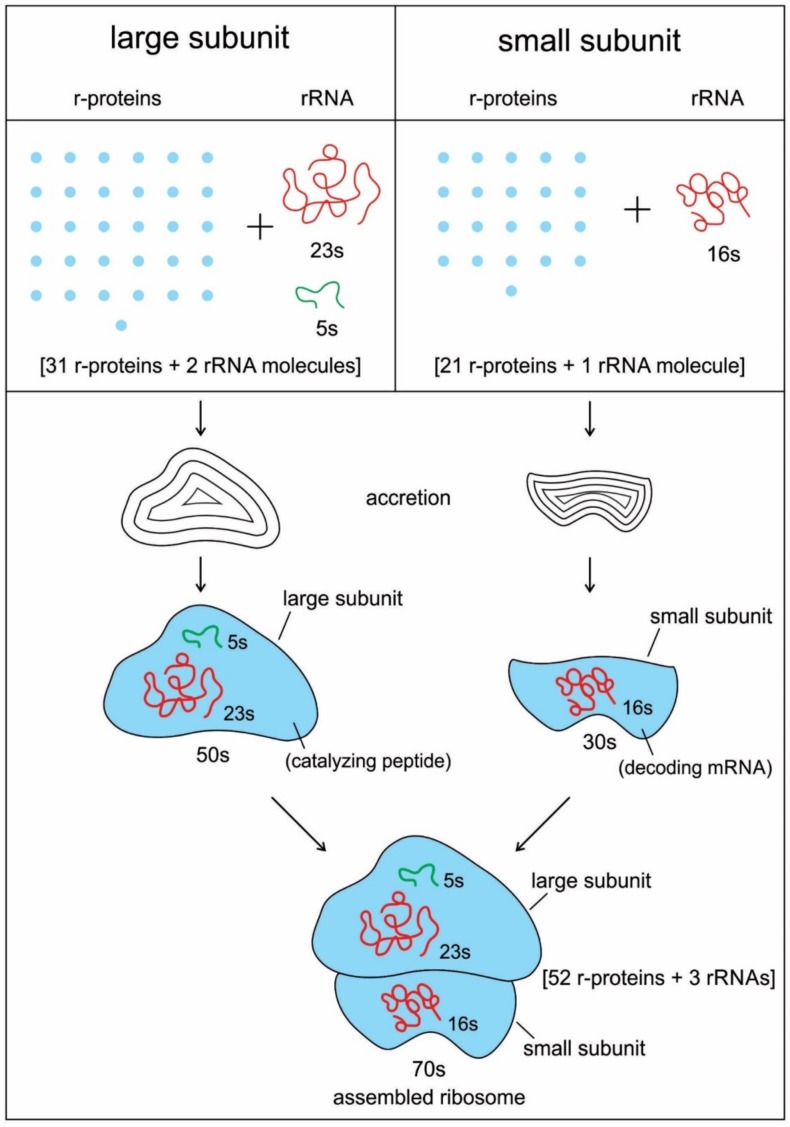
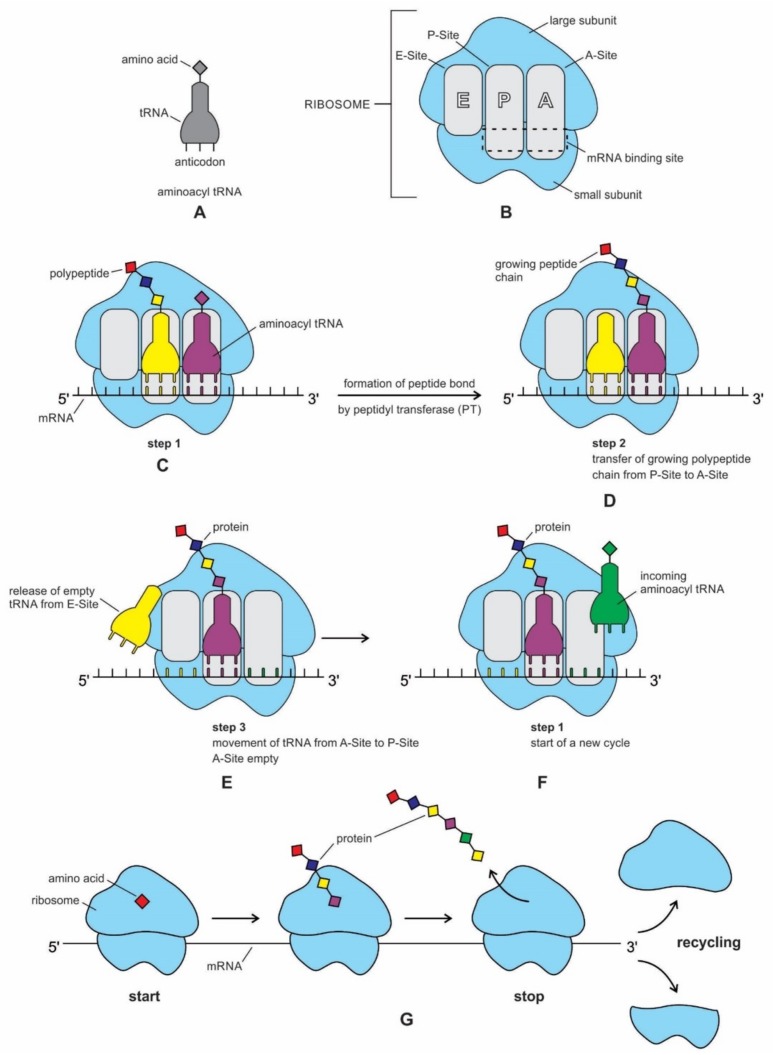
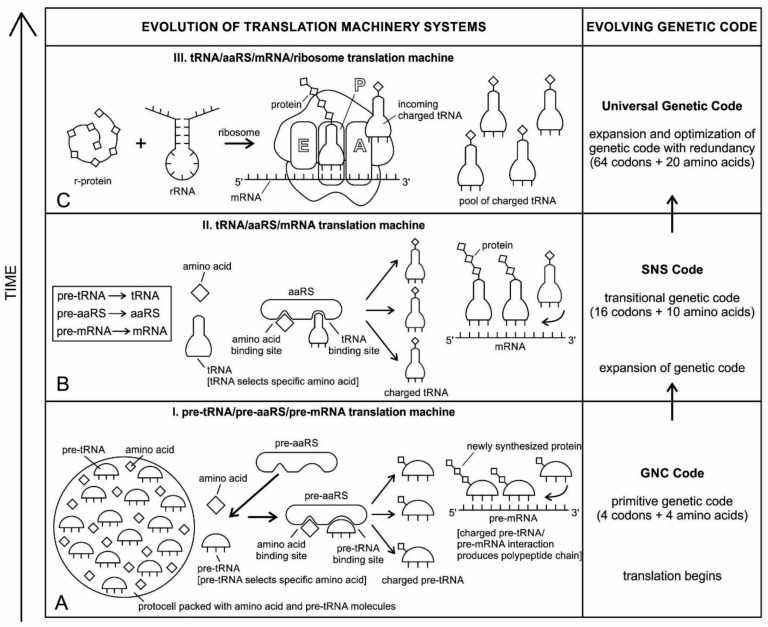
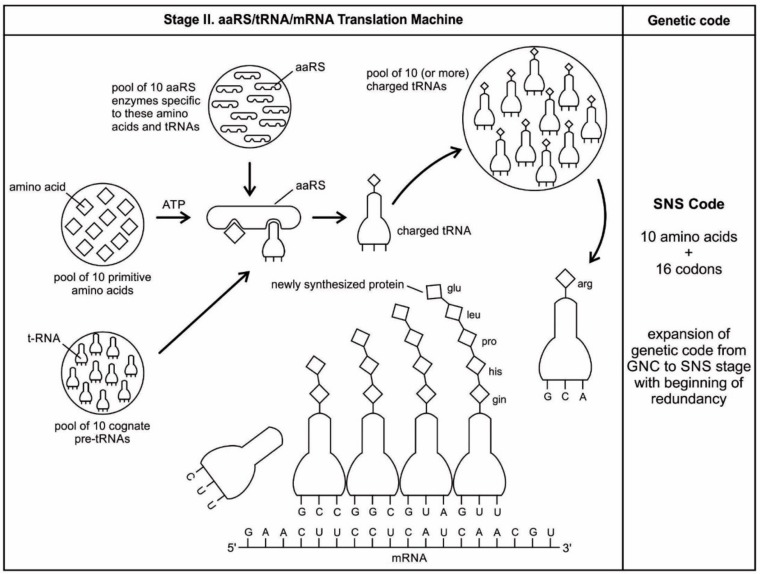
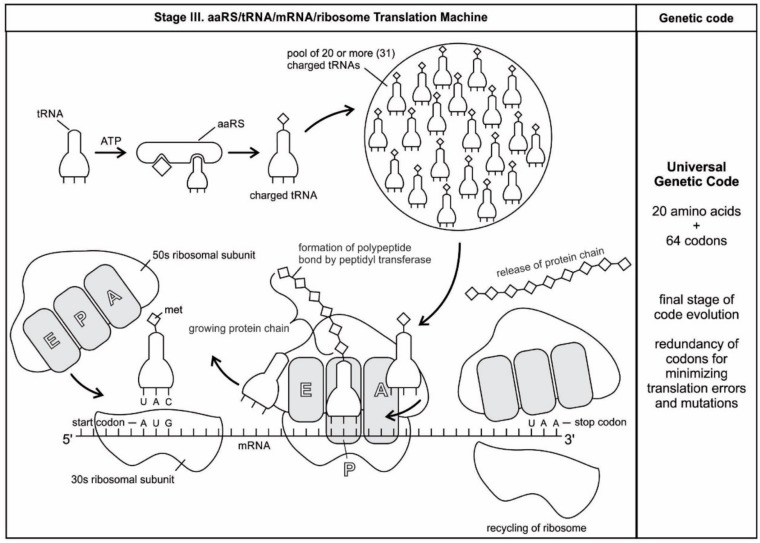
![Figure 10 Three stages of the evolution of the genetic code corresponding to the evolution of the translation machines and the progressive addition of amino acids. Pre-tRNA molecule creates its custom-made pre-mRNA for storage of limited amino acid information in the beginning. Primitive translation process began with interaction between pre-mRNA and pre-tRNA. Pre-tRNA molecule in collaboration with pre-aaRS enzyme serve as crucial role in selecting and matching prebiotic amino acids from the prebiotic soup. At this stage, translation machine is simple, consisting of pre-tRNA/pre-aaRS/pre-mRNA. In the abiotic stage, the primitive GNC code appeared, which code four amino acids: valine, alanine, aspartic acid, and glycine [87,88]]. In the next stage, translation machine becomes modified and efficient with the evolution of the tRNA/aaRS/mRNA translation machine, when six new amino acids–glutamic acid, leucine, proline, and histidine were created. mRNA strand becomes more elongated and containing 16 codons and combination thereof with assignments of 10 amino acids with the emergence of the SNS code [87,88]. These 10 amino acids were readily available from the prebiotic environment [93]. Here, we see the beginning of degeneracy, where some the amino acids have more than one codon assignment. With the appearance of ribosome, the SNS code is modified to universal genetic code with 64 codons and 20 amino acids. The translation machine containing tRNA/aaRS/mRNA/ribosome becomes more robust with extensive degeneracy minimizing translation errors and mutation. Furthermore, amino acids with similar chemical properties seem to share similar codons. Ten more new amino acids were recruited at this stage from SNS stage: isoleucine, methionine, threonine, asparagine, lysine, serine, tryptophan, phenylalanine, tyrosine, and cysteine, totaling 20 amino acids. These new amino acids are derivatives of the first set of 10 primitive amino acids [86]. mRNA becomes independent storage device, and it can create its own strand by replication without the assistance of tRNA. mRNA strand becomes more elongated, containing information of 20 amino acids using 64 codons or combination thereof.](https://figures.cochat.ai/paper-figures/bf2d0648ca844edc93f8c9746641e7d0/the-origin-of-prebiotic-information-system-in-the-peptide-rna-world-a-simulation-figure-10.jpg)
Verification
Claims the paper makes
29 Valid · 14 Not valid · 83 Not checked · 314 Own results and interpretations
At least one cited source doesn’t support this claim or points to a different paper, and none confirmed it — see the verdicts below.
In the paper
“The redundancy of the universal genetic code optimized translation errors and mutations [108].”
§ The Origin of Prebiotic Information System in the Peptide/RNA World: A Simulation Model of the Evolution of Translation and the Genetic Code > 9. Simulation and Visualization of the Translation Pathways > 9.3. Stage III. Visualization—aaRS-tRNA-mRNA-Ribosome Machine Complex
What the sources say
- Disputedcites [108] Rodin A.S. Szathmary E. Rodin S.N. On the origin of genetic code and tRNA before translation Biol. Dir. 2011 6 14 10.1186/1745-6150-6-14 21342520 PMC3050877 sourceExperimental — accuracy not yet measured
The Conclusions (page not provided) explicitly question the view that the genetic code was shaped by minimizing translation errors and instead emphasize that translation machinery evolved to fit an earlier code. The paper does not present redundancy as having optimized translation errors and mutations. (LLM, conf=0.87)
Checked by a reasoning model — may be wrong.
plainstates a cause- Asserted: passes — The authors put it forward as true.
- Checkable: passes — It can be checked against evidence.
- Load-bearing: unclear — It is unclear whether the paper’s conclusions depend on it.
- Based: passes — The paper gives a reason why it holds.
- Disputed
The cited sources support only part of this claim — read each source’s verdict below.
In the paper
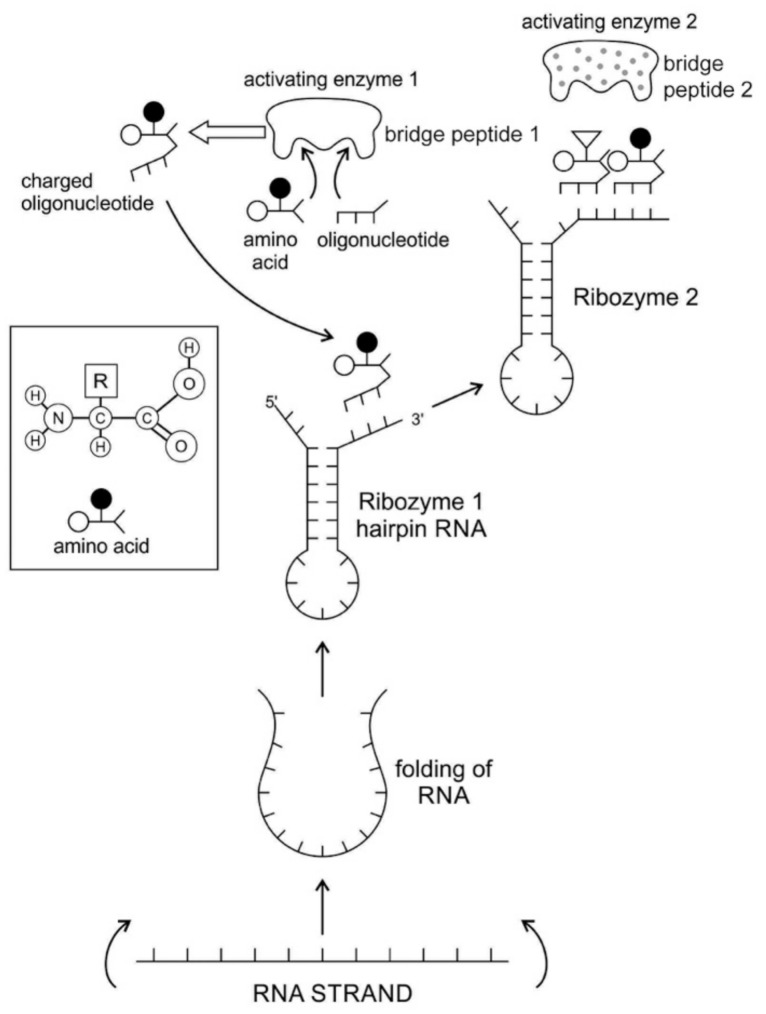
“One of the early manifestations of the transition from peptide to protein is the emergence of the ‘bridge peptide’ that facilitated the aminoacylation of RNA to specific amino acid.”
§ The Origin of Prebiotic Information System in the Peptide/RNA World: A Simulation Model of the Evolution of Translation and the Genetic Code > 5. Temporal Order of Emergence of the Translation Machines
What the sources say
- Partly supportedcites [24] Kunnev D. Gospodinov A. Possible emergence of sequence specific RNA aminoacylation via peptide intermediary to initiate Darwinian evolution and code through origin of life Life 2018 8 44 10.3390/life8040044 30279401 PMC6316189 sourceExperimental — accuracy not yet measured
The Introduction and §2.5 propose that a “bridge peptide” facilitated RNA aminoacylation by attracting a particular amino acid. The paper presents this as a hypothesis with initially low specificity, whereas the citing sentence states its emergence and effect as fact. (LLM, conf=0.84)
plainstates a cause- Asserted: passes — The authors put it forward as true.
- Checkable: passes — It can be checked against evidence.
- Load-bearing: passes — The paper’s conclusions depend on it.
- Based: passes — The paper gives a reason why it holds.
- Partly supported
The cited sources that could be checked couldn’t confirm or dispute this claim.
In the paper
“Most likely, ten proteinogenic amino acids were abiotically synthesized [67].”
§ The Origin of Prebiotic Information System in the Peptide/RNA World: A Simulation Model of the Evolution of Translation and the Genetic Code > 5. Temporal Order of Emergence of the Translation Machines
What the sources say
- Could not verifycites [67] Koonin E.V. Why the central dogma: On the nature of biological exclusion principle Biol. Dir. 2015 10 52 10.1186/s13062-015-0084-3 26377089 PMC4573691 sourceExperimental — accuracy not yet measured
The passages on amino acids in “Irreversibility of the digital to analog transition” (page unavailable) discuss their role in translation, not their abiotic synthesis. Searches for the claim and for prebiotic amino-acid synthesis found no passage stating that ten proteinogenic amino acids were abiotically synthesized. (LLM, conf=0.75)
hedged- Asserted: passes — The authors put it forward as true.
- Checkable: passes — It can be checked against evidence.
- Load-bearing: unclear — It is unclear whether the paper’s conclusions depend on it.
- Based: passes — The paper gives a reason why it holds.
- Could not verify
The cited sources support only part of this claim — read each source’s verdict below.
In the paper
“In recent times, the RNA world paradigm is shifting to a peptide/RNA world paradigm [9,17,18,19,20,21,22,23,24,25,26].”
§ The Origin of Prebiotic Information System in the Peptide/RNA World: A Simulation Model of the Evolution of Translation and the Genetic Code > 2. Peptide/RNA World
What the sources say
- Not checked — no full text of the sourcecites [9] Chatterjee S. A symbiotic view of the origin of life at hydrothermal impact crater lakes Phys. Chem. Chem. Phys. 2016 18 20033 20046 10.1039/C6CP00550K 27126878 source
- Partly supportedcites [17] Carter C.W. Jr. What RNA world? Why a peptide/RNA partnership merits renewed experimental attention Life 2015 5 294 320 10.3390/life5010294 25625599 PMC4390853 sourceExperimental — accuracy not yet measured
The Conclusions (page unavailable) present a peptide/RNA world as a more credible alternative to the RNA World hypothesis. They also call the RNA World view the prevailing idea; the paper advocates an alternative but does not establish that the field’s paradigm is shifting toward it. (LLM, conf=0.87)
- Partly supportedcites [18] Carter C.W. Jr. An alternative to the RNA world Nat. Hist. 2016 125 28 33 28659649 PMC5484163Experimental — accuracy not yet measured
Our copy of Carter's 'An Alternative to the RNA World' does advance exactly this alternative: the opening states 'Our research, however, has uncovered evidence that the RNA World hypothesis may be unnecessary', and the concluding section argues 'In defiance of the tenets of the RNA world that RNA catalysts came first... They suggest that biology arose from coexisting peptides and RNA...: a peptide/RNA world.' So the substance of a peptide/RNA paradigm competing with the RNA world is in the source. What the source does not support is the sociological claim that the field's paradigm 'is shifting': the paper makes no statement about changing consensus, and indeed says the RNA World 'was rapidly embraced by most students of the origin of life'; its own positive claim is hedged ('may be unnecessary', 'suggest', 'could have arisen'), which the citing sentence states more firmly as an accomplished shift. (LLM, conf=0.72)
plain- Asserted: passes — The authors put it forward as true.
- Checkable: passes — It can be checked against evidence.
- Load-bearing: passes — The paper’s conclusions depend on it.
- Based: passes — The paper gives a reason why it holds.
The cited sources support only part of this claim — read each source’s verdict below.
In the paper
“Monomers, such as nucleotides and amino acids, were selected from random assemblies of molecular pools and then polymerized on the pores and pockets of the mineral substrate to create RNAs and peptides, heralding the peptide/RNA world [9,17,18,19,20,21,22,23,24,25,26].”
§ The Origin of Prebiotic Information System in the Peptide/RNA World: A Simulation Model of the Evolution of Translation and the Genetic Code > 1. Introduction
What the sources say
- Not checked — no full text of the sourcecites [9] Chatterjee S. A symbiotic view of the origin of life at hydrothermal impact crater lakes Phys. Chem. Chem. Phys. 2016 18 20033 20046 10.1039/C6CP00550K 27126878 source
- Partly supportedcites [17] Carter C.W. Jr. What RNA world? Why a peptide/RNA partnership merits renewed experimental attention Life 2015 5 294 320 10.3390/life5010294 25625599 PMC4390853 sourceExperimental — accuracy not yet measured
Section 3.7 describes a proposed scenario in which amino acid and nucleic acid monomers assemble into peptide–RNA complexes, with peptide and oligonucleotide synthesis. The paper does not say that monomers were selected from random molecular pools or polymerized in pores and pockets of a mineral substrate. The pockets described in the Introduction’s Figure 2 belong to peptide–RNA structures, not minerals. (LLM, conf=0.88)
- Partly supportedcites [18] Carter C.W. Jr. An alternative to the RNA world Nat. Hist. 2016 125 28 33 28659649 PMC5484163Experimental — accuracy not yet measured
Our copy of 'An Alternative to the RNA World' does support the terminal idea of the claim: it concludes that biology arose from coexisting peptides and RNA assisting each other's initial molecular self-organization — 'a peptide/RNA world' (An Alternative to the RNA World, closing paragraph), and it states the RNA World hypothesis 'may be unnecessary' with the genetic code, not replication, as the bridge from pre-biotic chemistry. What our copy does not support is the mechanism the claim attributes to it: no passage describes monomers such as nucleotides and amino acids being selected from random assemblies of molecular pools, or being polymerized on the pores and pockets of a mineral substrate (searched: mineral substrate, pores/pockets, polymerization, random molecular pools, prebiotic synthesis). The paper's evidence is instead aaRS protozyme/urzyme structural and catalytic deconstruction and dual-strand gene ancestry, plus test-tube recapitulation of molecular evolution. (LLM, conf=0.72)
plainstates a cause- Asserted: passes — The authors put it forward as true.
- Checkable: passes — It can be checked against evidence.
- Load-bearing: passes — The paper’s conclusions depend on it.
- Based: passes — The paper gives a reason why it holds.
210 more claims · 17 with their cited sources checked
Create a free account to see all 440 claims and to verify the 31 references still open.
- It may state two separate claims as one. 115
- Probably not a substantial claim. 147
- The quote only partly states this claim. 1
Citations
Cites
A Mathematical Theory of Communication
Shannon, C. E. (1948) · Bell System Technical Journal · doi:10.1002/j.1538-7305.1948.tb01338.x · Cited by 88,486
The chemical basis of morphogenesis
Turing, A. M. (1952) · Philosophical Transactions of the Royal Society of London. Series B, Biological Sciences · doi:10.1098/rstb.1952.0012 · Cited by 11,733 · cited 1×
“Turing [52,53] was instrumental in recognizing organized shapes, patterns, forms, and decision making in biological organisms.”
BackgroundFrom molecular to modular cell biology.
Hartwell, L. H., Hopfield, J. J., Leibler, S., & Murray, A. W. (1999) · Nature · doi:10.1038/35011540 · Cited by 3,632
Central Dogma of Molecular Biology
CRICK, F. (1970) · Nature · doi:10.1038/227561a0 · Cited by 3,444
The Complete Atomic Structure of the Large Ribosomal Subunit at 2.4 Å Resolution
Ban, N., Nissen, P., Hansen, J., Moore, P. B., & Steitz, T. A. (2000) · Science · doi:10.1126/science.289.5481.905 · Cited by 3,327
Gilbert, W. (1986) · Nature · doi:10.1038/319618a0 · Cited by 2,721
The origin of the genetic code
Crick, F. H. C. (1968) · Journal of Molecular Biology · doi:10.1016/0022-2836(68)90392-6 · Cited by 2,320
The Structural Basis of Ribosome Activity in Peptide Bond Synthesis
Nissen, P., Hansen, J., Ban, N., Moore, P. B., & Steitz, T. A. (2000) · Science · doi:10.1126/science.289.5481.920 · Cited by 2,269 · cited 2×
“Similarly, the first atomic resolution of the larger of the two subunits of the ribosome suggests that the RNA components of the large subunit accomplish the key peptidyl transferase reaction [96].”
BackgroundCodon—anticodon pairing: The wobble hypothesis
Crick, F. H. C. (1966) · Journal of Molecular Biology · doi:10.1016/s0022-2836(66)80022-0 · Cited by 2,029
A principle of natural self-organization: Part A: Emergence of the hypercycle
Eigen, M., & Schuster, P. (1977) · Naturwissenschaften · doi:10.1007/bf00450633 · Cited by 1,752 · cited 5×
“The genetic code has certain regularities and structures [115].”
BackgroundInfluential
Research works printed but not linked: 8
- Kring D.A. Impact events and their effect on the origin, evolution, and distribution of life GSA Today 2000 10 1 7
- Hazen R.M. Genesis: The Scientific Quest for Life Joseph Henry Press Washington, DC, USA 2005
- Küppers B.O. Information and the Origin of Life MIT Press Cambridge, MA, USA 1990
- Von Neumann J. Theory of Self-Reproducing Automata Burks A.W. University of Illinois Press Chicago, IL, USA 1966
- De Duve C. The beginnings of life on earth Am. Sci. 1995 83 428 437
- Dyson F. Origins of Life Cambridge University Press Cambridge, UK 2004
- Freeman S. Biological Science 2nd ed. Pearson Prentice Hall Upper Saddle River, NJ, USA 2005
- Tanaka T. Kikuchi Y. Origin of cloverleaf shape of transfer RNA-the double hairpin model: Implication for the role of tRNA intro and long extra loop Viva Orig. 2001 29 134 142
Cited by
Parvathy, S. T., Udayasuriyan, V., & Bhadana, V. (2022) · Molecular Biology Reports · doi:10.1007/s11033-021-06749-4 · Cited by 556
Prebiotic Peptides: Molecular Hubs in the Origin of Life
Frenkel-Pinter, M., Samanta, M., Ashkenasy, G., & Leman, L. J. (2020) · Chemical Reviews · doi:10.1021/acs.chemrev.9b00664 · Cited by 354
Cryptic and abundant marine viruses at the evolutionary origins of Earth’s RNA virome
Zayed, A. A., Wainaina, J. M., Dominguez-Huerta, G., Pelletier, E., Guo, J., Mohssen, M., Tian, F., Pratama, A. A., Bolduc, B., Zablocki, O., et al. (2022) · Science · doi:10.1126/science.abm5847 · Cited by 236
Mechanisms of protein evolution
Jayaraman, V., Toledo‐Patiño, S., Noda‐García, L., & Laurino, P. (2022) · Protein Science · doi:10.1002/pro.4362 · Cited by 89
Intrinsically Disordered Proteins: Critical Components of the Wetware
Kulkarni, P., Bhattacharya, S., Achuthan, S., Behal, A., Jolly, M. K., Kotnala, S., Mohanty, A., Rangarajan, G., Salgia, R., & Uversky, V. (2022) · Chemical Reviews · doi:10.1021/acs.chemrev.1c00848 · Cited by 87
Evolution of Life on Earth: tRNA, Aminoacyl-tRNA Synthetases and the Genetic Code
Lei, L., & Burton, Z. F. (2020) · Life · doi:10.3390/life10030021 · Cited by 56
The Alanine World Model for the Development of the Amino Acid Repertoire in Protein Biosynthesis
Kubyshkin, V., & Budiša, N. (2019) · International Journal of Molecular Sciences · doi:10.3390/ijms20215507 · Cited by 58
Circular code motifs in the ribosome: a missing link in the evolution of translation?
Dila, G. K., Ripp, R., Mayer, C., Poch, O., Michel, C. J., & Thompson, J. (2019) · RNA · doi:10.1261/rna.072074.119 · Cited by 40
“Since LUCA, the same standard genetic code has been used to translate nucleotides into amino acids in (quasi-) all organisms.”
BackgroundInfluentialRecent advances in poly(amino acids), polypeptides, and their derivatives in drug delivery
Yuan, H., Jiang, M., Fang, H., & Tian, H. (2025) · Nanoscale · doi:10.1039/d4nr04481a · Cited by 39
Chatterjee, S., & Yadav, S. B. (2022) · Life · doi:10.3390/life12060834 · Cited by 29
Lei, L., & Burton, Z. F. (2021) · Transcription · doi:10.1080/21541264.2021.1927652 · Cited by 23
“Another somewhat similar model to ours has been advanced by Chatterjee and Yadav [116].”
ResultNew opportunities for genetic code expansion in synthetic yeast
Sanders, J., Hoffmann, S. A., Green, A. P., & Cai, Y. (2022) · Current Opinion in Biotechnology · doi:10.1016/j.copbio.2022.102691 · Cited by 23
The biological process of lysine‐tRNA charging is therapeutically targetable in liver cancer
Zhang, R., Noordam, L., Ou, X., Ma, B., Li, Y., Das, P., Shi, S., Liu, J., Wang, L., Li, P., et al. (2020) · Liver International · doi:10.1111/liv.14692 · Cited by 25
Origin of Life: The Point of No Return
Kunnev, D. (2020) · Life · doi:10.3390/life10110269 · Cited by 25
Molecules, Information and the Origin of Life: What Is Next?
Chirumbolo, S., & Vella, A. (2021) · Molecules · doi:10.3390/molecules26041003 · Cited by 21
The evolution of aminoacyl-tRNA synthetases: From dawn to LUCA
de Pouplana, L. R. (2020) · The Enzymes · doi:10.1016/bs.enz.2020.08.001 · Cited by 18
RNA Structure: Past, Future, and Gene Therapy Applications
Haseltine, W. A., Hazel, K., & Patarca, R. (2024) · International Journal of Molecular Sciences · doi:10.3390/ijms26010110 · Cited by 28
Nunn, A. V. W., Guy, G. W., Botchway, S. W., & Bell, J. D. (2020) · Phytotherapy Research · doi:10.1002/ptr.6654 · Cited by 18
“This could have had the necessary geothermal chemistry, ingredients from meteorites and dry/wet cycling, with UV being important in generating the compounds in space (Chatterjee, 2016; Chatterjee & Yadav, 2019).”
BackgroundMichel, C. J., & Thompson, J. (2020) · RNA Biology · doi:10.1080/15476286.2020.1719311 · Cited by 17
“Thus, our results provide additional support for the hypothesis that the primordial coding system was RNA-based, and this RNA translation template then evolved to form the modern tRNA, mRNA and rRNA sequences [59,60].”
ResultVangaveti, S., Ranganathan, S. V., & Agris, P. F. (2022) · The Journal of Physical Chemistry B · doi:10.1021/acs.jpcb.1c09053 · Cited by 14
From matter to form: the evolution of the genetic code as semio-poiesis
Zolyan, S. (2022) · Semiotica · doi:10.1515/sem-2020-0088 · Cited by 19
Potassium at the Origins of Life: Did Biology Emerge from Biotite in Micaceous Clay?
Hansma, H. G. (2022) · Life · doi:10.3390/life12020301 · Cited by 20
Gospodinov, A. G., & Kunnev, D. (2020) · Life · doi:10.3390/life10060081 · Cited by 14
Amino Acid Specific Nonenzymatic Montmorillonite‐Promoted RNA Polymerization
Namani, T., Snyder, S. R., Eagan, J. M., Bevilacqua, P. C., Wesdemiotis, C., & Sahai, N. (2021) · ChemSystemsChem · doi:10.1002/syst.202000060 · Cited by 15
Chatterjee, S., & Yadav, S. B. (2018) · Preprints.org · doi:10.20944/preprints201812.0203.v1 · Cited by 11
Despotović, D., & Tawfik, D. S. (2021) · ChemSystemsChem · doi:10.1002/syst.202100002 · Cited by 8
Analysing bio-art’s epistemic landscape: from metaphoric to post-metaphoric structure
Ahmedien, D. A. M. (2022) · BioSocieties · doi:10.1057/s41292-022-00270-y · Cited by 13
“…cognitive memory, while DNA sequences are strings of bases’ “nucleotides” A\ T\ C\ G that refer to numerous chemical interactions, which produce a myriad of proteins that make us who we are as a species and guide our growth, development, and health as individuals (Chatterjee and Yadav 2019).”
BackgroundChimeric Translation for Mitochondrial Peptides: Regular and Expanded Codons
Seligmann, H., & Warthi, G. (2019) · Computational and Structural Biotechnology Journal · doi:10.1016/j.csbj.2019.08.006 · Cited by 9
The Origin of Life and Cellular Systems: A Continuum from Prebiotic Chemistry to Biodiversity
Gómez‐Márquez, J. (2025) · Life · doi:10.3390/life15111745 · Cited by 16
Colombet, J., Fuster, M., Billard, H., & Sime‐Ngando, T. (2020) · Viruses · doi:10.3390/v12080881 · Cited by 11
Combinatorial Fusion Rules to Describe Codon Assignment in the Standard Genetic Code
Nesterov‐Mueller, A., Popov, R., & Seligmann, H. (2020) · Life · doi:10.3390/life11010004 · Cited by 4
Traces of a Primitive RNA Ring in Current Genomes
Demongeot, J. (2025) · Biology · doi:10.3390/biology14050538 · Cited by 4
“…villaricae chloroplast (Plants), and mitochondrion of Jaculus jaculus (mammal) have their proximity P PAL Doublets in decreasing order in (9) AL matches from GtRNAdb and [69–72]) (10) In the it “anticodes” (11) AL aligns TGG-Ψ CA, needed between the D-and T -loops of tRNAs for their 3D folding.”
Oller, J. W., & Shaw, C. A. (2019) · International Journal of Sciences · doi:10.18483/ijsci.2069 · Cited by 10
The Origin of Life in the Early Continental Crust: A Comprehensive Model
Schreiber, U. K. (2025) · Life · doi:10.3390/life15030433 · Cited by 2
“Lastly, how did information storage originate during the earliest stages of life [13]?”
Postbiotics-promising role as energetic biomolecules, safety regulations, and nutritional aspects
Deokar, G. S., Kshirsagar, S. J., Shinde, Y. A., Pathak, V. A., & Nirmal, N. P. (2025) · Elsevier eBooks · doi:10.1016/b978-0-443-22188-0.00042-5 · Cited by 4
Palacios-Pérez, M., & José, M. V. (2023) · Genes · doi:10.3390/genes14122158 · Cited by 2
“Early RNA genes could have been very short, reaching a maximum length of 50 to 100 nt, with most probably configured into mini-helixes whose strands must are stable and therefore equivalent to each other in topology and chemical composition [5–7, 10 , 13– 19].”
BackgroundChatterjee, S. (2023) · Springer eBooks · doi:10.1007/978-3-031-23397-5_2 · Cited by 1
Sati, S. C., Pant, C. K., Bhatt, P., & Pandey, Y. (2022) · Origins of Life and Evolution of Biospheres · doi:10.1007/s11084-022-09633-8 · Cited by 2
Giménez, J. A. M., & Tabarés‐Seisdedos, R. (2021) · Origins of Life and Evolution of Biospheres · doi:10.1007/s11084-021-09610-7 · Cited by 2
Assumption and Criticism on RNA World Hypothesis from Ribozymes to Functional Cells
Khatib, S. E., & Raslan, A. (2021) · Bioengineering and Bioscience · doi:10.13189/bb.2021.080101 · Cited by 2
Who is the “Matchmaker” between Proteins and Nucleic Acids?Preprint
Xie, P. (2021) · Preprints.org · doi:10.20944/preprints202003.0419.v10 · Cited by 2
“Or it is still unclear why the genetic code might have originated in the prebiotic world leading to the information age [7].”
Backgroundaulestia, F. C. (2019) · theses.fr (ABES) · doi:10.70675/3b6b7bffz584fz4cd9z9d0az246c16c16ecd · Cited by 2
Autogenesis: An Alternative Path to Molecular Information
Deacon, T. W., García-Valdecasas, M., & Monzón-Marqués, P. (2026) · Biological Theory · doi:10.1007/s13752-025-00528-1 · Cited by 2
Potentially Prebiotic Synthesis of a 3′-Amino-3′-deoxyribonucleoside
Sammons, S. R., Giurgiu, C., Szostak, J. W., & O’Flaherty, D. K. (2025) · Journal of the American Chemical Society · doi:10.1021/jacs.5c08614 · Cited by 2
Emergent Chemical Reactivity and Complexity of RNA Condensates
Hauf, S., Nakamura, R., Cellini, B., Yokobayashi, Y., & Dindo, M. (2025) · Angewandte Chemie International Edition · doi:10.1002/anie.202511332 · Cited by 6
“Such unspecialized catalysts require high substrate and catalyst concentrations to function effectively.”
Li, S., Wang, W., Liu, S., Du, Y., & Zhao, N. (2025) · International Journal of Biological Macromolecules · doi:10.1016/j.ijbiomac.2025.140068 · Cited by 1
From RNA world to RNA-peptide world: A review
Zheng, H. (2023) · Theoretical and Natural Science · doi:10.54254/2753-8818/21/20230843 · Cited by 1
Chatterjee, S. (2023) · Springer eBooks · doi:10.1007/978-3-031-23397-5_6 · Cited by 1
Chatterjee, S. (2023) · Springer eBooks · doi:10.1007/978-3-031-23397-5_15 · Cited by 1
Schreiber, U. K. (2022) · Preprints.org · doi:10.20944/preprints202201.0364.v1
Chaos, Order and Systematics in Evolution of the Genetic CodePreprint
Lei, L., & Burton, Z. F. (2020) · Preprints.org · doi:10.20944/preprints202009.0162.v2 · Cited by 2
The ATP Hypothesis Discovers the Missing “Matchmaker” between Proteins and Nucleic AcidsPreprint
Xie, P. (2020) · Preprints.org · doi:10.20944/preprints202003.0419.v8 · Cited by 1
The ATP hypothesis discovers the missing “matchmaker” between proteins and nucleic acidsPreprint
Xie, P. (2020) · Preprints.org · doi:10.20944/preprints202003.0419.v7 · Cited by 1
“Or it is still unclear why the genetic code might have originated in the prebiotic world leading to the information age [7].”
BackgroundThe ATP Hypothesis: A New Conceptual Framework for the Origin of the Genetic CodePreprint
Xie, P. (2020) · Preprints.org · doi:10.20944/preprints202003.0419.v6 · Cited by 1
Natural products and molecular networks
Bueno, J. (2020) · Elsevier eBooks · doi:10.1016/b978-0-12-817613-9.00003-1 · Cited by 1
The Protein/RNA World and the Origin of Life
Chatterjee, S. (2019) · Cited by 2
From Prebiotic Catalysts to Modern Applications: How Early Catalysts Inspire Today's Innovations
Agazani, O., & Reches, M. (2026) · Israel Journal of Chemistry · doi:10.1002/ijch.70038
Thermodynamic ontogeny: From hydrothermal thioesters to a protein world
Magro, A. M. (2026) · Biosystems · doi:10.1016/j.biosystems.2026.105854
RNA export through the nuclear pore complex: pathways, mechanisms, and imaging strategies
Fu, D., Yu, W., Zhang, F., Rush, C., Tingey, M., & Yang, W. (2026) · RNA Biology · doi:10.1080/15476286.2026.2656571 · Cited by 3
“For example, mRNA carries genetic information from transcription to translation [4], rRNA provides the structural and catalytic core of the ribosome [5], tRNA delivers amino acids to the growing polypeptide chain [6], and miRNAs regulate mRNA stability and translation [7].”
Prebiotic oligomerization of amino acids: A step in molecular evolution toward biological complexity
Vargas-García, A., & Heredia, A. (2026) · Biosystems · doi:10.1016/j.biosystems.2026.105773
Emergent Chemical Reactivity and Complexity of RNA Condensates
Hauf, S., Nakamura, R., Cellini, B., Yokobayashi, Y., & Dindo, M. (2025) · Angewandte Chemie · doi:10.1002/ange.202511332
Non-Coding RNAs and Their Regulatory Systems: Evolutionary Origin and Putative Link with Ribozymes
Markelov, V. A., Akhmadishina, L. Z., Solntsev, V. A., Danilko, K. V., & Korytina, G. F. (2025) · Journal of Evolutionary Biochemistry and Physiology · doi:10.1134/s0022093025020073
“…to the development of pep(cid:2) tide-synthetic activity, which promotes the positive selection of ribozymes with such an activity because of the potential increase in the stability of protocel(cid:2) lular structures due to the metabolic activity of dipeptides and oligopeptides [116, 117].”
A Proposal for the RNAome at the Dawn of the Last Universal Common Ancestor
Palacios-Pérez, M., & José, M. V. (2024) · Genes · doi:10.3390/genes15091195 · Cited by 1
A Survey of the Battlefield for the Origin of Life
Gordon, R. (2024) · Wiley eBooks · doi:10.1002/9781119901228.ch11
Active prokaryotic and eukaryotic viral ecology across spatial scale in a deep-sea brine poolPreprint
Minch, B., Chakraborty, M. I., Purkis, S. J., et al. (2024) · bioRxiv (Cold Spring Harbor Laboratory) · doi:10.1101/2024.01.25.577265
EVALUATION OF THE ADEQUACY OF WRITTEN SPECIALIZED TEXTS MACHINE TRANSLATION
Мишко, А., Гудманян, А., & Bray, A. (2023) · Advanced Linguistics · doi:10.20535/2617-5339.2023.12.291604 · Cited by 4
Chatterjee, S. (2023) · Springer eBooks · doi:10.1007/978-3-031-23397-5_20
Chatterjee, S. (2023) · Springer eBooks · doi:10.1007/978-3-031-23397-5_13
The First Gene Before DNA: The Digital Revolution
Chatterjee, S. (2023) · Springer eBooks · doi:10.1007/978-3-031-23397-5_12
The RNA World: Reality or Dogma?
Chatterjee, S. (2023) · Springer eBooks · doi:10.1007/978-3-031-23397-5_10
Biological Information Systems
Chatterjee, S. (2023) · Springer eBooks · doi:10.1007/978-3-031-23397-5_3
Noncoding RNAs: The Hybrid Information System
Chatterjee, S. (2023) · Springer eBooks · doi:10.1007/978-3-031-23397-5_11
The Lipid Membrane: Encapsulating Life
Chatterjee, S. (2023) · Springer eBooks · doi:10.1007/978-3-031-23397-5_9
Origin of Life: A Model of Hierarchical Complexity
Chatterjee, S. (2023) · Springer eBooks · doi:10.1007/978-3-031-23397-5_4
Chatterjee, S. (2023) · Springer eBooks · doi:10.1007/978-3-031-23397-5_17
Circular codes in the evolution of the genetic code
Starman, M. (2020) · theses.fr (ABES) · doi:10.70675/3ab91a69z3546z4072zb7ddzbe17cd5be7f4
The ATP Hypothesis Discovers the Missing “Matchmaker” between Proteins and Nucleic AcidsPreprint
Xie, P. (2020) · Preprints.org · doi:10.20944/preprints202003.0419.v9
Chaos, Order and Systematics in Evolution of The Genetic CodePreprint
Lei, L., & Burton, Z. F. (2020) · Preprints.org · doi:10.20944/preprints202009.0162.v1
“Class I aaRS enzymes were generated by refolding an ancient GlyRS-IIA probably to ValRS-IA (Figure 7).”
BackgroundResultInfluentialThe ATP Hypothesis: A New Conceptual Framework for the Origin of the Genetic CodePreprint
Xie, P. (2020) · Preprints.org · doi:10.20944/preprints202003.0419.v3
“Or it is still unclear why the genetic code might have originated in the prebiotic world leading to the information age [7].”
BackgroundAutocatakinesis systems in drug discovery
Bueno, J. (2020) · Elsevier eBooks · doi:10.1016/b978-0-12-817613-9.00009-2
Metadata
- Authors
- Chatterjee, S., & Yadav, S.
- Affiliations
- Texas Tech University (US)
- Corresponding author
- Chatterjee, Sankar
- Venue
- Life
- Publisher
- MDPI AG
- Published
- 2019-03-01
- Volume
- 9
- Issue
- 1
- Pages
- 25
- ISSN
- 2075-1729 (ISSN-L)
- PMC
- PMC6463137
- OpenAlex
- W2905259221
- Cited by
- 80
- References
- 126
- Citations by year
- 2026: 5 · 2025: 9 · 2024: 6 · 2023: 17 · 2022: 11 · 2021: 7 · 2020: 17 · 2019: 8
- FWCI
- 5.74
- Type
- journal article
- Language
- en
- Open access
- gold
- dx.doi.org
- Licence
- Locations
- Life (publishedVersion, cc-by)
- Preprints.org (acceptedVersion, cc-by)
- Europe PMC (PubMed Central) (publishedVersion, cc-by)
- PubMed Central (publishedVersion, cc-by)
- PubMed (publishedVersion)
- DOAJ (DOAJ: Directory of Open Access Journals) (submittedVersion, cc-by-sa)
- ThinkTech (Texas Tech University) (submittedVersion, cc-by)
- Funders
- Texas Tech University
- Topics
- Physical Sciences › Physics and Astronomy › Astronomy and Astrophysics › Origins and Evolution of Life
- Life Sciences › Biochemistry, Genetics and Molecular Biology › Molecular Biology › RNA and protein synthesis mechanisms
- Life Sciences › Biochemistry, Genetics and Molecular Biology › Genetics › Evolution and Genetic Dynamics
- Keywords
- origin of the genetic code, origin of translation, protocells, endosymbiosis, aminoacyl-tRNA synthetase, tRNA, ribozymes, pre-mRNA, pre-tRNA, computer simulation, origin of information, prebiotic chemistry, selection pressure
About these checks
Registry, retraction, Cites and statistics results are computed, not judged, with one exception: a printed reference that no index lists is read once by a model before it counts as a citation error. Claims are extracted by a model and kept only when their quote appears verbatim in the text; each cited source is then checked, with a model’s help, for whether it says what the claim relies on. Those verdicts can be wrong — read the claim’s quote and the cited source before relying on one.
The claim verdicts this report counts are experimental: their accuracy is not yet measured.
A language model drew the claims from the paper on 2026-10-10, under version 3 of the claim definition (model deepseek-v4.1-flash, prompt extract-v3).
A second model labelled each claim on 2026-10-10 (model jev-1.13-20260917, definition revision gold-guideline-v0.2).
Cited sources are checked with a language model’s help (gpt-6-sol and qwen3.8-omni-flash).
Statistics and arithmetic are recomputed, not judged.
Confidence bands are shown only for fields calibrated on our annotated test set. None is calibrated yet, so no band is shown.
What counts as a claim ›How we measure confidence ›How we check this ›
Are you an author, or do you see a problem with this page? Request a review
Data sources
Bibliographic data: Semantic Scholar, OpenAlex, Crossref.
Contains information from the Semantic Scholar Academic Graph Datasets, made available under the ODC Attribution License (ODC-BY 1.0).
Semantic Scholar’s data is described in: Kinney, R., et al. (2023). The Semantic Scholar Open Data Platform. arXiv:2301.10140.
