

The DOI matches its Crossref record; 4 of the 4 references it cites were found in a registry or an index.
Transport in Proton Exchange Membranes for Fuel Cell Applications—A Systematic Non-Equilibrium Approach
Open accessAbstract
We hypothesize that the properties of proton-exchange membranes for fuel cell applications cannot be described unambiguously unless interface effects are taken into account. In order to prove this, we first develop a thermodynamically consistent description of the transport properties in the membranes, both for a homogeneous membrane and for a homogeneous membrane with two surface layers in contact with the electrodes or holder material. For each subsystem, homogeneous membrane, and the two surface layers, we limit ourselves to four parameters as the system as a whole is considered to be isothermal. We subsequently analyze the experimental results on some standard membranes that have appeared in the literature and analyze these using the two different descriptions. This analysis yields relatively well-defined values for the homogeneous membrane parameters and estimates for those of the surface layers and hence supports our hypothesis. As demonstrated, the method used here allows for a critical evaluation of the literature values. Moreover, it allows optimization of stacked transport systems such as proton-exchange membrane fuel cell units where interfacial layers, such as that between the catalyst and membrane, are taken into account systematically.
Overview
The claims and statistics of this paper haven’t been checked yet.
Run the check — free, no account needed. It reads the open-access text and checks the sources it cites.
Integrity signals
Registry
Cites
Statistics
Figures
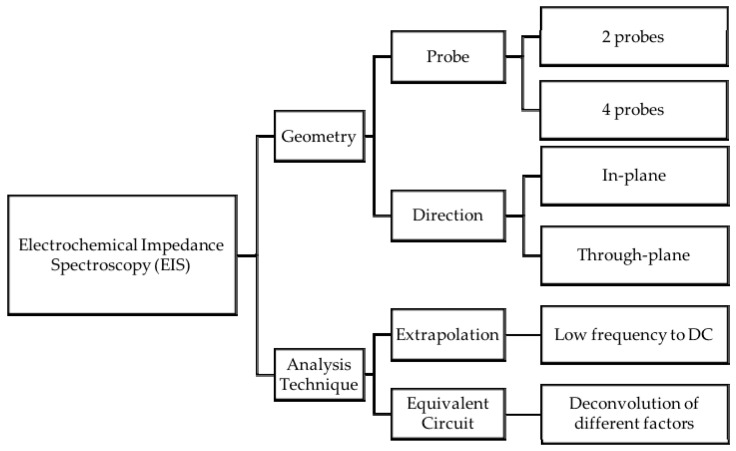
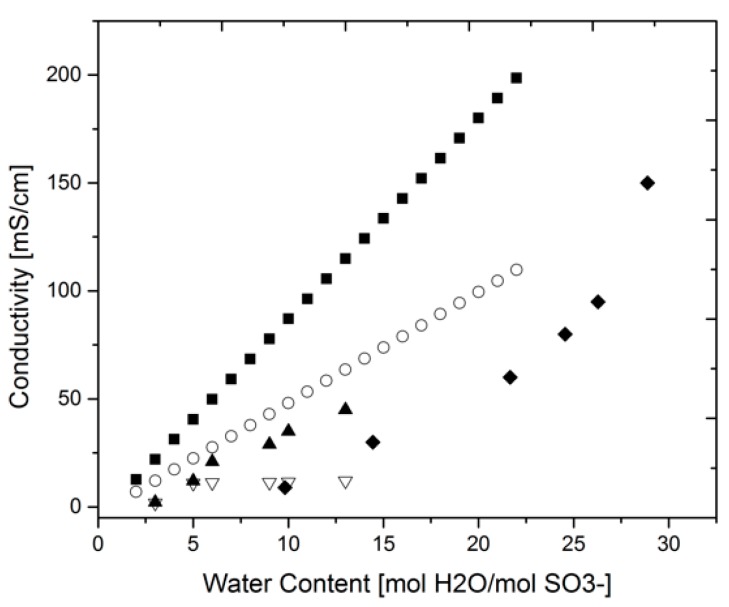
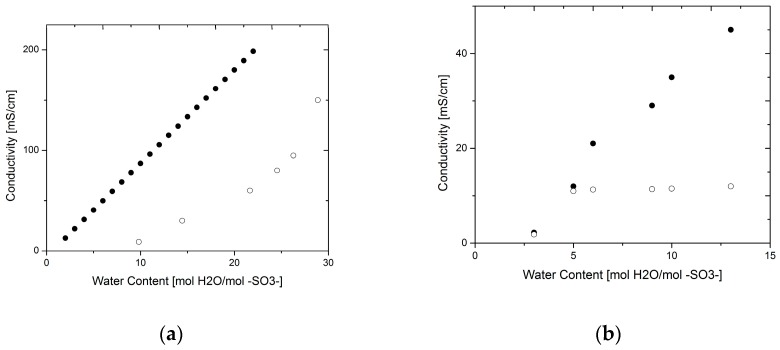
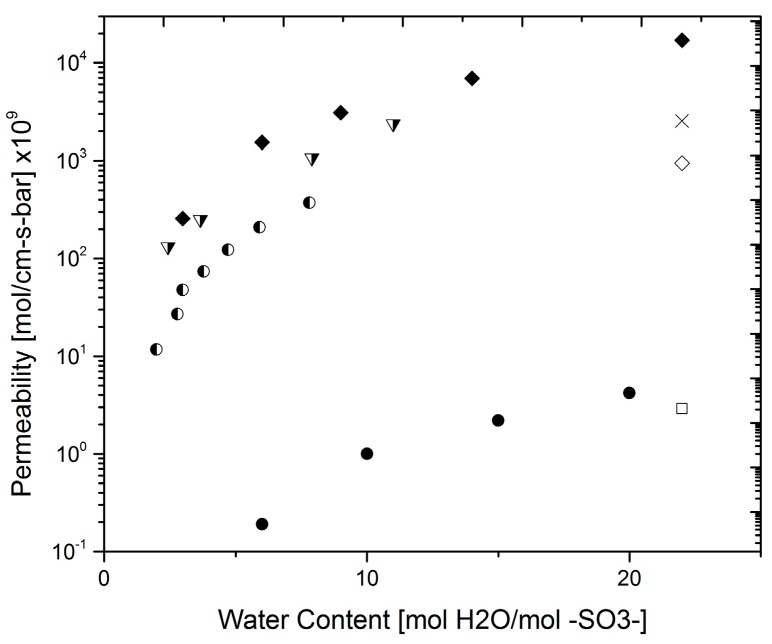
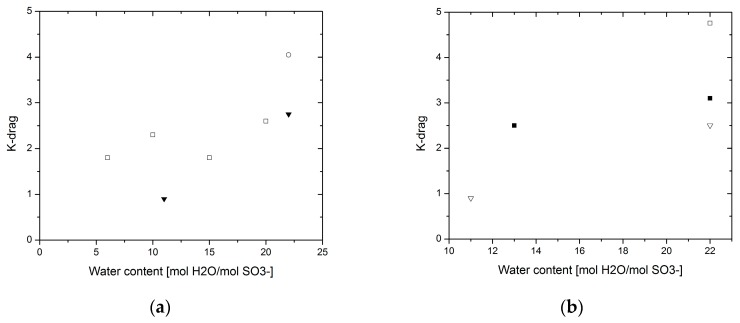
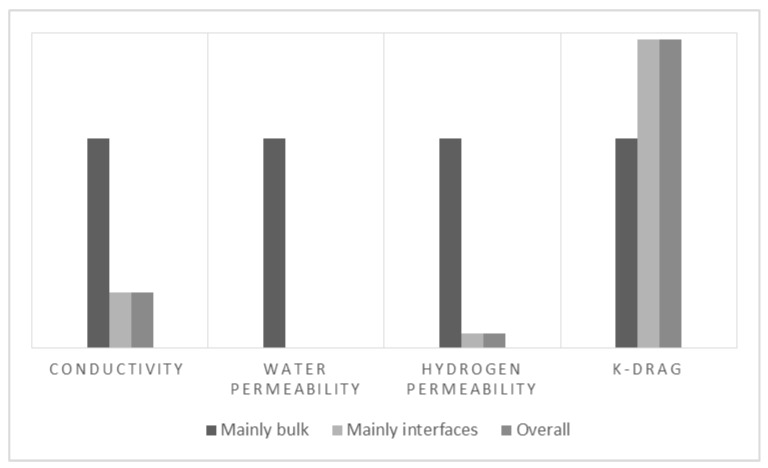
Verification
Claims the paper makes
The claims and statistics of this paper haven’t been checked yet.
Run the check — free, no account needed. It reads the open-access text and checks the sources it cites.
Claims other papers make about this one
Each is checked against this paper’s own text: does it say what the citing paper says it does?
The source backs part of the claim, not all of it — or backs it for a different population, condition or comparison.
In the citing paper
“Rangel-Cárdenas and Koper included H2 permeation of the membrane in a non-equilibrium thermodynamic model, but without any further application of the equations derived thereby [120].”
From Modelling the Proton-Conductive Membrane in Practical Polymer Electrolyte Membrane Fuel Cell (PEMFC) Simulation: A Review (2020) · cites this paper as [120]
Experimental — accuracy not yet measuredThe cited source says what the claim attributes to it.
In the citing paper
“Evidence for significant interfacial contributions to membrane conductivity measurements has also been presented by Rangel-Cárdenas and Koper [120].”
From Modelling the Proton-Conductive Membrane in Practical Polymer Electrolyte Membrane Fuel Cell (PEMFC) Simulation: A Review (2020) · cites this paper as [120]
Self-check
Percentages, sums and reported differences re-computed from the paper’s own numbers.
The self-check needs the paper’s full text.
Citations
Cites
Kreuer, K.-D., Paddison, S. J., Spohr, E., & Schuster, M. (2004) · Chemical Reviews · doi:10.1021/cr020715f · Cited by 2,187
Determination of water diffusion coefficients in perfluorosulfonate ionomeric membranes
Zawodzinski, T. A., Neeman, M., Sillerud, L. O., & Gottesfeld, S. (1991) · The Journal of Physical Chemistry · doi:10.1021/j100168a060 · Cited by 987
Modeling and Experimental Diagnostics in Polymer Electrolyte Fuel Cells
Springer, T. E., Wilson, M. S., & Gottesfeld, S. (1993) · Journal of The Electrochemical Society · doi:10.1149/1.2221120 · Cited by 581
Effect of Interfacial Water Transport Resistance on Coupled Proton and Water Transport Across Nafion
Cheah, M. J., Kevrekidis, I. G., & Benziger, J. (2011) · The Journal of Physical Chemistry B · doi:10.1021/jp204785t · Cited by 68
Research works printed but not linked: 40
- Rivin, 2001, Solubility and transport behavior of water and alcohols in Nafion™, Polymer, 42, 623, 10.1016/S0032-3861(00)00350-5 · DOI
- Kjelstrup, S., and Bedeaux, D. (2008). Non-Equilibrium Thermodynamics of Heterogeneous Systems, World Scientific. · DOI
- Onsager, 1931, Reciprocal relations in irreversible processes, I. Phys. Rev., 37, 405, 10.1103/PhysRev.37.405 · DOI
- Kjelstrup, S., Bedeaux, D., Johannessen, E., and Gross, J. (2010). Non-Equilibrium Thermodynamics for Engineers, World Scientific Publishing Co. Inc. · DOI
- Fuller, 1992, Experimental determination of the transport number of water in Nafion 117 membrane, J. Electrochem. Soc., 139, 1332, 10.1149/1.2069407 · DOI · Paper page
- Cooper, 2009, Progress toward accurate through-plane membrane resistance and conductivity measurement, ECS Trans., 25, 995, 10.1149/1.3210653 · DOI
- Zhao, 2011, Diffusion and interfacial transport of water in Nafion, J. Phys. Chem. B, 115, 2717, 10.1021/jp1112125 · DOI
- Majsztrik, 2007, Water sorption, desorption and transport in Nafion membranes, J. Membr. Sci., 301, 93, 10.1016/j.memsci.2007.06.022 · DOI · Paper page
- Cahan, 1993, AC impedance investigations of proton conduction in Nafion™, J. Electrochem. Soc., 140, L185, 10.1149/1.2221160 · DOI
- Lee, 2005, Importance of proton conductivity measurement in polymer electrolyte membrane for fuel cell application, Ind. Eng. Chem. Res., 44, 7617, 10.1021/ie0501172 · DOI
- Xie, 2006, Discrepancies in the measurement of ionic conductivity of PEMs using two-and four-probe AC impedance spectroscopy, J. Electrochem. Soc., 153, E173, 10.1149/1.2258091 · DOI
- Kondepudi, D., and Prigogine, I. (2014). Modern Thermodynamics: From Heat Engines to Dissipative Structures, John Wiley & Sons. · DOI
- Newman, J., and Thomas-Alyea, K.E. (2012). Electrochemical Systems, John Wiley & Sons.
- Ito, 2011, Properties of Nafion membranes under PEM water electrolysis conditions, Int. J. Hydrogen Energy, 36, 10527, 10.1016/j.ijhydene.2011.05.127 · DOI
- Wu, 2011, Differences in water sorption and proton conductivity between Nafion and SPEEK, J. Polym. Sci. B Polym. Phys., 49, 1437, 10.1002/polb.22326 · DOI
- Kornyshev, A., Kuznetsov, A.M., Spohr, A., and Ulstrup, J. (2003). Kinetics of Proton Transport in Water, ACS Publications. · DOI
- Choe, 2009, Nature of proton dynamics in a polymer electrolyte membrane, nafion: A first-principles molecular dynamics study, Phys. Chem. Chem. Phys., 11, 3892, 10.1039/b819535h · DOI
- Edmondson, 2002, Free volume and percolation in S-SEBS and fluorocarbon proton conducting membranes, Solid State Ion., 152, 355, 10.1016/S0167-2738(02)00336-3 · DOI
- Zawodzinski, 1994, Water-uptake by and transport through Nafion membranes, J. Electrochem. Soc., 140, 1041, 10.1149/1.2056194 · DOI · Paper page
- Alberti, 2001, Polymeric proton conducting membranes for medium temperature fuel cells (110–160 C), J. Membr. Sci., 185, 73, 10.1016/S0376-7388(00)00635-9 · DOI
- Edmondson, 2000, Complex impedance studies of proton-conducting membranes, Solid State Ion., 135, 419, 10.1016/S0167-2738(00)00520-8 · DOI
- Fontanella, 1996, High-pressure electrical conductivity and NMR studies in variable equivalent weight NAFION membranes, Macromolecules, 29, 4944, 10.1021/ma9600926 · DOI
- Kopitzke, 2000, Conductivity and water uptake of aromatic-based proton exchange membrane electrolytes, J. Electrochem. Soc., 147, 1677, 10.1149/1.1393417 · DOI
- Navessin, 2005, Influence of membrane ion exchange capacity on the catalyst layer performance in an operating PEM fuel cell, J. Electrochem. Soc., 152, A796, 10.1149/1.1864432 · DOI
- Springer, 1991, Polymer electrolyte fuel cell model, J. Electrochem. Soc., 138, 2334, 10.1149/1.2085971 · DOI · Paper page
- Sakai, 1986, Gas diffusion in the dried and hydrated Nafions, J. Electrochem. Soc., 133, 88, 10.1149/1.2108551 · DOI
- Sakai, 1985, Gas permeation properties of solid polymer electrolyte (SPE) membranes, J. Electrochem. Soc., 132, 1328, 10.1149/1.2114111 · DOI
- Jiang, 2004, Investigations of fuel cell reactions at the composite microelectrode| solid polymer electrolyte interface. I. Hydrogen oxidation at the nanostructured Pt|Nafion® membrane interface, J. Electroanal. Chem., 567, 123, 10.1016/j.jelechem.2003.12.018 · DOI
- Schalenbach, 2015, Gas Permeation through Nafion. Part 1: Measurements, J. Phys. Chem. C, 119, 25145, 10.1021/acs.jpcc.5b04155 · DOI
- Oszcipok, 2002, The compression of hydrogen in an electrochemical cell based on a PE fuel cell design, J. Power Sources, 105, 208, 10.1016/S0378-7753(01)00941-7 · DOI
- Felice, 2010, Nafion−montmorillonite nanocomposite membrane for the effective reduction of fuel crossover, Ind. Eng. Chem. Res., 49, 1514, 10.1021/ie901600a · DOI
- Broka, 1997, Oxygen and hydrogen permeation properties and water uptake of Nafion® 117 membrane and recast film for PEM fuel cell, J. Appl. Electrochem., 27, 117, 10.1023/A:1018469520562 · DOI
- Ye, 2007, Measurement of Water Transport Properties Through Membrane-Electrode Assemblies I. Membranes, J. Electrochem. Soc., 154, B676, 10.1149/1.2737379 · DOI · Paper page
- Kreuer, 2001, On the development of proton conducting polymer membranes for hydrogen and methanol fuel cells, J. Membr. Sci., 185, 29, 10.1016/S0376-7388(00)00632-3 · DOI · Paper page
- Marangio, 2009, Direct High Pressure Hydrogen Production: A Laboratory Scale PEM Electrolyser Prototype, ECS Trans., 17, 555, 10.1149/1.3142786 · DOI
- Onda, 2002, Performance analysis of polymer-electrolyte water electrolysis cell at a small-unit test cell and performance prediction of large stacked cell, J. Electrochem. Soc., 149, A1069, 10.1149/1.1492287 · DOI
- Ise, 1999, Electroosmotic drag in polymer electrolyte membranes: An electrophoretic NMR study, Solid State Ion., 125, 213, 10.1016/S0167-2738(99)00178-2 · DOI · Paper page
- Siroma, 2002, Proton conductivity along interface in thin cast film of Nafion®, Electrochem. Commun., 4, 143, 10.1016/S1388-2481(01)00290-9 · DOI
- Eastman, 2012, Effect of confinement on structure, water solubility, and water transport in Nafion thin films, Macromolecules, 45, 7920, 10.1021/ma301289v · DOI
- Zhang, 2014, Thickness-dependent structural and transport behaviors in the platinum–Nafion interface: A molecular dynamics investigation, RSC Adv., 4, 44214, 10.1039/C4RA05523C · DOI
Cited by
Sorted by citations
Dickinson, E. J. F., & Smith, G. (2020) · Membranes · doi:10.3390/membranes10110310 · Cited by 109
Metadata
- Authors
- Rangel-Cárdenas, A., & Koper, G.
- Affiliations
- Delft University of Technology (NL)
- Corresponding author
- Koper, Ger
- Venue
- Materials
- Publisher
- MDPI AG
- Published
- 2017-05-25
- Volume
- 10
- Issue
- 6
- Pages
- 576
- ISSN
- 1996-1944 (ISSN-L)
- PMC
- PMC5552083
- OpenAlex
- W2618099852
- Cited by
- 33
- References
- 4
- Citations by year
- 2026: 1 · 2025: 3 · 2024: 2 · 2023: 5 · 2022: 3 · 2021: 5 · 2020: 7 · 2019: 1 · 2018: 5 · 2017: 1
- FWCI
- 1.59
- Type
- journal article
- Language
- en
- Open access
- gold
- doi.org
- Licence
- Locations
- Materials (publishedVersion, cc-by)
- PubMed Central (publishedVersion, cc-by)
- PubMed (publishedVersion)
- DOAJ (DOAJ: Directory of Open Access Journals) (submittedVersion, cc-by-sa)
- Topics
- Physical Sciences › Engineering › Electrical and Electronic Engineering › Fuel Cells and Related Materials
- Physical Sciences › Materials Science › Materials Chemistry › Advancements in Solid Oxide Fuel Cells
- Physical Sciences › Chemical Engineering › Filtration and Separation › Membrane-based Ion Separation Techniques
- Keywords
- proton exchange membranes, fuel cell membranes, membrane transport properties, interface effects, surface layer, thermodynamic consistency, nonequilibrium transport, membrane parameters
About these checks
Registry, retraction, Cites and statistics results are computed, not judged, with one exception: a printed reference that no index lists is read once by a model before it counts as a citation error. Claims are extracted by a model and kept only when their quote appears verbatim in the text; each cited source is then checked, with a model’s help, for whether it says what the claim relies on. Those verdicts can be wrong — read the claim’s quote and the cited source before relying on one.
Statistics and arithmetic are recomputed, not judged.
Confidence bands are shown only for fields calibrated on our annotated test set. None is calibrated yet, so no band is shown.
What counts as a claim ›How we measure confidence ›How we check this ›
Are you an author, or do you see a problem with this page? Request a review
