

The DOI matches its Crossref record; 37 of the 37 references it cites were found in a registry or an index.
Laser-Ablated ZnO Nanoparticles and Their Photocatalytic Activity toward Organic Pollutants
Open accessAbstract
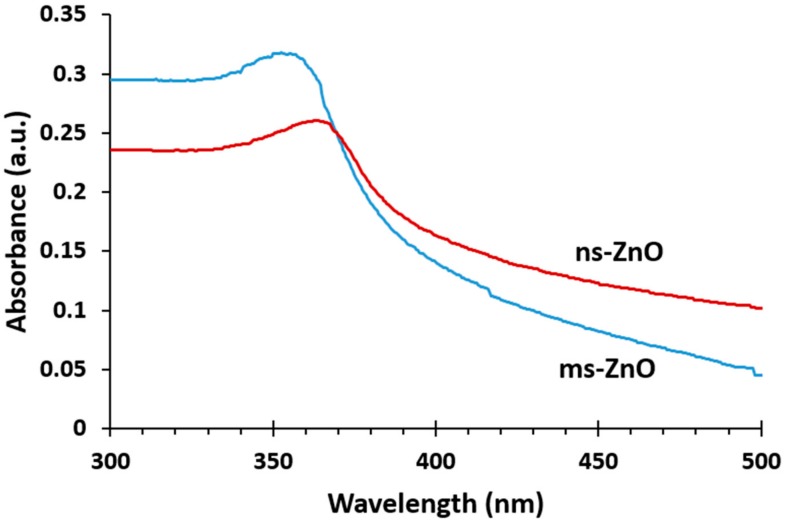
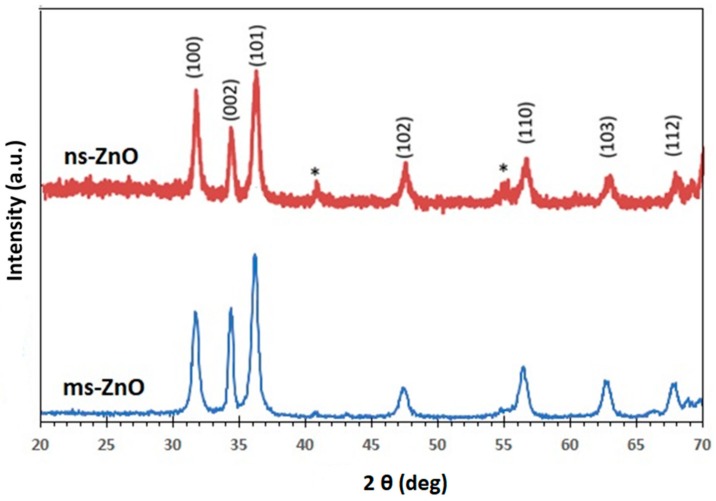
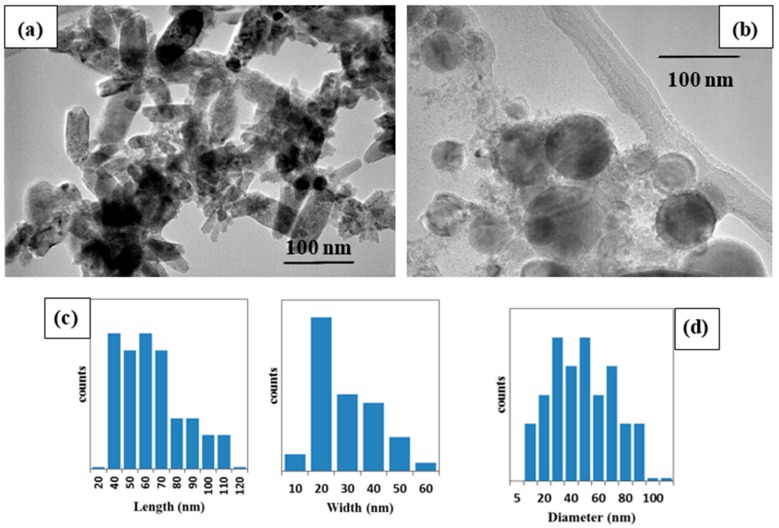
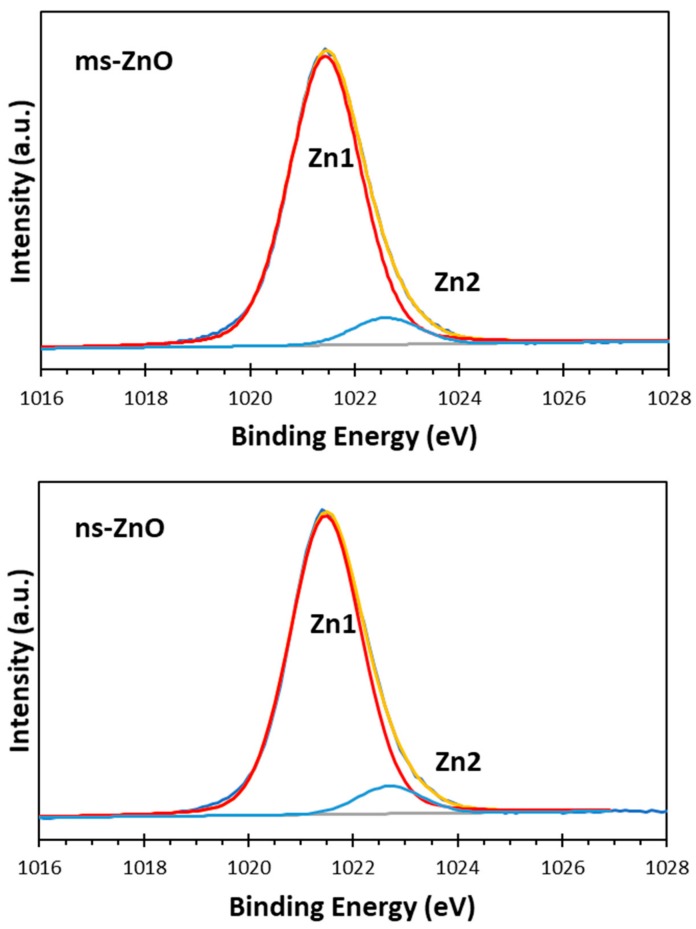
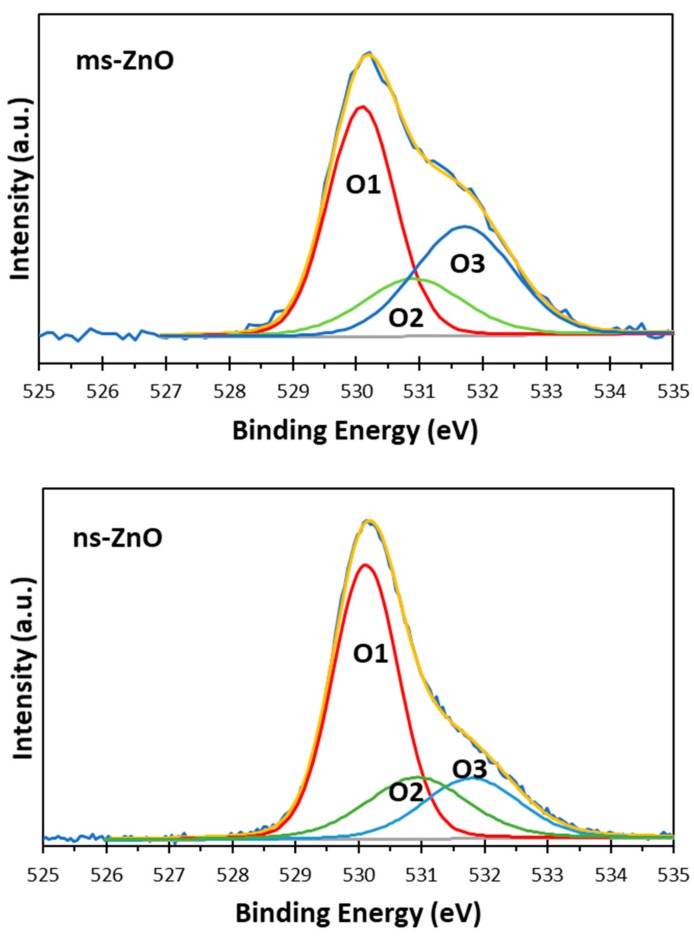
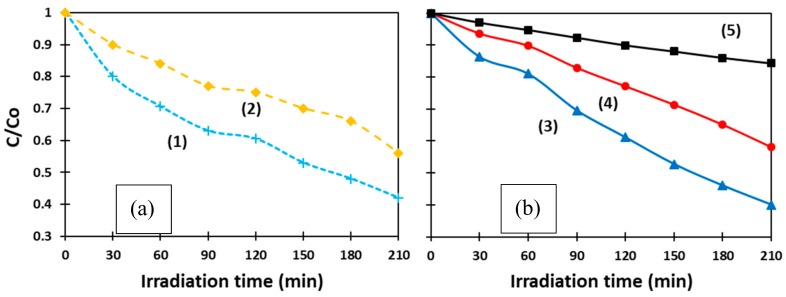
This work aimed to prepare nanostructures of ZnO with various lasers, testing them as photocatalysts, and comparing their morphology and activity in the degradation of organic pollutants in aqueous media. ZnO nanospheres (ns-ZnO) and ZnO nanorods (ms-ZnO) were prepared via the laser ablation of a Zn metal plate in water using nanosecond- and millisecond-pulsed lasers, respectively. The obtained materials were characterized using a set of optical, structural, and surface-science techniques, such as UV-vis spectroscopy, X-ray diffraction (XRD), transmission electron microscopy (TEM), and X-ray photoelectron spectroscopy (XPS). Under visible-light irradiation, both nanostructures were found to be catalytically active toward the oxidation of methylene blue, which was used as a model compound. The ZnO nanorods fabricated with the millisecond laser showed better photocatalytic performance than their spherically shaped counterparts obtained by means of the nanosecond laser, which could be assigned to a larger number of defects on the ms-ZnO surface.
Overview
The claims and statistics of this paper haven’t been checked yet.
Run the check — free, no account needed. It reads the open-access text and checks the sources it cites.
Integrity signals
Registry
Cites
Statistics
Figures
Verification
Claims the paper makes
The claims and statistics of this paper haven’t been checked yet.
Run the check — free, no account needed. It reads the open-access text and checks the sources it cites.
Claims other papers make about this one
Each is checked against this paper’s own text: does it say what the citing paper says it does?
The source backs part of the claim, not all of it — or backs it for a different population, condition or comparison.
In the citing paper
“The nanorods formed with millisecond laser exhibited higher photocatalytic activity than the spherical nanostructures obtained by nanosecond laser due to a larger number of defects on ZnO nanorods.”
From Fundamentals and comprehensive insights on pulsed laser synthesis of advanced materials for diverse photo- and electrocatalytic applications (2022) · cites this paper as [183]
Experimental — accuracy not yet measured
Self-check
Percentages, sums and reported differences re-computed from the paper’s own numbers.
The self-check needs the paper’s full text.
Citations
Cites
Recent developments of zinc oxide based photocatalyst in water treatment technology: A review
Lee, K. M., Lai, C. W., Ngai, K. S., & Juan, J. C. (2016) · Water Research · doi:10.1016/j.watres.2015.09.045 · Cited by 2,341
Effect of aspect ratio and surface defects on the photocatalytic activity of ZnO nanorods
Zhang, X., Qin, J., Xue, Y., Yu, P., Zhang, B., Wang, L., & Liu, R. (2014) · Scientific Reports · doi:10.1038/srep04596 · Cited by 1,028
Nanomaterials via Laser Ablation/Irradiation in Liquid: A Review
Zeng, H., Du, X., Singh, S. C., Kulinich, S. A., Yang, S., He, J., & Cai, W. (2012) · Advanced Functional Materials · doi:10.1002/adfm.201102295 · Cited by 966
Self-citationZheng, Y., Chen, C., Zhan, Y., Lin, X., Zheng, Q., Wei, K., Zhu, J., & Zhu, Y. (2007) · Inorganic Chemistry · doi:10.1021/ic062394m · Cited by 557
Controlling Morphologies and Tuning the Related Properties of Nano/Microstructured ZnO Crystallites
Han, X., He, H.-Z., Kuang, Q., Zhou, X., Zhang, X., Xu, T., Xie, Z., & Zheng, L. (2008) · The Journal of Physical Chemistry C · doi:10.1021/jp808233e · Cited by 399
Xiao, J., Liu, P., Wang, C. X., & Yang, G. W. (2017) · Progress in Materials Science · doi:10.1016/j.pmatsci.2017.02.004 · Cited by 352
Effect of Native Defects on Photocatalytic Properties of ZnO
Guo, M. Y., Ng, A. M. C., Liu, F., Djurišić, A. B., Chan, W. K., Su, H., & Wong, K. S. (2011) · The Journal of Physical Chemistry C · doi:10.1021/jp200926u · Cited by 271
Synthesis and optical properties of flower-like ZnO nanorods by thermal evaporation method
Zheng, J., Jiang, Q., & Lian, J. (2011) · Applied Surface Science · doi:10.1016/j.apsusc.2011.01.025 · Cited by 241
Preparation of zinc oxide nanorods using pulsed laser ablation in water media at high temperature
Ishikawa, Y., Shimizu, Y., Sasaki, T., & Koshizaki, N. (2006) · Journal of Colloid and Interface Science · doi:10.1016/j.jcis.2006.04.005 · Cited by 164
Morphology Control of Nanostructures via Surface Reaction of Metal Nanodroplets
Niu, K., Yang, J. Y., Kulinich, S. A., Sun, J., Li, H., & Du, X. (2010) · Journal of the American Chemical Society · doi:10.1021/ja102967a · Cited by 159
Self-citation
Cited by
Sorted by citations
Ijaz, I., Gilani, E., Nazir, A., & Bukhari, A. (2020) · Green Chemistry Letters and Reviews · doi:10.1080/17518253.2020.1802517 · Cited by 992
Theerthagiri, J., Karuppasamy, K., Lee, S. J., Shwetharani, R., Kim, H.-S., Pasha, S. K. K., Ashokkumar, M., & Choi, M. Y. (2022) · Light: Science & Applications · doi:10.1038/s41377-022-00904-7 · Cited by 461
Exploring the Journey of Zinc Oxide Nanoparticles (ZnO-NPs) toward Biomedical Applications
Islam, F., Shohag, S., Uddin, M. J., Islam, M. R., Nafady, M. H., Akter, A., Mitra, S., Roy, A., Emran, T. B., & Cavalu, S. D. (2022) · Materials · doi:10.3390/ma15062160 · Cited by 428
Weldegebrieal, G. K. (2020) · Inorganic Chemistry Communications · doi:10.1016/j.inoche.2020.108140 · Cited by 385
Mandal, A. K., Katuwal, S., Tettey, F., Gupta, A., Bhattarai, S., Jaisi, S., Bhandari, D. P., Shah, A. K., Bhattarai, N., & Parajuli, N. (2022) · Nanomaterials · doi:10.3390/nano12173066 · Cited by 338
Metadata
- Authors
- Mintcheva, N., Aljulaih, A. A., Wunderlich, W., Kulinich, S. A., & Iwamori, S.
- Affiliations
- Tokai University (JP)
- Corresponding author
- Mintcheva, Neli
- Kulinich, Sergei A.
- Venue
- Materials
- Publisher
- MDPI AG
- Published
- 2018-07-03
- Volume
- 11
- Issue
- 7
- Pages
- 1127
- ISSN
- 1996-1944 (ISSN-L)
- PMC
- PMC6073525
- OpenAlex
- W2810077735
- Cited by
- 115
- References
- 37
- Citations by year
- 2026: 12 · 2025: 19 · 2024: 15 · 2023: 15 · 2022: 14 · 2021: 13 · 2020: 16 · 2019: 8 · 2018: 3
- FWCI
- 4.00
- Type
- journal article
- Language
- en
- Open access
- gold
- dx.doi.org
- Licence
- Locations
- Materials (publishedVersion, cc-by)
- Europe PMC (PubMed Central) (publishedVersion, cc-by)
- PubMed Central (publishedVersion, cc-by)
- PubMed (publishedVersion)
- DOAJ (DOAJ: Directory of Open Access Journals) (submittedVersion, cc-by-sa)
- Funders
- Hanoi University of Mining and Geology
- Japan Society for the Promotion of Science (16K04904)
- Topics
- Physical Sciences › Materials Science › Materials Chemistry › Laser-Ablation Synthesis of Nanoparticles
- Physical Sciences › Energy › Renewable Energy, Sustainability and the Environment › Advanced Photocatalysis Techniques
- Physical Sciences › Materials Science › Materials Chemistry › ZnO doping and properties
- Keywords
- zinc oxide nanoparticles, laser ablation, ZnO nanorods, ZnO nanospheres, photocatalysis, visible light photocatalysis, methylene blue degradation, organic pollutant degradation, nanosecond laser, surface defects, morphology (materials science)
About these checks
Registry, retraction, Cites and statistics results are computed, not judged, with one exception: a printed reference that no index lists is read once by a model before it counts as a citation error. Claims are extracted by a model and kept only when their quote appears verbatim in the text; each cited source is then checked, with a model’s help, for whether it says what the claim relies on. Those verdicts can be wrong — read the claim’s quote and the cited source before relying on one.
Statistics and arithmetic are recomputed, not judged.
Confidence bands are shown only for fields calibrated on our annotated test set. None is calibrated yet, so no band is shown.
What counts as a claim ›How we measure confidence ›How we check this ›
Are you an author, or do you see a problem with this page? Request a review
