

Deterioration of Concrete Under the Combined Action of Sulfate Attack and Freeze–Thaw Cycles: A Review
Open accessThe DOI matches its Crossref record; 41 of the 41 references it cites were found in a registry or an index; none of the 82 sources its claims cite is checked for support yet.
Abstract
The synergistic interaction between freeze–thaw cycles and sulfate attack induces a more severe and complex deterioration mechanism in concrete than either factor in isolation. This review elucidates this process by first examining the individual damage mechanisms and then integrating current research to analyze the coupled effects, revealing a complex process involving the superposition and competition of physical crystallization, chemical reactions, and fatigue stresses. The deterioration is delineated into four distinct stages: (1) Pre-Inflection Acceleration, (2) Post-Inflection Acceleration, (3) Deceleration, and (4) Rapid Failure. Experimental methodologies, research materials, and study protocols are critically examined, with particular emphasis on the influence of sulfate solution type and concentration, while highlighting significant discrepancies between laboratory conditions and field exposure. Based on this, the existing durability damage models and multi-physics numerical simulation methods are summarized, emphasizing the importance of cross-scale studies. Finally, prioritized research directions are proposed, emphasizing the need for refined experimental protocols and integrated physico-chemical models to advance predictive durability assessment. This work provides a foundational reference for guiding future research in concrete durability.
Overview
CoChat Summary
TL;DR
This review synthesizes mechanisms, damage models, and numerical simulations for concrete under combined sulfate attack and freeze–thaw cycles, proposing a four-stage deterioration framework. It finds stage-specific synergistic/antagonistic effects and identifies lack of consensus, field validation, and multiscale models as key gaps.
Key findings
- Coupled sulfate attack–freeze–thaw cycle (SA-FTC) deterioration is more complex than either exposure alone; the review proposes four stages: Pre-Inflection Acceleration, Post-Inflection Acceleration, Deceleration, and Rapid Failure.
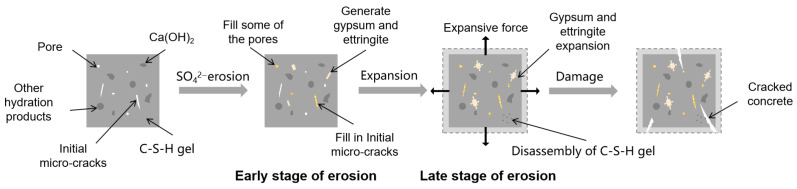
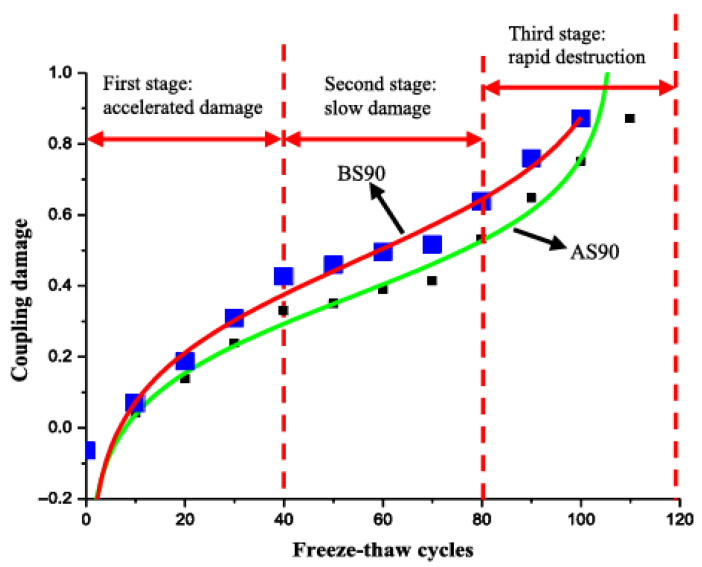
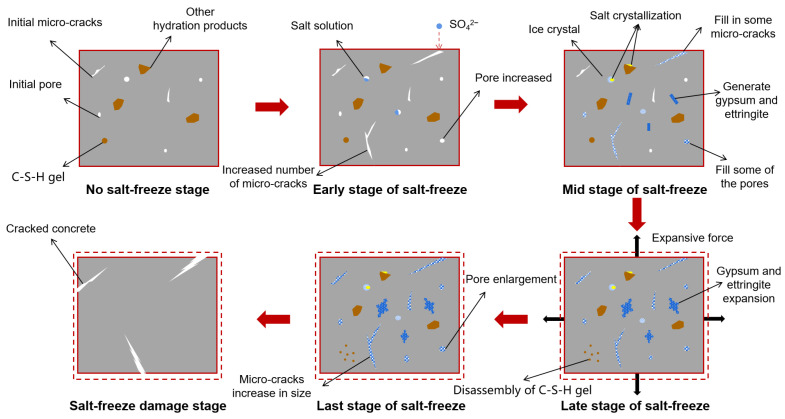
- Early sulfate exposure can mitigate FTC damage via pore filling and freezing-point depression, while later expansive ettringite/gypsum and crystallization pressures accelerate failure. For example, after 400 freeze–thaw cycles, compressive strength loss was 39.6% in 5% Na₂SO₄ solution versus 37.7% in water, and deterioration in 1% Na₂SO₄ exceeded both 5% Na₂SO₄ and pure water.
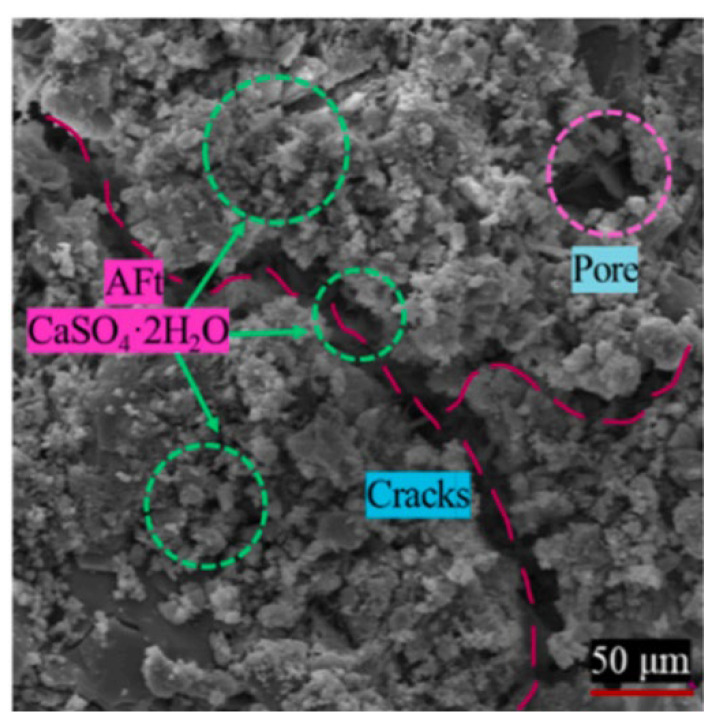
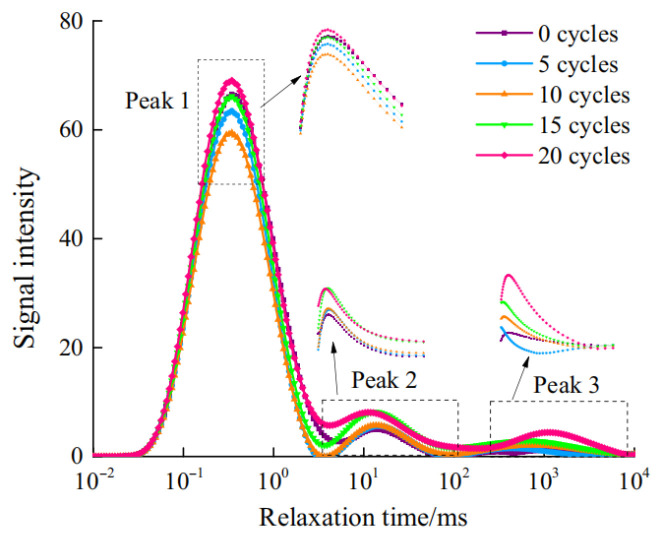
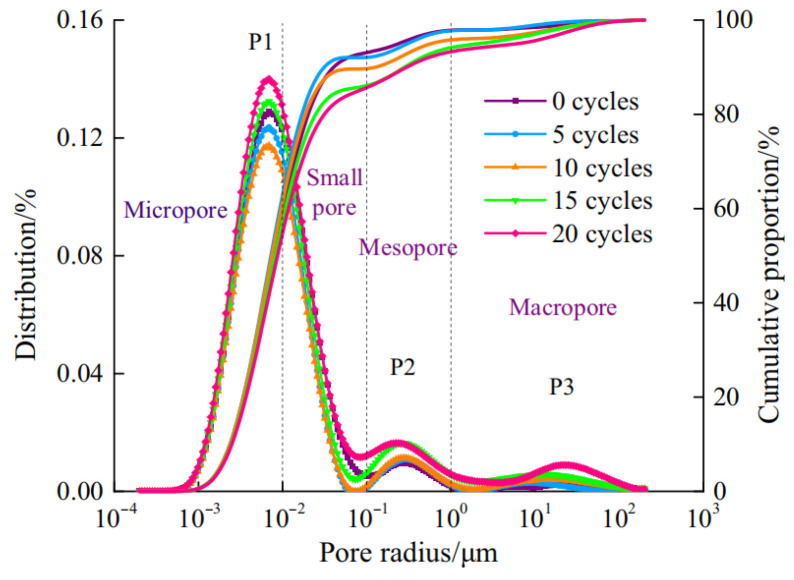
- Pore structure evolution under cyclic exposure showed: after 5 cycles, pores filled with ettringite and gypsum, increasing density; by 10 cycles, mesopore (2–50 nm) and macropore (>50 nm) proliferation; at 15 cycles, reduced fractal dimension; after 20 cycles, expansive pressures enlarged pores and created preferential pathways for salt ingress.
- Service-life predictions reported reductions under SA-FTC versus FTC alone: 75.3→30.7 years (w/b = 0.26), 24.6→22 years (w/b = 0.32), and 15.3→12.7 years (w/b = 0.38); Zhu et al. identified 100 FTCs as a critical threshold for sulfate diffusion in manufactured sand concrete.
Methods
- Review/synthesis of experimental studies, durability damage models, and numerical simulation methods for concrete under combined SA and FTC, with critical examination of experimental methodologies, materials, protocols, and sulfate solution type/concentration.
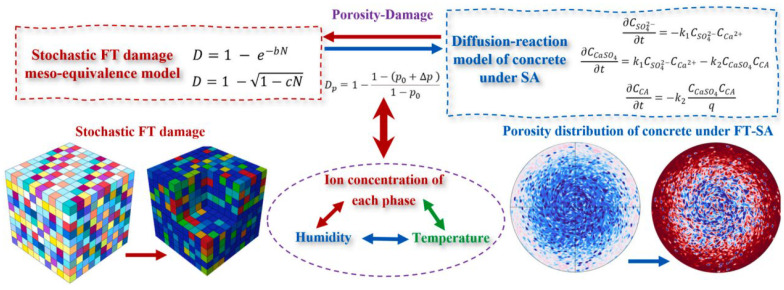
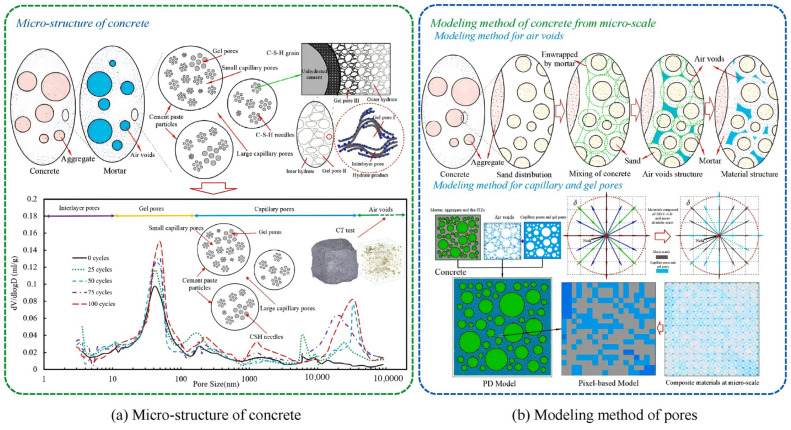
- Synthesizes studies using rapid freezing tests per GB/T 50082 or ASTM C666, specialized environmental chambers, and regionally customized regimes; reviews macro-test indicator models, damage accumulation/probabilistic models (e.g., Weibull, Wiener, GM(1,1)), and numerical approaches (FEM, DEM, peridynamics, multi-field coupling).
- Proposes a refined four-phase deterioration framework based on prior triphasic models and microstructural pore–stress–permeability insights.
Limitations
- Stated: current findings remain largely limited to laboratory investigations of specific mixtures under controlled freeze–thaw protocols; significant gaps persist in systematic analysis of thermal regime parameters (e.g., cooling rates, minimum freezing temperatures, dwell times) and field validation of laboratory-derived models.
- Stated: no consensus exists on a unified theoretical framework for cross-scale evolution from microscale pore deterioration to aggregate/cement paste/ITZ failure and macroscale degradation; no multiscale numerical framework spanning micro-to-macro levels has been established.
- Stated: experimental studies remain confined to material-level properties under simplified laboratory conditions that diverge from real-world exposure involving air freezing–water thawing, wet–dry cycles, and varying concentration–temperature histories, limiting extrapolation to engineering practice. Evident from text: as a review, it synthesizes prior studies rather than generating new primary experimental data.
Model-written summary. Check it against the paper before relying on it.
Integrity signals
Registry
Cites
Statistics
Figures
Verification
Claims the paper makes
0 Valid · 0 Not valid · 63 Not checked · 33 Own results and interpretations
In the paper
“Freeze–thaw deterioration in concrete originates from cyclic fatigue damage caused by repeated frost-induced expansive pressures and osmotic pressures generated during phase changes in free pore water under temperature fluctuations.”
§ Deterioration of Concrete Under the Combined Action of Sulfate Attack and Freeze–Thaw Cycles: A Review > 2. Deterioration Mechanisms of Concrete Under Combined Action of Sulfate Attack and Freeze–Thaw Cycles > 2.1. Deterioration Mechanism of Concrete Under Freeze–Thaw Cycles
What the sources say
- Not checked yetcites [1] Jin W.L. Zhao Y.X. Durability of Concrete Structures Science Press Beijing, China 2002
plainstates a cause- Asserted: passes — The authors put it forward as true.
- Checkable: passes — It can be checked against evidence.
- Load-bearing: unclear — It is unclear whether the paper’s conclusions depend on it.
- Based: passes — The paper gives a reason why it holds.
None of the sources cited for this claim have been checked yet.
In the paper
“Notably, deterioration severity in 1% Na2SO4 exceeded that observed in both 5% Na2SO4 and pure water environments.”
§ Deterioration of Concrete Under the Combined Action of Sulfate Attack and Freeze–Thaw Cycles: A Review > 1. Introduction
What the sources say
- Not checked yetcites [18] Jiang L. Niu D.T. Yuan L.D. Fei Q.N. Durability of concrete under sulfate attack exposed to freeze-thaw cycles Cold Reg. Sci. Technol. 2015 112 112 117 10.1016/j.coldregions.2014.12.006 source
- Not checked yetcites [19] Jiang L. Niu D.T. Deterioration law of concrete under combined sulfate and freeze-thaw action J. Cent. South Univ. Nat. Sci. Ed. 2016 47 3208 3216
plainstates a cause- Asserted: passes — The authors put it forward as true.
- Checkable: passes — It can be checked against evidence.
- Load-bearing: unclear — It is unclear whether the paper’s conclusions depend on it.
- Based: passes — The paper gives a reason why it holds.
In the paper
“By 10 cycles (considered the intermediate phase), mesopore (2–50 nm) and macropore (>50 nm) proliferation emerged due to frost-induced crack propagation and widening.”
§ Deterioration of Concrete Under the Combined Action of Sulfate Attack and Freeze–Thaw Cycles: A Review > 2. Deterioration Mechanisms of Concrete Under Combined Action of Sulfate Attack and Freeze–Thaw Cycles > 2.3. Deterioration Mechanism of Concrete Under Coupled Sulfate Attack and Freeze–Thaw Cycles
What the sources say
- Not checked yetcites [48] Xue W.P. Peng X.B. Alam M.S. Wang Z.J. Wu H. Lin J. Pore structure, mechanical property and permeability of concrete under sulfate attack exposed to freeze-thaw cycles Arch. Civ. Mech. Eng. 2024 24 130 10.1007/s43452-024-00944-3 source
plainstates a cause- Asserted: passes — The authors put it forward as true.
- Checkable: passes — It can be checked against evidence.
- Load-bearing: unclear — It is unclear whether the paper’s conclusions depend on it.
- Based: passes — The paper gives a reason why it holds.
A conclusion the paper draws from its own results — it cites no other source for it, so there is none to check. The quote shows it is in the paper.
In the paper
“while highlighting significant discrepancies between laboratory conditions and field exposure”
- Also stated in: § 2.3. Deterioration Mechanism of Concrete Under Coupled Sulfate Attack and Freeze–Thaw Cycles · plain
“Under actual field exposure, damage mechanisms exhibit significantly heightened complexity due to dynamic interdependencies among environmental variables”
§ Deterioration of Concrete Under the Combined Action of Sulfate Attack and Freeze–Thaw Cycles: A Review > Abstract
boostedstates an association- Asserted: passes — The authors put it forward as true.
- Checkable: passes — It can be checked against evidence.
- Load-bearing: passes — The paper’s conclusions depend on it.
- Based: passes — The paper gives a reason why it holds.
- Also stated in: § 2.3. Deterioration Mechanism of Concrete Under Coupled Sulfate Attack and Freeze–Thaw Cycles · plain
In the paper
“Fundamentally, sulfate-induced damage stems from synergistic interactions between crystallization pressures (physical) and expansive reaction products (chemical).”
§ Deterioration of Concrete Under the Combined Action of Sulfate Attack and Freeze–Thaw Cycles: A Review > 2. Deterioration Mechanisms of Concrete Under Combined Action of Sulfate Attack and Freeze–Thaw Cycles > 2.2. Deterioration Mechanism of Concrete Under Sulfate Attack
What the sources say
- Not checked yetcites [38] Chen F. Study on Sulfate Attack Mechanism of Cement-Based Materials in Harsh Environments Ph.D. Thesis Southeast University Nanjing, China 2025
plainstates a cause- Asserted: passes — The authors put it forward as true.
- Checkable: passes — It can be checked against evidence.
- Load-bearing: passes — The paper’s conclusions depend on it.
- Based: passes — The paper gives a reason why it holds.
49 more claims
Create a free account to see all 96 claims and to verify the 82 references still open.
- It may state two separate claims as one. 32
- Probably not a substantial claim. 10
- The quote only partly states this claim. 3
Claims other papers make about this one
Each is checked against this paper’s own text: does it say what the citing paper says it does?
In the citing paper
“Previous studies have shown that sulfate attack, often coupled with freeze–thaw or wet–dry cycles, induces complex deterioration in concrete, involving ion transport, moisture movement, and microstructural changes [38,39,40].”
From Steel Slag-Enhanced Cement-Stabilized Recycled Aggregate Bases: Mechanical Performance and PINN-Based Sulfate Diffusion Prediction (2026) · cites this paper as [39]
Self-check
Percentages, sums and reported differences re-computed from the paper’s own numbers.
Each contradiction between two passages listed here was confirmed by an independent check.
Rated minor: it would not touch a result — a value no result rests on, a p-value that stays on the same side of the significance level, or a conflict that is clerical, resolved elsewhere in the paper, or outside its own findings.
In the paper
§ Deterioration of Concrete Under the Combined Action of Sulfate Attack and Freeze–Thaw Cycles: A Review > 4. Numerical Simulation of Concrete Damage Under Combined Sulfate Attack and Freeze–Thaw Cycles
“Gouder et al.’s [85] mixture theory-based sulfate simulation”
§ Deterioration of Concrete Under the Combined Action of Sulfate Attack and Freeze–Thaw Cycles: A Review > References
“85. Xu J. Mo R. Wang P.G. Zhou J.G. Coupled transport of sulfate and chloride ions with adsorption effect: A numerical analysis Front. Mater. 2020 7 536517 10.3389/fmats.2020.536517”
Rated minor: it would not touch a result — a value no result rests on, a p-value that stays on the same side of the significance level, or a conflict that is clerical, resolved elsewhere in the paper, or outside its own findings.
In the paper
§ Deterioration of Concrete Under the Combined Action of Sulfate Attack and Freeze–Thaw Cycles: A Review > 1. Introduction
“concrete in 5% Na2SO4 solution exhibited lower compressive strength loss and reduced relative dynamic modulus of elasticity (RDEM) loss compared to water-immersed specimens.”
§ Deterioration of Concrete Under the Combined Action of Sulfate Attack and Freeze–Thaw Cycles: A Review > 1. Introduction
“For instance, after 400 freeze–thaw cycles, the compressive strength loss of concrete in 5% Na2SO4 solution was 39.6%, compared to 37.7% in water.”
Citations
Cites
Attack on plain and blended cements exposed to aggressive sulfate environments
Baghabra Al-Amoudi, O. S. (2002) · Cement and Concrete Composites · doi:10.1016/s0958-9465(01)00082-8 · Cited by 376 · cited 2×
“Al-Amoudi [33,34] The multifaceted nature of sulfate attack mechanisms [36] results in coexisting deterioration pathways and reaction products across concrete depths [37].”
Growth and dissolution of crystals under linear pressure
Correns, C. W. (1949) · Discussions of the Faraday Society · doi:10.1039/df9490500267 · Cited by 323
Micro-Ice-Lens Formation in Porous Solid
Setzer, M. J. (2001) · Journal of Colloid and Interface Science · doi:10.1006/jcis.2001.7828 · Cited by 264 · cited 2×
“Meanwhile, the Micro-Ice Lens Theory [27] proposes that freeze–thaw cycling accentuates water absorption from the environment, progressively elevating saturation and exacerbating damage with cumulative cycles.”
Mechanism of concrete deterioration due to salt crystallization
Thaulow, N., & Sahu, S. (2004) · Materials Characterization · doi:10.1016/j.matchar.2004.08.013 · Cited by 203 · cited 1×
“Following SO 4) [30,31], thereby inducing internal stresses and microcracking [32].”
Numerical assessment of external sulfate attack in concrete structures. A review
Ikumi, T., & Segura, I. (2019) · Cement and Concrete Research · doi:10.1016/j.cemconres.2019.04.010 · Cited by 175 · cited 1×
“Regarding SA, the degradation mechanism comprises four interconnected modules: transport processes, chemical reactions, expansion forces, and mechanical responses [83].”
Durability of concrete under sulfate attack exposed to freeze–thaw cycles
Jiang, L., Niu, D., Yuan, L., & Fei, Q. (2015) · Cold Regions Science and Technology · doi:10.1016/j.coldregions.2014.12.006 · Cited by 171 · cited 2×
“Jiang et al. [18,19] reported that in the early stages of the experiment, concrete in 5% Na 2 SO 4 solution exhibited lower compressive strength loss and reduced relative dynamic modulus of elasticity (RDEM) loss compared to water-immersed specimens.”
Xiao, Q. H., Cao, Z. Y., Guan, X., Li, Q., & Liu, X. L. (2019) · Construction and Building Materials · doi:10.1016/j.conbuildmat.2019.06.060 · Cited by 143 · cited 2×
“Xiao et al. [46,47] confirmed analogous phase-progressive damage in recycled aggregate concrete under identical exposure conditions, validating this failure progression framework.”
Modeling the deterioration of hydrated cement systems exposed to frost action
Zuber, B., & Marchand, J. (2000) · Cement and Concrete Research · doi:10.1016/s0008-8846(00)00405-1 · Cited by 136 · cited 1×
“Research on deterioration mechanisms of concrete under freeze–thaw cycles (FTCs) [10–12] and sulfate attack (SA) [13], along with associated predictive models [14] and numerical simulations [15–17], has achieved considerable maturity.”
Liu, L., Ye, G., Schlangen, E., Chen, H., Qian, Z., Sun, W., & van Breugel, K. (2011) · Cement and Concrete Composites · doi:10.1016/j.cemconcomp.2011.03.001 · Cited by 127 · cited 1×
“The first utilizes microscale cement paste models based on hydro-thermo-mechanical (HTM) tri-field coupling to analyze ice crystallization pressure [81].”
Al‐Amoudi, O. S. B. (1998) · Building and Environment · doi:10.1016/s0360-1323(97)00022-x · Cited by 111
Xiao, Q. H., Li, Q., Cao, Z. Y., & Tian, W. Y. (2019) · Construction and Building Materials · doi:10.1016/j.conbuildmat.2018.12.066 · Cited by 110 · cited 2×
“Xiao et al. [46,47] confirmed analogous phase-progressive damage in recycled aggregate concrete under identical exposure conditions, validating this failure progression framework.”
Hime, W. G., & Mather, B. (1999) · Cement and Concrete Research · doi:10.1016/s0008-8846(99)00068-x · Cited by 102
Damage constitutive model of concrete under repeated load after seawater freeze-thaw cycles
Qiu, W.-L., Teng, F., & Pan, S.-S. (2020) · Construction and Building Materials · doi:10.1016/j.conbuildmat.2019.117560 · Cited by 98 · cited 2×
“Some researchers have conducted modeling and simulation studies using traditional numerical simulation methods such as FEM [80] based on experimental results of macroscopic properties and microstructural changes under the combined effects of SA and FTCs. Zhu et al. [72] investigated the macroscopic…”
Wang, B., Pan, J., Fang, R., & Wang, Q. (2020) · Construction and Building Materials · doi:10.1016/j.conbuildmat.2020.118205 · Cited by 96 · cited 3×
“Wang et al. [44] investigated the durability of concrete in saline soil environments under the combined effects of carbonate–sulfate compound erosion and freeze–thaw cycles.”
A Working Hypothesis for Further Studies of Frost Resistance of Concrete
(1945) · ACI Journal Proceedings · doi:10.14359/8684 · Cited by 75 · cited 3×
“…attack (SA), sulfate ion penetration leads to both physical and chemical erosion, resulting in crystallization pressure and expansive products [5]; additionally, under negative temperature conditions, the internal solution freezes, generating hydrostatic pressure [6] and osmotic pressure [7].”
Wei, Y., Chen, X., Chai, J., & Qin, Y. (2024) · Construction and Building Materials · doi:10.1016/j.conbuildmat.2023.134794 · Cited by 73 · cited 2×
“Wei et al. [30] examined the deterioration patterns in both macro-and micro-properties of recycled aggregate concrete (RAC) subjected to combined SA and FTCs. Macroscopic indicators—including surface damage, mass loss rate, and relative dynamic modulus of elasticity (RDEM)—were assessed for RAC…”
On the competitive antagonism effect in combined chloride-sulfate attack: A numerical exploration
Yu, Y., Gao, W., Feng, Y., Castel, A., Chen, X., & Liu, A. (2021) · Cement and Concrete Research · doi:10.1016/j.cemconres.2021.106406 · Cited by 70 · cited 1×
“Notable advancements include Jiang et al.’s [16] transport model integrating porosity and damage thresholds, Yu et al.’s [84] operator splitting approach for sequential computation of ion-reaction-mechanics processes, Gouder et al.’s [85] mixture theory-based sulfate simulation, Liu et al.’s [86]…”
Significance of critical degrees of saturation at freezing of porous and brittle materials
Fagerlund, G. (1973) · Lund University Publications (Lund University) · Cited by 63
Bao, W., Yin, Y. C., Mi, W., Chen, R., & Lin, X. (2024) · Construction and Building Materials · doi:10.1016/j.conbuildmat.2024.136197 · Cited by 58
Deterioration law and life prediction of aeolian sand concrete under sulfate freeze-thaw cycles
Dong, W., & Wang, J. (2023) · Construction and Building Materials · doi:10.1016/j.conbuildmat.2023.134593 · Cited by 58 · cited 1×
“Dong et al. [42,69] evaluated capillary water absorption in aeolian sand concrete under SA-FTC coupling, analyzing the impacts of (i) aggressive environments (5% Na 2 SO 4 , 10% Na 2 SO 4 , 5% Na 2 SO 4 + 3.5% NaCl) and (ii) aeolian sand content (0%, 20%, 100%).”
InfluentialMoradllo, M. K., Qiao, C., Ghantous, R. M., Zaw, M. T., Hall, H., Ley, M. T., & Weiss, J. (2019) · Cement and Concrete Composites · doi:10.1016/j.cemconcomp.2019.103479 · Cited by 46 · cited 1×
“Research on deterioration mechanisms of concrete under freeze–thaw cycles (FTCs) [10–12] and sulfate attack (SA) [13], along with associated predictive models [14] and numerical simulations [15–17], has achieved considerable maturity.”
Fracture properties of concrete under freeze–thaw cycles and sulfate attack
Hu, S., & Yin, Y. (2022) · Construction and Building Materials · doi:10.1016/j.conbuildmat.2022.128856 · Cited by 39 · cited 1×
“Contradicting trends emerged in Hu et al.’s study [20], where water exposure caused more severe damage before 100 FTCs, whereas 5% Na 2 SO 4 specimens demonstrated maximal deterioration after 200 cycles.”
Critical Air Void Spacing Factors for Concretes Submitted to Slow Freeze-Thaw Cycles
Pigeon, M., & Lachance, M. (1981) · ACI Journal Proceedings · doi:10.14359/6926 · Cited by 37
Dong, W., & Wang, J. (2024) · Construction and Building Materials · doi:10.1016/j.conbuildmat.2024.139184 · Cited by 31 · cited 3×
“Stage II (the early stage of salt frost, Post-Inflection Accelerated Phase): Pore solution crystallization initiates ettringite/gypsum precipitation [42] that refines pore structure— reducing capillary/macropore volume [48]—thus improving impermeability and temporarily impeding ion transport [54].”
InfluentialZhang, R., Zhang, X., Xue, Y., Wang, X., Xiao, P., & Song, Y. (2024) · Structures · doi:10.1016/j.istruc.2024.107986 · Cited by 30 · cited 1×
“Subsequently [68], they quantified entropy-weighted durability values from morphology, mass loss, strength, and dynamic modulus data (air-entraining agent: 0.00%, 0.05%, 0.10%, and 0.15%), proposing a GM-GA-BP neural network model for durability prediction.”
InfluentialLiu, Y., Li, W., Guan, J., Zhou, X., & Guo, L. (2023) · Construction and Building Materials · doi:10.1016/j.conbuildmat.2023.133874 · Cited by 26 · cited 1×
“…approach for sequential computation of ion-reaction-mechanics processes, Gouder et al.’s [85] mixture theory-based sulfate simulation, Liu et al.’s [86] peridynamic analysis of expansion cracking, Zuo et al.’s [13] full-process chemo-mechanical model, and Li et al.’s [17] COMSOL-GEMS-MATLAB (a…”
Self-citationFULL PROCESS ANALYSIS OF DAMAGE AND FAILURE OF CONCRETE SUBJECTED TO EXTERNAL SULFATE ATTACK
Wei, S. (2009) · Guisuanyan xuebao · Cited by 25
Zhu, X., Wang, D., Zhang, Y., Liu, Z., Qiao, H., Zhou, Q., & Ye, F. (2024) · Construction and Building Materials · doi:10.1016/j.conbuildmat.2024.135559 · Cited by 24 · cited 1×
“Zhu et al. [70] developed a method for quantifying SO − concentration in hardened concrete.”
Sulfate resistance and life prediction of UHPC in western saline soil environment
Wang, Y., Yang, Z., Quan, Z., Zhang, S., Niu, D., & Wu, J. (2025) · Construction and Building Materials · doi:10.1016/j.conbuildmat.2024.139756 · Cited by 23 · cited 2×
“Different from standard indoor testing conditions, Wang et al. [66] developed an accelerated laboratory erosion protocol to simulate the combined effects of wet–dry cycles, corrosive ions, extreme temperatures, and freeze–thaw cycles (FTCs) prevalent in Western China’s saline soils.”
Xue, W., Peng, X., Alam, M. S., Wang, Z., Wu, H., & Lin, J. (2024) · Archives of Civil and Mechanical Engineering · doi:10.1007/s43452-024-00944-3 · Cited by 23 · cited 6×
“The interaction between freeze–thaw damage and sulfate erosion is influenced by temperature effects, changes in ion diffusion due to pore structure alterations, and chemical modifications in pore structure caused by variations in temperature and moisture transport [48].”
InfluentialSelf-citationDecký, M., Hodásová, K., Papánová, Z., & Remišová, E. (2022) · Sustainability · doi:10.3390/su14159034 · Cited by 22 · cited 1×
“However, due to inherent limitations in concrete itself and the complex variability of external environments, concrete structures suffer from durability deterioration, leading to reduced service life of buildings and Portland cement concrete (PCC) pavements [1,2].”
Coupled Transport of Sulfate and Chloride Ions With Adsorption Effect: A Numerical Analysis
Xu, J. H., Mo, R., Wang, P., Zhou, J., Dong, X., & She, W. (2020) · Frontiers in Materials · doi:10.3389/fmats.2020.536517 · Cited by 19 · cited 1×
“…and damage thresholds, Yu et al.’s [84] operator splitting approach for sequential computation of ion-reaction-mechanics processes, Gouder et al.’s [85] mixture theory-based sulfate simulation, Liu et al.’s [86] peridynamic analysis of expansion cracking, Zuo et al.’s [13] full-process…”
Liang, Y., & Wang, Z. (2025) · Ocean Engineering · doi:10.1016/j.oceaneng.2024.119935 · Cited by 17 · cited 2×
“The increase in porosity from FTCs reduces the expansion damage associated with the formation of calcite [87].”
Research on performance degradation analysis method of offshore concrete piers in cold regions
Peng, R.-X., Qiu, W.-L., & Teng, F. (2022) · Ocean Engineering · doi:10.1016/j.oceaneng.2022.112304 · Cited by 16
Gan, L., Xu, W., Shen, Z., Xu, L., Zhang, W., Zhang, H., Abbas, M. A., & Chen, G. (2023) · Journal of Building Engineering · doi:10.1016/j.jobe.2023.106469 · Cited by 13 · cited 1×
“Overall, there is limited research on the quantitative evolution of macroscopic and microscopic damage in concrete under sulfate–freeze–thaw conditions [24].”
Li, S., Li, H., Tian, J., Sun, H., Ding, Y., & Zhang, X. (2024) · KSCE Journal of Civil Engineering · doi:10.1007/s12205-024-2006-3 · Cited by 12 · cited 1×
“Li et al. [23] established a Hydraulic-Thermal-Salt-Mechanical (HTSM) coupled model to simulate salt-frost heaving in U-shaped concrete channels on saline soils under FTCs.”
Durability of concrete exposed to combined freeze-thaw, sulfate, and acid attacks after two years
Tanyıldızı, H. (2024) · Revista de la construcción · doi:10.7764/rdlc.22.1.102 · Cited by 11
Zheng, C., Wan, S., & Zong, Z. (2024) · Materials Today Communications · doi:10.1016/j.mtcomm.2024.109115 · Cited by 10 · cited 1×
“Zheng et al. [89] further investigated the durability of self-compacting concrete incorporating recycled coarse aggregates (RCA-SCC) under combined sulfate attack (SA) and freeze–thaw cycles (FTCs).”
Study on Constitutive Relation of Concrete Under Sulfate Attack and Freeze-thaw Environment
Lei, J., & Niu, D. (2016) · DOAJ (DOAJ: Directory of Open Access Journals) · Cited by 9
Study on Damage Failure Criterion of Concrete under Sulfate Attack and Freeze-thaw Environment
Lei, J., & Niu, D. (2017) · Journal of Seismology · Cited by 3
(1953) · Highway Research Board Proceedings
Research works printed but not linked: 47
- Jin W.L. Zhao Y.X. Durability of Concrete Structures Science Press Beijing, China 2002
- Wang Z.Q. Shou Q. Saline Soils of China Science Press Beijing, China 1993
- Yu H.F. Durability, Mechanism and Service Life Prediction Method of High-Performance Concrete in Salt Lake Areas Ph.D. Thesis Southeast University Nanjing, China 2004
- Mehta P.K. Monteiro P.J.M. Concrete: Microstructure, Properties, and Materials 3rd ed. China Electric Power Press Beijing, China 2008
- Zheng M.P. On Salt Lakes in China Miner. Depos. 2001 2 181 189+128
- Wu H.R. Jin W.L. Zhang F.J. Wang Y. Research progress on freeze-thaw damage characteristics of concrete concerned with environmental effects J. Civ. Eng. 2018 51 37 46
- Tian W. Xie Y. Dang F. Experimental study on meso damage mechanism of concrete Xieunder freezing and thawing environment based on CT technology J. Wuhan Univ. Eng. Sci. 2016 49 397 401
- Jiang J.Y. Zheng H.R. Sun G.W. Wang F.J. Liu Z.Y. Numerical simulation of sulfate attack on concrete J. Build. Mater. 2023 26 1047 1053
- Li Z.G. Wang Y. Guo B.B. Hong M.S. Niu D.T. Numerical simulation of sulfate attack behavior of concrete under temperature influence J. Build. Mater. 2025 28 315 322
- Jiang L. Niu D.T. Deterioration law of concrete under combined sulfate and freeze-thaw action J. Cent. South Univ. Nat. Sci. Ed. 2016 47 3208 3216
- Liu J.Z. Sun W. Miao C.W. Liu J.P. Freeze-thaw damage of concrete under combined bending load and salt solution J. Southeast Univ. Nat. Sci. Ed. 2006 36 243 247
- Zhu X.C. Zhang Y.S. Liu Z.Y. Qiao H.X. Xue C.Z. Feng Q. Zhou Q.M. Study on pore structure evolution of manufactured sand concrete under sulfate freeze-thaw based on NMR technology Acta Mater. Compos. Sin. 2024 41 5478 5491
- Gong L.S. Liu C.P. Durability of Concrete and Its Protective Repair China Building and Construction Press Beijing, China 1990
- Liang Y.N. Yuan Y.S. Mechanism of concrete corrosion damage in sodium sulfate and magnesium sulfate solutions J. Chin. Ceram. Soc. 2007 35 504 508
- Liu Z.Q. Study on Basic Mechanism of Concrete Sulfate Attack Ph.D. Thesis Central South University Changsha, China 2010
- Wu J.T. He R. Wang X.F. Yang B. Wang Z.J. Research progress on internal and external factors and mechanisms of sulfate attack concrete Bull. Silic. 2019 38 110 117
- Chen Y. Liu P. Yin J. Wang D. He S.S. Zhang X.Q. Yu Z.W. Progress of chemical thermodynamics and multi-scale research on sulfate erosion of concrete Concrete 2024 3 35 41
- Chen F. Study on Sulfate Attack Mechanism of Cement-Based Materials in Harsh Environments Ph.D. Thesis Southeast University Nanjing, China 2025
- Zhang S.Y. Mechanism of Concrete Sulfate Attack Under Complex Environment Ph.D. Thesis Qingdao University of Technology Qingdao, China 2014
- Yu H.F. Sun W. Wu W.F. Yang S. Yan L.H. Frost resistance and damage mechanism of ordinary concrete in salt lake brine environment J. Chin. Ceram. Soc. 2003 8 763 769
- Sun W. Miao C.W. Modern Concrete Theory and Technology Science Press Beijing, China 2012
- Yuan L.D. Experimental Study on Concrete Durability Under the Combined Action of Sulfate Erosion and Freeze-Thaw Cycle Ph.D. Thesis Xi’an University of Architecture and Technology Xi’an, China 2013
- Gan L. Liu Y. Shen Z.Z. Chen G.Y. Damage evolution law of concrete under sulfate erosion and freeze-thaw cycles J. Huazhong Univ. Sci. Technol. Nat. Sci. Ed. 2023 51 134 141
- Li F.L. Ma L.H. Gao R.D. Zhao S.B. Effect of erosion mode on transport of sulfate ions in concrete J. Yangtze River Sci. Res. Inst. 2010 27 62 65
- Su D.Y. Study on Mechanical Properties and Damage Constitutive Relationship of Waste Glass Concrete Under Sulfate Freeze-Thaw Coupling Environment Ph.D. Thesis Anhui University of Science and Technology Huainan, China 2023
- Lu C.G. Research on Durability Test and Life Prediction and Evaluation of Concrete Structure Materials in Northwest Saline Environment Ph.D. Thesis Lanzhou University of Technology Lanzhou, China 2022
- Deng L.J. Mechanism analysis of frost resistance of concrete under different sulfate concentrations Water Conserv. Tech. Superv. 2023 8 119 121+223+227.
- Wang H.L. Dong Y.S. Sun X.Y. Jin W.L. Mechanism of concrete degradation by sulfate attack in alternating dry and wet environment J. Zhejiang Univ. Eng. Technol. 2012 46 1255 1261
- Mu R. Miao C.W. Liu J.P. Sun W. Effects and mechanisms of sodium chloride and sodium sulfate solutions on frost resistance of concrete J. Chin. Ceram. Soc. 2001 29 523 529
- Zheng F. Qing G.S. Research status of environmental factors of concrete subjected to sulfate attack J. Xuzhou Inst. Technol. Nat. Sci. Ed. 2010 25 21 28
- Zheng X.N. Diao B. Study on the deterioration mechanism of concrete mechanical properties under the action of mixed erosion and freeze-thaw cycle J. Archit. Struct. 2010 31 111 116
- Li Y.D. Ye Y.H. Degradation test of concrete performance under the alternating action of mixed erosion and freeze-thaw Ind. Constr. 2011 41 120 123
- Yuan L.D. Niu D.T. Jiang L. Sun Y.Z. Fei Q.N. Study on concrete damage under combined sulfate erosion and freeze-thaw cycles Bull. Chin. Ceram. Soc. 2013 32 1171 1176
- Yuan X.Q. Study on the mechanism of freeze-thaw cycle and sulphate erosion damage hydraulic concrete Heilongjiang Water Sci. Technol. 2022 50 10 13+31
- Jin Z.Q. Chen H.S. Zhao T.J. Gao S. Damage and ion transport of concrete under sulfate freeze-thaw J. Build. Mater. 2015 18 493 498
- Tian W. Li X.S. Wang F. Experimental study on deterioration mechanism of concrete under coupling action of freeze-thaw cycles and sulfate solution Bull. Chin. Ceram. Soc. 2019 38 702 710
- Chen Z.M. Yang Z.Q. Liu J.H. Yuan Q.L. Zhang M. Zheng P.J. Mechanism of silica fume improving concrete life in Qinghai freeze-thaw-erosion environment Concrete 2024 12 133 137+144
- Duan M.H. Qin Y. Li Y. Durability of fiber-reinforced concrete under salt-freeze/thaw-dry/wet cycles J. Chin. Ceram. Soc. 2024 52 3703 3717
- Xie D.J. Qi Y.L. Zhao J.H. Wu P. Study on deterioration mechanism of fiber-reinforced aeolian sand concrete under salt-freeze-thaw coupling J. Railw. Sci. Eng. 2025 22 3086 3097
- Zhang X.P. Zhang R.L. Yang B. Xiao P.Z. Wang X.P. Long C.F. Strength evolution and prediction model of early-age concrete under freeze-thaw-sulfate corrosion coupling Mater. Rep. 2024 38 205 213
- Zhu F.F. Qiao H.X. Fu Y. Wang X.K. Freeze-thaw test and numerical analysis of basalt fiber reinforced concrete in western saline soil regions J. Chin. Ceram. Soc. 2024 52 3431 3443
- GB/T 50082-2009 Standard for Test Methods of Long-Term Performance and Durability of Ordinary Concrete Ministry of Housing and Urban-Rural Development of China; China Architecture & Building Press Beijing, China 2009
- Xiong B.B. Gao L. Lu X.C. Tian B. Chen B.F. Evolution model of concrete freeze-thaw damage based on hydrostatic pressure theory J. Eng. Mech. 2023 40 184 192
- Cai H. Prediction Model for Frost Durability of Concrete Ph.D. Thesis Tsinghua University Beijing, China 1998
- Guan Y.G. Sun W. Miao C.W. Service life prediction model of concrete based on reliability and damage theory I: Model description and establishment J. Chin. Ceram. Soc. 2001 6 530 534
- Guan Y.G. Sun W. Miao C.W. Service life prediction model of concrete based on reliability and damage theory II: Model verification and application J. Chin. Ceram. Soc. 2001 6 535 540
- Dong H.L. Li H.J. Yang Z.Q. Wen J.X. Huang F.L. Wang Z. Yi Z.L. Freeze-thaw damage mechanism and life prediction methods of concrete Mater. Rep. 2024 38 143 153
Cited by
Peng, G., Gao, Y., Tarantino, A. M., Wang, A., Kang, S., Hu, C., Zeng, H., Wang, J., Wu, W., & Yan, X. (2025) · Construction and Building Materials · doi:10.1016/j.conbuildmat.2025.144606 · Cited by 11
A comprehensive review of encapsulation-based self-healing concrete for construction applications
Jyoti, Ubaldi, S., Boschetti, A., Nanni, F. M. C., Fabbrocino, F., Luciano, R., & Bragaglia, M. (2025) · Journal of Sustainable Cement-Based Materials · doi:10.1080/21650373.2025.2605160 · Cited by 8
Hugo, M. Á., Rubio, C. A. N., Moreno, J. G. R., García-Barajas, M. G., Carrillo-Serrano, R. V., Araiza, J. L. R., Chavero-Navarrete, E., & Perea, M. T. (2026) · Infrastructures · doi:10.3390/infrastructures11050158 · Cited by 7
“In practice, service life is strongly influenced by resistance to chloride ingress, carbon-ation, sulfate attack, freeze–thaw cycling, moisture transport, and crack propagation under exposure conditions [25].”
Huang, Y., Liu, Z., Nie, R., Xiao, J., Hou, S., Li, P., & Li, M. (2026) · Construction and Building Materials · doi:10.1016/j.conbuildmat.2026.145376 · Cited by 5
Maraş, M. M., & Ekinci, E. (2025) · Road Materials and Pavement Design · doi:10.1080/14680629.2025.2593996 · Cited by 4
Metadata
- Authors
- Wu, H., Lv, C., Xu, Y., Sun, Y., Qu, S., & Zhou, X.
- Affiliations
- Henan University of Urban Construction (CN)
- China Railway Bridge Bureau Group Co., Ltd., Wuhan 430050, China
- Brunel University of London (GB)
- Corresponding author
- Wu, Hairong
- Venue
- Materials
- Publisher
- MDPI AG
- Published
- 2025-09-14
- Volume
- 18
- Issue
- 18
- Pages
- 4309
- ISSN
- 1996-1944 (ISSN-L)
- PMC
- PMC12471968
- OpenAlex
- W4414206768
- Cited by
- 34
- References
- 41
- Citations by year
- 2026: 28 · 2025: 6
- FWCI
- 2.09
- Type
- journal article
- Language
- en
- Open access
- gold
- doi.org
- Licence
- Locations
- Materials (publishedVersion, cc-by)
- Europe PMC (PubMed Central) (publishedVersion, cc-by)
- PubMed Central (publishedVersion, cc-by)
- PubMed (publishedVersion)
- Brunel University Research Archive (BURA) (Brunel University London) (submittedVersion, cc-by)
- Funders
- Henan Natural Science Foundation (232300420107)
- Henan Science and Technology Research Project (252102320092)
- China Railway Major Bridge Bureau Science and Technology Research and Development Plan Project (2022-2 Major)
- Topics
- Physical Sciences › Engineering › Civil and Structural Engineering › Concrete Corrosion and Durability
- Physical Sciences › Engineering › Civil and Structural Engineering › Concrete and Cement Materials Research
- Physical Sciences › Engineering › Civil and Structural Engineering › Concrete Properties and Behavior
- Keywords
- concrete deterioration, sulfate attack, freeze-thaw cycles, fatigue stress, durability assessment
About these checks
Registry, retraction, Cites and statistics results are computed, not judged, with one exception: a printed reference that no index lists is read once by a model before it counts as a citation error. Claims are extracted by a model and kept only when their quote appears verbatim in the text; each cited source is then checked, with a model’s help, for whether it says what the claim relies on. Those verdicts can be wrong — read the claim’s quote and the cited source before relying on one.
A language model drew the claims from the paper on 2026-11-27, under version 3 of the claim definition (model deepseek-v4.1-flash, prompt extract-v3).
A second model labelled each claim on 2026-11-27 (model jev-1.13-20260917, definition revision gold-guideline-v0.2).
Statistics and arithmetic are recomputed, not judged.
Confidence bands are shown only for fields calibrated on our annotated test set. None is calibrated yet, so no band is shown.
What counts as a claim ›How we measure confidence ›How we check this ›
Are you an author, or do you see a problem with this page? Request a review
Data sources
Bibliographic data: Semantic Scholar, OpenAlex, Crossref.
Contains information from the Semantic Scholar Academic Graph Datasets, made available under the ODC Attribution License (ODC-BY 1.0).
Semantic Scholar’s data is described in: Kinney, R., et al. (2023). The Semantic Scholar Open Data Platform. arXiv:2301.10140.
