

Smart Machine Vision System to Improve Decision-Making on the Assembly Line
Open accessThe DOI matches its Crossref record; 39 of the 39 references it cites were found in a registry or an index.
Abstract
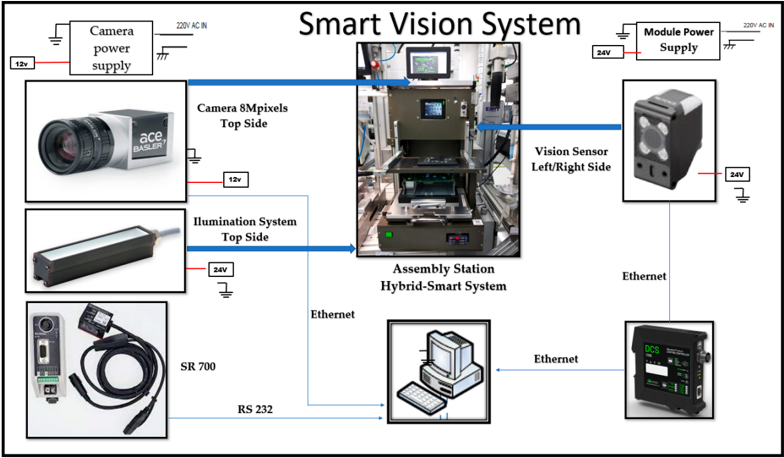
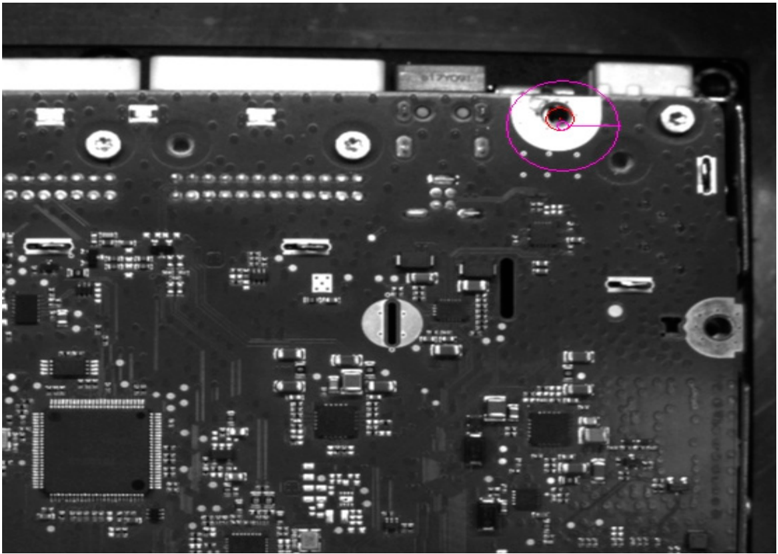
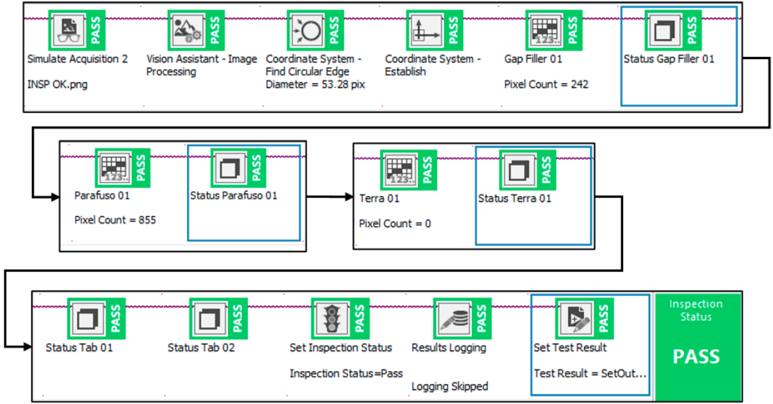
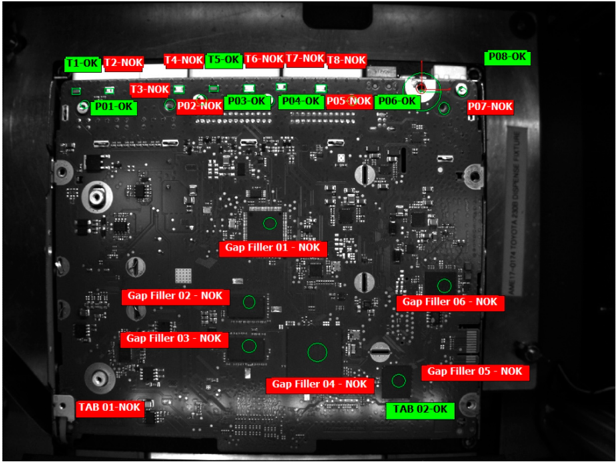
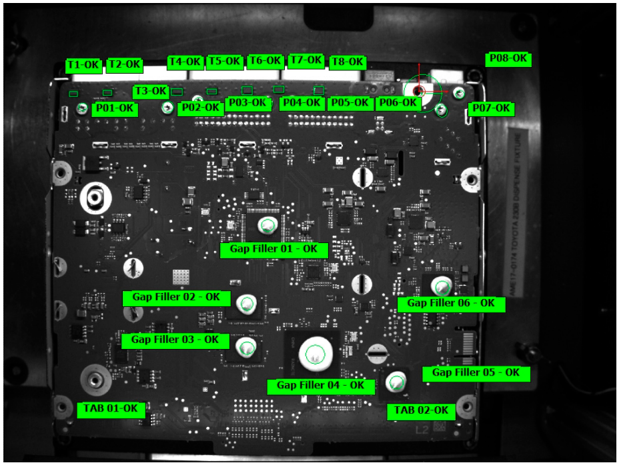
Technological advances in the production of printed circuit boards (PCBs) are increasing the number of components inserted on the surface. This has led the electronics industry to seek improvements in their inspection processes, often making it necessary to increase the level of automation on the production line. The use of machine vision for quality inspection within manufacturing processes has increasingly supported decision making in the approval or rejection of products outside of the established quality standards. This study proposes a hybrid smart-vision inspection system with a machine vision concept and vision sensor equipment to verify 24 components and eight screw threads. The goal of this study is to increase automated inspection reliability and reduce non-conformity rates in the manufacturing process on the assembly line of automotive products using machine vision. The system uses a camera to collect real-time images of the assembly fixtures, which are connected to a CMOS color vision sensor. The method is highly accurate in complex industry environments and exhibits specific feasibility and effectiveness. The results indicate high performance in the failure mode defined during this study, obtaining the best inspection performance through a strategy using Vision Builder for automated inspection. This approach reduced the action priority by improving the failure mode and effect analysis (FMEA) method.
Overview
The claims and statistics of this paper haven’t been checked yet.
Free: it reads the open-access text and checks the first 5 claims that cite a source we can check. Create a free account to check every claim.
Integrity signals
Registry
Cites
Statistics
Figures
Verification
Claims the paper makes
The claims and statistics of this paper haven’t been checked yet.
Free: it reads the open-access text and checks the first 5 claims that cite a source we can check. Create a free account to check every claim.
Claims other papers make about this one
Each is checked against this paper’s own text: does it say what the citing paper says it does?
The source backs part of the claim, not all of it — or backs it for a different population, condition or comparison.
In the citing paper
“Silva et al. (2025) show that the use of intelligent visual sensors enables the immediate identification of deviations, reducing the reaction time and increasing the accuracy of detectability assessments [30].”
From An Intelligent Framework for Implementing AIAG–VDA FMEA and Action Priority (AP) Assessment (2026) · cites this paper as [30]
Experimental — accuracy not yet measured
Self-check
Percentages, sums and reported differences re-computed from the paper’s own numbers.
The self-check needs the paper’s full text.
Citations
Cites
Preferred reporting items for systematic reviews and meta-analyses: The PRISMA statement
Moher, D., Liberati, A., Tetzlaff, J., Altman, D. G., & the PRISMA Group* (2009) · Annals of Internal Medicine · doi:10.7326/0003-4819-151-4-200908180-00135 · Cited by 37,554
bibliometrix: An R-tool for comprehensive science mapping analysis
Aria, M., & Cuccurullo, C. (2017) · Journal of Informetrics · doi:10.1016/j.joi.2017.08.007 · Cited by 16,064 · cited 1×
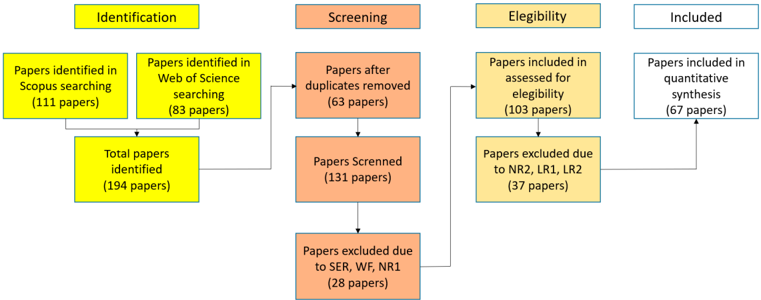
“From the articles selected for content analysis from 2013 to 2024, quantitative analyses were developed using the Bibliometrix tool of R Studio ® software, following the procedure developed by [17].”
Baduge, S. K., Thilakarathna, S., Perera, J. S., Arashpour, M., Sharafi, P., Teodosio, B., Shringi, A., & Mendis, P. (2022) · Automation in Construction · doi:10.1016/j.autcon.2022.104440 · Cited by 1,007
State of the Art in Defect Detection Based on Machine Vision
Ren, Z., Fang, F., Yan, N., & Wu, Y. (2022) · International Journal of Precision Engineering and Manufacturing-Green Technology · doi:10.1007/s40684-021-00343-6 · Cited by 799 · cited 2×
“With the advancement of artificial intelligence and the constant improvement of cameras and sensors, machine vision has become increasingly prevalent within industries for measuring and decision-making, helping to determine product compliance [15].”
Ebayyeh, A. A. R. M. A., & Mousavi, A. (2020) · IEEE Access · doi:10.1109/access.2020.3029127 · Cited by 310 · cited 3×
“According to [6,26], the manual quality inspection process must be reliable to meet consumer expectations and the standards the automotive industry sets.”
Automated surface defect detection framework using machine vision and convolutional neural networks
Singh, S. A., & Desai, K. A. (2023) · Journal of Intelligent Manufacturing · doi:10.1007/s10845-021-01878-w · Cited by 286 · cited 2×
“The process of machine vision is as follows: acquisition—images are acquired from the camera; image processing—the images are digitally manipulated; and data extraction— quantitative data are extracted from the images and autonomous decisions are made based on the extracted data [32].”
Multidimensional data in multidimensional scaling using the analytic network process
Huang, J.-J., Tzeng, G.-H., & Ong, C.-S. (2005) · Pattern Recognition Letters · doi:10.1016/j.patrec.2004.09.027 · Cited by 227
Image-based defect detection in lithium-ion battery electrode using convolutional neural networks
Badmos, O., Kopp, A., Bernthaler, T., & Schneider, G. (2019) · Journal of Intelligent Manufacturing · doi:10.1007/s10845-019-01484-x · Cited by 175 · cited 1×
“According to [16], machine vision has been used in processes with high repetition rates, benefiting several industrial activities.”
Soldering defect detection in automatic optical inspection
Dai, W., Mujeeb, A., Erdt, M., & Sourin, A. (2020) · Advanced Engineering Informatics · doi:10.1016/j.aei.2019.101004 · Cited by 158 · cited 1×
“The efficiency of manual inspection is often compromised by environmental and human factors, which can impair the human capacity for evaluation and perception, especially as fatigue increases throughout the workday [31].”
Multistage Quality Control Using Machine Learning in the Automotive Industry
Peres, R. S., Barata, J., Leitao, P., & Garcia, G. (2019) · IEEE Access · doi:10.1109/access.2019.2923405 · Cited by 139 · cited 1×
“High-quality and consistent product appearance and functionality [3] drive positive customer experiences and ultimately increase the product’s market share.”
Research works printed but not linked: 1
- Reichenstein, T.; Raffin, T.; Sand, C.; Franke, J. Implementation of Machine Vision based Quality Inspection in Production: An Approach for the Accelerated Execution of Case Studies. In Procedia CIRP;
Cited by
Integration of Machine Vision and PLC-Based Control for Scalable Quality Inspection in Industry 4.0
Maślanka, M., Jancarczyk, D., & Rysiński, J. (2025) · Sensors · doi:10.3390/s25206383 · Cited by 18
“Silva and Paladini [12] proposed a smart vision system directly interfacing with PLCs and MES platforms, emphasizing higher-level decision-making and line-level optimization.”
Eyes of the Future: Decoding the World Through Machine Vision
Khonina, S. N., Kazanskiy, N. L., Oseledets, I. V., Khabibullin, R. M., & Nikonorov, A. V. (2025) · Technologies · doi:10.3390/technologies13110507 · Cited by 11
“Silva et al. proposed a hybrid smart-vision inspection system that fuses MV methodology with dedicated vision sensor technology to simultaneously evaluate 24 discrete components and eight screw threads [46].”
Controlling an Industrial Robot Using Stereo 3D Vision Systems with AI Elements
Panasiuk, J. (2025) · Sensors · doi:10.3390/s25206402 · Cited by 9
“…architectures are being developed, allowing for the implementation of 3D detection with high throughput (e.g., several dozen frames per second) while maintaining high reliability [26,27]; Calibration and fusion of sensors are among the most difficult aspects of the implementation of 3D systems.”
Gwala, R. S. (2025) · Advances in computational intelligence and robotics book series · doi:10.4018/979-8-3693-8664-4.ch007 · Cited by 9
Patel, K., Patel, K., Thakare, S. B., Palanivel., R., & Sandhya., N. (2025) · International Conference on Software, Systems and Information Technology (SSITCON) · doi:10.1109/ssitcon66133.2025.11341982 · Cited by 2
An Intelligent Framework for Implementing AIAG–VDA FMEA and Action Priority (AP) Assessment
Oancea, A.-V., Ionescu, L.-M., Rontescu, C., Ionescu, N., Misztal, A., Bogatu, A.-M., Știrbu, C., Cicic, D.-T., & Stanciu, E.-M. (2026) · Applied Sciences · doi:10.3390/app16052591 · Cited by 1
Gandhi, D., May, G., & Psarommatis, F. (2026) · Applied Sciences · doi:10.3390/app16104841 · Cited by 1
Smart-Inspection System on Assembly Process of Pin-Through Components Using Machine Learning
Silva, C. A. D. S., Penedo, J. E. S., Paladini, E. P., & da Silva, W. S. (2025) · ITEGAM- Journal of Engineering and Technology for Industrial Applications (ITEGAM-JETIA) · doi:10.5935/jetia.v11i51.1525
Self-citationLu, Q., Kong, L., Dong, H., Li, L., Liu, J., & Sun, J. (2026) · Measurement · doi:10.1016/j.measurement.2026.120374
Advanced Defect Detection Techniques Using AI, CAD Data, and Computer Vision
Kulkarni, P. R., Sahu, D. K., Joshi, C., Khatavkar, A., Poddar, S., & Deep, A. (2026) · SAE technical papers on CD-ROM/SAE technical paper series · doi:10.4271/2026-26-0644
Niu, R., Wei, Z., Jin, P., Zhang, Q., & Li, Z. (2026) · Sensors · doi:10.3390/s26072220
“Traditional image-processing methods improve efficiency, but they rely heavily on hand-crafted features and are sensitive to lighting variation, surface glare, background noise, and motion blur in factory environments [5].”
A Corner-Analysis-Based Method for Dimensional Inspection and Defect Detection of Glass Chamfers
Jiang, J., Wang, T., Zhou, Y., Wang, W. H., Wu, C., & Wei, B. (2026) · Sensors · doi:10.3390/s26154764
“For example, Sánchez-Jiménez et al. [28] developed a computer vision application for measuring skin wound dimensions, whereas Silva and Paladini [29] proposed an intelligent machine vision system for the automatic verification of multiple components and threaded parts on automotive assembly lines.”
Low-Cost Automation System for Sorting Parts of Type “Connector”
Malakov, I., & Zaharinov, V. (2026) · International Scientific Conference TechSys — Engineering, Technology and Systems (TechSys) · doi:10.3390/engproc2026150085
Human–Machine Coordination in Adaptive Industrial Automation Systems
Sane, S., Sharma, S., tune, H. N., Shriyal, S. S., Gawhale, S. G., Pandey, N., Priyadharshini, K., & Perumal, S. A. (2026) · International Journal of Artificial Intelligence and Machine Learning · doi:10.51483/ijaiml.6.5s.2026.371-378
An Explainable Multi-Camera Vision System for Automated Bolt Inspection
Güçlü, E., Ergin, O., Aydin, İ., Akin, E., & UYANIK, Y. E. (2026) · International Conference on Advanced Computer Information Technologies (ACIT) · doi:10.1109/acit69831.2026.11700202
“This technology ensures a standardized, high-speed solution that maximizes reliability by eliminating human error in evaluation [6].”
Smart automation through computer vision and image processing: a systematic literature review
Nwakeze, O. M., Cynthia, N. U., Michael, O., Afamefuna, C. A., Cecilia, U. N. G., & Love., E.-O. C. (2026) · African Scientific Reports · doi:10.46481/asr.2026.5.3.588
Metadata
- Authors
- Silva, C. A. D. S., & Paladini, E. P.
- Affiliations
- Industrial and Systems Engineering Department, University Federal of Santa Catarina–UFSC, Florianópolis 88040-900, SC, Brazil
- Universidade Federal de Santa Catarina (BR)
- Venue
- Machines
- Publisher
- MDPI AG
- Published
- 2025-01-27
- Volume
- 13
- Issue
- 2
- Pages
- 98
- ISSN
- 2075-1702 (ISSN-L)
- OpenAlex
- W4406905291
- Cited by
- 13
- References
- 39
- Citations by year
- 2026: 8 · 2025: 5
- FWCI
- 6.39
- Type
- journal article
- Language
- en
- Open access
- gold
- doi.org
- Licence
- Locations
- Machines (publishedVersion, cc-by)
- Preprints.org (acceptedVersion, cc-by)
- DOAJ (DOAJ: Directory of Open Access Journals) (submittedVersion, cc-by-sa)
- Topics
- Physical Sciences › Engineering › Industrial and Manufacturing Engineering › Industrial Vision Systems and Defect Detection
- Physical Sciences › Engineering › Control and Systems Engineering › Robot Manipulation and Learning
- Physical Sciences › Engineering › Mechanical Engineering › Non-Destructive Testing Techniques
- Keywords
- machine vision, printed circuit board assembly, automated visual inspection, component inspection, automotive electronics manufacturing, quality inspection, failure mode and effects analysis
About these checks
Registry, retraction, Cites and statistics results are computed, not judged, with one exception: a printed reference that no index lists is read once by a model before it counts as a citation error. Claims are extracted by a model and kept only when their quote appears verbatim in the text; each cited source is then checked, with a model’s help, for whether it says what the claim relies on. Those verdicts can be wrong — read the claim’s quote and the cited source before relying on one.
Statistics and arithmetic are recomputed, not judged.
Confidence bands are shown only for fields calibrated on our annotated test set. None is calibrated yet, so no band is shown.
What counts as a claim ›How we measure confidence ›How we check this ›
Are you an author, or do you see a problem with this page? Request a review
Data sources
Bibliographic data: Semantic Scholar, OpenAlex, Crossref.
Contains information from the Semantic Scholar Academic Graph Datasets, made available under the ODC Attribution License (ODC-BY 1.0).
Semantic Scholar’s data is described in: Kinney, R., et al. (2023). The Semantic Scholar Open Data Platform. arXiv:2301.10140.
