

The DOI matches its Crossref record; 50 of the 50 references it cites were found in a registry or an index.
Preparation and Identification of ACE Inhibitory Peptides from the Marine Macroalga Ulva intestinalis
Open accessAbstract
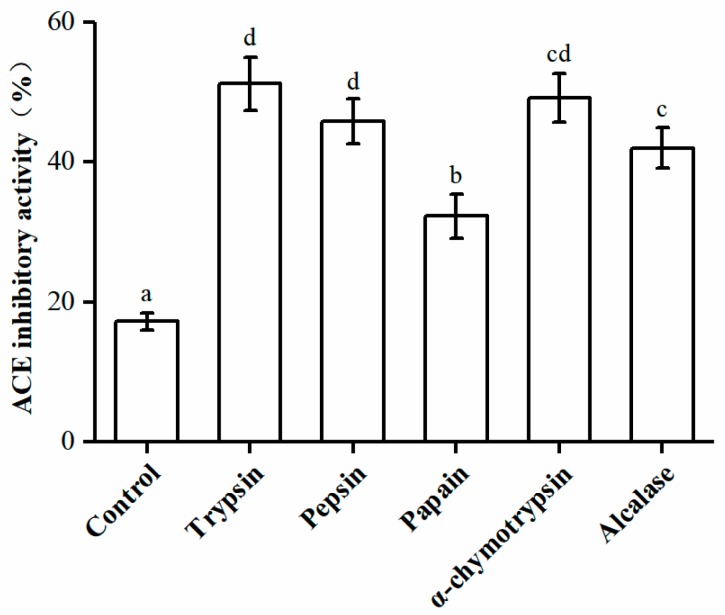
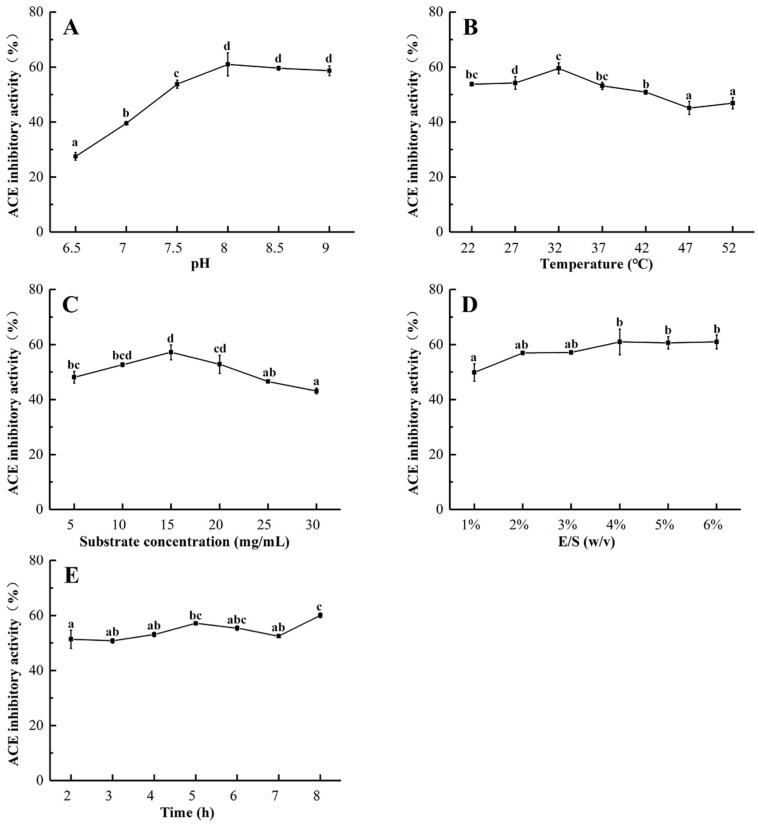
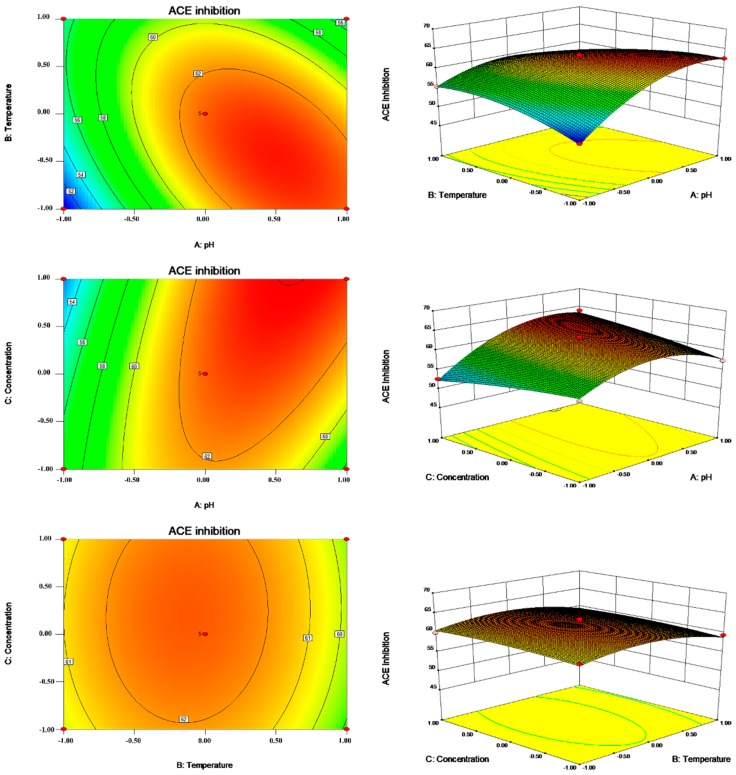
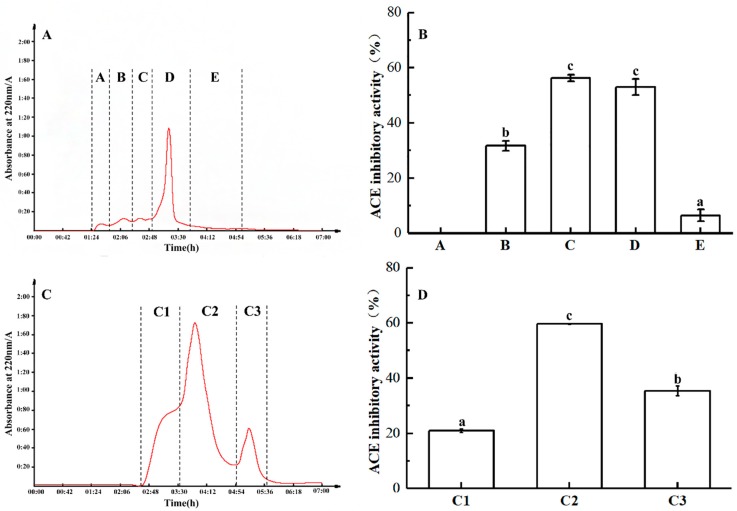
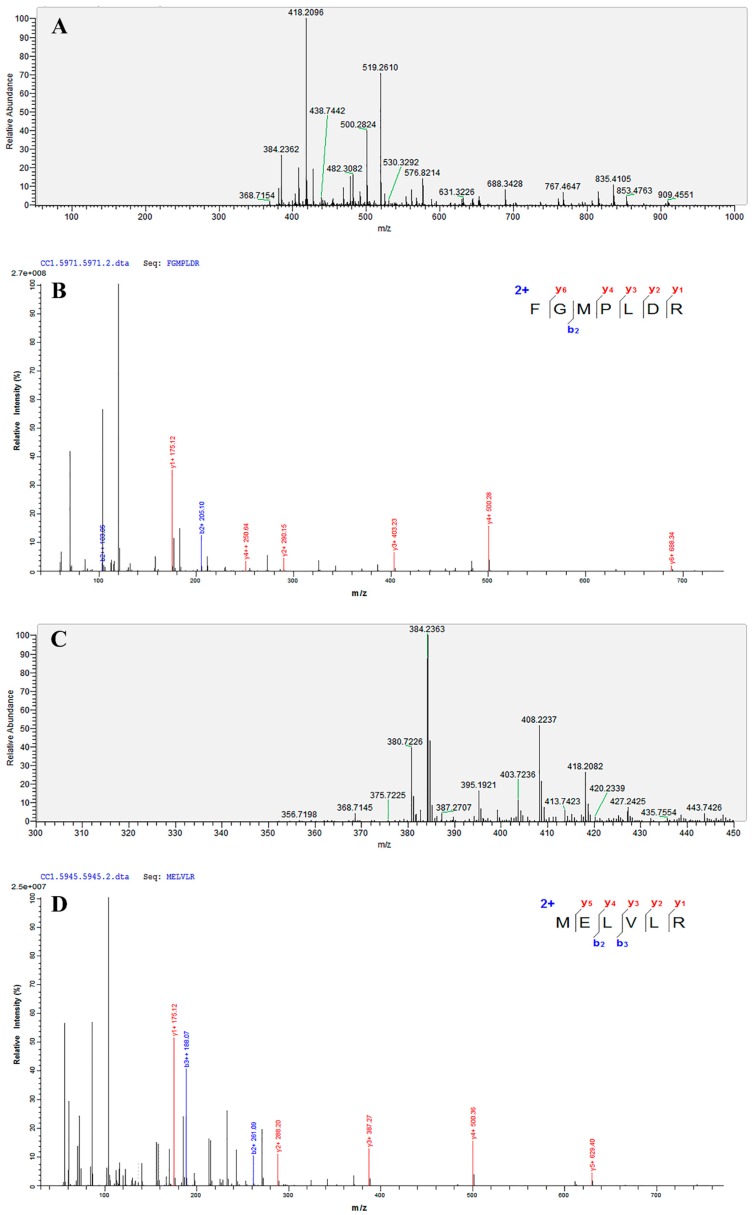
Angiotensin I-converting enzyme (ACE) inhibitory peptides derived from seaweed represent a potential source of new antihypertensive. The aim of this study was to isolate and purify ACE inhibitory peptides (ACEIPs) from the protein hydrolysate of the marine macroalga Ulva intestinalis. U. intestinalis protein was hydrolyzed by five different proteases (trypsin, pepsin, papain, α-chymotrypsin, alcalase) to prepare peptides; compared with other hydrolysates, the trypsin hydrolysates exhibited the highest ACE inhibitory activity. The hydrolysis conditions were further optimized by response surface methodology (RSM), and the optimum conditions were as follows: pH 8.4, temperature 28.5 °C, enzyme/protein ratio (E/S) 4.0%, substrate concentration 15 mg/mL, and enzymolysis time 5.0 h. After fractionation and purification by ultrafiltration, gel exclusion chromatography and reverse-phase high-performance liquid chromatography, two novel purified ACE inhibitors with IC50 values of 219.35 μM (0.183 mg/mL) and 236.85 μM (0.179 mg/mL) were obtained. The molecular mass and amino acid sequence of the ACE inhibitory peptides were identified as Phe-Gly-Met-Pro-Leu-Asp-Arg (FGMPLDR; MW 834.41 Da) and Met-Glu-Leu-Val-Leu-Arg (MELVLR; MW 759.43 Da) by ultra-performance liquid chromatography-tandem mass spectrometry. A molecular docking study revealed that the ACE inhibitory activities of the peptides were mainly attributable to the hydrogen bond and Zn(II) interactions between the peptides and ACE. The results of this study provide a theoretical basis for the high-valued application of U. intestinalis and the development of food-derived ACE inhibitory peptides.
Overview
The claims and statistics of this paper haven’t been checked yet.
Run the check — free, no account needed. It reads the open-access text and checks the sources it cites.
Integrity signals
Registry
Cites
Statistics
Figures
Verification
Claims the paper makes
The claims and statistics of this paper haven’t been checked yet.
Run the check — free, no account needed. It reads the open-access text and checks the sources it cites.
Claims other papers make about this one
Each is checked against this paper’s own text: does it say what the citing paper says it does?
The source backs part of the claim, not all of it — or backs it for a different population, condition or comparison.
In the citing paper
“Other promising peptides have been identified from Gracilariopsis lemaneiformis, Mazzaella japonica (Rhodophyta), and Ulva intestinalis (Chlorophyta), each contributing to ACE inhibition and cardiovascular health [58–60].”
From Navigating the potential of algal peptides: health effects, market applications, and scientific challenges (2026) · cites this paper as [60]
Experimental — accuracy not yet measured
Self-check
Percentages, sums and reported differences re-computed from the paper’s own numbers.
The self-check needs the paper’s full text.
Citations
Cites
Fish Protein Hydrolysates: Production, Biochemical, and Functional Properties
Kristinsson, H. G., & Rasco, B. A. (2000) · Critical Reviews in Food Science and Nutrition · doi:10.1080/10408690091189266 · Cited by 1,243 · cited 1×
“Different proteases affect the composition and size of the polypeptides produced, which can affect their biological activities [26].”
BackgroundHypotensive Peptides from Milk Proteins
Fitzgerald, R. J., Murray, B. A., & Walsh, D. J. (2004) · Journal of Nutrition · doi:10.1093/jn/134.4.980s · Cited by 725 · cited 1×
“captopril, and lisinopril, are widely used in hypertension treatments, synthetic ACEIs have a series of negative effects, including hypotension, cough, increased potassium levels and, angioedema [5,6].”
BackgroundBioactive Peptides from Muscle Sources: Meat and Fish
Ryan, J. T., Ross, R., Bolton, D., Fitzgerald, G., & Stanton, C. (2011) · Nutrients · doi:10.3390/nu3090765 · Cited by 493 · cited 2×
“According to previous studies, most ACEIPs are small peptides of 2–12 residues and molecular weights less than 3000 Da [33], which may more easily fit in the ACE active site and thus assert inhibitory activity [34].”
BackgroundLópez‐Fandiño, R., Otte, J., & Camp, J. V. (2006) · International Dairy Journal · doi:10.1016/j.idairyj.2006.06.004 · Cited by 389 · cited 1×
“To date, ACEIPs derived from a variety of products such as milk [7], bovine collagen [8], mushrooms [9], rice [10], and marine sources including fish, shellfish, and macroalgae [11,12], have been reported.”
BackgroundWu, J., & Ding, X. (2002) · Food Research International · doi:10.1016/s0963-9969(01)00131-4 · Cited by 344 · cited 1×
“After gastrointestinal digestion, some food-derived ACEIPs do not exhibit (or exhibit fewer than) the expected hypotensive effects [38,39].”
BackgroundHealth benefits of marine foods and ingredients
Larsen, R., Eilertsen, K., & Elvevoll, E. O. (2011) · Biotechnology Advances · doi:10.1016/j.biotechadv.2011.05.017 · Cited by 302 · cited 1×
“According to previous studies, many unique bioactive compounds, including peptides, fats, and carbohydrates, have been isolated from macroalgae [13,14].”
BackgroundSheih, I.-C., Fang, T. J., & Wu, T.-K. (2009) · Food Chemistry · doi:10.1016/j.foodchem.2008.12.019 · Cited by 280 · cited 1×
“Proteases are necessary to release ACEIPs from inactive forms [25].”
BackgroundSuetsuna, K., Maekawa, K., & Chen, J.-R. (2004) · The Journal of Nutritional Biochemistry · doi:10.1016/j.jnutbio.2003.11.004 · Cited by 249 · cited 1×
“5 μM), and Tyr-Asn-Lys-Leu (IC50 = 21 μM) from Undaria pinnatifida [15] and Ile-Tyr (IC50 = 2.”
Wang, J., Hu, J., Cui, J., Bai, X., Du, Y., Miyaguchi, Y., & Lin, B. (2008) · Food Chemistry · doi:10.1016/j.foodchem.2008.03.059 · Cited by 212 · cited 1×
“Hypertension seriously affects human health and is a causative factor of cardiovascular diseases, stroke, and renal diseases, among others [1,2].”
BackgroundWu, Q., Jia, J., Yan, H. H., Du, J., & Gui, Z. (2014) · Peptides · doi:10.1016/j.peptides.2014.07.026 · Cited by 193
Cited by
Sorted by citations
Items 101–140 of 140
Wei, Y., Guo, X. N., Fan, X., Zhao, Y., Wang, Z., Deng, X., & Zhang, J. (2023) · LWT · doi:10.1016/j.lwt.2023.115426 · Cited by 7
Sánchez-Magaña, L. M., Moreno, C. R., Tiznado, J. A. G., Milán‐Carrillo, J., Gómez-Favela, M. A., Cuevas‐Rodríguez, E. O., Moreno, R. J. E., & Gutiérrez‐Dorado, R. (2022) · Acta Universitaria · doi:10.15174/au.2022.3413 · Cited by 7
Wu, C., Yin, Z., Wang, Y., Chen, X., Li, B., Wang, Q. L., Yao, L., Zhang, Z., Liu, X., & Zhang, R. (2024) · Heliyon · doi:10.1016/j.heliyon.2024.e28060 · Cited by 6
“Marine sources include fish [18], mollusks [19,20], aquatic products [21,22], and seaweed [23].”
BackgroundSelf-citationDhaouafi, J., Romdhani, M., Deracinois, B., Flahaut, C., Balti, R., & Nedjar, N. (2024) · Waste and Biomass Valorization · doi:10.1007/s12649-024-02715-w · Cited by 6
“It has been demonstrated that both peptides, FGMPLDR and MELVLR, have a hydrophobic amino acid content of 42.9% and 50%, respectively, which may also play a crucial role in their high ACE inhibitory activities [79].”
InfluentialIn silico analysis of Gracilaria changii proteins for potential bioactive peptides
Sharmin, K. N., Amin, A. M., Ahmad, F., Razali, S. A., & Hashim, F. (2022) · IOP Conference Series Earth and Environmental Science · doi:10.1088/1755-1315/967/1/012017 · Cited by 6
“In-vitro hydrolysis of seaweed protein to generate bioactive peptides has been reported for Pyropia columbina [12], Gracilariopsis lemaneiformis [13], Ulva intestinalis [14], Undaria pinnatifida and Porphyra yezoensis [15,16].”
BackgroundWang, S., Zhang, L., Wang, H., Wu, X., & Tu, Z. (2024) · Food Bioscience · doi:10.1016/j.fbio.2024.105509 · Cited by 5
Amin, A. M., LEE, W. S., & SHARMIN, K. N. (2020) · Malaysian Applied Biology · doi:10.55230/mabjournal.v49i5.1642 · Cited by 5
“91%) (Sun et al., 2019) and sardinella by-product (13.”
Algal Proteins and Peptides: Current Trends and Future Prospects
Ganesan, A. R., Munisamy, S., Bhat, R., Seedevi, P., Mohan, K., & Matsukawa, S. (2021) · Wiley eBooks · doi:10.1002/9781119542650.ch14 · Cited by 5
Khaliq, M., Noor, Z., Moazzam, M., Saeed, F., Tul-Zohra, K., Tariq, E., Muhammad Shahbaz, H., & Khaliq, K. (2026) · Annals of Medicine · doi:10.1080/07853890.2026.2637282 · Cited by 4
Xue, F., Mejares, C. T., & Dokouhaki, M. (2025) · International Journal of Food Science & Technology · doi:10.1093/ijfood/vvaf106 · Cited by 4
Windarto, S., Lee, M., Nursyam, H., & Hsu, J. (2024) · Biocatalysis and Agricultural Biotechnology · doi:10.1016/j.bcab.2024.103452 · Cited by 5
Marine Origin Bioactive Peptides: Novel Advances in the Therapeutic Potential
Dehghani, M., Taherizadeh, M. R., & Homaei, A. A. (2022) · Springer eBooks · doi:10.1007/978-981-16-5374-2_11 · Cited by 4
Peraza, V. M. S., Betancur‐Ancona, D., Ruelas, A. F. C., Hernández-Rodríguez, Y., & Chel‐Guerrero, L. (2026) · Plants · doi:10.3390/plants15050704 · Cited by 2
Marine Bioactive Peptides (Fishes, Algae, Cephalopods, Molluscs, and Crustaceans)
Vásquez, P., Cian, R. E., & Drago, S. R. (2023) · Springer eBooks · doi:10.1007/978-3-030-81404-5_16-1 · Cited by 2
Chourasia, R., Dabrha, G., Abedin, M. M., Phukon, L. C., Singh, A. K., Sahoo, D., Singh, S. P., & Kumar, A. (2024) · Food & Function · doi:10.1039/d4fo00405a · Cited by 2
Wang, M., Zhang, W., Li, B., Jiang, X., Li, W., Zou, H., & Li, D. (2025) · Food biomacromolecules. · doi:10.1002/fob2.70009 · Cited by 1
Manjunath, R., Rao, A., Mahesha, M., H., U. K. A., Acharya, S., G., P. U. E., Salam, A. A. A., Hakkimane, S. S., Shashikala, B. S., Lokanath, N. K., et al. (2025) · RSC Advances · doi:10.1039/d5ra04675k · Cited by 1
Bilir, G., Cermeño, M., Khalesi, M., Ekinci, D., & Fitzgerald, R. J. (2025) · Food and Bioprocess Technology · doi:10.1007/s11947-025-04051-w · Cited by 1
“Similarly, some studies have reported that hydrolysates obtained from soybean, marine macroalga and whey protein using different enzymes have increased or maintained ACE inhibition activity following gastrointestinal digestion (Bustamante et al., 2021; Sangiorgio et al., 2022; Sun et al., 2019).”
Wu, J., Luo, R., Rong, Y., Zhang, D., Zhang, J., Yu, P., & Gan, Y. (2026) · Food Bioscience · doi:10.1016/j.fbio.2026.108759 · Cited by 1
Bioactive peptides released from seaweeds during gastrointestinal digestion
Fraga‐Corral, M., Silva, A., Echave, J., Cassani, L., Xiao, J., Simal‐Gándara, J., & Prieto, M. A. (2024) · Elsevier eBooks · doi:10.1016/b978-0-443-19141-1.00013-3 · Cited by 1
Baravia, P. A., Qhabibi, F. R., Hadinata, E., Katuuk, S. H. H., Alfaray, R. I., Rampengan, D. D. C. H., Syahputra, R. A., Taslim, N. A., Tjandrawinata, R. R., Tallei, T. E., et al. (2025) · Journal of Agriculture and Food Research · doi:10.1016/j.jafr.2025.101786 · Cited by 1
Vo, T. D. L., Huỳnh, T., Le, T. T. H., Tran, A. T. T., & Vo, B. C. (2025) · ACS Food Science & Technology · doi:10.1021/acsfoodscitech.4c01065 · Cited by 1
Vásquez, P., Cian, R. E., & Drago, S. R. (2023) · Springer eBooks · doi:10.1007/978-3-031-28109-9_16 · Cited by 1
Efficacy of the First Bioactive Peptide From The PearlPreprint
Wu, C., Yin, Z., Wang, Y., Chen, X., Li, B., Wang, Q., Yao, L., Zhang, Z., Liu, X., & Zhang, R. (2023) · bioRxiv (Cold Spring Harbor Laboratory) · doi:10.1101/2023.10.10.561660 · Cited by 1
Self-citationSeaweeds: A Comprehensive Review of Pharmacological Interests
Mohiuddin, A. K. (2019) · International Journal of Clinical Pharmacology & Toxicology · doi:10.19070/2167-910x-1900050
Qian, B., Yu, L., Tian, C., Huang, S., Huo, J., & Villarreal, O. D. (2020) · International Journal of Peptide Research and Therapeutics · doi:10.1007/s10989-020-10142-3
Enzyme Inhibitor from Marine Organisms
Tischler, D. (2020) · MDPI eBooks · doi:10.3390/books978-3-03943-784-9
Antimicrobial protein and peptides from marine macroalgae
Caprani, M., O’Keeffe, J., Slattery, O., & Healy, J. (2023) · Elsevier eBooks · doi:10.1016/b978-0-323-98819-3.00005-5
Bioactivity and Biofunctionality Characterization of Algal Biomass
Echave, J., Barciela, P., Perez-Vazquez, A., Seyyedi-Mansour, S., Donn, P., Cassani, L., Prieto, M. A., Simal‐Gándara, J., Otero, P., & Fraga‐Corral, M. (2024) · Environmental science and engineering · doi:10.1007/978-981-97-2371-3_23
Fleurence, J. (2025) · Wiley eBooks · doi:10.1002/9781394361427.refs
Food-Derived Bioactive Peptides as Potential Antimicrobial Agents: Challenges and Opportunities
Kasana, A., & Verma, V. (2025) · Springer eBooks · doi:10.1007/978-981-96-4379-0_8
Alemán, A., Gómez-Guillén, M. C., Montero, P., & López-Caballero, M. E. (2025) · Applied Sciences · doi:10.3390/app152111495
Lu, J.-J., Cheng, K., Khumsupan, D., Hsieh, C., Hsieh, C., Santoso, S. P., Angkawijaya, A. E., & Kuo, H. (2025) · Food Chemistry · doi:10.1016/j.foodchem.2025.147474
Venmarath, A., Madhu, I., Kannan, A., & Kudre, T. G. (2026) · International Journal of Peptide Research and Therapeutics · doi:10.1007/s10989-026-10805-7
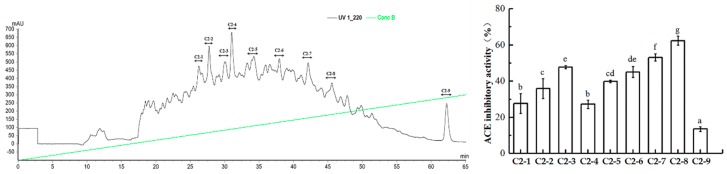
“A similar line of results was reported for fish peptides, where the fraction with the longest retention time exhibited the highest ACE-inhibitory activity (Sun et al. 2019 ).”
Bakku, R. K. (2026) · Elsevier eBooks · doi:10.1016/b978-0-443-15652-6.00002-3
Guzmán-Rodríguez, M. E., Valdez-Flores, M. A., Ayón-Fernandez, C., Ordaz-Ortíz, J. J., Guadrón‐Llanos, A. M., Magaña‐Gómez, J. A., la Herrán-Arita, A. K. D., Camberos-Barraza, J., Picos-Cárdenas, V. J., Osuna‐Ramos, J. F., et al. (2026) · Scientia Pharmaceutica · doi:10.3390/scipharm94020043
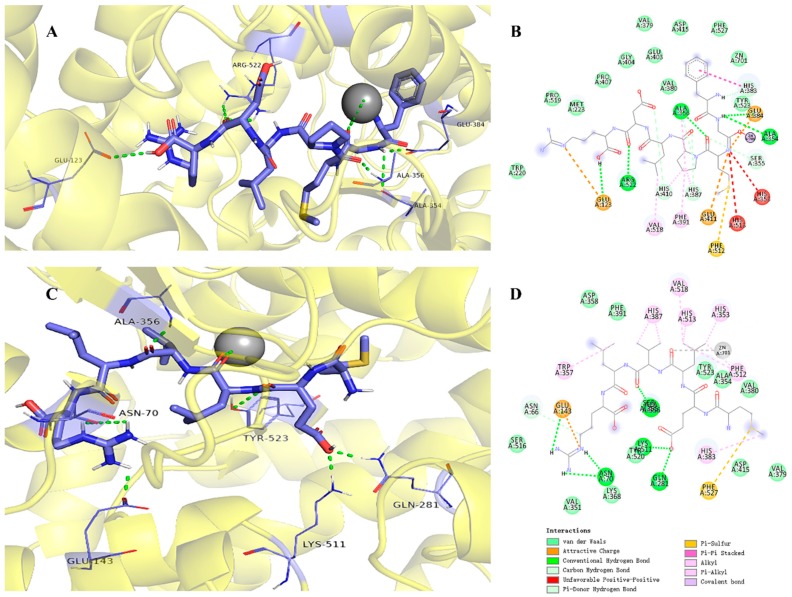
“For instance, peptides isolated from Ulva intestinalis , including FGMPLDR and MELVLR, showed ACE-inhibitory activity and molecular interactions involving hydrogen bonds and Zn 2+ -related contacts within the ACE active site [83].”
Ji, C., Niu, C., Liu, Q., Chen, Y., Zeng, Q., & Chen, Y. (2026) · International Journal of Biological Macromolecules · doi:10.1016/j.ijbiomac.2026.154169
Health benefits of bioactive peptides
Chukwuejim, S., Oluwajuyitan, T. D., Abioye, R. O., & Aluko, R. E. (2026) · Advances in food and nutrition research · doi:10.1016/bs.afnr.2026.08.005
Inumala, C., & Kudre, T. G. (2026) · Journal of Food Measurement & Characterization · doi:10.1007/s11694-026-04972-w
Metadata
- Authors
- Sun, S., Xu, X., Sun, X., Zhang, X., Chen, X., & Xu, N.
- Affiliations
- Ningbo University (CN)
- Vanderbilt University Medical Center (US)
- Corresponding author
- Xu, Nianjun
- Venue
- Marine Drugs
- Publisher
- MDPI AG
- Published
- 2019-03-19
- Volume
- 17
- Issue
- 3
- Pages
- 179
- ISSN
- 1660-3397 (ISSN-L)
- PMC
- PMC6471128
- OpenAlex
- W2922600776
- Cited by
- 140
- References
- 50
- Citations by year
- 2026: 9 · 2025: 21 · 2024: 29 · 2023: 22 · 2022: 27 · 2021: 15 · 2020: 14 · 2019: 3
- FWCI
- 4.88
- Type
- journal article
- Language
- en
- Open access
- gold
- dx.doi.org
- Licence
- Locations
- Marine Drugs (publishedVersion, cc-by)
- Europe PMC (PubMed Central) (publishedVersion, cc-by)
- PubMed Central (publishedVersion, cc-by)
- PubMed (publishedVersion)
- Discover Archive (Vanderbilt University) (submittedVersion, cc-by)
- DOAJ (DOAJ: Directory of Open Access Journals) (submittedVersion)
- Funders
- Natural Science Foundation of Zhejiang Province (LZ17D060001)
- Ningbo International Cooperation Program (2017D10019)
- Ningbo Municipal Bureau of Science and Technology (2016C10034)
- Topics
- Life Sciences › Agricultural and Biological Sciences › Food Science › Protein Hydrolysis and Bioactive Peptides
- Life Sciences › Agricultural and Biological Sciences › Aquatic Science › Seaweed-derived Bioactive Compounds
- Life Sciences › Biochemistry, Genetics and Molecular Biology › Biochemistry › Peptidase Inhibition and Analysis
- Keywords
- ACE inhibitory peptides, Ulva intestinalis, seaweed, protein hydrolysates, trypsin hydrolysis, enzymatic hydrolysis optimization, peptide purification, antihypertensive peptides, food-derived bioactive peptides, zinc binding
- MeSH terms
- Angiotensin-Converting Enzyme Inhibitors, Antihypertensive Agents, Drug Stability, Hydrolysis, Hypertension, Peptidyl-Dipeptidase A, Peptide Hydrolases, Peptides, Protein Hydrolysates, Seaweed, Inhibitory Concentration 50, Ulva, Enzyme Assays, Molecular Docking Simulation
About these checks
Registry, retraction, Cites and statistics results are computed, not judged, with one exception: a printed reference that no index lists is read once by a model before it counts as a citation error. Claims are extracted by a model and kept only when their quote appears verbatim in the text; each cited source is then checked, with a model’s help, for whether it says what the claim relies on. Those verdicts can be wrong — read the claim’s quote and the cited source before relying on one.
Statistics and arithmetic are recomputed, not judged.
Confidence bands are shown only for fields calibrated on our annotated test set. None is calibrated yet, so no band is shown.
What counts as a claim ›How we measure confidence ›How we check this ›
Are you an author, or do you see a problem with this page? Request a review
