

Cognitive Behavioral Therapy for Migraine Headache: A Systematic Review and Meta-Analysis
Open accessThe DOI matches its Crossref record; 38 of the 38 references it cites were found in a registry or an index.
Abstract
Background and Objectives: Migraine headaches are chronic neurological diseases that reduce the quality of life by causing severe headaches and autonomic nervous system dysfunction, such as facial flushing, nasal stuffiness, and sweating. Their major treatment methods include medication and cognitive behavioral therapy (CBT). CBT has been used for pain treatment and various psychogenic neurological diseases by reducing pain, disability, and emotional disorders caused by symptoms of mental illness and improving the understanding of mental health. This study aimed to evaluate the effectiveness and safety of CBT in treating migraines. Materials and Methods: Seven electronic databases were searched from the date of inception to December 2020. Randomized controlled studies (RCTs) using CBT as an intervention for migraine were included. The primary outcome of this study was to determine the frequency of migraines and the intensity of migraines on Visual Analog Scale (VAS), the frequency of drug use, Migraine Disability Assessment (MIDAS), and Headache Impact Test (HIT-6) index. The two authors independently conducted the data extraction and quality assessment of the included RCTs, and conducted meta-analysis with RevMan V.5.4. Results: Among the 373 studies, 11 RCTs were included in this systematic review. Seven out of the 11 RCTs were conducted in the USA, and four were conducted in the UK, Germany, Iran, and Italy, respectively. Headache frequency and MIDAS scores were statistically significant reduced. In the subgroup analysis, headache strength was significantly reduced. Two of the included studies reported adverse effects, including worsening of migraine intensity and frequency, respiratory symptoms, and vivid memory of a traumatic event. Conclusions: CBT for migraine effectively reduced headache frequency and MIDAS score in meta-analysis and headache intensity subgroup analysis, with few adverse events. Additional RCTs with CBT for migraine headaches are needed for a more accurate analysis.
Overview
The claims and statistics of this paper haven’t been checked yet.
Free: it reads the open-access text and checks the first 5 claims that cite a source we can check. Create a free account to check every claim.
Integrity signals
Registry
Cites
Statistics
Figures
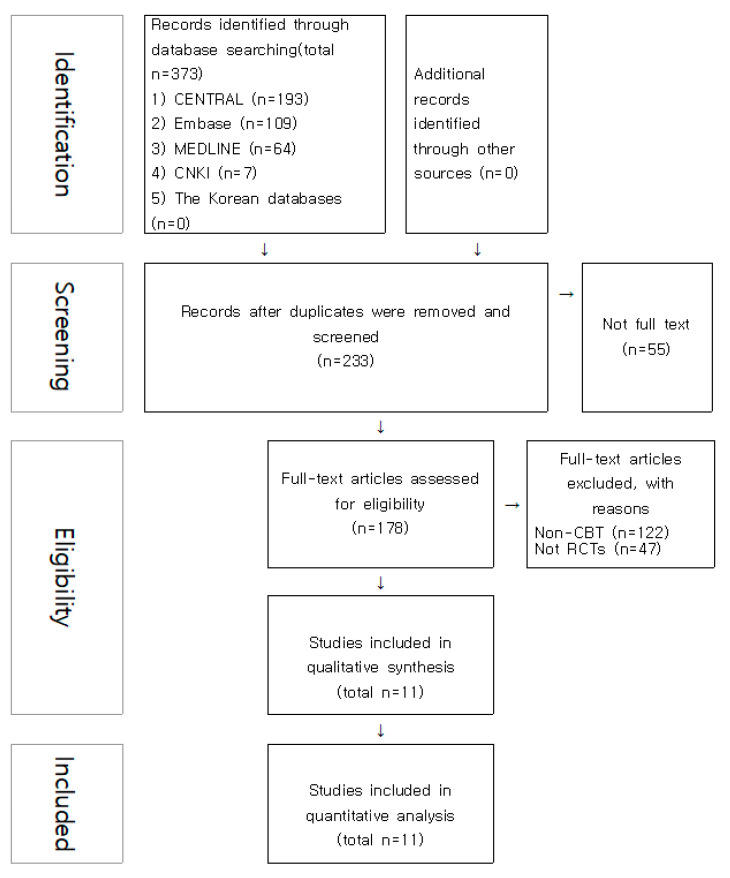
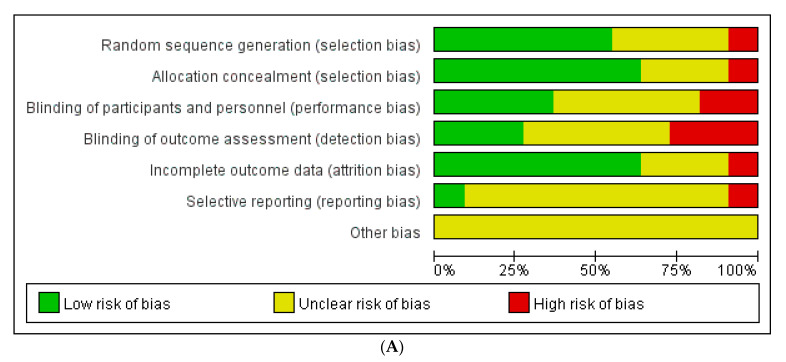
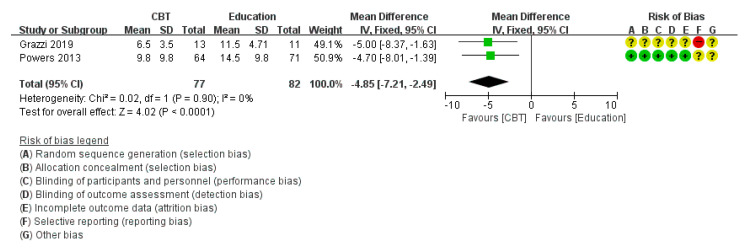
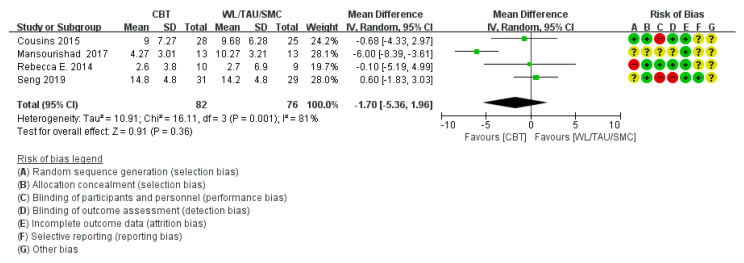
Verification
Claims the paper makes
The claims and statistics of this paper haven’t been checked yet.
Free: it reads the open-access text and checks the first 5 claims that cite a source we can check. Create a free account to check every claim.
Self-check
Percentages, sums and reported differences re-computed from the paper’s own numbers.
The self-check needs the paper’s full text.
Citations
Cites
The PRISMA 2020 statement: An updated guideline for reporting systematic reviews
Page, M. J., McKenzie, J. E., Bossuyt, P. M., Boutron, I., Hoffmann, T. C., Mulrow, C. D., Shamseer, L., Tetzlaff, J. M., Akl, E. A., Brennan, S. E., et al. (2021) · BMJ · doi:10.1136/bmj.n71 · Cited by 108,283
(2018) · Cephalalgia · doi:10.1177/0333102417738202 · Cited by 10,733 · cited 3×
“Migraine is a disease characterized by severe headache accompanied by symptoms, such as nausea, photophobia, phonophobia, and vomiting [1].”
BackgroundInfluentialVos, T., Allen, C., Arora, M., Barber, R. M., Bhutta, Z. A., Brown, A., Carter, A., Casey, D. C., Charlson, F. J., Chen, A. Z., et al. (2016) · The Lancet · doi:10.1016/s0140-6736(16)31678-6 · Cited by 7,253
The Efficacy of Cognitive Behavioral Therapy: A Review of Meta-analyses
Hofmann, S. G., Asnaani, A., Vonk, I. J. J., Sawyer, A. T., & Fang, A. (2012) · Cognitive Therapy and Research · doi:10.1007/s10608-012-9476-1 · Cited by 3,445 · cited 1×
“Cognitive behavioral therapy (CBT) is a treatment that uses cognitive factors to improve mental disorders and psychological distress [20].”
BackgroundMigraine — Current Understanding and Treatment
Goadsby, P. J., Lipton, R. B., & Ferrari, M. D. (2002) · New England Journal of Medicine · doi:10.1056/nejmra010917 · Cited by 1,918 · cited 1×
“Migraine is a chronic neurological disorder and autonomic nervous system dysfunction that affects patients’ quality of life [5,6].”
BackgroundA six-item short-form survey for measuring headache impact: The HIT-6™
Kosinski, M., Bayliss, M. S., Bjorner, J. B., Ware, J. E., Garber, W. H., Batenhorst, A., Cady, R., Dahlöf, C. G. H., Dowson, A., & Tepper, S. (2003) · Quality of Life Research · doi:10.1023/a:1026119331193 · Cited by 1,376
Silberstein, S. D. (2000) · Neurology · doi:10.1212/wnl.55.6.754 · Cited by 1,360
Stewart, W. F., Lipton, R. B., Dowson, A. J., & Sawyer, J. (2001) · Neurology · doi:10.1212/wnl.56.suppl_1.s20 · Cited by 1,210 · cited 1×
“Primary outcome measures were headache days assessed by headache diary (mostly defined as a day containing 2 or more hours of headache); headache duration and pain intensity; Migraine Disability Assessment (MIDAS) [27], assessing migraine-related disability, with a higher score reflecting more severe disability; and H…”
BackgroundEFNS guideline on the drug treatment of migraine—revised report of an EFNS task force
Evers, S., Áfra, J., Frese, A., Goadsby, P. J., Linde, M., May, A., & Sándor, P. S. (2009) · European Journal of Neurology · doi:10.1111/j.1468-1331.2009.02748.x · Cited by 892
Ehde, D. M., Dillworth, T. M., & Turner, J. A. (2014) · American Psychologist · doi:10.1037/a0035747 · Cited by 879 · cited 1×
“Several previous studies have shown that CBT reduces disability and chronic pain in patients [39,40].”
Background
Research works printed but not linked: 1
- Van Den Brink M. Antoinette MacGregor E.A. Gender and Migraine Springer International Cham, Switzerland 2019 1 15
Cited by
Items 101–104 of 104
A clinical case of chronic migraine complex therapy
BELOUS, M., Volgina, I., & Pavlova, A. (2026) · Современная терапия в психиатрии и неврологии · doi:10.32416/2304-9707-2026-3-25-30
Zhang, F.-Q., Wu, Y.-N., Liu, W., Yang, K., Li, X., & Wang, S.-Y. (2026) · World Journal of Pediatrics · doi:10.1007/s12519-026-01103-9
Terwindt, G. M., Morel, A. E. G., Akcicek, H., Ribalov, R., Zhang, Y., Raad, H., Modi, K., Paudel, N., Campos, V. R., & Kivelevitch, G. (2026) · Cephalalgia · doi:10.1177/03331024261477399
Prasad, S., Elaiyappan, R., Hariram, V., Ramalingam, S., & Arul, V. (2026) · Arquivos de Neuro-Psiquiatria · doi:10.1055/s-0046-1829149
“Wei et al. 34 and Bae et al. 35 previously evaluated 19 migraine diagnostic questionnaires; our review addresses the complementary domain of impact and disability measurement instruments.”
Metadata
- Authors
- Bae, J.-Y., Sung, H.-K., Kwon, N.-Y., Go, H.-Y., Kim, T.-J., Shin, S.-M., & Lee, S.
- Affiliations
- Kyung Hee University (KR)
- Semyung University (KR)
- Gachon University (KR)
- Clinical Trial Center, Wonkwang University Gwangju Hospital, Gwangju 61729, Korea
- Venue
- Medicina
- Publisher
- MDPI AG
- Published
- 2021-12-28
- Volume
- 58
- Issue
- 1
- Pages
- 44
- ISSN
- 1010-660X (ISSN-L)
- 1648-9144
- PMC
- PMC8777662
- OpenAlex
- W4200183743
- Cited by
- 105
- References
- 38
- Citations by year
- 2026: 22 · 2025: 23 · 2024: 35 · 2023: 17 · 2022: 7
- FWCI
- 2.66
- Type
- journal article
- Language
- en
- Open access
- gold
- doi.org
- Licence
- Locations
- Medicina (publishedVersion, cc-by)
- PubMed Central (publishedVersion, cc-by)
- PubMed (publishedVersion)
- DOAJ (DOAJ: Directory of Open Access Journals) (submittedVersion, cc-by-sa)
- Funders
- Korea Health Industry Development Institute (HB16C0043)
- Topics
- Health Sciences › Medicine › Clinical Neurology › Migraine and Headache Studies
- Health Sciences › Dentistry › Oral Surgery › Temporomandibular Joint Disorders
- Health Sciences › Medicine › Clinical Neurology › Traumatic Brain Injury Research
- Keywords
- cognitive behavioral therapy, migraine, headache frequency, headache severity, migraine disability, psychogenic headache, treatment effectiveness, adverse effects, autonomic symptoms
- MeSH terms
- Disability Evaluation, Headache, Humans, Migraine Disorders, Pain Measurement, Cognitive Behavioral Therapy
About these checks
Registry, retraction, Cites and statistics results are computed, not judged, with one exception: a printed reference that no index lists is read once by a model before it counts as a citation error. Claims are extracted by a model and kept only when their quote appears verbatim in the text; each cited source is then checked, with a model’s help, for whether it says what the claim relies on. Those verdicts can be wrong — read the claim’s quote and the cited source before relying on one.
Statistics and arithmetic are recomputed, not judged.
Confidence bands are shown only for fields calibrated on our annotated test set. None is calibrated yet, so no band is shown.
What counts as a claim ›How we measure confidence ›How we check this ›
Are you an author, or do you see a problem with this page? Request a review
Data sources
Bibliographic data: Semantic Scholar, OpenAlex, Crossref.
Contains information from the Semantic Scholar Academic Graph Datasets, made available under the ODC Attribution License (ODC-BY 1.0).
Semantic Scholar’s data is described in: Kinney, R., et al. (2023). The Semantic Scholar Open Data Platform. arXiv:2301.10140.
