

Survey Analysis of Quantitative and Qualitative Menstrual Cycle Tracking Technologies
Open accessThe DOI matches its Crossref record; 33 of the 33 references it cites were found in a registry or an index.
Abstract
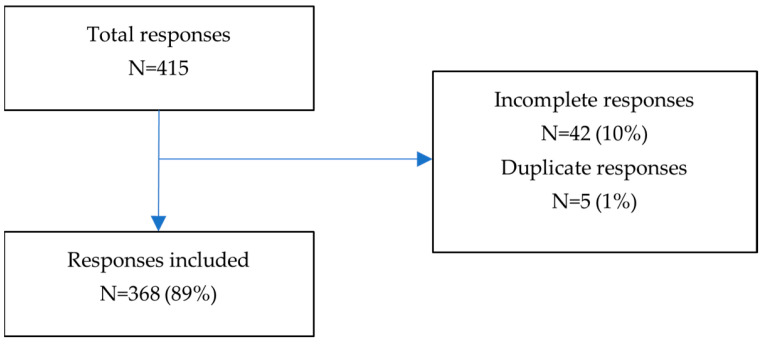
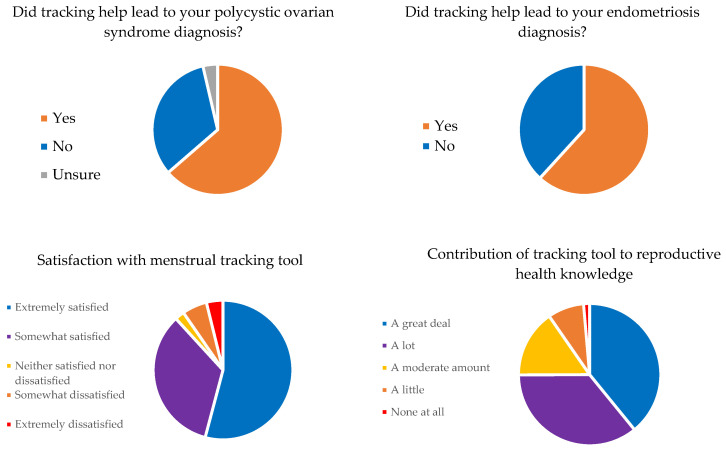
Background and Objectives: Digital health and personalized medicine are advancing at an unprecedented pace. Users can document their menstrual cycle data in a variety of ways, including smartphone applications (apps), temperature tracking devices, and at-home urine hormone tests. Understanding the needs and goals of women using menstrual cycle tracking technologies is the first step to making these technologies more evidence based. The purpose of this study was to examine the current use of these technologies and explore how they are being used within the context of common hormonal and reproductive disorders, like polycystic ovary syndrome (PCOS), endometriosis, and infertility. Materials and Methods: This was a cross-sectional study evaluating menstrual cycle tracking technology use. Participants were recruited in January–March 2023 using social media groups and a Marquette Method instructor email listserv. Data were collected using an electronic survey with Qualtrics. Data collected included participant demographics, menstrual cycle characteristics, reproductive health history, and menstrual cycle tracking behavior. Results: Three-hundred and sixty-eight participants were included in the analysis. Women had various motivations for tracking their menstrual cycles. Most participants (72.8%) selected “to avoid getting pregnant” as the primary motivation. Three hundred and fifty-six participants (96.7%) reported using a fertility awareness-based method to track and interpret their menstrual cycle data. The Marquette Method, which utilizes urine hormone tracking, was the most frequently used method (n = 274, 68.2%). The most frequently used cycle technology was a urine hormone test or monitor (n = 299, 81.3%), followed by a smartphone app (n = 253, 68.8%), and a temperature tracking device (n = 116, 31.5%). Women with PCOS (63.6%), endometriosis (61.8%), and infertility (75%) in our study reported that the use of tracking technologies aided in the diagnosis. Most participants (87.2%) reported a high degree of satisfaction with their use and that they contributed to their reproductive health knowledge (73.9%). Conclusions: Women in our study reported avoiding pregnancy as their primary motivation for using menstrual cycle tracking technologies, with the most frequently used being a urine hormone test or monitor. Our study results emphasize the need to validate these technologies to support their use for family planning. Given that most women in this study reported using a fertility awareness-based method, the results cannot be generalized to all users of menstrual cycle tracking technologies.
Overview
The claims and statistics of this paper haven’t been checked yet.
Free: it reads the open-access text and checks the first 5 claims that cite a source we can check. Create a free account to check every claim.
Integrity signals
Registry
Cites
Statistics
Figures
Verification
Claims the paper makes
The claims and statistics of this paper haven’t been checked yet.
Free: it reads the open-access text and checks the first 5 claims that cite a source we can check. Create a free account to check every claim.
Claims other papers make about this one
Each is checked against this paper’s own text: does it say what the citing paper says it does?
The source backs part of the claim, not all of it — or backs it for a different population, condition or comparison.
In the citing paper
“another article identified 119 free mobile apps for menstrual tracking for women with or without PCOS (eg, Flo [Flo Health, Inc] and Clue [BioWink GmbH]) [32]”
From Availability and Use of Digital Technology Among Women With Polycystic Ovary Syndrome: Scoping Review (2025) · cites this paper as [32]
Experimental — accuracy not yet measuredThe source backs part of the claim, not all of it — or backs it for a different population, condition or comparison.
In the citing paper
“A similar opinion was shared by those with endometriosis (n = 22, 62.8%) and infertility (n = 15, 75%) [53].”
From Polycystic Ovary Syndrome and the Internet of Things: A Scoping Review (2024) · cites this paper as [53]
Experimental — accuracy not yet measuredThe source backs part of the claim, not all of it — or backs it for a different population, condition or comparison.
In the citing paper
“Menstrual tracking apps (i.e., Flo and Read Your Body) were the most commonly used apps in studies including participants with and without PCOS conducted in New Zealand (n = 36, 51%) [54] and USA (n = 78, 21.19%) [53], respectively.”
From Polycystic Ovary Syndrome and the Internet of Things: A Scoping Review (2024) · cites this paper as [53]
Experimental — accuracy not yet measuredThe source backs part of the claim, not all of it — or backs it for a different population, condition or comparison.
In the citing paper
“The use of wearables such as activity [78,79] and sleep trackers [77,80], as well as mobile apps for symptom tracking [53,54], can keep clinicians informed about patients’ progress, consequently promoting communication and engagement.”
From Polycystic Ovary Syndrome and the Internet of Things: A Scoping Review (2024) · cites this paper as [53]
Experimental — accuracy not yet measuredThe cited source says what the claim attributes to it.
In the citing paper
“In the latter, participants (n = 368, aged 20 to 49 years) reported that their most frequently used technology was a urine hormone test or monitor (n = 299, 81.3%), mobile app (n = 253, 68.8%), or temperature tracking device (n = 116, 31.5%) [53].”
From Polycystic Ovary Syndrome and the Internet of Things: A Scoping Review (2024) · cites this paper as [53]
1 more claim about this paper
Create a free account to see every claim other papers make about this one.
Self-check
Percentages, sums and reported differences re-computed from the paper’s own numbers.
The self-check needs the paper’s full text.
Citations
Cites
Giudice, L. C. (2010) · New England Journal of Medicine · doi:10.1056/nejmcp1000274 · Cited by 1,924
Menstruation in girls and adolescents: using the menstrual cycle as a vital sign
American Academy of Pediatrics, Committee on Adolescence, American College of Obstetricians and Gynecologists, & Committee on Adolescent Health Care (2006) · PEDIATRICS · doi:10.1542/peds.2006-2481 · Cited by 651
Azziz, R., Marin, C., Hoq, L., Badamgarav, E., & Song, P. (2005) · The Journal of Clinical Endocrinology & Metabolism · doi:10.1210/jc.2005-0628 · Cited by 537 · cited 2×
“The only standalone technology validated for avoiding pregnancy is Natural Cycles [25], although the Marquette Method of Natural Family Planning, which incorporates multiple technologies, has also been validated for avoiding pregnancy [16,25].”
BackgroundGibson-Helm, M., Teede, H., Dunaif, A., & Dokras, A. (2016) · The Journal of Clinical Endocrinology & Metabolism · doi:10.1210/jc.2016-2963 · Cited by 428
Real-world menstrual cycle characteristics of more than 600,000 menstrual cycles
Bull, J. R., Rowland, S. P., Scherwitzl, E. B., Scherwitzl, R., Danielsson, K. G., & Harper, J. (2019) · npj Digital Medicine · doi:10.1038/s41746-019-0152-7 · Cited by 404 · cited 1×
“In recent years, there has been tremendous growth in menstrual cycle tracking technologies, aimed at allowing women to easily track their menstrual cycles [1].”
BackgroundExamining menstrual tracking to inform the design of personal informatics tools
Epstein, D. A., Lee, N. B., Kang, J. H., Agapie, E., Schroeder, J., Pina, L. R., Fogarty, J., Kientz, J. A., & Munson, S. (2017) · Proceedings of the 2017 CHI Conference on Human Factors in Computing Systems · doi:10.1145/3025453.3025635 · Cited by 346 · cited 1×
“The recent advancement in these technologies demonstrates an increasing interest in tracking menstrual cycle data to achieve reproductive health goals [2].”
BackgroundFrank-Herrmann, P., Heil, J., Gnoth, C., Toledo, E., Baur, S., Pyper, C., Jenetzky, E., Strowitzki, T., & Freundl, G. (2007) · Human Reproduction · doi:10.1093/humrep/dem003 · Cited by 201
Impact of Endometriosis Diagnostic Delays on Healthcare Resource Utilization and Costs
Surrey, E., Soliman, A. M., Trenz, H., Blauer-Peterson, C., & Sluis, A. (2020) · Advances in Therapy · doi:10.1007/s12325-019-01215-x · Cited by 151 · cited 1×
“As diagnosis of these conditions is frequently delayed [36,37], tools that have the potential to shorten the time to diagnosis could have a considerable impact on treatment outcomes for women with these conditions.”
BackgroundThe Performance of Fertility Awareness-based Method Apps Marketed to Avoid Pregnancy
Duane, M., Contreras, A., Jensen, E. T., & White, A. (2016) · The Journal of the American Board of Family Medicine · doi:10.3122/jabfm.2016.04.160022 · Cited by 110
Shilaih, M., Goodale, B. M., Falco, L., Kübler, F., De Clerck, V., & Leeners, B. (2018) · Bioscience Reports · doi:10.1042/bsr20171279 · Cited by 109 · cited 2×
“A few temperature devices marketed for menstrual cycle tracking include Ava, TempdropTM, and Oura [7,8].”
BackgroundPeriod tracker applications: What menstrual cycle information are they giving women?
Worsfold, L., Marriott, L., Johnson, S., & Harper, J. C. (2021) · Women s Health · doi:10.1177/17455065211049905 · Cited by 107
Alzueta, E., de Zambotti, M., Javitz, H. S., Dulai, T., Albinni, B., Simon, K. C., Sattari, N., Zhang, J., Shuster, A., Mednick, S. C., et al. (2022) · International Journal of Women s Health · doi:10.2147/ijwh.s341917 · Cited by 101 · cited 3×
“Several consumer-available tracking technologies are in the early stages of reliability testing for tracking or confirming ovulation [7,13,27,28].”
BackgroundIncreased pregnancy rate with use of the Clearblue easy fertility monitor
Robinson, J. E., Wakelin, M., & Ellis, J. E. (2007) · Fertility and Sterility · doi:10.1016/j.fertnstert.2006.05.054 · Cited by 99 · cited 3×
“The most frequently used urine hormone testing device was the Clearblue ® Fertility Monitor The most frequently used urine hormone testing device was the Clearblue ® Fertility Monitor (49.3%), followed by luteinizing hormone (LH) test strips (34.1%), and PROOV progesterone test strips (12.2%).”
MethodInfluentialIdentification and prediction of the fertile window using NaturalCycles
Berglund Scherwitzl, E., Lindén Hirschberg, A., & Scherwitzl, R. (2015) · The European Journal of Contraception & Reproductive Health Care · doi:10.3109/13625187.2014.988210 · Cited by 90 · cited 6×
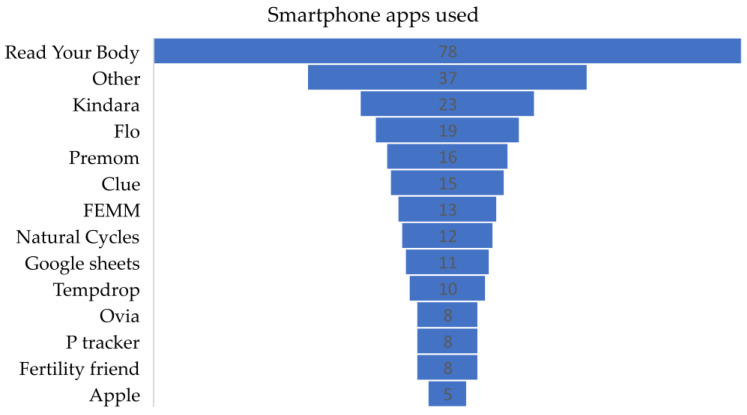
“For instance, there are significant differences between apps that act as an electronic chart—where users input and interpret their own observations (e.g., Read Your Body)—and apps that provide interpretations of the users’ data based on algorithms (e.g., Natural Cycles).”
BackgroundInfluentialZHU, T. Y., Rothenbühler, M., Hamvas, G. V., Hofmann, A., Welter, J., Kahr, M. K., Kimmich, N., Shilaih, M., & Leeners, B. (2021) · Journal of Medical Internet Research · doi:10.2196/20710 · Cited by 71 · cited 1×
“Several consumer-available tracking technologies are in the early stages of reliability testing for tracking or confirming ovulation [7,13,27,28].”
BackgroundWang, Y., Stuart, J. J., Rich-Edwards, J. W., Missmer, S. A., Rexrode, K. M., Farland, L. V., Mukamal, K. J., Nelson, S. M., Solomon, C. G., Fraser, A., et al. (2022) · JAMA Network Open · doi:10.1001/jamanetworkopen.2022.38513 · Cited by 70
Do fertility tracking applications offer women useful information about their fertile window?
Ali, R., Gürtin, Z. B., & Harper, J. C. (2020) · Reproductive BioMedicine Online · doi:10.1016/j.rbmo.2020.09.005 · Cited by 69 · cited 1×
“Prior research has demonstrated that many period tracker apps provide conflicting information on an ovulation day and a fertile window [4,6,26].”
BackgroundA Critical Appraisal of Fertility and Menstrual Tracking Apps for the iPhone
Zwingerman, R., Chaikof, M., & Jones, C. (2020) · Journal of Obstetrics and Gynaecology Canada · doi:10.1016/j.jogc.2019.09.023 · Cited by 67 · cited 2×
“Prior research has demonstrated that many period tracker apps provide conflicting information on an ovulation day and a fertile window [4,6,26].”
BackgroundUse of urinary pregnanediol 3-glucuronide to confirm ovulation
Écochard, R., Leiva, R. A., Bouchard, T. P., Boehringer, H., Direito, A., Mariani, A., & Fehring, R. J. (2013) · Steroids · doi:10.1016/j.steroids.2013.06.006 · Cited by 64
Self-citationEFFICACY OF THE MARQUETTE METHOD OF NATURAL FAMILY PLANNING
Fehring, R. J., Schneider, M., & Barron, M. L. (2008) · MCN The American Journal of Maternal/Child Nursing · doi:10.1097/01.nmc.0000341254.80426.32 · Cited by 47
Field trial of Billings Ovulation Method of natural family planning
INDIANCOUNCILOFMEDICALRESEARCH (1996) · Contraception · doi:10.1016/0010-7824(95)00269-3 · Cited by 40 · cited 2×
“2%), the Billings Ovulation Method®, which also utilizes cervical mucus monitoring [21] (n = 28, 7%), the Symptothermal Method, which utilizes temperature tracking and cervical mucus monitoring [22] (n = 30, 7.”
MethodUse Effectiveness of the Creighton Model Ovulation Method of Natural Family Planning
Fehring, R. J., Lawrence, D. M., & Philpot, C. (1994) · Journal of Obstetric, Gynecologic & Neonatal Nursing · doi:10.1111/j.1552-6909.1994.tb01881.x · Cited by 39 · cited 1×
“2%), followed by the Creighton Model FertilityCareTM System, which utilizes cervical mucus monitoring [20] (n = 53, 13.”
MethodBouchard, T. P., Fehring, R. J., & Mu, Q. (2021) · Expert Review of Molecular Diagnostics · doi:10.1080/14737159.2021.2000393 · Cited by 38 · cited 3×
“%) reported using the Mira Fertility Tracker and 3 (0.56”
MethodInfluentialSelf-citationOkoth, K., Parry‐Smith, W., Thomas, G. N., Nirantharakumar, K., & Adderley, N. J. (2023) · BMC Medicine · doi:10.1186/s12916-023-02794-x · Cited by 38 · cited 1×
“Irregular and long menstrual cycles are common among women of reproductive age and are associated with greater risk for chronic cardiovascular and metabolic diseases [34,35].”
BackgroundCharacterization of polycystic ovary syndrome among Flo app users around the world
Jain, T., Negris, O., Brown, D., Galic, I., Salimgaraev, R., & Zhaunova, L. (2021) · Reproductive Biology and Endocrinology · doi:10.1186/s12958-021-00719-y · Cited by 37 · cited 10×
“In this study, we also explored the use of menstrual cycle tracking technology by women with common reproductive disorders, including PCOS, endometriosis, and infertility.”
MethodInfluentialTime to Pregnancy for Women Using a Fertility Awareness Based Mobile Application to Plan a Pregnancy
Favaro, C., Pearson, J. T., Rowland, S. P., Jukic, A. M. Z., Chelstowska, M., Scherwitzl, E. B., Scherwitzl, R., Gemzell‐Danielsson, K., & Harper, J. C. (2021) · Journal of Women s Health · doi:10.1089/jwh.2021.0026 · Cited by 26
Stanford, J. B., Willis, S. K., Hatch, E. E., Rothman, K. J., & Wise, L. A. (2019) · Fertility and Sterility · doi:10.1016/j.fertnstert.2019.06.036 · Cited by 25 · cited 1×
“that the most common fertility indicator was charting menstrual cycle days [30].”
BackgroundPredicting serum hormone concentration by estimation of urinary hormones through a home-use device
Pattnaik, S., Das, D., Venkatesan, V. A., & Rai, A. (2022) · Human Reproduction Open · doi:10.1093/hropen/hoac058 · Cited by 24
Rodriguez, E. M., Thomas, D., Druet, A., Vlajic-Wheeler, M., Lane, K. J., & Mahalingaiah, S. (2020) · JMIR Formative Research · doi:10.2196/15094 · Cited by 18
Multisite Effectiveness Study of the Marquette Method of Natural Family Planning Program
Mu, Q., Fehring, R. J., & Bouchard, T. P. (2020) · The Linacre Quarterly · doi:10.1177/0024363920957515 · Cited by 12 · cited 1×
“The Marquette Method is a FABM that combines threshold-based urine hormone test results from the Clearblue fertility monitor with a method-specific algorithm to help women identify their fertile window [19,29].”
MethodSelf-citationUS Women's Perceptions and Acceptance of New Reproductive Health Technologies
Worthington, A. K., Burke, E. E., Shirazi, T. N., & Leahy, C. (2020) · Women s Health Reports · doi:10.1089/whr.2020.0063 · Cited by 10
Capotosto, M. P., Lee, C. S., Jurgens, C. Y., Wang, S., Mitsunami, M., Charlton, B. M., & Chavarro, J. E. (2023) · Nursing Research · doi:10.1097/nnr.0000000000000666 · Cited by 4
Yang, Z., Li, N., & Kang, S. M. (2020) · Fertility and Sterility · doi:10.1016/j.fertnstert.2020.08.1190 · Cited by 3 · cited 1×
“Several consumer-available tracking technologies are in the early stages of reliability testing for tracking or confirming ovulation [7,13,27,28].”
Background
Cited by
Exel, J., & Dabnichki, P. (2024) · Applied Sciences · doi:10.3390/app14083361 · Cited by 76
The Menstrual Cycle as a Vital Sign: A Comprehensive Review
Vollmar, A. K. R., Mahalingaiah, S., & Jukic, A. M. Z. (2024) · F&S Reviews · doi:10.1016/j.xfnr.2024.100081 · Cited by 70
Towards Hormone Health: An Autoethnography of Long-Term Holistic Tracking to Manage PCOS
Kang, D., Li, J., Leshed, G., Rzeszotarski, J. M., & Lu, X. (2025) · CHI Conference on Human Factors in Computing Systems · doi:10.1145/3706598.3713619 · Cited by 24
“Mobile health applications such as menstruation cycle tracking apps have been found useful for improving PCOS patients’ health [124, 149].”
Wegrzynowicz, A. K., Eyvazzadeh, A. D., & Beckley, A. (2024) · Seminars in Reproductive Medicine · doi:10.1055/s-0044-1791190 · Cited by 23
“46, 118,119 However, smartphones and apps also have powerful data collection potential to assess population-level menstrual cycle patterns and characteristics, 120,121 and may help diagnose reproductive health conditions.”
Polycystic Ovary Syndrome and the Internet of Things: A Scoping Review
Graca, S., Alloh, F., Lagojda, L., Dallaway, A., Kyrou, I., Randeva, H. S., & Kite, C. (2024) · Healthcare · doi:10.3390/healthcare12161671 · Cited by 14
“Analysis of 80 PCOS-related YouTube videos with a total of 36,437,534 views found that most were uploaded by non-physicians (n = 30, 37”
Background
Metadata
- Authors
- Stujenske, T. M., Mu, Q., Pérez Capotosto, M., & Bouchard, T. P.
- Affiliations
- Duquesne University (US)
- Marquette University (US)
- W. F. Connell School of Nursing, Boston College, Chestnut Hill, MA 02467, USA
- University of Calgary (CA)
- Corresponding author
- Stujenske, Theresa M.
- Venue
- Medicina
- Publisher
- MDPI AG
- Published
- 2023-08-22
- Volume
- 59
- Issue
- 9
- Pages
- 1509
- ISSN
- 1010-660X (ISSN-L)
- 1648-9144
- PMC
- PMC10534579
- OpenAlex
- W4386074316
- Cited by
- 22
- References
- 33
- Citations by year
- 2026: 6 · 2025: 8 · 2024: 7 · 2023: 1
- FWCI
- 5.63
- Type
- journal article
- Language
- en
- Open access
- gold
- doi.org
- Licence
- Locations
- Medicina (publishedVersion, cc-by)
- PubMed Central (publishedVersion, cc-by)
- PubMed (publishedVersion)
- DOAJ (DOAJ: Directory of Open Access Journals) (submittedVersion, cc-by-sa)
- Topics
- Health Sciences › Medicine › Public Health, Environmental and Occupational Health › Menstrual Health and Disorders
- Health Sciences › Health Professions › General Health Professions › Mobile Health and mHealth Applications
- Health Sciences › Medicine › Public Health, Environmental and Occupational Health › Reproductive Health and Contraception
- Keywords
- menstrual cycle tracking, fertility awareness, mobile application, polycystic ovary syndrome, endometriosis, infertility, family planning, reproductive health knowledge, user satisfaction, digital health
- MeSH terms
- Smartphone, Adult, Cross-Sectional Studies, Female, Humans, Menstrual Cycle, Middle Aged, Surveys and Questionnaires, Mobile Applications
About these checks
Registry, retraction, Cites and statistics results are computed, not judged, with one exception: a printed reference that no index lists is read once by a model before it counts as a citation error. Claims are extracted by a model and kept only when their quote appears verbatim in the text; each cited source is then checked, with a model’s help, for whether it says what the claim relies on. Those verdicts can be wrong — read the claim’s quote and the cited source before relying on one.
Statistics and arithmetic are recomputed, not judged.
Confidence bands are shown only for fields calibrated on our annotated test set. None is calibrated yet, so no band is shown.
What counts as a claim ›How we measure confidence ›How we check this ›
Are you an author, or do you see a problem with this page? Request a review
Data sources
Bibliographic data: Semantic Scholar, OpenAlex, Crossref.
Contains information from the Semantic Scholar Academic Graph Datasets, made available under the ODC Attribution License (ODC-BY 1.0).
Semantic Scholar’s data is described in: Kinney, R., et al. (2023). The Semantic Scholar Open Data Platform. arXiv:2301.10140.
