

Adherence to the Mediterranean Diet during Pregnancy: Associations with Sociodemographic and Anthropometric Parameters, Perinatal Outcomes, and Breastfeeding Practices
Open accessThe DOI matches its Crossref record; 62 of the 62 references it cites were found in a registry or an index.
Abstract
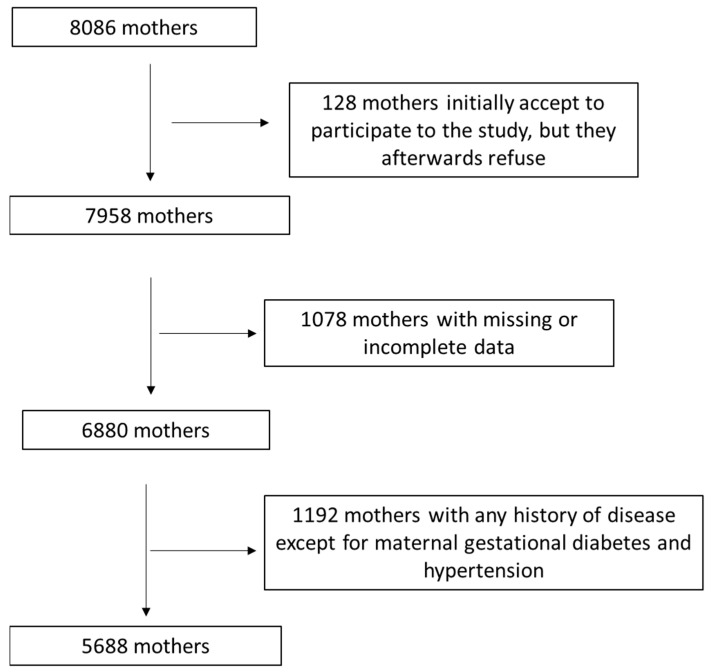
Background and Objectives: The Mediterranean diet (MD) has been recognized as a beneficial nutritional pattern that promotes human health, decreasing the risks of a variety of human disorders and pathological states, including adverse pregnancy outcomes. In this aspect, the current survey aimed to assess the potential association of compliance with the MD during gestation with various sociodemographic and anthropometric parameters, perinatal outcomes, and breastfeeding practices. Materials and Methods: This was a cross-sectional study performed on 5688 pregnant women from 10 distinctive Greek areas. Face-to-face interviews with qualified questionnaires and thorough retrievals of medical records were performed to collect data concerning the participants’ sociodemographic and anthropometric parameters, perinatal outcomes, and breastfeeding practices. Results: Elevated compliance with the MD during pregnancy was independently related with older age, higher educational status, and better economic status as well as decreased incidences of pre-pregnancy overweight/obesity and excess gestational weight gain and a lower likelihood of gestational diabetes. Moreover, greater adherence to the MD was independently associated with an increased prevalence of delivering vaginally and a greater prevalence of exclusive breastfeeding for at least 16 weeks postpartum. Conclusions: A higher level of compliance with the MD for the period of gestation was associated with several favorable lifestyle factors that may promote maternal health. Further studies with a prospective design as well as studies exploring the potential effects of maternal compliance with the MD for the period of pregnancy on the health of children should be performed. Future studies should also be extended beyond the MD by assessing the potential beneficial effects of adopting a Mediterranean lifestyle on maternal and child health.
Overview
The claims and statistics of this paper haven’t been checked yet.
Free: it reads the open-access text and checks the first 5 claims that cite a source we can check. Create a free account to check every claim.
Integrity signals
Registry
Cites
Statistics
Figures
Verification
Claims the paper makes
The claims and statistics of this paper haven’t been checked yet.
Free: it reads the open-access text and checks the first 5 claims that cite a source we can check. Create a free account to check every claim.
Claims other papers make about this one
Each is checked against this paper’s own text: does it say what the citing paper says it does?
The source backs part of the claim, not all of it — or backs it for a different population, condition or comparison.
In the citing paper
“Amongst the seven studies, five studies examined the risk of GDM [56,57,59,60,62], four studies examined the risk of preeclampsia [57,58,61,62], and three studies examined the risk of eGWG [56,61,62].”
From Impact of Mediterranean Diet Adherence During Pregnancy on Preeclampsia, Gestational Diabetes Mellitus, and Excessive Gestational Weight Gain: A Systematic Review of Observational Studies and Randomized Controlled Trials (2025) · cites this paper as [56]
Experimental — accuracy not yet measuredThe source backs part of the claim, not all of it — or backs it for a different population, condition or comparison.
In the citing paper
“one cross-sectional study (OR: 2.32; 95% CI 2.13 to 2.57 for a 1-point decrease in the dietary score) [56]”
From Impact of Mediterranean Diet Adherence During Pregnancy on Preeclampsia, Gestational Diabetes Mellitus, and Excessive Gestational Weight Gain: A Systematic Review of Observational Studies and Randomized Controlled Trials (2025) · cites this paper as [56]
Experimental — accuracy not yet measuredThe source backs part of the claim, not all of it — or backs it for a different population, condition or comparison.
In the citing paper
“one cross-sectional study (OR: 1.78; 95% CI 1.51 to 2.02 for a 1-point decrease in the MD score).”
From Impact of Mediterranean Diet Adherence During Pregnancy on Preeclampsia, Gestational Diabetes Mellitus, and Excessive Gestational Weight Gain: A Systematic Review of Observational Studies and Randomized Controlled Trials (2025) · cites this paper as [56]
Experimental — accuracy not yet measuredThe cited source says what the claim attributes to it.
In the citing paper
“Four [56,59,60,62] out of the five studies that examined the risk of GDM reported an inverse association between high MD adherence in pregnancy and low risk of GDM, but not in the US cohort study [57].”
Self-check
Percentages, sums and reported differences re-computed from the paper’s own numbers.
The self-check needs the paper’s full text.
Citations
Cites
(2004) · The Lancet · doi:10.1016/s0140-6736(03)15268-3 · Cited by 12,717
THE DIET AND 15-YEAR DEATH RATE IN THE SEVEN COUNTRIES STUDY
KEYS, A., MIENOTTI, A., KARVONEN, M. J., ARAVANIS, C., BLACKBURN, H., BUZINA, R., DJORDJEVIC, B. S., DONTAS, A. S., FIDANZA, F., KEYS, M. H., et al. (1986) · American Journal of Epidemiology · doi:10.1093/oxfordjournals.aje.a114480 · Cited by 1,790 · cited 1×
“The MD was primarily invented by Ancel Keys in 1960 [1]; it has been considered one of the most-investigated and broadly admired diets and has reasonably attracted the worldwide interest of the scientific community [2].”
BackgroundMaternal obesity and pregnancy outcome: a study of 287 213 pregnancies in London
Sebire, N., Jolly, M., Harris, J., Wadsworth, J., Joffe, M., Beard, R., Regan, L., & Robinson, S. (2001) · International Journal of Obesity · doi:10.1038/sj.ijo.0801670 · Cited by 1,743 · cited 1×
“Diet and the state of nourishment have been considered crucial factors for the health of both pregnant women and their fetuses during gestation [12].”
BackgroundPanagiotakos, D. B., Pitsavos, C., & Stefanadis, C. (2006) · Nutrition, Metabolism and Cardiovascular Diseases · doi:10.1016/j.numecd.2005.08.006 · Cited by 996 · cited 4×
“The sum of the eleven responses results in a score between 0 and 55; a greater score represents a higher level of adherence to the MD [44,45].”
BackgroundMethodInfluentialde Onis, M., & Habicht, J. (1996) · The American Journal of Clinical Nutrition · doi:10.1093/ajcn/64.4.650 · Cited by 961
The Mediterranean diet and health: a comprehensive overview
Guasch‐Ferré, M., & Willett, W. C. (2021) · Journal of Internal Medicine · doi:10.1111/joim.13333 · Cited by 940
Parikh, N. I., Gonzalez, J. M., Anderson, C. A. M., Judd, S. E., Rexrode, K. M., Hlatky, M. A., Gunderson, E. P., Stuart, J. J., Vaidya, D., & On behalf of the American Heart Association Council on Epidemiology and Prevention; Council on Arteriosclerosis, T. A. V. B. C. O. C. A. S. N. A. T. S. C. (2021) · Circulation · doi:10.1161/cir.0000000000000961 · Cited by 743
Cancer and Mediterranean Diet: A Review
Mentella, M. C., Scaldaferri, F., Ricci, C., Gasbarrini, A., & Miggiano, G. A. D. (2019) · Nutrients · doi:10.3390/nu11092059 · Cited by 478
Advanced Maternal Age: Adverse Outcomes of Pregnancy, A Meta-Analysis
Pinheiro, R. L., Areia, A. L., Mota Pinto, A., & Donato, H. (2019) · Acta Médica Portuguesa · doi:10.20344/amp.11057 · Cited by 335
Maternal dietary patterns and preterm delivery: results from large prospective cohort study
Englund-Ogge, L., Brantsaeter, A. L., Sengpiel, V., Haugen, M., Birgisdottir, B. E., Myhre, R., Meltzer, H. M., & Jacobsson, B. (2014) · BMJ · doi:10.1136/bmj.g1446 · Cited by 240
Weight gain in pregnancy and application of the 2009 IOM guidelines: Toward a uniform approach
Gilmore, L. A., & Redman, L. M. (2015) · Obesity · doi:10.1002/oby.20951 · Cited by 214
Mediterranean Diet and Obesity-related Disorders: What is the Evidence?
Muscogiuri, G., Verde, L., Sulu, C., Katsiki, N., Hassapidou, M., Frias-Toral, E., Cucalón, G., Pazderska, A., Yumuk, V. D., Colao, A., et al. (2022) · Current Obesity Reports · doi:10.1007/s13679-022-00481-1 · Cited by 207
Relation of the Mediterranean diet with the incidence of gestational diabetes
Karamanos, B., Thanopoulou, A., Anastasiou, E., Assaad-Khalil, S., Albache, N., Bachaoui, M., Slama, C. B., El Ghomari, H., Jotic, A., Lalic, N., et al. (2014) · European Journal of Clinical Nutrition · doi:10.1038/ejcn.2013.177 · Cited by 191 · cited 2×
“In parallel, it can promote glucose tolerance to a higher extent, even in pregnant women with an absence of gestational diabetes [16,17].”
BackgroundBreastfeeding in the Modern World
Prentice, A. M. (2022) · Annals of Nutrition and Metabolism · doi:10.1159/000524354 · Cited by 188 · cited 1×
“In this aspect, breastfeeding can reduce excess maternal weight gain during pregnancy and can also decrease the mother’s likelihood of developing breast and ovarian cancers, hypertension, and insulin-independent diabetes [35,36].”
BackgroundManagement of Pregnancy in Women of Advanced Maternal Age: Improving Outcomes for Mother and Baby
Glick, I., Kadish, E., & Rottenstreich, M. (2021) · International Journal of Women's Health · doi:10.2147/ijwh.s283216 · Cited by 186 · cited 2×
“In the last few decades, pregnancies of advanced maternal age have become more prevalent, which may be associated with increased risks for adverse pregnancy outcomes for both the mother and the child [63,64].”
BackgroundMediterranean diet in the management and prevention of obesity
Dominguez, L. J., Veronese, N., Di Bella, G., Cusumano, C., Parisi, A., Tagliaferri, F., Ciriminna, S., & Barbagallo, M. (2023) · Experimental Gerontology · doi:10.1016/j.exger.2023.112121 · Cited by 182
Healthy Indexes in Public Health Practice and Research: A Review
Arvaniti, F., & Panagiotakos, D. B. (2008) · Critical Reviews in Food Science and Nutrition · doi:10.1080/10408390701326268 · Cited by 181 · cited 4×
“The sum of the eleven responses results in a score between 0 and 55; a greater score represents a higher level of adherence to the MD [44,45].”
BackgroundMethodInfluentialSotos‐Prieto, M., Moreno‐Franco, B., Ordovás, J. M., León, M., Casasnovas, J. A., & Peñalvo, J. L. (2014) · Public Health Nutrition · doi:10.1017/s1368980014001360 · Cited by 171
Obeid, C. A., Gubbels, J. S., Jaalouk, D., Kremers, S. P. J., & Oenema, A. (2022) · European Journal of Nutrition · doi:10.1007/s00394-022-02885-0 · Cited by 169 · cited 1×
“However, even the residents of the Mediterranean basin have been found to adopt the MD only moderately in the last decade, highlighting the need to increase the promotion of compliance with the MD, at least in the countries of its origin and additionally in the countries beyond them [11].”
BackgroundThe Impact of Mediterranean Dietary Patterns During Pregnancy on Maternal and Offspring Health
Amati, F., Hassounah, S., & Swaka, A. (2019) · Nutrients · doi:10.3390/nu11051098 · Cited by 135 · cited 2×
“Overall, the favorable impact of the MD on the health of a woman throughout the period of pregnancy, and the significance of a pregnant woman’s health for her infant later in its life, have attracted the interest of the scientific community; however, there is currently no strongly conclusive evidence concerning specif…”
BackgroundFeltner, C., Weber, R. P., Stuebe, A., Grodensky, C. A., Orr, C., & Viswanathan, M. (2018) · doi:10.23970/ahrqepccer210 · Cited by 121
Mediterranean diet adherence rates in Sicily, southern Italy
Grosso, G., Marventano, S., Giorgianni, G., Raciti, T., Galvano, F., & Mistretta, A. (2014) · Public Health Nutrition · doi:10.1017/s1368980013002188 · Cited by 118 · cited 2×
“In a more recent study, women who were older residents of a coastal region and who exhibited an advanced education degree and better annual income, as well as those with a decreased BMI, were associated with greater adherence to the MD [51].”
BackgroundChatzi, L., Rifas‐Shiman, S. L., Georgiou, V., Joung, K. E., Koinaki, S., Chalkiadaki, G., Margioris, A., Sarri, K., Vassilaki, M., Vafeiadi, M., et al. (2017) · Pediatric Obesity · doi:10.1111/ijpo.12191 · Cited by 116 · cited 1×
“Several studies have provided evidence that strong compliance with the MD during gestation can reduce several cardiometabolic risk factors like high blood pressure and adiposity [24].”
BackgroundFranco, G. A., Interdonato, L., Cordaro, M., Cuzzocrea, S., & Paola, R. D. (2023) · International Journal of Molecular Sciences · doi:10.3390/ijms24087318 · Cited by 116
MIKKELSEN, T. B., LOUISE ØSTERDAL, M., KNUDSEN, V. K., HAUGEN, M., MELTZER, H. M., BAKKETEIG, L., & OLSEN, S. F. (2008) · Acta Obstetricia et Gynecologica Scandinavica · doi:10.1080/00016340801899347 · Cited by 114 · cited 2×
“Some non-US prospective studies have reported opposing results: the risk of preterm birth was inversely related with higher pregnant women compliance to MD in one study but not in the other [57,58].”
BackgroundResultInfluence of the Mediterranean Diet on Healthy Aging
Andreo-López, M. C., Contreras-Bolívar, V., Muñoz‐Torres, M., García-Fontana, B., & García‐Fontana, C. (2023) · International Journal of Molecular Sciences · doi:10.3390/ijms24054491 · Cited by 105 · cited 1×
“This is ascribed to the fact that the MD has been increasingly found to exert diverse beneficial effects on human health, promoting great daily quality of life and healthy aging and increasing life expectancy [3].”
BackgroundLópez-Gil, J. F., García-Hermoso, A., Sotos-Prieto, M., Cavero-Redondo, I., Martínez-Vizcaíno, V., & Kales, S. N. (2023) · Advances in Nutrition · doi:10.1016/j.advnut.2023.04.011 · Cited by 95
Mantzorou, M., Papandreou, D., Vasios, G. K., Pavlidou, E., Antasouras, G., Psara, E., Taha, Z., Poulios, E., & Giaginis, C. (2022) · Nutrients · doi:10.3390/nu14173599 · Cited by 88 · cited 1×
“Moreover, women with high levels of adherence to the MD are more likely to adopt a healthy lifestyle such as the Mediterranean lifestyle [60], which may enhance their probability of preferring a normal delivery such as vaginal delivery and also selecting exclusive breastfeeding, which is advantageous for the health of…”
BackgroundSelf-citationShin, D., Lee, K., & Song, W. (2016) · Nutrients · doi:10.3390/nu8030162 · Cited by 84
Meltzer, H. M., Brantsæter, A. L., Nilsen, R. M., Magnus, P. M., Alexander, J., & Haugen, M. (2011) · American Journal of Clinical Nutrition · doi:10.3945/ajcn.110.001248 · Cited by 77 · cited 2×
“Some non-US prospective studies have reported opposing results: the risk of preterm birth was inversely related with higher pregnant women compliance to MD in one study but not in the other [57,58].”
BackgroundResultHealthy dietary patterns and common pregnancy complications: A prospective and longitudinal study
Li, M., Grewal, J., Hinkle, S. N., Yisahak, S. F., Grobman, W. A., Newman, R. B., Skupski, D. W., Chien, E. K., Wing, D. A., Grantz, K. L., et al. (2021) · The American Journal of Clinical Nutrition · doi:10.1093/ajcn/nqab145 · Cited by 76 · cited 2×
“Additional studies have documented that adopting healthier nutritional patterns, including the MD, during both the periconceptional and gestational periods may reduce the risk of developing gestational diabetes and/or hypertension, pre-eclampsia, and preterm birth [19].”
BackgroundAssociation of a Mediterranean Diet Pattern With Adverse Pregnancy Outcomes Among US Women
Makarem, N., Chau, K., Miller, E. C., Gyamfi‐Bannerman, C., Tous, I., Booker, W. A., Catov, J. M., Haas, D. M., Grobman, W. A., Levine, L. D., et al. (2022) · JAMA Network Open · doi:10.1001/jamanetworkopen.2022.48165 · Cited by 76 · cited 3×
“In contrast, a longitudinal multicenter survey on 7798 racially, ethnically, and geographically differential women with singleton gestations showed that women with high levels of adherence to the MD had a 28% reduced probability of pre-eclampsia or eclampsia and a 37% decreased risk of gestational diabetes [15].”
BackgroundResultInfluentialMediterranean Diet and Its Association with Cardiovascular Disease Risk Factors: A Scoping Review
Richardson, L. A., Izuora, K. E., & Basu, A. (2022) · International Journal of Environmental Research and Public Health · doi:10.3390/ijerph191912762 · Cited by 72
Zaragoza-Martí, A., Ruiz-Ródenas, N., Herranz-Chofre, I., Sánchez-SanSegundo, M., Serrano Delgado, V. D. L. C., & Hurtado-Sánchez, J. A. (2022) · Frontiers in Nutrition · doi:10.3389/fnut.2022.813942 · Cited by 67
Stråvik, M., Jönsson, K., Hartvigsson, O., Sandin, A., Wold, A. E., Sandberg, A., & Barman, M. (2019) · Nutrients · doi:10.3390/nu11071680 · Cited by 66 · cited 1×
“The impact of maternal diet has been interrelated with several lifestyle factors such as smoking, BMI status, educational level, economic status, age, and place of residency [28].”
BackgroundUrbanization influences dietary habits of Cypriot children: the CYKIDS study
Lazarou, C., & Kalavana, T. V. (2009) · International Journal of Public Health · doi:10.1007/s00038-009-8054-0 · Cited by 55 · cited 1×
“In another study, it was shown that children living in rural areas exhibited higher levels of consumption of more traditional foods and ate fast food less frequently, being more likely to participate in meals with their families [54].”
BackgroundOlmedo‐Requena, R., Fernández, J. G., Amezcua‐Prieto, C., Moreno, J. M., Bueno‐Cavanillas, A., & Jiménez‐Moleón, J. J. (2013) · Public Health Nutrition · doi:10.1017/s1368980013000657 · Cited by 51
Szmidt, M. K., Granda, D., Madej, D., Sicinska, E., & Kałuża, J. (2023) · Nutrients · doi:10.3390/nu15092131 · Cited by 48 · cited 1×
“The MD can promote the maintenance of female reproductive health, exerting an important positive impact by preventing and monitoring reproductive health disorders in women [13].”
BackgroundPaalanen, L., Prättälä, R., Palosuo, H., & Laatikainen, T. K. (2010) · European Journal of Public Health · doi:10.1093/eurpub/ckp233 · Cited by 46
Mediterranean-Style Diet and Risk of Preeclampsia by Race in the Boston Birth Cohort
Minhas, A. S., Hong, X., Wang, G., Rhee, D. K., Liu, T., Zhang, M., Michos, E. D., Wang, X., & Mueller, N. T. (2022) · Journal of the American Heart Association · doi:10.1161/jaha.121.022589 · Cited by 46 · cited 1×
“Better compliance with the MD has been associated with reduced odds of pregnancy-induced hypertension and pre-eclampsia [18].”
BackgroundParlapani, E., Agakidis, C., Karagiozoglou-Lampoudi, T., Sarafidis, K., Agakidou, E., Athanasiadis, A., & Diamanti, E. (2019) · The Journal of Maternal-Fetal & Neonatal Medicine · doi:10.1080/14767058.2017.1399120 · Cited by 45 · cited 2×
“Accordingly, this study showed that decreased compliance with the MD was related to pre-pregnancy maternal overweight and obesity but not with pregnancy-induced hypertension and/or pre-eclampsia [47].”
BackgroundKyprianidou, M., Panagiotakos, D. B., Faka, A., Kambanaros, M., Makris, K. C., & Christophi, C. A. (2020) · Public Health Nutrition · doi:10.1017/s1368980020004267 · Cited by 45 · cited 1×
“Residents of rural regions were found to have higher levels of adherence to the MD compared to residents of urban regions in Cyprus [52,53].”
ResultPower, M. L., Lott, M. L., Mackeen, A. D., DiBari, J., & Schulkin, J. A. (2018) · BMC Pregnancy and Childbirth · doi:10.1186/s12884-018-1883-1 · Cited by 41
Valle, M. A. S. D., Sánchez‐Villegas, A., & Serra‐Majem, L. (2013) · PubMed · doi:10.3305/nh.2013.28.3.6377 · Cited by 38
The role of nutrition and the Mediterranean diet on the trajectories of cognitive decline
Maggi, S., Ticinesi, A., Limongi, F., Noale, M., & Ecarnot, F. (2023) · Experimental Gerontology · doi:10.1016/j.exger.2023.112110 · Cited by 36
Radwan, H. M., Hashim, M. S., Hasan, H. A., Abbas, N., Obaid, R. S., Ghazal, H. A., & Naja, F. (2021) · British Journal Of Nutrition · doi:10.1017/s0007114521002762 · Cited by 34 · cited 1×
“A recent prospective study also showed that the MD may reduce GWG and postpartum excess weight retention, underlining the significance of encouraging the adoption of the MD, which may exert several health benefits for both a mother and her child [27].”
MethodWomen Are Designed to Deliver Vaginally and Not by Cesarean Section: An Obstetrician's View
Visser, G. H. A. (2014) · Neonatology · doi:10.1159/000365164 · Cited by 30 · cited 1×
“4%) gave birth via caesarean section, while according to data from the WHO, a proportion of about 10% of all deliveries are usually performed via caesarean section, which is ideally only applied when there are strong medical recommendations [59].”
MethodKoutelidakis, A. Ε., Alexatou, O., Κουσαΐτη, Σ., Gkretsi, E., Vasios, G., Sampani, A., Tolia, M., Kiortsis, D. N., & Giaginis, C. (2017) · International Journal of Food Sciences and Nutrition · doi:10.1080/09637486.2017.1330403 · Cited by 28 · cited 2×
“Moreover, women who comply greatly with the MD were more often characterized by a GWG that meets the recommendations of the International Organization of Medicine (IOM) [32,33].”
BackgroundInfluentialSelf-citationFlor‐Alemany, M., Baena‐García, L., Migueles, J. H., Henriksson, P., Löf, M., & Aparicio, V. A. (2022) · Quality of Life Research · doi:10.1007/s11136-022-03121-2 · Cited by 23
Mediterranean diet during pregnancy and infant neurodevelopment: A prospective birth cohort study
Dai, F., Wang, P., Li, Q., Zhang, L., Yu, L., Wu, L., Tao, R., & Zhu, P. (2023) · Frontiers in Nutrition · doi:10.3389/fnut.2022.1078481 · Cited by 21 · cited 1×
“Moreover, newborns delivered by women that greatly adopted the MD during gestation also show greater neurodevelopment and better anthropometric indexes [14].”
BackgroundTranidou, A., Dagklis, T., Magriplis, E., Apostolopoulou, A., Tsakiridis, I., Chroni, V., Tsekitsidi, E., Kalaitzopoulou, I., Pazaras, N., & Chourdakis, M. (2023) · Nutrients · doi:10.3390/nu15040848 · Cited by 21 · cited 1×
“In accordance with the present study, a recent longitudinal study performed on 743 pregnant women in Greece indicated that a greater compliance with the MD prior to gestation, specifically with a lower meat intake, could exert a preventative impact on the incidence of developing gestational diabetes independently of b…”
ResultTorres‐Luque, G., Hernández‐García, R., Ortega, E., & Nikolaidis, P. Τ. (2018) · Nutrients · doi:10.3390/nu10121855 · Cited by 18 · cited 1×
“also reported that adherence to the MD was not associated with place of residence [56].”
BackgroundAdherence to Mediterranean Diet in Croatia: Lessons Learned Today for a Brighter Tomorrow
Gerić, M., Matković, K., Gajski, G., Rumbak, I., Štancl, P., Karlić, R., & Bituh, M. (2022) · Nutrients · doi:10.3390/nu14183725 · Cited by 17 · cited 1×
“Residents of rural regions were found to have higher levels of adherence to the MD compared to residents of urban regions in Cyprus [52,53].”
ResultImanpour, V., Khoshhali, M., Goodarzi-Khoigani, M., & Kelishadi, R. (2023) · Journal of Research in Medical Sciences · doi:10.4103/jrms.jrms_89_22 · Cited by 16 · cited 1×
“In accordance with our results, a meta-analysis on seven studies showed that Mediterranean-style diet interventions did not decrease the prevalence of pregnancyinduced hypertension and/or pre-eclampsia in healthy pregnancies [48].”
ResultTsarna, E., Eleftheriades, A., Tsomi, E., Ziogou, G., Vakas, P., Panoskaltsis, T., & Christopoulos, P. (2023) · Journal of Clinical Medicine · doi:10.3390/jcm12051857 · Cited by 14 · cited 2×
“recent cross-sectional observational study of 193 low-risk women admitted to a private maternity hospital in Greece for delivery documented that a greater compliance with the MD throughout gestation was related with a lower risk of gestational diabetes [17].”
BackgroundTabasso, C., Mallardi, D., Corti, Y., Perrone, M., Piemontese, P., Liotto, N., Menis, C., Roggero, P., & Mosca, F. (2021) · Journal of Nutritional Science · doi:10.1017/jns.2021.60 · Cited by 12 · cited 1×
“Another study also revealed that higher adherence to the MD across gestational and breastfeeding periods has been shown to reduce the gain of excess body weight which was obtained during pregnancy, decreasing the risk for mothers of being overweight or obese in the first years following delivery [37].”
BackgroundInfluentialAssessment Strategies to Evaluate the Mediterranean Lifestyle: A Systematic Review
Montero-Sandiego, E., Ferrer‐Cascales, R., Ruiz‐Robledillo, N., Costa-López, B., Alcocer‐Bruno, C., & Albaladejo-Blázquez, N. (2022) · Nutrients · doi:10.3390/nu14194179 · Cited by 12 · cited 1×
“The Mediterranean lifestyle has the advantage of extending its daily habits outside an elementary nutritional pattern according to the interrelationships of the diverse characteristics of a healthy lifestyle [62].”
BackgroundFlor‐Alemany, M., Nestares, T., Marín‐Jiménez, N., Baena‐García, L., & Aparicio, V. A. (2022) · Nutrients · doi:10.3390/nu14071348 · Cited by 11 · cited 1×
“A greater level of compliance with the MD has been associated with advanced age, a higher prevalence of normal BMI status, and better physical fitness, which promote physical activity recommendations [25].”
BackgroundAdherence to the Mediterranean Diet of Pregnant Women in Central South Africa: The NuEMI Study
Spies, H. C., Nel, M., & Walsh, C. M. (2022) · Nutrition and Metabolic Insights · doi:10.1177/11786388221107801 · Cited by 9 · cited 1×
“A cross-sectional study conducted on 681 pregnant women also indicated that higher compliance with the MD was related with an advanced education level and better annual income [50].”
BackgroundMorales-Suárez-Varela, M., Peraita-Costa, I., Perales-Marín, A., Marcos Puig, B., Llopis-Morales, J., & Picó, Y. (2023) · Life · doi:10.3390/life13051138 · Cited by 9 · cited 1×
“Adherence to the MD was also related to a lower risk of excess gestational weight gain (GWG), while optimal adherence to the MD may slow down iron deficiency and/or anemia during gestation [20].”
BackgroundGüzeldere, H. K. B., & Aksoy, M. (2021) · Clinical Nutrition ESPEN · doi:10.1016/j.clnesp.2021.08.018 · Cited by 4
Alberti (1998) · doi:10.1002/(sici)1096-9136(199807)15:7<539::aid-dia668>3.0.co;2-s · cited 2×
“Specifically, a fasting OGTT with 75 g of glucose with a cut-off plasma glucose level of ≥140 mg/dL after 2 h for the first trimester and the following trimester at 24–28 weeks of pregnancy were performed for all participating mothers [43].”
Method
Cited by
Jacovides, C., Papadopoulou, S. Κ., Pavlidou, E., Dakanalis, A., Alexatou, O., Vorvolakos, T., Lechouritis, E., Papacosta, E., Chrysafi, M., Mitsiou, M., et al. (2024) · Journal of Clinical Medicine · doi:10.3390/jcm13072096 · Cited by 16
“This study supported evidence that a higher level of MD adherence during pregnancy was related to various beneficial lifestyle characteristics that could promote mothers’ health [86].”
ResultSelf-citationSharma, S., Esposito, S., Di Castelnuovo, A., Gialluisi, A., De Domenico, P., de Gaetano, G., Bonaccio, M., & Iacoviello, L. (2025) · Nutrients · doi:10.3390/nu17101723 · Cited by 9
“…from a larger FFQ and Mediterranean-style diet score (MSDS) score ( 4– 38 ), Amongst cross-sectional and case-control studies, the studies were conducted in Greece [56] and Iran [59], respectively, and comprised 463 to 5688 participants recruited from an online survey and hospital centers [56,59].”
InfluentialJacovides, C., Pritsa, A. A., Chrysafi, M., Papadopoulou, S. Κ., Kapetanou, M. G., Lechouritis, E., Martin, M., Papadopoulou, V. G., Tsourouflis, G. S., Migdanis, A., et al. (2024) · Pediatric Reports · doi:10.3390/pediatric16040102 · Cited by 8
Self-citationDeligiannidou, G.-E., Papadimitriou, K., Louka, A., Papadopoulou, S. Κ., Mentzelou, M., Grammatikopoulou, M. G., Psara, E., Kontogiorgis, C. A., Alexatou, O., & Giaginis, C. (2025) · Epidemiologia · doi:10.3390/epidemiologia6030032 · Cited by 7
“…by the mothers, and exclusive breastfeeding for ≥ 4 months was used as a defined reference point for dietary transitions (gradually introducing pulp foods to the feeding practices at the end of the 4th month and the beginning of the 5th month) to minimize potential recall bias [29,36].”
Self-citationMediterranean Diet Outcomes Across the Mother–Milk–Infant Triad: A Narrative Review
Bağlayici, R., Hamułka, J., & Zielinska-Pukos, M. A. (2025) · Nutrients · doi:10.3390/nu17111760 · Cited by 7
“In the study conducted by Antasouras et al., mothers with high adherence to the MED in the last trimester of pregnancy had a higher rate of exclusively breastfeeding their infants for at least four months [49].”
Metadata
- Authors
- Antasouras, G., Papadopoulou, S., Alexatou, O., Papandreou, D., Mentzelou, M., Migdanis, A., Psara, E., Migdanis, I., Chrysafi, M., Tyrovolas, S., Louka, A., & Giaginis, C.
- Affiliations
- University of the Aegean (GR)
- International Hellenic University (GR)
- University of Sharjah (AE)
- University of Thessaly (GR)
- Hong Kong Polytechnic University (HK)
- Corresponding author
- Papadopoulou, Sousana
- ORCID
- Venue
- Medicina
- Publisher
- MDPI AG
- Published
- 2023-08-25
- Volume
- 59
- Issue
- 9
- Pages
- 1547
- ISSN
- 1010-660X (ISSN-L)
- 1648-9144
- PMC
- PMC10536474
- OpenAlex
- W4386221004
- Cited by
- 17
- References
- 62
- Citations by year
- 2026: 4 · 2025: 6 · 2024: 7
- FWCI
- 4.35
- Type
- journal article
- Language
- en
- Open access
- gold
- doi.org
- Licence
- Locations
- Medicina (publishedVersion, cc-by)
- PubMed Central (publishedVersion, cc-by)
- PubMed (publishedVersion)
- PolyU Institutional Research Archive (Hong Kong Polytechnic University) (submittedVersion, cc-by)
- DOAJ (DOAJ: Directory of Open Access Journals) (submittedVersion, cc-by-sa)
- Topics
- Health Sciences › Medicine › Public Health, Environmental and Occupational Health › Nutritional Studies and Diet
- Health Sciences › Medicine › Pediatrics, Perinatology and Child Health › Maternal and Neonatal Healthcare
- Health Sciences › Medicine › Obstetrics and Gynecology › Gestational Diabetes Research and Management
- Keywords
- Mediterranean diet, dietary adherence, pregnancy, perinatal outcomes, gestational diabetes mellitus, gestational weight gain, pre-pregnancy obesity, vaginal delivery, exclusive breastfeeding, maternal anthropometry, sociodemographic factors, maternal health, child health
- MeSH terms
- Anthropometry, Breast Feeding, Child, Cross-Sectional Studies, Female, Humans, Pregnancy, Diet, Mediterranean, Postpartum Period
About these checks
Registry, retraction, Cites and statistics results are computed, not judged, with one exception: a printed reference that no index lists is read once by a model before it counts as a citation error. Claims are extracted by a model and kept only when their quote appears verbatim in the text; each cited source is then checked, with a model’s help, for whether it says what the claim relies on. Those verdicts can be wrong — read the claim’s quote and the cited source before relying on one.
Statistics and arithmetic are recomputed, not judged.
Confidence bands are shown only for fields calibrated on our annotated test set. None is calibrated yet, so no band is shown.
What counts as a claim ›How we measure confidence ›How we check this ›
Are you an author, or do you see a problem with this page? Request a review
Data sources
Bibliographic data: Semantic Scholar, OpenAlex, Crossref.
Contains information from the Semantic Scholar Academic Graph Datasets, made available under the ODC Attribution License (ODC-BY 1.0).
Semantic Scholar’s data is described in: Kinney, R., et al. (2023). The Semantic Scholar Open Data Platform. arXiv:2301.10140.
