

Comprehensive Metabolomic Fingerprinting Combined with Chemometrics Identifies Species- and Variety-Specific Variation of Medicinal Herbs: An Ocimum Study
Open accessThe DOI matches its Crossref record; 47 of the 47 references it cites were found in a registry or an index; 15 of the 19 sources its claims cite were checked for support.
Abstract
Five Ocimum species, including O. sanctum and hybrid tulsi, were profiled using LC-MS, GC-MS, and FT-NIR with multiple chemometric classifiers.
Overview
CoChat Summary
## TL;DR
This paper profiles five Ocimum species and eight varieties using LC-MS, GC-MS, and FT-NIR to see whether metabolomic fingerprints can distinguish them. The combined chemometrics approach classified samples with 98% specificity and 99% sensitivity overall, and several models reported 100% correct classification.
## Key findings
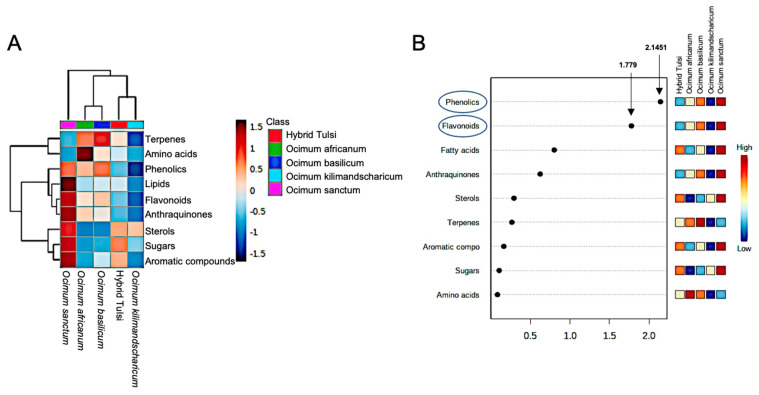
- LC-MS untargeted profiling detected 3626 metabolite features across positive and negative ionization modes, grouped into nine chemical classes.
- In LC-MS analysis, the PLS-DA model achieved Accuracy = 1.0, R2 = 0.9982, Q2 = 0.9949 in negative mode and Accuracy = 1.0, R2 = 0.9993, Q2 = 0.9965 in positive mode; 1000 permutation tests gave p < 0.001.
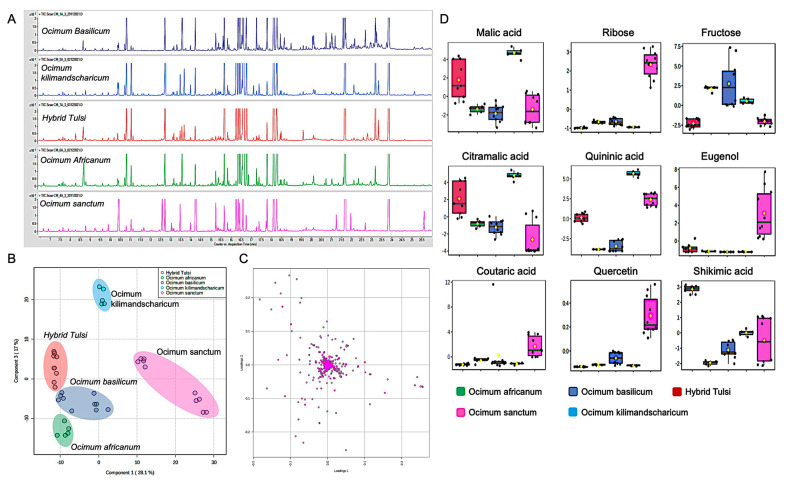
- GC-MS identified nine discriminatory metabolites for species-specific separation: malic acid, citramalic acid, ribose, fructose, quininic acid, eugenol, gluconic acid, quercetin, and shikimic acid.
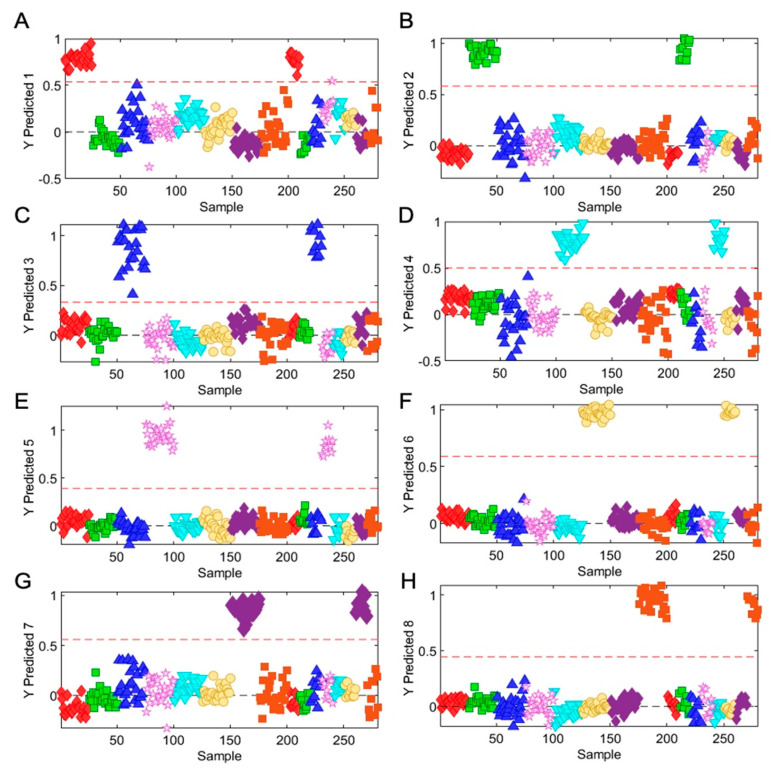
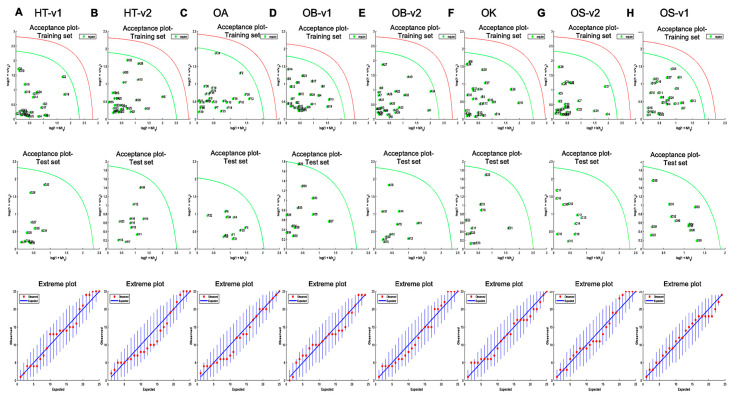
- The abstract reports overall discrimination performance of 98% specificity and 99% sensitivity; the FT-NIR models for the tested Ocimum groups reported 100% sensitivity and specificity in the paper’s results.
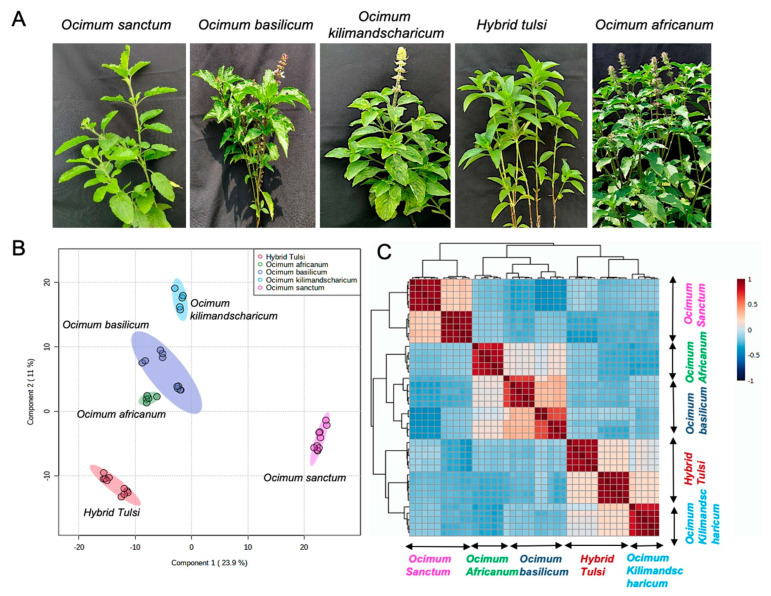
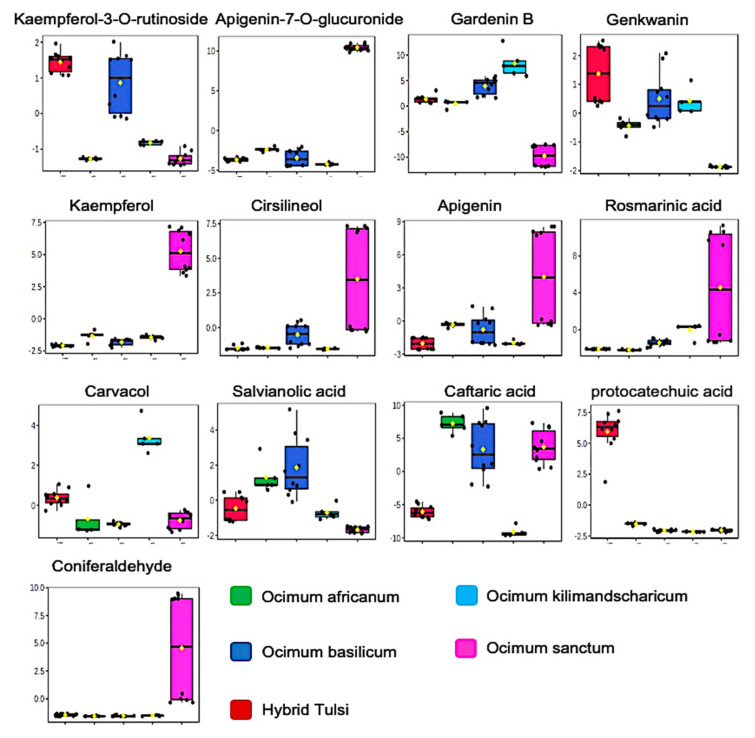
- Marker classes emphasized by the authors were phenolics and flavonoids for species-specific variation; the paper also notes species/variety separation among five species and eight varieties.
## Methods
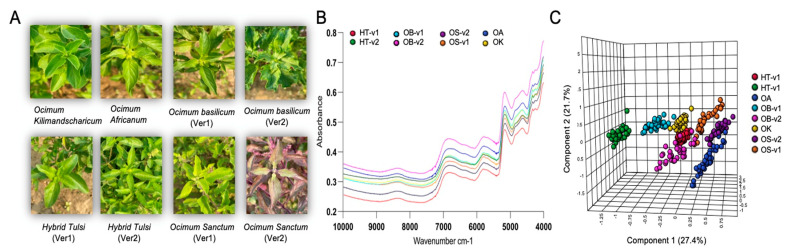
- The study analyzed leaves from five Ocimum species collected at CSIR-CIMAP in October 2021: *O. basilicum*, *O. sanctum*, *O. africanum*, *O. kilimandscharicum*, and Hybrid Tulsi; FT-NIR analysis covered 280 samples, with 35 replicates per species/variety.
- Samples were prepared by freeze-drying and methanol extraction for LC-MS; for GC-MS, extracts were derivatized with methoxyamine hydrochloride and MSTFA; FT-NIR spectra were recorded from 10,000–4000 cm−1.
- Data analysis used PCA, PLS-DA, DD-SIMCA, K-nearest neighbours, random forest, hierarchical clustering, cross-validation, and 1000 permutation tests; metabolite identification used libraries including Metlin, HMDB, PubChem, KEGG, and NIST.
## Limitations
- The authors state that real-time field screening of Ocimum leaves remains challenging and that the study needs to be further explored for field application.
- The paper’s text makes evident that the work is based on one collection period and one field source (CSIR-CIMAP, October 2021), so broader geographic/seasonal generalization is not directly tested here.
- The paper does not state external validation on an independent, geographically distinct cohort beyond the reported train/test splits and cross-validation.
Model-written summary. Check it against the paper before relying on it.
Integrity signals
Registry
Cites
Statistics
Figures
Verification
Claims the paper makes
10 Valid · 0 Not valid · 1 Not checked · 71 Own results and interpretations
Every source the paper cites for this claim was checked and supports it.
In the paper
“Indeed, the secondary metabolite expression in a given plant is a function of biotic, abiotic, and genetic factors that specify species, varieties, and cultivars [18].”
§ Comprehensive Metabolomic Fingerprinting Combined with Chemometrics Identifies Species- and Variety-Specific Variation of Medicinal Herbs: An Ocimum Study > 1. Introduction
What the sources say
- Supportedcites [18] Yeshi K. Crayn D. Ritmejerytė E. Wangchuk P. Plant Secondary Metabolites Produced in Response to Abiotic Stresses Has Potential Application in Pharmaceutical Product Development Molecules 2022 27 313 10.3390/molecules27010313 35011546 PMC8746929 source
Section 2, “Plant Secondary Metabolites and Their Biological Roles” (page not provided), says that secondary-metabolite variation can reflect genetic variability and that concentrations are affected by abiotic conditions and herbivore and pathogen attacks. It also notes that some metabolites are specific to related plant taxa and that concentrations vary among populations and individual plants, supporting the citing sentence’s broad paraphrase. (LLM, conf=0.90)
plainstates a cause- Asserted: passes — The authors put it forward as true.
- Checkable: passes — It can be checked against evidence.
- Load-bearing: passes — The paper’s conclusions depend on it.
- Based: passes — The paper gives a reason why it holds.
- Supported
The cited sources support only part of this claim — read each source’s verdict below.
In the paper
“The quality control of such medicinal plants is extremely challenging as it is not only limited to the botanical level but also given that there are significant variations of chemical profiles within the same species [17].”
§ Comprehensive Metabolomic Fingerprinting Combined with Chemometrics Identifies Species- and Variety-Specific Variation of Medicinal Herbs: An Ocimum Study > 1. Introduction
What the sources say
- Partly supportedcites [17] Balekundri A. Mannur V. Quality Control of the Traditional Herbs and Herbal Products: A Review Futur. J. Pharm. Sci. 2020 6 67 10.1186/s43094-020-00091-5 sourceExperimental — accuracy not yet measured
The Standardization of medicinal herbs and products section says that phytochemical constituents vary with climate, soil and growing region, making standardization difficult. It also describes quality control as involving both identification and chemical assessment. The copy does not specifically establish significant chemical-profile variation within the same species or discuss Ocimum in this context; no page numbers are available for these passages. (LLM, conf=0.83)
plain- Asserted: passes — The authors put it forward as true.
- Checkable: passes — It can be checked against evidence.
- Load-bearing: passes — The paper’s conclusions depend on it.
- Based: passes — The paper gives a reason why it holds.
- Partly supported
The cited sources support only part of this claim — read each source’s verdict below.
In the paper
“Upon analysing the profiles, we noted that spectral regions related to hydroxyl (4817 cm−1 and 4913 cm−1) and C-O plus O-H combinations first overtone region (5210 to 5314 cm−1) were selected [51].”
§ Comprehensive Metabolomic Fingerprinting Combined with Chemometrics Identifies Species- and Variety-Specific Variation of Medicinal Herbs: An Ocimum Study > 3. Results and Discussion > 3.3. Rapid Metabolic Fingerprinting with FT-NIR Identified Species- and Variety-Specific Variation of Ocimum Samples
What the sources say
- Partly supportedcites [51] Ma L. Peng Y. Pei Y. Zeng J. Shen H. Cao J. Qiao Y. Wu Z. Systematic Discovery about NIR Spectral Assignment from Chemical Structural Property to Natural Chemical Compounds Sci. Rep. 2019 9 9503 10.1038/s41598-019-45945-y 31263130 PMC6603013 sourceExperimental — accuracy not yet measured
The Results table on NIR assignments (page unavailable) identifies O–H-related bands near the claimed regions, including 1984–2081 nm for menthol and 1870–1909 nm for an O–H combination band. It does not give the cited wavenumbers or assign the 5210–5314 cm−1 region to a C–O plus O–H combination, so the specific band assignments are not fully supported. (LLM, conf=0.78)
plainn = 280- Asserted: passes — The authors put it forward as true.
- Checkable: passes — It can be checked against evidence.
- Load-bearing: passes — The paper’s conclusions depend on it.
- Based: passes — The paper gives a reason why it holds.
- Partly supported
A result the paper reports from its own data — it cites no other source for it, so there is none to check. The quote shows it is in the paper.
In the paper
“Conversely, high concentration of gardenin B was present in O. basilicum and O. kilimandscharicum samples in comparison to other species.”
§ Comprehensive Metabolomic Fingerprinting Combined with Chemometrics Identifies Species- and Variety-Specific Variation of Medicinal Herbs: An Ocimum Study > 3. Results and Discussion > 3.1. LC-MS-Based Metabolic Profiling of Ocimum Leaves Identified Species-Specific Variation
plainstates an association- Asserted: passes — The authors put it forward as true.
- Checkable: passes — It can be checked against evidence.
- Load-bearing: passes — The paper’s conclusions depend on it.
- Based: passes — The paper gives a reason why it holds.
A result the paper reports from its own data — it cites no other source for it, so there is none to check. The quote shows it is in the paper.
In the paper
“As presented in Figure 1B and Figure S5, five different clusters corresponding to five different Ocimum species were identified in the PLS-DA scores plot for both (+) and (−) ionisation modes”
§ Comprehensive Metabolomic Fingerprinting Combined with Chemometrics Identifies Species- and Variety-Specific Variation of Medicinal Herbs: An Ocimum Study > 3. Results and Discussion > 3.1. LC-MS-Based Metabolic Profiling of Ocimum Leaves Identified Species-Specific Variation
plainstates an association- Asserted: passes — The authors put it forward as true.
- Checkable: passes — It can be checked against evidence.
- Load-bearing: passes — The paper’s conclusions depend on it.
- Based: passes — The paper gives a reason why it holds.
48 more claims
Create a free account to see all 82 claims and every source verdict.
- Probably not a substantial claim. 12
- It may state two separate claims as one. 18
Self-check
Percentages, sums and reported differences re-computed from the paper’s own numbers.
Each contradiction between two passages listed here was confirmed by an independent check.
Rated major: it would touch a result — a value a result rests on, reported and recomputed p-values on opposite sides of the significance level, two passages that conflict with no sign which is right, or a cited work retracted before this paper was published.
In the paper
“The HP5-MS column with a dimension of 30 mL × 250 µm with film thicknesses of 0.25 µm was used for obtaining the peak separation in the chromatogram.”
§ Comprehensive Metabolomic Fingerprinting Combined with Chemometrics Identifies Species- and Variety-Specific Variation of Medicinal Herbs: An Ocimum Study > 2. Materials and Methods > 2.3. Sample Preparation and GC-MS Conditions
Reported 0.25 · recomputed 7500
Rated minor: it would not touch a result — a value no result rests on, a p-value that stays on the same side of the significance level, or a conflict that is clerical, resolved elsewhere in the paper, or outside its own findings.
In the paper
§ Comprehensive Metabolomic Fingerprinting Combined with Chemometrics Identifies Species- and Variety-Specific Variation of Medicinal Herbs: An Ocimum Study > 3. Results and Discussion > 3.2. GC-MS-Based Metabolic Fingerprinting Identified Ocimum Species-Specific Variation
“the first two principal components cumulatively accounted for 50% of the total variation, with PC1 accounting for 29.6% of the variation discriminating O. sanctum species samples from the other four species”
§ Comprehensive Metabolomic Fingerprinting Combined with Chemometrics Identifies Species- and Variety-Specific Variation of Medicinal Herbs: An Ocimum Study > 3. Results and Discussion > 3.2. GC-MS-Based Metabolic Fingerprinting Identified Ocimum Species-Specific Variation
“PC3 with 20.4 variation explains the variation of O. basilicum and O. africanum from the other two species Hybrid Tulsi and O. kilimandscharicum.”
Citations
Cites
Ekor, M. (2014) · Frontiers in Pharmacology · doi:10.3389/fphar.2013.00177 · Cited by 3,919
Discovery and resupply of pharmacologically active plant-derived natural products: A review
Atanasov, A. G., Waltenberger, B., Pferschy-Wenzig, E.-M., Linder, T., Wawrosch, C., Uhrin, P., Temml, V., Wang, L., Schwaiger, S., Heiss, E. H., et al. (2015) · Biotechnology Advances · doi:10.1016/j.biotechadv.2015.08.001 · Cited by 2,904 · cited 1×
“Plants are effective biochemists, producing potent biomolecules used since ancient [1] times for curing a range of diseases in the form of traditional systems medicine [2].”
BackgroundFlavonoids: biosynthesis, biological functions, and biotechnological applications
Falcone Ferreyra, M. L., Rius, S. P., & Casati, P. (2012) · Frontiers in Plant Science · doi:10.3389/fpls.2012.00222 · Cited by 1,831
Assessment of PLSDA Cross Validation
Westerhuis, J. A., Hoefsloot, H. C. J., Smit, S., Vis, D. J., Smilde, A. K., van Velzen, E. J. J., van Duijnhoven, J. P. M., & van Dorsten, F. A. (2008) · Metabolomics · doi:10.1007/s11306-007-0099-6 · Cited by 1,471
Hot Air and Freeze-Drying of High-Value Foods: A Review
Ratti, C. (2001) · Journal of Food Engineering · doi:10.1016/s0260-8774(00)00228-4 · Cited by 1,420 · cited 1×
“It is also important to note that freeze-drying (lyophilisation) is an effective drying process without compromising the quality [33].”
BackgroundNMR Spectroscopy for Metabolomics Research
Emwas, A.-H., Roy, R., McKay, R. T., Tenori, L., Saccenti, E., Gowda, G. A. N., Raftery, D., Alahmari, F., Jaremko, L., Jaremko, M., et al. (2019) · Metabolites · doi:10.3390/metabo9070123 · Cited by 1,169
Yeshi, K., Crayn, D., Ritmejerytė, E., & Wangchuk, P. (2022) · Molecules · doi:10.3390/molecules27010313 · Cited by 488
Trends in Chemometrics: Food Authentication, Microbiology, and Effects of Processing
Granato, D., Putnik, P., Kovačević, D. B., Santos, J. S., Calado, V., Rocha, R. S., Cruz, A. G. D., Jarvis, B., Rodionova, O. Y., & Pomerantsev, A. (2018) · Comprehensive Reviews in Food Science and Food Safety · doi:10.1111/1541-4337.12341 · Cited by 440 · cited 1×
“1 was used for performing K-nearest neighbour classification [39,40].”
MethodEssential oil eugenol: Sources, extraction techniques and nutraceutical perspectives
Khalil, A. A., Rahman, U. U., Khan, M. R., Sahar, A., Mehmood, T., & Khan, M. (2017) · RSC Advances · doi:10.1039/c7ra04803c · Cited by 407
Salem, M. A., Perez de Souza, L., Serag, A., Fernie, A. R., Farag, M. A., Ezzat, S. M., & Alseekh, S. (2020) · Metabolites · doi:10.3390/metabo10010037 · Cited by 361 · cited 1×
“Liquid chromatography/gas chromatography coupled to mass spectrometry have become central platforms in metabolomics studies, and the recent application of these metabolomics platforms, specifically in natural products and plant sciences, has gained more attention [27].”
Background
Research works printed but not linked: 3
- Bungãu S.G. Popa V.-C. Between religion and science some aspects concerning illness and healing in antiquity Transylv. Rev. 2015 24 3 18
- Nahak G. Mishra R.C. Sahu R.K. Taxonomic Distribution, Medicinal Properties and Drug Development Potentiality of Ocimum (Tulsi) Drug Invent. Today 2011 3 95 113
- Hastie T. Tibshirani R. Friedman J. Springer Series in Statistics the Elements of Statistical Learning Data Mining, Inference, and Prediction 2nd ed. Springer New York, NY, USA 2017
Cited by
Chukwuma, I. F., Uchendu, N. O., Asomadu, R. O., Ezeorba, W. F. C., & Ezeorba, T. P. C. (2023) · Arabian Journal of Chemistry · doi:10.1016/j.arabjc.2023.104870 · Cited by 49
Ouandaogo, H. S., Diallo, S., Odari, E. O., & Kinyua, J. D. M. (2023) · ACS Omega · doi:10.1021/acsomega.3c05554 · Cited by 56
Khalil, M. N. A., Afifi, S. M., Eltanany, B. M., Pont, L., Benavente, F., El-Sonbaty, S. M., & Sedeek, M. S. (2024) · Food Research International · doi:10.1016/j.foodres.2024.114053 · Cited by 30
Çetiz, M. V., Isah, M., Ak, G., Bakar, K., Ahamada‐Himidi, A., Mohamed, A., Glamočlija, J., Nikolić, F., Gašić, U. M., Céspedes, C. L., et al. (2024) · Cell Biochemistry and Function · doi:10.1002/cbf.70000 · Cited by 27
Kos, J., Pavelek, D., Kaykhaii, M., Olsen, M. J., Jampílek, J., & Halko, R. (2025) · European Journal of Pharmaceutical Sciences · doi:10.1016/j.ejps.2025.107175 · Cited by 26
Ibrahim, R. M., Sedeek, M. S., Wareth, A. A., et al. (2024) · Food Chemistry · doi:10.1016/j.foodchem.2024.141125 · Cited by 14
Ren, Y., Lin, F., Meng, J., et al. (2025) · Journal of Chromatography A · doi:10.1016/j.chroma.2025.465804 · Cited by 7
Kritsi, E., Tsiaka, T., Boroboka, A., Koletsou, G., Theofilatos, S., Maggenaki, A., Christodoulou, P., Ladika, G., Tsiantas, K., Sotiroudis, G., et al. (2024) · Separations · doi:10.3390/separations11090261 · Cited by 7
The Neuroprotective Potential of Ocimum Plant Species: Seasoning the Mind with Sweet and Holy Basil
Vasincu, A., Rusu, R.-N., Ababei, D. C., Bulea, D., Arcan, O. D., Vasincu, I. M., Chiriac, S. I. B., Popescu, I.-R., Bild, W., & Bild, V. (2025) · Nutrients · doi:10.3390/nu17172877 · Cited by 14
Kumar, A., Sharma, N., Kumar, A., Kumar, D., Jnanesha, A. C., Gupta, A. K., Chanotiya, C. S., Bisht, D., & Lal, R. K. (2024) · Ecological Genetics and Genomics · doi:10.1016/j.egg.2024.100217 · Cited by 12
Self-citationLi, Y., Cheng, Y., Zhang, Y., et al. (2024) · Phytochemical Analysis · doi:10.1002/pca.3380 · Cited by 5
Verma, A. K., Rakwal, P., Pandey, R., Birse, N., & Ch, R. (2025) · Plant Physiology and Biochemistry · doi:10.1016/j.plaphy.2025.109765 · Cited by 4
Self-citationSharma, N., Kumar, A., Tiwari, G., et al. (2024) · Industrial Crops and Products · doi:10.1016/j.indcrop.2024.119350 · Cited by 4
Self-citationAli, S., Ali, H., Hussain, A., Dey, G., Wang, C.-W., Taharia, M., Lin, P.-Y., Sharma, R. K., Hsiao, P.-G., & Chen, C. (2025) · Food Bioscience · doi:10.1016/j.fbio.2025.106603 · Cited by 9
Tong, T., He, L., Qiao, L., Zhou, Y., Li, J., Liang, J., Fu, J., Wei, S., Huang, G., & Xia, X. (2026) · Talanta · doi:10.1016/j.talanta.2026.129541 · Cited by 3
Torres-Guevara, F. A., Tirado-Kulieva, V. A., Suárez-Rebaza, L. A., et al. (2026) · Revista Brasileira de Farmacognosia · doi:10.1007/s43450-026-00740-5 · Cited by 2
“In this regard, chemometrics has proven useful for the analysis of chemical profiles, allowing the identification of patterns and the classification of plant species, as well as the validation of their identity (Pons et al. 2021; Manninen et al. 2022; Rai et al. 2023; Tarighat et al. 2023).”
Kumar, A., Lal, R. K., Gupta, A. K., et al. (2024) · Ecological Genetics and Genomics · doi:10.1016/j.egg.2024.100246 · Cited by 2
Self-citationUnveiling Chemical Interactions Between Plants and Fungi Using Metabolomics Approaches
Pontes, J. G. D. M., Pinheiro, M. S. D. S., & Fill, T. P. (2023) · Advances in experimental medicine and biology · doi:10.1007/978-3-031-41741-2_1 · Cited by 3
A low-cost visible and near-infrared (Vis-NIR) portable multispectral imager for fast drug analysis
Martinez, E. W., Tfayli, A. M., Nappez, T., et al. (2026) · The Analyst · doi:10.1039/d6an00059b · Cited by 1
Metabolomics applications in type 2 diabetes mellitus
Ch, R., Tiwari, A., & Verma, T. (2024) · Comprehensive analytical chemistry · doi:10.1016/bs.coac.2023.09.012 · Cited by 2
Self-citationMetabolomics-based profiling of anti-inflammatory compounds from Mentha spicata in shanghe, China
Li, W., Li, P., Li, X., et al. (2024) · Heliyon · doi:10.1016/j.heliyon.2024.e35974 · Cited by 1
Shanaida, M., Машталер, В. В., Сіра, Л. М., & Гонтова, Т. М. (2023) · Botanica · doi:10.35513/botlit.2023.2.4 · Cited by 1
The roles of polyamines in Malaysian herbs as a chemoprevention strategy: A scoping review
Azalan, M. S., Ghani, R. A., & WALLACE, H. M. (2023) · Asia-Pacific Journal of Molecular Biology and Biotechnology · doi:10.35118/apjmbb.2023.031.4.09
Natural Product as Chemoprevention from Maqasid Shariah Perspective: A Narrative Review
Azalan, M. S., & Ghani, R. A. (2023) · Revelation and Science · doi:10.31436/revival.v13i2.369
“These compounds can be broadly categorized into primary metabolites, which are essential for the organism's basic functions, and secondary metabolites, which serve various ecological roles (Barciela et al ., 2023; Rai et al ., 2023; Yang et al ., 2023).”
BackgroundTei, S., Rebiai, A., Seghir, B. B., et al. (2026) · Chemical Papers · doi:10.1007/s11696-025-04626-z
Yang, J., Huang, T., Huang, Y., et al. (2026) · Journal of Ethnopharmacology · doi:10.1016/j.jep.2026.121412
Sinha, A. K., Haldar, S., & Bandamaravuri, K. B. (2026) · World Journal of Microbiology and Biotechnology · doi:10.1007/s11274-026-04895-0
“The mass spectrometer was operated in electron ionization (EI) mode at 70 eV, with the ion source and transfer line temperatures set at 230 °C, and the quadrupole temperature maintained at 150 °C (Rai et al. 2023).”
Amin, A., & de Oliveira, M. S. (2026) · Forests · doi:10.3390/f17040497
Halder, M. (2026) · Sustainable development and biodiversity · doi:10.1007/978-981-95-7281-6_17
Umar, A. H., Syahruni, R., Nabila, S., & Paserang, O. (2026) · South African Journal of Botany · doi:10.1016/j.sajb.2026.06.040
Bai, L., Hou, Y.-F., Guo, S., et al. (2026) · Talanta Open · doi:10.1016/j.talo.2026.100682
Jaiswal, R. P., Khan, I., Pasrija, A., Mishra, B., Gupta, P. K., Patil, K., & Mitra, R. (2026) · Separation Science Plus · doi:10.1002/sscp.70315
Metadata
- Authors
- Rai, A. K., Khan, S., Kumar, A., Dubey, B. K., Lal, R. K., Tiwari, A., Trivedi, P. K., Elliott, C. T., & Ch, R.
- Affiliations
- Council of Scientific and Industrial Research (IN)
- Thammasat University (TH)
- Corresponding author
- Ch, Ratnasekhar
- ORCID
- Venue
- Metabolites
- Publisher
- MDPI AG
- Published
- 2023-01-13
- Volume
- 13
- Issue
- 1
- Pages
- 122
- ISSN
- 2218-1989 (ISSN-L)
- PMC
- PMC9862730
- OpenAlex
- W4315853375
- Cited by
- 33
- References
- 46
- Citations by year
- 2026: 12 · 2025: 5 · 2024: 10 · 2023: 6
- FWCI
- 4.21
- Type
- journal article
- Language
- en
- Open access
- gold
- doi.org
- Licence
- Locations
- Metabolites (publishedVersion, cc-by)
- PubMed Central (publishedVersion, cc-by)
- PubMed (publishedVersion)
- Research Portal (Queen's University Belfast) (acceptedVersion, cc-by)
- DOAJ (DOAJ: Directory of Open Access Journals) (submittedVersion, cc-by-sa)
- Funders
- Department of Science and Technology-SERB (SRG/2021/000750-G, BT/RLF/Re-entry/21/2020, HCP0007)
- Department of Biotechnology, Government of India for Ramalingaswami (SRG/2021/000750-G, BT/RLF/Re-entry/21/2020, HCP0007)
- Bualuang ASEAN Chair Professor Fund (SRG/2021/000750-G, BT/RLF/Re-entry/21/2020, HCP0007)
- Aroma mission (SRG/2021/000750-G, BT/RLF/Re-entry/21/2020, HCP0007)
- Topics
- Physical Sciences › Chemistry › Analytical Chemistry › Spectroscopy and Chemometric Analyses
- Health Sciences › Medicine › Complementary and alternative medicine › Traditional Chinese Medicine Analysis
- Health Sciences › Medicine › Complementary and alternative medicine › Phytochemicals and Medicinal Plants
- Keywords
- Ocimum, Ocimum basilicum, species identification, variety discrimination, metabolic fingerprinting, FT-NIR spectroscopy, chemometrics, phenolic compounds, flavonoids, medicinal plants, quality assessment, Ocimum sanctum, Ocimum kilimandscharicum
About these checks
Registry, retraction, Cites and statistics results are computed, not judged, with one exception: a printed reference that no index lists is read once by a model before it counts as a citation error. Claims are extracted by a model and kept only when their quote appears verbatim in the text; each cited source is then checked, with a model’s help, for whether it says what the claim relies on. Those verdicts can be wrong — read the claim’s quote and the cited source before relying on one.
The claim verdicts this report counts are experimental: their accuracy is not yet measured.
A language model drew the claims from the paper on 2026-10-09, under version 3 of the claim definition (model deepseek-v4.1-flash, prompt extract-v3).
A second model labelled each claim on 2026-10-09 (model jev-1.13-20260917, definition revision gold-guideline-v0.2).
Cited sources are checked with a language model’s help (gpt-6-sol).
Statistics and arithmetic are recomputed, not judged.
Confidence bands are shown only for fields calibrated on our annotated test set. None is calibrated yet, so no band is shown.
What counts as a claim ›How we measure confidence ›How we check this ›
Are you an author, or do you see a problem with this page? Request a review
Data sources
Bibliographic data: Semantic Scholar, OpenAlex, Crossref.
Contains information from the Semantic Scholar Academic Graph Datasets, made available under the ODC Attribution License (ODC-BY 1.0).
Semantic Scholar’s data is described in: Kinney, R., et al. (2023). The Semantic Scholar Open Data Platform. arXiv:2301.10140.
