

The DOI matches its Crossref record; 2 of the 2 references it cites were found in a registry or an index.
Comparative Analysis of Amino Acid and Biogenic Amine Compositions of Fermented Grape Beverages
Open accessAbstract
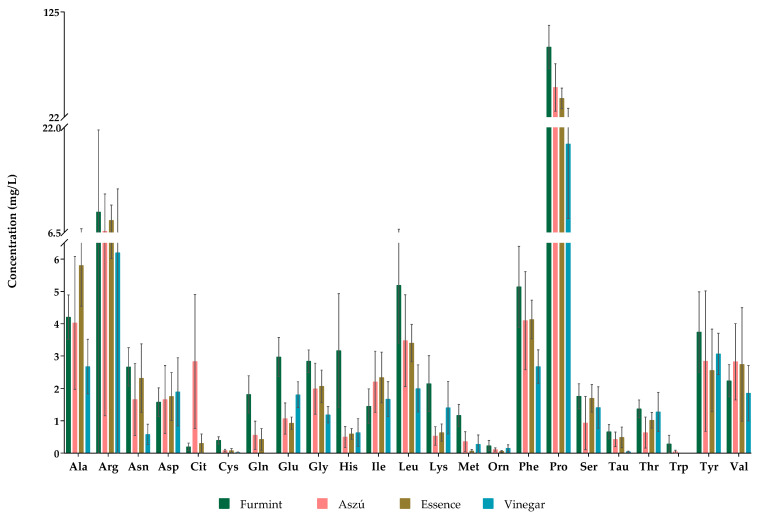
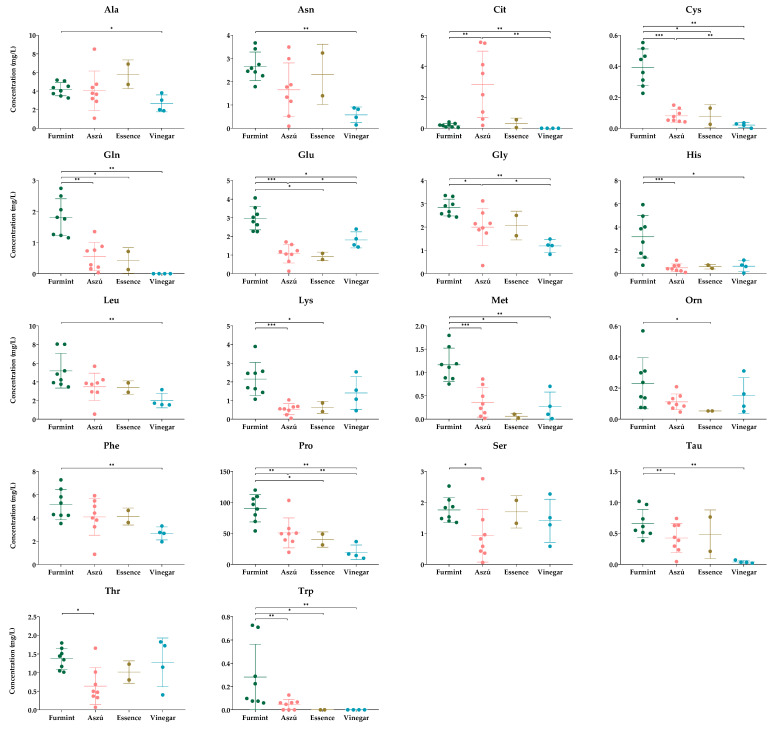
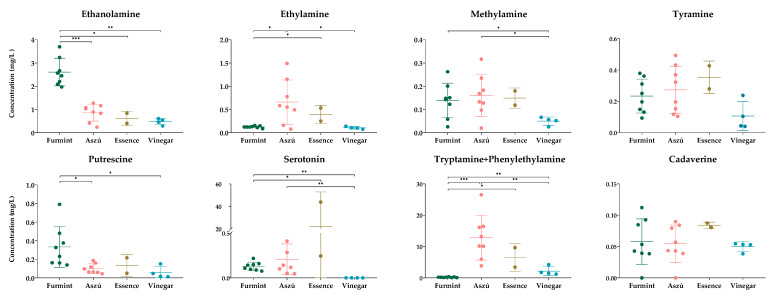
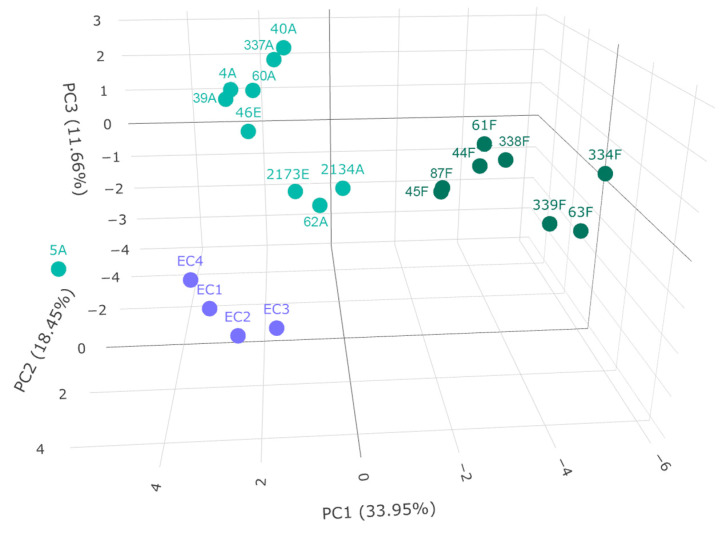
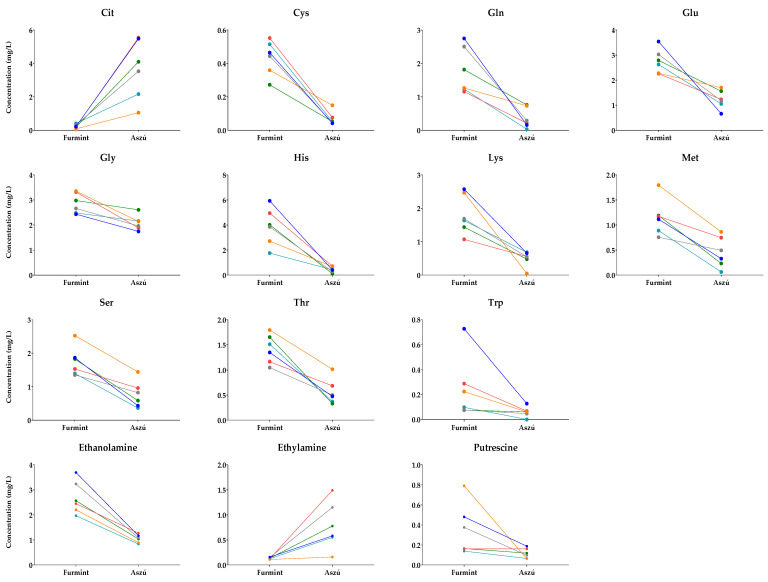
Amino acids and biogenic amines are important components of food and beverages. In grape-derived products such as wine and wine vinegar, they can have different origins and can influence the odor and taste of the products. Their concentration is influenced by the grape variety, vintage, and winemaking process. In our study, we carried out an LC-MS-based comparative analysis of 22 grape-derived beverages, including three different wine types and four wine vinegar samples from the Tokaj region in Hungary. The concentrations of 23 amino acids and 10 biogenic amines were examined, and the differences among the sample types were analyzed. The differences in the concentrations of some metabolites between Aszú–Furmint pairs originating from the same wineries and year provide information on the effect of botrytized grape on wine composition. Our data can provide further evidence on how the production process shapes the metabolite content of beverages and highlight the nutritional value of wine vinegar.
Overview
The claims and statistics of this paper haven’t been checked yet.
Run the check — free, no account needed. It reads the open-access text and checks the sources it cites.
Integrity signals
Registry
Cites
Statistics
Figures
Verification
Claims the paper makes
The claims and statistics of this paper haven’t been checked yet.
Run the check — free, no account needed. It reads the open-access text and checks the sources it cites.
Claims other papers make about this one
Each is checked against this paper’s own text: does it say what the citing paper says it does?
The cited source says what the claim attributes to it.
In the citing paper
“Studies have demonstrated that the amino acid profiles of wine and grape vinegar differ primarily in citrulline, glutamine, and tryptophan, while the remaining amino acids fall within similar ranges [86].”
From The Metabolic Pathways of Yeast and Acetic Acid Bacteria During Fruit Vinegar Fermentation and Their Influence on Flavor Development (2025) · cites this paper as [86]
Self-check
Percentages, sums and reported differences re-computed from the paper’s own numbers.
The self-check needs the paper’s full text.
Citations
Cites
(BIOHAZ), E. P. O. B. H. (2011) · EFSA Journal · doi:10.2903/j.efsa.2011.2393 · Cited by 995
(2009) · doi:10.1007/978-88-470-0866-3 · Cited by 204
Research works printed but not linked: 50
- Szerdahelyi, 2000, Changes in Biogenic Amine Content of Tokaj Grapes, Wines, and Aszu-Wines, J. Food Sci., 65, 1142, 10.1111/j.1365-2621.2000.tb10254.x · DOI
- Zaukuu, 2019, Authentication of Tokaj Wine (Hungaricum) with the Electronic Tongue and Near Infrared Spectroscopy, J. Food Sci., 84, 3437, 10.1111/1750-3841.14956 · DOI
- Magyar, 2016, Botrytized Wines-Current Perspectives, Int. J. Wine Res., 8, 29, 10.2147/IJWR.S100653 · DOI
- Kiss, 2005, Protection of Originality of Tokaji Aszú: Amines and Organic Acids in Botrytized Wines by High-Performance Liquid Chromatography, J. Agric. Food Chem., 53, 10042, 10.1021/jf050394j · DOI
- 2018, Fluorescence Spectroscopy for Discrimination of Botrytized Wines, Food Control, 88, 75, 10.1016/j.foodcont.2017.12.033 · DOI
- Gutiérrez-Gamboa, G., Garde-Cerdán, T., Moreno-Simunovic, Y., and Pérez-Álvarez, E.P. (2019). Nutrients in Beverages: Volume 12: The Science of Beverages, Elsevier.
- Ruiz-Capillas, C., and Herrero, A.M. (2019). Impact of Biogenic Amines on Food Quality and Safety. Foods, 8. · DOI
- Karovicova, 2005, Biogenic Amines in Food, ChemInform, 36, 70, 10.1002/chin.200534338 · DOI
- 2003, Ion-Pair High-Performance Liquid Chromatographic Determination of Biogenic Amines and Polyamines in Wine and Other Alcoholic Beverages, J. Chromatogr. A, 998, 235, 10.1016/S0021-9673(03)00610-1 · DOI
- Valero, 2005, Free Amino Acids and Volatile Compounds in Vinegars Obtained from Different Types of Substrate, J. Sci. Food Agric., 85, 603, 10.1002/jsfa.2016 · DOI
- Chinnici, 2016, Discrimination of Some European Vinegars with Protected Denomination of Origin as a Function of Their Amino Acid and Biogenic Amine Content, J. Sci. Food Agric., 96, 3762, 10.1002/jsfa.7566 · DOI
- Marques, 2008, Biogenic Amines in Wines: Influence of Oenological Factors, Food Chem., 107, 853, 10.1016/j.foodchem.2007.09.004 · DOI
- 2008, Current Knowledge about the Presence of Amines in Wine, Crit. Rev. Food Sci. Nutr., 48, 257, 10.1080/10408390701289441 · DOI
- Troncoso, 2010, Determination of Amino Acids in Grape-Derived Products: A Review, Talanta, 81, 1143, 10.1016/j.talanta.2010.02.040 · DOI
- 2003, Principal Component and Linear Discriminant Analyses of Free Amino Acids and Biogenic Amines in Hungarian Wines, J. Agric. Food Chem., 51, 8055, 10.1021/jf034851c · DOI
- Duchowicz, 2013, Amino Acid Profiles and Quantitative Structure-Property Relationship Models as Markers for Merlot and Torrontés Wines, Food Chem., 140, 210, 10.1016/j.foodchem.2013.02.064 · DOI
- Wong, 2008, Sensory Aroma from Maillard Reaction of Individual and Combinations of Amino Acids with Glucose in Acidic Conditions, Int. J. Food Sci. Technol., 43, 1512, 10.1111/j.1365-2621.2006.01445.x · DOI · Paper page
- Soufleros, 2007, Determination of Biogenic Amines in Greek Wines by HPLC and Ultraviolet Detection after Dansylation and Examination of Factors Affecting Their Presence and Concentration, Food Chem., 101, 704, 10.1016/j.foodchem.2006.02.028 · DOI
- Tuberoso, 2018, Biogenic Amines and Other Polar Compounds in Long Aged Oxidized Vernaccia Di Oristano White Wines, Food Res. Int., 111, 97, 10.1016/j.foodres.2018.05.020 · DOI
- 2007, Simultaneous HPLC Analysis of Biogenic Amines, Amino Acids, and Ammonium Ion as Aminoenone Derivatives in Wine and Beer Samples, J. Agric. Food Chem., 55, 608, 10.1021/jf062820m · DOI
- Jackson, R.S. (2020). Wine Science, Elsevier.
- 2010, Comparative Study of the Amine Concentration in Wines Obtained from the Traditional Fermentation and from a More Anaerobic Fermentation Method, LWT, 43, 771, 10.1016/j.lwt.2009.12.013 · DOI
- Cacho, 2002, Relationship between Varietal Amino Acid Profile of Grapes and Wine Aromatic Composition. Experiments with Model Solutions and Chemometric Study, J. Agric. Food Chem., 50, 2891, 10.1021/jf011395o · DOI
- Ibarz, 2006, Determination of the Biogenic Amines in Musts and Wines before and after Malolactic Fermentation Using 6-Aminoquinolyl-N-Hydroxysuccinimidyl Carbamate as the Derivatizing Agent, J. Chromatogr. A, 1129, 160, 10.1016/j.chroma.2006.06.111 · DOI
- 2014, Study of the Effect of Vintage, Maturity Degree, and Irrigation on the Amino Acid and Biogenic Amine Content of a White Wine from the Verdejo Variety, J. Sci. Food Agric., 94, 2073, 10.1002/jsfa.6526 · DOI
- Herbert, 2005, Free Amino Acids and Biogenic Amines in Wines and Musts from the Alentejo Region. Evolution of Amines during Alcoholic Fermentation and Relationship with Variety, Sub-Region and Vintage, J. Food Eng., 66, 315, 10.1016/j.jfoodeng.2004.03.024 · DOI
- Valero, 2003, Concentration of Amino Acids in Wine after the End of Fermentation by Saccharomyces Cerevisiae Strains, J. Sci. Food Agric., 83, 830, 10.1002/jsfa.1417 · DOI
- Sampedro, 2007, Simple and Rapid Determination of Biogenic Amines in Wine by Liquid Chromatography-Electrospray Ionization Ion Trap Mass Spectrometry, Anal. Chim. Acta, 584, 145, 10.1016/j.aca.2006.10.042 · DOI
- Manetta, 2016, Evaluation of Biogenic Amines in Wine: Determination by an Improved HPLC-PDA Method, Food Control, 62, 351, 10.1016/j.foodcont.2015.11.009 · DOI
- Pineda, 2012, Preliminary Evaluation of Biogenic Amines Content in Chilean Young Varietal Wines by HPLC, Food Control, 23, 251, 10.1016/j.foodcont.2011.07.025 · DOI
- Proestos, 2008, Determination of Biogenic Amines in Wines by HPLC with Precolumn Dansylation and Fluorimetric Detection, Food Chem., 106, 1218, 10.1016/j.foodchem.2007.06.048 · DOI
- Wang, 2014, Rapid HPLC Analysis of Amino Acids and Biogenic Amines in Wines during Fermentation and Evaluation of Matrix Effect, Food Chem., 163, 6, 10.1016/j.foodchem.2014.04.064 · DOI
- Angulo, 2020, Fast and Selective Method for Biogenic Amines Determination in Wines and Beers by Ultra High-Performance Liquid Chromatography, Food Chem., 309, 125689, 10.1016/j.foodchem.2019.125689 · DOI
- Nokhoijav, E., Guba, A., Kumar, A., Kunkli, B., Kalló, G., Káplár, M., Somodi, S., Garai, I., Csutak, A., and Tóth, N. (2022). Metabolomic Analysis of Serum and Tear Samples from Patients with Obesity and Type 2 Diabetes Mellitus. Int. J. Mol. Sci., 23. · DOI
- Guba, A., Bába, O., Tőzsér, J., Csősz, É., and Kalló, G. (2022). Fast and Sensitive Quantification of AccQ-Tag Derivatized Amino Acids and Biogenic Amines by UHPLC-UV Analysis from Complex Biological Samples. Metabolites, 12. · DOI
- Soufleros, 2003, Primary Amino Acid Profiles of Greek White Wines and Their Use in Classification According to Variety, Origin and Vintage, Food Chem., 80, 261, 10.1016/S0308-8146(02)00271-6 · DOI
- Kalló, G., Kunkli, B., Győri, Z., Szilvássy, Z., Csősz, É., and Tőzsér, J. (2020). Compounds with Antiviral, Anti-Inflammatory and Anticancer Activity Identified in Wine from Hungary’s Tokaj Region via High Resolution Mass Spectrometry and Bioinformatics Analyses. Int. J. Mol. Sci., 21. · DOI
- Csomos, 2002, Characterisation of Tokaj Wines Based on Free Amino Acids and Biogenic Amines Using Ion-Exchange Chromatography Key Wards, Chromatographia, 56, S185, 10.1007/BF02494136 · DOI
- 2003, New Aspects of the Simultaneous Analysis of Amino Acids and Amines as Their O-Phthaldialdehyde Derivatives by High-Performance Liquid Chromatography. Analysis of Wine, Beer and Vinegar, J. Chromatogr. A, 987, 311, 10.1016/S0021-9673(02)01538-8 · DOI
- Orriols, 2018, Effects of Irrigation over Three Years on the Amino Acid Composition of Albariño (Vitis vinifera L.) Musts and Wines in Two Different Terroirs, Sci. Hortic., 227, 313, 10.1016/j.scienta.2017.05.005 · DOI
- Redruello, 2019, The Biogenic Amines Putrescine and Cadaverine Show in Vitro Cytotoxicity at Concentrations That Can Be Found in Foods, Sci. Rep., 9, 120, 10.1038/s41598-018-36239-w · DOI
- Vinci, G., Maddaloni, L., Prencipe, S.A., and Ruggieri, R. (2021). Natural Contaminants in Wines: Determination of Biogenic Amines by Chromatographic Techniques. Int. J. Env. Res. Public. Health, 18. · DOI
- Shalaby, 1996, Significance of Biogenic Amines to Food Safety and Human Health, Food Res. Int., 29, 675, 10.1016/S0963-9969(96)00066-X · DOI
- Aturki, 2007, Nano-Liquid Chromatography Analysis of Dansylated Biogenic Amines in Wines, J. Chromatogr. A, 1147, 192, 10.1016/j.chroma.2007.02.072 · DOI
- Martuscelli, 2013, Biogenic Amines Content as a Measure of the Quality of Wines of Abruzzo (Italy), Food Chem., 140, 590, 10.1016/j.foodchem.2013.01.008 · DOI
- Vega, 2012, Evaluation of Biogenic Amines Content in Chilean Reserve Varietal Wines, Food Chem. Toxicol., 50, 2742, 10.1016/j.fct.2012.05.034 · DOI
- Romero, 2002, Characterization of Selected Spanish Table Wine Samples According to Their Biogenic Amine Content from Liquid Chromatographic Determination, J. Agric. Food Chem., 50, 4713, 10.1021/jf025514r · DOI
- Rando, 2009, Determination of Biogenic Amine and Heavy Metal Contents in Sicilian Wine Samples, Ital. J. Food Sci., 22, 28
- 2006, Biogenic Mono-, Di- and Polyamine Contents in Spanish Wines and Influence of a Limited Irrigation, Food Chem., 96, 43, 10.1016/j.foodchem.2005.01.054 · DOI
- Morales, 2013, A Survey of Biogenic Amines in Vinegars, Food Chem., 141, 2713, 10.1016/j.foodchem.2013.05.087 · DOI
Cited by
Sorted by citations
Ge, Y., Wu, Y., Aihaiti, A., Wang, L., Wang, Y., Xing, J., Zhu, M., & Hong, J. (2025) · Microorganisms · doi:10.3390/microorganisms13030477 · Cited by 49
Metadata
- Authors
- Nokhoijav, E., Guba, A., Vadadokhau, U., Tőzsér, J., Győri, Z., Kalló, G., & Csősz, É.
- Affiliations
- University of Debrecen (HU)
- Corresponding author
- Csősz, Éva
- ORCID
- Venue
- Metabolites
- Publisher
- MDPI AG
- Published
- 2023-07-27
- Volume
- 13
- Issue
- 8
- Pages
- 892
- ISSN
- 2218-1989 (ISSN-L)
- PMC
- PMC10456964
- OpenAlex
- W4385349078
- Cited by
- 12
- References
- 2
- Citations by year
- 2026: 2 · 2025: 3 · 2024: 7
- FWCI
- 1.73
- Type
- journal article
- Language
- en
- Open access
- gold
- doi.org
- Licence
- Locations
- Metabolites (publishedVersion, cc-by)
- PubMed Central (publishedVersion, cc-by)
- PubMed (publishedVersion)
- University of Debrecen Electronic Archive (University of Debrecen) (submittedVersion, other-oa)
- DOAJ (DOAJ: Directory of Open Access Journals) (submittedVersion, cc-by-sa)
- Funders
- GINOP (GINOP-2.3.3-15-2016-00020, GINOP-2.3.4-15-2016-00002, 1206/2018(IV.5.))
- Wine Academy of Mád (GINOP-2.3.3-15-2016-00020, GINOP-2.3.4-15-2016-00002, 1206/2018(IV.5.))
- TPF—Stipendium Hungaricum (GINOP-2.3.3-15-2016-00020, GINOP-2.3.4-15-2016-00002, 1206/2018(IV.5.))
- Topics
- Life Sciences › Agricultural and Biological Sciences › Food Science › Fermentation and Sensory Analysis
- Life Sciences › Biochemistry, Genetics and Molecular Biology › Molecular Biology › Polyamine Metabolism and Applications
- Life Sciences › Agricultural and Biological Sciences › Plant Science › Horticultural and Viticultural Research
- Keywords
- amino acids, biogenic amines, wine, wine vinegar, Tokaj, Botrytis, grape varieties, wine composition
About these checks
Registry, retraction, Cites and statistics results are computed, not judged, with one exception: a printed reference that no index lists is read once by a model before it counts as a citation error. Claims are extracted by a model and kept only when their quote appears verbatim in the text; each cited source is then checked, with a model’s help, for whether it says what the claim relies on. Those verdicts can be wrong — read the claim’s quote and the cited source before relying on one.
Statistics and arithmetic are recomputed, not judged.
Confidence bands are shown only for fields calibrated on our annotated test set. None is calibrated yet, so no band is shown.
What counts as a claim ›How we measure confidence ›How we check this ›
Are you an author, or do you see a problem with this page? Request a review
How to cite
Cite CoChat for the checks on this page, and the paper for its own findings.
- This page
- CoChat. (2026). Citation check: Comparative Analysis of Amino Acid and Biogenic Amine Compositions of Fermented Grape Beverages. https://app.cochat.ai/papers/10.3390/metabo13080892
- The paper
- Nokhoijav, E., Guba, A., Vadadokhau, U., Tőzsér, J., Győri, Z., Kalló, G., & Csősz, É. (2023). Comparative Analysis of Amino Acid and Biogenic Amine Compositions of Fermented Grape Beverages. Metabolites. https://doi.org/10.3390/metabo13080892
