

Psoromic Acid, a Lichen-Derived Molecule, Inhibits the Replication of HSV-1 and HSV-2, and Inactivates HSV-1 DNA Polymerase: Shedding Light on Antiherpetic Properties
Open accessThe DOI matches its Crossref record; 54 of the 54 references it cites were found in a registry or an index.
Abstract
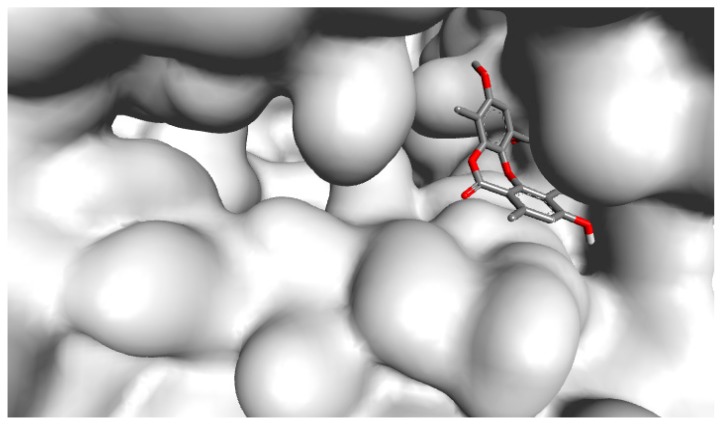
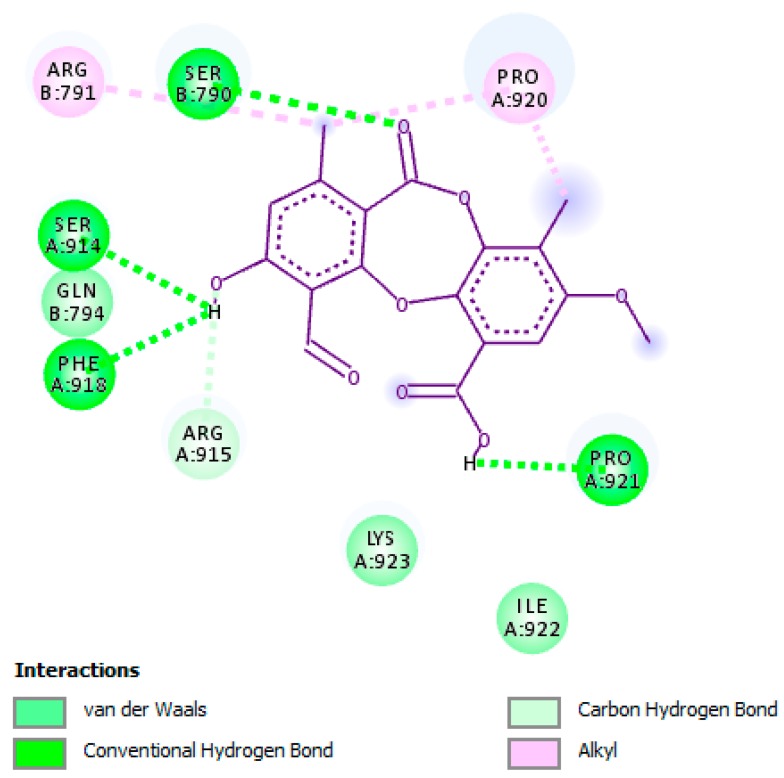
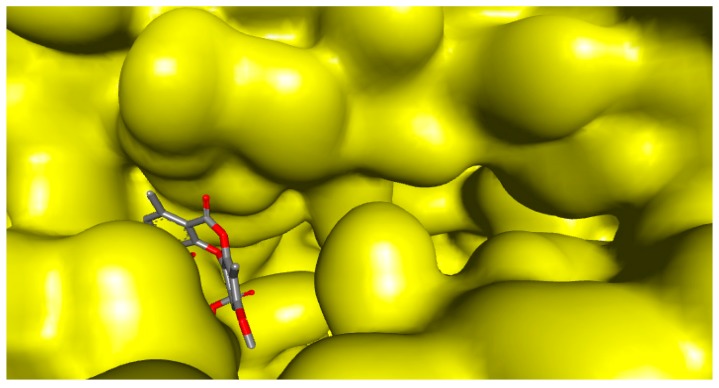
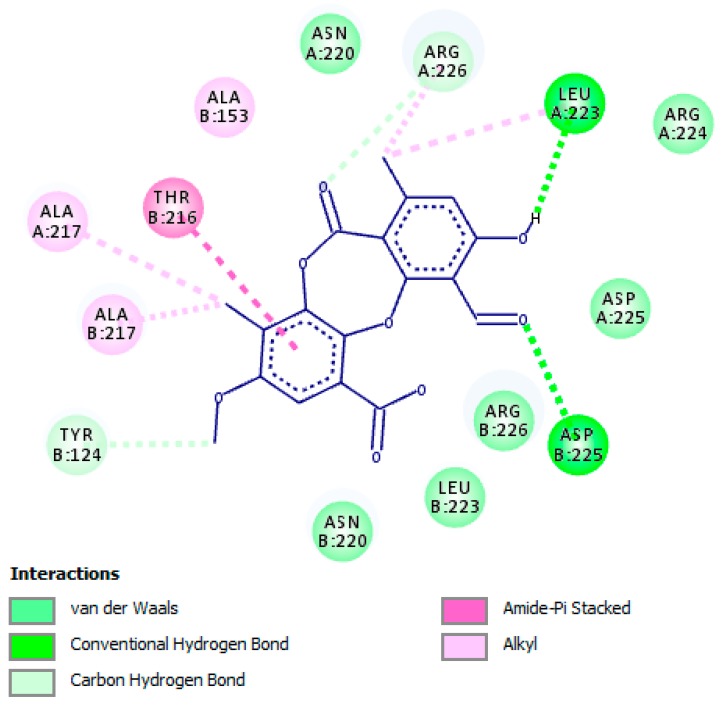
Psoromic acid (PA), a bioactive lichen-derived compound, was investigated for its inhibitory properties against herpes simplex virus type 1 (HSV-1) and type 2 (HSV-2), along with the inhibitory effect on HSV-1 DNA polymerase, which is a key enzyme that plays an essential role in HSV-1 replication cycle. PA was found to notably inhibit HSV-1 replication (50% inhibitory concentration (IC50): 1.9 μM; selectivity index (SI): 163.2) compared with the standard drug acyclovir (ACV) (IC50: 2.6 μM; SI: 119.2). The combination of PA with ACV has led to potent inhibitory activity against HSV-1 replication (IC50: 1.1 µM; SI: 281.8) compared with that of ACV. Moreover, PA displayed equivalent inhibitory action against HSV-2 replication (50% effective concentration (EC50): 2.7 μM; SI: 114.8) compared with that of ACV (EC50: 2.8 μM; SI: 110.7). The inhibition potency of PA in combination with ACV against HSV-2 replication was also detected (EC50: 1.8 µM; SI: 172.2). Further, PA was observed to effectively inhibit HSV-1 DNA polymerase (as a non-nucleoside inhibitor) with respect to dTTP incorporation in a competitive inhibition mode (half maximal inhibitory concentration (IC50): 0.7 μM; inhibition constant (Ki): 0.3 μM) compared with reference drugs aphidicolin (IC50: 0.8 μM; Ki: 0.4 μM) and ACV triphosphate (ACV-TP) (IC50: 0.9 μM; Ki: 0.5 μM). It is noteworthy that the mechanism by which PA-induced anti-HSV-1 activity was related to its inhibitory action against HSV-1 DNA polymerase. Furthermore, the outcomes of in vitro experiments were authenticated using molecular docking analyses, as the molecular interactions of PA with the active sites of HSV-1 DNA polymerase and HSV-2 protease (an essential enzyme required for HSV-2 replication) were revealed. Since this is a first report on the above-mentioned properties, we can conclude that PA might be a future drug for the treatment of HSV infections as well as a promising lead molecule for further anti-HSV drug design.
Overview
The claims and statistics of this paper haven’t been checked yet.
Free: it reads the open-access text and checks the first 5 claims that cite a source we can check. Create a free account to check every claim.
Integrity signals
Registry
Cites
Statistics
Figures
Verification
Claims the paper makes
The claims and statistics of this paper haven’t been checked yet.
Free: it reads the open-access text and checks the first 5 claims that cite a source we can check. Create a free account to check every claim.
Claims other papers make about this one
Each is checked against this paper’s own text: does it say what the citing paper says it does?
The source backs part of the claim, not all of it — or backs it for a different population, condition or comparison.
In the citing paper
“Recently, a promising drug called psoromic acid (a bioactive lichen-derived compound) has been found to inhibit the replication of both HSV-1 and HSV-2 by inhibiting proteases and DNA polymerases, which makes it a possible drug for treating meningitis caused by HSV [104].”
From Viral meningitis: an overview (2021) · cites this paper as [104]
Experimental — accuracy not yet measured
Self-check
Percentages, sums and reported differences re-computed from the paper’s own numbers.
The self-check needs the paper’s full text.
Citations
Cites
Yung-Chi, C., & Prusoff, W. H. (1973) · Biochemical Pharmacology · doi:10.1016/0006-2952(73)90196-2 · Cited by 12,922
Resistance of Herpes Simplex Viruses to Nucleoside Analogues: Mechanisms, Prevalence, and Management
Piret, J., & Boivin, G. (2011) · Antimicrobial Agents and Chemotherapy · doi:10.1128/aac.00615-10 · Cited by 558
(2014) · Handbook of Clinical Neurology · doi:10.1016/b978-0-444-53488-0.00011-0 · Cited by 474
Chromatin control of herpes simplex virus lytic and latent infection
Knipe, D. M., & Cliffe, A. (2008) · Nature Reviews Microbiology · doi:10.1038/nrmicro1794 · Cited by 444
Herpes simplex virus resistance to antiviral drugs
Morfin, F., & Thouvenot, D. (2003) · Journal of Clinical Virology · doi:10.1016/s1386-6532(02)00263-9 · Cited by 438
Styczynski, J., Reusser, P., Einsele, H., de la Camara, R., Cordonnier, C., Ward, K. N., Ljungman, P., Engelhard, D., & Leukemia, F. T. E. C. O. I. I. (2009) · Bone Marrow Transplantation · doi:10.1038/bmt.2008.386 · Cited by 380
Crystal Structure of the Herpes Simplex Virus 1 DNA Polymerase
Liu, S., Knafels, J. D., Chang, J. S., Waszak, G. A., Baldwin, E. T., Deibel, M. R., Thomsen, D. R., Homa, F. L., Wells, P. A., Tory, M. C., et al. (2006) · Journal of Biological Chemistry · doi:10.1074/jbc.m602414200 · Cited by 178
Inhibition of DNA Polymerase from Herpes Simplex Virus-Infected Wi-38 Cells by Phosphonoacetic Acid
Mao, J. C.-H., Robishaw, E. E., & Overby, L. R. (1975) · Journal of Virology · doi:10.1128/jvi.15.5.1281-1283.1975 · Cited by 174
Mohammadi Pour, P., Fakhri, S., Asgary, S., Farzaei, M. H., & Echeverría, J. (2019) · Frontiers in Pharmacology · doi:10.3389/fphar.2019.01207 · Cited by 168
Self-citationAntiherpesvirus drugs: a promising spectrum of new drugs and drug targets
Coen, D. M., & Schaffer, P. A. (2003) · Nature Reviews Drug Discovery · doi:10.1038/nrd1065 · Cited by 165
Cited by
Mohammadi Pour, P., Fakhri, S., Asgary, S., Farzaei, M. H., & Echeverría, J. (2019) · Frontiers in Pharmacology · doi:10.3389/fphar.2019.01207 · Cited by 168
Self-citationKohil, A., Jemmieh, S., Smatti, M. K., & Yassine, H. M. (2021) · Archives of Virology · doi:10.1007/s00705-020-04891-1 · Cited by 164
Natural Products-Derived Chemicals: Breaking Barriers to Novel Anti-HSV Drug Development
Treml, J., Gazdová, M., Šmejkal, K., Šudomová, M., Kubatka, P., & Hassan, S. T. S. (2020) · Viruses · doi:10.3390/v12020154 · Cited by 86
“In another study, psoromic acid (45), a bioactive, lichen‐derived molecule, was tested for its inhibitory action against HSV‐1 and HSV‐2 [46].”
BackgroundSelf-citationLichen Depsidones with Biological Interest
Ureña-Vacas, I., González‐Burgos, E., Divakar, P. K., & Gómez-Serranillos, M. P. (2021) · Planta Medica · doi:10.1055/a-1482-6381 · Cited by 63
“Psoromic acid was also of interest as an antiviral agent, as it blocked HSV-1 and HSV-2 replication and DNA synthesis [116].”
BackgroundAntiviral Active Compounds Derived from Natural Sources against Herpes Simplex Viruses
van de Sand, L., Bormann, M., Schmitz, Y., Heilingloh, C. S., Witzke, O., & Krawczyk, A. (2021) · Viruses · doi:10.3390/v13071386 · Cited by 65
“Cytotoxicity was determined with a CC50 (50% cytotoxic concentration) of >310 μM [56].”
BackgroundMethodFahmy, N. M., Al‐Sayed, E., Moghannem, S. A. M., Azam, F., El‐Shazly, M., & Singab, A. N. B. (2019) · Chemistry & Biodiversity · doi:10.1002/cbdv.201900511 · Cited by 53
Šudomová, M., & Hassan, S. T. S. (2021) · Microorganisms · doi:10.3390/microorganisms9020292 · Cited by 52
Self-citationTargeting SARS-CoV-2 Non-Structural Proteins
Tam, W. G., Lorenzo‐Leal, A. C., Hernández, L. R., & Bach, H. (2023) · International Journal of Molecular Sciences · doi:10.3390/ijms241613002 · Cited by 43
“For example, psoromic acid (29) is a β-orcinol depsidone that has been reported to inhibit Herpes Simplex virus type 1 and type 2 [96].”
BackgroundŠudomová, M., Berchová‐Bímová, K., Mazuráková, A., Šamec, D., Kubatka, P., & Hassan, S. T. S. (2022) · Viruses · doi:10.3390/v14030592 · Cited by 38
Self-citationHassan, S. T. S., Šudomová, M., Mazuráková, A., & Kubatka, P. (2022) · International Journal of Molecular Sciences · doi:10.3390/ijms232213891 · Cited by 28
Self-citationBerberine in Human Oncogenic Herpesvirus Infections and Their Linked Cancers
Šudomová, M., Berchová‐Bímová, K., Marzocco, S., Líšková, A., Kubatka, P., & Hassan, S. T. S. (2021) · Viruses · doi:10.3390/v13061014 · Cited by 26
“Currently, anti-herpesvirus drug development strategies face many challenges, and the most important tasks are linked with developing potent anti-herpesvirus medicines that can conquer the problems of drug resistance, viral latency, and recurrent infections and can also act with diverse mechanisms of action, minimum o…”
BackgroundSelf-citationŠudomová, M., & Hassan, S. T. S. (2023) · Viruses · doi:10.3390/v15122340 · Cited by 27
“Additionally, HSV’s ability to establish latent infections in host cells adds complexity to antiviral approaches [15,16].”
BackgroundSelf-citationBroad-Spectrum Antivirals Derived from Natural Products
Tian, W.-J., & Wang, X. (2023) · Viruses · doi:10.3390/v15051100 · Cited by 26
Hassan, S. T. S. (2020) · Viruses · doi:10.3390/v12040476 · Cited by 24
“These pathogens induce latent and lytic infections in humans and animals [5].”
BackgroundSelf-citationMendili, M., Essghaier, B., Seaward, M. R. D., & Khadhri, A. (2021) · Archives of Microbiology · doi:10.1007/s00203-020-02129-x · Cited by 22
Hassan, S. T. S. (2020) · Biomedicines · doi:10.3390/biomedicines8050132 · Cited by 21
“For instance, HSV-1 DNA polymerase was reported to be an essential enzyme required for viral replication [3], while HSV-1 TK is an important enzyme that catalyzes the transfer of the gamma-phospho group of ATP to thymidine to generate dTMP in the salvage pathway of pyrimidine synthesis, and hence the dTMP serves as a…”
BackgroundSelf-citationSrisai, P., Suriyaprom, S., Panya, A., Pekkoh, J., & Tragoolpua, Y. (2024) · Scientific Reports · doi:10.1038/s41598-024-60941-7 · Cited by 16
“Additionally, β-orcinol depsidone derived from lichen Usnea fruticose was found to inactivate HSV-1 DNA-polymerase during HSV replication 19 .”
BackgroundPoulsen-Silva, E., Otero, C., Díaz-Cornejo, S., Atala, C., Fuentes, J. A., & Gordillo-Fuenzalida, F. (2024) · Fungal Biology Reviews · doi:10.1016/j.fbr.2024.100410 · Cited by 16
Overview of Antiviral Drug Discovery and Development: Viral Versus Host Targets
Li, G., & Clercq, E. D. (2021) · Royal Society of Chemistry eBooks · doi:10.1039/9781788016858-00001 · Cited by 14
Lv, W., Zhou, L., Wu, J., Cheng, J., Duan, Y., & Qian, W. H. (2025) · Frontiers in Pharmacology · doi:10.3389/fphar.2024.1451083 · Cited by 14
Unassuming Lichens: Nature’s Hidden Antimicrobial Warriors
Tian, H., Lu, J. L., Liang, F., Ding, H., & Xiao, C. (2025) · International Journal of Molecular Sciences · doi:10.3390/ijms26073136 · Cited by 13
Wu, J., Power, H., Saksena, M. M., Valtchev, P., Schindeler, A., Cunningham, A. L., & Dehghani, F. (2022) · Pharmaceuticals · doi:10.3390/ph15030361 · Cited by 13
Lichens in Pharmacological Action: What Happened in the Last Decade?
Karagöz, Y., & Öztürk, B. (2023) · Eurasian Journal of Medicine · doi:10.5152/eurasianjmed.2022.22335 · Cited by 13
“Hassan et al 25 HSV-1 (IC50: 1.9 µM) and HSV-2 replication (EC50: 2.7 µM).”
InfluentialNorouzi, H., Sohrabi, M., Yousefi, M., & Boustié, J. (2023) · Frontiers in Fungal Biology · doi:10.3389/ffunb.2023.1088966 · Cited by 13
“, 2020), antiviral (Luzina and Salakhutdinov, 2018; Hassan et al., 2019), antimicrobial (Basile et al.”
Zhang, H., Li, Z., Li, C., Chen, R., Liu, T., & Jiang, Y. (2022) · Evidence-based Complementary and Alternative Medicine · doi:10.1155/2022/7953728 · Cited by 11
“Natural products had been essential sources of new drugs for infectious diseases [6, 7].”
BackgroundThe Interplay of Genital Herpes with Cellular Processes: A Pathogenesis and Therapeutic Perspective
Borase, H. P., & Shukla, D. (2023) · Viruses · doi:10.3390/v15112195 · Cited by 13
“[150]”
Youssif, K. A., Elkomy, M. H., Elhabal, S. F., El‐Mordy, F. M. A., Hisham, M., El‐Aleam, R. H. A., Al-Zuhairy, S. A. S., El-Nabarawi, M. A., Al-Shoubki, A. A., Elmanakhly, A. R., et al. (2025) · Scientific Reports · doi:10.1038/s41598-025-15718-x · Cited by 8
“The necessary docking settings were generated as previously reported, including the creation of PDBQT files for the ligands and receptors, the identification of binding sites, the computation of the protonation state, and the overall charges 41 .”
Hassan, S. T. S. (2025) · International Journal of Molecular Sciences · doi:10.3390/ijms26135932 · Cited by 7
“These limitations underscore the urgent need for alternative therapies [16,17].”
Self-citationExploring the antioxidant and protective effects of usnic acid: Opportunities and challenges
ENGİN, T. A. (2025) · Frontiers in Life Sciences and Related Technologies · doi:10.51753/flsrt.1572004 · Cited by 5
Loymunkong, C., Choowongkomon, K., Heawchaiyaphum, C., Chatchawankanpanich, N., Pientong, C., Ekalaksananan, T., & Chuerduangphui, J. (2025) · Viruses · doi:10.3390/v17070889 · Cited by 4
“…to promote mRNA and protein expression of early (E) genes (2–7 h), including UL30 encoding DNA polymerase, to replicate the viral genome, which plays an important role in viral replication, and is a target of several drugs against HSV, including ACV as well as other natural compounds [6].”
Rey, L. D. R. P., Pliego-Cortés, H. S., Marty, C., Araújo, E. C., Resik, S., Rodeiro, I., Bodet, P., Picot, L., & Bourgougnon, N. (2024) · Journal of Applied Phycology · doi:10.1007/s10811-024-03202-4 · Cited by 3
“Despite the existence of numerous studies on the antiher-petic activities of natural compounds (Hassan et al. 2019; van de Sand et al. 2021), the emergence of acyclovir and other nucleoside analogues resistant strains and its incidence in population, especially in immunocompromised patients,…”
Gavanji, S. (2022) · Biology Medicine & Natural Product Chemistry · doi:10.14421/biomedich.2022.112.89-109 · Cited by 2
An overview of the therapeutic potential of understudied lichen species for novel drug discovery
Venugopal, A., Glaudline, S., Raj, D. P., Lakshiakanthan, E., Vijayanand, S., & Sevanan, M. (2024) · Journal of Applied and Natural Science · doi:10.31018/jans.v16i4.5888 · Cited by 2
Anand, A. K., Manjula, S. N., Mruthunjaya, K., Mandal, S., Sharma, H., & Pathak, R. (2025) · Advances in Integrative Medicine · doi:10.1016/j.aimed.2025.100531 · Cited by 2
Yazdani, M., Barta, A., Hetényi, A., Saidu, M. B., Gallah, U. S., Berkecz, R., Csámpai, A., Burián, K., Paróczai, D., Ahmed, S. H. H., et al. (2025) · Phytochemistry · doi:10.1016/j.phytochem.2025.114659 · Cited by 1
Overview on the Causes and Management of Neonatal Meningitis
Elmihana, W. F., Hamed, N. F., Alshammari, A. S. M., & Alenezi, A. A. T. (2022) · Asian Journal of Pediatric Research · doi:10.9734/ajpr/2022/v8i330242 · Cited by 2
“In recent years, PRSV1 and HSV2 are suppressed by Proteases and DNA polymerase to suppress HSV 1 and HSV2 to be prepared as possible to treat meningitis by HSV [63].”
BackgroundInfluentialHerpes/SARS-CoV-2 Treatment with Micellized Nutraceuticals
Thornthwaite, J. T., & Strasser, D. (2022) · ACTA SCIENTIFIC MICROBIOLOGY · doi:10.31080/asmi.2022.05.1097 · Cited by 1
Viral Meningitis in Children and Hearing Loss
Kara, B., Güngör, M., Arısoy, E. S., & Demmler‐Harrison, G. J. (2023) · Comprehensive ENT · doi:10.1007/978-3-031-38495-0_24
In Silico Study of Natural Alkaloids as Rage Inhibitor for the Treatment of Meningitis
Gupta, N., Markande, P., Mokate, V., Nhavale, V., Dandale, B., Mate, M., & Shelke, T. (2025) · International Journal of Pharmaceutical Sciences Review and Research · doi:10.47583/ijpsrr.2025.v85i5.016
Gadali, K. E., Rafya, M., Mansouri, A. E., Mehdi, A., Andreï, G., Snoeck, R., Benkhalti, F., Sanghvi, Y. S., Taourirte, M., & Lazrek, H. B. (2026) · Molecular Diversity · doi:10.1007/s11030-026-11505-6 · Cited by 1
Antiviral effects of polyphenols against herpes simplex virus type 1: a comprehensive review
Mohebbi, A., Askari, F. S., Madihi, M., Monavari, S. H., Bokharaei‐Salim, F., Tabarraei, A., & Kiani, S. J. (2026) · Phytochemistry Reviews · doi:10.1007/s11101-026-10297-9
Metadata
- Authors
- Hassan, S. T. S., Šudomová, M., Berchová-Bímová, K., Šmejkal, K., & Echeverría, J.
- Affiliations
- University of Veterinary Sciences Brno (CZ)
- Museum of Literature in Moravia, Klášter 1, 664 61 Rajhrad, Czech Republic
- Department of Applied Ecology, Faculty of Environmental Sciences, Czech University of Life Sciences Prague, Kamýcká 129, 165 21, Praha 6-Suchdol, Czech Republic
- Universidad de Santiago de Chile (CL)
- Corresponding author
- Hassan, Sherif T. S.
- Venue
- Molecules
- Publisher
- MDPI AG
- Published
- 2019-08-11
- Volume
- 24
- Issue
- 16
- Pages
- 2912
- ISSN
- 1420-3049 (ISSN-L)
- PMC
- PMC6720901
- OpenAlex
- W2968305480
- Cited by
- 41
- References
- 54
- Citations by year
- 2026: 2 · 2025: 8 · 2024: 4 · 2023: 7 · 2022: 8 · 2021: 7 · 2020: 3 · 2019: 2
- FWCI
- 3.81
- Type
- journal article
- Language
- en
- Open access
- gold
- dx.doi.org
- Licence
- Locations
- Molecules (publishedVersion, cc-by)
- PubMed Central (publishedVersion, cc-by)
- PubMed (publishedVersion)
- DOAJ (DOAJ: Directory of Open Access Journals) (submittedVersion, cc-by-sa)
- Funders
- Internal Grant Agency (IGA) of the Faculty of Environmental Sciences, Czech University of Life Sciences Prague, Czech Republic (20154247/2015)
- Topics
- Health Sciences › Medicine › Infectious Diseases › Herpesvirus Infections and Treatments
- Life Sciences › Agricultural and Biological Sciences › Ecology, Evolution, Behavior and Systematics › Lichen and fungal ecology
- Life Sciences › Agricultural and Biological Sciences › Plant Science › Natural Compound Pharmacology Studies
- Keywords
- psoromic acid, herpes simplex virus type 1, herpes simplex virus type 2, antiviral activity, non-nucleoside polymerase inhibitors, molecular docking, selective toxicity, antiherpetic agents, natural product drug discovery
- MeSH terms
- Animals, Antiviral Agents, Benzoxepins, Carboxylic Acids, Chlorocebus aethiops, DNA-Directed DNA Polymerase, Humans, Lichens, Vero Cells, Viral Proteins, Virus Replication, Herpesvirus 2, Human, Herpesvirus 1, Human, Nucleic Acid Synthesis Inhibitors, Molecular Docking Simulation
About these checks
Registry, retraction, Cites and statistics results are computed, not judged, with one exception: a printed reference that no index lists is read once by a model before it counts as a citation error. Claims are extracted by a model and kept only when their quote appears verbatim in the text; each cited source is then checked, with a model’s help, for whether it says what the claim relies on. Those verdicts can be wrong — read the claim’s quote and the cited source before relying on one.
Statistics and arithmetic are recomputed, not judged.
Confidence bands are shown only for fields calibrated on our annotated test set. None is calibrated yet, so no band is shown.
What counts as a claim ›How we measure confidence ›How we check this ›
Are you an author, or do you see a problem with this page? Request a review
Data sources
Bibliographic data: Semantic Scholar, OpenAlex, Crossref.
Contains information from the Semantic Scholar Academic Graph Datasets, made available under the ODC Attribution License (ODC-BY 1.0).
Semantic Scholar’s data is described in: Kinney, R., et al. (2023). The Semantic Scholar Open Data Platform. arXiv:2301.10140.
