

The DOI matches its Crossref record; 1 of the 1 references it cites were found in a registry or an index.
Syntheses and Structure–Activity Relationships in Growth Inhibition Activity against Human Cancer Cell Lines of 12 Substituted Berberine Derivatives
Abstract
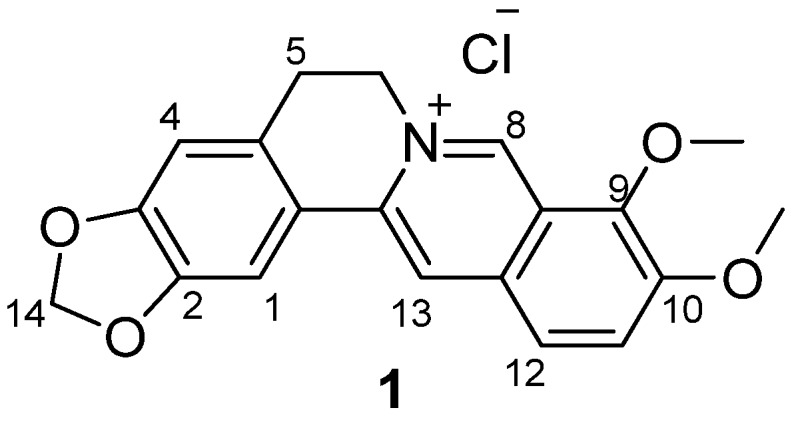
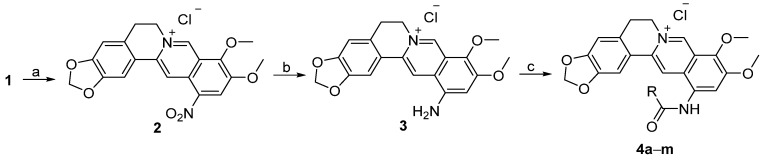
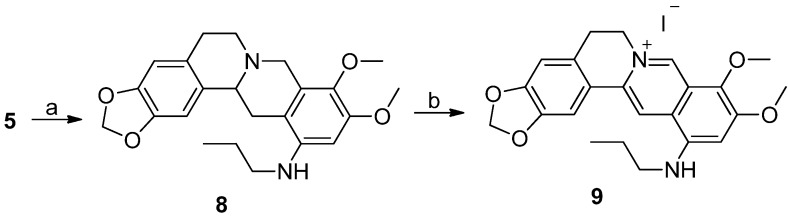
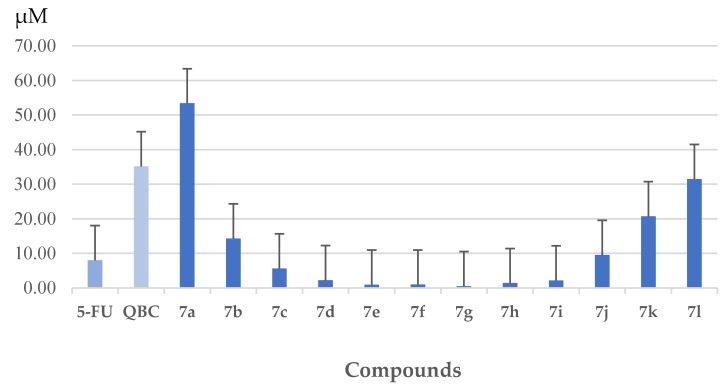
In this study, quaternary berberine chloride is used as a lead compound to design and synthesize a series of berberine-12-amine derivatives to evaluate the growth inhibition activity against human cancer cell lines. Forty-two compounds of several series were obtained. The quaternary berberine-12-N,N-di-n-alkylamine chlorides showed the targeted activities with the IC50 values of most active compounds being dozens of times those of the positive control. A significant structure–activity relationship (SAR) was observed. The activities of quaternary berberine-12-N,N-di-n-alkylamine chlorides are significantly stronger than those of the reduced counterparts. In the range of about 6-8 carbon atoms, the activities increase with the elongation of n-alkyl carbon chain of 12-N,N-di-n-alkylamino, and when the carbon atom numbers are more than 6-8, the activities decrease with the elongation of n-alkyl carbon chain. The activities of the tertiary amine structure are significantly higher than that of the secondary amine structure.
Overview
The claims and statistics of this paper haven’t been checked yet.
Run the check — free, no account needed. It reads the open-access text and checks the sources it cites.
Integrity signals
Registry
Cites
Statistics
Figures

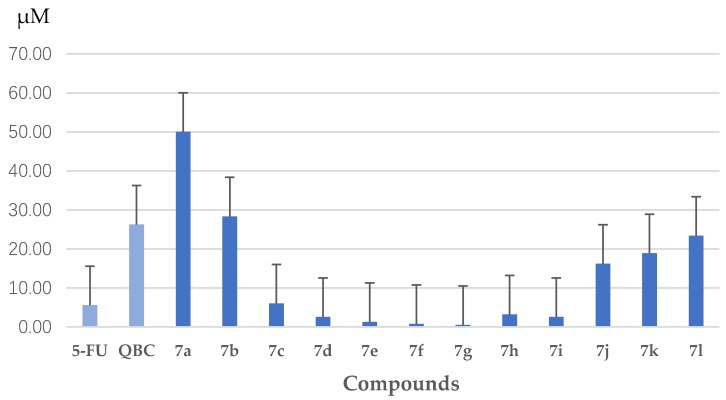
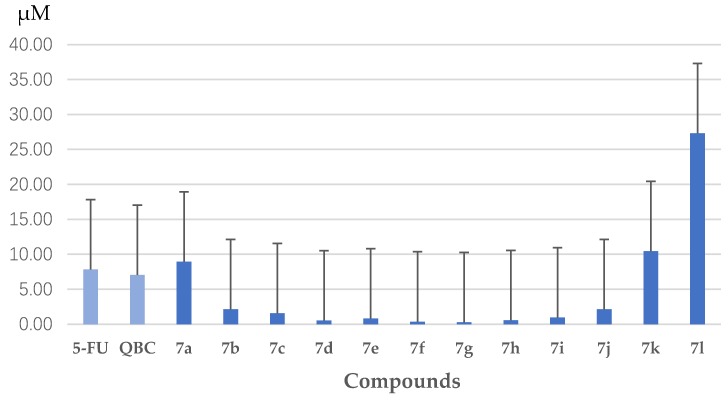
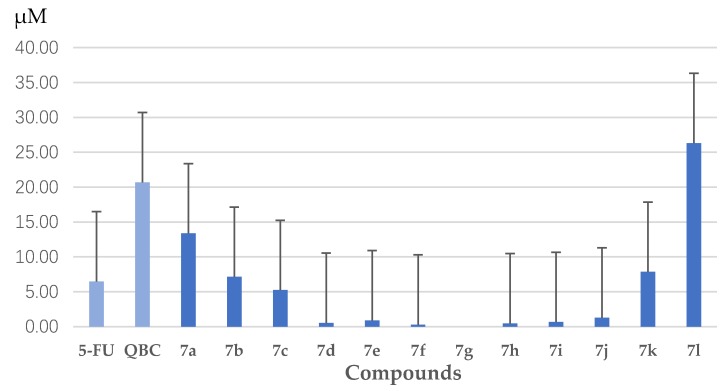
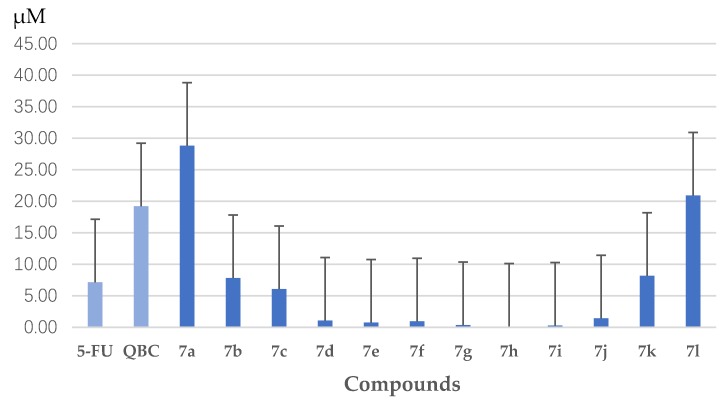
Verification
Claims the paper makes
The claims and statistics of this paper haven’t been checked yet.
Run the check — free, no account needed. It reads the open-access text and checks the sources it cites.
Claims other papers make about this one
Each is checked against this paper’s own text: does it say what the citing paper says it does?
In the citing paper
“HCT 116 cells were considered as an in vitro primary malignant epithelial colon carcinoma model, as they functionally replicate a similar physiology as that of primary aggressive human colon cancer.58”
Self-check
Percentages, sums and reported differences re-computed from the paper’s own numbers.
The self-check needs the paper’s full text.
Citations
Cites
Kong, W., Wei, J., Abidi, P., Lin, M., Inaba, S., Li, C., Wang, Y., Wang, Z., Si, S., Pan, H., et al. (2004) · Nature Medicine · doi:10.1038/nm1135 · Cited by 1,391
Self-citation
Research works printed but not linked: 23
- Ismael, 2008, Novel cytotoxic drugs: Old challenges, new solutions, Cancer Treat. Rev., 34, 81, 10.1016/j.ctrv.2007.08.001 · DOI
- Bian, 2006, Synthesis and antihyperglycemic evaluation of various protoberberine derivatives, Bioorg. Med. Chem. Lett., 16, 1380, 10.1016/j.bmcl.2005.11.045 · DOI
- Iwasa, 1997, Antimicrobial activity of some 13-alkyl substituted protoberberinium salts, Planta Med., 63, 196, 10.1055/s-2006-957651 · DOI
- Kumar, 2015, Current knowledge and pharmacological profile of berberine: An update, Eur. J. Pharmacol., 761, 288, 10.1016/j.ejphar.2015.05.068 · DOI
- Yang, 2008, Synthesis and structure-activity relationships of berberine analogues as a novel class of low-density-lipoprotein receptor up-regulators, Bioorg. Med. Chem. Lett., 18, 4675, 10.1016/j.bmcl.2008.07.005 · DOI
- Liu, B., Wang, G., Yang, J., Pan, X., Yang, Z., and Zang, L. (2011). Berberine inhibits human hepatoma cell invasion without cytotoxicity in healthy Hepatocytes. PLoS ONE, 6. · DOI
- Wang, L., Liu, L., Shi, Y., Cao, H., Chaturvedi, R., Calcutt, M.W., Hu, T., Ren, X., Wilson, K.T., and Polk, D.B. (2012). Berberine induces caspase-independent cell death in colon tumor cells through activation of apoptosis-inducing factor. PLoS ONE, 7. · DOI
- Chen, 2015, A randomized clinical trial of berberine hydrochloride in patients with diarrhea-predominant irritable bowel syndrome, Phytother. Res., 29, 1822, 10.1002/ptr.5475 · DOI
- Yin, 2008, Efficacy of berberine in patients with type 2 diabetes mellitus, Metab, Clin. Exp., 57, 712, 10.1016/j.metabol.2008.01.013 · DOI · Paper page
- Freile, 2003, Antimicrobial activity of aqueous extracts and of berberine isolated from Berberis heterophylla, Fitoterapia, 74, 702, 10.1016/S0367-326X(03)00156-4 · DOI
- Bandyopadhyay, S., Patra, P.H., Mahanti, A., Mondal, D.K., Dandapat, P., Bandyopadhyay, S., Samanta, I., Lodh, C., Bera, A.K., and Bhattacharyya, D. (2013). Potential antibacterial activity of berberine against multi drug resistant enterovirulent Escherichia coli isolated from yaks (Poephagus grunniens) with haemorrhagic diarrhoea. Asian Pac. J. Trop. Med., 315–319. · DOI
- Chiou, 1991, Mechanism of vasodilatory effect of berberine in rat mesenteric artery, Eur. J. Pharmacol., 204, 35, 10.1016/0014-2999(91)90832-B · DOI
- Lau, 2001, Cardiovascular actions of berberine, Cardiovasc. Drug Rev., 19, 234, 10.1111/j.1527-3466.2001.tb00068.x · DOI · Paper page
- Kulkarni, 2010, Berberine: A plant alkaloid with therapeutic potential for central nervous system disorders, Phytother. Res., 24, 317, 10.1002/ptr.2968 · DOI
- Kuo, 2004, The anti-inflammatory potential of berberine in vitro and in vivo, Cancer Lett., 203, 127, 10.1016/j.canlet.2003.09.002 · DOI
- Liu, 2016, Research progress on berberine with a special focus on its oral bioavailability, Fitoterapia, 109, 274, 10.1016/j.fitote.2016.02.001 · DOI · Paper page
- Zhang, 2015, Synthesis and structure-activity relationships of quaternary coptisine derivatives as potential anti-ulcerative aolitis agents, J. Med. Chem., 58, 7557, 10.1021/acs.jmedchem.5b00964 · DOI
- Zhang, 2016, Versatile methods for synthesizing organic acid salts of quaternary berberine-type alkaloids as anti-ulcerative colitis agents, J. Asian Nat. Prod. Res., 18, 576, 10.1080/10286020.2016.1171760 · DOI
- Xie, 2016, Synthesis and structure-activity relationships of N-dihydrocoptisine-8-ylidene aromatic amines and N-dihydrocoptisine-8-ylidene aliphatic amides as antiulcerative colitis agents targeting XBP1, J. Nat. Prod., 79, 775, 10.1021/acs.jnatprod.5b00807 · DOI
- Song, 2018, Syntheses and structure-activity relationships on antibacterial and anti-ulcerative colitis properties of quaternary 13-substituted palmatines and 8-oxo-13-substituted dihydropalmatines, Bioorg. Med. Chem., 26, 2586, 10.1016/j.bmc.2018.04.025 · DOI
- Zhang, 2018, Synthesis of quaternary 8-(1-acylethene-1-yl)-13-methylcoptisine chlorides and their selective growth inhibitory activity between human cancer cell lines and normal intestinal epithelial cell-6, Chin. Chem. Lett., 29, 131, 10.1016/j.cclet.2017.08.026 · DOI
- Zhang, 2014, Syntheses and structure-activity relationships in cytotoxicities of 13-substituted quaternary coptisine derivatives, Eur. J. Med. Chem., 86, 542, 10.1016/j.ejmech.2014.09.006 · DOI
- Li, 2018, Syntheses of alkyl-de-sanguinarine-N5-methyl derivatives and evaluation of in vitro growth inhibitory activities against cancer cell lines, Acta Pharm. Sin., 53, 1689
Cited by
Sorted by citations
Mishra, S., das, K., Chatterjee, S., Sahoo, P., Kundu, S., Pal, M., Bhaumik, A., & Ghosh, C. K. (2023) · ACS Omega · doi:10.1021/acsomega.2c04964 · Cited by 65
Metadata
- Authors
- Wang, B., Deng, A.-J., Li, Z.-H., Wang, N., & Qin, H.-L.
- Venue
- Molecules
- Publisher
- MDPI AG
- Published
- 2020-04-18
- Volume
- 25
- Issue
- 8
- Pages
- 1871
- ISSN
- 1420-3049
- PMC
- PMC7221678
- Cited by
- 23
- References
- 1
- Language
- en
- Funders
- National Mega-Project for Innovative Drugs (2019ZX09735002)
- Drug Innovation Major Project (2018ZX09711001-005006)
- the CAMS Initiation Fund for Innovative Medicine (2016-I2M-1-010)
About these checks
Registry, retraction, Cites and statistics results are computed, not judged, with one exception: a printed reference that no index lists is read once by a model before it counts as a citation error. Claims are extracted by a model and kept only when their quote appears verbatim in the text; each cited source is then checked, with a model’s help, for whether it says what the claim relies on. Those verdicts can be wrong — read the claim’s quote and the cited source before relying on one.
Statistics and arithmetic are recomputed, not judged.
Confidence bands are shown only for fields calibrated on our annotated test set. None is calibrated yet, so no band is shown.
What counts as a claim ›How we measure confidence ›How we check this ›
Are you an author, or do you see a problem with this page? Request a review
